太空算力

Search documents
钧达股份瞄上太空光伏赛道 拟入股星翼芯能
Zheng Quan Shi Bao Wang· 2026-01-14 13:57
Group 1 - The core point of the news is that JunDa Co., Ltd. has signed an investment agreement with Shanghai Xingyi Chip Energy Technology Co., Ltd., acquiring a 16.6667% stake by investing 30 million yuan [1] - The target company, Xingyi Chip Energy, was established on January 6, 2026, with a registered capital of 1.5 million yuan, and is set to take over all assets, personnel, and business from Hangzhou Shangyi Optoelectronics Technology Co., Ltd. [1] - The partnership will lead to the establishment of a joint venture for the production of CPI films and products combining CPI films with crystalline silicon batteries, with exclusivity clauses preventing the target company from collaborating with third-party photovoltaic companies in these areas [1] Group 2 - On December 29, 2025, JunDa Co., Ltd. announced a strategic cooperation framework agreement with Hangzhou Shangyi Optoelectronics, focusing on the research and industrialization of flexible perovskite technology for space applications [2] - The collaboration aims to enhance China's autonomous capabilities in aerospace energy components and includes joint R&D of space perovskite products, with JunDa Co. acting as a strategic investor [2] - Shangyi Optoelectronics is noted as a rare domestic satellite battery manufacturer, having completed foundational verification of perovskite materials in space environments, which supports future on-orbit validation [2] Group 3 - The purpose of the equity cooperation is to seize opportunities in the global low-orbit satellite networking and space computing industry, leveraging both companies' strengths in photovoltaic industrialization and perovskite technology [3] - This collaboration is expected to create synergies with JunDa Co.'s existing photovoltaic business, expanding the application scenarios of its products and facilitating a strategic shift from terrestrial to space photovoltaic applications [3] - The partnership aligns with the company's long-term strategic investment plan and aims to enhance its core competitiveness [3]


太空算力:打开AI应用场景新空间
Xi Niu Cai Jing· 2026-01-14 11:29
Core Insights - Space computing is an innovative result of the deep integration of aerospace technology and artificial intelligence, leading to a shift in computing paradigms from ground-based to space-based applications [1][2] - The global space computing industry has moved from planning to substantial verification and initial deployment, with China focusing on a self-controlled and systematic approach to build a complete industrial chain [2][10] Group 1: Overview of Space Computing - Space computing is a systematic orbital-level distributed AI architecture that deploys computing resources in space to achieve data collection, processing, storage, and output directly in orbit [3] - Applications of space computing are categorized into "space-based computing" and "ground-based computing," with the former involving autonomous data processing in orbit and the latter relying on ground-provided data for model training in space [3] Group 2: Economic Viability - Space computing is expected to address the long-standing economic loop challenges in commercial aerospace, with lifecycle operating costs potentially reduced to one-twentieth of ground facilities [6] - The cost structure for space data centers is significantly lower than that of ground facilities, with total costs estimated at $0.08 billion for space compared to $0.97 billion for China and $1.67 billion for the U.S. [7] Group 3: Industry Chain Analysis - The space computing industry chain consists of three core segments: upstream manufacturing and launching, midstream operation and ground access, and downstream data empowerment and application [8] - The downstream applications have expanded from traditional fields like remote sensing and navigation to include smart cities and edge intelligence [8] Group 4: Market Potential - The space computing industry is accelerating, with its strategic value becoming increasingly prominent as a solution to global computing resource bottlenecks [10] - According to Research and Markets, the global market for orbital data centers is projected to reach $39.09 billion by 2035, with a compound annual growth rate of 67.4% [10] Group 5: Company Profiles - Qianzhao Optoelectronics (300102) has seen significant growth in sales driven by its strategic focus on gallium arsenide solar cells, with a revenue increase of 46.4% year-on-year to $2.75 billion in the first three quarters of 2025 [11] - Putian Technology (002544) is transitioning to a provider of aerospace information infrastructure, reporting a revenue of $3.152 billion in the first three quarters of 2025, a decrease of 7.82% year-on-year [13] - Maiwei Co., Ltd. (300751) specializes in solar cell manufacturing equipment and has signed contracts for perovskite/silicon heterojunction battery production lines, with a revenue of $6.204 billion in the first three quarters of 2025, down 20.13% year-on-year [15]

技术看市:“降龙十八涨”爽约,市场有分歧难以形成合力,回落随时可能结束
Jin Rong Jie· 2026-01-13 16:00
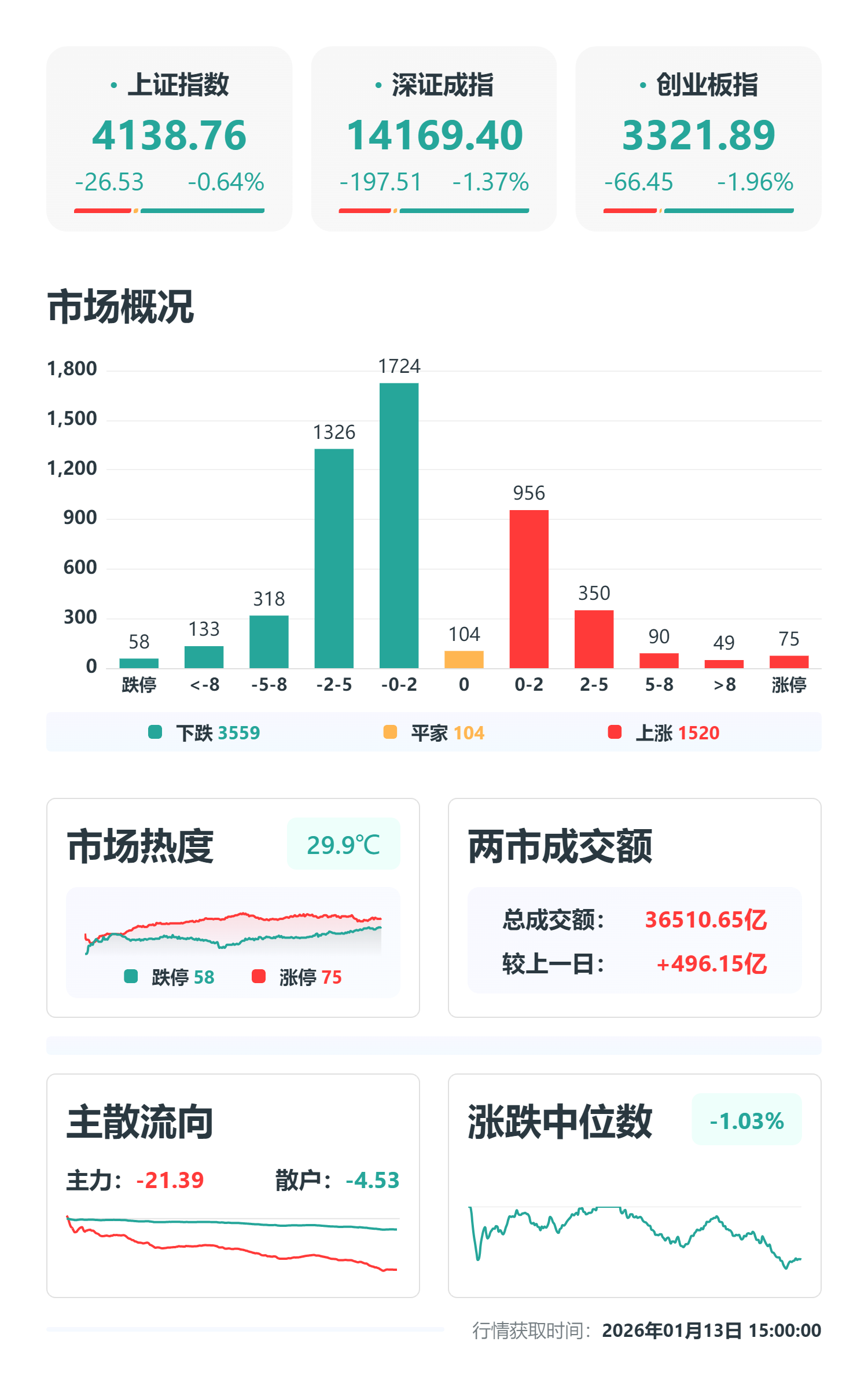
Market Overview - The A-share market experienced a decline with major indices all retreating, including the Shanghai Composite Index down 0.64% to 4138.76 points, Shenzhen Component Index down 1.37%, ChiNext Index down 1.96%, CSI 300 down 0.6%, and STAR 50 down 2.8% [1] - A total of 1520 stocks rose while 3547 stocks fell, with a total trading volume of 3.65 trillion yuan, an increase of approximately 496.18 billion yuan compared to the previous trading day [1] - The net outflow of main capital from the market was 1805.56 billion yuan, with the power grid equipment sector seeing a net inflow of 19.56 billion yuan, while the communication equipment sector experienced a net outflow of 196.20 billion yuan [1] Sector Performance - In terms of themes, sectors such as Ant Group's Afu, MCP concept, recombinant proteins, CRO, and SST concepts saw significant gains, while sectors like space computing, commercial aerospace, large aircraft, space station concepts, and phased array antennas faced substantial declines [2] Market Sentiment - Senior market analyst Xu Xiaoming commented on the market's adjustment, indicating that the Shanghai Composite Index has ended a 17-day winning streak, suggesting a return to rational and normal market behavior [3] - Xu noted that it is difficult to determine the scale of the current pullback, as the market has not established a clear top structure, and the rapid price movements make it challenging to assess the high points [3] - There is a divergence among indices, with the CSI 500 showing strong performance while the ChiNext Index is slowing down, indicating market disagreements that complicate the formation of a unified market direction [3]
天邑股份:没有可以运用到卫星互联网、太空算力相关的技术储备
Zheng Quan Ri Bao Wang· 2026-01-13 11:12
Group 1 - The company Tianyi Co., Ltd. (300504) stated that it currently has no technological reserves applicable to satellite internet or space computing [1]
天邑股份:目前没有可以运用到卫星互联网、太空算力相关的技术储备
Ge Long Hui· 2026-01-13 07:13
格隆汇1月13日丨天邑股份(300504.SZ)在互动平台表示,公司目前没有可以运用到卫星互联网、太空算 力相关的技术储备。 ...
天邑股份(300504.SZ):目前没有可以运用到卫星互联网、太空算力相关的技术储备
Ge Long Hui· 2026-01-13 07:05
格隆汇1月13日丨天邑股份(300504.SZ)在互动平台表示,公司目前没有可以运用到卫星互联网、太空算 力相关的技术储备。 ...
地球电费逼走AI算力: 太空光伏,把成本打掉20倍?
Hua Er Jie Jian Wen· 2026-01-13 03:51
Core Viewpoint - The significant cost difference of $167 million and $8.2 million for the same project highlights the emerging opportunity in space computing, suggesting that the future of computational power may shift from terrestrial data centers to space-based solutions [1]. Group 1: Cost Comparison - The cost of operating data centers on Earth can exceed $100 million in electricity over ten years, while space-based solutions can reduce costs to one-twentieth of that amount due to free solar energy and natural cooling [1]. Group 2: Future of Computing - The future competition for computational power is expected to take place in space rather than in traditional data centers, indicating a paradigm shift in how computing resources are utilized [1].
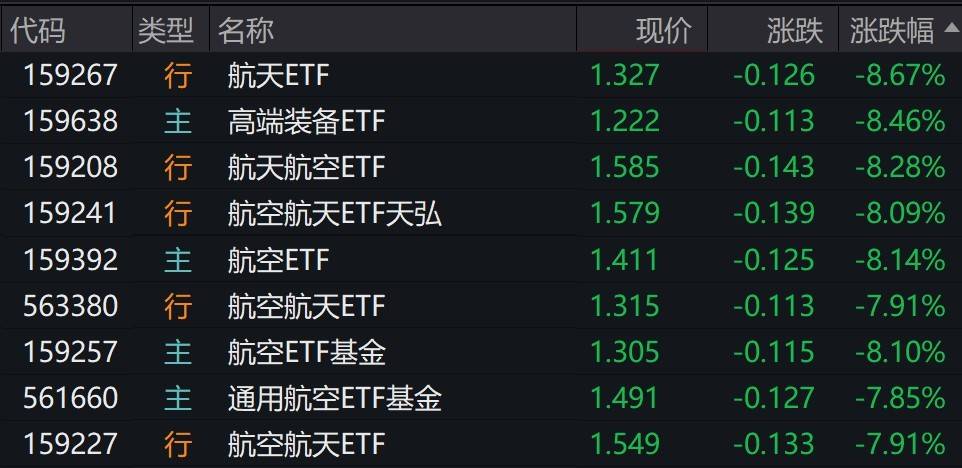
航天航空概念股早盘大幅调整,多只航天航空相关ETF跌超8%
Sou Hu Cai Jing· 2026-01-13 02:00
Group 1 - Aerospace and aviation concept stocks experienced significant declines in early trading, with Aerospace Electronics down over 8%, AVIC High-Tech down over 6%, and AVIC Heavy Machinery down over 5% [1] - Several aerospace-related ETFs also fell by more than 8%, reflecting the overall market trend [1] Group 2 - Specific ETFs reported the following price changes: Aerospace ETF (1.327, -8.67%), High-end Equipment ETF (1.222, -8.46%), Aerospace Aviation ETF (1.585, -8.28%), and others showing similar declines [2] - Analysts believe that recent improvements in top-level design and new policy support in the commercial aerospace sector have clarified the development blueprint for the industry, enhancing market confidence in its long-term growth [2] - With decreasing launch costs and increased in-orbit computing power, the future of space computing is expected to create a "more launches, more savings" scenario, potentially leading to a transformative industrial change with scalable commercial value [2]


杀疯了!两大顶流赛道引爆全市场
Ge Long Hui· 2026-01-12 09:27
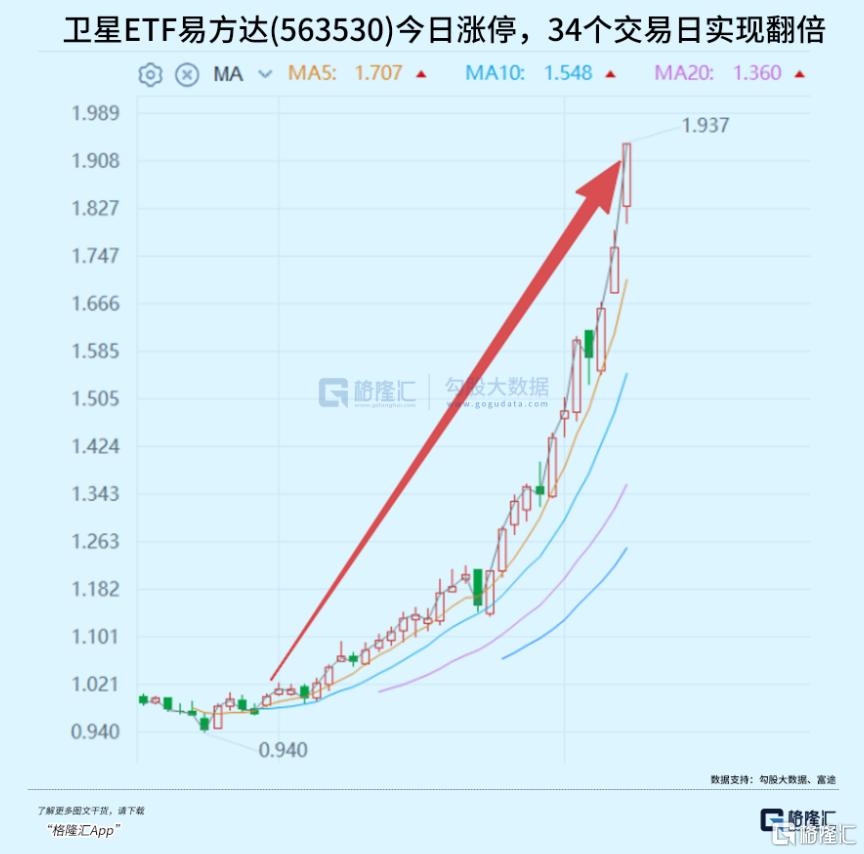
Core Insights - The article highlights the explosive growth of the satellite and AI application sectors, marking the beginning of a strong market trend in 2026, with A-shares achieving a 17-day consecutive rise and nearing 4200 points [1][24]. Group 1: Satellite Industry Developments - China has submitted a record application to the International Telecommunication Union (ITU) for approximately 203,000 satellites, covering 14 constellations, aiming to secure essential resources for satellite internet development over the next decade [6][26]. - The U.S. Federal Communications Commission (FCC) has approved SpaceX's deployment of an additional 7,500 second-generation Starlink satellites, indicating a competitive race for scarce space resources [7][8]. - The satellite industry is experiencing a significant increase in investment, with a notable rise in institutional fund inflows exceeding 150% in key sectors such as satellite manufacturing and rocket support [16][17]. Group 2: AI Application Advancements - The AI sector is witnessing a shift from "Chat" to "Agent" models, with major tech companies accelerating their entry into AI healthcare and other applications [11][12]. - The cost of AI services has decreased by over 90% in the past 18 months, making complex AI applications economically viable for large-scale commercialization [25][28]. - Significant investments are being made in AI, with SoftBank investing $41 billion in OpenAI and ByteDance partnering with NVIDIA for a $14 billion chip collaboration [20][22]. Group 3: Market Trends and Investment Opportunities - The satellite ETF E Fund (563530) has seen a net inflow of 860 million yuan, reflecting strong investor interest in the satellite industry, which is expected to benefit from a long-term growth cycle [18][20]. - The software ETF E Fund (562930) has increased by 213% in size compared to the previous year, indicating a robust interest in AI application companies [20][22]. - The convergence of satellite technology and AI applications is anticipated to create substantial commercial value, with both sectors poised for significant growth in 2026 [30][31].
A股超3800股上涨 139股涨停 商业航天多股爆发 中国卫星创历史新高
2 1 Shi Ji Jing Ji Bao Dao· 2026-01-12 05:14
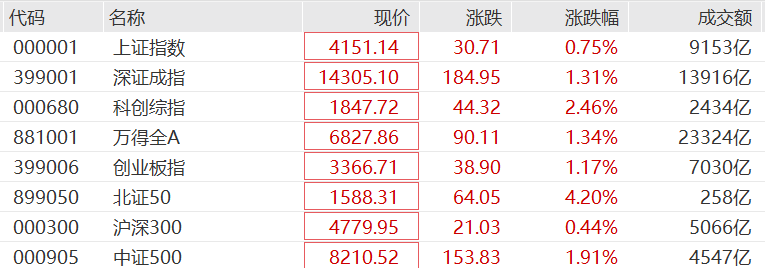
Market Overview - On January 12, A-shares saw a collective rise in the three major indices, with the Shanghai Composite Index up 0.75%, the Shenzhen Component Index up 1.31%, and the ChiNext Index up 1.17% [1] - The market's half-day trading volume exceeded 2.3 trillion yuan, an increase of over 478.1 billion yuan compared to the previous day [1] Stock Performance - The Shanghai Composite Index closed at 4151.14, with a rise of 30.71 points [2] - The Shenzhen Component Index reached 14305.10, increasing by 184.95 points [2] - The ChiNext Index was at 3366.71, up by 38.90 points [2] - Over 3800 stocks in the market rose, with 139 stocks hitting the daily limit up [1] Sector Performance - AI applications, commercial aerospace, photovoltaic, and retail sectors showed significant gains, while oil and gas, as well as coal sectors, experienced declines [2] - Notable stocks in the photovoltaic sector included Oriental Sunrise, Jiejia Weichuang, and Maiwei Shares, which saw increases of 16.08%, 12.71%, and 11.36% respectively [5] Lithium and Precious Metals - Lithium carbonate futures hit a high of 156,100 yuan per ton, marking a new peak since September 2023, with major lithium mining stocks also rising significantly [3] - Gold prices reached over $4600 per ounce, with a nearly 2% increase, and domestic gold jewelry prices also rose, leading to a collective rise in A-share gold stocks [3] Commercial Aerospace - The commercial aerospace sector remained active, with companies like China Satellite and Goldwind Technology seeing significant stock price increases [4] - China submitted an application for an additional 203,000 satellites, indicating a growing focus on satellite technology [4] AI Applications - AI application stocks surged, with companies like Worth Buying and Guangyun Technology hitting the daily limit up [7] - A significant breakthrough in AI-driven drug screening was reported by Tsinghua University, further boosting interest in AI-related stocks [7] Storage Market - The storage market is experiencing a price surge, with expectations of a 40-50% increase in prices by Q1 2026 due to rising demand from AI and server capacities [8] - Companies like Fudan Microelectronics and Aerospace Intelligence saw stock price increases of over 10% [8] Technology Sector Outlook - Recent reports suggest that China's technology sector is poised for significant growth, with expectations of surpassing the profitability of major US tech giants by 2026 [9]