
自主创新

Search documents
7种新农药有效成分获批登记
Zhong Guo Hua Gong Bao· 2025-10-17 03:43
Core Insights - The recent approval of new pesticide registrations by the Beijing Academy of Agricultural and Forestry Sciences and six other entities highlights advancements in the Chinese pesticide industry [1] Group 1: New Pesticide Registrations - A total of 7 new active ingredients and 13 new pesticide products have been approved, with the issuance of pesticide registration certificates and product labels [1] - The newly approved pesticides include Bacillus subtilis BJ-1 (available in both active ingredient and water-dispersible granule forms), abamectin (available in both active ingredient and water-emulsifiable forms), and cyprodinil (available in active ingredient, suspension, and dispersible liquid forms) [1] Group 2: Characteristics of New Pesticides - A high proportion of biopesticides is noted, with 5 out of the 7 approved active ingredients being biopesticides [1] - The newly approved pesticides are environmentally friendly, characterized as low-toxicity products, primarily in water-based formulations such as water-dispersible granules, water-emulsifiable concentrates, and suspensions [1] - Significant progress in independent innovation is observed, with 4 out of the 7 new pesticide ingredients developed by domestic enterprises (research institutions), some of which meet international advanced standards for similar products [1]
新思想引领新征程·非凡“十四五”丨北斗系统:应用场景不断丰富 实现高质量发展
Yang Shi Xin Wen Ke Hu Duan· 2025-10-17 01:15
Core Insights - The article emphasizes the importance of the BeiDou system in promoting China's economic and social development, as well as contributing to the construction of a community with a shared future for mankind [1] - The BeiDou system has achieved significant breakthroughs during the 14th Five-Year Plan period, enhancing its global satellite navigation capabilities and application scenarios [1][6] Group 1: Development and Achievements - The BeiDou system provides location services trillions of times daily, with a total navigation mileage exceeding 4 billion kilometers [6] - Since its official launch in July 2020, the BeiDou system has entered a new phase of global development, with successful satellite launches in 2023 and 2024, improving positioning accuracy from meter-level to centimeter-level [12] - The system has overcome over 160 core technologies and achieved 100% domestic control of core components, ensuring its reliability and independence [15] Group 2: Applications and Integration - The BeiDou system is integrated into various sectors, including aviation, smart ports, smart cities, and the sharing economy, significantly contributing to high-quality economic development [18] - In the aviation sector, the coverage of BeiDou onboard terminals has reached 95%, supporting new low-altitude economic activities such as drone delivery and intercity transportation [18] - The system's applications extend to international standards, facilitating its global service capabilities [17] Group 3: Future Goals - By 2035, the BeiDou system aims to establish a comprehensive national positioning, navigation, and timing system that is stronger, safer, and more reliable, covering indoor to outdoor and deep-sea to deep-space environments [21]


【新思想引领新征程·非凡“十四五”】北斗系统:应用场景不断丰富 实现高质量发展
Yang Shi Wang· 2025-10-16 11:56
Core Insights - The promotion of the BeiDou system is aimed at contributing to China's economic and social development and building a community with a shared future for mankind [1] - The BeiDou system has achieved significant breakthroughs during the 14th Five-Year Plan period, enhancing its global satellite navigation capabilities and application scenarios [1][2] Group 1: Development and Achievements - The BeiDou system has provided location services trillions of times daily, with a total navigation mileage exceeding 4 billion kilometers [1] - During the 14th Five-Year Plan, the BeiDou system entered a new phase of global development, with successful satellite launches enhancing its positioning accuracy from meter-level to centimeter-level [2] - Over 100 national and industry standards have been established to facilitate the rapid transition of the BeiDou system from technology research and development to large-scale application [2] Group 2: Technological Innovations - The core technology of the BeiDou system is based on independent innovation, featuring domestically developed atomic clocks with an error of one second every 3 million years [2] - The BeiDou system's short message communication terminal can send messages globally without the need for ground stations, a unique feature among navigation systems [2] - The BeiDou system has overcome over 160 core technologies and achieved 100% domestic control of its core components [2] Group 3: Applications and Integration - In the aviation sector, the coverage rate of BeiDou onboard terminals has reached 95%, supporting new low-altitude economic activities such as drone delivery and intercity transportation [3] - The BeiDou system has been integrated into various fields, including smart ports, smart cities, smart grids, smart wearables, and the sharing economy, driving high-quality economic and social development [3] Group 4: Future Goals - By 2035, the BeiDou system aims to establish a comprehensive national positioning, navigation, and timing system that is stronger, safer, and more reliable, covering indoor to outdoor and deep sea to deep space [4]
广交会看格力:自主创新铸就实力,自主品牌闪耀全球
Jing Ji Wang· 2025-10-16 09:05
Core Insights - The 138th China Import and Export Fair (Canton Fair) has set new records with over 200 countries participating, featuring 74,600 booths and more than 32,000 exhibitors, highlighting the event's significance in global trade [1] - Gree Electric Appliances showcased over 100 products under the theme "Innovative Gree, Low-Carbon Life," emphasizing its leadership in the home appliance and industrial manufacturing sectors [1] Product Innovation and Awards - Gree Electric Appliances won the "Design Innovation Award" for four products, demonstrating its technological capabilities across various categories including washing machines, water purifiers, industrial equipment, and robots [3][5] - The award-winning products include a heat pump washing and drying machine, a water purifier with a 99.9999% sterilization rate, and an intelligent double-beam gantry machining center designed for the new energy vehicle parts processing [5][10] International Market Performance - Gree's overseas market revenue grew by 10.19% year-on-year in the first half of 2025, with strong interest from clients in Europe, the Middle East, and Southeast Asia during the Canton Fair [7] - The launch of the GMV9 series of commercial air conditioning products aims to meet diverse global market demands with differentiated technology [7][9] Technological Advancements - The GMV9 series features models designed for extreme environments, with capacities ranging from 8 to 42 HP and the ability to operate in temperatures from -35°C to 60°C, showcasing high energy efficiency and AI energy-saving technology [9][10] - Gree's Airy air conditioner, equipped with a "super-fast compressor" technology, improves heating efficiency in low temperatures, addressing global low-carbon consumption trends [10][12] Commitment to Sustainability - Gree's participation in the Canton Fair reflects its commitment to green and intelligent manufacturing, positioning itself as a leader in sustainable development within the global trade landscape [14] - The company aims to leverage technological innovation to provide high-quality low-carbon living solutions for global users, contributing to the transformation of Chinese manufacturing towards high-quality exports [14]

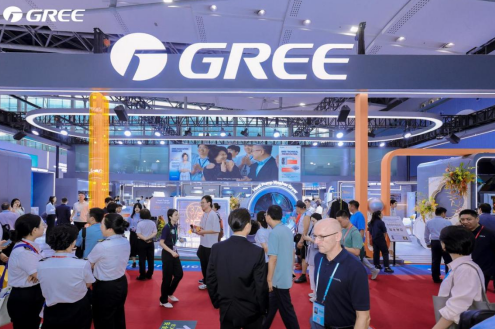
十年磨“智”,握牢工业制造关键技术
Jing Ji Wang· 2025-10-16 08:25
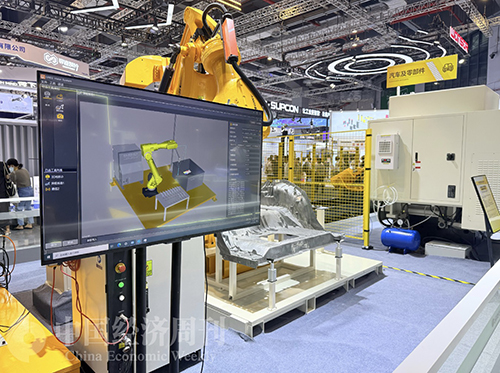
Core Insights - The 25th China International Industrial Expo showcased Gree Electric's advancements in industrial equipment, particularly a six-axis robot designed for precision tasks in automotive manufacturing, highlighting Gree's commitment to empowering industrial manufacturing through innovation [1][7]. Group 1: Technological Innovations - Gree's robots are equipped with electric spindles, enabling them to perform various machining tasks such as milling, polishing, and drilling, which addresses the increasing demand for flexibility in manufacturing [7]. - The FMS flexible manufacturing system developed by Gree allows for high levels of automation and intelligence, enhancing equipment utilization and enabling rapid market response [8]. - Gree's robots utilize deep learning and 3D vision technology for precise object recognition and sorting, overcoming industry challenges in deep frame grabbing [8]. Group 2: Educational Initiatives - Gree has introduced a desktop-level digital factory platform aimed at educational institutions, allowing students to engage in practical training that replicates real factory processes [9]. - Collaborations with universities such as Hubei University and Fujian Shipbuilding College have been established to support vocational education and industry integration [9]. Group 3: Strategic Vision - Gree Electric's chairman emphasized the importance of independent innovation in the industrial equipment sector, contrasting it with the more lucrative but less sustainable financial and real estate sectors [10]. - Over the past decade, Gree has transitioned from relying on external components to developing its own core components, marking a significant shift in China's manufacturing capabilities [10]. - Gree's commitment to quality and technology over low-cost competition is seen as a pathway for China to evolve from a manufacturing powerhouse to a manufacturing leader [10].
重大国产替代!北京首台套电子束光刻机认定
仪器信息网· 2025-10-15 08:26
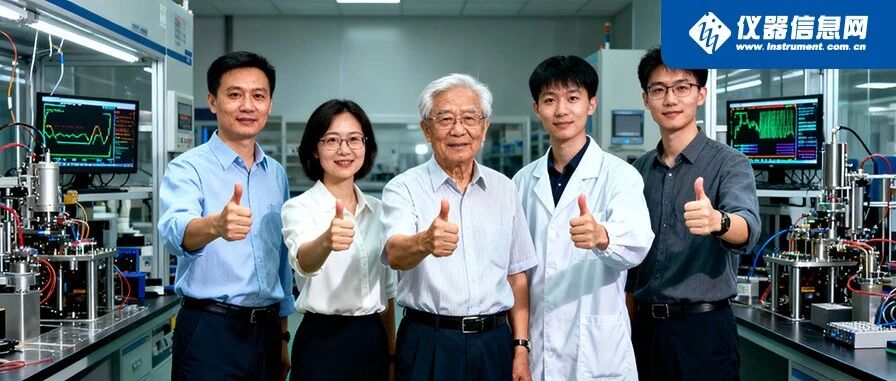
Core Viewpoint - Beijing Jinjing Technology's Pharos 310 electron beam lithography machine has received the first major technology equipment certification in Beijing, marking a significant breakthrough in China's high-end lithography equipment sector and reducing reliance on imports [1][2][17]. Group 1: Product Development - The Pharos series electron beam lithography machine is widely used in micro-nano processing and semiconductor device fabrication, which are critical areas for national strategy [4]. - Jinjing Technology has achieved key technological breakthroughs in electron beam exposure processes and core components, with multiple key technical indicators reaching international first-class levels [5]. - The Pharos 310 has successfully passed market verification and has been accepted and put into use by several universities and research institutions, including Tianjin University and the Chinese Academy of Sciences [7]. Group 2: Recognition and Achievements - The Pharos 310 was prominently featured at the Zhongguancun Forum in 2024, garnering widespread attention [13]. - The company has received numerous accolades, including recognition as a National High-tech Enterprise and a National Specialized and New "Little Giant" enterprise [17]. - The successful launch of the Pharos 310 has also led to awards such as the first prize at the "Startup Beijing" Innovation and Entrepreneurship Competition [17]. Group 3: Future Plans - Jinjing Technology aims to continue responding to the national "14th Five-Year Plan" regarding technological innovation and industrial upgrading, enhancing collaboration with universities, research institutions, and enterprises to accelerate the transformation and application of scientific achievements [17].
荷兰的玻璃门:从欢迎投资到冻结资产,中企出海遭遇模式切换
Sou Hu Cai Jing· 2025-10-15 00:05
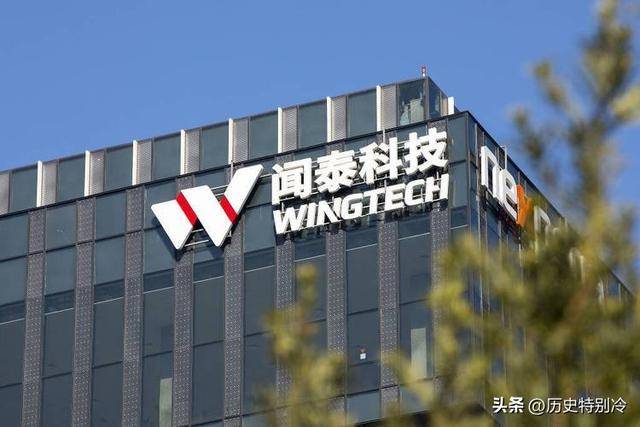
Core Viewpoint - The recent asset freeze by the Dutch government against Anshi Semiconductor, valued at 14.7 billion RMB, highlights the complex interplay between multinational business and geopolitical tensions [1][3][7]. Group 1: Asset Freeze and Legal Actions - The Dutch government issued a directive on September 30 to freeze Anshi Semiconductor's assets and intellectual property for one year, amounting to 14.7 billion RMB [1][3]. - The swift response from the Dutch courts included the immediate suspension of CEO Zhang Xuezheng's duties, showcasing an efficient judicial process in Europe [3][5]. Group 2: Geopolitical Context - The asset freeze is part of a broader trend where Western countries are tightening controls on technology exports to China, aiming to restrict its advancement in the semiconductor industry [5][7]. - The incident reflects the escalating global semiconductor competition, particularly as the Netherlands becomes a frontline in the US-China tech rivalry [7][13]. Group 3: Internal Struggles and Management Issues - A group of foreign executives at Anshi Semiconductor has initiated a "palace coup," demanding the transfer of shares held by Wentai Technology and the suspension of CEO Zhang Xuezheng [1][5]. - The internal conflict coinciding with the asset freeze suggests potential external influences, raising questions about the stability of control in cross-border acquisitions [5][11]. Group 4: Future Implications for the Semiconductor Industry - The freezing of 14.7 billion RMB in assets poses a significant challenge not only for Wentai Technology but also for China's semiconductor sector as a whole [3][8]. - The ongoing geopolitical pressures may catalyze a spirit of innovation within China's semiconductor industry, which could become a focal point in global tech competition over the next decade [8][13].

中国打出稀土核弹,荷兰跳出来,明抢中国海外资产,开了危险先例
Sou Hu Cai Jing· 2025-10-14 11:30
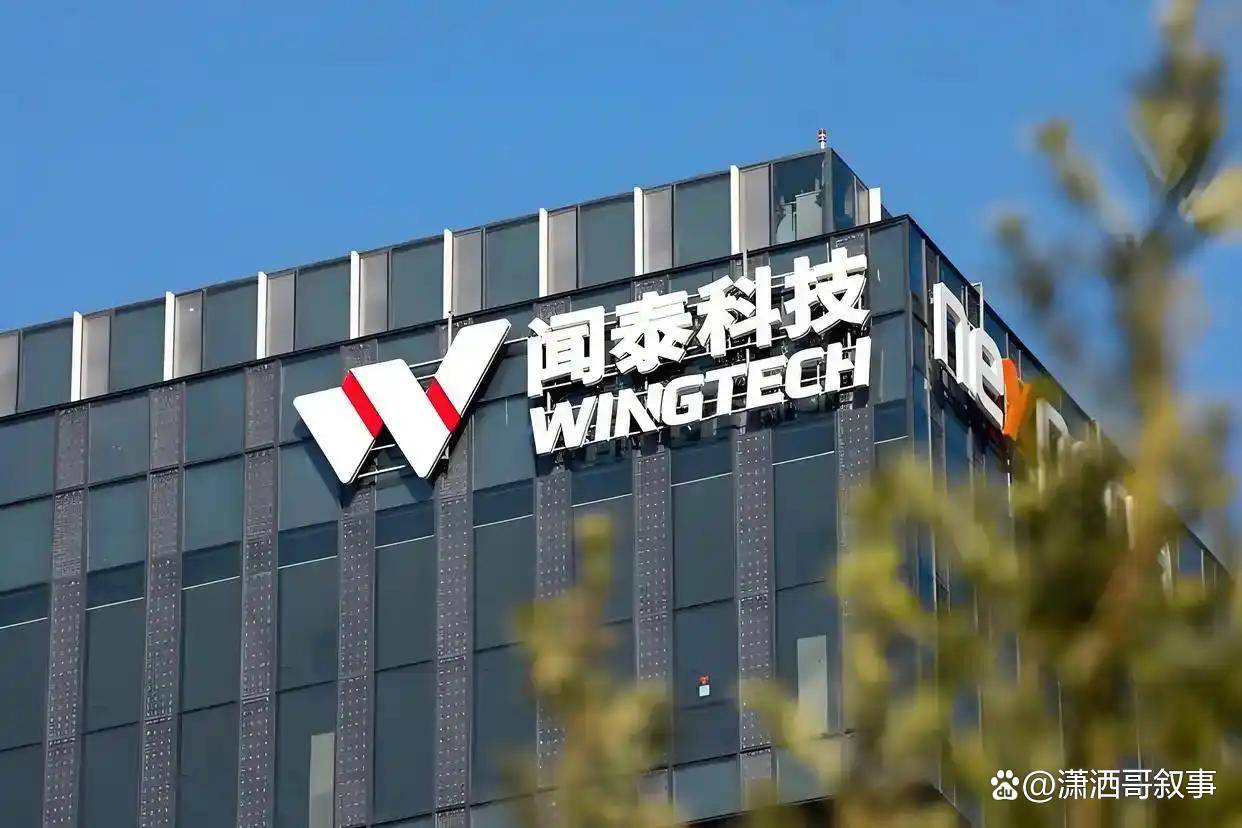
Core Viewpoint - The article discusses the significant loss of control over the semiconductor company Nexperia by the Chinese firm Wingtech Technology, following a series of actions by the Dutch government that resulted in the freezing of Nexperia's global assets and the transfer of 99% of its shares to a third party, highlighting the geopolitical tensions surrounding technology and investment in the semiconductor industry [1][3][12]. Group 1: Company Impact - Wingtech Technology's market value plummeted by 5.8 billion yuan in a single day due to the asset freeze, causing panic among investors [1][9]. - The acquisition of Nexperia was a critical move for Wingtech, which had previously struggled with low margins in mobile phone manufacturing, investing over 30 billion yuan to transform into a semiconductor powerhouse [5][9]. - The Dutch government's actions have left Wingtech with significant financial liabilities and a potential liquidity crisis, as the company's stock price drop could trigger margin calls on pledged shares [9][20]. Group 2: Industry Implications - The incident has raised alarms in the global investment community, as it sets a precedent for the arbitrary seizure of assets under the guise of national security, undermining the principle of private property protection [18][20]. - There has been a notable decline in Chinese investments in European high-tech sectors, with a 42% drop in the number of mergers and acquisitions and a 58% decrease in transaction value, particularly in sensitive areas like semiconductors and renewable energy [20][22]. - The automotive supply chain is at risk due to Nexperia's status as a major player in power semiconductors, with a reported decrease in global automotive chip inventory levels [20][22]. Group 3: Geopolitical Context - The Dutch government's actions are seen as part of a broader strategy by the U.S. and Europe to curb China's semiconductor industry, following the implementation of the Vifo Act, which allows for retrospective scrutiny of foreign investments [12][16]. - The timing of the asset freeze coincided with the EU's semiconductor alliance declaration, indicating a coordinated effort to regain control over critical technology sectors [14][16]. - The situation underscores the importance of self-reliance in technology, as reliance on foreign acquisitions for core technologies has proven to be precarious in the face of geopolitical tensions [27][31]. Group 4: Future Outlook - The next few months will be crucial for Wingtech as it navigates legal challenges and the potential outcomes of the Dutch court's decisions regarding Nexperia's assets [33]. - The incident serves as a wake-up call for global investors regarding the risks associated with investments in jurisdictions where national security can be invoked to justify asset seizures [33]. - Chinese companies are shifting their strategies towards "technology symbiosis" rather than outright acquisitions, aiming to mitigate risks associated with geopolitical tensions [29][31].
深市智能制造龙头加快自主创新 铸就工业变革新引擎
Zheng Quan Ri Bao Wang· 2025-10-14 11:29
Core Viewpoint - The leading companies in Shenzhen's intelligent manufacturing sector are driving industry upgrades through core technological breakthroughs, contributing to the establishment of a solid foundation for China's intelligent manufacturing [1] Group 1: Technological Advancements - Shenzhen's intelligent manufacturing leaders are breaking overseas monopolies in industrial automation core systems and components, enhancing efficiency across various industries [1] - Companies like 汇川技术 (Inovance Technology), 华工科技 (Huagong Tech), and 埃斯顿 (Estun) are focusing on specialized innovations to strengthen key segments of the intelligent manufacturing supply chain [1][2] - 汇川技术 has a workforce of 6,118 R&D personnel and invested 1.966 billion in R&D in the first half of 2025, with a R&D expense ratio of 9.58% [2] - 华工科技's R&D investment reached 461 million, a 19% increase year-on-year, with 143 patent applications and 56 software copyrights [2][3] - 埃斯顿 maintains a consistent R&D investment of around 10% of its sales revenue, with 418 software copyrights and 597 authorized patents as of June 2025 [3] Group 2: Market Attention and Institutional Interest - The high R&D investments have not only enhanced the companies' technological capabilities but also played a crucial role in breaking foreign technology monopolies [4] - As of October 14, 2023, 汇川技术, 华工科技, and 埃斯顿 received institutional research attention 1,462, 342, and 334 times respectively, focusing on their international business expansion and R&D developments [4] Group 3: Capital Market Support - The capital market serves as a significant growth catalyst for Shenzhen's intelligent manufacturing companies, providing funding support and mechanisms for equity incentives and mergers [5] - 汇川技术 has implemented seven equity incentive plans covering 1,160 employees, aligning employee interests with company goals [6] - 华工科技 has raised 3.424 billion through equity financing and successfully issued various bonds, maintaining low interest rates [6] - 埃斯顿 has raised 1.745 billion through two private placements for projects related to robotic intelligent manufacturing systems [6][7] - The company has also executed four equity incentive plans and one employee stock ownership plan to enhance employee motivation and align talent acquisition with rapid growth [7]



大国重器背后的深市力量丨智能制造龙头集群以自主创新破垄断,激活工业变革新引擎
Zheng Quan Shi Bao Wang· 2025-10-14 09:56
Core Insights - The article highlights the significant role of leading companies in Shenzhen's intelligent manufacturing sector, such as Inovance Technology, Huagong Technology, and Estun, in driving China's transition to high-end, intelligent manufacturing through cluster innovation [1][3] Group 1: Market Position and Innovations - In the industrial automation sector, Inovance Technology holds a leading position with a 32% market share in general servo systems and a 22% share in low-voltage frequency converters [2] - Estun has achieved a breakthrough in the industrial robot market, surpassing foreign brands with a 10.2% market share in the first half of 2025, becoming the highest-selling industrial robot brand in China [2] - Huagong Technology has established a comprehensive laser intelligent manufacturing system, successfully delivering the world's first intelligent three-dimensional five-axis laser cutting equipment and achieving mass delivery of third-generation SiC/GaN semiconductor intelligent equipment [2] Group 2: R&D Investment and Talent Development - Leading companies in Shenzhen's intelligent manufacturing sector have demonstrated significantly higher R&D investment compared to industry averages, with Inovance Technology investing 1.966 billion yuan and a R&D expense ratio of 9.58% [4] - Huagong Technology's R&D investment reached 461 million yuan, a 19% year-on-year increase, while Estun maintains a stable R&D investment ratio of around 10% of sales [4] - These companies focus on precise technological breakthroughs, enhancing efficiency across various industries and solidifying their positions in the intelligent manufacturing supply chain [4] Group 3: Capital Market Support - The capital market has provided dual support in financing and incentives for leading companies in Shenzhen's intelligent manufacturing sector, facilitating capacity expansion and industry chain development [5] - Huagong Technology has raised a total of 3.424 billion yuan since its listing, while Estun has raised 1.745 billion yuan through private placements for smart equipment R&D and robot industrialization projects [5] Group 4: Future Outlook - The intelligent manufacturing sector is entering a golden development period, driven by favorable national policies and industry demand [6] - Recent government initiatives have positioned industrial robots as a core engine of new productivity, with a focus on digital transformation in the machinery industry [7] - Companies are expected to leverage cluster innovation to enhance China's manufacturing quality and competitiveness on a global scale, supported by continuous technological advancements and capital market collaboration [7]