元宇宙

Search documents
完美世界20251212
2025-12-15 01:55
Summary of Perfect World Conference Call Company Overview - **Company**: Perfect World - **Current Market Capitalization**: 28 billion CNY - **Projected Net Profit for 2026**: 1.7 billion CNY - **Current Price-to-Earnings Ratio**: 16 times, considered low [13] Industry Insights - **Industry**: Gaming - **Current Market Performance**: The gaming sector experienced a pullback of approximately 15% from October to November, with key stocks like Perfect World seeing a decline of 25% [3] - **Valuation Trends**: The gaming sector's average valuation dropped from 25 times to a range of 19-20 times, presenting a buying opportunity with a potential upside of 50% [2][5] - **Market Recovery**: The industry is expected to rebound in 2025, with 2026 anticipated to be a significant year for product launches [5] Key Financial Metrics - **Revenue for Q3**: 5.417 billion CNY, a year-on-year increase of 33% [6] - **Net Profit for Q3**: 666 million CNY, marking a return to profitability [6] - **Gaming Revenue for Q3**: 4.044 billion CNY, a year-on-year increase of 15.6% with a gross margin of 69.29% [6][7] - **R&D Investment for 2024**: 2.227 billion CNY, accounting for 40% of revenue, a 6.8% increase year-on-year [7] Product Pipeline and Development - **Upcoming Game**: "Yihuan" (《异环》) - **Development Team**: Suzhou Hanta Studio, known for its expertise in open-world game development [8] - **Testing Phases**: The game has completed initial tests with positive feedback and is set for a final paid test in Q1 2026 [10][14] - **Expected Revenue Contribution**: Anticipated to generate 1 billion CNY in profit if it reaches a revenue cap of 5 billion CNY [13] Strategic Recommendations - **Investment Recommendation**: Perfect World is recommended as a "December Gold Stock" due to its low valuation and potential for short-term catalysts [2][6] - **Market Positioning**: Despite recent stock price adjustments due to delays in game testing, the company is positioned favorably within the gaming sector with significant growth potential [14] Additional Insights - **Industry Trends**: The gaming sector is experiencing a structural shift with increasing user engagement and willingness to pay, indicating a recovery in demand [5] - **Team Dynamics**: Successful teams in the gaming industry, such as those at Perfect World, are crucial for innovation and the development of hit games [9] This summary encapsulates the key points from the conference call, highlighting the financial performance, industry context, product development, and strategic recommendations for Perfect World.

数字经济周报:OpenAI正式发布GPT-5.2-20251215
GUOTAI HAITONG SECURITIES· 2025-12-15 01:11
Semiconductor Sector Dynamics - AMD officially released the EPYC Embedded 2005 series processors, which can support up to 16 x86 cores and 64MB of shared L3 cache, with a TDP range of 45W to 75W, offering a 28% higher boost frequency and 35% higher base frequency compared to Intel Xeon 6503P-B2 at half the TDP[6] - DapuStor and ZTE are collaborating to build a green and efficient data center using immersion liquid cooling SSDs, marking a significant engineering application breakthrough in enterprise SSDs[8] - ASE Technology has integrated vacuum printing encapsulation and copper pillar transfer technology, significantly reducing product development time by up to 90% and cutting development costs by approximately 30%[10] Automotive Electronics Sector Dynamics - BAIC Group is partnering with Horizon Robotics to develop a full-scene urban NOA system, leveraging the Horizon Journey 6M chip to enhance computational capabilities for smart driving[12] - Innosilicon and United Power announced the successful installation of a new generation 6.6kW OBC system in Changan Automobile, achieving a 30% increase in power density and over 2% improvement in overall efficiency compared to similar products[14] - Ruijia received a development notification from a well-known flying car company, marking a significant milestone in expanding into the low-altitude economy[17] AI Sector Dynamics - OpenAI launched GPT-5.2, which outperformed previous models in professional knowledge tasks, achieving a 70.9% success rate in GDPval tests across 44 job tasks[19] - SenseTime introduced the upgraded "SenseTime Ark" platform, aiming to revolutionize visual AI production methods and enhance algorithm efficiency[22] - Zhiyuan officially launched and open-sourced the GLM-4.6V series multimodal models, reducing prices by 50% compared to the previous version, with API call costs as low as 1 RMB per million tokens[26] Metaverse Sector Dynamics - Cellid released two new AR glasses reference designs, targeting various applications from enterprise digital transformation to everyday consumer use[28] - Beijing Jishuitan Hospital successfully performed China's first "spatial computing + robotics" orthopedic surgery, marking a significant advancement in smart orthopedic technology[30] - Yunglight Technology completed a Series A financing round to accelerate the mass production of AR/VR technologies, with plans for a new 12-inch silicon-based OLED production line[34] Risk Warnings - There are risks of intensified market competition in semiconductor, automotive electronics, AI, and metaverse sectors due to rapid growth in participant numbers and capital investment[38] - Potential risks exist if technological advancements in these sectors do not meet expectations, which could hinder overall development[39] - Market demand growth may fall short of expectations in emerging sectors, impacting overall industry progress[40]
小扎忍痛,亲口宣告了元宇宙的死亡
36氪· 2025-12-14 23:57
Core Insights - Meta's ambitious vision for the "metaverse" has officially faced a significant setback, leading to a strategic shift towards AI smart glasses due to unexpectedly high sales [3][8] - The company plans to cut 10% to 30% of its workforce in the Reality Labs division, which focuses on VR headsets and social networks [4][5][6] Group 1: Strategic Shift - Meta is reallocating resources from the metaverse to the more successful AR glasses and wearable devices, indicating a strategic pivot rather than a complete withdrawal from the metaverse [8][17] - The company has previously collaborated with Ray-Ban to launch smart glasses that have seen unexpected market success, outperforming internal sales expectations [11][14] Group 2: Financial Context - Reality Labs has incurred over $70 billion in losses over the past four years, raising concerns among investors about the sustainability of such expenditures [23] - The competitive landscape has shifted, with major players like Apple and Google slowing their VR initiatives, allowing Meta to reconsider its aggressive VR strategy [25][26] Group 3: Design and Innovation - Meta is enhancing its smart glasses with a focus on fashion and design, appointing former Apple designer Alan Dye to lead a new creative studio within Reality Labs [31][32] - The company aims to integrate technology with design to create fashionable smart devices that redefine user interaction [30][33]



湖北打造场景创新服务平台 到2027年每年提供千次以上场景服务
Chang Jiang Shang Bao· 2025-12-14 23:47
Core Viewpoint - The Hubei Provincial Government has released the "Implementation Plan for Accelerating Scene Cultivation and Application," aiming to significantly enhance scene supply capacity and drive effects by 2027, establishing a comprehensive scene innovation ecosystem [1] Group 1: Key Areas of Focus - Hubei will focus on five key areas for scene layout: digital economy, artificial intelligence, all-space unmanned systems, biomedicine, and clean energy [2] - The plan emphasizes the integration of the metaverse and virtual reality in various sectors such as office, social, consumption, and entertainment, promoting the deep integration of digital and physical realms [2] - Hubei aims to achieve industrial transformation and upgrade in four sectors: manufacturing, transportation, smart logistics, and modern agriculture, focusing on high-end, intelligent, and green manufacturing [2] Group 2: Implementation Strategies - The plan outlines 18 measures to accelerate scene optimization and ensure effective implementation, including innovative scene supply models and resource allocation [3] - Hubei will implement five initiatives to optimize the scene innovation ecosystem, such as strengthening diverse financial services and building integrated scene service platforms [3] - An evaluation mechanism will be established to promote continuous optimization of scenes, including the creation of a scene evaluation index system and regulatory verification [3]
华尔街见闻早餐FM-Radio | 2025年12月15日
Hua Er Jie Jian Wen· 2025-12-14 23:17
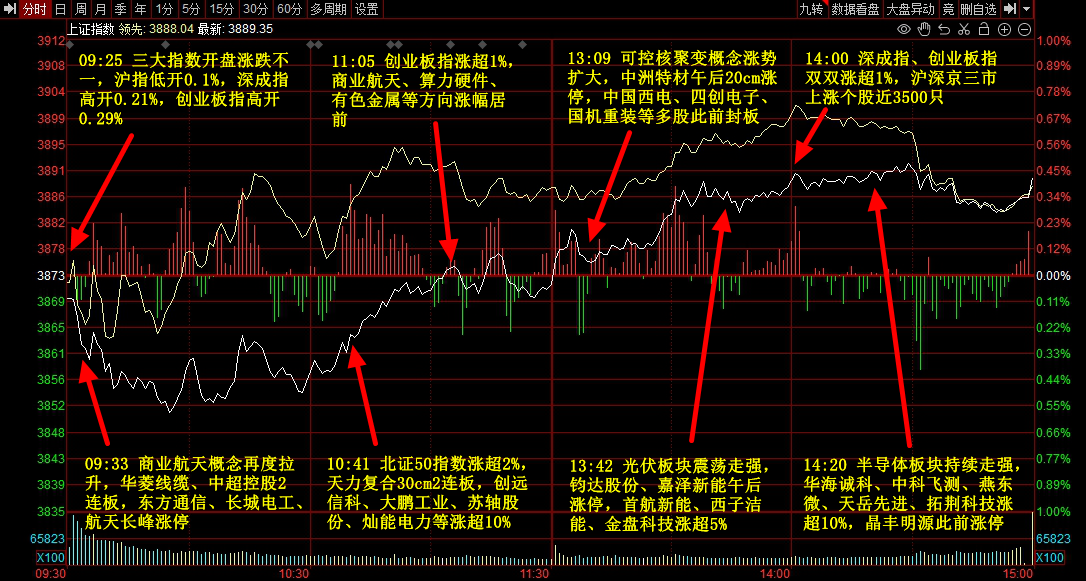
华见早安之声 请各位听众升级为见闻最新版APP,以便成功收听以下音频。 市场概述 上周五,AI担忧加剧压垮美股,纳指收跌近2%、标普跌超1%,全周均转跌,道指跌落纪录高位,全周仍涨超1%、连涨三周;芯片和AI股重挫,英伟达跌 超3%、领跌科技巨头,芯片指数跌超5%,博通业绩电话会后跌11%,传出数据中心延期的甲骨文跌4.5%、财报后两日跌近15%;特斯拉逆市反弹近3%; 大麻股高涨,Canopy Growth涨54%。 长期美债跌,十年期美债收益率逼近三个月高位。美元指数暂别近八周低位,连跌三周;离岸人民币失守7.05、跌离14个月高位、但全周涨超百点;加密货 币齐跌,比特币盘中跌近4%,以太坊一度跌超6%。 黄金连创逾七周新高,盘中涨近2%后曾转跌;银铜创新高后跳水,期银一度跌超5%,伦铜跌3%、全周转跌;原油两连跌、全周回落超4%,美油收创七个 月新低。 亚洲时段,A股探底回升,创业板涨0.97%,可控核聚变、商业航天领涨,电网设备走强,港股高开高走,恒指、恒科指涨超1%,科技股普涨,有色强势。 要闻 中国11月新增社融2.49万亿元,新增人民币贷款3900亿元,M2-M1剪刀差扩大。 何立峰:2026年 ...


Meta (META) Stock Pops Following Metaverse Cuts Announcement – Could it Hit $1,000 In 2026?
Yahoo Finance· 2025-12-14 17:12
Core Viewpoint - Meta Platforms is shifting its focus from the underperforming Metaverse to AI initiatives, which is seen as a positive move by analysts, potentially leading to a significant increase in share price if executed well [1][4][12]. Financial Performance and Projections - Meta's shares could trade closer to $900 per share this year if the company maintains cost discipline and AI continues to enhance business results, with a bullish case suggesting a rise to $1,000 per share by 2026 [1][3][12]. - Currently, Meta is trading between 20X and 30X forward earnings, and a re-rating closer to 30X could lead to higher share prices [3][9][11]. Strategic Shift - The recent acquisition of AI wearable company Limitless indicates a strategic pivot towards AI, reflecting a commitment to redirect resources from the Metaverse to more promising opportunities [1][4][13]. - Analysts have criticized Meta's previous heavy investments in the Metaverse, suggesting that the company has more potential in AI, which could drive better returns [5][10]. Market Reaction - Following the announcement of spending cuts on the Metaverse, Meta's stock experienced a positive reaction, indicating investor approval of the strategic shift [4][11]. - The market's perception of Meta has been affected by high operating costs, but the recent changes may help restore confidence [9][12].
【数字经济资本市场周概览】智慧树港交所主板挂牌上市,飞速创新向港交所递交招股书
GUOTAI HAITONG SECURITIES· 2025-12-14 14:41
Financing Overview - A total of 99 financing events occurred in the tech industry from December 6 to December 12, 2025, with 81 events in China and 18 abroad[9] - The leading sectors in domestic financing were advanced manufacturing (44 events), artificial intelligence (23 events), and automotive transportation (5 events)[9] IPO and Prospectus Submissions - Wisdom Tree was listed on the Hong Kong Stock Exchange on December 8, 2025[12] - Fast Innovation submitted a prospectus for a proposed listing on the Hong Kong main board[14] - National Instrument Quantum and Precision Laser submitted prospectuses for listings on the Shanghai STAR Market[16][19] Market Performance - The Shanghai Composite Index fell by 0.34% to 3889 points, while the Shenzhen Component Index rose by 0.84% to 13258 points, and the ChiNext Index increased by 2.74% to 3194 points[21] - The semiconductor index rose by 2.84%, automotive electronics by 1.82%, artificial intelligence by 0.45%, and the metaverse index by 1.58%[21] Valuation Metrics - The PE ratios for the semiconductor, automotive electronics, artificial intelligence, and metaverse indices were 130.50, 37.94, 72.67, and 51.63, respectively, reflecting week-on-week increases of 2.5%, 1.5%, 0.8%, and 1.7%[25] - The PB ratios for the same indices were 6.34, 3.87, 7.51, and 5.56, with week-on-week increases of 2.5%, 1.4%, 0.9%, and 1.7%[27] Risk Factors - Market competition risk exists due to rapid growth in key sectors like semiconductors and AI, potentially intensifying competition[28] - Risks related to technological advancements not meeting expectations could hinder sector growth[29] - Market demand growth may fall short of expectations, impacting overall sector development[30]
晚报 | 12月15日主题前瞻
Xuan Gu Bao· 2025-12-14 14:38
Film Industry - As of December 13, 2025, China's box office has surpassed 50 billion yuan, an increase of nearly 7.5 billion yuan compared to the entire year of 2024, with 1.194 billion moviegoers, an increase of approximately 184 million compared to 2024 [1] - The animated film "Nezha: Birth of the Demon Child" leads the box office with 15.446 billion yuan [1] - Analysts believe that the high reputation and high screening rate of the imported animated film "Zootopia 2" may help its box office exceed expectations, while the upcoming "Avatar 3: The Way of Fire" is expected to further boost box office performance [1] Brain Science - Brain Tiger Technology announced the completion of the first clinical trial of its fully implanted, wireless brain-computer interface product, which allows a patient with complete paralysis to browse the web and play games [2] - The global brain-computer interface market is projected to reach approximately $2.62 billion in 2024 and $2.94 billion in 2025, with a compound annual growth rate of 17.35% expected to reach $12.4 billion by 2034 [2] Metaverse - The Ministry of Industry and Information Technology is soliciting opinions on the "Metaverse Industry Comprehensive Standardization System Construction Guide (2026 Edition)," aiming to establish over 20 national and industry standards by 2028 [3] - The metaverse is characterized by immersive interconnectivity between digital and physical worlds, with significant growth potential in areas such as XR, AIGC, and blockchain technologies [3] Rural Revitalization - The Ministry of Commerce and other financial authorities issued a notice to enhance collaboration between commerce and finance to boost consumption, particularly in rural areas [4] - The retail sales of consumer goods in rural areas are projected to reach 6.6729 trillion yuan in 2024, growing at a rate of 4.3%, which is faster than urban areas [4] Cannabis - Former President Trump is reportedly pushing for a historic plan to lower the federal regulation level of cannabis to that of common prescription painkillers, marking a significant shift in U.S. federal drug policy [5] Commercial Space - SpaceX is preparing for a potential IPO in 2026, with a target valuation of approximately $1.5 trillion, comparable to Saudi Aramco's record valuation [6] - The rapid expansion of SpaceX's Starlink satellite internet service and ongoing projects like the Starship lunar and Mars missions are key factors driving the IPO [6] Smart Healthcare - The National Medical Insurance Administration plans to advance smart healthcare initiatives by promoting AI development in the medical insurance sector and hosting competitions for AI-assisted diagnosis [7] - The integration of AI in healthcare is expected to accelerate, with significant investments from leading companies in the sector [7]
小扎忍痛,亲口宣告了元宇宙的死亡
猿大侠· 2025-12-14 04:11
Core Viewpoint - Meta is shifting its focus from the metaverse to AI smart glasses, planning to cut 10% to 30% of its Reality Labs workforce after incurring $70 billion in losses over four years [2][4][21]. Group 1: Strategic Shift - Meta is not abandoning its metaverse ambitions but reallocating resources from VR to the more successful AR glasses and wearable devices [7][15]. - The company has seen unexpected success with its AI smart glasses, which have exceeded internal sales expectations [12]. Group 2: Financial Context - Reality Labs has accumulated losses exceeding $70 billion since its inception, prompting a reevaluation of investment strategies [21]. - The competitive landscape has changed, with major players like Apple and Google slowing their VR device developments, allowing Meta to adjust its VR focus [23]. Group 3: Design and Innovation - Meta is enhancing the design and fashion aspects of its smart glasses, appointing former Apple designer Alan Dye to lead a new creative studio [28][30]. - The company aims to integrate technology with thoughtful design to improve user interaction with AI glasses and other devices [30].

上海交大一间宿舍,走出3个百亿宅男
首席商业评论· 2025-12-14 03:49
Core Viewpoint - The article highlights the remarkable journey of miHoYo, a gaming company that evolved from a small startup to the third-largest gaming company in China, with a valuation of 175 billion yuan, focusing on creating a virtual world that can accommodate a billion people by 2030 [7][34]. Group 1: Company Background and Founding - miHoYo was founded by a group of talented students from Shanghai Jiao Tong University, who initially started with a small loan and a passion for gaming and anime [8][10]. - The founders, including Cai Haoyu and Liu Wei, were recognized for their exceptional academic achievements and shared a common interest in the emerging subculture of anime and gaming [10][12]. - The company was officially established in 2011, with a mission to "save the world through technology" [14][15]. Group 2: Early Challenges and Breakthroughs - The initial years were challenging, with the first game, "Fly Me 2 The Moon," receiving only 3,000 downloads, prompting the team to rethink their business model [16][18]. - miHoYo's breakthrough came with the release of "崩坏学园2" (Honkai Academy 2) in 2014, which capitalized on the rise of mobile gaming and the popularity of the Bilibili platform, leading to significant revenue growth [22][24]. - The company focused on creating a successful commercial product while maintaining its unique style, which resulted in "崩坏学园2" generating revenues of 0.95 billion yuan in 2014 and 2.67 billion yuan in 2016 [24][25]. Group 3: Major Successes and Expansion - The launch of "崩坏3" in 2016 marked a significant turning point, with the game achieving over 1 billion yuan in revenue within the first month and eventually surpassing Tencent's "Honor of Kings" in popularity [29][31]. - Following this success, miHoYo invested heavily in the development of "原神" (Genshin Impact), which was released in 2020 and generated over 3 billion USD in its first month, solidifying the company's position in the global gaming market [32][34]. - By 2022, miHoYo had become the third-largest gaming company in China, with revenues of 27.34 billion yuan, primarily driven by "原神" and "崩坏: 星穹铁道" [36][37]. Group 4: Future Aspirations and Innovations - miHoYo aims to create a virtual world that can host a billion users by 2030, expanding its focus beyond gaming to include AI, brain-computer interfaces, and nuclear fusion technologies [39][41]. - The company has established partnerships with institutions like Shanghai Jiao Tong University to develop cutting-edge technologies and has launched new ventures in AI and the metaverse [39][41]. - The upcoming game "Varsapura" is positioned as a key step towards achieving the ambitious goal of creating a more immersive virtual world [43][45].