
现代化产业体系

Search documents
山东成为中国第三个GDP超10万亿元省份
Xin Hua Wang· 2026-01-23 13:54
Economic Growth - Shandong Province's GDP is projected to reach 10.3 trillion yuan by 2025, with a year-on-year growth of 5.5%, making it the third province in China to exceed this milestone after Guangdong and Jiangsu, and the first in Northern China [2] - The total grain output in Shandong is expected to stabilize at over 110 billion jin, with the total output value of agriculture, forestry, animal husbandry, and fishery reaching 1.3 trillion yuan [2] - The industrial added value above designated size is anticipated to grow by 7.6% year-on-year, while the service sector's added value is expected to increase by 6.1% [2] Industrial Development - Shandong is recognized for having the most complete industrial categories and systems in China, with new growth drivers continuously emerging and high-quality development being promoted [4] - Industrial technological transformation investment is projected to grow by 5.3% year-on-year, and the added value of the equipment manufacturing industry is expected to increase by 11.4% [4] - The production of industrial robots, electronic components, and semiconductor discrete devices is experiencing rapid growth, with Shandong leading in the number of smart factories cultivated [4] Trade and Export - The total import and export volume of Shandong is expected to reach 35.303 trillion yuan, marking a growth of 4.5%, which accounts for 7.8% of China's total import and export value [5] - Shandong's contribution to national foreign trade growth is approximately 9.1%, with exports to countries involved in the Belt and Road Initiative growing by around 7% [5] - The province aims to be a promoter of a unified national market domestically and a bridgehead for Northeast Asia and the Belt and Road Initiative internationally [5]

民间投资何以重要
Xin Lang Cai Jing· 2026-01-23 06:32
Group 1 - The central government emphasizes the importance of stimulating private investment and increasing its proportion in the economy, as highlighted in the 20th Central Committee's Fourth Plenary Session and subsequent policy measures [1][3] - Private investment serves as a crucial indicator of economic activity, playing a significant role in stabilizing growth, employment, and expectations [3][4] - Since the reform and opening-up, private investment in China has grown from less than 15% of total investment in 1980 to over 50% in recent years, becoming a vital force in driving economic development [3][4] Group 2 - Private investment is characterized by flexibility, high risk tolerance, and strong innovation awareness, making it a key support for building a modern industrial system [4] - In 2025, private investment in high-tech industries, such as information services and professional technical services, saw year-on-year growth of 26.7% and 17.6% respectively, indicating a shift towards strategic emerging industries [4] - The manufacturing sector accounts for about 40% of total private investment, with significant growth in traditional industries driven by policies promoting intelligent, green, and integrated development [4] Group 3 - Private investment plays a crucial role in job creation, contributing to over 80% of urban employment in China, thus becoming a primary channel for employment [5] - The rise of new economic formats, such as online sales and logistics, has further amplified the employment effects of private investment [5] - In the public management and social security sectors, private investment grew by 31.9% year-on-year in 2025, highlighting its increasing role in meeting the growing needs of the population [5]
亮江苏“硬核家底” 向全球“强力邀约”
Xin Hua Ri Bao· 2026-01-23 05:54
观消费市场,"规模"与"活力"并举。2025年,江苏社会消费品零售总额首次跃居全国第一,8000多万人 口创下4.6万亿元消费规模,体量可比肩德国。这不仅意味着庞大的市场容量,更彰显着活跃的消费升 级与业态创新。国际化消费环境建设等试点任务方面,江苏入选试点的城市数量全国领先,这为外资品 牌提供了进入中国前沿市场的"绝佳入口"。 □ 本报记者 王梦然 黄浦江畔,暖意融融。1月21日,2026年江苏省与外国在华商协会和咨询机构新春恳谈会在上海举行。 这场江苏省级层面新年的对外经贸"首秀",汇聚了美中贸易全国委员会、中国欧盟商会、上海美国商会 等全球主要商协会负责人,以及安永、麦肯锡等顶尖咨询服务机构代表。省商务厅厅长携全省13个设区 市商务负责人,与外资"老友新朋"面对面,展开了一场基于实力与信心的"双向奔赴"。现场,江苏以硬 核数据、鲜活案例和开放承诺,清晰诠释了自己作为外资高质量发展"优选地"的独特魅力;外资代表则 以过往的务实合作与新年的拓展计划,表达了与江苏一同"再出发"的坚定期盼。 "优选地"亮出招牌,与外资共觅机遇 恳谈会上,江苏亮出"硬核家底",向全球发出"强引力"邀约。省商务厅厅长司勇将"苏大强 ...
推动高质量发展不断取得新成效——二论学习习近平总书记在省部级主要领导干部专题研讨班开班式重要讲话精神
Xin Hua Wang· 2026-01-23 02:32
新华社北京1月22日电 题:推动高质量发展不断取得新成效——二论学习习近平总书记在 省部级主要领导干部专题研讨班开班式重要讲话精神 新华社评论员 高质量发展是全面建设社会主义现代化国家的首要任务。习近平总书记日前在省部级主要领 导干部学习贯彻党的二十届四中全会精神专题研讨班开班式上发表的重要讲话,着眼党的二 十届四中全会对"十五五"时期经济社会发展的战略擘画,就抓住工作重点、完成好战略任 务,进一步作出部署、提出要求。我们要自觉把思想和行动统一到总书记重要讲话精神和党 中央决策部署上来,学以致用、知行合一,推动高质量发展不断取得新成效。 回首过去一年,面对国内外经济环境的复杂变化,国民经济运行顶压前行、向新向优,高质 量发展取得新成效,经济社会发展主要目标任务圆满实现,"十四五"胜利收官。回望过去 五年,在以习近平同志为核心的党中央坚强领导下,我们紧紧围绕推动高质量发展这一主 题,深入践行创新、协调、绿色、开放、共享的新发展理念,持续推动质量变革、效率变 革、动力变革,推动中国经济在"量"上接连跨越新关口,在"质"上持续实现新突破。五年 间,新动能积厚成势,新优势不断塑造,高质量发展底气更足、韧性更强、含金量 ...
推动高质量发展不断取得新成效
Xin Hua Wang· 2026-01-23 02:07
现代化产业体系是现代化国家的物质技术基础。建设现代化产业体系、实现产业体系整体跃升,是"十 五五"时期的重要战略任务。推动高质量发展不断取得新成效,必须加快建设以实体经济为支撑的现代 化产业体系,巩固壮大实体经济根基。各地区各部门要找准定位,坚持智能化、绿色化、融合化方向, 发挥比较优势,形成上下游产业相互衔接、各展其长、同向发力的生动局面。先进制造业是现代化产业 体系的骨干。要保持制造业合理比重,大力发展先进制造业。要加快高水平科技自立自强,因地制宜发 展新质生产力,推动科技创新和产业创新深度融合,塑造产业发展新优势。要建设现代化基础设施,强 化基础设施支撑引领作用,为推动高质量发展夯实基础。 新华社评论员 高质量发展是全面建设社会主义现代化国家的首要任务。习近平总书记日前在省部级主要领导干部学习 贯彻党的二十届四中全会精神专题研讨班开班式上发表的重要讲话,着眼党的二十届四中全会对"十五 五"时期经济社会发展的战略擘画,就抓住工作重点、完成好战略任务,进一步作出部署、提出要求。 我们要自觉把思想和行动统一到总书记重要讲话精神和党中央决策部署上来,学以致用、知行合一,推 动高质量发展不断取得新成效。 回首过去 ...
上海松江:去年社会消费品零售总额增长11.8%,增幅居全市第一
Xin Lang Cai Jing· 2026-01-23 01:59
Core Insights - The report highlights the commitment of Shanghai's Songjiang District to high-quality development, focusing on advanced manufacturing, new productivity, modern urban construction, and rural revitalization [1][3] Economic Performance - The district's GDP is expected to grow by 4.3%, with local fiscal revenue reaching 20.879 billion, a 2.1% increase year-on-year [3] - Industrial output is projected at 376.703 billion, while service sector revenue is expected to rise by 25.3% to 104.5 billion [3] - The total import and export volume is anticipated to reach 273.96 billion, reflecting a 4.5% year-on-year growth [3] - Retail sales are expected to increase by 18% and 11.8% for total commodity sales and social consumer goods, respectively, both leading the city [3] New Growth Drivers - R&D expenditure is projected to account for 6.39% of GDP, surpassing the city average [3] - Strategic emerging industries like smart terminals and life health are expected to see double-digit growth, with software and information services growing by 88.6% [3] - The district aims to add 21 "little giant" enterprises and 11 foreign-funded R&D centers [3] Infrastructure and Urban Development - 70 key industrial projects are set to commence, with 85 expected to be completed [4] - The district is developing a "2+4" industrial system, focusing on two leading industries and four hundred billion-level characteristic industries [4] - Urban construction initiatives include enhancing city space quality and accelerating key area functionality [6] Social Welfare and Governance - The average disposable income for residents is expected to grow by 4.2% [3] - The district has completed 24 public service projects and has been recognized as a "National Civilized City" [3] - Social governance improvements include a 93% online service completion rate and the introduction of 135 reform measures to enhance the business environment [6][8] Future Goals - For 2026, the district aims for a GDP growth of around 4.5% and a fiscal revenue increase of 1.5% [8] - The focus will be on expanding effective demand, promoting industrial upgrades, enhancing regional innovation, and improving urban governance [8]
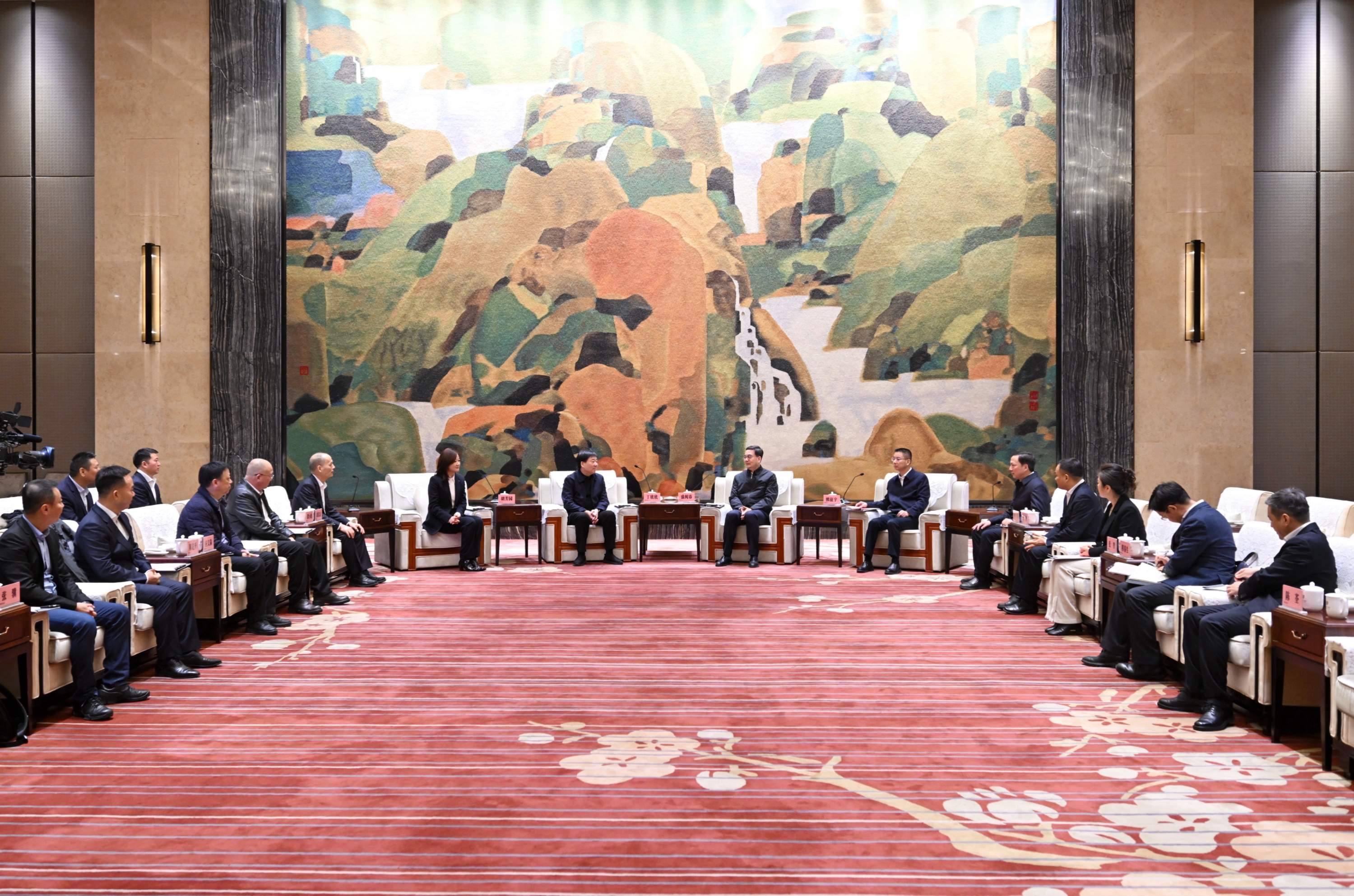
盛阅春熊征宇会见亚厦控股董事长丁欣欣等企业家
Chang Jiang Ri Bao· 2026-01-23 00:30
1月22日,省委常委、市委书记盛阅春,市委副书记、市长熊征宇会见亚厦控股有限公司董事长、总裁丁欣欣,恒太商业管理集团有 限公司董事长、总裁胡芳园,浙江德塔森特数据技术有限公司董事长谭小敢等企业家一行。 编辑:胡之澜 盛阅春对各位企业家来汉考察交流表示欢迎。他说,近年来,武汉城市发展地位上升、定位拓展、机遇叠加,"大战略+高科技+好保 障+低成本+广市场+优配套"综合优势更加凸显,高质量发展呈现生机勃勃的良好态势。当前,我们正深入学习贯彻党的二十届四中全会精 神和习近平总书记考察湖北重要讲话精神,认真落实省委、省政府部署要求,大力实施城市更新,推动科技创新和产业创新深度融合,构 建现代化产业体系,加快建设国家中心城市,全力打造"五个中心",全面建设现代化大武汉。希望大家坚定看好武汉、持续投资武汉,在 汉布局更多优质项目,积极参与武汉城市更新、科技创新、产业发展,助力武汉经济社会高质量发展。我们将坚持"无事不扰,有求必 应",为广大企业在汉发展提供优质服务、创造良好条件。 企业家们表示,武汉营商环境优越、人才资源丰富、市场潜力巨大,是企业投资兴业的热土。将积极投资武汉、建设武汉、融入武 汉,在汉设立更多研发中心、 ...
2026年江苏省与外国在华商协会和咨询机构新春恳谈会在上海举行亮江苏“硬核家底” 向全球“强力邀约”
Xin Hua Ri Bao· 2026-01-23 00:07
Core Viewpoint - Jiangsu Province is positioning itself as a prime destination for foreign investment, showcasing its economic strengths and commitment to high-quality development through a recent New Year meeting with global business associations and consulting firms [1][2]. Group 1: Economic Strengths - Jiangsu's retail sales reached 4.6 trillion yuan in 2025, making it the largest consumer market in China, comparable to Germany, indicating significant market capacity and active consumption upgrades [2]. - The province's total import and export volume was 5.95 trillion yuan, with a growth rate of 6%, supported by strong industrial chains, exemplified by the 97% completeness of the supply chain in the new energy vehicle sector [2]. - Jiangsu has been selected as a leading pilot for international consumption environment construction, providing an excellent entry point for foreign brands into the Chinese market [2]. Group 2: Talent and Innovation - With 175 universities and 272 million students, Jiangsu has a vast talent pool, attracting 531 foreign R&D centers, the highest in the country [3]. - Foreign companies in Jiangsu are engaging in deep collaborations with local universities, facilitating the transformation of innovative ideas into market results [3]. Group 3: Business Environment - Jiangsu has maintained the highest actual foreign investment scale in China for eight consecutive years, with 220,000 new enterprises established in 2025 [3][8]. - The province has implemented a legal framework and service system to ensure a predictable and trustworthy business environment for foreign investors [3][8]. Group 4: Foreign Investment Trends - Foreign investment in Jiangsu is evolving from traditional manufacturing to deep integration and innovation, with significant investments from companies like Microsoft and Roche [4][6]. - Jiangsu is becoming a critical hub in the global innovation landscape, with a substantial portion of Apple's and Tesla's supply chains located in the province [4][6]. Group 5: Future Outlook - Jiangsu is committed to deepening openness and sharing opportunities with foreign investors, outlining six long-term advantages including innovation ecosystems and favorable policies [7]. - The province is actively working on policies to ensure a supportive environment for foreign investment, including tax incentives and dedicated service teams [8].
发挥比较优势 构建现代化产业体系强县富民
Xin Lang Cai Jing· 2026-01-22 22:14
深化改革开放,充分激发市场活力动力。充分发挥贵州贞丰经济开发区和贞丰文旅试验区的平台优势, 推进"管委会+运营公司"体制机制改革,优化功能布局、深化功能定位,加快转型升级发展。纵深推 进"五个通办""联合踏勘""无感续证"等改革,全力打造"企业之家"。大力开展"投资贞丰·我家有矿"招商 宣传推介,强化招商引资要素保障,全面提升服务能力和水平,不断擦亮"贞心贞意·贵人服务"品牌。 加快城乡融合,奋力推进乡村全面振兴。抢抓贞丰列入省级城市更新编制试点县机遇,加快推进城市体 检,深入实施县城更新行动,大力推进"三镇同城"建设,推动城乡资源优势互补、优质均衡。健全落实 兜底式帮扶保障和产业帮扶政策,强化开发式帮扶,守牢不发生规模性返贫底线。有序推进农村人居环 境整治,加快建设宜居宜业和美乡村。 增进民生福祉,不断提高群众生活品质。深入实施城乡居民增收计划,建好用好创业孵化基地、零工市 场、人力资源市场等平台,加快推进教育、医疗等民生领域项目谋划实施,统筹推进易地扶贫搬迁安置 区五个体系、"一老一小"服务体系建设,持续扩大社会保险参保覆盖面,让发展成果更多更公平惠及群 众,不断增强群众获得感和幸福感。 转自:贵州日报 ...
宿迁新材料产业晋级千亿方阵
Xin Hua Ri Bao· 2026-01-22 22:03
Group 1 - The core objective of Suqian City is to accelerate the growth of its advantageous industries, targeting a total output value of over 520 billion yuan from six industrial clusters by 2025, with the new materials industry becoming the third trillion-yuan industrial cluster after new energy and high-end textiles [1] - Suqian City will implement the "New Round of Trillion-Level Industry Attack Three-Year Action Plan (2025-2027)" focusing on strengthening, supplementing, and extending the industrial chain to develop the new materials industry cluster, with 72 key projects including green platinum nano materials [1] - The city aims to enhance its manufacturing sector by optimizing financial, land, and talent resources, achieving the third-highest growth rate in manufacturing loans in the province, thereby providing solid support for the quality and efficiency of the industrial cluster [1] Group 2 - In 2026, Suqian plans to strengthen its "619" advanced manufacturing system, targeting an industrial output value exceeding 560 billion yuan, with all six industrial clusters achieving over 100 billion yuan and 19 industrial chains exceeding 10 billion yuan [2] - The new materials industry is expected to focus on high-end and differentiated markets, aiming for an output value of 110 billion yuan, while mature trillion-yuan clusters like new energy and high-end textiles will consolidate their advantages through smart transformation initiatives [2] - The city is set to build a modern industrial system that supports multi-polar and collaborative development, accelerating the establishment of a technology-driven digital manufacturing base in the Yangtze River Delta [2]