
自由现金流

Search documents
节前市场仍然偏成长,不含金融地产的自由现金流ETF基金(159233)备受关注
Xin Lang Cai Jing· 2025-09-29 05:39
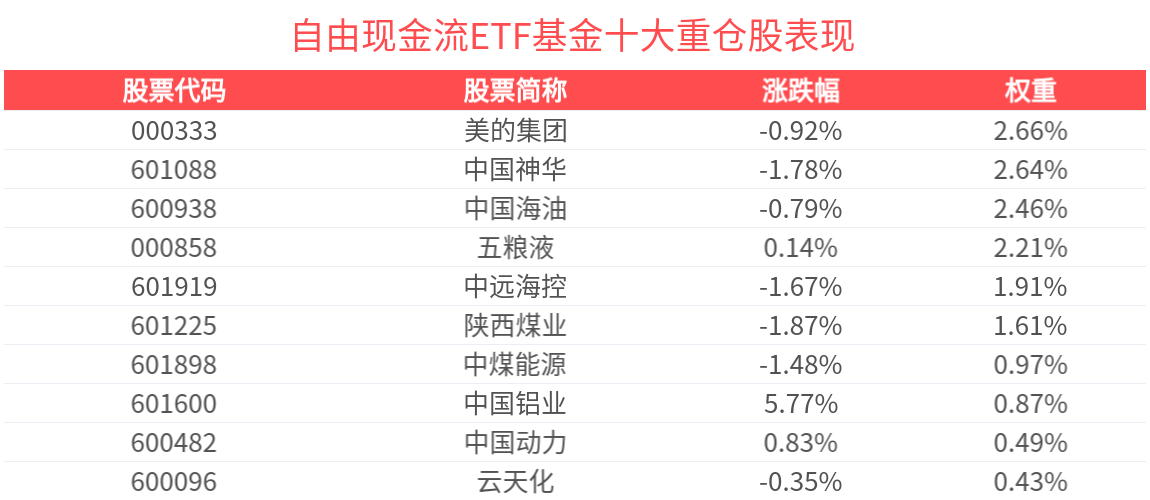
Core Viewpoint - The performance of the CSI All Share Free Cash Flow Index and its related ETF reflects mixed results among constituent stocks, with notable gains and losses observed in specific companies, indicating a volatile market environment [1][2]. Group 1: Index Performance - As of September 29, 2025, the CSI All Share Free Cash Flow Index (932365) decreased by 0.01% [1]. - The index's constituent stocks showed varied performance, with Xinyi Silver (000426) leading gains at 9.89%, while Jihong Co. (002803) experienced the largest decline at 9.75% [1]. - The Free Cash Flow ETF (159233) has seen a recent price of 1.11 yuan, with a cumulative increase of 11.41% over the past three months as of September 26, 2025 [1]. Group 2: Fund Liquidity and Scale - The Free Cash Flow ETF recorded a turnover rate of 2.96% during trading, with a total transaction volume of 6.9722 million yuan [1]. - The fund's total scale reached 236 million yuan, marking a recent one-month high [1]. - The number of shares for the Free Cash Flow ETF reached 213 million, also a recent one-month high [1]. Group 3: Fund Inflows and Returns - Over the past 20 days, the Free Cash Flow ETF has experienced continuous net inflows, with a peak single-day net inflow of 19.1927 million yuan, totaling 138 million yuan in net inflows [1]. - Since its inception, the Free Cash Flow ETF has achieved a maximum monthly return of 7.80% and a longest consecutive monthly gain of 3 months, with an average monthly return of 4.07% [2]. Group 4: Drawdown and Fees - The maximum drawdown for the Free Cash Flow ETF since inception is 3.76%, with a relative benchmark drawdown of 0.24% [3]. - The management fee for the Free Cash Flow ETF is set at 0.50%, while the custody fee is 0.10% [3]. - The tracking error for the Free Cash Flow ETF over the past month is 0.066%, indicating close tracking of the CSI All Share Free Cash Flow Index [3]. Group 5: Top Holdings - As of August 29, 2025, the top ten weighted stocks in the CSI All Share Free Cash Flow Index accounted for 57.03% of the index, with notable companies including China National Offshore Oil (600938) and Wuliangye (000858) [3].

分红能力盘点:消费制造篇:自由现金流资产系列14
Huachuang Securities· 2025-09-28 11:48
Traditional Dividend Assets - White appliances' cash flow ratio decreased to 26% in Q2 2025, primarily due to increased allocation of financial assets impacting cash flow space[11] - The cash flow ratio for liquor reached 55% in Q2 2025, with a reduction in the allocation of financial assets compared to previous quarters[19] Cash Flow Improvement Assets - Black appliances' cash flow ratio was 24% in Q2 2025, with capital expenditure reduced to a historical low of 0.7, indicating a potential shift to a new high expenditure cycle[24] - Lighting equipment's cash flow ratio improved to 31% in Q2 2025, as financial asset allocation decreased, allowing cash flow to return to positive[33] - Beauty care's cash flow ratio was 47% in Q2 2025, driven by reduced capital expenditure, which fell to a historical low of 1.4[39] Stable Cash Flow Assets - Textile manufacturing maintained a cash flow ratio of 21% in Q2 2025, with stable cash flow generation since 2022[47] - The apparel and home textile sector achieved a cash flow ratio of 52% in Q2 2025, entering a phase of stable cash flow generation due to reduced capital expenditure[51] Assets Under Pressure - Traditional Chinese medicine and beverage sectors are under pressure, with profitability not showing signs of improvement, particularly in the context of centralized procurement affecting traditional Chinese medicine[3] - The non-liquor beverage sector, including beer and wine, continues to face challenges, with profitability remaining under pressure[3]
同类规模最大的自由现金流ETF(159201)逆势上行,底仓配置价值凸显
Sou Hu Cai Jing· 2025-09-26 03:48
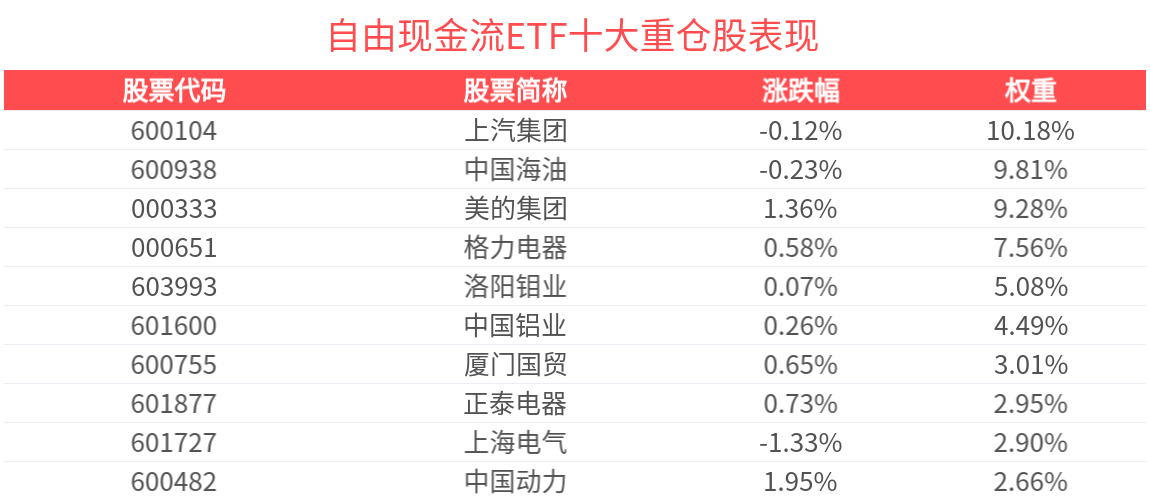
Core Insights - The Guozheng Free Cash Flow Index has increased by 0.24%, with leading stocks including Ningbo Huaxiang, Wo Le Home, and others [1] - The Free Cash Flow ETF (159201) has risen by 0.27%, with a latest price of 1.11 yuan [1] - The ETF has seen significant liquidity, with a turnover of 4.08% and a transaction volume of 182 million yuan [1] - Over the past 23 trading days, there have been net inflows on 14 days, totaling 189 million yuan [1] - The ETF's share volume has increased by 35.6 million shares over the past three months [1] - The ETF has a management fee of 0.15% and a custody fee of 0.05%, the lowest among comparable funds [2] - The tracking error for the ETF over the past two months is 0.055%, the highest tracking precision among comparable funds [2] Performance Metrics - Since its inception, the ETF has achieved a maximum monthly return of 7% and a longest consecutive monthly gain of 4 months [1] - The longest cumulative gain has been 16.68%, with a monthly profit percentage of 83.33% and a monthly profit probability of 80.3% [1] - The ETF has outperformed its benchmark with an annualized return of 8.76% over the last three months [1] Top Holdings - The top ten weighted stocks in the Guozheng Free Cash Flow Index account for 57.95% of the index, including SAIC Motor, China National Offshore Oil, and Midea Group [2] - The weightings of the top stocks are as follows: SAIC Motor (10.18%), Midea Group (9.28%), and Gree Electric (7.56%) [4]
石化、农林牧渔涨幅居前,自由现金流ETF(159233)投资机会受关注
Xin Lang Cai Jing· 2025-09-26 03:45
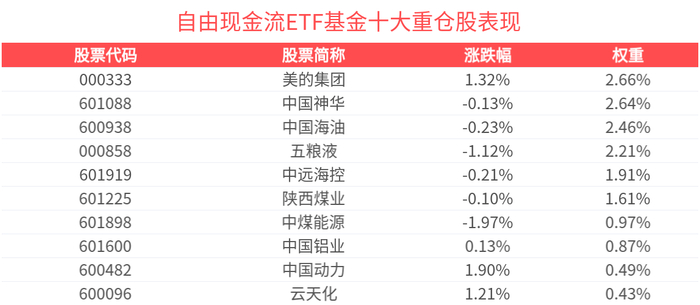
Core Viewpoint - The report highlights the performance and metrics of the Free Cash Flow ETF Fund, indicating a positive trend in both fund inflows and returns, alongside a strong tracking accuracy of the underlying index. Group 1: Fund Performance - As of September 26, 2025, the Free Cash Flow ETF Fund has seen a recent increase of 0.27% over the past week, ranking 1 out of 13 comparable funds [1] - The fund's latest scale reached 228 million yuan, marking a new high in the past month [1] - The fund has experienced continuous net inflows over the past 19 days, totaling 130 million yuan, with a peak single-day inflow of 19.19 million yuan [2] Group 2: Return Metrics - Since its inception, the fund's highest monthly return was 7.80%, with the longest consecutive months of gains being 3, and the maximum gain during this period was 12.56% [2] - The average return for months with gains is 4.07%, with a 100% probability of profit in those months and a 91.30% probability of profitability [2] - The maximum drawdown since inception is 3.76%, with a relative benchmark drawdown of 0.24% [2] Group 3: Fund Fees and Tracking Accuracy - The management fee for the Free Cash Flow ETF Fund is 0.50%, while the custody fee is 0.10% [3] - The fund has a tracking error of 0.066% over the past month, closely following the CSI All Index Free Cash Flow Index [4] Group 4: Index Composition - The CSI All Index Free Cash Flow Index includes 100 high free cash flow rate listed companies, with the top ten weighted stocks accounting for 57.03% of the index [4] - The top ten stocks in the index include China National Offshore Oil Corporation, Wuliangye, and China Southern Airlines, among others [4]
盘中速递 | 自由现金流ETF(159201)成交额超2.5亿元,海信视像涨停
Mei Ri Jing Ji Xin Wen· 2025-09-24 08:21
Group 1 - The A-share market showed upward movement on September 24, with the National Index of Free Cash Flow experiencing a slight decline of approximately 0.2% after opening lower [1] - Notable stocks included Hisense Visual, which hit the daily limit, and others like Taiji Industry, Anfu Technology, Shanghai Electric, and Yaxiang Integration, which saw gains exceeding 5% [1] - The largest free cash flow ETF (159201) recorded a trading volume surpassing 250 million yuan, indicating active trading [1] Group 2 - Huachuang Securities suggests that in the era of a stock economy, companies are shifting focus from scale to profitability and cash flow, with long-term excellent free cash flow potentially translating into shareholder returns [1] - The strategy for constructing a high free cash flow return portfolio emphasizes "high free cash flow returns" combined with "low investment and high profit distribution to shareholders," which tends to perform better in declining or volatile markets [1] - The free cash flow ETF (159201) targets industry leaders with abundant free cash flow, covering sectors such as home appliances, automotive, non-ferrous metals, power equipment, and petrochemicals, effectively mitigating risks associated with single industry fluctuations [1] - The fund management annual fee is set at 0.15%, and the custody annual fee at 0.05%, both representing the lowest fee levels in the market [1]

家电行业涨幅接近1%,自由现金流ETF(159233)的投资机会受关注
Xin Lang Cai Jing· 2025-09-24 06:15
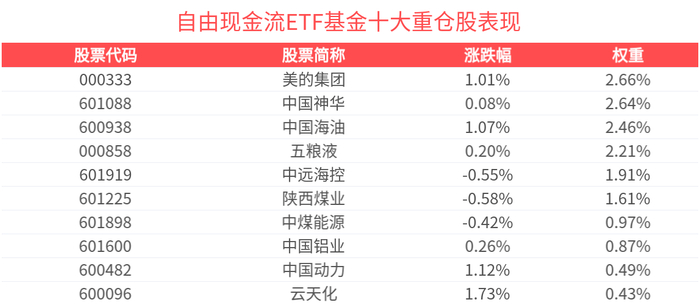
Core Viewpoint - The performance of the CSI All Share Free Cash Flow Index and its related ETF has shown positive trends, indicating strong cash flow generation capabilities among the constituent companies. Group 1: Index Performance - As of September 24, 2025, the CSI All Share Free Cash Flow Index rose by 0.67%, with notable increases in constituent stocks such as Anfu Technology (up 6.19%) and Yaxiang Integration (up 5.06%) [1] - Over the past three months, the Free Cash Flow ETF has accumulated a return of 11.56% [1] - The Free Cash Flow ETF experienced a turnover rate of 4.72% with a total transaction volume of 10.14 million yuan [1] Group 2: Fund Inflows and Returns - The Free Cash Flow ETF has seen continuous net inflows over the past 17 days, with a peak single-day inflow of 19.19 million yuan, totaling 118 million yuan in net inflows [1] - Since its inception, the Free Cash Flow ETF has achieved a maximum monthly return of 7.80% and a longest consecutive monthly gain of 12.56% [2] - The fund has a historical monthly profit probability of 92.54% and a maximum drawdown of 3.76% since inception [2] Group 3: Index Composition - As of August 29, 2025, the top ten weighted stocks in the CSI All Share Free Cash Flow Index accounted for 57.03% of the index, including China National Offshore Oil Corporation and Wuliangye [3] - The top ten stocks include major companies such as Gree Electric Appliances and Muyuan Foods, reflecting a diverse range of sectors [3] Group 4: Stock Performance - The Free Cash Flow ETF includes various stocks with different weightings, such as Midea Group (2.66%) and China Shenhua (2.64%), indicating a balanced portfolio [5]
现金流ETF(159399)盘中净流入4500万份,资金积极布局,关注震荡市中现金流防御价值
Mei Ri Jing Ji Xin Wen· 2025-09-23 07:11
Core Insights - The cash flow ETF (159399) has seen a real-time net inflow of 45 million units, indicating strong demand for cash flow assets [1] - Huachuang Securities highlights a shift in the economy from scale pursuit to profit and cash flow, suggesting that companies with high free cash flow will eventually provide returns to shareholders [1] - The high free cash flow return strategy has shown better performance in declining or volatile markets [1] Investment Opportunities - Investors are encouraged to pay attention to the cash flow ETF (159399), which has outperformed the CSI Dividend Index and the CSI 300 Index for nine consecutive years from 2016 to 2024 [1] - The underlying index of the cash flow ETF focuses on large and mid-cap stocks, with a higher proportion of central state-owned enterprises compared to similar cash flow indices [1] - The ETF has consistently paid dividends for seven months since its launch, making it an attractive option for investors [1] Alternative Options - For investors without stock accounts, they can consider the Guotai FTSE China A-Share Free Cash Flow Focused ETF Initiated Link A (023919) and the Guotai FTSE China A-Share Free Cash Flow Focused ETF Initiated Link C (023920) [1]
招商中证800自由现金流ETF今日起发售
Zheng Quan Shi Bao Wang· 2025-09-23 01:28
Group 1 - The招商中证800自由现金流ETF (159119) will be launched from September 23, 2025, to October 29, 2025, with a cash fundraising cap of 2 billion yuan [1] - The fund will be managed by 招商基金, with 侯昊 serving as the fund manager [1] - The performance benchmark for the fund is the 中证800自由现金流指数收益率 [1]
EPHE: One Of The World's Cheapest Markets Looks Attractive
Seeking Alpha· 2025-09-22 22:27
Philipp is a seasoned value investor with nearly 20 years of experience in the field. He takes a global approach to investment opportunities, seeking out undervalued companies that offer a significant margin of safety, leading to attractive dividend yields and returns. While he does not limit his investments to specific sectors or countries, he focuses only on companies he thoroughly understands and can reasonably assess for future growth potential. Philipp is particularly enthusiastic when he identifies a ...

同类规模最大的自由现金流ETF(159201)震荡调整,迎低位布局机会
Mei Ri Jing Ji Xin Wen· 2025-09-22 16:55
Group 1 - The A-share market experienced slight fluctuations after a small opening, with the Guozheng Free Cash Flow Index declining approximately 0.85% [1] - Major stocks such as Lianxu Electronics, Dayang Electric, and Debang Co. led the gains, while Shanghai Construction, Xuefeng Technology, and Shoulv Hotel faced declines [1] - The largest free cash flow ETF (159201) followed the index's fluctuations, presenting low-position investment opportunities [1] Group 2 - Goldman Sachs indicated that the current rally in the Chinese stock market (including A-shares and Hong Kong stocks) is based on a healthier foundation and is sustainable due to three main reasons: optimized market participant structure, reasonable valuation levels, and a lower margin balance relative to market value compared to 2015 [1] - Goldman Sachs is particularly focused on "anti-involution" policies and AI-related investment opportunities, which are expected to provide continuous growth momentum for the Chinese stock market [1] Group 3 - The free cash flow ETF (159201) focuses on industry leaders with abundant free cash flow, covering sectors such as automotive, home appliances, non-ferrous metals, power equipment, and oil and petrochemicals, effectively mitigating single industry volatility risks [1] - The fund management annual fee rate is 0.15%, and the custody annual fee rate is 0.05%, both of which are the lowest in the market [1]