数字技术

Search documents
专访经合组织农贸司司长:数字技术推动农业贸易可持续发展
2 1 Shi Ji Jing Ji Bao Dao· 2025-09-15 11:22
Core Insights - The 2025 China International Service Trade Fair is themed "Digital Intelligence Leading, Service Trade Renewed," focusing on new trends in service trade development [1] - Marion Jensen from OECD emphasizes the importance of agricultural trade for future food markets, highlighting the need for open agricultural markets to ensure global food security [2] Group 1: Agricultural Market Trends - Agricultural trade remains crucial for future agricultural markets, with production growth in some regions but not in high-population areas like Africa [2] - Maintaining open agricultural markets is essential to ensure global food security amid varying production rates [2] Group 2: Challenges in Agricultural Supply Chains - A significant challenge in agriculture is that productivity growth is not keeping pace with demand, necessitating higher productivity to feed the global population [3] - Ensuring smooth supply chains is critical for transporting agricultural products to where they are needed, avoiding disruptions in the supply chain [3] Group 3: Role of Trade Agreements - Trade agreements like the Regional Comprehensive Economic Partnership (RCEP) are important for promoting agricultural and food markets, enhancing cross-border cooperation [4] Group 4: Impact of Digital Technology - Digital technology plays a vital role in improving productivity and facilitating agricultural trade, which is essential for meeting growing demand and ensuring sustainable trade [5] - Digitalization is crucial for reducing costs associated with border checks and promoting paperless trade, enhancing the efficiency of agricultural food trade [5] Group 5: Cooperation with China - OECD has a close collaboration with China in service trade, particularly in measuring trade barriers and promoting digital trade, with expectations for continued cooperation [6]
调研速递|湖北富邦科技接受民生证券等2家机构调研 上半年营收6.85亿元
Xin Lang Cai Jing· 2025-09-15 11:02
Core Viewpoint - Hubei Fubon Technology Co., Ltd. reported a revenue growth of 6.50% in the first half of 2025, driven by strong performance in its modern agriculture business, and is focusing on integrating biological and digital technologies to enhance agricultural modernization [2][4]. Financial Performance - In the first half of 2025, the company achieved a revenue of 684.60 million yuan, an increase of 6.50% year-on-year [2] - Domestic revenue was 365.06 million yuan, up 5.10%, accounting for 53.32% of total revenue [2] - International revenue reached 319.54 million yuan, growing by 8.16%, making up 46.68% of total revenue [2] - Net profit attributable to shareholders was 61.22 million yuan, with net assets of 1.47 billion yuan, reflecting a year-on-year increase of 9.53% [2] R&D and Innovation - The company has established a comprehensive R&D innovation mechanism, maintaining investment in R&D to accelerate industrialization through demonstration verification and business model innovation [3] - In the modern agriculture sector, the company is developing a strain resource library, efficient fermentation processes, and field application technology [3] - Collaborations with academic institutions are ongoing to advance key projects in nitrogen fixation and nematode control [3][5] Strategic Layout - The company aims to empower global agriculture through biological and digital technologies, focusing on a dual-driven approach for agricultural modernization [4] - The biological agriculture sector is centered on four product areas, establishing a full-chain R&D system to promote large-scale application of products [4] - The digital agriculture sector emphasizes data-driven and intelligent decision-making, providing comprehensive products and services for precision agriculture [4] Agricultural Microbial Technology - The company collaborates with various agricultural universities and research centers to build a collaborative innovation system [5] - It utilizes laboratory platforms to screen nitrogen-fixing strains and jointly develops process innovations [5] Digital Agriculture Solutions - The company has launched digital agriculture solutions that integrate biological and digital technologies, focusing on cost reduction and yield increase [6] - A press conference is scheduled for March 2025 to unveil the "Agricultural Doctor" green agriculture brand [6] Auxiliary Business Development - The company is committed to developing efficient and environmentally friendly auxiliary products for fertilizers, collaborating with OCP Group on advanced project research [7] - A comprehensive solution for heavy metal remediation has completed small-scale customer testing and is moving towards industrial experimentation [7] AI Technology Application - The company is introducing advanced agricultural smart devices, particularly in digital soil testing and fertilization [8] - Projects include soil detection and big data, precision irrigation, and yield estimation using AI to enhance planting chain efficiency [8]

富邦科技(300387) - 300387富邦科技投资者关系管理信息20250915
2025-09-15 10:14
Financial Performance - In the first half of 2025, the company achieved a revenue of 684.60 million CNY, a year-on-year increase of 6.50% [2] - Domestic revenue was 365.06 million CNY, up 5.10%, accounting for 53.32% of total revenue; overseas revenue was 319.54 million CNY, up 8.16%, accounting for 46.68% [2] - Net profit attributable to shareholders was 61.22 million CNY, with net assets of 1,470.95 million CNY, a year-on-year increase of 9.53% [2] - The modern agriculture business generated a revenue of 122.37 million CNY, with a growth rate of 13.31% [3] Research and Development - The company has established a robust R&D innovation mechanism to ensure continuous investment in core technologies [3] - Collaborations with top research institutions focus on key technologies, including nitrogen-fixing and nematode control [3] - The company is developing a complete chain from laboratory research to field demonstration in modern agriculture [3] Product Development and Market Strategy - The "Tian Sheng Dan" series products are undergoing market promotion through demonstration experiments across multiple provinces, covering over 10 crop types [4] - The company launched the "Million Mu Technology Assistance Project" to apply advanced agricultural technologies in practice [4] - Future strategies include a focus on "biotechnology + digital technology" to drive global agricultural modernization [5] Digital Agriculture Solutions - The digital agriculture segment emphasizes data-driven and intelligent decision-making, exploring areas like agricultural big data and IoT [5] - The company aims to provide comprehensive solutions from planting planning to harvest, enhancing efficiency in large-scale agricultural operations [7] - AI technologies are being integrated into soil testing, irrigation management, and yield estimation to optimize agricultural practices [9] Collaborations and Innovations - Partnerships with institutions like China Agricultural University and Huazhong Agricultural University enhance the company's R&D capabilities [6] - The company is actively developing new multifunctional additives and has achieved international recognition for its heavy metal remediation technology [8]
数智赋能构建服务贸易新优势
Jing Ji Ri Bao· 2025-09-14 22:35
Core Viewpoint - The development of service trade in the era of digital intelligence is crucial for countering the downward pressure on goods trade in the short term and gaining competitive advantages in international competition and rule-making in the long term [1][2]. Group 1: Current Trends and Developments - The 2025 China International Service Trade Fair, held from September 10 to 14, focuses on "Digital Intelligence Leading, Service Trade Renewed," reflecting the latest trends in service trade development [1]. - The World Trade Organization projects a 4% growth in global service exports this year, significantly higher than the 0.9% expected growth in goods trade [1]. - Knowledge-intensive service exports from China increased by 6.8% in the first seven months of this year, supported by advancements in artificial intelligence and digital technologies [1]. Group 2: Advantages in Digital Empowerment - China has established a strong foundation for service trade through advanced digital technologies, ranking second globally in artificial intelligence innovation capability, just behind the United States [2]. - The country leads in the development of 5G/6G technologies and international standards, positioning itself in the first tier globally [2]. - China possesses the largest digital service consumption market, providing a "testing ground" for replicable and competitive service models [2]. Group 3: Policy Support and Strategic Initiatives - Central government policies, such as the "Opinions on Digital Trade Reform and Innovation Development," support the enhancement of digital infrastructure and the promotion of digital product exports [2]. - Local initiatives include the establishment of pilot programs and digital service export bases to create "pioneering areas" for digital service trade [2]. Group 4: Future Directions for Development - There is a need to deepen institutional openness in service trade, particularly in artificial intelligence and digital technology sectors, by reducing negative list items and streamlining foreign investment approval processes [3]. - Investment in digital infrastructure, such as cross-border communication and smart logistics, is essential to enhance connectivity [3]. - Active participation in the formulation of service trade rules at bilateral and multilateral levels is crucial for advancing digital trade agreements [3]. Group 5: Talent and Financial Support - Strengthening the training and mobility of specialized talent in service trade and digital technologies is vital for fostering a skilled workforce [4]. - Establishing a robust financial support system for digital service trade and optimizing cross-border fund management will facilitate growth [4]. - Developing efficient mechanisms for the orderly cross-border flow of data is necessary to support digital service trade [4].
焦点访谈|数字技术全面赋能服贸行业,将如何影响你我?
Yang Shi Wang· 2025-09-14 13:37
Core Viewpoint - The 2025 China International Service Trade Fair, held in Beijing, attracted nearly 2,000 domestic and foreign enterprises, showcasing the resilience and innovation in the service trade sector amidst rising global trade protectionism [1][3]. Group 1: Event Overview - The theme of this year's fair is "Digital Intelligence Leading, Service Trade Renewed," focusing on innovations and developments driven by digitalization and intelligence [1]. - The event featured six types of activities, including global service trade summits, exhibitions, forums, negotiations, and product launches, with participation from nearly 500 Fortune 500 companies and industry leaders [3][4]. Group 2: Impact of AI and Digital Technologies - AI and digital technologies are significantly empowering the service trade industry, enhancing various sectors such as education and cross-border trade [3][4]. - For example, AI-driven applications are helping small and medium enterprises streamline processes from account opening to operations, enabling faster integration and compliance across different countries [4][6]. Group 3: Service Trade Growth Statistics - In the first half of this year, China's service import and export totaled 3.9 trillion yuan, a year-on-year increase of 8%, with service exports reaching 1.7 trillion yuan, growing by 15% [8]. - Since 2012, China's service import and export annual growth rate has averaged 6.7%, with the proportion of knowledge-intensive service exports increasing from 38.5% to 52.2% [8]. Group 4: Innovations in Healthcare Services - The fair showcased a public medical service platform that integrates multiple healthcare institutions and research organizations, developing innovative products to address healthcare challenges [11][13]. - AI technologies are being utilized to enhance the capabilities of grassroots medical institutions, improving the efficiency and accuracy of medical screenings [14][16]. Group 5: Forum and Discussion Highlights - The fair hosted nearly 180 forums, featuring high-profile guests, including ministers and international organization leaders, discussing issues related to service trade standards and international cooperation [16]. - Key forums included the "Ninth China Service Trade Standardization Forum" and the "Xiong'an New Area Digital Trade Innovation Development Conference," focusing on international collaboration and compliance challenges [16]. Group 6: Future Directions - The fair emphasized the importance of friendly exchanges and cooperation for the healthy development of service trade, alongside strengthening internal capabilities to enhance competitiveness [18]. - China aims to contribute to global economic growth and service trade through high-level openness and innovative cooperation strategies [18].

东软盖龙佳出席新加坡亚洲愿景论坛 探讨全球医疗产业趋势
Sou Hu Cai Jing· 2025-09-14 10:26
Group 1: Company Overview - Neusoft has over 30 years of experience in the healthcare sector, being the leading provider of digital health solutions in China with the highest market share [3] - The company has developed a comprehensive industrial ecosystem covering medical insurance, smart healthcare, big data and AI in healthcare, medical equipment manufacturing, cloud hospitals, and health education [3] - Neusoft is the manufacturer of China's first CT scanner, with over 14,000 hospitals in more than 110 countries using its medical equipment, totaling over 50,000 installations [3] Group 2: Innovations and Solutions - Neusoft launched China's first photon-counting CT in August 2025, which is also the world's first 8cm wide photon-counting CT, marking a significant breakthrough in China's high-end medical equipment industry [3] - The integration of digital technology and healthcare is becoming a core driver of industry transformation, with data value realization in areas like elderly care and employment being crucial for high-quality national development [5] - Neusoft has introduced the "Tianyi" intelligent solution in the healthcare sector, successfully implemented in multiple hospitals, focusing on data value extraction from social security, medical insurance, and healthcare data [5] Group 3: Future Challenges and Goals - The core challenge for the healthcare system in the next five years is achieving more precise and balanced allocation of medical resources [6] - Neusoft aims to leverage AI and big data to enhance hospital operations, disease diagnosis, treatment, and health management, thereby addressing resource imbalance [6] - The company seeks to collaborate with partners globally to promote the digital and intelligent development of the healthcare industry, aiming to provide high-quality and efficient medical services [6]


全球服务贸易联盟专家邢厚媛:数字技术、人工智能对服务贸易的包容发展有重要意义
Xin Hua Cai Jing· 2025-09-13 05:39
Core Insights - The 2025 China International Service Trade Fair is being held in Beijing from September 10 to 14, highlighting the importance of inclusive development in global service trade [1] - Digital technology and artificial intelligence are identified as crucial drivers for the inclusive development of service trade, enabling remote areas to integrate into the global trade network [1] - There is a strong demand from developing countries for inclusive service trade development, which is becoming a core driver of global economic growth [1] Group 1 - The current trends in global service trade inclusive development include the significant role of digital technology and AI [1] - Developing countries are increasingly participating in service trade, driven by the need for inclusive development [1] - The construction of rules is becoming a key factor in promoting inclusive development in global service trade, with more countries implementing supportive policies [1] Group 2 - The restructuring of global economic patterns and supply chains is having a noticeable impact on the inclusive development of service trade [2] - This restructuring involves not only technological upgrades but also a redistribution of global interests, which will have profound effects on service trade [2]
外滩大会彭翼捷分享:相信女性在科技时代有更好的发展
Huan Qiu Wang· 2025-09-13 02:43
Core Viewpoint - The conference emphasizes the importance of empowering women in the digital age, highlighting their critical role in driving high-quality development and advocating for increased digital literacy and training for women [3][5][10]. Group 1: Women's Empowerment and Digital Literacy - The former vice-chair of the All-China Women's Federation, Wu Haiying, stresses that women are playing an unprecedented role in China's modernization, particularly in technology and digital transformation [3]. - The need for society to collectively enhance women's digital literacy and training is highlighted, aiming to make women beneficiaries and creators of digital technology [3][5]. - Ant Group's senior vice president, Peng Yijie, discusses the "Three Powers" necessary for empowering women: personal belief and social consensus, digital skills and literacy, and societal action [5]. Group 2: Social Initiatives and Impact - Ant Group's "Digital Mulan" initiative has provided 5.59 million public welfare insurance policies and helped 21,000 rural women achieve digital employment [5]. - The initiative also collaborates with over 100 partners to offer part-time cloud jobs to more than 50,000 women, creating tangible employment opportunities while benefiting businesses [5]. - The conference features various forums and showcases women's achievements in technology, including a team led by a female graduate student that won a prize in an AI innovation competition [9]. Group 3: Gender Equality and Economic Growth - The World Bank estimates that closing gender gaps in employment and entrepreneurship could increase global GDP by 20% [10]. - The importance of technology and innovation as key drivers for gender equality is emphasized, with a shift from physical labor to intellectual capabilities benefiting women's rights [10]. - The event concludes with the launch of a storytelling initiative to highlight inspiring stories of women in the digital age [12].

多项服务贸易新标准发布
Bei Jing Shang Bao· 2025-09-12 16:20
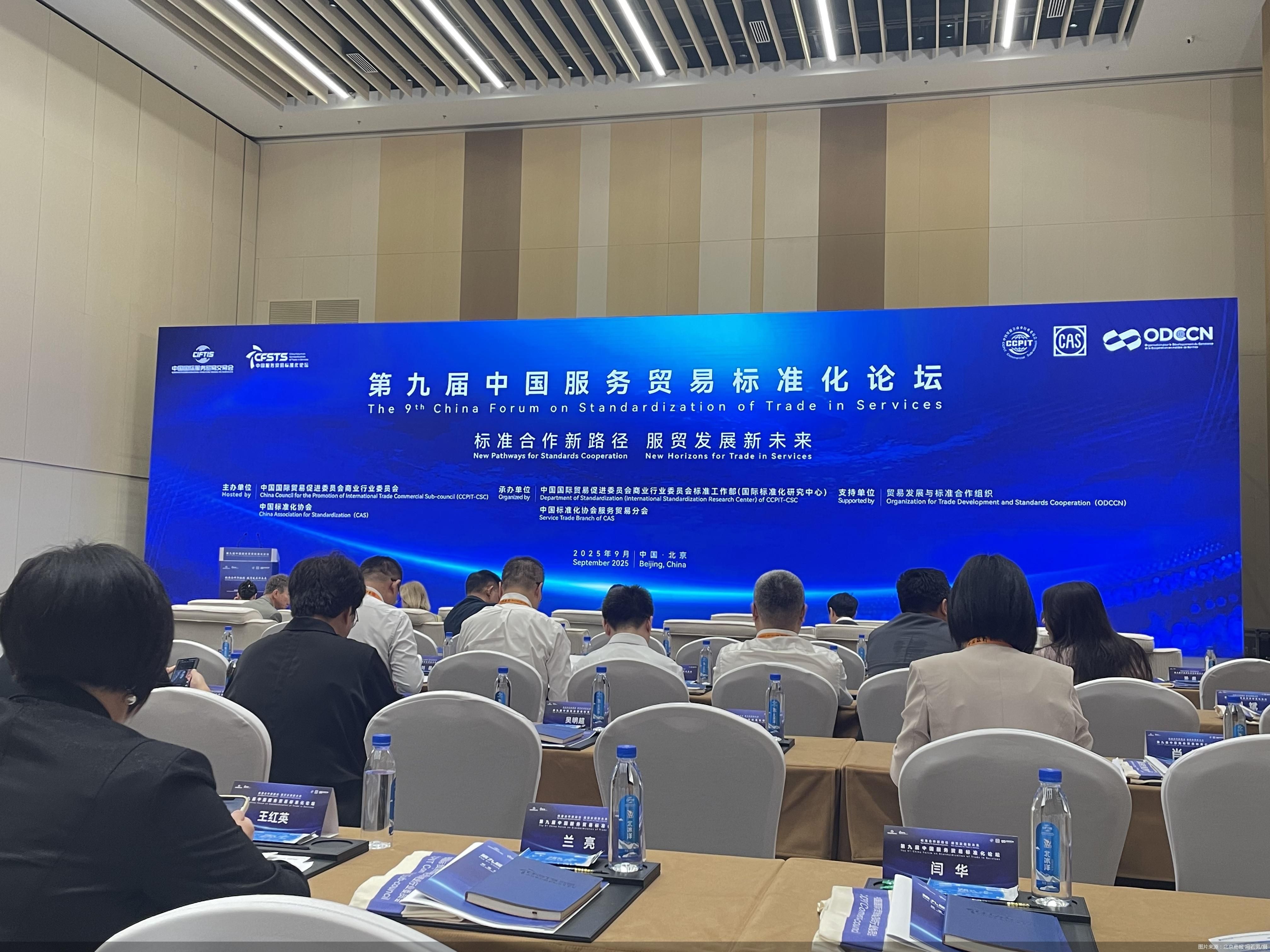
Core Insights - The rapid development of international service trade has made standardization a crucial component of international economic cooperation [1] - The 9th International Service Trade Standardization Forum was held during the 2025 Service Trade Fair, focusing on "New Paths for Standard Cooperation, New Futures for Service Trade" [1] - The forum launched multiple industry standards, established international platforms, and initiated international projects to support Chinese enterprises in navigating international market regulations [1][3] Group 1: Standardization and Compliance - Chinese enterprises are accelerating their global expansion, with standardization leading compliance, service upgrades, and brand building as key to enhancing competitiveness and sustainability [3] - The current global service trade is entering a new transformation and innovation phase, driven by digital technology, green economy, and artificial intelligence [3] - The Ministry of Commerce aims to strengthen inter-departmental collaboration and promote standardization in emerging industries, establishing a comprehensive management standard system [3][4] Group 2: Trade Barriers and Market Dynamics - The lack of unified global standards creates "invisible barriers" that pose significant challenges for enterprises going abroad, driving the need for service trade standardization [4] - China's service trade scale is projected to exceed $1 trillion in 2024, ranking second globally with a year-on-year growth of 13.2%, outpacing the global average growth rate [4] - Service exports reached $445.9 billion, growing by 17%, while imports totaled $610.6 billion, increasing by 10.6% [4] Group 3: Standardization Initiatives - The forum announced the release of 19 group standards, which are expected to lower international trade transaction costs and promote connectivity and innovation [5] - The 2025 "Service Trade Standardization China Case" was officially released, featuring 10 standard projects, highlighting China's growing influence in international standard-setting [6] - Experts agree that standardization is essential for service trade development, serving as a key link between innovation, cooperation, and inclusivity [6]
强化国际话语权 服务贸易新标准发布
Bei Jing Shang Bao· 2025-09-12 13:09
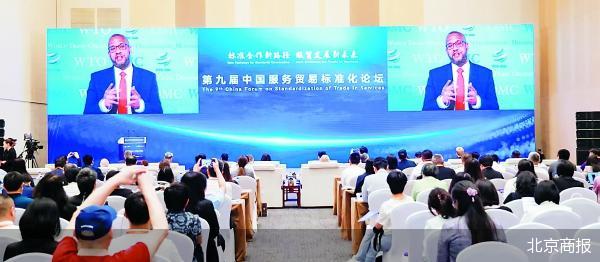
Core Viewpoint - The rapid development of international service trade has made standardization in the service industry a crucial area for international economic cooperation, highlighted by the recent International Service Trade Standardization Forum held on September 12, themed "New Pathways for Standard Cooperation, New Future for Service Trade" [1] Group 1: Importance of Standardization - The forum aims to establish compliance support platforms for Chinese enterprises to navigate international market rules, thereby enhancing China's international voice in service trade standardization [4] - Standardization is increasingly recognized as essential for improving competitiveness and sustainable development as Chinese enterprises expand globally [5] - The complexity of the current global environment necessitates exploring new pathways for standard cooperation to address the evolving challenges in service trade [5] Group 2: Current Trends and Challenges - China's service trade is experiencing a transformation period, with new technologies and business models emerging, which raises the demand for higher adaptability and resilience in standardization [5] - The global service trade market is projected to reach over $1 trillion in 2024, with China being the second-largest service trade nation, showing a 13.2% year-on-year growth, surpassing the global average growth rate of 4.2% [7] - Despite the growth, discrepancies between domestic and international standards create "invisible barriers" that hinder the free flow of products across borders [7] Group 3: Initiatives and Developments - The forum announced the launch of 19 new group standards, including guidelines for digital trade and cross-border e-commerce logistics, aimed at enhancing standardization in key sectors [8] - The establishment of various technical committees will facilitate the development of diversified standards in cultural and creative industries, promoting participation in international standard formulation [8] - The transition from being a "follower" to a "standard setter" is evident, with the release of the 2025 "Service Trade Standardization China Case," showcasing ten selected standard projects [9] Group 4: Future Directions - China's participation in international standard organizations is increasing, with a significant number of new technical committees related to service trade being established, indicating a growing influence in this area [10] - The consensus among experts emphasizes that standards are not only institutional support for service trade but also a vital link for innovation, cooperation, and inclusivity [11] - Future efforts will focus on deepening standard cooperation, enhancing standard supply and promotion, and increasing the participation of small and medium-sized enterprises in global service trade [11]