
农业贸易

Search documents
俄乌冲突新进展,泽连斯基同意不加入北约!
Xin Lang Cai Jing· 2025-12-15 05:48
Group 1 - The core breakthrough of the peace agreement involves a shift from territorial deadlock to security guarantees, with key terms revised to focus on practical aspects like ceasefire and prisoner exchanges while postponing core disputes over territory and NATO membership [2][21] - Ukraine has accepted a collective defense commitment similar to NATO's Article 5 from the US and Europe, while excluding direct NATO membership, and the limit on the Ukrainian military size has been increased from 600,000 to 800,000, maintaining defense autonomy [2][21] Group 2 - The US is leading a transactional diplomacy approach, exchanging security guarantees for Ukrainian concessions, particularly targeting the development rights of Ukrainian mineral resources, with 50% of the reconstruction fund's revenue allocated to the US [3][22] - Europe is participating passively, with Germany, France, and the UK proposing a modified peace plan emphasizing that territorial issues should be decided by a national referendum in Ukraine, attempting to weaken US unilateral dominance [3][22] Group 3 - Ukraine's compromise is driven by dual pressures of military and economic exhaustion, with Russia controlling 120,000 square kilometers of Ukrainian territory (20% of the country), highlighting vulnerabilities in Ukraine's defense system [4][24] - The infrastructure in Ukraine has suffered systemic damage, necessitating a comprehensive ceasefire to ensure wartime elections, forcing Ukraine to trade resources for security [5][25] Group 4 - The US has a strategic interest in key minerals, with Ukraine's lithium and titanium reserves ranking among the top globally, and the mineral agreement stipulates that 50% of future mineral revenues will fund the US-led reconstruction efforts to offset military aid costs [6][26] Group 5 - The geopolitical landscape is shifting towards a tripartite balance among the US, Russia, and Europe, with the US prioritizing resource control through security agreements that bind Ukraine's mineral development rights, thereby diminishing Europe's economic influence in Ukraine [7][27] - There is a tacit agreement between the US and Russia, allowing Russia to maintain control over eastern Ukraine in exchange for halting further advances, which reduces US strategic investments [8][28] Group 6 - Europe faces a dilemma of marginalization, losing security discourse power, as Germany and France push for the "Eastern Sentinel" initiative to strengthen eastern defense but cannot prevent direct negotiations between the US and Russia [9][29] - The competition for resources is intensifying, with the EU submitting a mineral cooperation agreement to compete with the US for dominance over Ukrainian lithium and titanium [10][30] Group 7 - Investment opportunities arise from the urgent need for reconstruction in Ukraine's energy and transportation infrastructure, with international engineering firms like China Power Construction (601669) and China Communications Construction (601800) likely to secure contracts [11][31] - The repair of the electrical grid and construction of natural gas pipelines will drive equipment exports from companies like XJ Electric (000400) and Beiken Energy (002828) [12][32] Group 8 - The development of lithium mines in Ukraine will benefit battery manufacturers like CATL (300750) and Huayou Cobalt (603799) as they diversify their supply chains, while titanium processing will attract attention to Baotai Co. (600456) [13][33] - The restoration of the Black Sea grain corridor will benefit agricultural trade, reducing import costs for companies like COFCO Corporation (600737) and Suqian Agricultural Development (601952) [14][34] Group 9 - The peace agreement signals the start of a post-war reconstruction cycle, presenting structural opportunities in infrastructure, minerals, and agriculture, with investors needing to monitor the progress of the agreement and the dynamics of US-European resource competition [20][38]





携手提升农业国际贸易韧性
Jing Ji Ri Bao· 2025-11-07 22:13
Core Viewpoint - The high-quality development of international agricultural trade is crucial for global food security and economic recovery, facing challenges from protectionism, geopolitical conflicts, extreme weather, and market speculation [1]. Group 1: Challenges in Agricultural International Trade - Current agricultural international trade is navigating through uncertainties, with protectionism disrupting trade order, geopolitical conflicts hindering smooth trade, extreme weather impacting the trade foundation, and market speculation affecting expectations [1]. - The uncertainties in agricultural trade manifest as dramatic changes in tariffs, non-tariff barriers, supply-demand shifts, and supply chain disruptions, which have a greater marginal effect and longer duration [2]. Group 2: Strategies for High-Quality Development - The Ministry of Agriculture and Rural Affairs of China emphasizes the need for practical actions to promote high-quality agricultural international trade, including policy coordination, innovation-driven development, enhanced cooperation, and information sharing [1]. - To address uncertainties, it is suggested to leverage agricultural technology advantages and deepen integration into the international agricultural ecosystem through high-level openness and quality expansion of enterprises [2]. Group 3: Regional Insights and Collaborations - Weifang, a major agricultural city in China, reported a total agricultural output value of 135.87 billion, ranking fifth among major Chinese cities, and aims to enhance agricultural trade quality to better integrate into the international agricultural cycle [3]. - Brazil has successfully transformed from a major grain importer to a significant agricultural exporter in less than 50 years, with China being a key trade partner, highlighting the importance of scientific innovation for stability and resilience in agriculture [3].
一系列层次高、内容实、成果丰的活动亮点纷呈“苏”式合作“链全球”
Xin Hua Ri Bao· 2025-11-06 23:09
Core Insights - The 8th China International Import Expo serves as a strategic platform for Jiangsu to deepen friendships, expand cooperation, and pursue development opportunities with global partners [1] Group 1: Trade Cooperation - Jiangsu hosted the "China-Central Asia Trade Facilitation Cooperation Platform Promotion Conference," highlighting its role as a key player in Central Asia's investment landscape [2] - Significant agreements were signed, including the establishment of an investment development center and strategic partnerships in various sectors such as agriculture and mining [2] - Jiangsu's trade with Central Asia is projected to grow by 32% in 2024, with a remarkable 82% increase in trade volume for Suhao Group [3] Group 2: Open Innovation - The "2025 Jiangsu Open Innovation Development International Consultation Conference" gathered over 50 executives from Fortune 500 and hidden champion companies, focusing on collaborative paths for innovation [4] - Siemens emphasized its ongoing investment in Jiangsu, showcasing a commitment to enhancing the local business environment through various projects [4][5] Group 3: Cultural Exchange - The inaugural friendly city exhibition at the expo showcased cultural and economic ties between Nanjing and Stuttgart, celebrating 30 years of partnership [6] - The exhibition highlighted collaborative achievements and cultural integration, reinforcing the importance of human connections in economic cooperation [6]
农业农村部:农业国际贸易面临四方面挑战
Di Yi Cai Jing· 2025-11-05 13:43
Core Viewpoint - Current agricultural international trade faces significant challenges, including protectionism, geopolitical conflicts, extreme weather, and market speculation, which threaten the stability and predictability of trade [1][2][4]. Group 1: Challenges in Agricultural International Trade - Challenge one: Protectionism disrupts agricultural trade order, with countries misusing tariffs and trade remedies, violating WTO rules, and undermining global trade stability [1]. - Challenge two: Geopolitical conflicts hinder smooth agricultural trade, damaging infrastructure and disrupting production, leading to supply shortages and increased costs [2]. - Challenge three: Extreme weather events, exacerbated by climate phenomena like El Niño and La Niña, cause significant crop damage and increase uncertainty in global agricultural supply [2]. - Challenge four: Market speculation linked to agricultural products' energy and financial attributes leads to increased volatility in trade expectations [2]. Group 2: China's Role in Agricultural Trade - China has implemented a national food security strategy, maintaining grain production above 650 million tons for ten consecutive years, with a target of reaching 700 million tons in 2024 [3]. - China continues to lower tariffs and provide zero-tariff treatment for products from least developed countries, enhancing its position as the world's largest agricultural importer and fifth-largest exporter [3]. - China's agricultural trade policies aim to stabilize the international market, contributing to global agricultural resource allocation and resilience [3]. Group 3: Recommendations for Enhancing Agricultural Trade - Strengthening policy coordination to uphold the authority of the multilateral trade system is essential [4]. - Fostering innovation to cultivate new drivers for agricultural trade development is crucial [4]. - Enhancing cooperation and information sharing among countries can improve the resilience of the agricultural trade system [4][5]. - Promoting collaboration in agricultural production, processing, and logistics can create a more stable and resilient global agricultural supply chain [5].
连续第八年,他们为什么从不缺席?
Zhong Guo Xin Wen Wang· 2025-11-04 02:41
Group 1 - The 8th China International Import Expo (CIIE) will be held from November 5 to 10 in Shanghai, featuring participation from 155 countries and regions, with 4,108 overseas companies exhibiting, marking a record exhibition area of over 430,000 square meters [1] - A total of 170 overseas companies and 27 institutions are recognized as "full attendance" participants, having never missed any previous CIIE, showcasing their commitment to the event and China's market [1] - Siemens will present over 10 AI-driven core products and solutions, while Bayer will highlight its commitment to the Chinese market with an 800 square meter booth and several global debut products [1] Group 2 - Fosun Pharma views CIIE as a key platform for showcasing global innovation and advancing business cooperation, having transformed from "exhibits to products" over the past seven years [2] - Panasonic will showcase innovative solutions across various spaces, emphasizing the importance of firsthand experience for Japanese companies in observing the Chinese market [2] Group 3 - The expo will feature 461 new products, technologies, and services, positioning China as a testing ground for global innovation and profit opportunities [3] - AstraZeneca will showcase over 40 innovative drugs and announce a new production expansion plan, with a significant investment of $2.5 billion in China [3] - Johnson & Johnson will present over 100 innovative products, highlighting its long-term commitment to China's healthcare sector [3] Group 4 - The CIIE serves as a bridge for trade cooperation between China and other countries, facilitating foreign companies' entry into the Chinese market [4] Group 5 - Louis Dreyfus Company has signed trade intention agreements across various sectors at previous expos and aims to help Chinese partners diversify import sources [5] - Canadian companies are increasingly looking to expand into the Chinese market, with nearly 50 companies from British Columbia participating in this year's expo, a historic high [5][6] Group 6 - Singapore's participation is notable, with a delegation of 57 companies and over 500 executives attending, reflecting the growth potential in the Chinese market despite global economic challenges [6]
中国APEC第三城!深圳早已与APEC深情相拥
Sou Hu Cai Jing· 2025-11-01 23:18
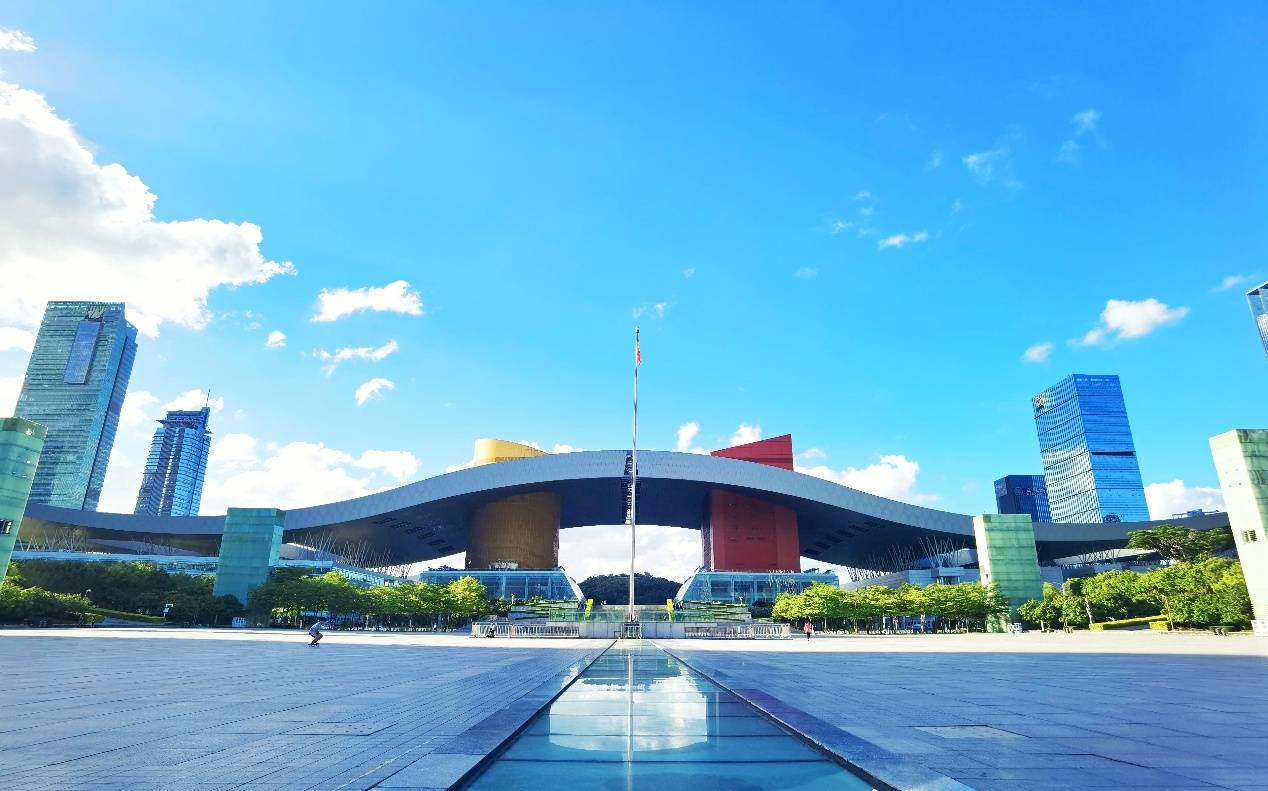
Group 1 - Shenzhen has been officially announced as the host city for the 2026 APEC meeting, becoming the third Chinese city to host after Beijing and Shanghai, highlighting its rapid transformation from a fishing village to a modern metropolis [1][18] - APEC, which stands for Asia-Pacific Economic Cooperation, is the highest-level and most influential economic cooperation mechanism in the Asia-Pacific region, consisting of 21 member economies [3][5] - Shenzhen is China's top foreign trade city, with significant trade relationships with APEC member countries, indicating strong economic ties and collaboration opportunities [4][6] Group 2 - The APEC SME Business Forum has been held in Shenzhen since 2018, focusing on policy dialogue and cooperation among APEC member economies, which has established Shenzhen as a key platform for SME development [8] - The RCEP (Regional Comprehensive Economic Partnership) is a significant outcome of APEC's efforts to promote a free trade area in the Asia-Pacific, with Shenzhen actively participating in its implementation [10][11] - Shenzhen is developing the RCEP National Pavilion, which will serve as a comprehensive platform for cultural display, technology exchange, and industry cooperation, further enhancing its role in APEC activities [13][18] Group 3 - Shenzhen has established friendly exchange relationships with 95 cities in 59 countries, many of which are APEC members, fostering international collaboration and networking [16] - Hosting the 2026 APEC meeting presents both an honor and a responsibility for Shenzhen, indicating its growing influence and commitment to international economic cooperation [18]

一亩田借战略合作进军RWA领域
Zheng Quan Shi Bao Wang· 2025-10-04 01:01
Core Insights - The strategic partnership between Yimuyuan Group and BC Technology aims to leverage their strengths in agriculture and digital asset services to enhance global agricultural trade through digitalization [1][3] - The global RWA market is projected to reach $16 trillion by 2030, indicating significant potential for agricultural RWA products [1] - Yimuyuan Group serves over 60 million users across nearly 2,800 counties in China, covering over 15,000 types of agricultural products [1] Group 1: Strategic Focus Areas - The collaboration will focus on three main areas: cross-border payment solutions, agricultural RWA product innovation, and exploring new business scenarios [2] - Yimuyuan Group plans to purchase at least $12 million in stablecoins to enhance the efficiency of cross-border trade in agricultural products [2] - Agricultural RWA products will be developed using high-quality agricultural assets, with BC Technology providing technical and platform support for compliance and risk assessment [2] Group 2: Industry Implications - This partnership is seen as a potential model for traditional agricultural assets to access international markets through the RWA framework [3] - The integration of agricultural resources and digital technology is expected to create new pathways for value extraction and operational efficiency in cross-border agricultural business [3] - The collaboration aims to establish a complete value realization model from agricultural assets to global capital markets, enhancing the potential for agricultural production and circulation [3]
第八届虹桥论坛开启公开注册 八大亮点抢先看
Di Yi Cai Jing Zi Xun· 2025-09-30 05:15
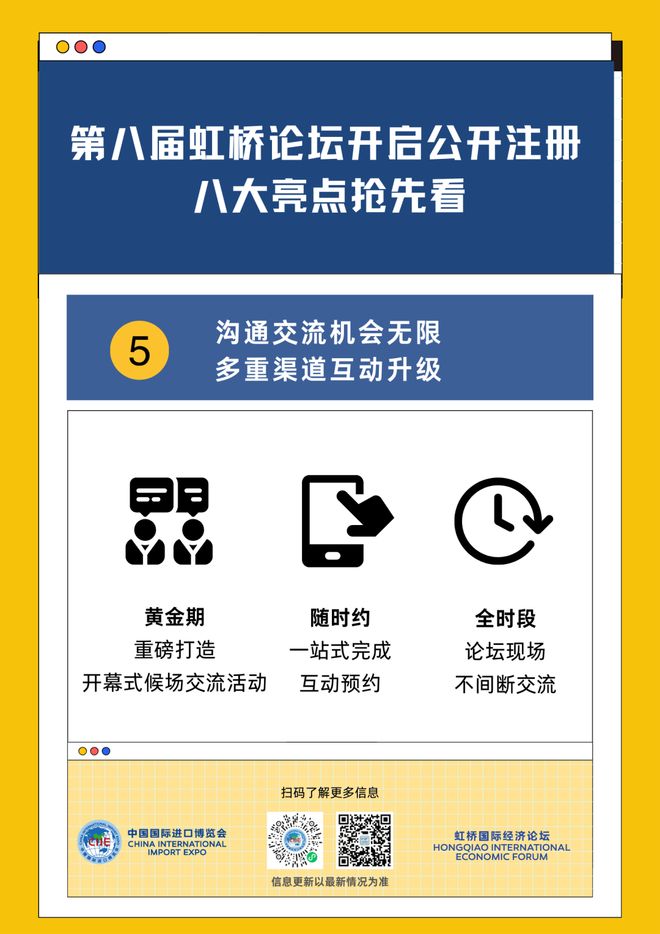
Core Insights - The 8th Hongqiao International Economic Forum will be held from November 5 to 10, 2025, at the National Exhibition and Convention Center in Shanghai, focusing on global openness and economic governance [5][6] Group 1: Forum Theme and Objectives - The forum's theme is "Open Cooperation - Creating New Opportunities Together, Sharing a New Future," addressing global governance initiatives and the evolving global economic landscape [7] - The event coincides with the 80th anniversary of the United Nations, reflecting on the current state of global governance and trade order [7] Group 2: Agenda and Topics - The forum will feature 25 sub-forums covering topics such as multilateral cooperation, digital empowerment, sustainable development, and China's openness [8] - Key issues include trade security, supply chain resilience, and global south concerns, alongside discussions on artificial intelligence and digital economy [8] Group 3: Guest Speakers and Participation - Over 400 representatives from governments, international organizations, and top scholars are expected, with nearly 10,000 participants [9] - Notable speakers include Nobel laureates and executives from Fortune 500 companies, enhancing the forum's prestige [9] Group 4: Key Reports and Publications - The flagship report "World Open Report 2025" will be released, focusing on new trends and challenges in global openness [10][11] - Various authoritative research outcomes will be presented, including national standards in artificial intelligence and reports on trade security [11] Group 5: Communication and Interaction - The forum aims to enhance communication opportunities through various interactive formats, including pre-event networking and real-time engagement during sessions [12] - A dedicated app will facilitate participant interactions and information sharing [12] Group 6: Integration with Trade Events - The forum will leverage its concurrent scheduling with the China International Import Expo to enhance synergies between exhibitions and discussions [12] - Special activities will be organized to connect exhibitors with forum participants, fostering deeper dialogue [12] Group 7: Organizational Collaboration - The forum is co-hosted by multiple national ministries and international organizations, ensuring high-quality organization and diverse perspectives [13] - Collaboration with renowned think tanks and media outlets will support the forum's objectives [13] Group 8: Media Coverage and Promotion - Comprehensive media coverage will be implemented before, during, and after the forum to maximize outreach and engagement [14][15] - Continuous updates on guest participation and forum highlights will be shared through various media channels [15]
专访经合组织农贸司司长:数字技术推动农业贸易可持续发展
2 1 Shi Ji Jing Ji Bao Dao· 2025-09-15 11:22
Core Insights - The 2025 China International Service Trade Fair is themed "Digital Intelligence Leading, Service Trade Renewed," focusing on new trends in service trade development [1] - Marion Jensen from OECD emphasizes the importance of agricultural trade for future food markets, highlighting the need for open agricultural markets to ensure global food security [2] Group 1: Agricultural Market Trends - Agricultural trade remains crucial for future agricultural markets, with production growth in some regions but not in high-population areas like Africa [2] - Maintaining open agricultural markets is essential to ensure global food security amid varying production rates [2] Group 2: Challenges in Agricultural Supply Chains - A significant challenge in agriculture is that productivity growth is not keeping pace with demand, necessitating higher productivity to feed the global population [3] - Ensuring smooth supply chains is critical for transporting agricultural products to where they are needed, avoiding disruptions in the supply chain [3] Group 3: Role of Trade Agreements - Trade agreements like the Regional Comprehensive Economic Partnership (RCEP) are important for promoting agricultural and food markets, enhancing cross-border cooperation [4] Group 4: Impact of Digital Technology - Digital technology plays a vital role in improving productivity and facilitating agricultural trade, which is essential for meeting growing demand and ensuring sustainable trade [5] - Digitalization is crucial for reducing costs associated with border checks and promoting paperless trade, enhancing the efficiency of agricultural food trade [5] Group 5: Cooperation with China - OECD has a close collaboration with China in service trade, particularly in measuring trade barriers and promoting digital trade, with expectations for continued cooperation [6]
逃避缴纳税款!北大荒商贸集团被罚
Qi Lu Wan Bao· 2025-08-01 03:24
Core Viewpoint - Beidahuang Commercial Group Co., Ltd. was fined 51,327.54 yuan by the Harbin Taxation Bureau for falsely declaring tax deductions and evading tax payments [1] Company Overview - Beidahuang Commercial Group Co., Ltd. was established on December 21, 2000, with its legal representative being Xing Weiguo, and it is a subsidiary of Beidahuang Agricultural Reclamation Group Co., Ltd. [1][2] - The company operates under the unified social credit code 912330007253354227 and is registered in Harbin, Heilongjiang Province [2] - The company has a registered capital of 743,565,000 yuan and is currently in operation [2] Business Operations - Beidahuang Commercial Group's business scope includes the sale of agricultural raw materials, agricultural machinery, and various retail products such as fertilizers and daily necessities [2] - The parent company, Beidahuang Agricultural Reclamation Group, manages a total land area of 53,600 square kilometers, with stable arable land of 4,874,400 acres [3][5] - The group is recognized as a national ecological demonstration zone and a national modern agricultural demonstration zone, employing approximately 459,000 people [3][5]

