新能源消纳

Search documents
电力行业周报:迎峰度夏有望提振电力需求,新型电力系统试点解决新能源消纳
GOLDEN SUN SECURITIES· 2025-06-08 13:35
证券研究报告 | 行业周报 gszqdatemark 2025 06 08 年 月 日 在新一代煤电方面,提出对照《新一代煤电升级专项行动实施方案 (2025—2027 年)》要求,推动具备条件的现役机组和新建机组针对清 洁降碳、高效调节两类指标分别开展试点,通过采用零碳低碳燃料掺烧、 CCUS((碳集、、利用与存))等降碳施施,著降降低煤电碳放;;开展 主辅机装备技术创新应用和系统、成优化,提高煤电机组快速变负荷、 深度调峰和宽负荷高效调节能力,同时需具备安全可靠启停调峰能力。 ➢ 多地发布高温预警,迎峰度夏开启有望提振用电需求,煤价跌至 618 元 /吨。4 月,国家能源局曾预计今年度夏期间,全国用电负荷将快速增长, 最高负荷同比增长约 1 亿千瓦,电力保供面临着一定压力。综合研判, 迎峰度夏期间,全国电力供应总体有保障,局部地区高峰时段可能)在 电力供应紧张的情况。本周,多地地表温度超过 60℃,高温范围持续扩 大。今年 1-4 月全社会用电量 31566 亿千瓦时,同比增长 3.1%,整体 用电需求偏弱。进入迎峰度夏,高温天气或催化用电需求提升。成本端 煤价持续下跌,本周北港动煤 5500K 跌至 6 ...
政策解读丨绿电直连迈入制度化发展新阶段
国家能源局· 2025-06-06 10:05
Core Viewpoint - The article discusses the institutionalization and standardization of green electricity direct connection, highlighting its role in enhancing renewable energy consumption, reducing carbon footprints for export-oriented enterprises, and creating new application scenarios for innovative power entities [2]. Group 1: Project Planning and Construction - Green electricity direct connection enables distributed renewable energy to be used locally, but its decentralized nature may disrupt the load distribution of the larger power grid. Unregulated project construction could lead to mismatched power development timelines and redundant grid investments [3]. - The notification establishes a framework for planning and construction, emphasizing that new loads should be matched with renewable projects, particularly for export-oriented enterprises with carbon reduction needs [3]. Group 2: Investment and Operation Models - There is significant variation in investment and operation models for green electricity direct connection projects across regions, with some areas imposing restrictions that hinder market investment vitality and operational efficiency [4]. - The notification proposes several innovative measures, including removing restrictions on investment entities, allowing various operators to invest in projects, and setting a cap on the proportion of surplus electricity fed back to the grid [4]. Group 3: Safety and Economic Responsibilities - The safety and economic responsibilities of green electricity direct connection projects involve both internal project responsibilities and those related to the public grid. Clear delineation of responsibilities is necessary to manage the risks associated with integrating renewable energy into the grid [5][6]. - The notification clarifies the safety responsibility interface between direct connection projects and the public grid, ensuring that both parties fulfill their respective risk management duties [6]. Group 4: Market and Pricing Mechanisms - Establishing clear market and pricing mechanisms is crucial for the effective integration of green electricity direct connection projects with existing policies and for their broader application [7]. - The notification specifies that these projects should participate in the electricity market on equal terms and outlines the pricing mechanisms, including the payment of various fees related to transmission and distribution [7].

数千亿元电网投资 勾勒能源变革新版图
Zheng Quan Ri Bao Zhi Sheng· 2025-06-05 16:39
Core Insights - The rapid growth of renewable energy installations in China is facing challenges in grid integration and utilization, leading to significant waste of green energy [1][3][4] - The State Grid Corporation of China plans to significantly increase its investment in grid infrastructure to enhance the capacity for renewable energy integration, with a projected investment exceeding 650 billion yuan in 2025 [2][5] - The utilization rates for solar and wind energy have declined recently, indicating a mismatch between generation capacity and grid absorption capabilities [3][4] Investment Trends - Both major grid companies, State Grid and China Southern Power Grid, are set to invest record amounts in 2025, with State Grid's investment surpassing 650 billion yuan and Southern Grid's fixed asset investment reaching 175 billion yuan [2] - In 2024, State Grid's investment exceeded 600 billion yuan, resulting in the successful operation of several high-capacity transmission lines, enhancing cross-regional transmission capabilities [5] Renewable Energy Utilization - The utilization rates for solar and wind energy have decreased from 98.0% and 97.3% in 2023 to 93.9% and 93.2% in the first four months of 2025, respectively [3][4] - The need for improved grid infrastructure is critical to ensure that renewable energy can be effectively transmitted and utilized [4] Technological Innovations - The development of a new type of distribution system is underway to accommodate large-scale distributed solar and wind energy integration, with a focus on enhancing system flexibility and intelligence [6][9] - The integration of advanced technologies, such as 5G and quantum computing, is being explored to optimize grid operations and enhance energy quality [10][11] Industry Opportunities - The ongoing investment in grid infrastructure is expected to benefit various sectors within the energy supply chain, including equipment manufacturing and smart technology applications [2][7][8] - Chinese companies are increasingly looking to expand into international markets, capitalizing on the global shift towards renewable energy and smart grid solutions [11]
下滑的新能源利用率:死守还是放宽消纳“红线”?
3 6 Ke· 2025-06-05 04:07
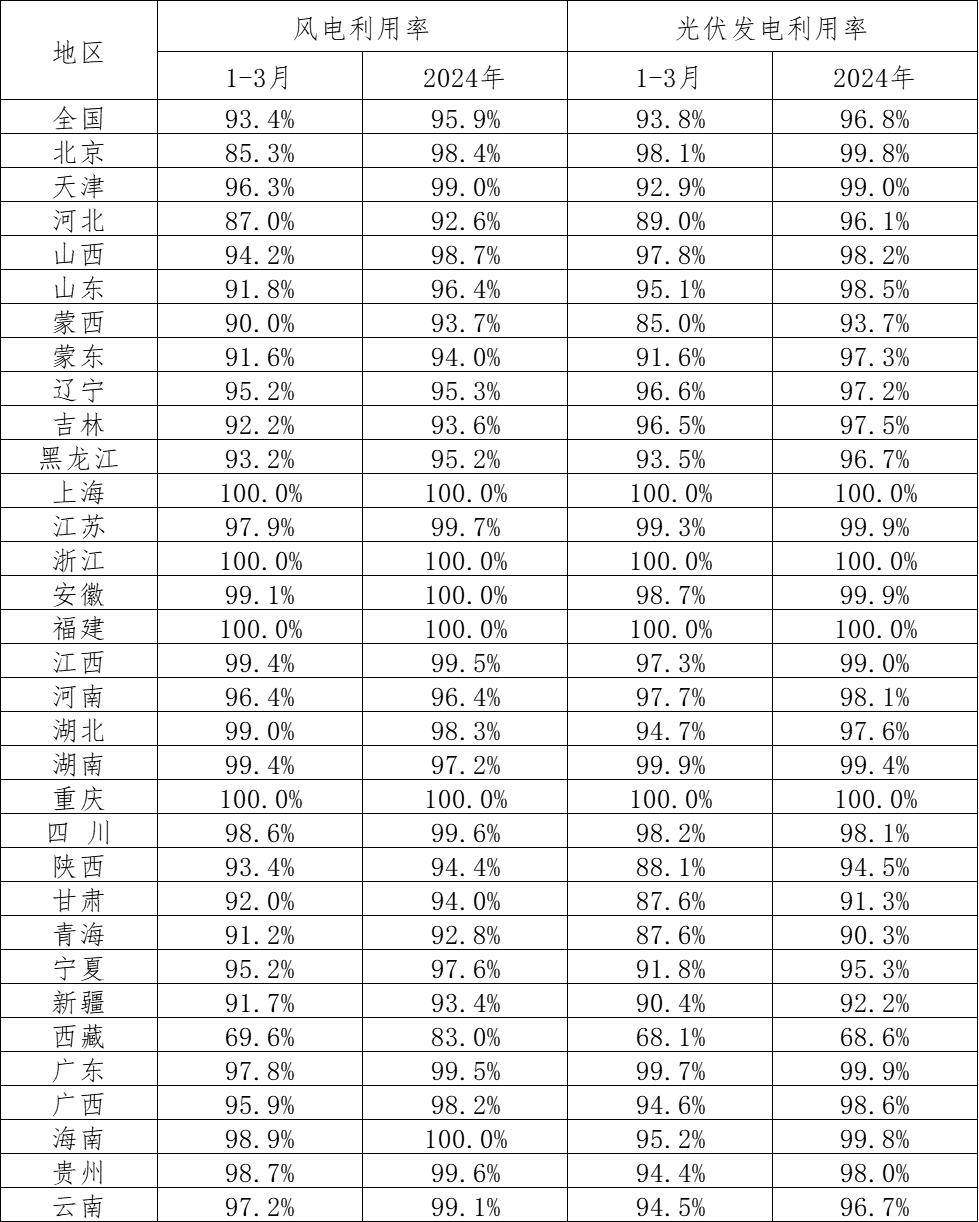
Core Viewpoint - The article discusses the significant discrepancy between reported renewable energy utilization rates and the actual experiences of industry stakeholders, highlighting a concerning decline in utilization rates despite rapid increases in installed capacity [1][2][3]. Group 1: Renewable Energy Utilization Rates - As of April 2025, national wind and solar utilization rates were reported at 92.4% and 94.0%, respectively, down 3.7 and 3.1 percentage points year-on-year [1]. - For the first four months of 2025, the overall wind and solar utilization rates were 93.2% and 93.9%, reflecting a year-on-year decline of 2.9 and 2.4 percentage points [1]. - The reported utilization rates contrast sharply with the experiences of industry players, who believe that the actual issues of wind and solar curtailment are significantly underestimated [3][4]. Group 2: Installed Capacity Growth - In April 2025, nearly 50 GW of new solar capacity was added, marking a 215% year-on-year increase, while the total new solar capacity for the first four months reached 104.9 GW, a 75% increase [2]. - The rapid growth in installed capacity has raised concerns about the ability of the grid to accommodate such increases, leading to a decline in utilization rates [9][10]. Group 3: Limitations and Challenges - The average curtailment rate for renewable energy plants reached 17% in the first quarter of 2025, with some regions experiencing rates as high as 30-50% [3][4]. - The discrepancy in utilization rates is attributed to different statistical methodologies, with the official rates only considering system-related curtailments, which do not account for other factors leading to underutilization [6][12]. Group 4: Policy Implications - The government has previously set a utilization rate "red line" at 95%, but this has been adjusted to 90% to allow for more renewable projects and installations [12][13]. - There is ongoing debate about whether to maintain or further relax this red line, especially as many regions are already falling below the new threshold [13][14]. Group 5: Future Outlook - The article suggests that without improvements in grid infrastructure and management, the decline in renewable energy utilization rates may continue, potentially undermining China's renewable energy goals [14][15]. - Experts advocate for a shift from merely increasing installed capacity to enhancing the ability of the grid to effectively integrate and utilize renewable energy [14].
中信证券:绿电源网荷储、垃圾发电+数据中心等需求有望迎来高速增长
智通财经网· 2025-06-04 00:56
Core Viewpoint - The introduction of the first national policy on green electricity direct connection aims to balance efficiency and fairness, facilitating the use of renewable energy and addressing challenges in wind and solar energy consumption [1][2]. Group 1: Policy Overview - The notification represents the first national-level policy for green electricity direct connection, incorporating both incremental and existing projects [2]. - Previous local government attempts in Jiangsu and pilot projects in Xinjiang have laid the groundwork for this policy, which now includes both new and existing renewable energy projects [2]. - Direct connection refers to power lines that connect energy sources directly to users, bypassing the public grid, with a clear physical trace of the supplied electricity [2]. Group 2: Objectives and Benefits - The policy aims to enhance the consumption of renewable energy by requiring that at least 60% of the annual self-generated electricity from direct connection projects comes from renewable sources, with targets increasing to 35% by 2030 [3]. - It addresses the growing demand for green electricity from users, particularly in high-energy industries, by facilitating a transition to low-carbon energy sources [3]. - The policy encourages cost reduction for users by allowing them to self-declare grid capacity and manage their own responsibilities, thus enhancing flexibility and lowering electricity costs [3]. Group 3: Fairness and Efficiency - Green electricity direct connection projects must comply with national regulations regarding transmission and distribution fees, ensuring that local governments do not waive these fees [4]. - The policy promotes the self-regulation of direct connection projects to increase the proportion of self-generated renewable energy, thereby reducing reliance on the public grid and lowering operational costs [4]. - It allows projects to participate in the electricity market, optimizing their energy consumption patterns while ensuring compliance with energy supply requirements [4].

海博思创(688411):把握新能源消纳大机遇 出海开启新成长
Xin Lang Cai Jing· 2025-06-03 06:27
Group 1 - The company focuses on the rapid expansion of energy storage systems, having shifted its strategy in 2019 to concentrate on energy storage integration, divesting from other businesses to capitalize on the growing demand for renewable energy consumption [1] - From 2021 to 2024, the company's energy storage system sales are projected to reach 0.7, 2.2, 6.2, and 11.8 GWh, indicating a rapid growth in shipment scale, with a strong domestic market share and breakthroughs in overseas markets expected [1] - The company anticipates revenue of 8.27 billion yuan in 2024, representing an 18.4% year-on-year increase, with a gross margin of 18.5% and a net margin of 7.9%, significantly outperforming the industry [1] Group 2 - The domestic market is undergoing a transition from policy-driven to market-driven dynamics, with the cancellation of mandatory storage requirements prompting companies to shift from "low-price bidding" to "value creation" [1] - Globally, the demand for energy storage is expected to grow steadily, with projections of new installations reaching approximately 228, 280, and 366 GWh from 2025 to 2027, reflecting year-on-year growth rates of 18%, 23%, and 31% respectively [2] - The company is leveraging its product and channel advantages to expand both domestically and internationally, establishing partnerships with leading state-owned enterprises and enhancing its presence in overseas markets through collaborations with major international firms [2] Group 3 - As a leading player in the energy storage integration industry, the company is projected to achieve net profits of 889 million, 1.14 billion, and 1.35 billion yuan from 2025 to 2027, with year-on-year growth rates of 37.3%, 28.1%, and 18.9% respectively [3] - The expected earnings per share (EPS) for the same period are forecasted to be 4.94, 6.32, and 7.52 yuan per share, with a reference valuation of 18x PE for 2025, leading to a reasonable value estimate of 88.90 yuan per share [3]
八大措施系统破解消纳难题,“新能源第一大省”有望成为全国“样板”
3 6 Ke· 2025-06-03 03:11
Core Viewpoint - Shandong Province, known as the "first province of renewable energy," has initiated "Eight Major Actions" to address the challenges of renewable energy consumption and explore a new path for high-quality development in the sector [2][4]. Group 1: Actions and Goals - The Shandong government aims to optimize the ratio of solar and wind power installations from 3.2:1 to 2.6:1 by the end of the year, complete the renovation and approval of 20 million kilowatts of existing units, and add approximately 1 million kilowatts of compressed air storage and over 2 million kilowatts of electrochemical storage within the year [2][11]. - The "Eight Major Actions" include optimizing the structure of renewable energy installations, enhancing the power system's adjustment capabilities, accelerating the development of new energy storage, and stimulating the demand for green electricity [2][11]. Group 2: Current Challenges - Shandong has experienced a significant increase in negative electricity prices, rising from 19 hours during the same period last year to nearly 50 hours this year, highlighting the urgency of addressing renewable energy consumption issues [4][10]. - The province's renewable energy and clean energy installations exceed 51%, with solar power leading nationally and wind power ranking fifth, yet the rapid growth has led to consumption challenges [4][5]. Group 3: Historical Context and Development - Shandong's solar power capacity was only 4.55 GW at the end of 2016, ranking lower than several other provinces, but has since become the leading province in solar power installations due to strategic policy initiatives and resource advantages [5][6]. - The province began large-scale distributed solar development in 2017, four years ahead of the national promotion, which has contributed to its current leading position in solar energy [6]. Group 4: Future Directions - The province's strategy includes reducing the proportion of solar installations while increasing wind power capacity, a policy termed "heavy wind, light solar," to alleviate the pressure on the power system [11]. - Shandong plans to enhance the flexibility of existing coal-fired power plants, with a goal of completing the renovation of 20 million kilowatts of units by 2025, to support renewable energy consumption [12]. - The development of energy storage solutions, including compressed air and electrochemical storage, is emphasized, with specific targets for new installations in the coming years [13]. Group 5: Infrastructure and Market Reforms - The enhancement of the power grid is crucial for improving renewable energy consumption capabilities, with plans to strengthen the provincial and municipal grid structures and optimize grid operation [14]. - The transition to a new type of power grid that accommodates renewable energy's variability is essential, requiring high-precision forecasting and flexible intelligent systems [14].
两部门印发《通知》有序推动绿电直连发展
Ke Ji Ri Bao· 2025-06-03 01:01
原标题:两部门印发《通知》有序推动绿电直连发展 科技日报讯 (记者刘园园)为探索创新新能源生产和消费融合发展模式,促进新能源就近就地消纳, 更好满足企业绿色用能需求,5月30日,由国家发展改革委、国家能源局联合印发的《关于有序推动绿 电直连发展有关事项的通知》(以下简称《通知》)正式发布。 谈及《通知》出台背景,该负责同志提到,近年来,随着我国新能源跃升式发展,新能源消纳压力逐年 递增。在远距离输送的同时,通过绿电直连项目等探索新能源生产和消费集成发展模式,可挖掘就近就 地消纳需求,拓展新能源应用场景,提高新能源资源利用效率。 《通知》提出,绿电直连项目以满足企业绿色用能需求、提升新能源就近就地消纳水平为目标。为规范 项目建设,《通知》要求,新增负荷可配套建设新能源项目。存量负荷在已有燃煤燃气自备电厂足额清 缴可再生能源发展基金的前提下开展绿电直连,通过压减自备电厂出力,实现清洁能源替代。有降碳刚 性需求的出口外向型企业利用周边新能源资源探索开展存量负荷绿电直连。《通知》明确,包括民营企 业在内的各类经营主体(不含电网企业)可投资绿电直连项目。 "《通知》始终坚持以绿为底色,多措并举提高绿电直连项目对新能源消 ...
施耐德电气林婷:破局新能源消纳难题,数智化能力是关键
2 1 Shi Ji Jing Ji Bao Dao· 2025-05-31 08:06
Group 1: Industry Overview - The rapid development of the renewable energy industry in China is driven by the "dual carbon" goals, with installed capacity of wind and solar power reaching 1.18 billion kilowatts by the end of June 2024, surpassing coal power for the first time [1] - The annual new installed capacity of renewable energy is expected to exceed 200 million kilowatts, continuing a rapid growth trend during the 14th Five-Year Plan period, which will significantly increase system absorption pressure [1][2] Group 2: Challenges in Renewable Energy Consumption - The challenges in renewable energy consumption arise from various factors, including the intermittent and unpredictable nature of wind and solar power, which complicates accurate forecasting and control [2] - There is a mismatch between the scale of renewable energy installations and the capacity of local power grids, as some regions did not adequately consider grid capacity when planning new projects [2] - Regional imbalances in grid development hinder the timely and sufficient transmission of renewable energy to load centers, with distribution networks facing limitations in accommodating high proportions of distributed renewable energy [2] Group 3: Policy and Investment in Distribution Networks - The release of two significant documents, "Guiding Opinions on High-Quality Development of Distribution Networks under New Circumstances" and "Implementation Plan for High-Quality Development of Distribution Networks (2024-2027)," aims to address the challenges of renewable energy consumption [2] - Investment in distribution networks is increasing, with the State Grid planning over 1.2 trillion yuan for distribution network construction during the 14th Five-Year Plan, accounting for over 60% of total grid investment [4] - The Southern Power Grid expects to achieve 50 million kilowatts of distributed solar power and 2.5 million charging piles by 2025, with a goal of achieving flexible, intelligent, and digital transformation by 2027 [4] Group 4: Technological Innovations and Requirements - The transition to a new power system necessitates new requirements for the reliability, flexibility, and green capabilities of distribution equipment [5] - Schneider Electric's EcoStruxure architecture enables digital collaboration through interconnected products and services, facilitating proactive and preventive maintenance [5] - The introduction of more direct current microgrid solutions reflects the increasing complexity of future power grids, with Schneider Electric launching medium-voltage direct current switches to address this [5]
国家发展改革委 国家能源局关于有序推动绿电直连发展有关事项的通知
国家能源局· 2025-05-30 09:10
Overall Requirements - The article defines "green electricity direct connection" as a model where renewable energy sources like wind and solar power supply electricity directly to a single user without going through the public grid, ensuring clear physical traceability of the supplied electricity [2][3] - The development goal is to meet the green energy needs of enterprises and enhance the local consumption of renewable energy, adhering to principles of safety, environmental friendliness, and responsibility sharing [2][3] Strengthening Planning Guidance - New loads can be paired with renewable energy projects, and existing loads can engage in green electricity direct connection after fulfilling renewable energy fund obligations [3] - Provincial energy authorities should ensure orderly development of green electricity direct connection projects, incorporating them into energy and land use planning [4] Encouraging Model Innovation - The main responsibility for green electricity direct connection projects lies with the load, allowing various entities, including private enterprises, to invest in these projects [5] - Agreements must be established between different investment entities regarding power facility construction, ownership, operation, and settlement [5] Strengthening Operational Management - Safety management measures must be strictly implemented to ensure stable operation of green electricity direct connection projects [7] - Projects should be equipped with necessary protective and control devices to avoid impacting the stability of the public grid [8] Clarifying Responsibility Interfaces - Clear safety responsibility interfaces must be established between green electricity direct connection projects and the public grid, ensuring both parties fulfill their respective safety risk management responsibilities [9] - Projects should balance internal generation and load to ensure power exchange with the public grid does not exceed declared capacity [9] Transaction and Pricing Mechanism - Green electricity direct connection projects should participate in the electricity market as a whole, following registration rules and settling based on power exchange with the public grid [11] - Projects must pay relevant fees according to national regulations and ensure proper metering and settlement practices [12] Strengthening Organizational Support - The National Development and Reform Commission and the National Energy Administration will guide the green electricity direct connection model and monitor project implementation [12] - Provincial energy authorities should refine specific requirements based on local conditions to promote orderly development of green electricity direct connection projects [12]