
绿色金融

Search documents
多家银行扎堆发卫星上天
21世纪经济报道· 2026-01-21 11:06
Core Viewpoint - The article discusses the recent satellite launches by major Chinese banks, highlighting their strategic shift towards utilizing satellite technology for enhancing financial services and risk management [1][4]. Group 1: Satellite Launches and Their Purpose - Three major banks, China Merchants Bank, Shanghai Pudong Development Bank, and Ping An Bank, have successfully launched satellites as part of their strategic initiatives to integrate satellite technology into their operations [4][5]. - The "Zhaoyin Jinqi" satellite launched by China Merchants Bank is designed to enhance global communication capabilities and improve data transmission efficiency, forming a comprehensive low-orbit satellite communication matrix [4][6]. - The "Puyin Shuzhi" satellite, launched simultaneously, is part of the "Tianqi Constellation" and aims to improve the performance and revisit time of the satellite network [4][6]. Group 2: Business Logic Behind Satellite Utilization - Banks are leveraging satellite technology for remote monitoring of collateral and project progress, significantly enhancing post-loan management efficiency and reducing credit risk [7][8]. - The use of satellite technology allows banks to gather unique spatial data, which can transform risk control and business models, addressing issues of information asymmetry in lending [7][9]. - For instance, China Merchants Bank has integrated remote sensing technology into its risk management system, achieving over 95% accuracy in monitoring construction progress of mortgage properties [8][9]. Group 3: Applications in Extreme Scenarios - In extreme scenarios such as natural disasters, satellite communication technology provides a solution to maintain business continuity when ground communication networks fail [12][13]. - China Merchants Bank has tested low-orbit satellite links for disaster recovery, establishing a foundation for an integrated emergency communication network [12][13]. Group 4: Supporting National Strategy and Commercial Space Industry - By participating in satellite launches, banks are aligning with national strategies and expanding financial services to support the commercial space industry [13][14]. - The banks are developing various services and products tailored to the needs of the commercial space sector, such as satellite leasing and financing solutions [14]. Group 5: Broader Industry Impact - The trend of banks utilizing satellite technology is expanding beyond a few players, with other banks also exploring applications in agriculture, environmental monitoring, and supply chain finance [14]. - Innovations such as satellite remote sensing applications are being adopted to enhance risk management and service delivery in various sectors, indicating a shift towards integrating advanced technologies in traditional banking practices [14].





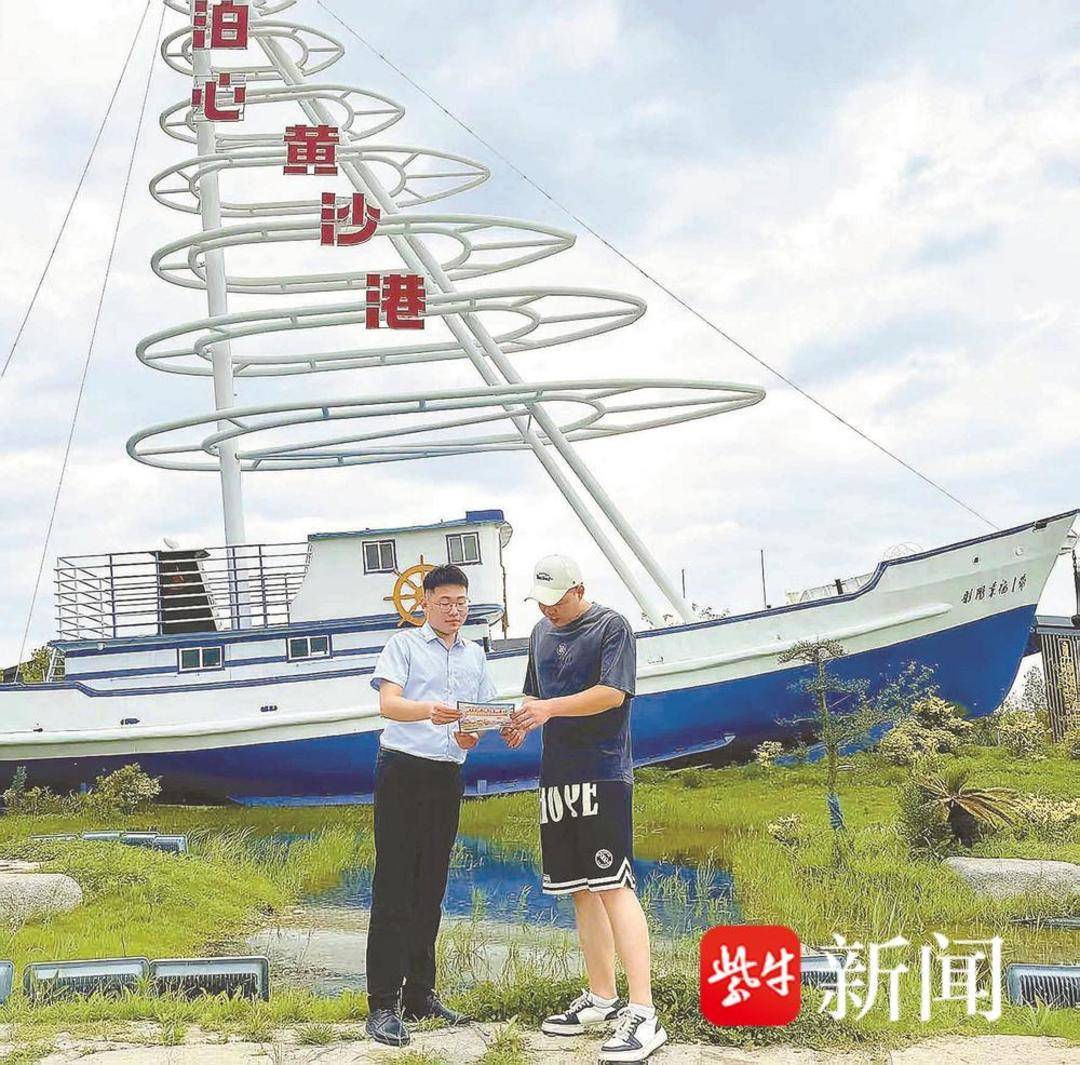
江苏银行盐城分行:向海、向绿、向新 助推盐城高质量发展
Yang Zi Wan Bao Wang· 2026-01-21 06:33
Core Viewpoint - Jiangsu Bank (600919) emphasizes its commitment to financial functionality and regional economic development through strategic partnerships, particularly with the Yancheng municipal government, aiming for high-quality growth and compliance with policies and regulations [1] Group 1: Financial Support and Development Initiatives - Jiangsu Bank has signed a strategic cooperation agreement with the Yancheng municipal government to enhance regional economic development and has been recognized for its performance, being rated first in comprehensive assessments for six consecutive years [1] - By the end of 2025, the bank's total loan balance is projected to reach 141.12 billion yuan, with an increase of 29.58 billion yuan from the beginning of the year, focusing on manufacturing and green loans [1] - The bank supports 12 enterprises in the marine industry with a loan balance of 1.11 billion yuan, demonstrating its commitment to the blue economy [3] Group 2: Innovative Financial Products - Jiangsu Bank has developed a comprehensive product system tailored for marine enterprises, offering various financial products for different stages of business development, including "Su Incubation Loan" for startups and "Specialized and New Loan" for mature enterprises [4] - The bank has introduced differentiated pricing policies, providing a 70 basis points discount for blue credit and an 80 basis points discount for clean energy loans, to support the transformation of blue industries [5] Group 3: Green Finance Initiatives - Jiangsu Bank has signed a strategic cooperation agreement to support the construction of a green low-carbon development demonstration zone in Yancheng, with green loan balances expected to reach 38.09 billion yuan by the end of 2025, an increase of 12.80 billion yuan from the start of the year [7] - The bank has created the first green specialized branch in Yancheng and received the first "Carbon Neutral Certificate" from Jiangsu Province, highlighting its leadership in green finance [7] Group 4: Support for Modern Agriculture and Manufacturing - The bank has provided 17.76 billion yuan in loans to the manufacturing sector, with an increase of 2.75 billion yuan from the beginning of the year, positioning itself as a leader in the local market [9] - Jiangsu Bank has implemented various initiatives to enhance service quality for manufacturing, including the launch of innovative financial products and participation in provincial policies to support manufacturing upgrades [11] Group 5: Collaborative Financial Services - The bank has established partnerships with local enterprises and financial institutions to enhance direct financing support, including debt and equity financing, and has organized various events to promote financial services for listed and prospective companies [12] - Jiangsu Bank aims to empower local economic development through innovative financial solutions and strategic collaborations, ensuring a robust support system for enterprises in Yancheng [12]

建设银行盐城分行以金融赋绿潮,向海逐新章
Sou Hu Cai Jing· 2026-01-21 06:25
Core Viewpoint - The Construction Bank Yancheng Branch is committed to integrating financial services into local development, focusing on green economy, marine economy, and technological innovation to support high-quality economic growth in Yancheng [1][3][12]. Green Finance - The bank prioritizes green finance as a strategic focus, implementing a series of action plans to support energy conservation, clean energy, and ecological services, aligning with Yancheng's strategic emerging industries [3][5]. - The bank has successfully introduced the first green foreign debt for a local grain and oil enterprise, facilitating its green transformation and providing a replicable model for green foreign debt in the province [5]. - The bank supports key projects in clean energy and green manufacturing, providing comprehensive credit support to traditional industries for their transformation and upgrading [5][9]. Marine Economy - The bank actively supports the development of the marine economy by innovating financial products tailored to local needs, such as the "Su Nong Dan·Fishing Boat Loan" to alleviate financing difficulties for fishermen [7][11]. - The bank emphasizes financial support for major marine energy projects, particularly offshore wind power, to contribute to the establishment of a national offshore wind power industry base [9][11]. Technological Innovation - The bank has elevated technology finance to a strategic core, achieving a significant increase in technology loans, with a year-on-year growth rate of 39.52% in 2025 [12][14]. - A specialized service system has been established to address the unique needs of technology enterprises, including the creation of a dedicated technology finance center and a specialized customer manager team [14][16]. - The bank has launched differentiated products for various stages of enterprise growth, facilitating access to credit for startups and providing comprehensive services for mature companies [16]. Overall Commitment - The Construction Bank Yancheng Branch aims to continue enhancing financial innovation and service quality, supporting Yancheng's development as a model for green, low-carbon growth, a strong marine economy, and a hub for technological innovation [12][16].

银行间资产证券化市场2025年报:规模增长近八成 精准灌溉实体经济关键领域
Xin Hua Cai Jing· 2026-01-21 03:31
Core Insights - The interbank asset securitization market in China is experiencing robust growth in 2025, significantly contributing to national strategies and optimizing financing structures [1][2] Group 1: Market Growth and Performance - In 2025, the issuance scale of Asset-Backed Notes (ABN) in the interbank market reached 571.825 billion yuan, showing substantial growth compared to the previous year [1] - The market has seen a continuous increase in issuance scale, number of issuances, and the number of enterprises served over the past three years, establishing itself as a vital financial tool for asset optimization and financing [1] Group 2: Targeted Financing and Sector Support - Funds are strategically directed towards key areas of national development, with over 22 billion yuan provided for financing technology enterprises in sectors like new materials and the Internet of Things [1] - The green finance channel has become more accessible, with over 70 billion yuan raised for green projects and assets, reflecting strong market response [1] - Continuous capital inflow into rural revitalization has effectively supported agricultural enterprises and projects [1] Group 3: Inclusive Finance and Economic Support - In 2025, the interbank market supported the issuance of securitized products exceeding 35 billion yuan for internet platforms and car rental institutions, benefiting numerous small and micro enterprises and individual consumers [2] - Successful pilot programs for supply chain bill securitization and the expansion of collateral asset ranges for private enterprise asset-backed bonds have provided more flexible financing solutions for small and medium-sized enterprises [2] Group 4: Infrastructure and Service Enhancements - The launch of the ABN underlying asset information disclosure system in 2025 aims to enhance market transparency and risk identification capabilities [2] - The association has improved services for issuers and investors through specialized services, research, and ongoing training [2]
资本市场年度“风向标”看杭州
Hang Zhou Ri Bao· 2026-01-21 02:59
年度资本市场标杆奖项揭晓 冬日的杭州因一场思想盛宴而热闹非凡。 近日,由杭州金融科技领域头部企业"同花顺"及其旗下iFinD主办的"共同发声·价值发现"资本市场 高质量创新发展交流会暨2025年度评选颁奖典礼,在钱塘江畔隆重举行。 这场盛会吸引了超400位来自全国的上市公司高管、券商、基金、银行等金融机构代表,齐聚杭州 这座创新活力之城,围绕经济前瞻、AI赋能、企业出海等资本市场核心议题展开深度研讨,共同展 望"十五五"高质量发展的新蓝图。 活动还同步揭晓涵盖2025年度上市公司与金融机构的数百项资本市场年度奖项,为杭州打造更具国 际竞争力的金融生态圈,为中国式现代化贡献独特的"杭州金融样本"再添浓墨重彩的一笔。 杭州搭台凝聚创新力量 作为本次活动的主办地,杭州再次展现其全国金融科技与资本要素聚集地特色,为资本与产业的对 话提供了绝佳舞台。 现场,备受关注的同花顺2025年度资本市场评选结果揭晓。 在针对上市公司的评选中,综合考量了公开投票、客观数据,涵盖各上市公司企业号数据(粉丝数 量、文章发布情况、互动数据等)、IR活动(路演直播、栏目对话、调研投关活动等),以及个股和话 题热度等多维度数据。最终,"最受 ...

四部门:将汽车租赁等纳入贷款贴息支持范围
Cai Jing Wang· 2026-01-21 02:06
Core Viewpoint - The Ministry of Finance, Ministry of Commerce, People's Bank of China, and Financial Regulatory Administration have issued a notice to optimize the implementation of the loan interest subsidy policy for service industry operators, aiming to enhance support for various consumption sectors [1] Group 1: Policy Changes - The notice proposes to increase the upper limit of interest subsidies and expand the supported sectors [1] - In addition to the existing eight categories of consumption, three new categories—digital, green, and retail—will be included in the policy support scope [1] Group 2: Green Sector Inclusion - The green sector corresponds to the "green transportation" classification standards outlined in the notice issued by the People's Bank of China, Financial Regulatory Administration, and China Securities Regulatory Commission [1] - Specific industries included under the green sector are "car rental" and "other road transport auxiliary activities" [1]
国泰君安期货商品研究晨报:绿色金融与新能源-20260121
Guo Tai Jun An Qi Huo· 2026-01-21 01:28
2026年01月21日 国泰君安期货商品研究晨报-绿色金融与新能源 观点与策略 | 镍:印尼言论反复扰动情绪,镍价宽幅震荡运行 | 2 | | --- | --- | | 不锈钢:盘面锚定矿端矛盾,镍铁跟涨支撑重心 | 2 | | 碳酸锂:供给扰动,偏强震荡 | 4 | | 工业硅:商品情绪回落,逢高布空思路 | 6 | | 多晶硅:关注现货成交价 | 6 | 国 泰 君 安 期 货 研 究 所 请务必阅读正文之后的免责条款部分 1 期货研究 商 品 研 究 2026 年 1 月 21 日 镍:印尼言论反复扰动情绪,镍价宽幅震荡运行 不锈钢:盘面锚定矿端矛盾,镍铁跟涨支撑重心 张再宇 投资咨询从业资格号:Z0021479 zhangzaiyu@gtht.com 【基本面跟踪】 镍基本面数据 | | | 指标名称 | T | T-1 | T-5 | T-10 | T-22 | T-66 | | --- | --- | --- | --- | --- | --- | --- | --- | --- | | | | 沪镍主力(收盘价) | 141,360 | -960 | 2,910 | 1,560 | 24,18 ...
与上海同行 建行助力打造全球一流营商环境
Zhong Guo Jin Rong Xin Xi Wang· 2026-01-20 13:55
Core Viewpoint - The article emphasizes the importance of optimizing the business environment in Shanghai, highlighting the initiatives taken by the Shanghai branch of China Construction Bank (CCB) to support this goal through innovative financial services and products aimed at enhancing efficiency and reducing costs for businesses [1][2][3][4][5][6][7] Group 1: Financial Support for Innovation - CCB Shanghai branch has developed a "value flow" evaluation model to convert "soft strengths" like technology patents into quantifiable "hard credit," enabling tech companies to secure loans based on intellectual property [2] - By the end of 2025, CCB Shanghai branch aims to serve nearly 20,000 tech enterprises, achieving a market coverage rate of over 50% and a loan balance exceeding 130 billion yuan in the tech innovation sector [2] Group 2: Solutions for Small and Medium Enterprises - CCB Shanghai branch employs an "industry map service" to analyze SMEs within the context of their entire industry chain, facilitating access to credit loans based on digital credit assessments [3] - In 2025, the balance of CCB Shanghai branch's loans for small and micro enterprises is projected to reach nearly 170 billion yuan, benefiting over 70,000 market entities in Shanghai [3] Group 3: Enhancing Cross-Border Financial Services - CCB Shanghai branch has upgraded its FT account system to streamline cross-border fund flows, significantly improving the efficiency of capital turnover for enterprises operating internationally [4][5] - The branch has established a global financial service center to provide comprehensive support for both outbound and inbound enterprises, positioning itself as a crucial financial bridge in the dual circulation economy [5] Group 4: Integration of Financial Services with Governance - CCB Shanghai branch has integrated its financial services with local governance through smart terminals that facilitate various administrative services, enhancing convenience for residents [6] - The bank has launched products aimed at supporting urban green transformation and has established community service points to provide essential services to outdoor workers, reflecting its commitment to improving the quality of life in the city [6][7]
信用卡分期纳入贴息支持范围,年贴息比例1%
21世纪经济报道· 2026-01-20 11:55
Core Viewpoint - The article discusses the recent upgrades to multiple loan interest subsidy policies aimed at stimulating consumer spending and supporting small and micro enterprises, indicating a shift in government strategy from large-scale infrastructure investment to more targeted financial support [1][3]. Summary by Sections Personal Consumption Loan Subsidy Policy - The optimization of the personal consumption loan subsidy policy includes extending the policy period to the end of 2026, incorporating credit card installment payments into the subsidy scope, and increasing the annual subsidy rate to 1% [3][4]. - The previous limits on subsidy amounts have been removed, allowing for a cumulative annual subsidy cap of 3,000 yuan per borrower at a single institution [3]. Service Industry Loan Subsidy Policy - The subsidy cap for individual service industry loans has been raised from 1 million yuan to 10 million yuan, with new support areas including digital, green, and retail sectors [7][9]. - The expansion of eligible banks for these subsidies now includes city commercial banks and foreign banks with a regulatory rating of 3A or above [8]. Equipment Update Loan Subsidy Policy - The subsidy rate for equipment update loans has been increased to 1.5%, with a focus on high-end, intelligent, green, and digital equipment updates [10][11]. - The policy now includes a wider range of sectors such as construction, aviation, and artificial intelligence, with a streamlined subsidy process [11]. New Subsidy Policy for Small and Micro Enterprises - A new subsidy policy for small and micro enterprises has been introduced, targeting key industry chains and their upstream and downstream sectors, with a subsidy rate of 1.5% for eligible loans [13][14]. - The policy aims to support various sectors including new energy vehicles, medical equipment, and agricultural machinery, with a loan cap of 50 million yuan per borrower [14].

华夏银行石家庄分行:3.328亿元绿色贷款落地!助力国际会展中心焕新升级
Zhong Guo Jin Rong Xin Xi Wang· 2026-01-20 11:26
Core Viewpoint - Huaxia Bank's Shijiazhuang branch successfully launched a syndicate green loan of 332.8 million yuan for the Shijiazhuang International Convention and Exhibition Center, marking the bank's first syndicate green loan and demonstrating its commitment to green finance [1][3]. Group 1: Project Overview - The Shijiazhuang International Convention and Exhibition Center, located in the core area of the Zhengding New District, covers a total area of 644,000 square meters and has a building area of 359,000 square meters, recognized as the world's largest double-cable-suspended structure [2]. - The center has hosted over 600 high-profile exhibitions, attracting more than 30,000 exhibitors and over 7 million visitors, and is designated as the permanent venue for the China International Digital Economy Expo, a national-level exhibition approved by the central government [2]. Group 2: Loan Approval Process - Upon learning about the project, Huaxia Bank's Shijiazhuang branch quickly formed a special task force, finalizing the syndicate participation plan within one day and obtaining credit approval in just seven days [3]. - The loan was officially approved on December 11, 2025, and was successfully disbursed on December 22, 2025, showcasing the bank's efficient financial service capabilities [3]. Group 3: Future Implications - This green loan not only revitalizes a landmark project but also supports the future of green development, reflecting Huaxia Bank's commitment to green finance and its role in facilitating major local projects and state-owned enterprise reforms [4]. - The bank plans to continue focusing on green finance, particularly in areas such as green buildings and clean energy, to contribute to Shijiazhuang's low-carbon and high-quality development [4].
