合成生物学

Search documents
加好友,免费领取!《2025中国合成生物制造产业发展白皮书》
synbio新材料· 2025-10-13 03:48
Core Viewpoint - The article emphasizes the rising importance of biomanufacturing as a strategic and innovative field that disrupts traditional production methods, presenting it as a new growth point for optimizing industrial structure and transforming economic models. The release of the "2025 China Synthetic Biomanufacturing Industry Development White Paper" highlights the current state, trends, and challenges of the biomanufacturing industry in China [1]. Group 1: Current State and Trends - The white paper outlines the development status and trends of biomanufacturing, analyzing the global landscape and key platform facilities [5]. - It compares the biomanufacturing sectors of China and the United States, identifying competitive advantages and areas for improvement [5]. - Future development trends in biomanufacturing are discussed, indicating a shift towards more integrated and sustainable practices [5]. Group 2: Policy Landscape - The report reviews major policies affecting biomanufacturing both domestically and internationally, providing insights into regulatory frameworks that shape the industry [5]. - It highlights the importance of supportive policies in fostering innovation and growth within the biomanufacturing sector [5]. Group 3: Industry Map and Applications - A comprehensive map of the Chinese biomanufacturing industry is presented, detailing key players and their roles [5]. - The report identifies critical application areas for biomanufacturing, including pharmaceuticals, food, personal care, agriculture, chemicals, materials, and energy [5]. Group 4: Key Enterprises - The white paper lists the top 10 leading enterprises in China's biomanufacturing industry, showcasing their contributions and market positions [6]. - It also details the strategic directions of 15 publicly listed companies in the field of synthetic biology, summarizing their development strategies [6]. Group 5: Investment and Challenges - The report examines the investment landscape in synthetic biology from 2024 to mid-2025, providing data on funding trends and investor interest [6]. - It discusses the challenges faced by the biomanufacturing industry in China, including technological barriers and market competition, and offers targeted policy recommendations to address these issues [6].

全球丙氨酸龙头华恒生物赴港上市,“绿色野心”与三大隐忧
Sou Hu Cai Jing· 2025-10-12 09:49
Core Viewpoint - Anhui Huaheng Biotechnology Co., Ltd. (Huaheng Bio) has submitted an application for listing on the Hong Kong Stock Exchange, marking a significant step in its global strategy as a leader in synthetic biology [1][9] Company Overview - Huaheng Bio claims to be a global pioneer in synthetic biology, holding market shares of 43.3% in L-alanine and 26.9% in L-valine, leading the industry [3] - Revenue is projected to grow from 1.419 billion yuan in 2022 to 2.178 billion yuan in 2024, with a remarkable 46.54% increase in the first half of 2025, reaching 1.489 billion yuan [3] Financial Performance - Despite revenue growth, Huaheng Bio's profitability is under pressure, with gross margin dropping from 40.4% in 2023 to 24.8% in 2024, nearly halving [4] - In the first half of 2025, net profit fell by 23.26% to 115 million yuan, with gross margin further declining to 23.5% [4] - The company attributes these declines to a significant drop in average selling prices of amino acids and vitamins, highlighting the risk of a relatively narrow product structure [4] Industry Context - The synthetic biology sector has promising prospects, with the global bio-based product market expected to grow from $42.1 billion in 2024 to $109.1 billion by 2035, at a compound annual growth rate of 6.4% [5] - Government support for the bio-manufacturing industry in China, driven by carbon neutrality goals, provides a strong backing for the sector [5] Challenges Faced - Huaheng Bio acknowledges several risks in its prospectus, including changes in international trade policies, fluctuations in raw material prices, production technology iterations, and intellectual property protection [5] - The imposition of a 53.9% temporary anti-dumping duty by the EU and uncertainties regarding U.S. tariffs on Chinese goods cast a shadow over the company's overseas operations [5][6] Expansion and Financial Health - Huaheng Bio has rapidly expanded, operating four production bases across three provinces in China and continuing to increase capacity in Inner Mongolia [7] - The company's debt ratio was high, with asset-liability ratios of 68.3% in 2023 and 60.4% in 2024, and a net current liability of 626 million yuan at the end of 2023 [7] - The funds raised from the Hong Kong listing are intended for global expansion, technology research and development, capacity upgrades, and working capital, reflecting the company's need for financial resources [7] Common Dilemmas in the Industry - Huaheng Bio's situation mirrors the common challenges faced by Chinese synthetic biology companies: technological leadership but unproven commercialization capabilities, rapid expansion but unstable profitability, and a solid domestic market but challenges in internationalization [8] - The company has established partnerships with several research institutions, including the Chinese Academy of Sciences, emphasizing its commitment to research and development [8] Future Outlook - The decision to list in Hong Kong is driven by the market's international advantages and the need for funding to support global expansion [9] - While Huaheng Bio possesses a first-mover advantage and technological accumulation in synthetic biology, uncertainties in commercialization paths and challenges related to product concentration, profitability fluctuations, and complex international trade environments remain [9] - The company must balance technological investment with commercial returns and navigate the changing international market landscape to achieve its goal of transitioning from a "China leader" to a "global leader" [9]

英雄帖已发!“科创·柳叶湖”第二届合成生物制造创新创业大赛面向全国开启报名通道
Zhong Jin Zai Xian· 2025-10-11 11:35
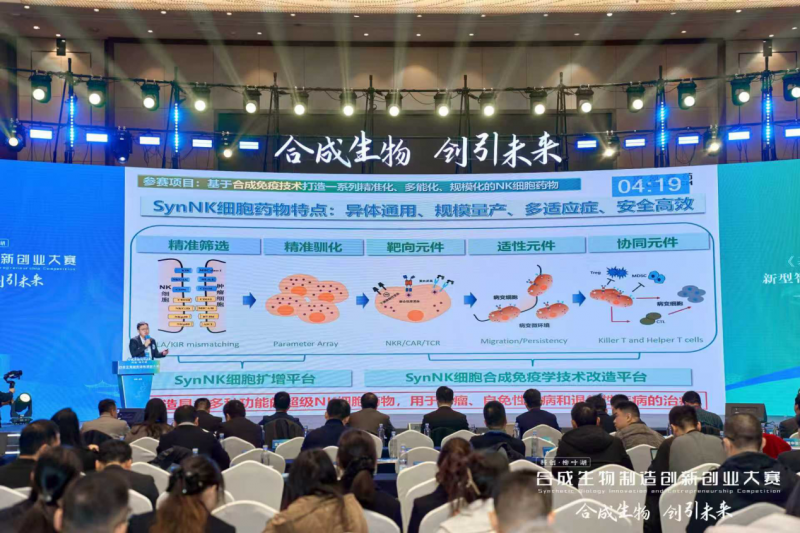
Core Insights - Changde is transforming its industrial landscape by integrating synthetic biology into its development strategy, aiming to become a national leader in the bio-manufacturing sector [1][3] - The second "Innovation and Entrepreneurship Competition for Synthetic Biology Manufacturing" is set to attract innovative projects with industrial potential, supported by various top-tier research institutions and investment firms [1][4] Group 1: Changde's Industrial Evolution - Changde's bio-manufacturing roots trace back to the 1960s with the fermentation process for MSG, evolving into a significant global production base for enzyme preparations and steroid drugs, with a 62% global market share in glyphosate production and 70% in corticosteroids [3] - The city has established synthetic biology as a core pillar of its modern industrial system, supported by provincial policies and the first local regulations on synthetic biology manufacturing in China [3][4] Group 2: Competition Structure and Objectives - The competition features a dual-track mechanism with "Creative Group" for students and researchers focusing on original innovation, and "Growth Group" for registered SMEs emphasizing commercialization and industry collaboration [4][5] - The competition covers nine key areas including bio-food, bio-pharmaceuticals, and bio-materials, aligning with national strategies for green development and health [6] Group 3: Resource Support and Incentives - The competition aims to create a strong ecosystem for innovation, providing financial support, access to industrial resources, and a comprehensive service mechanism for project implementation [8] - Winners will share approximately 1.5 million yuan in prizes and benefit from various policy supports, including talent subsidies and access to a fund matrix of around 40 billion yuan for financial services [8] Group 4: Participation and Timeline - The registration for the second competition has officially opened, with a timeline from September to mid-November for project submissions, followed by preliminary and final rounds leading to a decision in January 2026 [9]

免费领取!《2025中国合成生物制造产业发展白皮书》
synbio新材料· 2025-10-11 09:35
Core Viewpoint - The article emphasizes the rising importance of biomanufacturing as a strategic and innovative field, which is seen as a new growth point that can drive industrial structure optimization and economic transformation. The release of the "2025 China Synthetic Biomanufacturing Industry Development White Paper" highlights the current state, trends, and challenges of the biomanufacturing industry in China [1]. Group 1: Current State and Trends - The white paper provides an overview of the global biomanufacturing industry, including its development status and trends [5]. - It compares the biomanufacturing sectors of China and the United States, highlighting competitive dynamics [5]. - Future development trends in biomanufacturing are discussed, indicating potential growth areas [5]. Group 2: Policy Landscape - The report outlines major policies affecting biomanufacturing both domestically and internationally for the years 2024-2025 [5]. - It details foreign biomanufacturing industry policies and their implications for the sector [5]. - Domestic policies related to biomanufacturing are also analyzed, providing insights into regulatory frameworks [5]. Group 3: Industry Map and Applications - The white paper presents a comprehensive map of the Chinese biomanufacturing industry, identifying key players and their roles [5]. - It analyzes the biomanufacturing industry chain and key application areas, including pharmaceuticals, food, personal care, agriculture, chemicals, materials, and energy [5][6]. - Specific applications of biomanufacturing in various sectors are highlighted, showcasing its versatility and potential impact [5]. Group 4: Key Enterprises and Investment Landscape - The report identifies ten leading enterprises in the Chinese biomanufacturing industry, providing insights into their operations and market positions [6]. - It summarizes the strategic directions of 15 listed companies in synthetic biology, indicating their focus areas and growth strategies [6]. - The investment landscape for synthetic biology in China is examined, detailing funding trends and opportunities from 2024 to mid-2025 [6]. Group 5: Challenges and Recommendations - The white paper discusses the challenges faced by the biomanufacturing industry in China, including technological, regulatory, and market-related issues [6]. - It offers targeted policy recommendations to address these challenges, aiming to support the sustainable development of the biomanufacturing sector [6].




倒计时14天!化学品绿色生物合成论坛:清华、天大、山大、上海交大、浙大、天工所等专家出席报告!一起相约天津!
synbio新材料· 2025-10-11 09:35
Core Viewpoint - The article discusses the upcoming China Industrial Biotechnology Innovation Forum and Bio-Manufacturing Industry Conference, emphasizing its role in promoting high-quality development in synthetic biology and bio-manufacturing through collaboration among various sectors [3][4]. Conference Overview - The conference has been held annually since 2007, becoming a significant platform for communication, showcasing, and collaboration in the field of industrial biotechnology and bio-manufacturing [3]. - The theme for the 2025 conference is "Synthetic Biology Driving Bio-Manufacturing," scheduled for October 24-26, 2025, at the Tianjin Binhai Crowne Plaza Hotel [4]. Organizational Structure - The event is organized by several prominent institutions, including the Chinese Society of Biotechnology and the Tianjin Institute of Industrial Biotechnology [4]. Conference Agenda - The agenda includes a series of forums focusing on various topics such as AI in bio-manufacturing, industrial strain innovation, and green biosynthesis of chemicals, with notable speakers from leading universities and research institutions [5][8][11][13][18]. Registration Information - Registration fees are set at 2500 RMB for regular attendees and 1500 RMB for students, with the registration period starting from October 1, 2025 [24][25]. Accommodation Guide - Several hotels near the conference venue offer discounted rates for attendees, with prices ranging from 299 RMB to 800 RMB per night, including breakfast [28][29][30].
利民股份(002734):多个主营产品量价齐升,代森锰锌在巴西获原药及制剂登记
Guoxin Securities· 2025-10-10 15:25
Investment Rating - The report maintains an "Outperform the Market" rating for the company [5][18]. Core Views - The company is expected to achieve significant year-on-year growth in net profit for the first three quarters of 2025, with estimates ranging from 384 million to 394 million yuan, representing a growth of 649.71% to 669.25% [1][8]. - The increase in profit is attributed to rising sales and prices of key products, improved gross margins, and increased investment income from affiliated companies [1][8]. - The company has signed a registration agreement for the sale of its product in Brazil, which is the largest market for the product globally, indicating strong future sales potential [2][13]. Summary by Sections Financial Performance - The company forecasts a net profit of 529 million yuan for 2025, with a projected earnings per share (EPS) of 1.26 yuan, corresponding to a price-to-earnings (PE) ratio of 15.4 [4][18]. - Revenue is expected to grow from 4.24 billion yuan in 2023 to 4.96 billion yuan in 2025, reflecting a growth rate of 17% [4][22]. Product Pricing and Market Trends - Key products such as甲维盐 and 阿维菌素 have seen price increases, with甲维盐 rising from 500,000 yuan/ton to 650,000 yuan/ton and 阿维菌素 from 350,000 yuan/ton to 455,000 yuan/ton since March 2024 [2][14]. - The price of代森锰锌 has increased from 23,500 yuan/ton to 27,500 yuan/ton since March 2025, contributing to improved profitability [2][13]. New Business Developments - The company has accelerated its new business layout by acquiring a 51% stake in 德彦智创, which focuses on global pesticide creation using AI technology [3][17]. - Strategic partnerships with various technology companies aim to develop innovative agricultural products, potentially leading to high-barrier new products and growth opportunities [3][17].

合成生物学-培养肉!江南大学陈坚院士团队发文!
合成生物学与绿色生物制造· 2025-10-09 07:47
/生物制造产业社群/ 让上下游聚在一起, 未来食农、绿色化工、大健康、美妆个护 等产业同行❤️↓ SynBio团队 | 江南大 学 赵鑫锐研究员 、 堵国成教授 细胞农业作为新兴的革命性生物技术,依托细胞培养与组织工程技术,从供体动物中获取细胞,在生 物反应器中生产蛋白质、脂质及组织,从而获得与传统畜牧产品分子等价的农产品。 培 养 肉 (Cultured Meat, CM)是细胞农业的核心方向之一,通过体外培养动物肌肉细胞生产可食用组 织,无需直接屠宰牲畜。与传统肉类相比,培养肉可显著减少温室气体排放与环境负担,降低抗生素 耐药性与人畜共患病风险,成为应对全球肉类消费增长与资源压力的潜在解决方案。然而,CM生产 仍面临多重技术瓶颈,包括细胞系筛选、无血清培养体系构建、组织成熟度控制及风味与营养特性重 建等。其生产过程一般包括细胞分离、增殖扩增、组织分化与后处理四个阶段,要求精准控制以确保 食品安全与感官质量。 为解决关键问题,合成生物学(synthetic biology, synbio)正成为推动CM产业化的突破口。通过 代谢与基因重编程,合成生物学可设计微生物底盘细胞,用于生产重组生长因子、风味增强物及 ...
2025年中国临床前CRO行业进入壁垒、市场政策、产业链图谱、市场规模、竞争格局及发展趋势分析:本土企业在国内市场竞争优势显著[图]
Chan Ye Xin Xi Wang· 2025-10-09 02:17
Overview - The global CRO market is projected to reach $90.03 billion by 2024, with the preclinical CRO market accounting for $27.46 billion, representing 30.5% of the total CRO market [1][9]. - The increasing prevalence of chronic diseases and heightened health awareness are driving demand for high-quality biopharmaceutical products and related research services [1][9]. Industry Barriers - The preclinical CRO sector faces significant entry barriers due to the need for experienced professionals and established operational expertise, which new entrants may struggle to acquire quickly [5][6]. - Established CROs typically have over 10 years of experience, making it challenging for newcomers to compete effectively [5]. Market Policies - The pharmaceutical manufacturing industry is a key focus for development in China, supported by various policies aimed at encouraging new drug research and optimizing approval processes [7]. - Recent policies include guidelines for improving drug quality and promoting digital healthcare, creating a favorable environment for the preclinical CRO industry [7]. Industry Chain - The upstream of the preclinical CRO industry includes suppliers of experimental materials, laboratory animals, scientific instruments, and data analysis software [8]. - The primary clients for preclinical CROs are pharmaceutical companies, which outsource research to reduce costs and improve efficiency [8]. Development Status - China's CRO market is expected to reach 89.22 billion yuan in 2024, with a year-on-year growth of 5.19%, and the preclinical CRO market is projected to reach 42.91 billion yuan, growing by 5.74% [9]. - The demand for CRO services is expanding due to the aging population and rising chronic disease rates in China [9]. Competitive Landscape - The global preclinical CRO market is dominated by established companies in the US and Western Europe, with the US holding a significant market share [10][11]. - Domestic companies like WuXi AppTec and Kanglong Chemical are gaining competitive advantages by understanding local regulations and market needs, offering tailored services at lower costs [11]. Representative Domestic Companies - WuXi AppTec reported a total revenue of 39.24 billion yuan in 2024, with a gross profit of 16.02 billion yuan and a gross margin of 40.8% [12]. - YinuoSi achieved a total revenue of 1.142 billion yuan in 2024, with 95.4% of this revenue coming from its non-clinical CRO services [12][13]. Development Trends - Future advancements in AI and big data analytics are expected to enhance drug discovery and toxicology assessments, improving efficiency and accuracy in the preclinical CRO sector [13]. - There will be a growing emphasis on personalized solutions targeting specific diseases or patient groups, necessitating diverse disease models for drug development [13].


巨子生物(02367.HK)2025年半年报点评:达人复播渐明 数据修复企稳
Ge Long Hui· 2025-10-02 03:08
Group 1: Financial Performance - The company reported a revenue of 3.11 billion, representing a year-on-year increase of 22.5%, and a net profit attributable to the parent company of 1.18 billion, up 20%, meeting market expectations [1] - Gross margin stood at 81.7%, down 0.7 percentage points, while net profit margin was 38.0%, down 0.6 percentage points [1] - Revenue breakdown shows 82% from the brand "可复美" and 16% from "可丽金", with "可复美" generating 2.54 billion (up 23%) and "可丽金" 503 million (up 27%) [1] Group 2: Strategic Initiatives - The company is expanding production capacity and global presence by adding new production lines for collagen, cosmetics, and medical devices, and constructing new factories for medical devices and health products [2] - A new regional headquarters has been established in Xiamen Free Trade Zone, which will serve as a business settlement center, manufacturing base, and cross-border trade platform [2] - The company is actively participating in major exhibitions and has made significant inroads into markets like Hong Kong and Malaysia, marking a breakthrough in overseas sales [2] Group 3: R&D and Supply Chain Management - The core R&D and management team remains stable, providing a solid foundation for the company's development [2] - The company is focusing on functional skincare and medical devices, with several new products in the R&D or registration phase, expected to launch in the first half of next year [2] - Supply chain management capabilities are being optimized through long-term partnerships with quality raw material suppliers and digital management of production, warehousing, and logistics [2] Group 4: Investment Outlook - The company is positioned as a leader in the application of synthetic biology in the beauty and medical fields, with high technical barriers and increasing brand recognition [3] - Short-term performance is stabilizing, while long-term growth is supported by new product launches and deeper global expansion [3] - Projected net profits for 2025-2027 are 2.502 billion, 3.008 billion, and 3.655 billion, corresponding to PE ratios of 22.0, 18.3, and 15.1, respectively, with a target price of 69.04 HKD for 2025 [3]
Nature Biotechnology:华大发布DNA合成新技术,助力合成生物产业迈向新时代
生物世界· 2025-10-01 10:50
Core Viewpoint - The article discusses a groundbreaking DNA synthesis technology called mMPS, developed by BGI Life Sciences Research Institute, which overcomes traditional limitations in DNA synthesis efficiency, cost, and coverage, marking a significant advancement in synthetic biology [3][4][6]. Group 1: Technology Overview - mMPS technology utilizes a microchip-based approach, dividing a chip into independent millimeter-scale microchips, each synthesizing a single short DNA strand, allowing for identity tracking and sorting of DNA fragments [7][9]. - The technology enables a systematic breakthrough in synthesis throughput, yield, and quality, addressing the challenges of traditional high-throughput DNA synthesis methods [3][10]. Group 2: Performance and Applications - mMPS technology has demonstrated superior performance in complex sequence handling, high GC content regions, and repetitive sequences, providing reliable support for protein stability research and disease mutation mechanism analysis [10]. - The technology significantly reduces the time for constructing mutation libraries from weeks to days, enhancing the discovery and optimization process of antibody drugs [12]. - In the field of clinical diagnostics, mMPS can synthesize thousands of primer probes at once, reducing costs by over three times and enabling upgrades in multi-target detection capabilities [13]. Group 3: Industrial Impact - The mMPS technology is expected to transform DNA synthesis from a laboratory service into a foundational infrastructure for biomanufacturing, driving efficiency revolutions in pharmaceuticals and diagnostics [12]. - The cost of single-base synthesis is reduced by approximately 70% compared to traditional methods, facilitating large-scale industrial applications [12]. - The modular and automated characteristics of mMPS technology lay the groundwork for the emergence of "DNA synthesis as a service" platforms, integrating AI-driven design and automated synthesis [15]. Group 4: Future Prospects - The mMPS technology is anticipated to become the core engine of next-generation industrial-grade DNA synthesis factories, enabling the design, construction, and testing of complex biological systems [18]. - Experts believe that the integration of AI and automation with mMPS will drive deep integration and industrialization of synthetic biology in biomanufacturing and healthcare [18].