生态保护

Search documents
筑牢生态安全屏障:水清岸绿处 百鸟引“巢”来
Xin Hua She· 2025-11-14 09:53
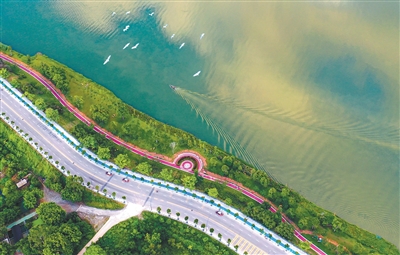
初冬时节,在安徽明光女山湖省级自然保护区,成群的候鸟时而在水中嬉戏、觅食,时而翩翩飞舞,构 成一幅美丽和谐的生态画卷。 记者:曹力 摄制:史悦 周明娟 新华社音视频部制作 地处江淮分水岭的女山湖省级自然保护区,是以保护淡水湖泊湿地生态系统和珍稀动植物、鸟类为主体 的内陆湿地型自然保护区,作为淮河流域重要生态屏障,该区域在调节水质、防洪减灾及维持生物多样 性方面具有关键作用。 近年来,当地坚守绿色发展底色,深入践行"绿水青山就是金山银山"理念,探索"生态+"多元共治路 径,水清、岸绿、河畅、景美的美好生态画卷正在这里徐徐展开。 ...
中俄业界人士聚珲春探讨推进东北虎豹跨境保护合作
Zhong Guo Xin Wen Wang· 2025-11-14 08:15
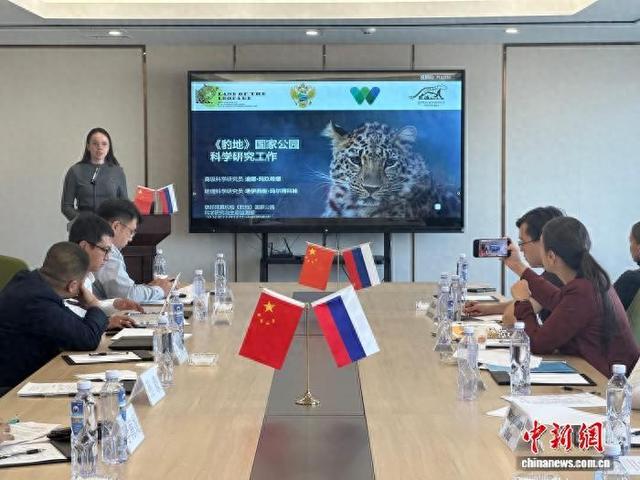
Core Viewpoint - The event "Technology Empowering Ecological Protection and Promoting Civilizational Mutual Learning" held in Hunchun, Jilin, focused on discussions around monitoring technology, biodiversity research, and cross-border cooperation for the protection of Northeast tigers and leopards [1] Group 1: Event Overview - The event was organized by Jishi Media, which has collaborated with the Northeast Tiger and Leopard National Park to establish an integrated intelligent monitoring system that utilizes 700MHz broadcasting networks, satellite remote sensing, and AI recognition technology [2] - The monitoring system provides real-time data on tiger and leopard activity, population changes, and habitat conditions, supporting scientific research and management [2] Group 2: International Collaboration - The newly established Jishi Media Northeast Tiger and Leopard Cultural International Communication Center aims to enhance international outreach through innovative content formats, attracting over 6 million views and achieving a total of 32 million views for short videos [2] - The center's content has reached audiences in 26 countries and regions, showcasing the ecological protection efforts in Jilin [2] Group 3: Research and Data Sharing - Russian experts shared their experiences in protecting the Northeast leopard, noting an increase in the leopard population from approximately 35 to around 120 individuals in the national park [4] - Chinese and Russian researchers discussed advancements in monitoring systems and proposed the establishment of a cross-border research data sharing platform to enhance monitoring effectiveness [4][6] Group 4: Biodiversity and Community Engagement - Research teams from Yanbian University presented findings on biodiversity in Northeast Asia and the impact of climate and land use changes on tiger habitats, along with new methods for analyzing human-tiger interactions [6] - The event included discussions on community education and sustainable livelihood projects aimed at mitigating human-wildlife conflicts [6] Group 5: Future Cooperation - Jishi Media and the Russian Leopard National Park expressed intentions to strengthen cross-border communication cooperation, exploring joint content releases to enhance international communication capabilities in ecological protection [6]


铺展天山南北青绿画卷
Zhong Guo Zi Ran Zi Yuan Bao· 2025-11-14 06:22
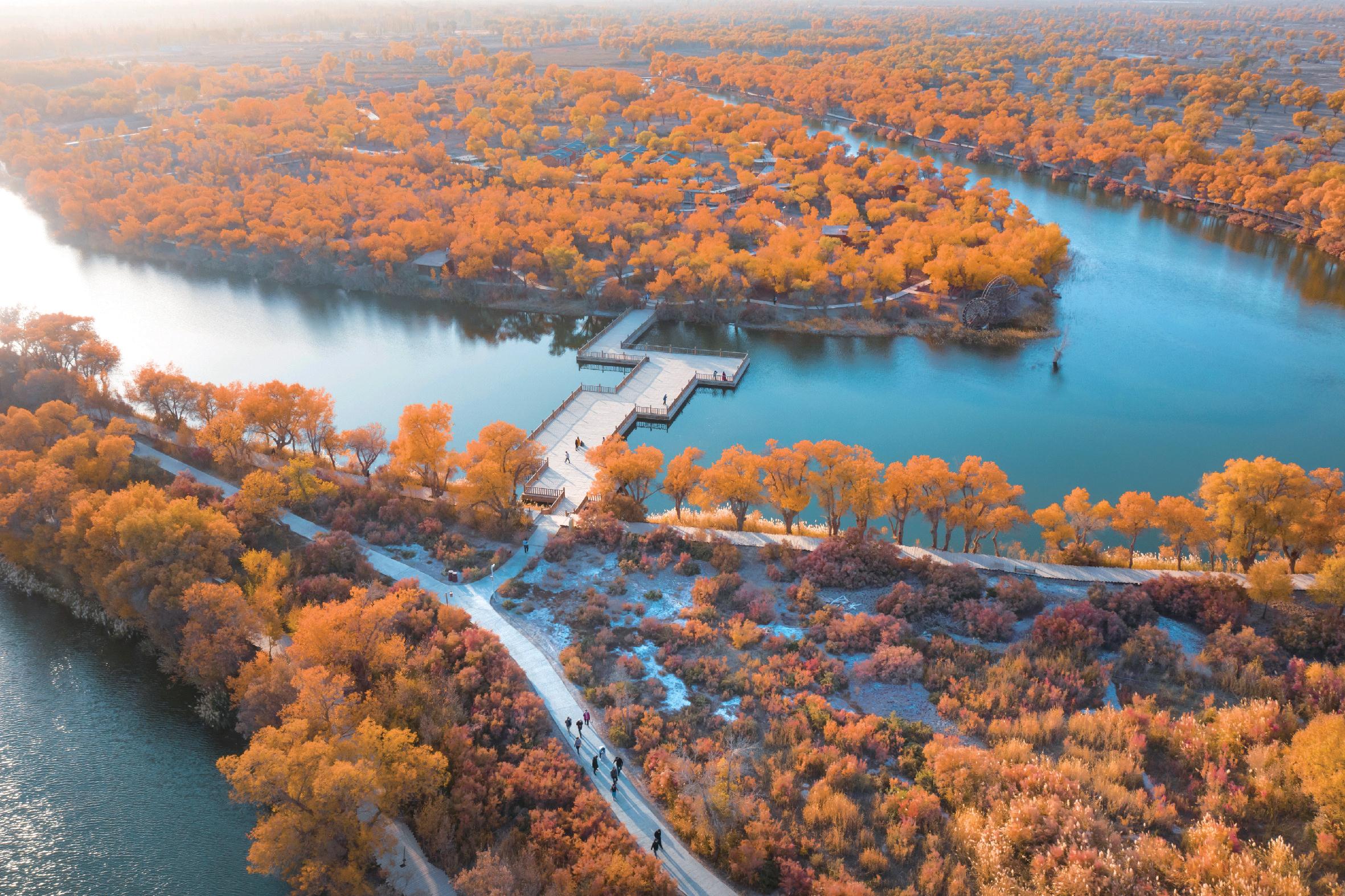
Core Viewpoint - Xinjiang Uygur Autonomous Region has made significant progress in ecological civilization construction since the 14th Five-Year Plan, implementing a comprehensive forest chief system to enhance forestry and grassland governance, and creating a robust ecological security barrier around the Taklamakan Desert [3][7][18] Group 1: Forest Chief System Implementation - The establishment of a five-level forest chief system has been accelerated since 2021, with over 30,000 forest chiefs appointed by the end of 2024 [7] - The system includes coordination mechanisms such as "forest chief + river (lake) chief" and "forest chief + prosecutor" to enhance resource protection [7] - Xinjiang has received excellent ratings in national forest chief assessments for three consecutive years from 2022 to 2024 [7] Group 2: Ecological Restoration and Green Development - The "Three-North" project has achieved the construction of 12.95 million acres of ecological barriers, promoting the integration of ecological protection with rural revitalization and renewable energy industries [12][18] - The region has seen a shift from "protecting green" to "increasing green," with significant investments in afforestation and ecological restoration projects [12][18] - The introduction of innovative practices, such as the "land-based forestry" initiative, has improved funding for forest management and enhanced local economic development [16] Group 3: Local Initiatives and Community Involvement - Various counties have developed unique ecological industries, such as the apple plantation in Zepu County, which integrates ecological restoration with economic benefits [14] - Community participation in afforestation and sand control has been encouraged, leading to successful projects like the establishment of sand control teams and the promotion of ecological sand industries [11][15] - The transformation of desert areas into productive landscapes has improved local livelihoods and biodiversity, with significant increases in wildlife populations [17][18]
江西省联合执法打击涉鸟违法犯罪
Zhong Guo Zi Ran Zi Yuan Bao· 2025-11-14 06:22
Group 1 - The core viewpoint of the articles highlights the significant efforts made by Jiangxi Province in wildlife protection, particularly focusing on bird conservation through various initiatives since February this year [1][2] Group 2 - The "Clear Net and Protect Birds" campaign has led to a high-pressure crackdown on illegal bird trapping, with over 1.118 million personnel involved, resulting in the removal of 4,157 bird nets and the investigation of 139 cases [1] - The campaign has successfully apprehended 178 suspects, demonstrating a strong deterrent effect against wildlife crimes [1] - Collaborative efforts with the National Forestry and Grassland Administration have strengthened the protection of migratory bird habitats in Poyang Lake, with over 9,700 law enforcement personnel deployed and 200 birds rescued [1] Group 3 - The preparation for the "Fourth Poyang Lake International Bird Watching Season" is underway, aiming to integrate ecological and cultural aspects, with 22 bird watching points being planned and enhanced services being developed [2]
四川“十四五”时期筑牢维护国家生态安全战略屏障主要成就发布 生态环境质量创近20年来最好水平
Si Chuan Ri Bao· 2025-11-14 00:31
Core Viewpoint - Sichuan Province has made significant progress in ecological protection and restoration during the "14th Five-Year Plan" period, achieving historical breakthroughs in pollution prevention and control, while promoting green and low-carbon industrial transformation. Ecological Protection and Restoration - A total of 530 natural protected areas have been optimized and integrated, with ecological restoration covering over 6.5 million acres, effectively protecting wildlife [7] - Sichuan has established a three-tier ecological restoration planning system at the provincial, municipal, and county levels, delineating ecological protection red lines covering 148,700 square kilometers, which is 30.59% of the province's area [7] Blue Sky, Clear Water, and Clean Land Campaign - PM2.5 concentration has reached the best level since monitoring began, dropping to 25.3 micrograms per cubic meter in the first ten months of this year [4] - The water quality of national and provincial monitoring sections has maintained a 100% excellent rate for two consecutive years, with the Yangtze and Yellow Rivers consistently rated at Class II or above [4] - Over 3,400 "waste-free city cells" have been established, with a construction waste recycling rate of 70%, ranking first in Western China [6] Industrial Transformation - Sichuan has eliminated over 700 enterprises with backward production capacity, achieving a 15.4% reduction in energy consumption per unit of industrial added value, completing the "14th Five-Year" industrial energy-saving target one year ahead of schedule [8] - The water consumption per ten thousand yuan of industrial added value has decreased to 11.5 cubic meters, which is about half of the national average [8] Pollution Prevention Achievements - The number of heavily polluted days has decreased by 80% compared to ten years ago, and the rural sewage treatment rate has increased from less than 20% in 2019 to 78% [3] - The province has implemented proactive air quality monitoring and prediction, achieving a 90% accuracy rate in forecasts [4] Ecosystem Diversity and Stability - The population of endangered species, such as the critically endangered Qing头潜鸭, has expanded due to improved water quality in Sichuan [7] - The province has completed the construction of the Giant Panda National Park and the Ruoergai National Park, enhancing ecosystem diversity and stability [7]

鄱阳湖保护区鸟类种类增至394种 多样性增势持续
Zhong Guo Xin Wen Wang· 2025-11-13 11:38
来源:中国新闻网 编辑:张澍楠 鄱阳湖保护区鸟类种类增至394种 多样性增势持续 中新社江西永修11月13日电 (记者 李韵涵)江西鄱阳湖国家级自然保护区(简称"鄱阳湖保护区")第三次科 考成果13日在"中国候鸟小镇"江西永修县吴城镇公布。本次科考成果显示,鄱阳湖保护区内鸟类种类新 增至394种,鸟类多样性呈现出持续增长、记录完善、结构稳定趋势。 鄱阳湖是中国最大淡水湖,也是全球候鸟重要栖息地、国际重要湿地。鄱阳湖保护区第三次科考于2024 年启动,由中国科学院南京地理与湖泊研究所牵头,开展了多轮调查,借助更先进的技术手段和更科学 的研究方法,对保护区生物资源和生境质量进行了全方位、多层次系统监测调查。 本次科考成果显示,从浮游植物到浮游动物,从底栖动物到水生植物,再到洲滩植物、鱼类和鸟类,众 多生物种类构成了一个复杂而有序的生态网络。其中,浮游植物鉴定出8门103属257种,远高于第二次 鄱阳湖科考的97种;浮游动物记录到118种,远高于第二次科考的42种;底栖动物共发现69种,介于前 两次科考发现的物种数之间。 在2019年至2025年间,依托系统化监测、民众观鸟活动和遥感、声学识别等新技术手段,鄱阳湖保 ...
青海玉树:护好三江源,“一处美”带动“一片富”
Ren Min Ri Bao· 2025-11-13 05:53
Core Viewpoint - The article emphasizes the importance of ecological protection in the Sanjiangyuan region, highlighting initiatives for waste management and ecological restoration as part of China's broader environmental goals [2][4]. Group 1: Ecological Initiatives - The Sanjiangyuan National Park, covering over 190,000 square kilometers, is a pilot for the national park system, focusing on ecological barrier construction in the Qinghai-Tibet Plateau [2]. - A closed-loop system for waste management is being established, which includes source classification, efficient transportation, and green processing [4]. - The introduction of a points system in "green supermarkets" incentivizes local residents to participate in waste sorting, allowing them to exchange points for essential goods [3][4]. Group 2: Economic and Social Benefits - The ecological improvements have led to increased wetland areas, now nearly 50,000 square kilometers, and improved water quality in major rivers [4]. - The local economy is benefiting from eco-tourism and sustainable livestock farming, with the "Yushu Yak" gaining recognition as a geographical indication product [6]. - Financial support for villagers includes medical and pension insurance payments totaling 590,000 yuan, with individual dividends exceeding 1,600 yuan [6]. Group 3: Policy and Governance - The local government is committed to enhancing ecological protection as part of the 14th Five-Year Plan, aiming for a balance between economic, social, and ecological benefits [5][6].
候鸟翩跹绘就壮观生态“画卷” 美丽中国建设成果丰硕
Yang Shi Wang· 2025-11-13 03:47
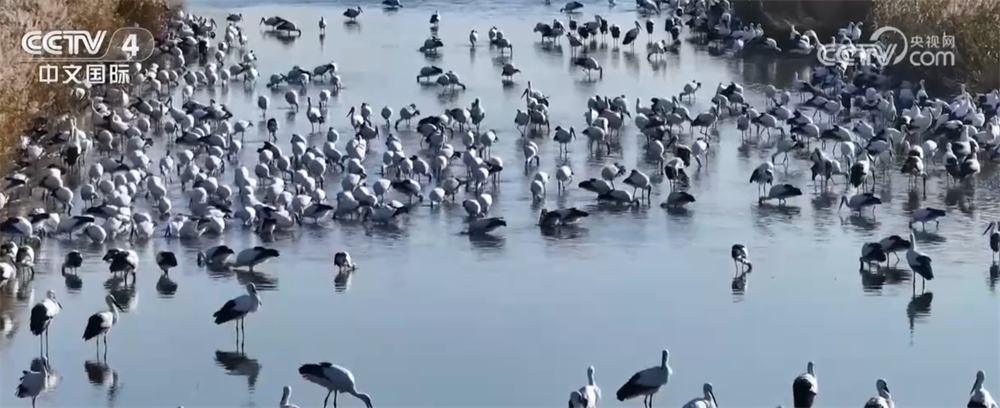
央视网消息:眼下正是候鸟迁徙高峰,作为候鸟迁徙重要停歇点,多地出现成群鸟类,其中不少珍稀品种。 在位于中国候鸟迁徙中路通道的陕西榆林,数以万计的南迁候鸟让湖泊湿地生趣盎然。在红碱淖国家级自然保护区内,天鹅、鸿雁、赤麻 鸭等迁徙鸟类数量已达近4万只,迎来年度峰值。近年来,保护区持续落实生态保护措施,科学调度补水,还加强候鸟迁徙季的日常巡护监 测,为候鸟营造良好的栖息环境。在榆林河口水库湿地,宽阔水域与丰富食物为迁徙鸟类提供充足能量补给,目前飞抵候鸟已达7000余只。 作为东亚到澳大利西亚候鸟迁徙路线上的关键驿站和越冬地,天津北大港湿地自然保护区候鸟陆续飞抵。监测数据显示,随着秋季迁徙季 开启,25万只候鸟已飞抵湿地,其中包括东方白鹳、白枕鹤、灰雁等国家一、二级保护动物。 天津市北大港湿地自然保护区管理中心野保科科员张欣达称:"通过布设的红外相机声纹监测设备,为鸟类保护提供科学的支撑。" 河北唐山曹妃甸湿地是候鸟们的天然"大食堂",每年云集于此的候鸟多达数百万只。在这片湿地中,最引人注目的是有着"鸟中大熊猫"美 誉的东方白鹳。为了让它们安心觅食,湿地工作人员特意对高水位区域进行人工抽排,搭配湿地内丰富的鱼虾资源, ...
护好三江源,“一处美”带动“一片富”(贯彻四中全会精神一线见闻)
Ren Min Ri Bao· 2025-11-12 23:10
Core Viewpoint - The article emphasizes the importance of ecological protection in the Sanjiangyuan region, highlighting initiatives for waste management and ecological restoration as part of China's broader environmental goals [2][5]. Group 1: Ecological Protection Initiatives - The Sanjiangyuan National Park, covering over 190,000 square kilometers, is a pilot for national park systems in China, focusing on ecological barrier construction in the Qinghai-Tibet Plateau [2]. - A closed-loop system for waste management is being established, which includes source classification, efficient transportation, and green processing [5]. - The implementation of a "green supermarket" points system encourages local participation in waste sorting, allowing residents to exchange points for daily necessities [4][5]. Group 2: Economic and Social Benefits - The ecological improvements have led to increased wetland areas, now nearly 50,000 square kilometers, and improved water quality in major rivers [5]. - The local economy is benefiting from eco-tourism and sustainable livestock farming, with the "Yushu Yak" gaining recognition as a geographical indication product [7]. - Financial support for residents includes medical and pension insurance payments, totaling 590,000 yuan, and individual dividends exceeding 1,600 yuan [7]. Group 3: Policy and Future Directions - The local government is committed to enhancing ecological barriers and achieving a balance between economic, social, and ecological benefits [8]. - The integration of ecological health with economic prosperity is seen as essential, with local leaders advocating for continued efforts in environmental protection [6][8].
一条河带美一个村(我家门前有条河)
Ren Min Ri Bao· 2025-11-12 22:19
如今再看增江河,碧波荡漾、鱼翔浅底,孩子们在河边嬉戏的身影,像极了我小时候的模样。守护这条 河,就是守护我们的根、守护村子的未来。接下来,我会继续同村民一起,当好增江河的守护者,让生 态美转化为发展美,续写人与自然和谐共生的故事。 我家在广东广州增城区正果镇蒙花布村,增江河如蜿蜒丝带穿村而过,滋养着一方水土。这条河陪伴我 成长,我也有幸成为它变迁的见证者与守护者。 童年时的增江河,水清澈得能看见河底的鹅卵石。夏天,孩子们光着脚丫在浅滩追逐,摸小鱼、捡贝 壳,玩累了就躺在沙滩上歇凉。后来,为了求学和工作,我离开了家乡。但无论走多远,每次回家,我 都会去河边走走。 2007年春节回家,我来到河边,眼前的景象让我心头一紧:曾经清澈的河水变得浑浊,岸边散落着垃 圾,水草杂乱丛生。这让我心痛不已,也萌生了一个念头——我要回家,守护这条养育了我们的"母亲 河"。 2008年,恰逢村里换届选举,我主动报名参选,最终当选村两委成员,也第一时间加入了刚成立的村级 河道巡逻队。2014年,我当选蒙花布村党支部书记,身份虽有变化,但巡河护河的责任始终没放下。 如今,我已经坚持巡河17年。这些年里,我还牵头组建了村里的环保志愿者队伍 ...