
污染防治

Search documents
生态环境法典草案三审紧急情况下造成野生动物损害不担责
Zhong Guo Xin Wen Wang· 2026-01-23 06:38
Core Viewpoint - The draft of the Ecological Environment Code has been submitted for the third review, emphasizing the need for regulations regarding wildlife protection and ecological conservation, while also addressing the balance between human safety and wildlife management [1][2] Group 1: General Principles - The draft includes a new provision to promote ecological culture and summarizes judicial practices, enhancing the roles of courts and procuratorates in ecological protection [1] - The Ecological Environment Code is China's second law named as a "code," with its initial draft presented in April 2025, consisting of five parts [1] Group 2: Pollution Prevention - The draft improves regulations on the organization and management of burning straw and fallen leaves, and adds regulatory measures for the cross-province transfer of solid waste [1][2] Group 3: Ecological Protection - New provisions support international cooperation in marine ecological protection, deep-sea polar exploration, and sand prevention and control [1] - The draft mandates local governments to organize comprehensive prevention and control measures in areas severely affected by wildlife, ensuring no legal liability for actions taken in emergencies [2] Group 4: Green and Low-Carbon Development - The draft enhances the overall requirements for green and low-carbon development, focusing on the construction of a green, low-carbon circular economy and reinforcing resource recycling measures [2] - It emphasizes the commitment to "dual carbon" goals and improves the legal framework for climate change response [2]
新疆纵深推进污染防治攻坚筑牢生态安全屏障
Zhong Guo Huan Jing Bao· 2026-01-08 00:46
Core Viewpoint - The news emphasizes the importance of green development in Xinjiang as part of China's modernization efforts, highlighting the region's commitment to ecological civilization and sustainable development through various initiatives and policies aimed at pollution prevention and environmental protection [2][3][22]. Group 1: Green Transformation and Development Goals - Xinjiang aims to accelerate comprehensive green transformation in economic and social development, with a focus on building a beautiful Xinjiang by 2025 [2][3]. - The region's economic work priorities include promoting carbon reduction, pollution control, and green expansion, with specific targets set for energy system construction and green electricity application [2][20]. Group 2: Pollution Prevention and Environmental Quality Improvement - Xinjiang has made significant progress in pollution prevention, achieving high marks in national assessments and maintaining over 90% satisfaction in ecological environment quality among residents [4][5]. - The air quality in the Tianshan North Slope urban cluster improved, with a 91.0% rate of good air quality days in 2025, and a reduction in heavy pollution days [5]. - Water quality has also improved, with 97.3% of surface water meeting good quality standards, reflecting a 1.4% increase [5]. Group 3: Ecological Protection and Sustainable Practices - The region has implemented comprehensive measures for soil pollution prevention, ensuring 100% safety in the utilization of contaminated farmland [6]. - Xinjiang has established a robust system for solid waste management, with 77 hazardous waste disposal facilities capable of processing 13.99 million tons annually [6][11]. - The development of eco-friendly practices, such as desert aquaculture, is being promoted to address ecological challenges while enhancing economic growth [9]. Group 4: Carbon Market Participation and Low-Carbon Development - Xinjiang is actively participating in the national carbon market, focusing on key industries and ensuring compliance with carbon emission regulations [20][21]. - The region is enhancing its capacity for carbon data management and quality supervision, aiming to improve the overall effectiveness of carbon market participation [21]. Group 5: Systematic Approach to Ecological Civilization - The implementation of a comprehensive plan for ecological civilization construction includes 25 key tasks across various sectors, aiming for a coordinated approach to environmental management [9][10]. - Continuous monitoring and improvement of ecological conditions are being prioritized, with new monitoring stations established to enhance data collection and analysis [18].


钟楼:生态文明建设展现新图景
Zhong Guo Huan Jing Bao· 2025-12-29 02:38
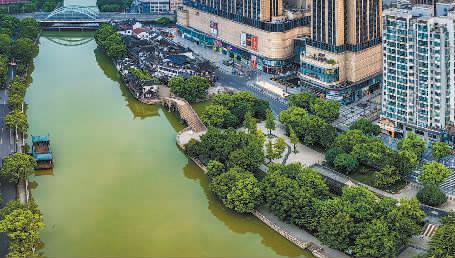
Core Viewpoint - Jiangsu Province's Changzhou City is actively promoting a green and low-carbon transformation in the Zhonglou District, achieving significant progress in pollution prevention and control, leading to improved environmental quality and biodiversity [2] Environmental Quality Improvement - As of the end of November, the PM2.5 concentration in Zhonglou District was 29.2 micrograms per cubic meter, a year-on-year decrease of 6.1%, marking the best level for the same period since monitoring began [2] - The observation of the national second-level protected wild animal, the fish eagle, at the He Garden bird observation station indicates increased biodiversity [2] Green and Low-Carbon Transformation - The district has made strides in the comprehensive governance of "hazardous, polluting, disordered, and low" enterprises, completing the remediation of 400 companies in the year, including the closure of 50 and the upgrading of 350 [2] - A total of 1,868.56 acres of low-efficiency land have been reclaimed and revitalized [2] - The Xinggang International Intelligent Manufacturing Park in Zhonglou Economic Development Zone has been selected as a near-zero carbon pilot park for 2025 [2] - The Wuxing Experimental Primary School has received the Green Flag honor from the 12th batch of International Eco-Schools [2] Environmental Governance Capacity - The district completed eight ecological environment infrastructure projects, including the first phase of the comprehensive renovation of urban sewage collection and treatment in Zouqu Town, and the urban sewage pipeline project [2] - A total of 10 kilometers of new urban sewage pipelines were constructed, achieving a centralized treatment rate of over 90% for urban domestic sewage [2] - The district hosted an emergency drill for sudden environmental incidents, enhancing the emergency response capabilities of logistics parks and coordination among multiple departments [2]
一问一答丨@从事污染防治的第三方企业 所得税优惠相关问题解答,请查收!
蓝色柳林财税室· 2025-12-20 05:10
Core Viewpoint - The article discusses the tax incentives available for third-party pollution control enterprises in China, specifically a reduced corporate income tax rate of 15% for eligible companies until December 31, 2027 [2]. Group 1: Definition and Tax Incentives - Third-party pollution control enterprises are defined as those responsible for the operation and maintenance of environmental pollution control facilities, either commissioned by polluting enterprises or the government [1]. - Eligible third-party pollution control enterprises can benefit from a reduced corporate income tax rate of 15% [2]. Group 2: Eligibility Criteria - To qualify for the tax incentives, third-party pollution control enterprises must meet several conditions, including: - Being a legally registered resident enterprise in mainland China [3]. - Having at least one year of continuous operation in environmental pollution control [3]. - Employing a minimum of five technical personnel with intermediate or higher qualifications in environmental protection, or at least two with senior qualifications [3]. - Ensuring that at least 60% of their annual revenue comes from environmental protection facility operations [3]. - Possessing the capability for testing and having a laboratory that meets the requirements for routine pollutant detection [3]. - Maintaining the normal operation of pollution control facilities to meet national or local emission standards [3]. - Having a good tax credit rating, not rated as C or D in the past three years [3]. Group 3: Documentation Requirements - Third-party pollution control enterprises must retain specific documentation for verification, including: - Evidence of continuous operation for over one year, contracts, and revenue records related to pollution control [5]. - Valid technical personnel qualifications and employment records [5]. - Documentation showing the proportion of revenue from environmental protection services [5]. - Evidence of testing capabilities and compliance with pollutant detection requirements [5]. - Proof of stable operation of pollution control facilities meeting emission standards [5]. - For enterprises solely engaged in automatic continuous monitoring, documentation of monitoring reliability is required, while emission compliance records are not necessary [5]. Group 4: Additional Documentation for Testing Capability - To demonstrate testing capability, enterprises must keep: - A list of pollution detection instruments, including certificates for mandatory measuring instruments [6]. - Original records of routine physical and chemical testing for the year, including hazardous waste transfer documentation if applicable [6].
3个涉重金属污染防治国家重点研发计划项目启动实施
Guang Xi Ri Bao· 2025-12-16 04:53
Core Viewpoint - The Guangxi region has made significant progress in heavy metal pollution prevention and control, with the launch of three national key research and development projects aimed at addressing soil and groundwater contamination in karst areas [1][2][3] Group 1: Project Initiatives - Three national key R&D projects have been initiated in Nanning, focusing on integrated technology and demonstration for heavy metal pollution prevention in Guangxi's karst areas [1] - The projects are led by research institutions including Sun Yat-sen University, Central South University, and the Institute of Geographic Sciences and Natural Resources Research, Chinese Academy of Sciences [1] Group 2: Specific Focus Areas - The "Comprehensive Governance of Air, Soil, and Groundwater Pollution" project aims to address the inadequate prevention of soil and groundwater pollution in Guangxi's karst metal mining areas through heavy metal tracing, risk assessment, and the development of pollution control materials and technologies [2] - The "Protection and Restoration of Typical Fragile Ecosystems" project focuses on mitigating the risks of heavy metal migration due to strong permeability and erosion in karst landscapes by employing geomorphological reshaping, soil reconstruction, and vegetation restoration [2] - The "Key Technologies and Equipment for Circular Economy" project targets the historical legacy of solid waste in resource-rich areas, addressing the reduction of heavy metal solid waste at the source and ensuring safe disposal and risk management of historical heavy metal waste [2] Group 3: Strategic Implementation - The Ministry of Ecology and Environment and the Ministry of Science and Technology have designed a systematic top-level framework for the three projects, emphasizing the application of technology in the Hechi region of Guangxi [3] - The implementation of these projects will focus on problem-oriented approaches, strengthening system integration, and creating a comprehensive technical solution package for heavy metal pollution control [3] - The goal is to transform technological investments into environmental, economic, and social benefits through the development of low-cost, low-disturbance pollution control models that are replicable and scalable [3]
四川“十四五”时期筑牢维护国家生态安全战略屏障主要成就发布 生态环境质量创近20年来最好水平
Si Chuan Ri Bao· 2025-11-14 00:31
Core Viewpoint - Sichuan Province has made significant progress in ecological protection and restoration during the "14th Five-Year Plan" period, achieving historical breakthroughs in pollution prevention and control, while promoting green and low-carbon industrial transformation. Ecological Protection and Restoration - A total of 530 natural protected areas have been optimized and integrated, with ecological restoration covering over 6.5 million acres, effectively protecting wildlife [7] - Sichuan has established a three-tier ecological restoration planning system at the provincial, municipal, and county levels, delineating ecological protection red lines covering 148,700 square kilometers, which is 30.59% of the province's area [7] Blue Sky, Clear Water, and Clean Land Campaign - PM2.5 concentration has reached the best level since monitoring began, dropping to 25.3 micrograms per cubic meter in the first ten months of this year [4] - The water quality of national and provincial monitoring sections has maintained a 100% excellent rate for two consecutive years, with the Yangtze and Yellow Rivers consistently rated at Class II or above [4] - Over 3,400 "waste-free city cells" have been established, with a construction waste recycling rate of 70%, ranking first in Western China [6] Industrial Transformation - Sichuan has eliminated over 700 enterprises with backward production capacity, achieving a 15.4% reduction in energy consumption per unit of industrial added value, completing the "14th Five-Year" industrial energy-saving target one year ahead of schedule [8] - The water consumption per ten thousand yuan of industrial added value has decreased to 11.5 cubic meters, which is about half of the national average [8] Pollution Prevention Achievements - The number of heavily polluted days has decreased by 80% compared to ten years ago, and the rural sewage treatment rate has increased from less than 20% in 2019 to 78% [3] - The province has implemented proactive air quality monitoring and prediction, achieving a 90% accuracy rate in forecasts [4] Ecosystem Diversity and Stability - The population of endangered species, such as the critically endangered Qing头潜鸭, has expanded due to improved water quality in Sichuan [7] - The province has completed the construction of the Giant Panda National Park and the Ruoergai National Park, enhancing ecosystem diversity and stability [7]
生态环境部:“十四五”污染防治攻坚战取得新成效
Jing Ji Guan Cha Wang· 2025-09-19 02:47
Core Viewpoint - The press conference highlighted the achievements in pollution prevention and the promotion of high-quality development through ecological environment protection during the "14th Five-Year Plan" period [1] Group 1: Pollution Prevention Achievements - Significant progress has been made in the battle against pollution, particularly in the "Blue Sky Defense War" [1] - A total of 41 million households have completed coal-to-clean heating transformations in northern regions [1] - Nearly 20 million high-emission vehicles have been eliminated as part of the "14th Five-Year Plan" [1] Group 2: Air Quality Improvement Targets - Focused actions are being implemented in key regions to reduce PM2.5 concentrations by 2024 [1] - PM2.5 concentrations in the Beijing-Tianjin-Hebei region are expected to decrease by 18% compared to 2020 levels [1] - The Yangtze River Delta region aims for a 10% reduction, while the Fenwei Plain targets a 20% reduction in PM2.5 concentrations [1]
全省经济向新向好动能持续增强
Liao Ning Ri Bao· 2025-08-17 01:59
Group 1 - The province is actively promoting industrial upgrades, increasing technological investments, advancing digital transformation, and adhering to green development principles, resulting in significant improvements in new quality productivity [1] - In the first half of this year, the invoicing amount in the chemical industry accounted for 41.8% of the petrochemical sector, while the non-ferrous metal smelting industry accounted for 23.3% of the metallurgy sector, indicating the growth of new materials in metallurgy [1] - The proportion of invoicing amounts from strategic emerging industries has increased to 28.4%, and high-tech industries have seen an increase to 4.7% [1] Group 2 - The province has made substantial investments in pollution prevention and environmental monitoring equipment, with an average annual growth of 37.3% from 2022 to 2024 [2] - The invoicing amounts for environmental technology promotion services and energy-saving technology promotion services have increased by 60.2% and 20.3% respectively [2] - New energy vehicle sales have seen an average annual growth of 109.6%, with their share of total sales rising to 40.7% in the first half of this year [2] Group 3 - The province is integrating into the national unified market, with the invoicing amount from central enterprises in Liaoning growing at an average annual rate of 1.5% from 2022 to 2024 [3] - In the first half of this year, the invoicing amount from Liaoning's trade with the Yangtze River Delta, Beijing-Tianjin-Hebei, and the Pearl River Delta accounted for 23.2%, 20.5%, and 6.9% of total inter-provincial trade respectively [3] - The total import and export volume with countries along the Belt and Road has grown at an average annual rate of 17.2%, with exports increasing by 27% [3]
辽宁省地方标准累计总量达2215项
Liao Ning Ri Bao· 2025-07-19 01:43
Core Viewpoint - The provincial market regulatory bureau has implemented a standard-driven strategy to promote industrial transformation and high-quality development, resulting in the release of numerous local standards in various sectors [1][2]. Group 1: Local Standards Released - In the second quarter, 32 local standards were published in Liaoning Province, with a total of 84 new local standards added by the end of June, bringing the cumulative total to 2,215 [1]. - The newly released local standards cover areas such as modern agriculture, forestry and grassland industry, pollution prevention, commerce, property trading, cultural tourism, home services, special equipment, sports, meteorological services, and cultural services [1]. Group 2: Impact of Specific Standards - The "Combined Harrow Operation Technical Regulations" is expected to enhance the mechanization of agricultural production, reduce pest occurrences, and minimize soil moisture loss, leading to an estimated increase in overall quality compliance rates by 15% to 20% and yield increases of 10% to 20% per acre [1]. - The "Air Pollutant Emission Standards for the Steel Industry" is a mandatory local standard that addresses key processes and 16 types of pollutants, promoting green development and equipment upgrades in the steel sector [2]. - The "Guidelines for E-commerce Operations of County-level Agricultural Products" fills a gap in e-commerce standards, facilitating the construction of competitive county-level agricultural businesses and enhancing logistics and digital infrastructure [2]. - The "Rainstorm Disaster Survey and Risk Assessment Zoning" provides scientific guidance for disaster investigation and risk assessment, aiding in disaster prediction and emergency decision-making [2].
奋力谱写中原大地推进中国式现代化新篇章 丨追青逐绿 美丽前行——河南践行“两高四着力”系列述评之三
He Nan Ri Bao· 2025-06-18 23:24
Core Viewpoint - The article emphasizes the importance of ecological protection and its direct correlation with the well-being of the people and high-quality development in Henan province, as highlighted by President Xi Jinping's directives during his visit [1][4]. Group 1: Environmental Quality Improvement - Henan province has seen a continuous improvement in air quality, with 101 days of good air quality recorded by the end of May, an increase of 6.9 days year-on-year, and only 1.9 days of heavy pollution, a decrease of 4.6 days [2]. - The province has implemented significant measures to tackle pollution, including the closure of over 120,000 "scattered and polluting" enterprises and the completion of ultra-low emission transformations in the thermal power industry [3]. Group 2: Ecological Protection Initiatives - Henan has established 351 various types of natural protected areas, safeguarding 95% of nationally protected wild animals and 80% of typical ecosystems, making it one of the provinces with the richest biodiversity in China [3]. - The province has completed afforestation of 6.45 million acres and wetland restoration of 27,800 acres along the Yellow River since 2019, contributing to improved ecological conditions [4]. Group 3: Sustainable Development Strategies - The province is focusing on green development, with 85.6% coverage of green transformation in key industries and the establishment of 11 zero-carbon factories and 301 green factories [6]. - The South-to-North Water Diversion Project has maintained water quality at Class II or above, ensuring a stable supply of clean water to northern regions [5]. Group 4: Ecological Civilization and Economic Growth - Henan has built 7 national-level innovation bases for the "Green Mountains and Clear Waters are Gold and Silver Mountains" concept and 19 national ecological civilization demonstration zones, transforming ecological advantages into developmental strengths [7]. - The province is committed to integrating ecological protection with economic development, promoting a harmonious coexistence between nature and human activities [5][6].