稀土出口管制

Search documents
商务部宣布:对稀土相关技术实施出口管制!
Mei Ri Jing Ji Xin Wen· 2025-10-09 01:26
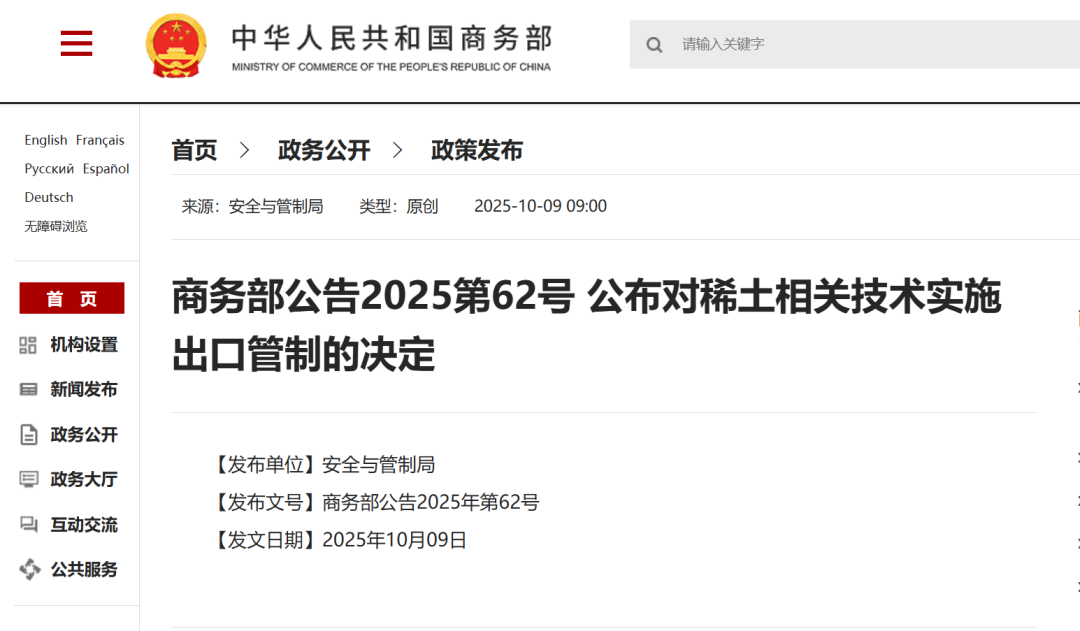
Core Points - The Ministry of Commerce announced export controls on rare earth-related technologies to safeguard national security and interests [1][3] - The decision is based on relevant laws and regulations, including the Export Control Law of the People's Republic of China [3] Group 1: Export Control Regulations - Export of the following items requires permission: technologies related to rare earth mining, smelting separation, metal smelting, magnetic material manufacturing, and recycling of rare earth secondary resources [3][4] - Exporters must apply for export licenses for controlled items and provide necessary documentation as specified [4][5] - The definition of "export" includes various forms of transfer or provision to foreign organizations or individuals [4] Group 2: Compliance and Responsibilities - Exporters are required to enhance compliance awareness and determine whether their goods, technologies, and services fall under controlled items [5][6] - Any individual or organization must not provide intermediary services for activities that violate the export control regulations [5][6] - Technologies that have entered the public domain or are necessary for basic scientific research are not subject to these controls [6] Group 3: Implementation and Updates - The announcement takes effect immediately upon publication, and the Export Control List will be updated accordingly [7]

商务部公布对境外相关稀土物项实施出口管制的决定 稀土板块或迎来估值重建(附概念股)
Zhi Tong Cai Jing· 2025-10-09 01:17
Group 1 - The Ministry of Commerce has announced export controls on certain rare earth items to foreign military users and specific importers listed in the export control list, with applications generally not permitted [1] - Exporters must apply for dual-use item export licenses if they are aware that their goods, technology, or services will significantly assist in foreign rare earth mining, smelting, metal refining, magnet manufacturing, or recycling activities [1] - The announcement specifies the definitions and scope of "rare earth," "smelting separation," "metal refining," and "rare earth secondary resources" according to relevant regulations [1] Group 2 - Huaxi Securities noted that the U.S. government is actively working to rebuild its rare earth industry, but global production of rare earth permanent magnets remains highly concentrated in China in the short term [1] - Guojin Securities believes that price increases, supply chain adjustments, and strategic attributes of the sector will lead to continued valuation and performance growth in the rare earth sector [1] Group 3 - Kinglong Permanent Magnet (300748) has achieved the highest production and sales volume in the global rare earth permanent magnet materials industry for 2024, leveraging its advantages in technology, capacity, and customer resources, while also expanding into new application areas such as humanoid robots [2] - China Minmetals' subsidiary, Hunan Xikang Mining's Shining Antimony Industry, fully controls over 300,000 tons of antimony resources [3] - Jiangxi Copper (600362) produces products that include crude antimony and sodium antimonate compounds [4]
商务部公布对境外相关稀土物项实施出口管制的决定
Shang Wu Bu Wang Zhan· 2025-10-09 01:08
Core Points - The Ministry of Commerce of China has announced export control measures for certain dual-use items to safeguard national security and interests, requiring specific export licenses for overseas organizations and individuals before exporting these items to other countries [1][2][3] Group 1: Export Control Measures - Overseas specific exporters must obtain export licenses for items manufactured abroad that contain or integrate Chinese-origin items listed in the announcement, with a value proportion of 0.1% or more [1] - Export applications to military users and those listed in the export control list will generally not be approved [1] - Applications for items intended for the development or production of weapons of mass destruction, terrorism, or military enhancement will also generally be denied [1][2] Group 2: Special Cases and Reporting - Export applications for research and production of advanced logic chips (14nm and below) and storage chips (256 layers and above) will be reviewed on a case-by-case basis [2] - Humanitarian aid-related exports do not require a license but must be reported to the Ministry of Commerce within 10 working days post-export [2][3] - Exporters must provide compliance notices to overseas importers and end-users when exporting controlled items [3] Group 3: Implementation Timeline - The measures regarding the first two points will take effect from December 1, 2025, while the third point is effective immediately upon publication [3]
中国严控稀土出口后,曾有国人偷3834吨稀土到美国,却被美企举报
Sou Hu Cai Jing· 2025-10-03 04:45
Core Viewpoint - In late 2024, China implemented strict export controls on rare earths, significantly impacting the global supply chain, particularly for the U.S. market, leading to a surge in illegal smuggling activities by U.S. companies themselves [1][2][3] Group 1: Policy Impact - China's new export control policy prohibits the export of rare earths for military use to the U.S. and requires permits for other types, marking an upgrade in China's control over the global rare earth industry [1][10] - Following the policy's implementation, rare earth prices in the U.S. skyrocketed by over 230%, prompting illegal smuggling activities [3][10] Group 2: Smuggling Dynamics - Smuggling operations often disguise rare earths within ordinary goods, making detection difficult, with illegal rare earths priced nearly 50% lower than legal ones, attracting U.S. companies to the underground market [3][5] - U.S. rare earth companies, facing market share erosion due to smuggling, began to self-fund evidence collection against smugglers, realizing that only intervention from the Chinese government could effectively address the issue [5][6] Group 3: Corporate Responses - Some U.S. companies chose to report smuggling activities to protect their market interests, with examples like MP Materials focusing on reporting rather than expanding production capacity [8][14] - The actions of U.S. companies in reporting smuggling have led to increased market share and stock price boosts for those involved, indicating a strategic shift towards legal compliance [8][14] Group 4: Regulatory Measures - China has initiated a series of strong measures against rare earth smuggling, including the use of nano-level electronic tags for traceability and a comprehensive regulatory framework from extraction to application [10][11] - The revised Mineral Resources Law in 2025 increased penalties for smuggling, with severe consequences for significant offenses, reflecting China's commitment to controlling the rare earth supply chain [11][14] Group 5: Global Competition - The rare earth industry is characterized by a complex interplay of global resource governance, technological competition, and national interests, with control over the supply chain being crucial for competitive advantage [13][14] - China's response to the smuggling issue highlights its role as a rule-maker in the global rare earth market, emphasizing the importance of sustainable and compliant industry practices for long-term success [14]
欧美30国对华稀土动手,巴元帅送特朗普稀土样品,为何拉拢美入伙
Sou Hu Cai Jing· 2025-10-01 08:47
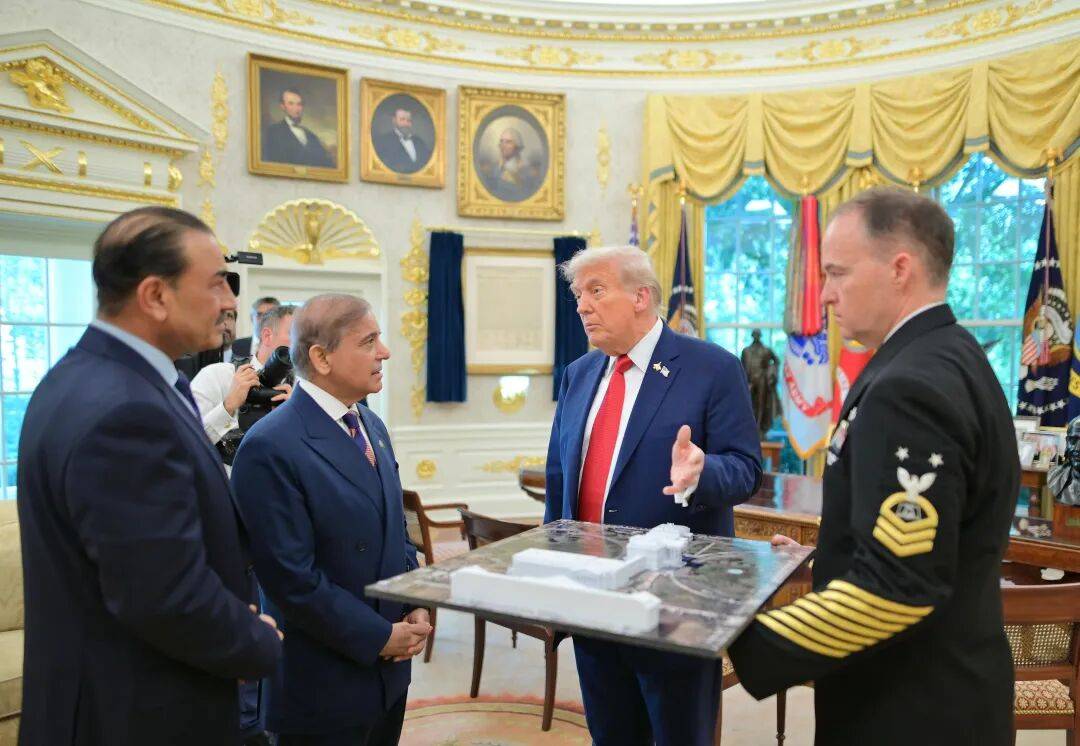
Group 1 - The "Critical Minerals Alliance," led by the U.S. and comprising 31 countries, has initiated measures targeting China's rare earths, including a $5 billion global exploration fund for projects in Australia and Canada [1] - The European Union is advancing plans to establish an "Eastern European Rare Earth Corridor," aiming for 20% self-sufficiency in rare earths by 2030 through the construction of separation plants in Hungary and Poland [1] - The U.S. is relaxing environmental standards to expedite rare earth mining in Minnesota, despite local protests from indigenous communities [1] Group 2 - Australia's Mount Weld mine has been operational for five years, but all extracted rare earths still require processing in China due to a lack of critical separation technology locally [2] - Chinese companies, such as Northern Rare Earth, have developed advanced separation processes and maintain a significant technological edge in rare earth materials [3] Group 3 - The U.S. is imposing a 25% tariff on Chinese rare earth magnets starting April 2025 and has established import quotas with Japan and South Korea, limiting their purchases from China to 60% [3] - The EU is planning to impose a carbon tax on Chinese rare earth oxides, but Chinese companies have managed to reduce carbon emissions significantly, leading to a delay in the tax's implementation [4] Group 4 - The U.S. Department of Defense is funding research for alternatives to rare earths, but current substitutes like iron-nitride alloys are not viable for high-performance applications [5] - Pakistan has signed a rare earth cooperation agreement with the U.S., planning a two-phase investment to explore and develop its rare earth resources, which could provide significant economic benefits [7][9] Group 5 - Despite the potential of U.S.-Pakistan cooperation, it is unlikely to impact China's dominance in the rare earth sector in the short term due to the lengthy timeline for exploration and production [11] - China currently controls over 60% of global rare earth extraction and 92% of processing, maintaining a strong position in the industry [11][13]

美国又变脸了,特朗普升级打法,大批中企被牵连,中方预告反击战
Sou Hu Cai Jing· 2025-10-01 05:24
Group 1 - The core issue of the trade relationship between the US and China remains unresolved, with both sides unable to reach a mutually satisfactory agreement, leading to increased uncertainty in trade matters [2][3] - The US Department of Commerce has implemented new export control rules targeting companies on the "entity list," which primarily affects Chinese firms, indicating a strategic move to prevent sanctioned companies from acquiring US products through subsidiaries [3][5] - The recent escalation in US sanctions is perceived as a response to China's military advancements, which have heightened US political sensitivities, suggesting that further actions may follow [5][6] Group 2 - The decline in US agricultural exports to China, particularly soybeans, has resulted in significant financial distress for American farmers, potentially impacting political support for the Trump administration [6][8] - The US's aggressive stance on semiconductor and artificial intelligence technologies may backfire, as China has developed alternatives, indicating that US sanctions could harm its own supply chains [8][10] - China's potential countermeasures, including export controls on strategic minerals like rare earths, could disrupt US military and technology sectors, prompting US industry leaders to seek negotiations with the Trump administration [10]
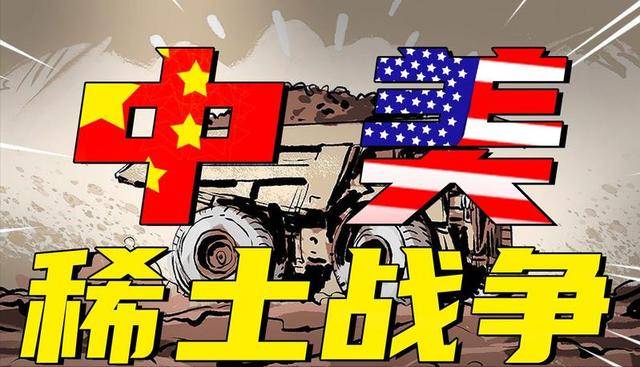
美国企业疯了?自费砸钱查走私稀土,把铁证送中国,啥目的?
Sou Hu Cai Jing· 2025-09-27 11:11
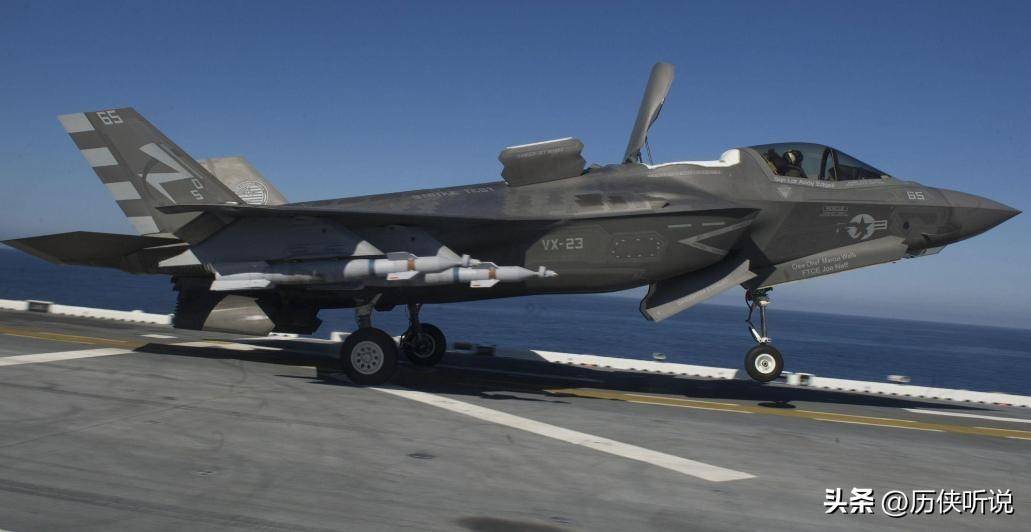
Core Insights - The article discusses a covert conflict among U.S. rare earth companies in 2025, where companies that received government subsidies engaged in internal sabotage by providing evidence of smuggling operations to Chinese authorities, effectively dismantling a cross-border smuggling network [2][30]. Group 1: Strategic Importance of Rare Earths - Rare earths are referred to as "industrial gold," essential for various technologies from mobile phone chips to military equipment like the F-35 fighter jet and nuclear submarines [2]. - In December 2024, China implemented export controls on rare earths, banning the export of key materials for military use to the U.S. and requiring permits for other exports [4][30]. Group 2: U.S. Market Response - Following China's export ban, the U.S. rare earth market experienced chaos, with prices soaring over 230% [5][7]. - Instead of expanding production to fill the supply gap, U.S. companies opted to hoard materials and raise prices, leading to stagnation in production capacity despite receiving $1.7 billion in government subsidies [7][30]. Group 3: Smuggling Operations - Between December 2024 and April 2025, 3,834 tons of neodymium oxide, suitable for military use, were smuggled into the U.S., surpassing the total legal exports from the previous three years [9]. - Smuggling methods included disguising rare earths as various products, such as embedding them in plastic models or mixing them with paint additives [9][11]. Group 4: Internal Conflict and Reporting - U.S. rare earth companies began to report smuggling activities to Chinese authorities, leveraging their industry connections to gather evidence against competitors [16][30]. - Companies like Alpha Materials reported specific smuggling operations, leading to significant seizures by Chinese customs, which in turn boosted their stock prices and market share [20][30]. Group 5: Regulatory Developments - In June 2025, China introduced advanced tracking systems for rare earths, including electronic tags and stringent penalties for smuggling, which drastically reduced the volume of illegally obtained rare earths in the U.S. by 67% within two months [22][24]. - The U.S. companies, facing a shortage of affordable rare earths, were compelled to seek supplies from domestic producers, reversing their previous strategy of hoarding [24][30]. Group 6: Conclusion of the Conflict - The article concludes that the U.S. companies' internal reporting was driven by self-interest rather than altruism, and it inadvertently strengthened China's regulatory framework, enhancing its control over the rare earth supply chain [30][32]. - The ongoing rare earth conflict is characterized as a complex interplay of industry dynamics, regulatory frameworks, and profit motives, rather than a simple matter of export bans [33].
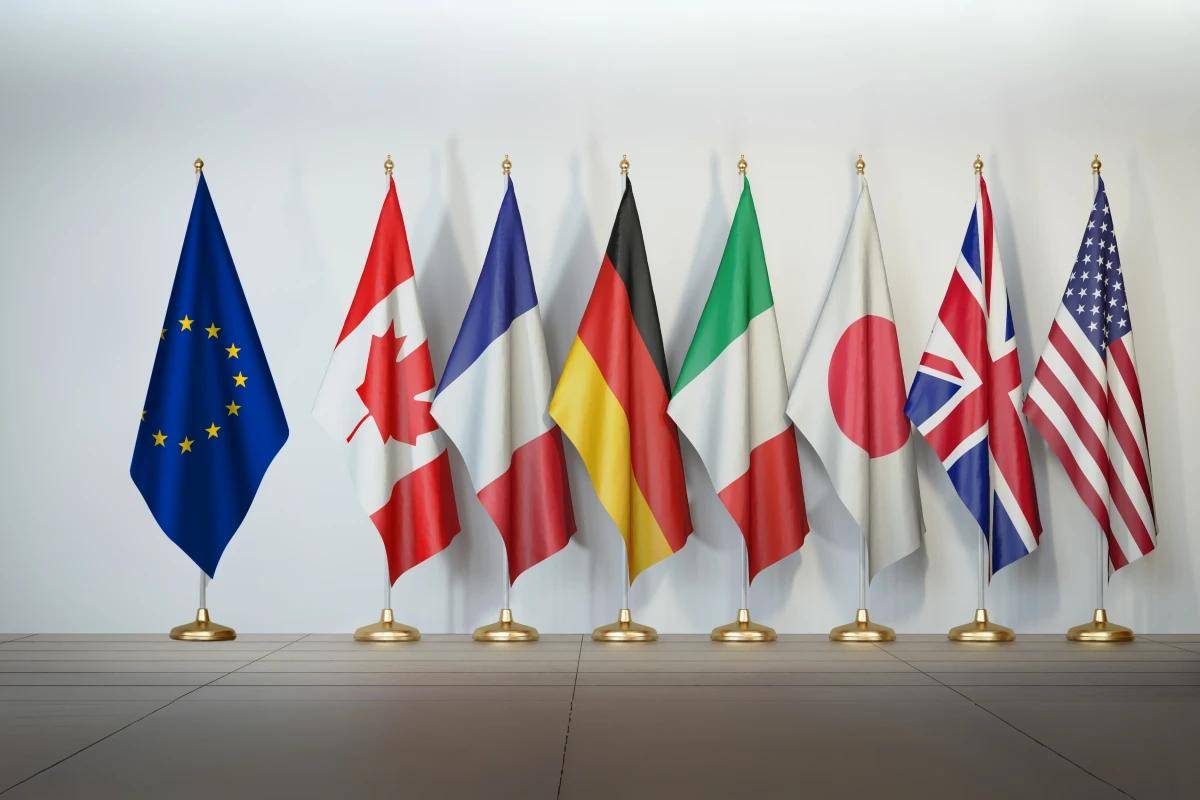
买不到就下黑手,西方准备对中国稀土价格设限,G7欧盟闭门商讨
Sou Hu Cai Jing· 2025-09-27 06:47
Core Points - G7 and EU are planning to impose price controls on Chinese rare earths in response to China's recent export restrictions [1][5] - China has implemented stricter regulations on rare earth management, including transaction reporting and a blockchain tracing system [1][5] - Western countries are struggling to find alternative rare earth sources, realizing that no other country can match China's complete supply chain and advanced processing technology [3][5] Group 1 - G7 and EU are in urgent discussions to address the challenges posed by China's export controls on rare earths [1][5] - China's new regulations require individual transaction reporting and prohibit stockpiling, utilizing blockchain technology for monitoring [1][5] - The complete supply chain and high-end processing technology controlled by China make it difficult for Western nations to establish alternative sources [3][5] Group 2 - The proposed price cap and punitive tariffs by G7 and EU reveal their anxiety and frustration over China's resource protection measures [5] - Western nations are caught in a dilemma, acknowledging China's rise while attempting to pressure it through closed-door meetings [5] - The reliance of Western industries on Chinese rare earths, particularly in sectors like renewable energy and military manufacturing, complicates the effectiveness of any sanctions [5]

对稀土出台“限低价令”,欧美想用对付俄罗斯的手段,对付中国?
Sou Hu Cai Jing· 2025-09-26 05:41
西方多国密谋稀土限价令 专家:恐将适得其反 据国际媒体报道,七国集团(GEO)与欧盟近期正酝酿一项针对中国稀土出口的限价令计划。与俄乌冲突期间对俄罗斯石油实施的最高限价不同,这次他 们打算设置稀土出口的最低价格,并可能对中国稀土加征关税和碳税。 这一计划的背景要追溯到中国实施稀土出口管制政策后。西方国家最初试图通过施压要求中国放松管制,但未能得逞。随后他们转向另起炉灶,试图建立独 立于中国的稀土供应链。然而现实却给他们泼了两盆冷水: 首先是资源禀赋问题。全球稀土储量分布极不均衡,中国不仅储量丰富,更关键的是掌握了占绝对优势的重稀土资源。其他国家即便有少量稀土矿藏,也以 轻稀土为主。就像一位矿业专家所说:没有矿藏资源,再好的技术也是无源之水。 相比之下,西方国家则陷入一个尴尬的悖论:他们要从零开始追赶,而中国已经在领跑。就像两个赛跑选手,一个在起跑线上热身,另一个已经跑出百米开 外。 更关键的是,这种政策难以获得国际支持。当年对俄罗斯石油的限价令之所以见效,是因为俄罗斯石油并非不可替代,且低价石油对进口国有利。但稀土的 情况截然相反:全球供应高度集中,限价令只会推高价格,这对其他进口国而言有百害而无一利。 业内 ...
拿不到中国稀土,G7反其道而行,准备联手对华下达稀土“限价令”
Sou Hu Cai Jing· 2025-09-25 10:26
根据路透社的报道,最近七国集团(G7)正在与欧盟密谋,要联手针对中国的稀土出口。 G7准备对华下达稀土"限价令",规定稀土的价格下限,不仅如此还考虑对部分中国出口的稀土征收关税。 现在稀土够用了,G7就开始和欧盟商量着对华"下黑手",计划设定所谓的"稀土价格下限"来推动自己国家的产能建设,不止如此,还考虑对中国的部分稀土 出口征收关税。 本月初G7的技术团队就在美国举行了会晤,一起参加的还有澳大利亚,这次会议核心讨论是,要不要在关键矿产领域提高外国投资的门槛,主要是限制对 华的投资。 另外还有一种选择就是地理限制,限定公共采购招标中对特定国家采购的稀土配额,着重也是针对中国的稀土。 这消息一出,不少人都乐了,七国集团和欧盟似乎没搞清楚,在稀土问题上,是中国"施舍"给他们饭吃,怎么还分不清大小王呢? 那么G7这样做的目的究竟是什么?这个计划真的能奏效吗? 最近的西方国家颇有种好了伤疤忘了疼的样子。 9月20日,中国官方发布的数据显示,8月份中国稀土出口量已经达到了2582吨,环比增长超过了两成,大部分的都流向了欧洲,可以说是缓解了欧洲的燃眉 之急。 然而记吃不记打说的就是他们,今年4月,中方实施关键矿产的出口管 ...