保护主义

Search documents
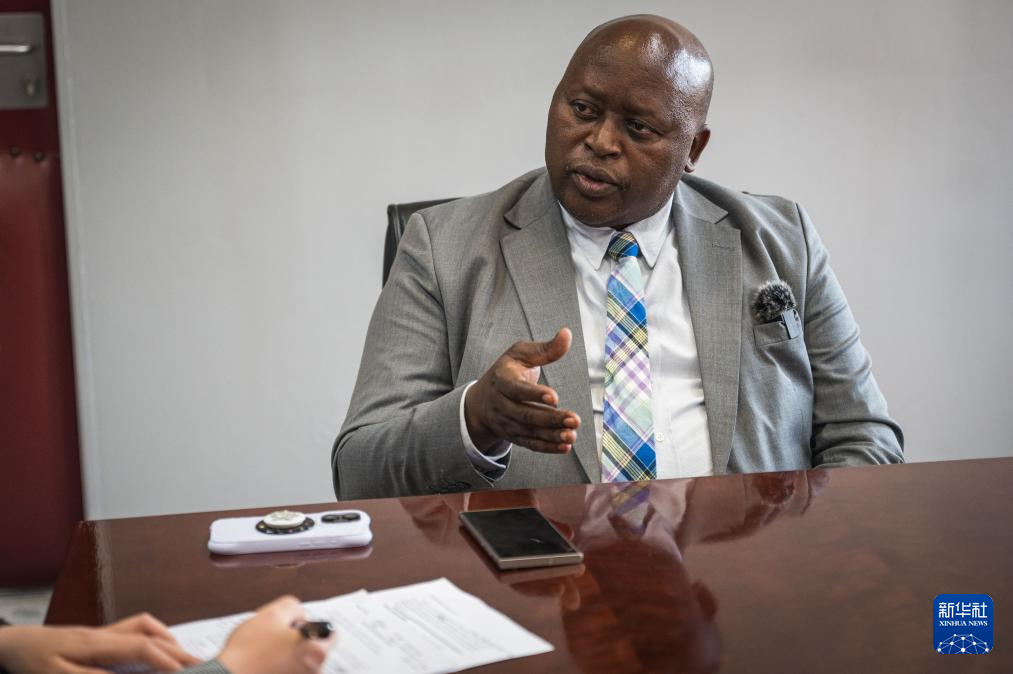
加拿大通知中国:加税25%!中方转手将订单给了澳大利亚,卡尼想搞事?美突然对加拿大出手
Sou Hu Cai Jing· 2025-08-06 14:44
Core Viewpoint - The Canadian government's decision to impose a 25% additional tax on steel products containing melted and cast iron from China has led to a swift and severe retaliation from China, highlighting strategic miscalculations by the Canadian Prime Minister [1][3][5]. Group 1: Trade Dynamics - Canada announced a 25% additional tax on steel imports from countries outside the U.S., particularly targeting China, which has raised international concerns [1][3]. - In response, China quickly established a trade agreement with Australia for canola seed, with the first trial shipment reaching 250,000 tons, undermining Canadian farmers [1][5]. - The Australian Prime Minister's visit to Beijing coincided with Canada's tax announcement, allowing Australia to capitalize on the situation and reclaim market share previously held by Canada [3][5]. Group 2: Strategic Miscalculations - The Canadian government misjudged China's economic influence, as China is the world's largest importer of canola seeds, with an annual import volume exceeding 4 million tons [5]. - Canada’s approach to trade disputes has been criticized as lacking diplomatic wisdom, contrasting sharply with Australia's pragmatic stance that prioritizes economic interests [5][7]. - The reliance of 75% of Canadian exports on the U.S. market has left Canada with limited maneuverability in foreign policy, making it vulnerable to external pressures [5][7]. Group 3: Economic Implications - The trade conflict has exposed structural weaknesses in the Canadian economy, particularly its dependence on the U.S. market and the inability to effectively engage with China [5][7]. - Canada's attempt to shift domestic discontent onto China has backfired, resulting in a loss of both steel industry support and agricultural orders [7]. - The situation illustrates that Canada lacks the strength of the U.S. and the market appeal of China, leading to a precarious position in international trade [7].

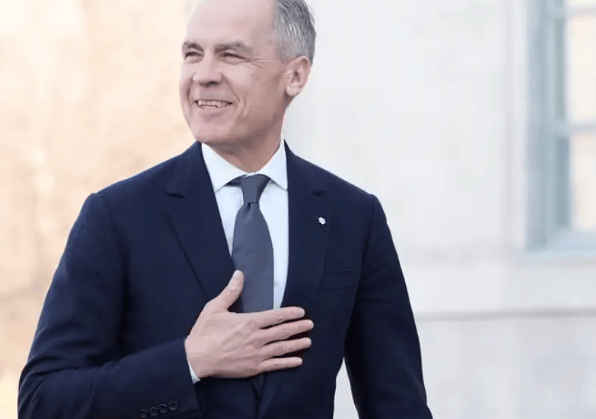
果然不出中国所料?美国对全球征税后,特朗普高兴了不到一天,噩耗就来了!麻烦一个接一个
Sou Hu Cai Jing· 2025-08-04 15:57
Group 1 - Trump's new tariff policy, implemented on July 31, 2025, aims to adjust global tariff rates under the pretext of "national security" and "fair trade" [1][3] - Tariff rates are significantly high, with Syria facing a 41% tariff, Myanmar and Laos at 40%, and Canada at 35%, while Brazil and the UK are at 10% [3] - The introduction of a 50% tariff on copper semi-finished products caused a dramatic 17.7% drop in copper prices, severely impacting industries reliant on this material, such as renewable energy and infrastructure [3] Group 2 - The U.S. stock market reacted negatively to the tariff announcement, with major indices dropping significantly on August 1, 2025, leading to a loss of over $100 billion in market value for companies like Apple and Nike [4] - The legal challenges against Trump's tariffs are mounting, with a federal appeals court hearing a case questioning the legality of the tariffs under the International Emergency Economic Powers Act [4][8] - The tariffs have led to a fragmented global trade order, with the EU and other allies expressing strong opposition and considering retaliatory measures [6][11] Group 3 - The tariffs have not affected China as severely, as it is subject to a 10% default tariff rate, indicating a strategic calculation by the U.S. to avoid escalating tensions with China [7] - Economic indicators in the U.S. are showing signs of distress, with July job growth falling short of expectations and a significant drop in the 10-year Treasury yield [7] - The ongoing trade tensions and tariff policies are accelerating the shift towards a multipolar trade system, with ASEAN and China seeing a 12% increase in trade [11]
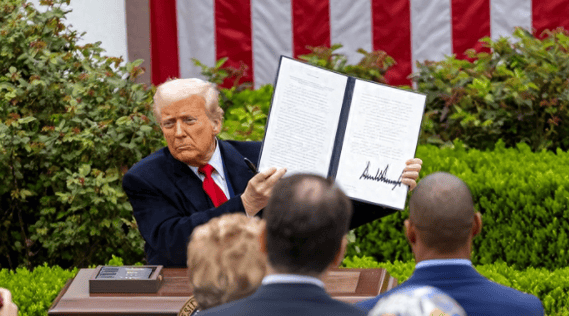
美国的关税政策对非洲莱索托的纺织业造成严重冲击
Yang Shi Xin Wen Ke Hu Duan· 2025-08-04 03:09
Group 1 - The U.S. tariff policy has severely impacted Lesotho's textile industry, which is a crucial sector for the country's economy and employment [1][2] - Lesotho's textile exports primarily depend on the U.S. market, with over 40,000 jobs at stake due to the tariffs [1] - The U.S. government has implemented a 15% tariff, which poses a significant challenge to Lesotho's fragile economy, despite an initial announcement of a 50% tariff [1] Group 2 - The Minister of Trade and Industry, Mokheti Shelile, criticized the U.S. for unfairly calculating tariffs that ignore Lesotho's service trade surplus [2] - Shelile emphasized that the unilateral imposition of tariffs by the U.S. violates World Trade Organization principles and disrupts global supply chains [2] - He called for African nations to strengthen cooperation in response to such unilateral and protectionist actions [2]
约4万人受影响 美关税政策严重冲击莱索托支柱产业
Sou Hu Cai Jing· 2025-08-03 01:45
Core Viewpoint - The U.S. tariff policy is severely impacting Lesotho's textile industry, which is a critical sector for the country's economy and employment [1][3]. Group 1: Economic Impact - Lesotho, recognized as one of the least developed countries by the UN, heavily relies on its textile industry, with over 40,000 jobs dependent on exports to the U.S. [1] - The U.S. announced a 50% "reciprocal tariff" in April, which was later postponed, but the current 15% tariff still poses a significant challenge to Lesotho's fragile economy [1][3]. - Approximately 12,000 jobs in Lesotho's textile sector are directly affected by the tariffs, with a total of around 40,000 individuals impacted [3]. Group 2: Business Reactions - Many U.S. importers have canceled orders for textiles produced in Lesotho due to the tariff threat, leading to large-scale layoffs in the industry [3]. - Local textile vendors report that the tariffs have forced them to raise prices, resulting in a loss of customers who find the products too expensive [5]. Group 3: Policy Critique - The calculation of U.S. tariffs is criticized for only considering goods trade while ignoring the significant surplus Lesotho has in service trade, making the tariffs "absolutely unfair" [7]. - The unilateral imposition of discriminatory tariffs by the U.S. is seen as a violation of World Trade Organization principles, and there is a call for African nations to strengthen cooperation to address such unilateral and protectionist actions [8].
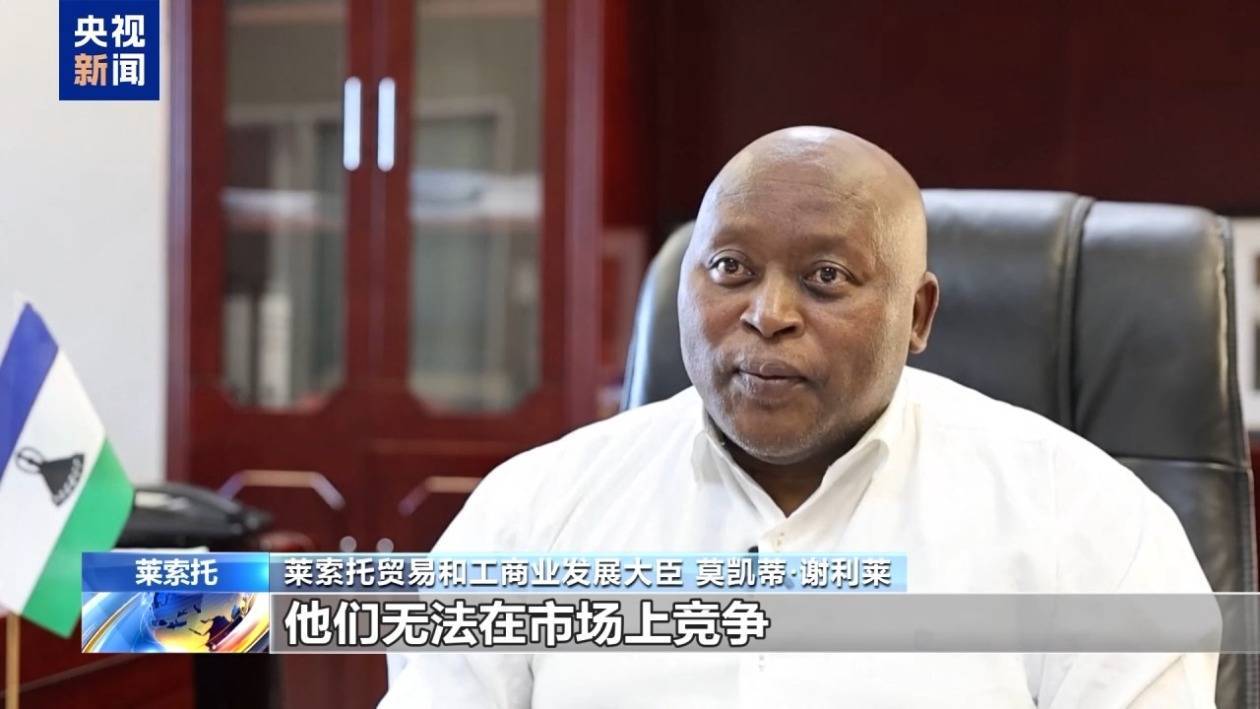
特朗普签署行政令对大多数国家实施关税,中方回应
Ren Min Ri Bao· 2025-08-01 08:10
法新社提问:美国总统特朗普签署了一项行政令,对大多数国家实施关税,请问外交部对此有何评论? 中方:中方反对滥施关税的立场是一贯和明确的,关税战、贸易战没有赢家,搞保护主义损害各方的利 益。 8月1日,外交部发言人郭嘉昆主持例行记者会。 ...
特朗普签令对大多数国家实施关税,外交部回应
第一财经· 2025-08-01 08:06
据环球网,外交部发言人郭嘉昆主持8月1日例行记者会。会上法新社记者提问称:美国总统特朗普 签署了一项行政令,对大多数国家实施关税。请问外交部对此有何评论? 郭嘉昆对此表示,中方反对滥施关税的立场是一贯和明确的,关税战、贸易战没有赢家,搞保护主义 损害各方的利益。 ...

外交部:中方反对滥施关税的立场是一贯和明确的
Zheng Quan Shi Bao Wang· 2025-08-01 07:37
责任编辑:刘万里 SF014 人民财讯8月1日电,8月1日,外交部发言人郭嘉昆主持例行记者会。有记者问:美国总统特朗普签署了 一项行政令,对大多数国家实施关税。请问外交部有何评论? 郭嘉昆表示,中方反对滥施关税的立场是一贯和明确的,关税战、贸易战没有赢家,搞保护主义损害各 方利益。 ...
特朗普签令对大多数国家实施关税,外交部回应
news flash· 2025-08-01 07:25
金十数据8月1日讯,外交部发言人郭嘉昆主持8月1日例行记者会。会上法新社记者提问称:美国总统特 朗普签署了一项行政令,对大多数国家实施关税。请问外交部对此有何评论?郭嘉昆对此表示,中方反 对滥施关税的立场是一贯和明确的,关税战、贸易战没有赢家,搞保护主义损害各方的利益。 (环球 网) 特朗普签令对大多数国家实施关税,外交部回应 ...
特朗普签署行政令对多国和地区征收“对等关税”,外交部回应
news flash· 2025-08-01 07:23
8月1日,外交部发言人郭嘉昆主持例行记者会。当地时间7月31日,美国总统特朗普签署行政令,确定 了对多个国家和地区征收的"对等关税"税率,具体税率从10%至41%不等。发布会上,法新社记者就此 提问,请问外交部对此是否有评论?郭嘉昆回应:"中方反对滥施关税的立场是一贯和明确的,关税 战、贸易战,没有赢家。搞保护主义,损害各方的利益。"(智通财经) ...
专访丨“高额关税面前,我们不会坐以待毙”——访莱索托贸易与工商业发展大臣莫凯蒂·谢利莱
Xin Hua Wang· 2025-08-01 00:40
谢利莱表示,美国关税的计算仅涵盖货物贸易,完全忽视其在服务贸易上对莱索托的巨大顺差;同时,通过南非输入莱索托的美国商品也未纳入 统计。他认为,基于这种错误计算方式对莱索托征收高额关税"绝对不公平"。他强调,莱索托纺织业的发展受益于零关税政策激励,如今美方单 方面推动施加关税,实在"有失公允"。 莱索托贸易和工商业发展大臣莫凯蒂·谢利莱日前接受新华社记者专访时表示,面对美国关税冲击,莱索托不会"坐以待毙",将积极通过拓展多元 化国际市场、深化非洲区域合作等方式推动经济重回正轨。 非洲内陆小国莱索托是联合国认定的最不发达国家之一。今年4月,美国宣布对其征收50%的所谓"对等关税",随后虽宣布暂缓90天实施,但10% 基准税率仍对该国脆弱的经济构成严峻挑战。 "美国关税来得猝不及防,严重冲击莱索托纺织业,"谢利莱说,特朗普政府宣布关税措施后,美国采购商取消了80%的订单,导致莱索托11家主 要对美国市场出口的纺织企业停产,约1.3万名工人失业。 纺织业是莱索托支柱产业,其成衣出口主要依赖美国市场,带动超过4万人就业。谢利莱说,美关税引发的失业潮可能进一步波及交通运输、仓储 物流和房地产等行业,威胁社会治安稳定。数据 ...