
工业互联网

Search documents
诺基亚完成对诺基亚贝尔股权收购
Ju Chao Zi Xun· 2025-12-17 03:42
Core Viewpoint - Nokia has completed the acquisition of the remaining 50% stake in Shanghai Nokia Bell Co., Ltd. from China Huaxin Post and Telecommunications Technology Co., Ltd., making it a wholly-owned subsidiary [1][3]. Group 1: Acquisition Details - The acquisition was part of Nokia's established strategy, with the company announcing its intention to exercise the call option in its shareholder agreement as early as March 2025 [3]. - The shares were listed for transfer at a base price of 4.1 billion RMB, and the final transaction was completed on December 12, 2025 [3]. - This acquisition aims to optimize and simplify Nokia's ownership structure in China, allowing for smoother decision-making and better resource integration [3][4]. Group 2: Financial Performance - In 2024, Nokia Bell achieved a revenue of 8.391 billion RMB and a net profit of 42.09 million RMB [4]. - For the first three quarters of 2025, the revenue was 4.606 billion RMB, with a significant increase in net profit to 90.46 million RMB [4]. - As of September 30, 2025, the total assets of the company reached 11.569 billion RMB, and net assets were 6.951 billion RMB, providing a clear valuation basis for the share transfer [4]. Group 3: Strategic Implications - The move to full ownership is seen as a long-term commitment to the Chinese market, especially as the 5G network construction peaks and new growth areas emerge in vertical industries [4]. - By eliminating the joint venture model, Nokia aims to reduce management and decision-making costs, allowing for a more agile response to market demands [4]. - The focus on vertical industries such as enterprise private networks, industrial internet, smart manufacturing, and smart energy is expected to drive future growth [4]. Group 4: Global Strategy - Concurrently, Nokia is simplifying its global operations by delisting from the Paris Euronext exchange while maintaining listings in Helsinki and New York [5]. - This strategy reflects Nokia's intent to concentrate resources on core growth areas while leveraging its established presence in China, which includes a comprehensive industry chain and R&D capabilities [5]. - The future adjustments in technology R&D direction and market cooperation strategies for Nokia Bell as a wholly-owned subsidiary are of significant interest to the telecommunications industry [5].



苏州秋逸枫自动化设备有限公司成立 注册资本10万人民币
Sou Hu Cai Jing· 2025-12-17 00:24
Core Viewpoint - Suzhou Qiuyifeng Automation Equipment Co., Ltd. has been established with a registered capital of 100,000 RMB, focusing on various industrial automation and control systems sales and services [1] Group 1: Company Overview - The company is legally represented by Chen Xia [1] - The registered capital is 100,000 RMB [1] Group 2: Business Scope - The business scope includes sales of industrial automation control systems, industrial control computers, smart instruments, and robots [1] - Additional offerings include sales of mechanical equipment, metal products, hardware products, software development, and sales [1] - The company also provides services in intelligent control system integration, industrial internet data services, and technical consulting [1]
专家倡议两岸合力发展AI与工业互联网行业
Zhong Guo Xin Wen Wang· 2025-12-16 14:48
Group 1 - The core theme of the 2025 Cross-Strait Entrepreneurs Summit is "Focusing on Transformation and Innovation, Deepening Multi-Chain Cooperation" [1] - Experts advocate for cross-strait collaboration in the development of AI and industrial internet sectors [1] - As of now, mainland China has over 4.7 million 5G base stations and more than 11 million 5G mobile phone users, leading globally in key metrics such as 5G user penetration and gigabit optical network coverage [1] Group 2 - The industrial internet in mainland China has transitioned from connecting people, machines, and objects to full-chain intelligent optimization over the past decade, providing a solid technological foundation for cross-strait industrial cooperation [1] - AI technology is reshaping the industrial ecosystem and injecting new momentum into the development of the industrial internet [1] - The Taiwan side emphasizes the need for stable exchanges and exploring technological and market cooperation to create new opportunities amid global supply chain challenges [2] Group 3 - Taiwan has advantages in chip technology and applications, while mainland China excels in algorithms and market reach, suggesting complementary strengths between the two regions [2] - The focus on humanoid robots is highlighted as a potential area for future collaboration, with mainland China strong in technology application and Taiwan competitive in high-end semiconductor chips and precision machinery [2]
哈工大北京研究院在石景山区揭牌
Xin Jing Bao· 2025-12-16 11:49
Group 1 - The Beijing Shijingshan District Government and Harbin Institute of Technology signed a cooperation agreement to establish the Harbin Institute of Technology Beijing Research Institute, aiming to enhance technology innovation and talent cultivation for the development of Beijing's international technology innovation center [1] - Harbin Institute of Technology is recognized for its strengths in artificial intelligence, robotics, aerospace, and new materials, aligning well with the industrial development direction of Shijingshan District [1] - The establishment of the research institute is seen as a significant step in implementing the spirit of the 20th National Congress of the Communist Party of China and promoting the integration of education, technology, and talent development [1] Group 2 - Shijingshan District is focusing on urban renewal and industrial transformation strategies, achieving a GDP of 104.07 billion yuan with a year-on-year growth of 7.2% in the first three quarters of 2025 [2] - The district is leveraging opportunities from the "Two Parks and One River" development and the hosting of major events to accelerate the construction of a modern industrial system characterized by "dominant +特色 + future" [2] - Shijingshan District aims to develop distinct features in areas such as artificial intelligence, sci-fi gaming, industrial internet, and virtual reality [2]
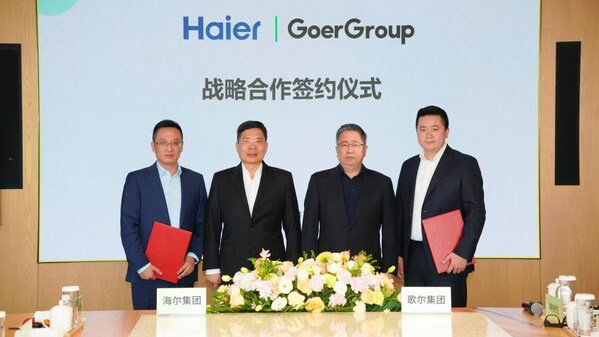
海尔携手歌尔共拓智能未来,新时达助力精密制造智能化升级
Zhong Guo Jin Rong Xin Xi Wang· 2025-12-16 09:24
歌尔深耕智能硬件研制20余年,在声学、光学、微电子等领域拥有核心技术优势,并在智能制造领域持 续创新,为全球客户提供精密零组件与AI+智能整机从研发到量产的一站式服务。 围绕海尔集团智慧住居、大健康、数字经济三大业务板块布局,结合歌尔集团在精密零组件、智能硬件 以及智能制造等领域的经验沉淀和先进技术,双方将共同聚焦智能家电、工业互联网、新能源及人工智 能等领域,推动研发协同与成果转化,落地技术攻关项目,开展全场景务实合作,携手共筑智慧美好生 活。 具体到工业互联网与智能制造领域,新时达作为海尔生态的一员,将依托其在运动控制、工业机器人及 智能装备解决方案方面的技术积累,助力歌尔集团推进精密制造环节的智能化升级与工艺创新。目前, 新时达已在工业机器人、运动控制、具身智能场景探索等方面与歌尔展开合作。 【新华企业资讯12月16日】12月11日,海尔集团与歌尔集团正式签署战略合作协议,双方将聚焦智能家 电、工业互联网、新能源及人工智能等领域展开深度合作。海尔集团董事局主席、首席执行官周云杰, 歌尔集团董事长姜滨共同出席见证签约,并展开深入的交流与探讨。海尔集团副总裁、新时达董事长展 波,新时达总裁刘长文等一同出席了 ...



AI技术爆发 汽车业迎智能化革命
Zhong Guo Qi Che Bao Wang· 2025-12-16 02:25
Core Insights - The automotive industry is entering an era of universal intelligent driving by 2025, with AI technology deeply integrated into smart cockpits and autonomous driving, marking a significant transformation in the sector [2][3] Group 1: Intelligent Driving and AI Integration - "Intelligent driving equity" has emerged as a key theme, with traditional automakers and new players racing to adopt advanced driving systems, leading to the prediction of 2025 as the "year of universal intelligent driving" [3] - BYD has launched its self-developed "Tianshen Eye" advanced driving system, enhancing the driving experience across its entire model range and supporting sales growth [3] - The overall cost of intelligent driving has significantly decreased due to technological advancements, enabling systems to be integrated into vehicles priced around 100,000 yuan or lower [3][6] Group 2: VLA Model and Its Advantages - The introduction of VLA (Visual Language Action) models by various automakers signifies a trend in intelligent driving, addressing the unpredictability of traditional end-to-end models [4][5] - VLA models enhance the ability to handle complex scenarios and provide interpretability in decision-making, mimicking human driving logic [5] - Companies like Li Auto have upgraded their systems to VLA architecture, improving spatial understanding and communication capabilities [5] Group 3: Robotaxi Commercialization - The commercial application of L4-level autonomous taxis (Robotaxi) is accelerating, with cities like Shanghai seeing the deployment of driverless vehicles [7] - The Robotaxi market in China is projected to grow from $54 million in 2025 to $47 billion by 2035, with over 50,000 Robotaxis expected to operate in more than 10 cities by 2030 [8] - Companies like Xiaoma Zhixing and Wenyan Zhixing reported significant revenue growth in their Robotaxi businesses, indicating a rapid commercialization trend [9][10] Group 4: Emerging Technologies and Opportunities - The automotive industry is also focusing on embodied intelligence, flying cars, and humanoid robots as new opportunities for growth by 2025 [11][12] - The development of flying cars is seen as a transformative innovation in transportation, with companies targeting 2026 for mass production [12] - The integration of industrial internet technologies in automotive manufacturing is redefining production processes and driving the shift towards intelligent manufacturing [12][13]
AI技术爆发,汽车业迎智能化革命
Zhong Guo Qi Che Bao Wang· 2025-12-16 01:41
Core Insights - The automotive industry is entering an era of universal intelligent driving by 2025, with AI technology deeply integrated into smart cockpits and autonomous driving, marking a significant transformation in the industry [2][3] - "Intelligent driving equity" has emerged as a key theme, with traditional automakers and new players racing to adopt advanced driving systems, indicating a shift towards a more accessible intelligent driving experience for consumers [3][4] Industry Trends - The introduction of advanced driving systems like BYD's "Tian Shen Zhi Yan" and XPeng's XNGP system is enhancing the driving experience and supporting sales growth [3] - The overall cost of intelligent driving technology is decreasing, enabling its adoption in more affordable vehicles, thus broadening consumer access [3][4] - The VLA (Visual Language Action) model is becoming a highlight in automotive intelligence, offering better handling of complex scenarios and improving the interpretability of driving decisions [4][5] Market Dynamics - The Robotaxi market is accelerating, with companies like Pony.ai and Baidu obtaining operational licenses in major cities, indicating a rapid commercialization of autonomous taxi services [6][7] - The Chinese Robotaxi market is projected to grow from $54 million in 2025 to $47 billion by 2035, with over 50,000 Robotaxis expected to operate in more than 10 cities by 2030 [7][8] Financial Performance - Companies like Pony.ai and WeRide are reporting significant revenue growth, with Pony.ai's Robotaxi business revenue increasing by 89.5% year-over-year, reflecting the rapid commercialization of autonomous driving [8][9] Technological Innovations - The emergence of embodied intelligence, flying cars, and humanoid robots is becoming a focus for automotive companies, with significant advancements in these areas expected by 2025 [9][10] - The integration of industrial internet technologies is redefining automotive manufacturing, enhancing efficiency and quality while reducing costs [10][11] Policy and Regulation - The Chinese government is actively promoting the development of intelligent connected vehicles through various policies, which are expected to guide the industry's growth and ensure compliance with safety standards [12][13] - Recent policies emphasize the importance of a structured approach to the commercialization of intelligent driving technologies, aiming to prevent over-marketing and ensure reliability [13][14]


陕西智能制造水平居西部前列
Shan Xi Ri Bao· 2025-12-16 00:24
省工信厅相关负责人介绍,智能制造已成为陕西转变工业增长方式、重塑工业增长动力的重要抓 手。陕西汽车、航空航天、输变电装备、水泥建材、石油化工、消费品等行业重点企业广泛采用数控机 床、工业机器人、增材制造、物联网、智能物流仓储等装备技术以及人工智能、工业互联网等先进信息 系统,开展智能制造标准化与新模式应用,企业产品设计周期、劳动生产率、生产成本、产品质量等重 要指标都有了明显改善。 近年来,陕西通过征集智能制造系统解决方案"揭榜挂帅"项目,成立智能制造系统解决方案供应商 联盟陕西分盟,积极培育智能制造系统解决方案供应商。目前,全省共有16家企业入选国家智能制造示 范工厂揭榜单位,35家企业获评国家智能制造优秀场景单位,2家企业入选2024年度国家智能制造系统 解决方案"揭榜挂帅"项目。全省累计有146家企业被认定为省级智能制造示范企业(智能工厂、车间、 生产线)。(记者:沈谦) 12月12日,记者从陕西省智能制造现场会暨"智能制造进园区"专项活动上获悉:随着人工智能和大 数据等新技术的创新应用,陕西智能制造蓬勃发展,智能制造水平居西部前列,智能工厂总数居西北第 一、西部第三。 ...
歌尔集团与海尔集团达成战略合作,携手共筑智慧美好生活
Zhong Jin Zai Xian· 2025-12-15 01:49
Core Viewpoint - Goer Group and Haier Group have signed a strategic cooperation agreement focusing on smart home appliances, industrial internet, new energy, and artificial intelligence [2][4] Group 1: Company Profiles - Goer Group has over 20 years of experience in smart hardware development, possessing core technological advantages in acoustics, optics, and microelectronics [2] - Haier Group is a leading provider of solutions for a better life and digital transformation, consistently ranking first in global large home appliance retail volume for 16 consecutive years [2] Group 2: Areas of Collaboration - The collaboration will leverage Goer's expertise in precision components, smart hardware, and smart manufacturing alongside Haier's focus on smart home ecosystems, health industries, and digital economy [4] - Both companies aim to promote research and development collaboration, technology project implementation, and practical cooperation across various scenarios [4]

第十八届中国工业论坛在北京举办 聚焦首台(套)重大技术装备
Zhong Guo Xin Wen Wang· 2025-12-14 15:03
宋志明也提醒,要清醒认识到首台(套)的技术攻关与推广应用之路依然任重道远。创新成果的首次工程 化、市场化应用,面临着技术成熟度、市场认可度、应用可靠性等多种考验。应集中力量攻克关键核心 技术,推动原创性、颠覆性科技创新,进一步完善创新生态,构建以企业为主体,产学研用经深度融合 的科技创新体系,优化从研发工程化到市场准入、推广应用的全链条的支撑体系,有效降低用户单位的 使用风险和成本顾虑,畅通"最初一公里"和"最后一公里"。同时,要加强知识产权保护,激发持续创新 的内生动力,让首台(套)从首台走向套系、从突破走向引领。 中国工业经济联合会党委委员、制造业单项冠军办公室主任郭嘉海在会议中表示,每一项首台(套)装备 的成功研制与应用,都是对产业链自主可控能力的一次有力提升,是对薄弱环节的一次坚实加固。谈及 下一步发展,郭嘉海建议,研发企业要勇当"智造领航员",主动将人工智能、工业互联网等智能技术融 入装备研发、制造、服务的全生命周期,紧盯用户痛点,打造真正好用、智能的高端装备。 中新网北京12月14日电(陈昊星)12月14日,第十八届中国工业论坛——"智能制造赋能首台(套)"大会在 北京举办。此次论坛以"数智赋能装 ...