智能体

Search documents
余承东 增任关键新职务
Shang Hai Zheng Quan Bao· 2025-09-29 15:45
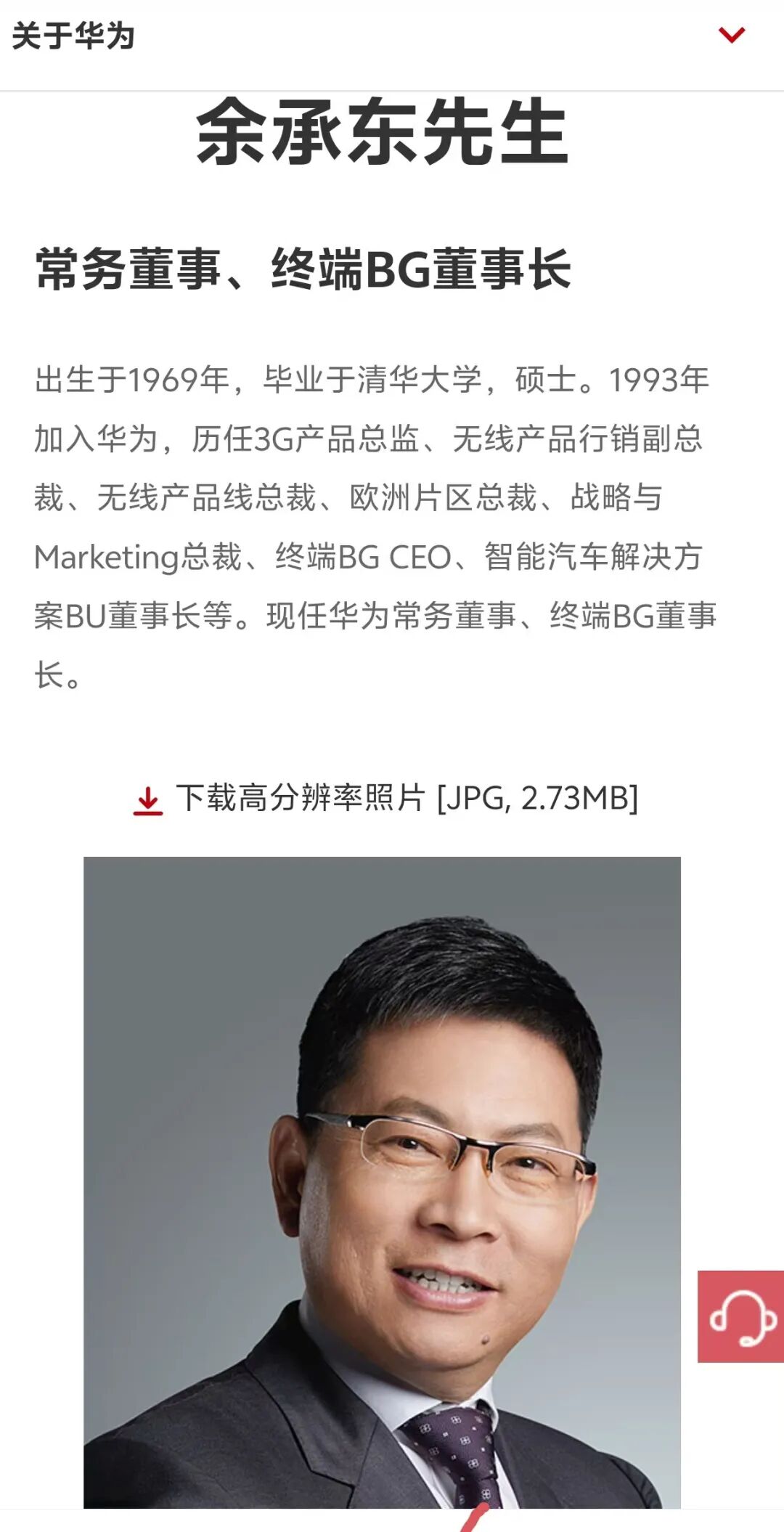
Core Viewpoint - Huawei has appointed Yu Chengdong as the head of the Product Investment Review Board (IRB), with a focus on leading the company's strategic direction in artificial intelligence (AI) and ensuring efficient resource allocation towards core strategic goals [1][6]. Group 1: Appointment and Responsibilities - Yu Chengdong's new role as IRB director is aimed at evaluating and controlling key decisions related to resource investment, project initiation, and budget approval for major strategic directions [1]. - He will continue to serve as an executive director and chairman of the terminal business group, overseeing Huawei's terminal and HarmonyOS operations [1]. Group 2: AI Strategic Importance - The appointment signifies a heightened focus on AI within Huawei, aligning with the company's vision outlined in the "Smart World 2035" report, which predicts the rapid emergence of intelligent worlds and trillion-dollar industries [6]. - Huawei forecasts that over 90% of Chinese households will have smart robots, leading to immersive technological transformations in home environments [6]. - The report anticipates that intelligent agents will drive paradigm shifts across industries, initially enhancing operational efficiency, then transforming production methods, and ultimately reconstructing products and experiences, potentially creating a $10 trillion industry [6].

5000亿元!国家发改委重磅宣布!
Jin Rong Shi Bao· 2025-09-29 11:16
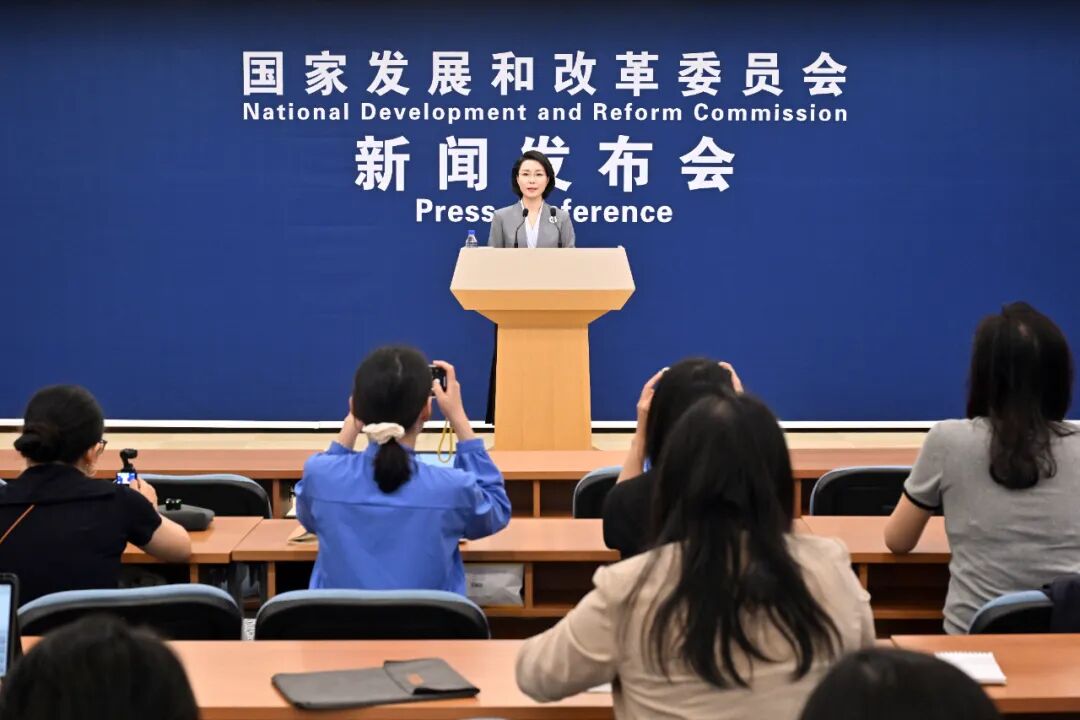
Core Insights - The National Development and Reform Commission (NDRC) is actively promoting new policy financial tools with a total scale of 500 billion yuan to support effective investment and enhance financial services for the real economy [3] - Despite facing external pressures, China's economy is generally stable, with solid progress in high-quality development, although challenges remain [4] - The NDRC aims to increase the application rate of new intelligent terminals and intelligent agents to over 70% by 2027, highlighting the importance of AI technology in various sectors [5][6] Group 1: New Policy Financial Tools - The NDRC is working with relevant parties to implement new policy financial tools, which will be used entirely to supplement project capital [3] - The NDRC plans to expedite the allocation of these funds to specific projects to generate more tangible work volume and promote effective investment [3] Group 2: Economic Stability and Challenges - In August, some economic indicators showed fluctuations, including a slowdown in consumption growth and weak investment, raising concerns about achieving the annual economic growth target [4] - The NDRC emphasizes that, despite external challenges, the overall economic operation remains stable, with improvements in industrial profits and resilience in demand [4] - The NDRC will continue to strengthen economic monitoring and policy research to adapt to changing circumstances and ensure the achievement of annual targets [4] Group 3: Promotion of Intelligent Technology - The NDRC's "Artificial Intelligence+" initiative aims for over 70% application rate of new intelligent terminals and agents by 2027, which are seen as direct carriers of AI technology [5][6] - The NDRC will focus on creating a supportive policy environment, promoting technological innovation, and expanding market demand to facilitate the widespread adoption of intelligent technologies [6][7] - Efforts will include collaboration between AI companies and industry leaders, as well as promoting pilot demonstrations in key sectors like education, healthcare, and transportation [7]
附下载|业内首份企业级智能体产业落地研究报告:从场景试点到规模化应用实践
腾讯研究院· 2025-09-29 08:03
Core Viewpoint - The report highlights the transformative shift of AI from being an "auxiliary tool" to becoming an "autonomous productivity" driver through the emergence of AI agents, which can independently understand goals, plan paths, and interact with both physical and digital worlds [4][6][20]. Group 1: Definition and Capabilities of AI Agents - AI agents are defined as digital employees capable of autonomous planning and execution, moving beyond simple task execution to complex decision-making and interaction [6][9]. - The core structure of AI agents consists of a "brain" for autonomous planning and "hands" for tool invocation, enabling them to complete tasks in a closed-loop manner [8][9]. Group 2: Application Scenarios of AI Agents - The report identifies a wide range of application scenarios for AI agents across various industries, including finance, retail, healthcare, education, manufacturing, transportation, and government [19]. - A "scene compass" is introduced to help enterprises assess the maturity of AI agent applications based on task complexity and autonomy, categorizing them into four quadrants: efficient assistants, execution experts, decision experts, and all-round experts [19]. Group 3: Challenges in Implementation - The report outlines six major challenges in the large-scale implementation of AI agents: high training costs, model hallucination and generalization issues, security and data governance, complex document understanding, and integration with business systems [19]. - Companies are encouraged to utilize the strategic framework provided by Tencent Cloud to build reliable AI agents that understand customers, make decisions, and execute tasks effectively [19]. Group 4: Case Studies and Practical Applications - The report includes several pioneering case studies demonstrating the successful integration of AI agents into business operations, such as: - Huazhu Group's 24/7 "all-round hotel butler" that can respond to guest requests and manage logistics autonomously [20]. - Juewei Food's AI marketing agent that significantly outperformed human teams in sales performance [20]. - The establishment of a digital counter by Handan's provident fund, which streamlined service processes and reduced processing time by over 80% [20]. - These examples illustrate how AI agents are creating value as efficient digital employees and business partners [20].


蚂蚁百宝箱智能体开发平台与友盟联合打造一站式Agent 服务,助力开发者迈向智能体时代
Sou Hu Cai Jing· 2025-09-29 03:44
Core Insights - Ant Group's "Treasure Box" intelligent agent development platform has partnered with Umeng to launch intelligent agent construction services, integrating both parties' expertise in big data and large models to provide developers with a one-stop service for building, publishing, and promoting intelligent agents [1][3] Group 1: Partnership and Service Offering - The collaboration aims to empower developers with low-threshold access to intelligent agent solutions through data empowerment, account interoperability, and SDK integration [1] - Developers can utilize the LGUI low-code development environment for intuitive application development, with features like AI-generated application frameworks and a library of mature application templates [1][4] - The platform supports mainstream AI model integration and offers both official certification components and third-party ecosystem components to meet diverse developer needs [1][4] Group 2: Practical Applications and Impact - The intelligent agent service has been applied in various enterprise scenarios, such as a health app that improved its click-through rate by over 30% through intelligent operational strategies [3] - The collaboration has also enhanced educational tools like "Classroom Manager," facilitating better communication between teachers, students, and parents while improving teaching efficiency [3] Group 3: Open Platform Capabilities - Ant Group's Treasure Box open platform provides comprehensive AI capability support, including OpenAPI, front-end and back-end SDKs, and WebSDK for easy integration of intelligent agent dialogues and large model testing into business processes [4] - The initiative is seen as a significant step towards helping developers transition into the intelligent agent era, promoting a more open intelligent agent ecosystem [6]
「理想同学」的进化史:从AI助手到智能体的自研之路
雷峰网· 2025-09-28 10:34
Core Viewpoint - The article discusses how Li Auto is transforming its cockpit experience through the development of its self-developed AI model "Mind GPT," positioning itself as a leader in the intelligent cockpit space amidst increasing competition in the automotive industry [4][5][6]. Group 1: Development of AI Capabilities - Li Auto has shifted from relying on third-party suppliers for its voice assistant to developing its own AI capabilities, marking a significant transformation in its cockpit technology [6][8]. - The company aims to enhance user interaction through the "Li Xiang Classmate" app, which integrates the Mind GPT model into its vehicle systems, allowing for more natural and efficient user engagement [4][23]. - The internal team was formed to regain data ownership and establish a self-sufficient AI development environment, which has led to significant improvements in user experience and interaction [14][15]. Group 2: Strategic Vision and Implementation - Li Auto's CEO, Li Xiang, emphasizes the necessity of developing large models to compete effectively in the AI space, stating that without them, the company cannot be considered an AI company [5][19]. - The company has set ambitious goals, including becoming a leading AI enterprise by 2030, which reflects a shift in its identity from a traditional car manufacturer to a technology-driven company [19][28]. - The introduction of the Mind GPT model is part of a broader strategy to integrate AI into various aspects of the user experience, including travel assistance, entertainment, and education [23][24]. Group 3: Future Directions and Innovations - Li Auto is focusing on the development of a foundational model that will support its AI initiatives, with plans to open-source its operating system to enhance collaboration and reduce costs [31][32]. - The company envisions vehicles evolving from mere transportation tools to AI-driven "space robots," indicating a significant shift in the automotive landscape [32][33]. - The establishment of an AI committee aims to oversee technological advancements and investment decisions, ensuring that the company remains at the forefront of AI innovation in the automotive sector [27][30].

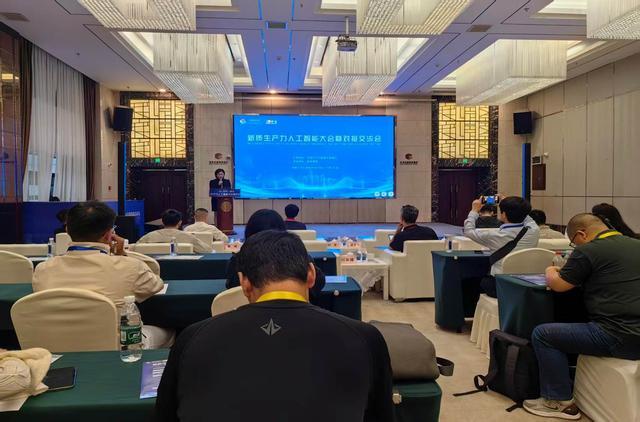
新质生产力人工智能大会暨对接交流会在绵阳举行
Huan Qiu Wang Zi Xun· 2025-09-28 08:15
Group 1 - The conference on new productivity and artificial intelligence was held in Mianyang, Sichuan, attracting various stakeholders including business leaders, experts, and financial executives to share experiences and promote high-quality development [1] - Liu Jun, a prominent scientist, discussed the evolution of AI and its future direction, emphasizing that "intelligent agents" will be a key theme in the development of China's IT industry [3] - Various speakers presented practical examples and case studies on AI applications, including breakthroughs in technology and new operational scenarios [3][4] Group 2 - The core features of the next-generation enterprise automation products include low-threshold interactive design, intelligence and controllability, automatic response to anomalies, and team collaboration among digital employees [4] - Project presentations included topics such as knowledge management platforms driven by knowledge graphs and AI, and the integration of AI in financial services [4][5] - The discussions and exchanges at the conference are expected to contribute to Mianyang's high-quality development and further advancements in China's AI sector [5]
京东、阿里、美团上演新“三国杀” 谁能挟AI Agent卡位未来电商超级入口?
Xin Lang Cai Jing· 2025-09-28 05:56
Core Insights - The integration of AI into e-commerce is accelerating, with companies like JD.com and Taobao focusing on deep integration of large models into their business operations [1][2] - JD.com has introduced its e-commerce AI architecture, Oxygen, and plans to launch more intelligent features in its app, including smart shopping guides and 3D product presentations [1] - Various AI models have been developed based on JD.com's JoyAI model, serving as the "brain" and decision-making center for intelligent e-commerce [1] Group 1: JD.com's AI Initiatives - JD.com is developing functional intelligent agents for product display, procurement, customer service, and marketing to enhance the smart e-commerce platform [1] - The company has opened its multi-agent collaboration framework, OxyGent, and the Oxygent-9N-xLLM model inference engine for future technological openness [1] - JD.com is also focusing on enhancing product presentation technology, particularly in XR and 3D fields, to create virtual try-ons and 3D live streaming [2] Group 2: Industry Trends and Competitors - Other e-commerce platforms like Taobao and Meituan are also accelerating their AI initiatives, with Taobao launching features like "AI Assistant" and AI price comparison tools [2] - Meituan has introduced an independent C-end intelligent agent, "Xiao Mei," focusing on local life services and providing intelligent interaction based on user preferences [2] - The AI e-commerce sector is still in its early stages, with companies exploring different strategies and competitive advantages based on their unique business models [3] Group 3: Challenges and Future Directions - The main challenge in scaling 3D content creation lies in the time and cost involved in producing 3D models, which can take months and be expensive [2] - The phenomenon of "hallucination" in large models remains a significant issue, making it difficult to achieve definitive results in certain applications [3] - The future of AI in e-commerce will likely involve deeper multi-modal interactions, cross-scenario data integration, and the establishment of new industry norms regarding AI recommendations and user privacy [3]


科技周报|蓝战非多平台被禁止关注,京东宣布三年带动万亿生态
Di Yi Cai Jing· 2025-09-28 03:29
Group 1 - The "Beijing Plan" for super node intelligent computing applications was released, aiming to develop industry-specific intelligent entities by integrating various model algorithms and creating a plug-and-play platform by 2026 [2] - The gaming live-streaming industry experienced a boom from 2016 to 2018, leading to significant wealth creation but also the downfall of many streamers and companies that could not keep pace [3] - Shanghai Zhiyuan became the new controlling shareholder of Shangwei New Materials, with a market value of 92.46 billion yuan for the acquired shares, resulting in a floating profit of nearly 8.5 billion yuan [4] Group 2 - Changjiang Storage's parent company completed its shareholding reform, with an estimated valuation exceeding 160 billion yuan [5] - Meituan's new generation of unmanned delivery vehicles received approval for cross-district trials in Shenzhen, expanding the service radius beyond 30 kilometers [6] - Zhuanzhuan announced a shift from C2C to C2B2C model, closing its "free market" business due to challenges in trust and supply [8] Group 3 - Alibaba plans to reduce its stake in Suning.com, with no impact on the company's control or ongoing operations [9] - JD.com aims to drive a trillion-scale AI ecosystem over the next three years, with a focus on enhancing supply chain efficiency through its open-source AI architecture [10] - The dialogue between Zhou Hongyi and Luo Yonghao highlighted the evolution of AI and the importance of intelligent agents in future developments [11] Group 4 - Xiaohongshu launched the "Xiaohong Card" to enhance local life services, marking a new attempt at commercialization and potentially reshaping the local lifestyle industry [12][13] - Zhihu completed an upgrade to its search capabilities, transitioning from passive responses to proactive service, enhancing user experience in research and learning [14] - Hongmeng Smart's focus on health sleep scenarios was showcased with a new smart bed product, tapping into the growing sleep economy market projected to reach 658.68 billion yuan by 2027 [15]
潘云鹤,最新发声!
Zheng Quan Shi Bao· 2025-09-27 08:56
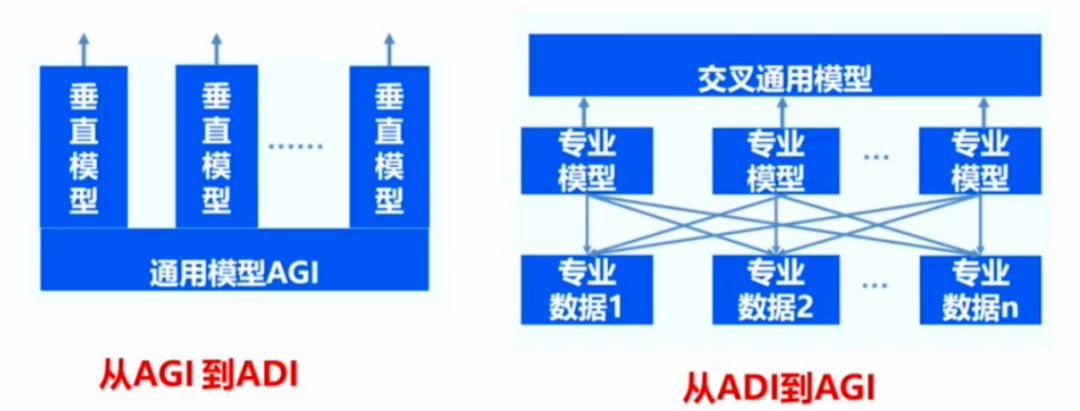
Group 1 - The core viewpoint of the article emphasizes that AI+ will initiate a new wave in platform economy, leading it into a 2.0 era, where platform companies will leverage big data and AI to create economic activities through algorithms and models [1] - Since 2017, China has outlined five directions for AI planning, including big data intelligence, cross-media intelligence, collective intelligence, human-machine hybrid intelligence, and autonomous intelligent systems, with a focus on both cognitive and action simulation [1] - The issue of "big model hallucination," where generated content may not align with facts or logic, is highlighted as a significant concern, especially in engineering and scientific applications [1] Group 2 - A proposed solution to the hallucination problem is the development of specialized (domain) big models, which are becoming increasingly important [1] - The evolution of big models can transition from general to specialized and vice versa, with the latter potentially being more natural and smoother, akin to the development of individuals from specialists to generalists [2] - The concept of embodied intelligence is expected to further generalize and deepen, expanding the industrial space as robots evolve into more comprehensive intelligent terminals [4] Group 3 - The intelligent agent concept is anticipated to transcend hardware and software boundaries, becoming systems capable of perception, decision-making, and action [4] - The evolution of embodied intelligence will progress from visual-action (VA) models to more advanced visual-language-action (VLA) models combined with mechanics [4]