
能源安全

Search documents
挺进深地,进军深海!中国能源安全保障再添硬核底气
Sou Hu Cai Jing· 2025-10-25 00:56
Core Insights - China's resource exploration and high-end manufacturing sectors have achieved significant breakthroughs, enhancing energy security and promoting manufacturing upgrades [1][12] Group 1: Resource Exploration Achievements - Over 80 new mineral sites have been discovered in China this year, with approximately 70% being medium to large-sized [2] - The newly identified geological reserves are estimated to be around 2.5 billion tons of mineral equivalent, representing a year-on-year increase of about 20% [2] - Lithium exploration results are leading globally, with China's lithium reserves expected to account for about 20% of the global total [5] - Additional reserves include approximately 300 million tons of bauxite, 12 billion tons of coal, and over 1 billion tons of oil, with tungsten, tin, and phosphate reserves expected to grow by around 25% year-on-year [5] Group 2: Environmental Considerations - The proportion of green exploration projects has reached 90%, with carbon emissions intensity reduced by 15% compared to the previous year [5] - Ecological restoration projects now cover 95% of the exploration areas [5] Group 3: Oil and Gas Discoveries - A new shale oil resource with a potential of over 100 million tons has been discovered in the Sichuan Basin, with the well producing 38.64 cubic meters of shale oil and 10,000 cubic meters of natural gas daily [6][9] - The discovery expands the unconventional resource types in the Qijiang shale gas field, creating a "gas below, oil above" resource structure [9] - The "Deep Sea No. 1" gas field, which is the most challenging deep-water gas field in China, is expected to reach an annual peak production of 4.5 billion cubic meters by 2025 [9] Group 4: Manufacturing and Innovation - The series of breakthroughs in resource exploration and high-end manufacturing reflects a strong shift from "Made in China" to "Created in China" [12]



特朗普制裁重拳落地!次日中印国企便暂停采购俄油,俄能源出口遇急刹车
Sou Hu Cai Jing· 2025-10-24 22:56
Core Viewpoint - The U.S. government has imposed significant sanctions on two major Russian oil companies, Rosneft and Lukoil, marking a pivotal shift in U.S.-Russia relations amid ongoing geopolitical tensions related to the Ukraine conflict [3][5][6]. Sanctions Overview - The sanctions include placing Rosneft and Lukoil, along with over thirty affiliated entities, on the Specially Designated Nationals List, which will freeze their overseas assets and prohibit U.S. citizens and entities from engaging in any business with them [4][5]. - The sanctions are a direct response to the stalled ceasefire negotiations between Russia and Ukraine, reflecting a more aggressive U.S. stance under the Trump administration [6]. Secondary Sanctions - A critical aspect of the sanctions is the "secondary sanctions" clause, which warns foreign financial institutions against engaging in significant transactions with the sanctioned Russian companies, potentially exposing them to U.S. retaliation [8]. India's Response - Following the announcement of sanctions, Indian state-owned refineries quickly initiated a review of their contracts with Russian suppliers, indicating a strong reaction to U.S. geopolitical pressure [10]. - Indian Oil, HPCL, BPCL, and MRPL, which control over 60% of India's refining capacity, have shifted their focus away from Russian oil towards Middle Eastern and West African sources [10][11]. India's Geopolitical Position - India's rapid response to U.S. sanctions highlights its precarious position between reliance on Russian energy supplies and the desire to maintain strong ties with the U.S. [11][12]. - Despite the pressure, India has not completely halted Russian oil imports, reducing its share to 25% while negotiating with the U.S. for the lifting of sanctions on Iranian and Venezuelan oil [12][14]. China's Strategy - In contrast to India's opportunistic approach, China has maintained a calm and strategic stance, continuing its energy cooperation with Russia without significant disruption [13][15]. - China's state-owned oil companies have adjusted their import strategies, reducing Russian oil orders by 15% while increasing pipeline imports, ensuring energy security amidst sanctions [13][14]. Economic Impact on Russia - The sanctions are expected to significantly impact Russia's economy, as the sanctioned companies account for nearly 50% of its oil exports, which are crucial for government revenue [15][16]. - The loss of India as a major buyer has increased Russia's dependency on China, enhancing China's bargaining power in energy negotiations [15][16]. Conclusion - The differing responses of India and China to U.S. sanctions reflect their respective economic strengths and strategic priorities, with India focusing on short-term gains and China demonstrating a long-term energy security strategy [14][16].
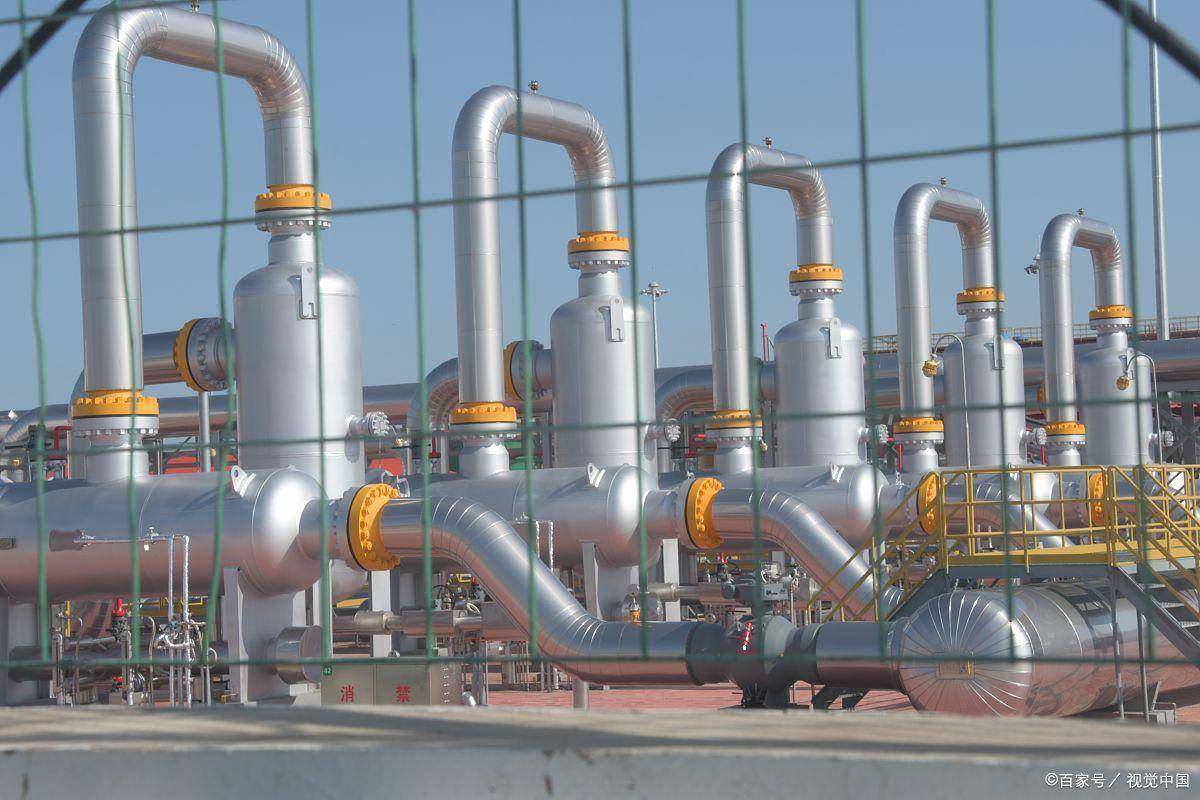
挺进深地 进军深海!中国能源安全保障再添硬核底气
Yang Shi Xin Wen Ke Hu Duan· 2025-10-24 22:30
Group 1 - China's mineral exploration has yielded significant results this year, with over 80 new mineral sites discovered, 70% of which are medium to large-sized [2] - The estimated newly proven geological reserves amount to approximately 2.5 billion tons of mineral equivalent, representing a year-on-year increase of about 20% [2] - Lithium exploration results are leading globally, with China's lithium reserves expected to increase to around 20% of the global total [2] Group 2 - A new shale oil resource with a scale of over 100 million tons has been discovered in the Sichuan Basin, with the well yielding a daily production of 38.64 cubic meters of shale oil and 10,000 cubic meters of natural gas [3] - The discovery enhances the unconventional resource landscape in the region, contributing to a strategic resource pattern of "oil and gas co-development" in the Sichuan Basin [3] Group 3 - The "Deep Sea No. 1" gas field, which is the most challenging deep-water gas field in China, is expected to reach an annual peak production of 4.5 billion cubic meters by 2025 [4] - This project signifies a major step in ensuring national energy resource security and showcases the transition from "Made in China" to "Created in China" [4]
寒冬将至,乌克兰的能源 “生命线” 能否被德国总理握住?
Sou Hu Cai Jing· 2025-10-24 16:40
Core Insights - The meeting between Ukrainian President Zelensky and German Chancellor Merz has brought global attention back to Ukraine's energy crisis, which is critical as winter approaches [1] - Ukraine's energy infrastructure has been severely damaged due to the ongoing conflict, with 60% of natural gas production and electricity facilities destroyed, leading to a gas shortfall of 4.4 billion cubic meters this winter [1] - The humanitarian impact is dire, with reports indicating a 31% increase in civilian casualties in the first nine months of 2025 compared to the previous year [2] Group 1: Ukraine's Energy Crisis - Ukraine's energy crisis is exacerbated by the destruction of energy facilities, with significant financial requirements for repairs estimated at €758 million [1] - The government is delaying the start of the heating season to conserve natural gas and is accelerating the development of renewable energy, aiming for a 27% share in the energy mix by 2030 [5][6] - Ukrainian citizens are facing severe hardships, including lack of heating and water supply due to power outages [2] Group 2: International Response - Germany has committed to providing air defense support and leading efforts in energy equipment and financial aid to help Ukraine rebuild its energy system [4] - Discussions are ongoing regarding the use of frozen Russian assets to aid Ukraine, with Germany's support deemed crucial [4] - However, Germany faces its own energy crisis and internal divisions regarding the extent of support for Ukraine, balancing national energy security with international obligations [4] Group 3: Broader Implications - The energy crisis in Ukraine is not just a national issue but a global concern, affecting energy security and international relations [6] - The EU is encouraged to enhance support for Ukraine's energy system reconstruction through funding, technology, and equipment [6] - A call for Russia to cease attacks on Ukrainian energy infrastructure and engage in peaceful negotiations is emphasized, highlighting the need for a collaborative international approach to resolve the crisis [6][7]

美国宣布重启阿拉斯加油气开发计划
Xin Hua She· 2025-10-24 09:26
(文章来源:新华社) 人民财讯10月24日电,美国内政部23日宣布在阿拉斯加州开发能源计划,其中包括开放该州的国家北极 野生生物保护区沿海平原,允许在那里开采石油和天然气。内政部在一份新闻公报中宣布,阿拉斯加沿 海平原蕴藏着美国最具开发前景但尚未开发的能源资源,对增强国家能源安全具有关键作用。内政部决 定推翻上届政府限制在阿拉斯加州开采油气的政策,允许租赁这块大约63万公顷的沿海平原,用于开采 油气。 ...
中国宣布亿吨级页岩油大发现,能源安全再添保障!
Sou Hu Cai Jing· 2025-10-24 04:16
Core Insights - An energy revolution is emerging in the Sichuan Basin, with shale oil and gas resources being uncovered, indicating its strategic importance for China's energy security [1] Company Developments - Sinopec has successfully tested high-yield shale oil and gas flow from the Qilu Well 1 in the Qijiang District of Chongqing, achieving a daily crude oil production of 38.64 cubic meters and associated natural gas of 10,000 cubic meters [3] - The discovery confirms the region's potential for billion-ton shale oil reserves and complements the previously discovered shale gas field, creating a "gas below, oil above" resource structure [3][8] - The successful drilling of Qilu Well 1 is a key step in Sinopec's strategic layout, following the discovery of a large shale gas field in 2022 and the initiation of new shale oil research [5] Technical Achievements - The drilling team overcame significant technical challenges related to the region's geological conditions, achieving a 100% rate of encountering quality shale during the drilling process [6] - The well's horizontal section extends over 2,000 meters, with a shale thickness of nearly 40 meters, indicating substantial exploration potential over an area exceeding 1,000 square kilometers [8] Industry Impact - Shale oil is increasingly important in China's energy strategy, with Sinopec's shale oil production expected to reach 705,000 tons in 2024, a 77% increase from the previous year [9] - The discovery of the new shale oil reserve in Qijiang enhances the long-term stability of China's crude oil production and strengthens national energy security [9] - Sinopec has made significant progress in shale oil exploration across multiple regions, with proven geological reserves exceeding 200 million tons and natural gas reserves of 12.352 billion cubic meters by 2025 [11] Strategic Outlook - The success of Qilu Well 1 marks a strategic shift in oil and gas exploration in the southern Sichuan Basin, contributing to a new energy future in Southwest China [13] - Sinopec's simultaneous exploration efforts in the Bohai Bay Basin, Jiangsu North Basin, and southeastern Sichuan Basin have established a strategic layout of three large-scale shale oil fields [13]

西非油气市场前景广泛
Shang Wu Bu Wang Zhan· 2025-10-23 19:23
Core Insights - The West African oil and gas market is projected to grow at a compound annual growth rate (CAGR) of 6.5% from 2025 to 2033, driven by global energy demand and the region's abundant energy reserves [1] - The oil and gas industry, valued at approximately $80 billion, is showing strong growth potential, marking a pivotal turning point for the sector in Sub-Saharan Africa [1] - Ghana accounts for 20% of the West African oil and gas market value, and recent policy changes are helping the country reposition itself as an investment destination after a period of production stagnation [1] Industry Overview - The report titled "Opportunities Arising from the Complexities of the West African Oil and Gas Market" highlights the significant resources available in the region, including hydrocarbon-rich areas in Nigeria, offshore blocks in Angola, and substantial natural gas reserves in the East African Rift [1] - The report emphasizes the need for a reassessment of energy equity, security, and sustainability across the African continent [1]
冯来法会见中国大唐集团总经理李向良
Sou Hu Cai Jing· 2025-10-22 03:58
Group 1 - The meeting between the general managers of China Energy Group and China Datang Group focused on deepening cooperation and communication between the two companies [1][3] - China Energy Group is transitioning from a "large and complete" model to a "strong and superior" model, emphasizing sustainable growth and high-quality development [3] - Both companies aim to collaborate in areas such as coal supply, clean and efficient coal utilization, technological innovation, and industrial control systems [3] Group 2 - China Datang Group expressed gratitude for the support received from China Energy Group and shared its development plans and project construction status [3] - The two companies have a solid foundation for cooperation, with significant achievements and broad opportunities for further collaboration [3] - The focus of the partnership includes coal trade, resource exchange, and information technology development to enhance mutual benefits and contribute to high-quality development [3]
Beam Global (NasdaqCM:BEEM) Conference Transcript
2025-10-21 22:32
Beam Global Conference Call Summary Company Overview - Beam Global is a San Diego-based sustainable technology innovation company focused on designing, engineering, and manufacturing various products related to renewable energy and electric vehicle (EV) infrastructure [2][3] Expansion and Partnerships - Beam Global has expanded into Europe with facilities in Belgrade and Kraljevo, Serbia, and recently established a joint venture, Beam Middle East LLC, with Platinum Group UAE, which is a 50/50 partnership [3][40] - The Middle East is seen as a significant market due to a commitment to invest over $1 trillion in sustainable infrastructure over the next decade [4] Product Offerings - The flagship product, EV ARC (Electric Vehicle Autonomous Renewable Charger), allows for rapid deployment of EV charging infrastructure without the need for construction or electrical work [5][6] - Other products include: - **Beam Bike**: Infrastructure for charging electric bicycles, developed for New York City [10][11] - **BeamWell**: A mobile desalination and electricity generation unit designed for areas with limited access to clean water [12][13] - **BeamPatrol**: Electric motorcycles for law enforcement, providing a maintenance-free and quiet operation [14][15] - **Beam Flight**: A drone recharging product, emphasizing rapid deployment and scalability [27] Market Position and Competition - Beam Global claims to have no direct product competition, as their offerings are unique and not directly replicated by competitors [29][42] - The company competes with an ecosystem of contractors and service providers, which customers prefer to avoid due to the complexities involved in traditional installations [42] Financial Performance - Historically, 50%-70% of revenues came from federal government customers, but this has shifted due to current political climates [21][22] - The company is seeing growth in commercial and municipal sales, which are expected to replace lost federal revenues [22] - Beam Global has maintained improving gross profits despite revenue fluctuations, indicating strong operational discipline [22][23] Financial Health - The company has no debt and a clean balance sheet, with a $100 million line of credit priced at SOFR plus 300 basis points [24] - A low number of shares outstanding compared to peers enhances the potential for earnings per share (EPS) growth [25] Future Revenue Models - Beam Global is introducing recurring revenue models, including a sponsorship model for EV charging infrastructure, which allows for free charging while retaining ownership of the infrastructure [34][35] - The company plans to offer products as a service, bundling energy, disaster preparedness, and charging solutions [35][36] Product Longevity and Quality - The oldest unit, deployed in 2011, has shown no significant performance degradation, highlighting the durability and quality of Beam Global's products [37][38] - The company prioritizes high-quality materials in manufacturing, which contributes to lower warranty costs and enhances long-term profitability [39] Conclusion - Beam Global is positioned as a leader in sustainable technology and renewable energy infrastructure, with a strong focus on innovation, quality, and expanding market presence globally. The company is adapting to changing market conditions and exploring new revenue streams while maintaining a solid financial foundation [22][24][35]

特朗普重申:莫迪告诉我 印度将停止购买俄罗斯石油
Mei Ri Jing Ji Xin Wen· 2025-10-21 15:22
Group 1: U.S.-India Relations and Oil Imports - President Trump claimed that Indian Prime Minister Modi assured him that India would stop purchasing Russian oil, although the Indian Foreign Ministry denied any such conversation took place [1] - India has accelerated its imports of Russian oil, averaging 1.8 million barrels per day in the first half of October, an increase of approximately 250,000 barrels per day compared to September [2] - Russian oil constitutes about 34% of India's total oil imports, driven by attractive discounts and high margins on Russian crude [2] Group 2: Trade Negotiations and Tariffs - Ongoing trade negotiations between the U.S. and India aim to reach an agreement next month, with reported narrowing of differences on trade issues [4] - The U.S. imposed a 50% import tariff on Indian goods starting in late August, which has led to a significant drop in India's exports to the U.S., down 20% year-on-year in September [5][6] - India's trade deficit widened to $32.15 billion in September, the highest in 13 months, exacerbated by the decline in exports [7] Group 3: Economic Impact and Future Projections - Estimates suggest that India's exports to the U.S. could decline by 30% in the fiscal year ending March 2026, dropping from $86.5 billion to $60.6 billion [8] - The high tariffs are expected to adversely affect small and medium enterprises and farmers in India, as criticized by opposition leaders [8]