中国创造

Search documents
民企这一年丨科沃斯集团总经理庄建华:创新的本质是要帮用户解决问题
Zhong Guo Xin Wen Wang· 2026-02-26 01:44
Group 1 - The core message of the article emphasizes the importance of innovation and global expansion for private enterprises in China, as highlighted by the recent high-level symposium attended by President Xi Jinping [1] - The growth trajectory of Ecovacs Robotics is presented as a case study of the transformation of Chinese manufacturing, showcasing the shift from OEM to owning a brand and the commitment to innovation and R&D [2][3] - Ecovacs has established itself as a leader in the service robotics sector since its inception in 1999, with over 600,000 technology and innovation-driven SMEs in China, predominantly private enterprises [3] Group 2 - The company has successfully integrated its original OEM business into a new brand, "TianKe," which has contributed to its second growth curve and reflects a strategic shift from low-cost competition to technology-driven competition [3] - Globalization has become a significant aspect of Ecovacs' identity, with overseas revenue accounting for approximately 40% of total income for both Ecovacs and its TianKe brand [4] - The ability to understand market nuances and maintain a resilient international talent supply chain has been crucial for the company's global expansion efforts [5]

春晚机器人舞出“中国创造范儿”
Huan Qiu Wang· 2026-02-23 22:37
Group 1 - The article highlights China's significant advancements in humanoid robotics, showcasing a performance during the Chinese New Year gala that attracted millions of viewers, indicating China's growing leadership in advanced robotics technology [1][2] - Chinese manufacturers accounted for the majority of the global humanoid robot shipments in the previous year, with notable sales from companies like Yushu and Zhiyuan, which sold approximately 5,500 and over 5,000 units respectively [1] - The production scale of humanoid robots in China is rapidly increasing, with a forecast of 295,000 new industrial robots to be installed in China by 2024, surpassing the total installations in other countries [3] Group 2 - China's humanoid robots are expected to see a cost reduction of at least 40% from 2022 to 2024, enhancing their industrial competitiveness as labor costs rise and the population ages [2] - The Chinese government is actively supporting the robotics sector through national venture capital funds, aiming to leverage significant fiscal resources to stimulate private investment in AI and robotics [2] - Public perception in China is increasingly positive towards humanoid robots, viewing them as partners in work and daily life, contrasting with the skepticism seen in other regions [4]

用春晚的视角打开国产科技变化
Xin Lang Cai Jing· 2026-02-16 11:53
Core Viewpoint - The evolution of technology in China's Spring Festival Gala reflects the advancement from basic manufacturing to intelligent creation, showcasing the significant progress in domestic technology over the past four decades [1] Group 1: Technological Advancements - The first Spring Festival Gala in 1983 featured simple stage designs and wired broadcasts, relying on telephone interactions to engage the audience [1] - In the 1990s, the introduction of LED screens and satellite transmission marked a transition to more sophisticated stage presentations, achieving global signal coverage [1] - Post-2010, technologies such as holograms, AR, and VR became prevalent, with 4K and 8K ultra-high-definition production fully localized, and the integration of human-machine collaboration and digitally controlled stages became standard [1] Group 2: Recent Innovations - Recent years have seen the emergence of AI visual tracking, virtual interaction, and intelligent simultaneous translation, with robots making appearances on stage [1] - The latest Spring Festival Gala showcased an intelligent ecosystem, indicating that technology has shifted from being a mere embellishment to taking center stage [1]
大国小农:城市化进程中的农民
Xin Lang Cai Jing· 2026-02-08 00:58
Core Viewpoint - The article emphasizes the interdependent relationship between smallholder economy, Chinese manufacturing, and Chinese innovation as the three driving forces behind China's modernization and economic growth [3][4][5]. Group 1: Smallholder Economy - The smallholder economy provides a stable foundation for China's modernization, acting as a stabilizer and reservoir that supports the manufacturing sector by supplying high-quality, low-cost labor [4]. - This economic model has allowed rural families to maintain agricultural income while also benefiting from urban employment, leading to a sustained increase in household income [2]. Group 2: Chinese Manufacturing - Chinese manufacturing has been a key contributor to the country's economic miracle, characterized by its competitive pricing and quality, which has established China as the "world's factory" [1][4]. - The success of Chinese manufacturing is significantly attributed to the influx of rural labor, which has provided the necessary workforce to sustain this sector [1][2]. Group 3: Chinese Innovation - Transitioning from "Made in China" to "Created in China" requires continuous technological advancement and industrial upgrading, which are essential for maintaining global competitiveness [3][4]. - The development of Chinese innovation is contingent upon strong educational and scientific foundations, high levels of policy support, and an effective market mechanism [4][5]. Group 4: Interconnectedness of the Three Forces - The three components—smallholder economy, Chinese manufacturing, and Chinese innovation—are not parallel but rather mutually supportive and complementary, forming a cohesive strategy for sustainable economic growth [4][5]. - The success of Chinese innovation will enable the formation of a complete industrial chain, enhancing international competitiveness and allowing for the transformation of the smallholder economy [5].
和光控股:解码国潮背后的创意密
Sou Hu Cai Jing· 2026-02-05 07:35
Core Viewpoint - The article highlights the rise of China's cultural and creative industry, emphasizing the need for domestic brands to break the monopoly of overseas brands in the high-end derivative product market, showcasing the innovative journey of Beijing He Guang Holdings under the leadership of Chairman Pan Yuchen [1][3]. Industry Development - The Chinese cultural and creative industry has shown remarkable growth, yet it faces challenges in competing with established overseas brands that dominate the high-end derivative market [3]. - The key issue for many practitioners is to integrate traditional culture with modern design to establish a strong presence for "Chinese creation" on the international stage [3]. Company Background - Beijing He Guang Holdings was founded by Pan Yuchen in 2009, starting as Mirror Studio, one of the first domestic brands in the figure model sector, breaking the monopoly of foreign brands in the domestic art derivative market [5]. - The company has evolved from a small studio to a comprehensive enterprise covering the entire industry chain, including art creation, IP development, and production sales [5]. Innovation and Product Development - Pan Yuchen's approach involves lowering production costs to make high-quality cultural products accessible to the general public, aiming to price products under 300 yuan [4]. - The company integrates rich elements of traditional Eastern aesthetics into modern designs, exemplified by the anthropomorphized Dunhuang deer figure, which resonates with younger audiences [6]. Technological Advancement - The company has adopted advanced technologies such as CNC and automated production lines to enhance product quality and production efficiency, achieving an annual output of over 350,000 pieces [7]. Cultural Impact - Beijing He Guang Holdings actively collaborates with nearly 50 well-known domestic and international IPs, promoting Chinese traditional culture through modern products and enhancing cultural exchange [9]. Future Vision - The company aims to continuously innovate in production technology and improve product quality, aspiring to create culturally significant products that appeal to diverse markets and consumers [10]. - Pan Yuchen envisions that Chinese derivative products will serve as vital carriers of cultural output, showcasing the unique charm and profound heritage of Chinese culture on the global stage [10].


国产盾构机高效开挖样样在行(向新向优的中国产业)
Ren Min Ri Bao· 2026-02-02 00:54
Group 1 - The core point of the news is the advancement of China's tunneling technology, particularly with the introduction of the world's largest diameter vertical shaft tunneling machine, "Qiming," which marks a significant shift in construction efficiency and safety [1] - The "Qiming" machine, developed in 2025, overcomes the limitations of traditional shield machines that can only excavate horizontally, allowing for vertical excavation and addressing the inefficiencies and risks associated with traditional shaft construction [1] - China's shield tunneling industry is experiencing continuous market expansion, significant technological improvements, and increasing internationalization, with 70% of the world's shield machines being produced in China and a core component localization rate exceeding 90% [1] Group 2 - The "Jiaomei" tunneling machine, capable of advanced excavation techniques, has achieved a monthly excavation record of 606 meters, improving efficiency by 40% and reducing costs by 60% in challenging geological conditions [3] - The "Bianjing No. 1," the world's first continuously variable diameter shield machine, can adjust its cutting diameter from 8.83 meters to 12.45 meters, representing a major innovation in tunneling technology [5] - The "Bianjing No. 1" allows for seamless construction of both tunnel sections and station platforms without the need for disassembly, enhancing operational efficiency and reducing downtime [6] Group 3 - The export of China's largest diameter shield machines, "Patigalang" and "Balanglu," to Australia signifies a shift from reliance on imports to leading the global market in ultra-large diameter tunneling machines [8] - These machines incorporate advanced intelligent features, such as robotic tools for blade detection and replacement, significantly enhancing operational efficiency and safety in challenging underwater environments [8] - Chinese companies have secured leading positions in global shield machine sales, successfully entering high-profile international projects, and establishing a comprehensive "shield ecology" that includes various tunneling-related technologies [9]
“三轮驱动”的中国现代化进程
Xin Lang Cai Jing· 2026-02-01 21:21
Core Viewpoint - The article emphasizes the interdependent relationship between smallholder agriculture, Chinese manufacturing, and innovation, suggesting that all three are essential for China's modernization and economic growth [3][4][5]. Group 1: Role of Smallholder Agriculture - Smallholder agriculture provides a continuous supply of high-quality, low-cost labor for Chinese manufacturing, which is crucial for maintaining its global competitive advantage [3][5]. - The semi-subsistence model of farming, where young laborers migrate to cities while older family members remain in rural areas, has led to increased household incomes through both agricultural and urban employment [2][3]. Group 2: Importance of Chinese Manufacturing - Chinese manufacturing has been a key driver of the country's economic miracle, providing affordable and high-quality products that have established China as the "world's factory" [1][5]. - Maintaining the global competitive edge of Chinese manufacturing is essential for the country's economic future, as it serves as a foundation for further advancements [4][5]. Group 3: Need for Innovation ("China Creation") - Transitioning from "Made in China" to "Created in China" requires sustained technological advancement and industrial upgrading, which are critical for moving up the value chain [4][5]. - The success of "China Creation" depends on strong educational and technological foundations, high levels of policy support, and an effective market mechanism [5][6]. Group 4: Interconnectedness of the Three Aspects - The three components—smallholder agriculture, Chinese manufacturing, and innovation—are not independent but rather support and complement each other, forming a "three-wheel drive" for China's modernization [5][6]. - The resilience provided by smallholder agriculture is vital for supporting the innovation process, while manufacturing can supply the necessary resources for technological breakthroughs [5][6].
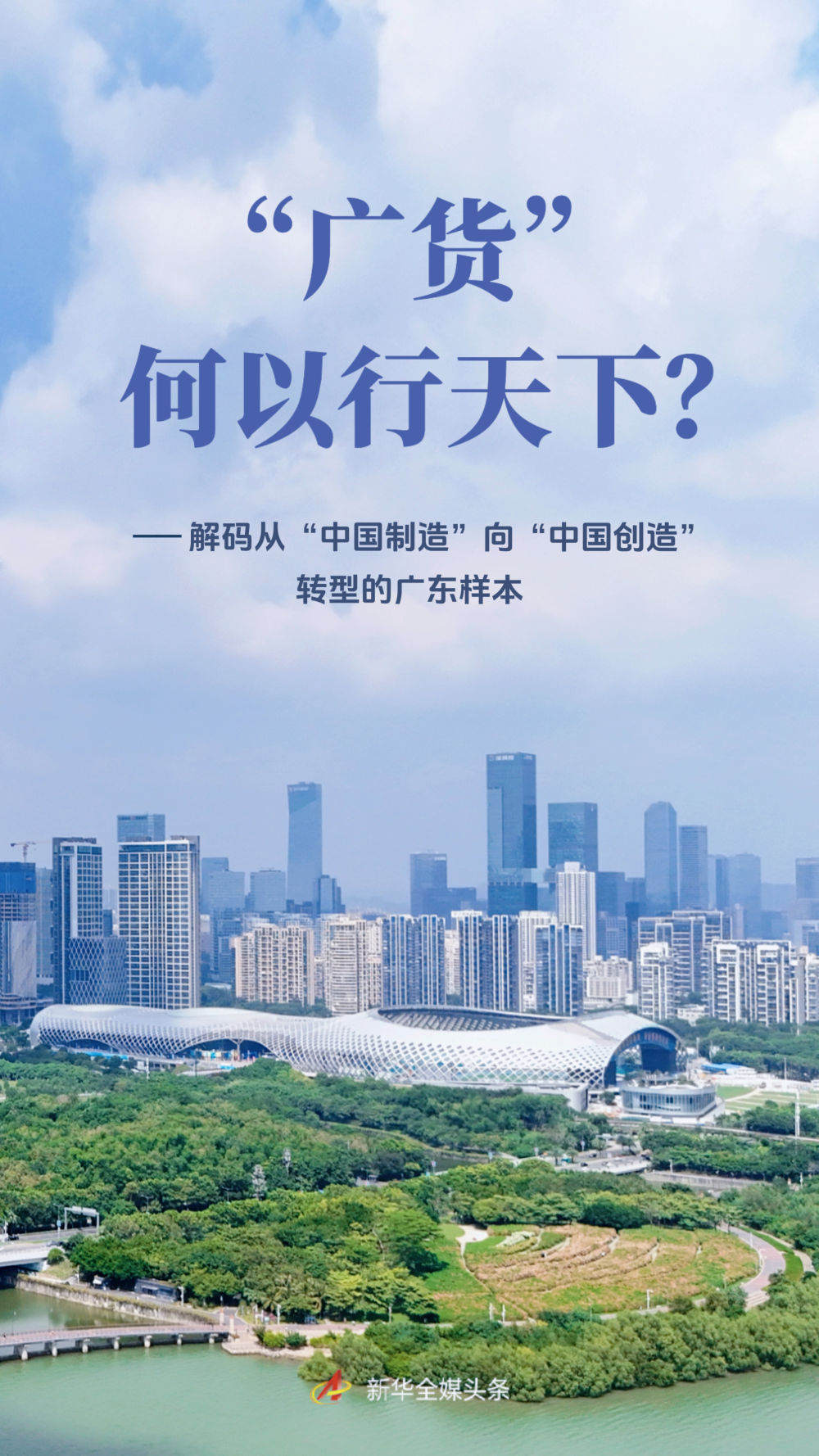
“广货”何以行天下?——解码从“中国制造”向“中国创造”转型的广东样本
Xin Hua Wang· 2026-02-01 13:58
Core Viewpoint - The article emphasizes the transformation of "Guangdong goods" from mere manufacturing to innovation and leadership in various high-tech industries, showcasing the resilience and potential of China's economy [3][4][7]. Group 1: Industrial Strength and Ecosystem - Guangdong has developed a robust industrial ecosystem, exemplified by the efficiency of local supply chains, such as the ability to source all components within a 5-kilometer radius for lighting products [4]. - The province boasts nine trillion-yuan industrial clusters, including electronics, textiles, and automotive, supported by both large enterprises like Huawei and numerous specialized SMEs [4][7]. - Guangdong's manufacturing capabilities are significant, producing 50% of the nation's air conditioners and 33% of mobile phones, along with 70% of consumer drones and 40% of industrial robots [7]. Group 2: Technological Innovation and Market Leadership - The evolution of "Guangdong goods" reflects a shift towards high-tech manufacturing, with local companies now leading in innovation and product development [7][10]. - Shenzhen's innovation cluster has been recognized as the top global innovation hub, highlighting advancements in low-altitude economy, commercial aerospace, and artificial intelligence [10]. - Companies are transitioning from order-takers to solution providers, indicating a deeper engagement with market needs and proactive product development [9][10]. Group 3: Cultural Integration and Global Reach - "Guangdong goods" serve as a cultural and lifestyle representation, integrating traditional elements into modern products, such as games and fashion, enhancing their global appeal [13][16]. - The province's cultural richness is reflected in various products, from traditional crafts to modern smart devices, which are increasingly recognized on the global stage [13][16]. - The digital economy is reshaping the trade landscape, allowing small businesses to connect directly with global consumers, thus enhancing the reach of "Guangdong goods" [17]. Group 4: Strategic Initiatives and Future Directions - The "Guangdong goods go global" initiative aims to leverage the province's manufacturing strengths to participate actively in both domestic and international markets [21]. - Government support is crucial in creating favorable conditions for businesses, focusing on quality improvement, technological innovation, and brand value enhancement [21][22]. - The strategy includes promoting local agricultural products and utilizing e-commerce to expand market access, reflecting a comprehensive approach to economic development [21].
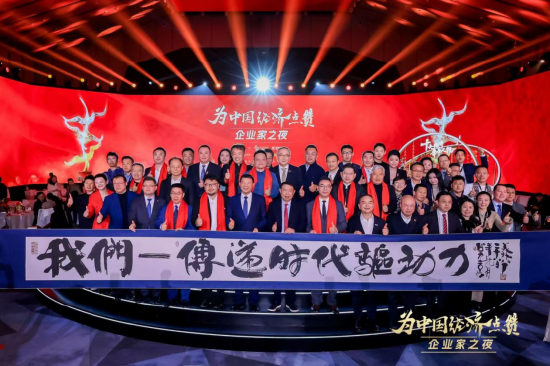
1月29日的夜晚,早已伏脉于千里之外
Xin Lang Cai Jing· 2026-01-30 08:53
Group 1 - The article highlights the significant contributions of various entrepreneurs to China's economic landscape over the past 40 years, emphasizing their courage, vision, and resilience in shaping the future of industries and the nation [2][35] - The narrative focuses on the theme of not just wealth and success, but also on pioneering new pathways in deep industrial waters and nurturing world-class dreams on the soil of national confidence [2][35] Group 2 - The emergence of great enterprises often begins with leaders who possess a profound insight into the "certainty" of the times, as exemplified by Ma Changhai of Weichai Power and Chen Jinghe of Zijin Mining [3][36] - In 1997, Chen Jinghe posed a critical question about the survival of Zijin Mining, which at the time was struggling with a seemingly worthless gold mine, and he committed to self-research and innovation to overcome external and internal challenges [3][37] Group 3 - Chen Jinghe's leadership led to significant advancements in technology and international strategy, transforming Zijin Mining from a local enterprise into a global mining giant [5][39] - Similarly, Ma Changhai faced fierce competition in the heavy machinery sector and emphasized the importance of mastering core technologies to ensure China's industrial autonomy [7][41] Group 4 - The stories of Chen Jinghe and Ma Changhai reflect the broader narrative of China's industrial evolution from scale chasing to reaching the pinnacle of technology and value chains [8][42] - The article also discusses the commitment of entrepreneurs like Cold Friend and Wu Xiangdong to redefine "Made in China" through deep-rooted business practices and cultural confidence [9][43] Group 5 - Cold Friend's strategic decisions during the crisis in the dairy industry led to the establishment of a complete supply chain for infant formula, enhancing the global competitiveness of Chinese dairy products [9][43] - Wu Xiangdong's acquisitions in the liquor industry marked a significant shift from brand operation to controlling core production capacities, thereby reinforcing cultural heritage through commercial success [11][45] Group 6 - The article emphasizes the role of entrepreneurs like Ma Yin in creating spaces that blend commerce and culture, establishing new value benchmarks in the real estate sector [14][48] - Lu Mai's advocacy for rural children's development highlights the importance of social equity and community engagement in entrepreneurial efforts [16][50] Group 7 - The narrative also covers the innovative pursuits of leaders like Peng Jun and Zhao Deli in the fields of autonomous driving and flying cars, pushing the boundaries of transportation technology [20][21] - Liu Debing and Han Bicheng are noted for their contributions to artificial intelligence and brain-computer interfaces, showcasing China's shift from follower to leader in global tech competition [23][28] Group 8 - The article concludes by celebrating the diverse stories of these entrepreneurs, portraying them as architects of a new era that encourages innovation and exploration [30][63] - It acknowledges the challenges faced on their journeys, underscoring their determination and commitment to their visions [31][63]
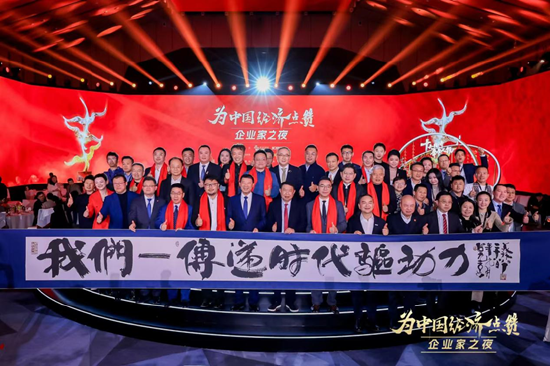
为什么是他们?40年激流,10座高峰,10个造舟者
Xin Lang Cai Jing· 2026-01-30 08:46
Core Insights - The article highlights the achievements of ten distinguished entrepreneurs who have significantly contributed to China's economic landscape, showcasing their courage, vision, and resilience in various industries [2][33]. Group 1: Industrial Leadership - Chen Jinghe, founder of Zijin Mining, transformed the company from a small local enterprise into a global mining giant by overcoming technical challenges and establishing an international strategy [5][37]. - Ma Changhai, chairman of Weichai Power, led the company through a comprehensive reform process, focusing on mastering core technologies and achieving breakthroughs in heavy-duty engines and hydraulic systems [7][40]. - Both Chen and Ma's stories symbolize China's industrial evolution from scale chasing to technological and value chain leadership [8][40]. Group 2: Manufacturing Excellence - Cold Friend, chairman of Feihe Dairy, adopted a long-term strategy to ensure the safety and quality of infant formula, establishing a complete supply chain from pasture to product [9][43]. - Wu Xiangdong, chairman of Guizhou Zhenjiu, transitioned from brand management to controlling core production capacities through strategic acquisitions, enhancing the cultural value of Chinese liquor [11][45]. - Ma Yin, founder of Anaya, created a unique cultural and tourism destination that emphasizes the integration of business and humanity, setting a new value benchmark in the real estate sector [14][47]. Group 3: Technological Innovation - Peng Jun, chairman of Pony.ai, is pioneering the field of autonomous driving, addressing complex challenges in algorithms and hardware to redefine future transportation [19][53]. - Zhao Deli, founder of XPeng, is working on flying cars, tackling significant technical and regulatory challenges to establish a new industry in low-altitude economy [22][56]. - Liu Debing, chairman of Zhipu AI, is focused on developing AI infrastructure with independent intellectual property rights, marking a significant step in China's AI industry [23][60]. - Han Bicheng, founder of Strong Brain Technology, is innovating in brain-computer interfaces, contributing to advancements in life sciences and assistive technologies [25][58]. Group 4: Social Responsibility and Vision - Lu Mai, former vice chairman of the China Development Research Foundation, emphasizes the importance of early childhood development in rural areas, advocating for immediate action to support children's growth [16][50]. - The article underscores the entrepreneurial spirit as a driving force behind China's transition from manufacturing to value creation, highlighting the importance of social responsibility and cultural heritage in business [18][52].