自主创新

Search documents
以自主创新推动绿色转型 | 大家谈 如何当好“碳路先锋”
Zhong Guo Hua Gong Bao· 2025-09-26 03:30
突破创新瓶颈,以技术攻坚锻造绿色低碳核心竞争优势。化企要聚焦"卡脖子"技术,建立课题制,实 施"揭榜挂帅";在基础应用层要全面推广工艺优化模型,推动成熟节能技术在现有装置中深化应用,有 效促进能效水平系统提升;在技术攻关层要依托高水平研发平台突破绿色低碳前沿技术,探索资源循环 利用,攻关废水深度回用、废气资源化转化、固废高值化利用技术,打造闭环式资源循环体系;在前沿 引领层要加快研发碳能协同管理系统,通过数字化赋能实现碳排放动态监测与智能优化。 强化规划引领,以系统思维构建绿色低碳发展"四梁八柱"。化企要将绿色低碳作为核心要素深度融入战 略规划,从碳排放、能源利用、资源利用、污染防治、绿色发展等方面制订细分目标;要坚持节能降 碳、固碳中和,开发资源能源消耗低、碳排放水平低的绿色产品,延伸拓展产业链;要推广应用先进适 用的节能、降碳、减污、利废技术,大力推进清洁生产技术改造和循环化改造,提高资源能源利用效 率。 当前,全球产业变革与生态文明建设深度融合,绿色低碳技术革命正重塑化工行业竞争格局。化工企业 要以新质生产力培育为突破点,将自主创新作为推动绿色转型的关键一招,在守正创新中开辟绿色转型 新路径。 创新管理 ...
智能装备亮相工博会 董明珠呼吁中国企业“卷”质量与技术
Nan Fang Du Shi Bao· 2025-09-25 14:36
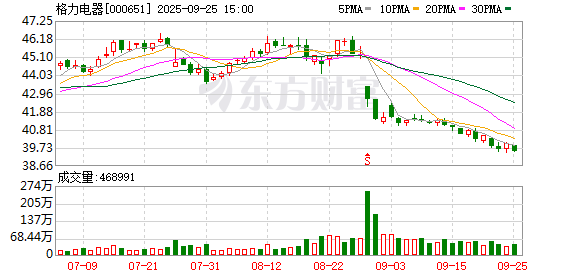
9月23日,第25届中国国际工业博览会于上海盛大开幕。本届博览会以"工业新质,智造无界"为主题,展览面积 达30万平方米,规模水平实现历史之最。格力智能装备携多种创新产品及系统解决方案重磅现身,覆盖汽车及零 部件、新能源、3C电子、船舶钢构、教育培训等领域,尤其是工业机器人相关设备的惊艳亮相,进一步诠释 了"精工品质,格力智造"的品牌宗旨。 格力工业机器人秉承自主创新,掌握核心科技的设计理念,深耕核心零部件关键技术研究。2024年,重点项目数 控机床"高性能机器人专用伺服电机及控制"关键技术荣获广东省科技进步二等奖,经鉴定已达到国际领先水平。 格力"高速双五轴龙门加工中心"荣获2025年日内瓦国际发明展金奖,这一荣誉充分印证了中国智造在技术创新领 域的硬实力,已得到全球行业的高度认可。 工业机器人以机械臂为主要载体,其核心功能是替代人工完成重复性、标准化的手部作业,从控制逻辑来看,人 类手部动作依赖大脑神经中枢调控,而工业机器人则通过数字化程序实现精准控制。工业机器人各核心零件对应 人体关键结构:机器人机身相当于人体躯干,伺服电机承担关节运动控制功能,减速机相当于动力源头,控制与 驱动系统则如同人的大脑,负责 ...


从“技术依赖”到“自主创新”,机器人产业链技术突破持续落地
Huan Qiu Wang· 2025-09-25 00:29
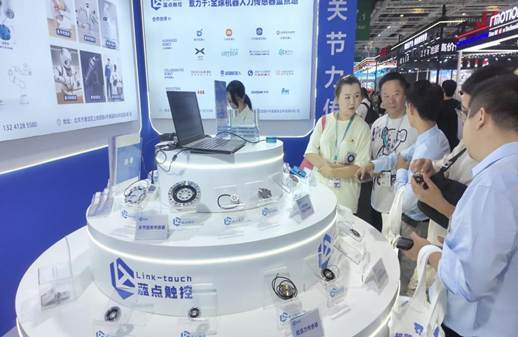
Group 1 - The Ministry of Industry and Information Technology emphasizes the need to cultivate emerging industries and create new driving forces during the "14th Five-Year Plan" period, focusing on sectors like humanoid robots, brain-computer interfaces, metaverse, and quantum information [1] - The 2025 China International Industrial Expo highlighted six-dimensional force sensors as a key component for robots, showcasing advancements in domestic technology that now competes with international brands [1] - Domestic companies, represented by Blue Dot Touch, have achieved significant breakthroughs in algorithms and strain structure design, allowing their sensors to match imported products in key performance indicators while offering advantages in cost control and customization [1] Group 2 - Blue Dot Touch has captured over 70% of the domestic market share in humanoid robot six-dimensional force sensors, with a shipment volume exceeding 70,000 units in the first half of 2025, accounting for over 95% of the total domestic shipments [3] - The CEO of Blue Dot Touch expressed ambitions to move beyond merely replacing imported products, aiming to leverage original technology to enter the global market, highlighting China's vast robot application landscape as fertile ground for high-end sensor development [3] - Industry experts note a strategic transformation in China's force sensor industry from "technology dependence" to "independent innovation," showcasing agility in iteration speed, application response, and customized development, particularly in emerging fields like humanoid robots and precision medical equipment [3]

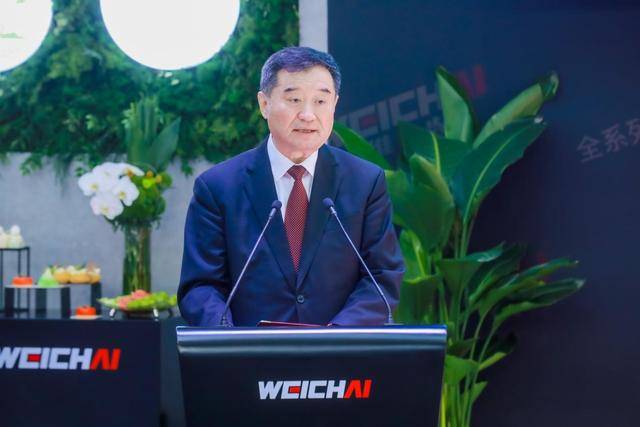
苏子孟出席潍柴全系列矿山动力产品解决方案发布会并讲话
Sou Hu Cai Jing· 2025-09-24 11:29
9月23日,第十七届中国(北京)国际工程机械、建材机械及矿山机械展览与技术交流会(BICES 2025)在北京开幕。会上,潍柴举行"潍柴动力 国之重器——全系列矿山动力产品解决方案发布会", 中国工程机械工业协会会长苏子孟受邀出席发布会并讲话。 中国工程机械工业协会会长苏子孟出席发布会并对潍柴给予高度评价 会上,凝聚潍柴领先技术成果的柴油、甲醇、天然气等多元燃料,直驱、纯电、混动等多种路线的矿山 动力集中亮相。潍柴还现场发布了全新推出的12M25矿山动力产品。作为M系列家族的新成员,潍柴 12M25可适配90-100吨机械传动矿卡、165吨挖掘机等,在可靠性、动力性、经济性等方面实现了全方 位突破。 随着12M25的面世,在M33、M55平台的基础上,潍柴M系列大缸径矿用产品序列得到进一步完善,也 标志着国产矿山动力将进一步满足客户高效运营、行业自主可控的需求。苏子孟表示,多年来,潍柴以 自主创新为核心驱动力,积累了深厚的技术沉淀,成功从"自主可控"向"超越引领"迈进,既为矿山装备 自主可控提供了关键支撑,也为本次BICES展会增添了亮眼的"自主创新亮点"。 在潍柴展区,苏子孟详细了解了潍柴非道路纯电用动力电 ...
安杰思(688581):国内短期承压 海外稳健增长
Xin Lang Cai Jing· 2025-09-23 10:28
Core Insights - The company achieved total revenue of 302 million yuan in H1 2025, representing a year-on-year growth of 14.56%, with a net profit attributable to shareholders of 126 million yuan, up 1.26%, while the gross margin declined by 1.35 percentage points [1] - Domestic revenue faced short-term pressure, while overseas revenue showed steady growth, with 14 new overseas clients added in H1 2025 [1] - The company is focusing on independent innovation and enhancing its R&D capabilities, with R&D expenses reaching 344.6 million yuan, a 33.29% increase year-on-year, and an R&D expense ratio of 11.39% [1][2] Revenue Breakdown - Domestic revenue for H1 2025 was 140 million yuan, a 10.50% increase, accounting for 46.19% of total revenue, with a slight gross margin increase of 0.18 percentage points [1] - Overseas revenue reached 163 million yuan, growing by 18.28% and making up 53.81% of total revenue [1] R&D and Talent Development - The company expanded its R&D team to 187 personnel, a 47.24% increase year-on-year, with 42.25% holding bachelor's degrees and 40.11% holding master's degrees or higher [2] - The company obtained 45 new product registration certificates in H1 2025, including 26 new domestic and international registrations, supporting its global sales strategy [1] Future Projections - Revenue projections for 2025-2027 are 769 million, 942 million, and 1.147 billion yuan, with expected growth rates of 20.8%, 22.4%, and 21.8% respectively [2] - Net profit projections for the same period are 327 million, 387 million, and 464 million yuan, with growth rates of 11.6%, 18.1%, and 19.8% respectively [2]

安杰思(688581):国内短期承压,海外稳健增长
Western Securities· 2025-09-23 09:11
Investment Rating - The report maintains an "Accumulate" rating for the company [5][11] Core Views - The company experienced a total revenue of 302 million yuan in H1 2025, representing a year-on-year growth of 14.56%, while the net profit attributable to shareholders was 126 million yuan, with a growth of 1.26%. The gross margin decreased by 1.35 percentage points [1][5] - Domestic performance is under short-term pressure, while overseas growth remains robust. The company is actively expanding its overseas partnerships and has added 14 new overseas clients in H1 2025 [1][2] - The company invested 344.6 million yuan in R&D in H1 2025, with an R&D expense ratio of 11.39%, an increase of 1.6 percentage points year-on-year, and R&D investment grew by 33.29% [2] Summary by Sections Financial Performance - In H1 2025, domestic revenue was 140 million yuan, up 10.50% year-on-year, accounting for 46.19% of total revenue, with a gross margin increase of 0.18 percentage points. Overseas revenue reached 163 million yuan, growing by 18.28% year-on-year, making up 53.81% of total revenue [1] - The company forecasts revenues of 769 million yuan, 942 million yuan, and 1.147 billion yuan for 2025, 2026, and 2027, respectively, with year-on-year growth rates of 20.8%, 22.4%, and 21.8% [2][3] R&D and Innovation - The company is focused on self-innovation and enhancing its R&D capabilities, with a total of 45 new product registrations in H1 2025, including 26 new registrations for domestic and international products [2] - The R&D personnel count reached 187, a year-on-year increase of 47.24%, with 42.25% holding bachelor's degrees and 40.11% holding master's degrees or higher [2] Future Outlook - The net profit attributable to shareholders is projected to be 327 million yuan, 387 million yuan, and 464 million yuan for 2025, 2026, and 2027, respectively, with growth rates of 11.6%, 18.1%, and 19.8% [3]
三友联众宋朝阳:深耕小器件 实现大梦想
Shang Hai Zheng Quan Bao· 2025-09-22 18:48
Core Viewpoint - The company Sanyou Lianzhong, led by Chairman Song Chaoyang, focuses on innovation and investment in high-value relay sectors such as new energy and automotive, aiming for high-quality development and breaking monopolies in the industry [2][10]. Group 1: Company Background and Development - Sanyou Lianzhong was founded in 2008 by Song Chaoyang and two university classmates, specializing in relay production and self-developed automation equipment [3]. - The company initially aimed to provide domestic brands for the home appliance industry, successfully producing relays that matched the quality of imported brands at a lower price [4]. - Sanyou Lianzhong faced challenges entering the white goods market due to procurement standards favoring imported brands, leading to a partnership with Japanese brand DEC to gain market access [5][6]. Group 2: Market Position and Product Expansion - The company has expanded its product range from general power relays to include magnetic latching relays, automotive relays, new energy relays, and signal relays, penetrating various sectors such as smart meters and industrial control [6][8]. - Sanyou Lianzhong ranked second in domestic relay sales for eight consecutive years from 2014 to 2021, indicating a strong market presence [6]. Group 3: Investment and R&D Focus - After going public on the Shenzhen Stock Exchange in 2021, Sanyou Lianzhong allocated significant funds to expand production lines for automotive and new energy relays, recognizing these as growth markets with higher technical demands [7]. - The company maintains a research and development investment ratio of over 5% of revenue, with a growing R&D team from 470 in 2022 to a projected 668 by the end of 2024 [7][8]. Group 4: Future Strategy and Market Trends - Sanyou Lianzhong is preparing for a shift towards automation and intelligent manufacturing in the relay industry, moving from mass production to customized production [9]. - The company aims to increase its self-manufacturing of core components and has developed fully automated production lines to enhance competitiveness [9]. - Sanyou Lianzhong is also expanding internationally, establishing subsidiaries in North America, South Korea, Germany, and Vietnam to enhance its global footprint [9].


短短一年半,运20B就开启爆兵模式,俄罗斯彻底痛失千亿中国市场
Sou Hu Cai Jing· 2025-09-22 03:46
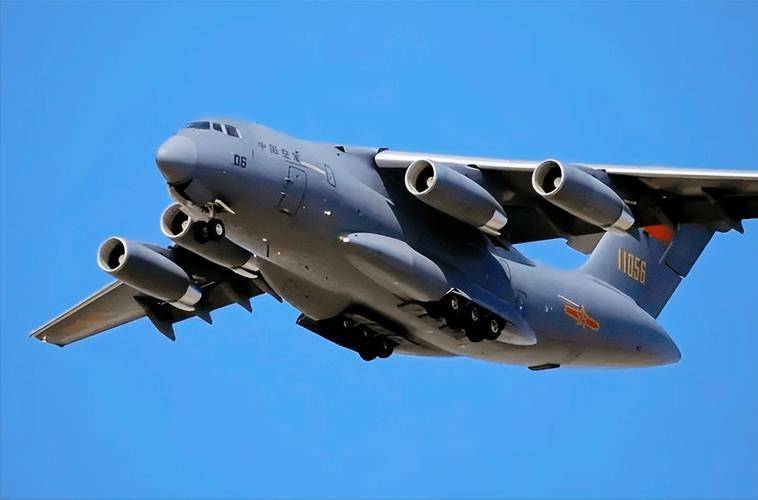
Core Insights - The Chinese Air Force has made significant breakthroughs in large transport aircraft, particularly with the Y-20 series, especially the latest Y-20B model, which has achieved rapid development and mass production within two years since its debut in April 2023 [1][3]. Group 1: Development and Production - The Y-20B has reached a production scale of 10-15 aircraft per year, with satellite images showing 16 Y-20Bs stationed at a military airport, indicating that the total number of units may have surpassed 100 [1]. - The key to the rapid development of the Y-20B is the breakthrough in engine technology, transitioning from the Russian D-30KP-2 engine in the Y-20A to the domestically produced WS-20 engine, which significantly enhances performance and ensures self-sufficiency in critical technology [1][3]. Group 2: Engine Technology - The WS-20 engine, with a thrust of 16 tons, began testing on the Il-76 platform in 2014 and was first fitted on the Y-20 in November 2020, marking a significant advancement in China's aviation capabilities [3]. - The Y-20B's range exceeds 8,000 kilometers, greatly improving its strategic deployment capabilities, and its production has been confirmed by satellite imagery showing multiple units at the factory [3]. Group 3: Industry Impact - The success of the Y-20B represents a milestone for China's aviation industry, overcoming long-standing reliance on foreign engines, which has historically hindered the development of Chinese fighter jets [4]. - The successful mass production of the WS-10 and WS-20 engines signifies a comprehensive breakthrough in aviation engine technology, which will also support the development of other large aircraft like the C929 wide-body passenger plane [4]. Group 4: Competitive Landscape - Russia's aviation industry faces severe challenges due to China's engine technology advancements, which have eroded its market share, compounded by international sanctions from the Russia-Ukraine conflict [6]. - The Y-20's success underscores the importance of independent innovation, as reliance on foreign technology has proven insufficient for achieving core technological advancements [6].
黄仁勋摊牌,或退出中国市场?美媒:特朗普让美国失去了唯一优势
Sou Hu Cai Jing· 2025-09-20 14:29
Core Viewpoint - Nvidia's CEO Jensen Huang announced the company's intention to exclude the Chinese market from future financial forecasts, indicating a potential complete withdrawal from China, marking a significant shift in the U.S. chip industry's strategy towards China [2][3]. Group 1: Nvidia's Challenges in China - Huang expressed disappointment with the Chinese market, citing restrictions faced during his visits and the possibility of Chinese internet companies halting purchases of Nvidia products [3][5]. - The company has faced difficulties with its specially developed H20 chips for China, which have been criticized for poor performance and low cost-effectiveness, leading to potential order cancellations [7][11]. - Nvidia's efforts to develop tailored chips to circumvent U.S. export controls have not yielded the expected results, resulting in significant inventory losses and a lack of interest from Chinese clients [11][13]. Group 2: U.S. Government Policies and Market Dynamics - U.S. government policies have created a challenging environment for Nvidia, with restrictions on advanced chip sales to China undermining its competitive edge in the market [13][15]. - Huang's comments reflect a broader concern that U.S. policies are detrimental to American companies' positions in the global AI landscape, potentially leading to a loss of competitive advantage [9][24]. - The ongoing geopolitical tensions have prompted a shift in the Chinese market, with local companies increasingly opting for domestic chip suppliers, reducing Nvidia's market share [19][21]. Group 3: Impact on Global Semiconductor Industry - The conflict between the U.S. and China is reshaping the global semiconductor supply chain, forcing companies to reconsider their market strategies [21][22]. - The global semiconductor industry is projected to shrink by approximately 12% in 2024 due to U.S.-China tensions, with further declines expected in 2025 [22]. - The situation highlights the end of an era of technological hegemony, as U.S. attempts to suppress Chinese technological advancement may inadvertently accelerate China's innovation efforts [24].


中方对美芯片发起调查,国际风向开始变了
Xin Lang Cai Jing· 2025-09-20 11:23
Core Viewpoint - The Chinese Ministry of Commerce has initiated anti-dumping investigations against American analog chips and anti-discrimination investigations regarding U.S. measures, signaling a strong response to U.S. chip hegemony [1][3]. Group 1: U.S. Actions and Their Impact - The U.S. has previously threatened to ban Huawei chips and imposed restrictions on advanced AI chip sales to China, which has led to a significant decline in NVIDIA's market share in China from 95% to 50% [2][5]. - The U.S. government has also implemented a "chip tax" of 15% on American chip companies operating in China, which has negatively impacted their revenues [5]. Group 2: China's Strategic Response - China has developed three key strategies in response to U.S. actions: 1. **Technological Breakthroughs**: Following the U.S. ban on H20 chips, Huawei announced the successful development of the Ascend 920 chip, increasing China's AI chip self-sufficiency from 12% to 40% [9]. 2. **Market Leverage**: U.S. chip companies have significantly reduced prices to compete, resulting in a drastic drop in their profits while China seeks to create a fairer environment for its domestic chip manufacturers through anti-dumping investigations [11]. 3. **Rule-Based Countermeasures**: China is utilizing the WTO framework to challenge U.S. discriminatory policies, effectively turning the tables on U.S. tactics [11]. Group 3: Broader Implications of the Tech Battle - The ongoing U.S.-China tech rivalry extends beyond chips, with the U.S. facing backlash from its own policies, as evidenced by the agricultural sector's struggles due to reduced Chinese orders for U.S. soybeans [14][16]. - China controls nearly 90% of global refined rare earth production, using this leverage strategically in trade negotiations with the U.S. [16]. - The conflict illustrates that the U.S. approach of weaponizing rules may ultimately backfire, while China's focus on innovation and resilience positions it favorably in the long term [18][20].