
生物制造

Search documents
权益类基金,发行冲刺
Zhong Guo Ji Jin Bao· 2025-12-14 13:40
【导读】年末发行冲刺,权益类基金成"主力军" 临近年底,新基金发行掀起小高潮,有超120只基金正在或即将发行。权益类基金成为发行"主力军", 占比超过六成;指数基金成为很多基金公司重点布局方向;"固收+"基金、FOF也占较大比例。与此同 时,基金公司继续上报新品,12月以来有120只新基金上报。 多位业内人士表示,基金公司在年底前密集推出新基金,意在把握当前市场机会,同时布局2026年投资 窗口。在政策引导下,基金发行的重心也将从规模扩张转向注重持有体验与长期业绩。 正在或即将发行 为明年"春播"做准备 在积极发行新基金的同时,基金公司也在密集上报新品,为明年"春播"做准备。12月以来,已有120只 新产品上报,其中,指数型产品占比过半,不仅有中证500指数、创业板50指数、沪深300指数等指数基 金或指数增强基金,也有有色金属、石油天然气、新能源等主题ETF。主动权益基金已经上报逾40只, 其中,"科技+成长"成为最受重视的方向,不少上报的产品名称中带有"科技先锋""先进制造""睿选成 长""成长领航"字眼。此外,还有十多只FOF于近期上报。 展望2026年,汇成基金研究中心表示,新基金发行预计将延续万亿元 ...
权益类基金,发行冲刺
中国基金报· 2025-12-14 13:37
Core Viewpoint - The article highlights a surge in new fund issuances as the year-end approaches, with equity funds becoming the main focus, accounting for over 60% of the total [2][4]. Group 1: Fund Issuance Trends - Over 120 new funds are currently being issued or are set to be issued, with 90 funds actively in the market and 31 awaiting issuance [3][4]. - Equity funds have become the dominant category in new fund issuances, with a significant portion being index funds, including broad-based ETFs and sector-specific products [4]. - The current trend shows a structural reversal compared to previous years, where equity funds accounted for only 30% of new issuances in the same period last year, while bond funds made up nearly half [4]. Group 2: Focus on Index Funds and Active Management - Index funds are a key focus for many fund companies, with a dual strategy of broad-based and niche sector investments [4]. - Notable active equity funds are being managed by well-known fund managers, indicating a strong emphasis on experienced leadership in fund management [4]. - The "solid income+" funds and Funds of Funds (FOFs) are also gaining traction, with themes like "multi-asset," "stable," and "diversified" being highlighted in marketing [4]. Group 3: Future Outlook and Strategic Focus - Fund companies are preparing for the next year by submitting a significant number of new products, with over 120 new products reported since December, more than half of which are index funds [7]. - The focus for 2026 is expected to maintain a normal issuance scale of over one trillion, with a balanced approach between equity and bond investments [7]. - The emphasis on product characteristics, holder experience, and long-term performance is becoming more pronounced, shifting from mere scale expansion to quality and sustainability in fund offerings [8].


生物制造:以生命为动力的未来工厂(院士讲科普)
Ren Min Ri Bao· 2025-12-12 22:00
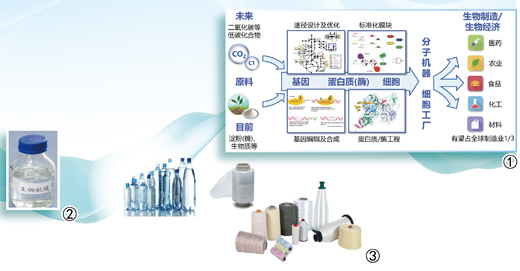
Core Viewpoint - Biomanufacturing is emerging as a transformative industry that utilizes living organisms to produce essential materials, marking a shift from traditional manufacturing methods reliant on fossil fuels to more sustainable practices using renewable resources [5][6]. Group 1: Definition and Importance of Biomanufacturing - Biomanufacturing involves using microorganisms, animal, or plant cells to produce desired substances by designing and controlling their metabolic pathways [5]. - This industry combines traditional fermentation techniques with synthetic biology, allowing for the production of pharmaceuticals, flavors, plastics, and fuels from renewable resources like sugar and carbon dioxide [5][6]. - It is considered a future industry because it represents a new manufacturing path driven by life, rather than an extension of traditional industries [5]. Group 2: Environmental and Economic Impact - Biomanufacturing is crucial for achieving carbon neutrality goals, as it utilizes renewable resources instead of fossil fuels, enabling a "carbon cycle" approach [6]. - Predictions suggest that by 2050, approximately 60% of industrial products could be produced through biomanufacturing, potentially generating an economic value exceeding $30 trillion [6]. Group 3: Current Developments in China - China is accelerating its biomanufacturing industry, with government reports emphasizing the need to cultivate new growth engines, including biomanufacturing [7]. - The country has established leading advantages in fermentation capacity, industrial scale, and engineering experience, positioning itself favorably in the future development of this industry [7]. Group 4: Innovations and Applications - Biomanufacturing is reshaping traditional production logic, enabling the cultivation of lab-grown meat and the production of microbial proteins and synthetic dairy products without livestock [8]. - In the fashion industry, biomanufacturing offers sustainable alternatives, such as bio-silk and mycelium leather, which can replace petroleum-based textiles [8]. - In construction, "bio-bricks" made from fungal mycelium and mineral particles can self-repair and absorb carbon dioxide, contributing to eco-friendly building practices [8]. Group 5: Challenges and Future Trends - Key challenges include the need for foundational capabilities in gene editing, strain design algorithms, and metabolic pathway databases, which are currently weak in China [10]. - The transition from laboratory success to industrial application faces hurdles, including process complexity and cost control [11]. - Future trends indicate a convergence of artificial intelligence with biomanufacturing, enhancing the design of living organisms, and a shift towards carbon circular manufacturing, where factories can utilize carbon dioxide as a raw material [12].
第十一届福建青年创青春大赛成果丰硕 为发展新质生产力注入青春动能
Zhong Guo Xin Wen Wang· 2025-12-12 13:52
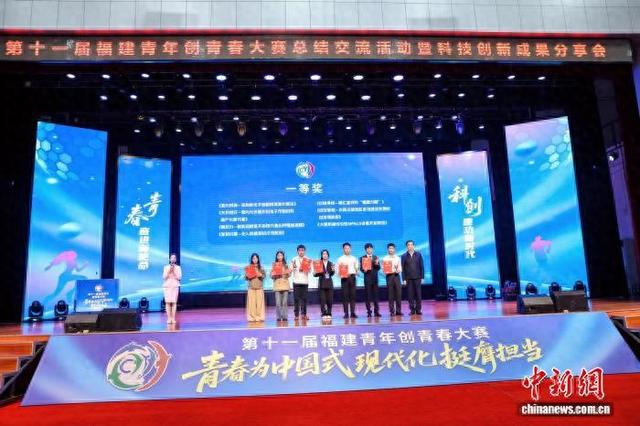
Core Insights - The 11th Fujian Youth "Chuang Qing Chun" competition and technology innovation achievement sharing event was successfully held in Yong'an, attracting over 300 participants including youth entrepreneurs and representatives from various organizations [1][3] - The competition focused on themes of technological innovation, digital economy, and entrepreneurship among Taiwanese youth, receiving 1,266 project entries covering advanced fields such as artificial intelligence, biomanufacturing, life health, big data, and blockchain technology [3] - The event has expanded its influence by inviting projects from regions like Gansu, Ningxia, Tibet, and Xinjiang to the finals, fostering regional innovation and entrepreneurship collaboration [3] Competition Highlights - A total of 7 first prizes, 21 second prizes, 34 third prizes, and 49 excellence awards were awarded, along with 8 outstanding organization awards [3] - Since its inception in 2014, the "Chuang Qing Chun" competition has attracted 10,763 youth entrepreneurial projects and 32,100 young participants, awarding 1,381 outstanding projects and distributing 24.4 million yuan in entrepreneurial support funds [3] - The competition has successfully nurtured a number of high-tech enterprises, contributing significantly to the high-quality economic development of the province and injecting youthful energy into the formation of new productive forces [3] Event Activities - During the event, a talent policy promotion for Sanming City was held, along with sharing sessions by entrepreneurial experts on technology innovation achievements [3] - Activities included organized visits and promotional events for young entrepreneurs and startups [3]
经济地理丨广东:在量子竞赛中打造“大湾区方案”
Sou Hu Cai Jing· 2025-12-12 05:42
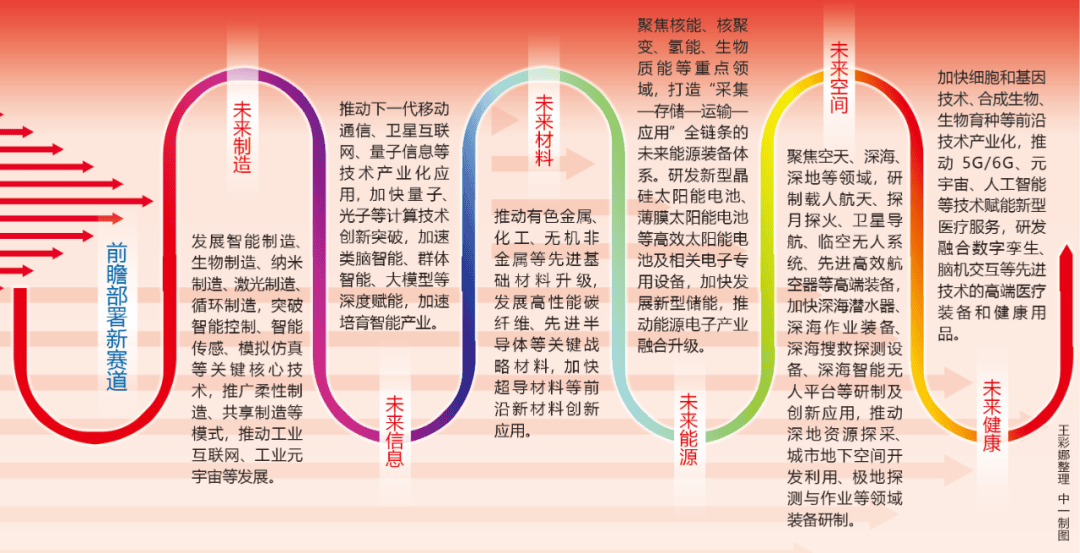
Core Viewpoint - The article emphasizes the importance of seizing opportunities in future industries, particularly in quantum technology, biotechnology, hydrogen energy, and nuclear fusion, as outlined in China's 15th Five-Year Plan [1] Group 1: Quantum Technology Development - Guangdong has established a clear strategic layout for quantum technology, aiming to create a world-class quantum information technology innovation platform and a southern base for quantum information industry [4][13] - The first large-scale dedicated optical quantum computer manufacturing plant in Shenzhen marks a significant transition from laboratory principles to engineering mass production, filling a global gap in the industry [5][14] - The Guangdong-Hong Kong-Macau Greater Bay Area is forming a robust "innovation magnetic field," with increased activity in quantum technology, including forums and collaborative events among universities and enterprises [6][14] Group 2: Sustainable Quantum Innovation Ecosystem - A comprehensive development framework covering basic research, technology breakthroughs, platform construction, and industry cultivation is rapidly taking shape in the Greater Bay Area [8][15] - Guangdong is implementing open talent recruitment plans and enhancing quantum information science education in key universities to support the growth of the quantum ecosystem [15] - The unique "one country, two systems, three tariff zones" structure of the Greater Bay Area is fostering a distinct path for quantum technology development, focusing on international research, industry demand, and regional collaboration [15] Group 3: Future Industries in Other Regions - In Hubei, the hydrogen energy industry is being developed with a comprehensive approach, aiming for a total industry chain output value of 100 billion yuan by 2027 [23] - Hubei has established a full-chain innovation matrix in biotechnology, with several products leading globally in market share [21] - The province is also advancing in 6G communication technology, with significant investments and developments aimed at becoming a leader in the global 6G landscape [20][22]
“沪”航科创——上海科创产业创新突围样本调研
Shang Hai Zheng Quan Bao· 2025-12-11 18:40
Group 1 - Shanghai's "14th Five-Year Plan" outlines a strategic blueprint for high-quality development, emphasizing innovation and internationalization for local tech companies [1][2] - Companies like Titan Technology, Kasei Biotech, and Yingfang Software are leveraging Shanghai's supportive ecosystem to tackle key technological challenges and expand into global markets [1][2][19] - Kasei Biotech aims to become a pioneer in the global biomanufacturing industry, focusing on high-value utilization of biomass and synthetic biology technologies [4][11][12] Group 2 - Titan Technology has transitioned from a focus on basic manufacturing to a comprehensive production system covering reagents, consumables, and instruments, with significant investments in capacity expansion [19][20][21] - The company has established a full industrial chain and is actively pursuing mergers and acquisitions to enhance its product capabilities and market presence [22][23] - Titan Technology's goal during the "14th Five-Year Plan" is to break into the global market, supported by a strong customer base and ongoing product development [24][25] Group 3 - Yingfang Software has developed a robust disaster recovery system, addressing critical data management needs for various industries, including finance and healthcare [13][14][15] - The company has achieved significant market penetration, serving over 6,000 clients globally, and aims to increase its international revenue share [13][18] - Yingfang Software is focusing on AI integration and international expansion to enhance its competitive edge in the data resilience sector [17][18] Group 4 - Chuangyuan Xinke is advancing communication testing technologies, with a focus on 6G and satellite communication, and has invested heavily in R&D to maintain its competitive position [27][28][29] - The company is expanding its testing capabilities to cover low-altitude and satellite communication, aiming to provide comprehensive testing solutions across various domains [29][30] - Chuangyuan Xinke is also exploring opportunities in the robotics testing sector, recognizing its potential for long-term growth [34][35]




杨德龙:中央经济工作会议为“十五五”良好开局奠定坚实的基础
Xin Lang Cai Jing· 2025-12-11 12:40
Group 1: Economic Policy Direction - The Central Economic Work Conference outlined a systematic deployment for China's macroeconomic operation and policy direction for 2026, emphasizing stability and quality improvement through the interplay of existing and new policies [1][2] - The conference highlighted the need for macro policies to be more forward-looking, targeted, and coordinated, aiming to expand domestic demand and optimize supply structure [2][7] - A proactive fiscal policy is expected to continue, maintaining necessary fiscal deficit levels and expenditure intensity while optimizing the fiscal expenditure structure [1][4] Group 2: Capital Market and Economic Growth - The capital market is deemed crucial for its wealth effect and expectation management, with a stable stock market expected to enhance residents' property income and boost consumption confidence [2][6] - The conference indicated that the capital market's healthy development could reinforce the positive cycle of the economy, supporting a slow and steady growth pattern for A-shares in 2026 [11][12] - The current market conditions are influenced by the structural shift of household savings into the capital market, supported by policy measures enhancing the capital market's functions [11] Group 3: Consumer and Innovation Focus - Expanding domestic demand remains a key focus, with initiatives aimed at boosting consumption and increasing rural and urban residents' income [3][8] - Innovation is recognized as a core driver of economic development, with plans to foster new growth drivers and develop international technology innovation centers in major regions [3][8] - The conference emphasized the importance of developing new productive forces in emerging sectors such as artificial intelligence, solid-state batteries, and biomedicine [3][5] Group 4: Structural Reforms and Risk Management - Structural reforms are to be deepened to enhance high-quality development, particularly in industries facing overcapacity, promoting optimization in sectors like photovoltaics and electric vehicles [3][4] - The conference stressed the need to mitigate risks in real estate and local government debt, with policies aimed at stabilizing market expectations and ensuring sustainable fiscal operations [4][10] - Future industries such as quantum technology and hydrogen energy are identified as new economic growth points, with mechanisms proposed to support small and medium enterprises in becoming competitive [5][10]
吉林省“十五五”规划建议:把发展经济的着力点放在实体经济,再造老工业基地竞争新优势
Zheng Quan Shi Bao Wang· 2025-12-11 04:36
Core Insights - The "14th Five-Year" period has seen significant achievements in revitalizing Jilin's economy, with stable GDP growth and improved economic structure [1] - The focus is on building a modern industrial system, emphasizing the transformation of traditional industries and the growth of strategic emerging industries [2][3] - There is a strong push for innovation and the establishment of a robust technological platform, with a notable increase in high-tech enterprises [1][2] Economic Development - Jilin's GDP has shown stable growth, with a continuous optimization of the economic structure and enhanced resilience and vitality [1] - The province has implemented effective strategies to expand domestic demand, particularly in tourism and consumption sectors [1] Industrial Transformation - The strategy emphasizes the optimization and upgrading of traditional industries, including the transition of the automotive sector to new energy vehicles and the petrochemical industry towards higher quality and reduced oil dependency [2] - There is a focus on fostering strategic emerging industries such as new energy, new materials, and biomanufacturing, with specific targets for growth in these sectors [3][4] Future Industry Layout - Jilin aims to seize opportunities in future industries like artificial intelligence, hydrogen energy, and advanced manufacturing, with plans to develop a comprehensive ecosystem around these sectors [4] - The province is set to enhance its capabilities in high-performance computing and develop new battery technologies [4] Modern Service Industry - The development of the modern service industry is prioritized, with initiatives to enhance service quality and integrate with advanced manufacturing and agriculture [5] - There is a specific focus on promoting the ice and snow economy, including the development of related tourism and equipment industries [5] Infrastructure Development - Jilin plans to advance its infrastructure system, balancing new construction with the renovation of existing facilities, and enhancing digital infrastructure [6] - Key projects include the expansion of transportation networks and the optimization of water and energy resource management [6]
华为牵手万华化学,生物制造领域首个鸿蒙系统问世!
合成生物学与绿色生物制造· 2025-12-11 04:20
关键词 | 底层技术&AI |华为|万华化学 【SynBioCon】 获 悉, 近日,由广州生物岛实验室联合 华为云 、 万华化学 、 华龙讯达等共同研发的"生鸿"工业操作系统发布 , 这是 鸿蒙化工业 系统首次引入生物制造领域 。 生物制造 作为全球科技竞争的战略制高点,正深刻重塑医药、材料、能源等关键产业,是我国发展新质生产力的重要方向。其技术的自主可控,直接关 乎国家产业安全与核心竞争力。然而,长期以来,底层控制系统的依赖与数据孤岛问题,制约着行业的智能化升级。在此背景下, 构建自主可控的数字 技术底座,推进"鸿蒙化"转型 ,成为关乎未来的必然选择。 "生鸿"工业操作系统由生物岛实验室牵头,联合华为云、华龙讯达、万华化学等行业领军力量共同研发 。其命名寓意"生命如鸿,自主翱翔",基于开 源鸿蒙(OpenHarmony)打造,具有完全的自主知识产权,核心目标直指实现底层控制自主可控、设备智能互联与工艺数据安全闭环,旨在为未来数 字化、智能化的生物工厂奠定坚实的技术 底座。 02 从理念到实践 "生鸿"系统已取得阶段性应用成果 由生物岛实验室和万华化学等单位的协同推进下, "生鸿"系统已经在生物制造领域的多 ...
吉林省“十五五”规划建议:抢占人工智能、氢能与新型储能、空天信息、生物制造、原子级制造等未来产业发展新赛道
Ge Long Hui· 2025-12-11 02:35
Core Viewpoint - The Jilin Provincial Committee of the Communist Party of China has released recommendations for the 15th Five-Year Plan, focusing on the strategic development of future industries such as artificial intelligence, hydrogen energy, and advanced manufacturing [1] Group 1: Future Industry Development - The plan emphasizes the need to seize opportunities in emerging industries, including artificial intelligence, hydrogen energy, new energy storage, aerospace information, biomanufacturing, and atomic-level manufacturing [1] - It aims to establish high-performance computing clusters and promote the "AI+" initiative to develop a comprehensive intelligent and humanoid robotics industry [1] Group 2: Hydrogen Energy Initiatives - The plan outlines the acceleration of hydrogen energy industry development, aiming to create a "hydrogen energy+" industrial ecosystem [1] - It supports the promotion of hydrogen-powered intercity trains and focuses on building hydrogen energy transportation corridors [1] Group 3: Advanced Battery and Satellite Development - There is a strong push for the development of high-efficiency, low-cost new battery products [1] - The plan includes the research and development of next-generation satellite products and the establishment of an integrated information infrastructure that combines space, ground, and remote sensing technologies [1] Group 4: Biomanufacturing and Key Technologies - The plan calls for accelerated development of bioproducts and the creation of new biological health products [1] - It emphasizes the need to tackle key technologies in high-precision equipment, advanced materials, and micro-nano manufacturing processes to expedite industrialization [1]