稳定币

Search documents
助推金融机构布局全球数字结算,锐融天下发布稳定币发行产品解决方案
Sou Hu Cai Jing· 2025-11-21 06:16
Core Insights - The article emphasizes the importance of efficiency, security, and low costs in payment systems as key competitive advantages for financial institutions in the global market by 2025. It highlights how RuiRongTianXia leverages blockchain technology to address pain points in cross-border payments, trade settlements, and digital asset flows through its stablecoin issuance product solution [1]. Group 1: Unique Features of RuiRongTianXia's Stablecoin Issuance Solution - The solution supports multiple chains and currencies, enabling institutions to deploy and manage various tokens on mainstream public chains, facilitating rapid global market expansion [3]. - It utilizes a decentralized blockchain consensus to construct the issuance system, with on-chain transactions executed automatically via smart contracts, ensuring transparency and trustworthiness. The management of issuance and reserves is centralized, involving collaboration between issuers and licensed banks, which allows for effective auditing and information disclosure [4]. - The solution features a flexible risk control rules engine that supports transaction limits, black and white lists, and anti-money laundering rules, ensuring comprehensive risk monitoring, identification, and management throughout the transaction lifecycle [5]. Group 2: Security and Compliance Framework - The solution adheres to compliance requirements based on the Hong Kong Stablecoin Regulation and the U.S. GENIUS Act, meeting the basic requirements set by regulatory authorities for issuers. It employs multiple security measures, including two-factor authentication, multi-signature protocols, strict access controls, and multi-tiered accounts to enhance system security [6]. - The risk control system includes user-level and regional black and white list configurations for precise transaction management, along with a customizable risk rules engine for real-time risk identification and handling [9][10]. Group 3: Business Applications of Stablecoins - Stablecoins facilitate fast and low-cost cross-border transfers, avoiding the cumbersome processes and high fees associated with traditional banking systems [11]. - In the decentralized finance (DeFi) ecosystem, stablecoins serve as core assets for lending, trading, and liquidity mining, allowing users to earn yields or trade other crypto assets while mitigating market volatility risks [12]. - Stablecoins can be used for online shopping and payments, particularly in cross-border e-commerce, where their convenience and cost-effectiveness are significant advantages [13]. - Multinational companies can utilize stablecoins for settling cross-border trade payments, reducing exchange rate risks and transaction costs, while also improving internal fund management efficiency [14]. Group 4: Comprehensive Security Payment System - RuiRongTianXia's stablecoin issuance product solution innovatively integrates technology, mechanisms, and compliance to create a secure payment system from identity verification to fund security. This solution not only aligns with global stablecoin regulatory trends but also positions blockchain technology as a core driver, ensuring compliance and security as foundational elements [14]. - As cross-chain interoperability and compliance ecosystems expand, this solution will continue to empower financial institutions, driving the digital transformation of global trade and financial innovation, and opening a new chapter for efficient, transparent, and inclusive global value circulation [14].


ETF午评 | A股三大指数全线重挫,稀有金属ETF跌7%,中韩半导体ETF跌6.06%,科创新能源ETF、科创板新能源ETF跌5.8%
Sou Hu Cai Jing· 2025-11-21 04:02
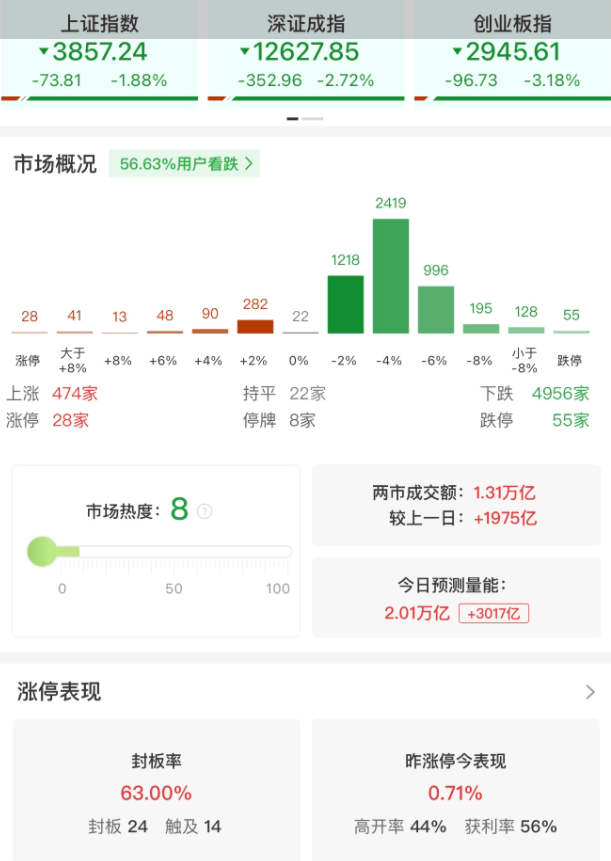
Market Overview - The A-share market experienced a collective adjustment, with the Shanghai Composite Index down by 1.88%, the Shenzhen Component Index down by 2.72%, and the ChiNext Index down by 3.18% [1] - The total trading volume in the Shanghai, Shenzhen, and Beijing markets reached 13,174 billion yuan, an increase of 2,004 billion yuan compared to the previous day [1] - Over 4,900 stocks in the market declined, indicating a broad market downturn [1] Sector Performance - The lithium battery industry chain saw a significant decline, alongside a collective pullback in computing hardware themes, with memory and CPO sectors leading the losses [1] - The photovoltaic, NVIDIA, stablecoin, consumer electronics, and semiconductor concept stocks also experienced notable declines [1] - The rare metals sector faced severe losses, with rare metals ETFs and funds dropping by 7.05% and 6.99% respectively [4] - The semiconductor sector also fell, with the China-Korea semiconductor ETF down by 6.06% [4] - The new energy sector, represented by the Sci-Tech Innovation New Energy ETF and the Sci-Tech Board New Energy ETF, both dropped by 5.8% [4] ETF Performance - In the ETF market, the Huaxia Fund's soybean meal ETF rose by 0.45%, leading the market [3] - The Bosera Fund's leading home appliance ETF increased by 0.09% [3] - Bond ETFs showed resilience, with the Sci-Tech Bond ETFs from Invesco, Penghua, and Bosera rising by 0.05%, 0.04%, and 0.04% respectively [3]
吕志宏:香港稳定币监管框架清晰 发行人须满足资本、资产及赎回等多项要求
Zhi Tong Cai Jing· 2025-11-21 03:24
Core Viewpoint - Hong Kong has established a clear regulatory framework for stablecoins, requiring issuers to meet multiple criteria related to capital, asset management, and redemption mechanisms [1][2]. Regulatory Requirements - Capital Requirement: Issuers must have a minimum capital of HKD 25 million to ensure sufficient financial strength to operate and manage market risks [2]. - Asset Management: Funds collected in fiat currency must be invested in highly liquid, low-risk assets to ensure the stablecoin's value is reliably supported [2]. - Redemption Mechanism: Issuers are required to establish clear and executable redemption arrangements, allowing holders to exchange their stablecoins for fiat currency on a one-to-one basis in a short time [2]. Compliance and Auditing - Issuers must provide compliance proof through independent audits, with firms like Deloitte expected to issue audit reports verifying that the assets held are indeed low-risk and that asset allocation aligns with public disclosures [2]. Industry Impact - The robust regulatory framework in Hong Kong not only safeguards investor interests but also lays a solid foundation for the development of stablecoins and the Web3 industry, potentially attracting more international institutions to issue or use stablecoins in the region [2].
Circle Q3交易量暴增580%,但收入命脉掌握在美联储手中
Xin Lang Cai Jing· 2025-11-20 10:28
Core Viewpoint - Circle's third-quarter performance shows strong results, but the full realization of its diversified revenue efforts will be slow, and a recession could lead to a significant downturn in its business [3][4] Market Environment - The total supply of stablecoins increased by 59% year-over-year in the third quarter, with Circle's market share rising to 29% [4] - Stablecoin trading volume grew approximately 130% year-over-year, with USDC's trading volume accounting for 40% of the total [4] - A favorable regulatory environment is emerging for stablecoins, positioning Circle advantageously due to its compliance focus [3] Business Updates - Circle primarily issues USDC, with the recent launch of the EURC stablecoin having minimal market impact [6] - Circle is developing a Layer-1 blockchain, Arc, which has over 100 participating institutions in its public test [6] - Cross-Chain Transfer Protocol (CCTP) transactions reached $31.3 billion, a 640% year-over-year increase, representing 47% of tracked cross-chain transfers [6] - Circle's payment network (CPN) is set to launch in May 2025, with current annualized transaction volume at approximately $3.4 billion [7] - The USYC tokenized money market fund has approximately $1 billion in assets under management, making it the second-largest globally [7] Financial Analysis - The total supply of USDC reached nearly $74 billion, a 108% year-over-year increase, with on-chain transaction volume growing 580% to $9.6 trillion [8] - Revenue and reserve income grew by 66% to $740 million, impacted by lower interest rates [8] - Adjusted operating expenses increased by 35% to $131 million, with adjusted EBITDA at $166 million and a profit margin of 22% [9] - Distribution, trading, and other costs rose by 74% to $448 million, leading to a net distribution cost margin of 39.5% [11] Future Outlook - Circle anticipates a 40% compound annual growth rate for USDC supply over the next few years, with revenue growth potentially below 30% [8] - The company projects "other income" to reach $90 million to $100 million by 2025, indicating a stable outlook for this revenue segment [8] - Despite strong profitability, the business's reliance on interest rates and cryptocurrency speculation raises concerns about future performance [12]
长亮科技(300348) - 2025年11月19日投资者关系活动记录表
2025-11-20 10:02
Group 1: Mergers and Acquisitions - The company prefers horizontal mergers within the industry and acquisitions of new productive forces, actively seeking suitable opportunities [2] - Vertical mergers have limited complementary effects due to the short supply chain in the industry [2] Group 2: Accounts Receivable and Cash Flow - High accounts receivable at the end of Q3 is expected to improve quickly, enhancing year-end cash flow [2] - The company anticipates faster collection of receivables towards the end of the year [2] Group 3: Client Base and Revenue Distribution - Major clients include various commercial banks, with no significant reliance on any single client; the top five clients contribute a small revenue share [3] - The company has established itself as a benchmark in the domestic信创 (new infrastructure) business, gaining recognition from numerous clients [3] Group 4: Employee Growth and Market Expansion - The company has over 7,000 employees, with continuous growth driven by increasing sales contracts [3] - Focus on expanding into overseas markets, particularly Southeast Asia, where opportunities are gradually increasing [3] Group 5: Digital Currency and AI Development - The company is exploring digital asset operations in response to national policies on digital currency, while also monitoring stablecoin developments in Hong Kong [4] - AI technology is being integrated to enhance internal efficiency, with ongoing development of systematic product solutions [4] Group 6: Overseas Mergers and Acquisitions - The company is open to acquiring quality overseas enterprises, although challenges exist in the Southeast Asian market [4] - Past overseas acquisitions have yielded positive results, and the company continues to seek market opportunities that align with its existing product capabilities [4]

2 Brilliant Stocks to Buy With $110 Before They Soar Up to 300%, According to Wall Street Analysts
The Motley Fool· 2025-11-20 09:12
Group 1: Circle Internet Group - Circle Internet Group has seen a significant decline in its stock price, falling 73% from its highs, but analysts believe it is deeply undervalued with a potential 300% upside [1][6] - The company issues stablecoins USDC and EURC, which are tied to the U.S. dollar and the European euro, respectively, and is the second-largest stablecoin by market value [3] - Circle generates most of its revenue from interest on reserve assets, which are backed by fiat currency reserves, making it sensitive to Federal Reserve monetary policy [4] - The company is expanding into payments through the Circle Payments Network, which has attracted 29 financial institutions and a pipeline of 500 companies interested in joining [5] - Analysts expect the volume of circulating USDC to grow at 40% annually, leading to a projected revenue increase of 33% annually through 2027, making its current valuation of 6.5 times sales reasonable [6] - Jeff Cantwell from Seaport Research set a target price of $280 per share for Circle, indicating a 300% upside from its current price of $70 [7][8] Group 2: The Trade Desk - The Trade Desk has also experienced a significant stock decline of 71% from its highs, but analysts see a potential 125% upside with a target price of $90 per share [1][7] - The Trade Desk is a leading demand-side platform for the open internet, focusing on connected TV advertising, a rapidly growing market [8][9] - Concerns about increased competition from Amazon, which has made deals to access advertising inventory from Roku and Netflix, have contributed to the stock's decline [9] - The Trade Desk's independence from owning media content or advertising inventory allows it to avoid conflicts of interest, making it more appealing to publishers [10] - The ad tech spending is expected to grow at 14% annually through 2030, with The Trade Desk's adjusted earnings projected to increase at 15% annually over the next three years, making its current valuation of 22 times earnings reasonable [11]


美股异动 | Circle(CRCL.US)跌8% 遭董事连续减持共计29.1万股普通股
Zhi Tong Cai Jing· 2025-11-19 16:09
Core Viewpoint - Circle (CRCL.US) shares fell by 8% to $70.41, continuing a downward trend since late October, influenced by insider selling and market performance [1] Group 1: Stock Performance - Circle's stock price has been on a decline, with an 8% drop reported on Wednesday [1] - The stock has faced a persistent downward trend since the end of October [1] Group 2: Insider Trading - Circle's director, Date Rajeev V, sold 291,000 shares at an average price of $84.23 per share on November 13 and 14, totaling approximately $24.51 million [1] Group 3: Financial Performance - Circle reported third-quarter revenue of $740 million, a 66% year-over-year increase, surpassing market expectations of $710 million [1] - Earnings per share for the third quarter were $0.64, significantly exceeding the expected $0.20 [1] - The company achieved a net profit of $214.4 million in the third quarter, up from $71 million in the same period last year, representing a 202% increase [1] Group 4: Market Demand - The substantial growth in USDC circulation has been a key driver of Circle's revenue increase, with circulation more than doubling compared to the previous year [1] - There is a sustained market demand for regulated stablecoins, as evidenced by the growth in Circle's stablecoin circulation [1]
Circle(CRCL.US)跌8% 遭董事连续减持共计29.1万股普通股
Zhi Tong Cai Jing· 2025-11-19 16:08
Core Viewpoint - Circle's stock has been on a downward trend, dropping 8% to $70.41, with a continuous decline since the end of October [1] Financial Performance - Circle reported third-quarter revenue of $740 million, a 66% year-over-year increase, surpassing market expectations of $710 million [1] - The company's earnings per share (EPS) were $0.64, significantly exceeding the expected $0.20 [1] - Net profit for the third quarter was $214.4 million, compared to $71 million in the same period last year, reflecting a 202% year-over-year growth [1] Market Dynamics - The substantial growth in the circulation of USDC (USD Coin) was a key driver of Circle's revenue increase, with circulation more than doubling compared to the same period last year [1] - There is a sustained market demand for regulated stablecoins, as evidenced by the growth in Circle's stablecoin circulation [1]
ETF午评 | AI应用下挫,影视ETF、文娱传媒ETF跌2.8%
Ge Long Hui· 2025-11-19 15:11
Market Overview - The A-share market experienced a mixed performance with the Shanghai Composite Index down 0.04%, the Shenzhen Component Index down 0.32%, and the ChiNext Index up 0.12% as of midday trading [1] - The North China 50 Index fell by 1.52%, with total trading volume across the Shanghai and Shenzhen markets at 1,115.7 billion yuan, a decrease of 180.4 billion yuan from the previous day [1] - Over 4,500 stocks in the market declined [1] Sector Performance - Lithium mining stocks showed repeated activity, while military equipment, CPO, and oil sectors strengthened [1] - Conversely, sectors such as Hainan Free Trade Zone, photovoltaic, AI applications, innovative pharmaceuticals, and stablecoin themes saw declines [1] ETF Performance - The Nasdaq Biotechnology ETF led gains with a rise of 3.92%, while WTI December crude oil futures increased by 1.39% [1] - Both the Harvest Fund S&P Oil & Gas ETF and the Franklin Templeton S&P Oil & Gas ETF rose by 2% [1] - Gold prices rebounded, with the Yongying Fund Gold Stock ETF increasing by 1.78% [1] - Japanese stocks rose, with the Huaan Fund Nikkei 225 ETF up 1.7% [1] Declining Sectors - The innovative energy sector declined, with the Innovative Energy ETF down 2.83% [1] - The AI application sector also fell, with the Film and Television ETF, Cultural and Entertainment Media ETF, and Film ETF all decreasing by 2.8% [1]
汇丰银行将向美国和阿联酋客户提供代币化存款服务
Sou Hu Cai Jing· 2025-11-19 10:24
Core Insights - HSBC is launching a tokenized deposit service that enhances cross-border payment solutions for global enterprises, already operational in strategic financial hubs like Hong Kong, Singapore, the UK, and Luxembourg [1][2] - The adoption of tokenized deposits is gaining traction among major financial institutions, with collaborations such as UBS and Ant Group in Singapore, indicating a shift from concept validation to large-scale application [1][2] Industry Trends - The proliferation of tokenized deposit technology is expected to reshape the competitive landscape of the cross-border payment market, significantly improving transaction efficiency compared to traditional SWIFT systems [2] - As more financial institutions adopt this technology, standards and regulatory frameworks will evolve, supporting the digital transformation of the financial industry [2] Key Advantages - The service supports 24/7 near-instantaneous transactions, optimizing liquidity management for large enterprises by eliminating traditional banking hours [3] - It operates on a private blockchain, ensuring transaction security and privacy while maintaining compliance with financial regulations [3] Expansion Plans - HSBC plans to extend tokenized deposits to programmable payments and autonomous treasury management, enhancing financial management efficiency for enterprises [4] - The bank is exploring the stablecoin sector, potentially issuing its own or collaborating with other banks, to strengthen its position in the blockchain finance landscape [4]