一人公司

Search documents
人工智能加速重塑职业图景
Xin Lang Cai Jing· 2026-01-25 22:25
Group 1 - The core viewpoint of the articles highlights the transformative impact of artificial intelligence (AI) on the job market, creating new roles and requiring new skills from workers [1][2] - AI is leading to the emergence of new job categories such as AI trainers, AI product managers, and AI ethics reviewers, reflecting a growing demand for hybrid and application-oriented talent [1][2] - The average salary premium for workers with AI skills has reached 56%, doubling from the previous year, indicating a significant economic shift towards AI-related employment [2] Group 2 - The rise of "one-person companies" (OPC) is noted as a new entrepreneurial model enabled by AI tools, allowing individuals to manage content production, product operations, and service delivery independently [2] - The trend towards "super individuals" in the OPC model is expected to become a significant part of the digital economy within the next five years, as supported by various cities promoting OPC-friendly policies [2] - Experts emphasize that human qualities such as imagination, judgment, aesthetic ability, critical thinking, and emotional interaction will remain irreplaceable advantages in the context of human-AI collaboration [3] Group 3 - The concept of "slash" careers is emerging as a potential primary lifestyle, encouraging individuals to develop diverse skills and avoid reliance on a single profession to enhance resilience against risks posed by AI advancements [4] - AI's ability to rapidly generate content is prompting a reevaluation of human core competencies, suggesting that adaptability and a broad skill set will be crucial in the evolving job landscape [3][4]
2026年,如何从零做一人公司
3 6 Ke· 2026-01-23 12:41
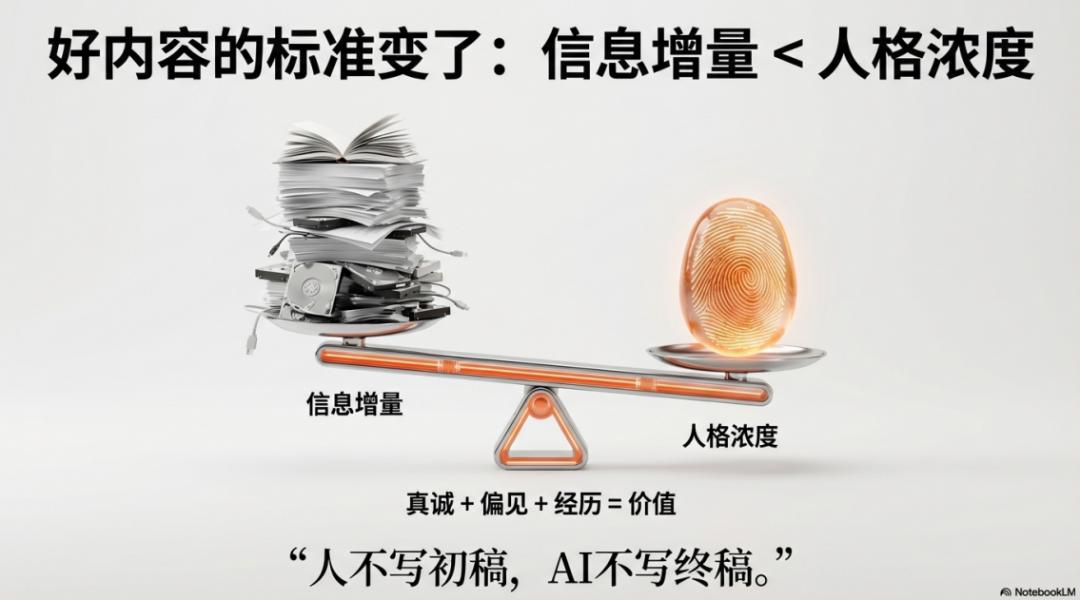
Group 1 - The timing for one-person companies is maturing by 2026, shifting from skepticism to acceptance due to advancements in AI technology [1] - The new standard for valuable content is based on sincerity, bias, and personal experience rather than strict logic and objectivity [2][4] - The era of relying on traffic is over; the focus is now on genuine skills and craftsmanship [11][12] Group 2 - Platforms are moving towards decentralization, supporting mid-tier creators rather than just top influencers, allowing smaller accounts to thrive [15] - The approach should shift from heavy reliance on personal branding (IP) to integrating AI into every aspect of business operations [16][19] - Emphasizing high-value offerings and personalized services is crucial, as competing on low prices is unsustainable for one-person companies [30][32] Group 3 - The workflow for one-person companies has evolved to leverage AI for efficiency, reducing the need for large teams and complex processes [35][38] - Maintaining a focus on personal strengths and comfort zones is essential for sustainable content creation [41][42] - A systematic approach to business, integrating strengths, product design, and delivery processes, is necessary for success [46]

那个每天准点下班的同事,背地里开了家“隐形公司”
3 6 Ke· 2026-01-23 09:20
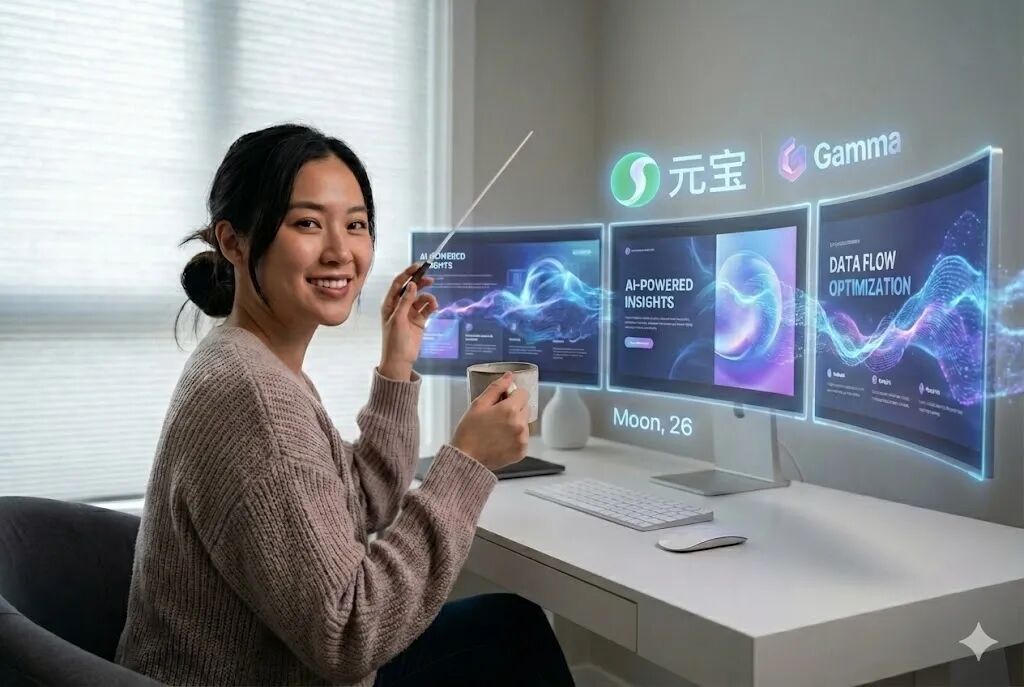
Core Insights - The article discusses the evolving nature of work in 2026, highlighting a stark contrast between employees who feel insecure about their jobs and those who have developed alternative income streams, referred to as "invisible companies" [1][2][3]. Group 1: The Concept of "Invisible Companies" - Employees who have adapted to the changing job market have transformed their skills into independent businesses, leveraging their expertise and resources without formally registering a company [4]. - The article presents three real-life examples of individuals who have successfully created their own "Plan B" while maintaining their primary jobs [5]. Group 2: Case Study 1 - Al Moon - Al Moon, a 26-year-old administrative assistant in Hangzhou, turned her PPT-making skills into a side business by outsourcing tasks to AI tools and freelancers, significantly increasing her income [6][11]. - By utilizing AI tools, she can now complete projects in under three hours, earning between 800 to 1500 yuan per project, compared to her previous earnings from overtime work [11][12]. Group 3: Case Study 2 - Lao Lin - Lao Lin, a 33-year-old former sales employee in Beijing, capitalized on his extensive network of over 5000 WeChat contacts to become a "job matchmaker," earning commissions that exceed his main salary [13][15]. - He effectively labels his contacts and connects them with job opportunities, demonstrating that social capital can be monetized without the need for formal recruitment services [15]. Group 4: Case Study 3 - Sasa - Sasa, a 29-year-old former planner in Shanghai, created a weekend activity business that addresses social isolation by organizing themed outings, earning 2000 yuan per weekend [16][19]. - Her approach highlights the potential for individuals to become "lifestyle operators," providing emotional value and community engagement through organized activities [19].
全球首家民间AI智能体应用委员会成立:刘晓春领衔,以制度创新引领“一人公司”时代
Jiang Nan Shi Bao· 2026-01-23 05:14
Core Insights - The Global AI Agent Application Committee (GAAAC) was established in early 2026, marking a significant milestone in the governance of AI agents, focusing on scaling, standardization, and accessibility [1] - GAAAC aims to fill the gap in current AI governance by providing operational rules for end-users, particularly non-technical individuals and small businesses, to effectively utilize AI agents [2] - The committee plans to release the world's first Charter for Responsible AI Agent Deployment, which will include six core systems to ensure responsible AI usage [3][4] Group 1: Governance and Structure - GAAAC is the first non-governmental international organization focused on AI agent applications, aiming to create a governance mechanism that is independent of government and large corporations [2] - The committee's members include entrepreneurs, freelancers, small business owners, educators, community representatives, AI developers, legal experts, and ethicists, forming a comprehensive governance loop [2] - The Charter will include a trusted identity certification system, scenario adaptation assessment framework, and cross-cultural ethical guidelines among other components [3][4] Group 2: Strategic Vision and Implementation - The committee's vision is to empower individuals and small enterprises, enabling them to leverage AI for productivity enhancements, thus transforming AI from a tool into a partner [1][2] - GAAAC's establishment is a strategic extension of Liu Xiaochun's vision of "one-person companies," which aims to help individuals become businesses through AI [5] - The committee will also implement a "sandbox regulatory" model to balance innovation and regulation, allowing new AI agents to operate in controlled environments before broader deployment [7] Group 3: Global Reach and Local Impact - GAAAC intentionally avoids being labeled as a "Chinese organization," emphasizing its commitment to neutrality and global collaboration [6] - The committee has partnered with various Chinese cities to localize its charter and support initiatives aimed at empowering rural youth and marginalized groups [6] - GAAAC aims to redefine traditional concepts of employment and productivity, envisioning a future where individuals can manage multiple business activities simultaneously with the help of AI [7][8]

一人干翻十亿?当“一人公司”涌现,这代孩子真正的铁饭碗是它
Sou Hu Cai Jing· 2026-01-22 10:47
Core Insights - The article discusses the transformative impact of AI on job searching and entrepreneurship, highlighting how individuals can leverage AI to create significant value and navigate the job market effectively [1][3]. Group 1: AI in Business Operations - A company has integrated AI as a core component of its operations, functioning as a due diligence officer, engineer, and administrative officer, allowing users to focus on creativity and decision-making [2]. - The founder claims that one individual can generate a value of up to one billion dollars, indicating the potential of AI-driven businesses [3]. Group 2: Job Market Dynamics - The job market is increasingly competitive, with 15.93 million graduates vying for positions, leading to a high ratio of applicants per job, such as 856 candidates for a popular role [10][14]. - AI is reshaping recruitment processes, with a significant percentage of job postings now requiring candidates to demonstrate their ability to collaborate with AI systems [7]. Group 3: Individual Experiences in Job Searching - Candidates are adapting their approaches to interviews, with one individual successfully navigating AI-driven interview questions by emphasizing a human touch in algorithmic recommendations [5][6]. - Another candidate, after facing numerous rejections, shifted her strategy from a broad application approach to a more targeted one, focusing on specific companies and roles that align with her skills [16][22]. Group 4: Emotional and Psychological Aspects - The pressure of job searching is palpable, with candidates experiencing anxiety and frustration due to the competitive landscape and the impersonal nature of AI screening processes [10][14]. - Building support networks and focusing on actionable steps have emerged as effective strategies for candidates to manage their anxiety and improve their job search outcomes [16][24].

让“一人”更强大,让创业更智慧
Xin Lang Cai Jing· 2026-01-20 18:53
索乙 "一人公司"的蓬勃发展,高度依赖于由前沿技术、赋能政策、开放产业和宽容文化共同构成的"创新气 候"。它既代表了数字经济时代个体力量的崛起,也对整个社会的创新支持系统提出了新的更高要求。 这就意味着,创业者固然要加强自我认知,评估是否具有"超级个体"的潜质,政府有关方面也需持续 让"一人公司"摆脱孤军奋战的传统叙事,转而成为一场系统支持、生态滋养的集体实验,从而适应和拥 抱这种"新物种"的进化与演变。 近日,"一人公司"(One Person Company,简称OPC)的创新模式引发热议。一个小型团队甚至个体创 业者,凭借人工智能工具的赋能,便能高效运营一家企业。这种模式显著降低了创业成本,提升了运营 效率,让创业者得以轻装上阵,同时大幅降低了创业门槛。人工智能技术带来的新机遇与可能性,为创 业领域注入了强劲的新动能,也激发了人们对未来的新期待。 "一人公司"不是新鲜词汇。20世纪初互联网兴起,个人注册成立"一人有限责任公司",借助一台电脑, 大大节约了经营成本。而今"一人公司"话题冲上热搜,不单是因为这种由单一创始人主导决策,借助AI 和外部资源,放大创始人个体能力边界的创业形态正被越来越多的创业者所 ...

00后团队夺得AI编程智能体榜SOTA榜首,一人公司时代开启
3 6 Ke· 2026-01-16 12:51
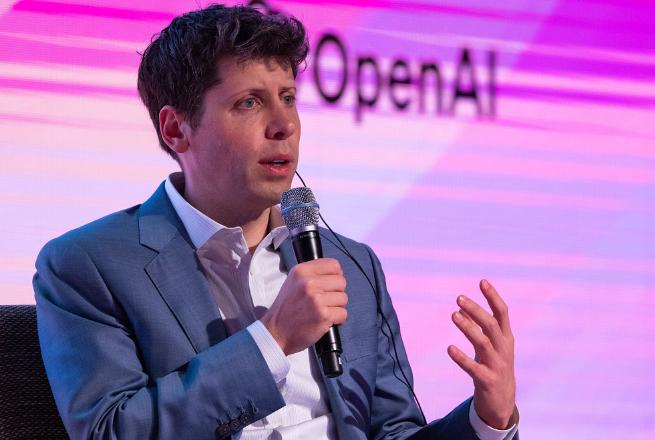
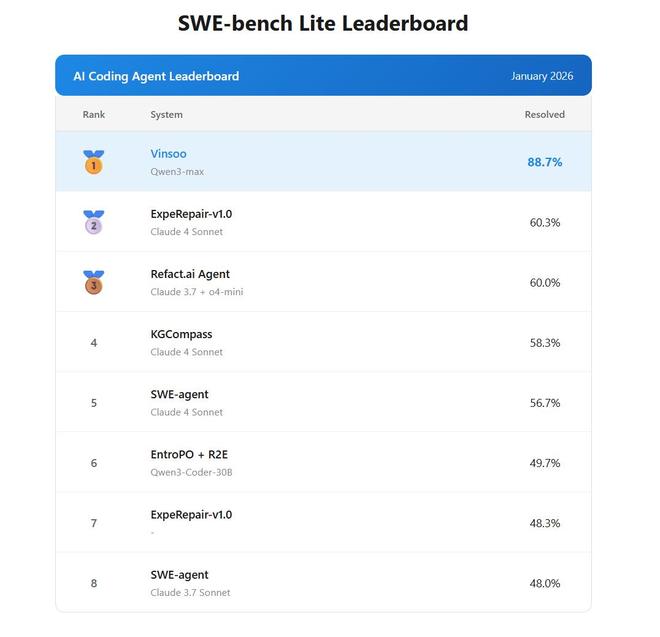
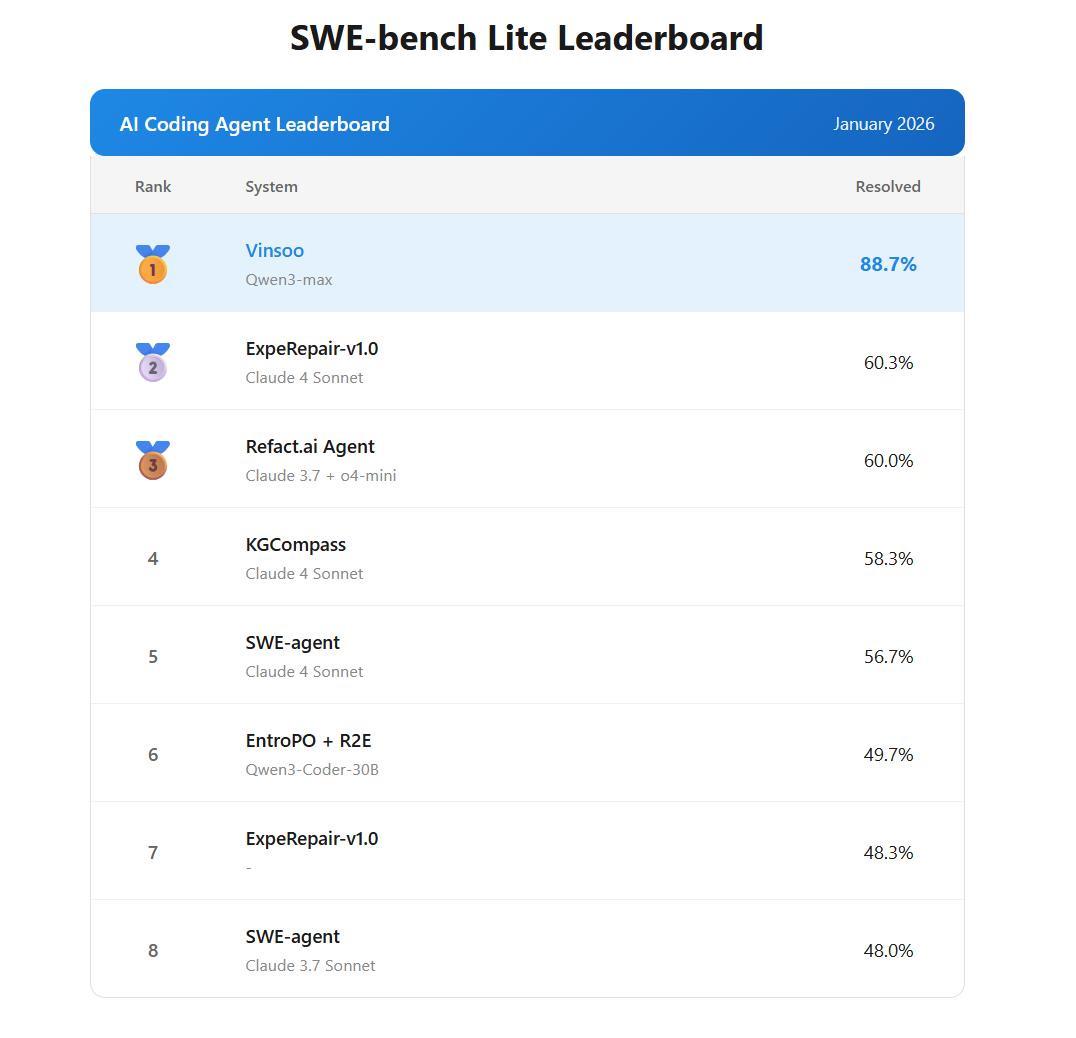
Core Viewpoint - The AI programming revolution led by young Chinese innovators is underway, with the potential for "one-person unicorns" becoming a reality in the AI era, as stated by OpenAI's founder Sam Altman [1][29]. Group 1: AI Programming Breakthroughs - Vinsoo's self-developed cloud-based Agent, Vinsoo 3.0, has achieved world-leading performance in complex task handling without human intervention, surpassing many Silicon Valley unicorns [2]. - The AI Coding Agent Leaderboard shows Vinsoo achieving a resolution rate of 88.7%, significantly higher than competitors like ExpeRepair-v1.0 at 60.3% [3]. Group 2: Paradigm Shift in Software Development - The traditional software development model struggles with the "80% deep development" phase, where AI often fails to maintain context, leading to "context corruption" [8]. - Vinsoo's architecture revolution involves a multi-agent parallel network that enhances efficiency by decoupling tasks among specialized agents, addressing the limitations of traditional AI tools [9][10]. Group 3: Cost Efficiency and Market Potential - Vinsoo's approach reduces the comprehensive application costs of domestic models to one-tenth of overseas models, positioning it as a competitive player in the global market [7]. - The platform aims to democratize programming, allowing individuals to transform ideas into applications with minimal technical barriers, thus lowering the cost of innovation [17][22]. Group 4: Future of Individual Entrepreneurship - Vinsoo envisions a future where a single individual can manage complex projects through automated tools, significantly reducing the need for large development teams [16][17]. - The platform's capabilities enable rapid development cycles, allowing entrepreneurs to go from concept to market in minutes rather than weeks [17][18]. Group 5: Team and Vision - The Vinsoo team, composed of top talents from prestigious universities, emphasizes a belief in technology's ability to empower individuals rather than relying on traditional elite structures [23][25]. - The company's mission is to make programming accessible to all, reflecting a commitment to social equity through technological advancement [27][28].
当一家中国00后团队拿下AI编程智能体榜SOTA效果世界第一,一人公司时代真的要来了
3 6 Ke· 2026-01-16 10:30
Core Insights - The emergence of "one-person unicorns" is becoming inevitable in the AI era, as AI technology allows individuals to leverage their creativity and decision-making on a larger scale [1] - Vinsoo's self-developed Vinsoo 3.0 cloud agent has achieved world-leading performance in complex task handling without human intervention, surpassing many Silicon Valley unicorns [2][6] - The traditional model of software development is being transformed, allowing for significant cost reductions and enabling individuals to create and launch products independently [15][16] Group 1: AI and Development Paradigm Shift - AI is changing the landscape of software development, allowing a single individual to manage complex projects that previously required large teams [1][15] - Vinsoo's approach involves a multi-agent system that enhances efficiency by dividing tasks among specialized agents, addressing the limitations of traditional AI tools [7][10] - The introduction of innovative memory management techniques, such as DYCODE and COTER, allows for efficient handling of large codebases, reducing cognitive load on AI systems [11][13] Group 2: Cost Efficiency and Market Impact - Vinsoo's technology significantly lowers the cost of AI application development, making it ten times cheaper than overseas models, thus democratizing access to AI tools [6][29] - The company aims to create a foundation that enables individuals to transform their ideas into scalable products, effectively reducing the time from concept to market [15][22] - By focusing on cost reduction and efficiency, Vinsoo is positioned to disrupt the global AI market, particularly in sectors like healthcare, finance, and industry [29][30] Group 3: Team and Vision - The Vinsoo team, composed of talented individuals from top universities, is driven by a vision to democratize programming and empower individuals to realize their creative potential [23][28] - The company's ethos emphasizes resilience and adaptability in the face of challenges, as demonstrated during a recent cyber attack [26][27] - Vinsoo's mission is rooted in the belief that technology should be accessible to all, enabling a new generation of creators to thrive in the AI era [28][29]
21对话|解码“一人公司”:“人多力量大”在AI时代失灵了吗
2 1 Shi Ji Jing Ji Bao Dao· 2026-01-16 10:19
Core Insights - The rise of "One Person Company" (OPC) is driven by advancements in artificial intelligence (AI), enabling individuals to leverage diverse tools and technologies to operate businesses independently [1][3][4] - The traditional model of requiring large teams for business operations is being disrupted as AI reduces the complexity and cost of various tasks, allowing individuals to manage multiple roles [3][4][16] - The entrepreneurial landscape is evolving, with a diverse range of OPC founders, including recent graduates, seasoned entrepreneurs, and those with previous startup experience, all utilizing AI to innovate and create [6][7][10] Industry Trends - The OPC model is gaining traction as AI democratizes access to technology, allowing individuals to handle tasks that previously required larger teams or specialized service providers [4][10] - The operational efficiency of OPCs is enhanced by AI, which can participate in nearly all aspects of business processes, from ideation to marketing [4][16] - Different cities are witnessing varying focuses in OPC development, with Shenzhen emphasizing hardware products and global market outreach due to its strong supply chain advantages [14][15] Policy and Support - Recent policy shifts in major cities like Shenzhen reflect a growing recognition of the long-term value of OPCs, with support mechanisms transitioning from broad subsidies for large enterprises to targeted assistance for individual entrepreneurs [19][20] - The government is adopting a role as an "ecological gardener," fostering a conducive environment for innovation by providing tailored support to meet diverse entrepreneurial needs [19][20]

一人公司,疑云四起
3 6 Ke· 2026-01-15 11:43
Core Concept - The concept of "one-person companies" is gaining traction, particularly in the context of AI advancements, allowing individuals to potentially create billion-dollar companies with minimal investment and resources [1][4][7]. Group 1: Emergence of One-Person Companies - The idea of one-person companies is not entirely new, as similar models exist in e-commerce, social media, and design [4]. - The recent surge in interest is attributed to the maturity of AI technologies, enabling individuals to perform tasks traditionally requiring larger teams [4][5]. - Prominent figures, such as OpenAI's Sam Altman, have suggested that individuals could soon establish companies valued at $1 billion, further fueling interest in this model [4][7]. Group 2: Investment and Training Trends - Investment institutions and training organizations are increasingly promoting the one-person company model, highlighting its low-cost, high-reward potential [7][8]. - The narrative surrounding one-person companies appeals to young entrepreneurs eager to enter the AI sector, creating a buzz in the investment community [7][19]. - However, the growth in the number of one-person companies does not necessarily correlate with the establishment of successful, revenue-generating businesses [8][12]. Group 3: Challenges and Realities - Many one-person companies are often just individual developers or designers who have not fundamentally changed their business models despite using AI tools [12][21]. - The reliance on AI tools does not guarantee success, as competition remains fierce, and the uniqueness of the individual becomes a critical factor [13][22]. - The narrative of easy entrepreneurship through AI may mislead aspiring entrepreneurs, leading to potential financial pitfalls [19][21]. Group 4: Future Outlook - The potential for AI to streamline operations and reduce workforce requirements is acknowledged, but the maturity of AI tools and their practical application in business remains uncertain [10][11]. - The concept of one-person companies may lead to a reduction in traditional employment, raising ethical concerns about workforce displacement [16][17]. - Ultimately, while AI can facilitate entrepreneurship, it is not a shortcut, and individuals must possess a diverse skill set to succeed in this competitive landscape [21][22].