三权分立

Search documents
刚刚,美国会参议院就结束政府“停摆”达成一致
Jin Rong Shi Bao· 2025-11-10 04:30
Group 1 - The U.S. Senate has reached an agreement to end the federal government shutdown that has lasted for 40 days, with President Trump indicating that a resolution is near [1] - The Senate previously rejected two bipartisan funding bills, leading to the shutdown that affected hundreds of thousands of federal employees and various government services [1] - A new funding bill, which includes short-term funding measures until January 2026 and three annual appropriations bills, is expected to pass with sufficient Democratic support [1] Group 2 - The ongoing government shutdown has severely impacted multiple industries, with officials warning of economic downturns and disruptions to citizens' daily lives [1] - The Senate's inability to pass funding bills has resulted in a historic low in legislative efficiency, with 14 rejections of the same bill during the shutdown [2] - The aviation industry has been particularly affected, with over 2,000 flight cancellations and more than 7,000 delays reported, attributed to air traffic control staffing shortages [2]
刚和中国谈好,美国就面临毁灭?特朗普心虚了,收的钱都得吐出来
Sou Hu Cai Jing· 2025-11-09 17:56
Core Viewpoint - The U.S. Supreme Court is questioning the legality of President Trump's tariff policies, which could lead to significant setbacks for him, especially following a recent trade agreement with China [1][5]. Group 1: Legal Authority and Constitutional Concerns - The core debate revolves around the president's power to impose taxes, as the U.S. Constitution grants this authority to Congress, not the president [3]. - Supreme Court justices are skeptical of the Trump administration's invocation of the International Emergency Economic Powers Act, suggesting it was intended to limit presidential power rather than expand it [3][5]. - Justices pointed out that the tariffs effectively act as a tax on American citizens, raising constitutional concerns about the delegation of trade responsibilities to the president [3][5]. Group 2: Potential Consequences of a Supreme Court Ruling - If Trump loses the case, he may have to refund up to $140 billion in tariffs to U.S. businesses, which could severely threaten his presidency [5]. - The Trump administration maintains that its actions are legal, but justices question whether allowing the president to impose tariffs under the guise of national security undermines Congress's role in trade [5]. - Regardless of the Supreme Court's decision, Treasury Secretary Yellen has indicated that the government will seek alternative methods to maintain tariffs, suggesting that U.S. businesses have already incurred significant costs due to Trump's tariff policies [6]. Group 3: Broader Implications - The Supreme Court's ruling, expected by the end of the year, is anticipated to redefine the boundaries of power within the U.S. government and have lasting effects on global trade dynamics [6].

北美观察丨美最高法院开审关税大案 两个半小时辩论充满质疑
Yang Shi Xin Wen Ke Hu Duan· 2025-11-06 06:11
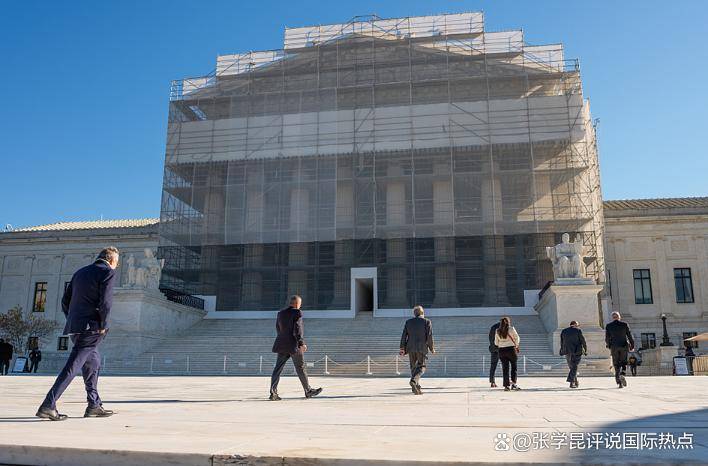
Core Points - The U.S. Supreme Court is debating the legality of the President's broad tariff powers under the International Emergency Economic Powers Act (IEEPA), which has significant implications for presidential authority, congressional tax powers, and the economic fate of thousands of businesses [1][4][15] - The case has garnered widespread media attention, with reports highlighting skepticism and concerns among justices regarding the interpretation of IEEPA as a basis for universal tariff authority [1][4][11] Group 1: Background of the Case - The legal battle began in April 2025 when Learning Resources, an educational toy company, filed a lawsuit against the President's tariff policy due to rising import costs and squeezed profit margins [4] - Similar lawsuits were filed by V.O.S. Selections, a wine and spirits importer, questioning the legality of the President's broad tariff imposition under IEEPA [4][5] - The case escalated from the U.S. International Trade Court to the Federal Circuit Court, which ruled that the President lacked the authority to impose such extensive tariffs under IEEPA, prompting the government to appeal to the Supreme Court [4][5] Group 2: Legal Representation and Arguments - The government is represented by Solicitor General D. John Roberts, a highly regarded figure in the Supreme Court, while the opposing side includes former Solicitor General Neal Katyal, representing small businesses [8][9] - A coalition of state governments has also joined the plaintiffs, emphasizing the need for clear congressional authorization for significant actions in the sensitive area of tariffs [8][9] Group 3: Court Proceedings and Dynamics - The oral arguments on November 5 were extended to 80 minutes due to intense questioning from justices, lasting approximately two and a half hours [10] - Justices focused on whether IEEPA grants the President the authority to impose such broad and long-term tariffs, with discussions around the "major questions doctrine" and the historical context of tariff powers [11][12] Group 4: Potential Outcomes and Implications - Predictions for the Supreme Court's ruling include three main possibilities: a significant limitation of presidential power, a technical compromise acknowledging limited emergency powers, or a ruling in favor of the government's position [15][16] - The outcome will have profound implications for U.S. trade policy, affecting business costs, import prices, and the constitutional balance of power between the presidency and Congress [15][16]

特朗普大祸临头!有人直戳要害,美法院判决结果即将出炉,全球都在等结果
Sou Hu Cai Jing· 2025-10-26 18:51
Core Points - The potential refund of tariffs could reach up to $1 trillion if the Supreme Court rules against the Trump administration, impacting American households with nearly $8,000 in debt each [1] - The case is described as a "final showdown of the separation of powers," with U.S. companies suing their own president rather than foreign governments [1] Group 1: Tariff Impact on Companies - Learning Resources, a family-owned toy company, faces severe cash flow issues due to increased costs from tariffs, highlighting the struggles of many U.S. businesses reliant on imports [3] - An alliance led by V.O.S. Selections estimates that Trump's tariffs could result in over $3 trillion in additional taxes for American citizens over the next decade, with the legal obligations falling on U.S. companies [3] Group 2: Legal Proceedings and Rulings - The U.S. International Trade Court ruled that the Trump administration lacked the authority to impose tariffs under the International Emergency Economic Powers Act, emphasizing that tax authority is constitutionally granted to Congress [5] - The appellate court upheld this ruling with a 7-4 vote, labeling Trump's tariff policy as "illegal" [5] Group 3: Political and Economic Context - The case has broader implications for the U.S. constitutional system, with experts suggesting that a ruling in favor of the lower courts would limit executive power abuse [10] - The upcoming Supreme Court hearing on November 5 is critical, with a majority of justices appointed by conservative presidents, raising questions about the potential outcomes [12]
全额退还中国关税?特朗普大祸临头,有人直戳要害,美法院判决结果即将出炉,全球都在等结果
Sou Hu Cai Jing· 2025-10-25 18:33
Core Points - The upcoming Supreme Court hearing on Trump's tariff policy is a focal point globally, with significant implications for Trump's political future and tariff refunds for multiple countries, including China [1][3] - The legality of Trump's tariffs has been challenged, with lower courts ruling that the tariffs are illegal and an overreach of presidential power [3][5] - The potential financial impact of a Supreme Court ruling against Trump could require the U.S. government to refund between $750 billion to $1 trillion in tariffs, exacerbating fiscal challenges [5][7] Group 1: Legal and Political Implications - The Supreme Court hearing is described as a "final showdown" regarding the separation of powers, questioning whether the President can impose tariffs without Congressional approval [1][3] - Trump's administration has attempted to mitigate potential losses by exempting certain products from tariffs, indicating a strategy to reduce future refund liabilities [3][5] - The case is seen as a test of the U.S. constitutional framework, with implications for the balance of power between the executive and legislative branches [5][7] Group 2: Economic Impact on U.S. Businesses - U.S. businesses, including toy manufacturers and wine distributors, have expressed significant distress over the tariffs, labeling them as "massive illegal taxes" that strain cash flow and increase costs [5] - The tariffs are projected to impose an additional tax burden of over $3 trillion on American consumers over the next decade, highlighting the economic repercussions of the policy [5][7] - The potential for tariff refunds could provide financial relief to affected businesses if the Supreme Court rules in their favor [5] Group 3: International Relations and Trust - The tariffs primarily target key U.S. allies such as Japan, South Korea, and the EU, risking the integrity of trade agreements and U.S. credibility among its allies [7] - A ruling against the tariffs could lead to the collapse of previously established trade agreements, further straining U.S. relations with its allies [7] - The outcome of the Supreme Court hearing is critical not only for domestic policy but also for international economic relations, particularly in the context of U.S.-China trade dynamics [7]

美最高法院掀权力博弈:特朗普可解雇美联储官员?三权平衡悬了!
Sou Hu Cai Jing· 2025-10-09 06:51
Core Viewpoint - The U.S. Supreme Court is reconsidering a long-standing rule that limits the President's power to dismiss federal agency officials, which could significantly enhance presidential authority and impact the independence of federal agencies [1][2]. Group 1: Presidential Authority - If the Supreme Court expands the President's power to dismiss officials, it will greatly enhance presidential authority in areas such as economic regulation, immigration, and criminal justice [2]. - The Court is currently reviewing cases involving officials from independent agencies like the Federal Trade Commission and the Federal Reserve, which have historically been protected from arbitrary dismissal by the President [1][2]. Group 2: Legal Considerations - The Court is examining two main issues: whether statutory protections violate the principle of separation of powers and whether to overturn the 1935 "Humphrey's Executor" ruling [3]. - The Supreme Court's approach to presidential policy issues is evolving, with the Trump administration having made numerous emergency requests compared to the Biden administration [3]. Group 3: Emergency Orders and Policy Changes - Critics argue that emergency rulings often lack sufficient justification and can lead to significant policy changes before thorough judicial review, making it difficult to revert once implemented [4]. - Supporters contend that emergency orders prevent policies from being locked in place, which could negatively affect subsequent reviews [4]. Group 4: Future Implications - The Supreme Court is set to hear key cases that may significantly expand presidential control over the federal government, particularly regarding the dismissal of independent agency officials [6]. - The outcomes of these cases will determine how quickly the President can exercise power and the extent to which the judiciary can impose checks on policy changes [6].

上任才九个月的特朗普,如何摧毁三权分立?
虎嗅APP· 2025-09-23 10:48
Core Viewpoint - The article discusses the significant expansion of executive power under Trump's second term, highlighting the challenges to the traditional checks and balances of the U.S. government and the implications for American governance and global order [4][10][25]. Group 1: Executive Power Expansion - Trump's administration has increasingly utilized executive orders to bypass legislative processes, exemplified by the renaming of the Department of Defense to the "Department of War" without Senate approval [4][8]. - The use of administrative appointments, such as the controversial appointment of Alina Habba as acting U.S. Attorney for New Jersey, illustrates the strategic maneuvering within the bureaucratic system to consolidate power [6][7][9]. - The Trump administration's approach to budget cuts, including the use of "pocket vetoes" to eliminate previously approved foreign aid, demonstrates a bold strategy to assert executive authority over congressional appropriations [9][10]. Group 2: Historical Context of Executive Power - The article traces the roots of executive power expansion back to the New Deal era under Franklin D. Roosevelt, where significant regulatory authority was shifted to the executive branch in response to the Great Depression [10][11]. - Historical precedents of executive overreach are cited, including actions taken by past presidents during wartime and crises, suggesting that Trump's actions are part of a broader historical trend rather than an isolated phenomenon [10][11][14]. Group 3: Political Implications - The article posits that Trump's challenge to the "deep state" reflects a broader ideological struggle within American politics, questioning the neutrality of government institutions and their alignment with specific political ideologies [14][15]. - The implications of Trump's policies, such as the introduction of the "Trump Golden Card" for wealthy immigrants, indicate a shift towards using state power as a tool for economic gain, diverging from traditional neoliberal principles [18][19]. - The potential for increased political polarization and the erosion of democratic norms is highlighted as a consequence of Trump's aggressive expansion of executive power [25][26].
上任才九个月的特朗普,如何摧毁三权分立?
Hu Xiu· 2025-09-23 00:05
Core Points - The article discusses the significant changes in the U.S. government structure under Trump's administration, particularly the renaming of the Department of Defense to the Department of War, reflecting a broader ideological shift [1] - It highlights the ongoing political battles between the Democratic and Republican parties, emphasizing the constitutional challenges posed by Trump's executive orders [2] - The article also examines Trump's strategic use of executive power to bypass traditional legislative processes, showcasing a trend of expanding executive authority [8][23] Group 1: Executive Power Expansion - Trump's administration has increasingly utilized executive orders to assert control, often bypassing legislative approval, as seen in the renaming of the Department of Defense [1][6] - The article notes that Trump's approach to executive orders has become more sophisticated, exploiting legal loopholes to challenge the traditional bureaucratic structure [3][6] - The use of "parallel nomenclature" to rename government departments illustrates a tactical maneuver to consolidate power without formal legislative changes [6] Group 2: Political and Legal Challenges - Trump's opponents have reacted strongly against his executive actions, with plans to challenge them in court, indicating a deepening partisan divide [2][4] - The article describes the legal battles surrounding the appointment of federal officials, highlighting the complexities and conflicts arising from Trump's appointments [4][5] - The ongoing struggle between the executive branch and the judiciary reflects broader concerns about the erosion of checks and balances in the U.S. political system [2][8] Group 3: Ideological Implications - The article argues that Trump's actions represent a challenge to the post-World War II ideological framework of the U.S. government, aiming to reshape its foundational principles [1][23] - It suggests that Trump's expansion of executive power is not unique but part of a historical trend among U.S. presidents, raising questions about the nature of governance and authority [8][15] - The concept of a "deep state" is explored, indicating a belief that entrenched bureaucratic interests oppose Trump's agenda, complicating his efforts to implement change [16][23] Group 4: Economic Policies and Globalization - Trump's recent policies, such as imposing high fees on H1B visa applications and introducing a "Trump Golden Card" for wealthy immigrants, reflect a shift in economic strategy towards leveraging foreign capital [17][18] - The article discusses how these policies aim to attract investment while simultaneously asserting national control over economic resources [17][19] - It highlights the tension between traditional neoliberal globalization and Trump's more nationalist economic approach, suggesting a potential reconfiguration of U.S. economic policy [17][19]
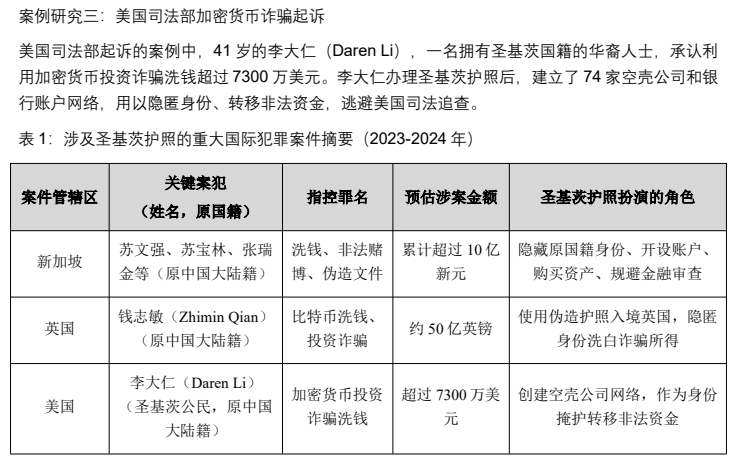
美政府关税官司缠身折射治理乱象
Ren Min Ri Bao Hai Wai Ban· 2025-09-18 10:05
Core Points - The U.S. Supreme Court will review the legality of the government's tariffs, marking the first time it will assess a core policy of the current administration, with oral arguments scheduled for the first week of November [1][2] - The ongoing lawsuits regarding tariff policies reflect significant domestic controversy over their effectiveness and the procedures used to implement them, highlighting deeper issues within the U.S. political system [1][3] Summary by Sections Tariff Policy and Legal Challenges - The tariffs under review include the 10% "baseline tariff" imposed globally and higher tariffs on trade partners without agreements, as well as the "fentanyl tariff" [2] - The U.S. International Trade Court ruled that the President lacks the authority to impose these tariffs under the International Emergency Economic Powers Act, a decision upheld by the U.S. Court of Appeals [2][3] - The legal basis for these tariffs has been challenged, with arguments that the President's actions bypassed Congress, which constitutionally holds the power to levy taxes [3][4] Economic Impact - The effective tariff rate on imported goods has reached nearly 19%, the highest since the Great Depression, significantly above the typical 2-3% rate [4] - Increased tariffs are estimated to cost American households an additional $2,400 annually, contributing to rising inflation and economic strain [4] Political and Judicial Implications - The Supreme Court's decision could either affirm the President's unilateral power in trade policy or reinforce Congressional authority, impacting future trade negotiations and fiscal stability [5][7] - The current political climate, characterized by intense partisan conflict, has led to numerous lawsuits against the administration, raising questions about judicial independence and the effectiveness of the political system [9][10] - The ongoing legal battles reflect a broader struggle over the balance of power among the branches of government, with potential implications for the future of U.S. governance [6][10]
特朗普就关税违法提出上诉,能否获胜?美国司法又如何制衡总统?
Sou Hu Cai Jing· 2025-09-08 01:45
Group 1 - The recent ruling by the U.S. Court of Appeals indicates that President Trump's authority to impose tariffs on multiple countries may be legally challenged, potentially ending his trade war [2][3] - Trump has formally appealed to the U.S. Supreme Court, which may hear the case and could issue a ruling by the summer of 2026 [3] - The U.S. judicial system operates independently of the executive branch, meaning the President cannot directly influence court decisions or overturn them [5][7] Group 2 - The judicial system in the U.S. can limit presidential power through judicial review and legal interpretation, declaring presidential actions unconstitutional or unauthorized [7] - If Trump disregards court rulings, Congress could intervene through hearings, funding restrictions, or impeachment proceedings, highlighting the checks and balances in the U.S. government [9] - The outcome of Trump's Supreme Court case may not significantly impact ongoing international negotiations, particularly with countries like India and China, as perceptions of U.S. power may shift following recent military displays [9]