产学研深度融合

Search documents
天津强化企业创新主体地位 培育超250家“猎豹企业”
Zhong Guo Xin Wen Wang· 2025-11-29 07:48
Core Insights - Tianjin has strengthened the role of enterprises in technological innovation during the "14th Five-Year Plan" period, cultivating over 12,000 technology-based SMEs and high-tech enterprises, with more than 250 high-growth "Cheetah Enterprises" [1][2] Group 1: Technological Innovation - A number of Tianjin technology companies have made breakthroughs in key areas, including Huahai Qingke, Feiteng Information, Kirin Software, Shuguang Information, CanSino, and Heyuan Biotechnology, establishing themselves as innovation benchmarks in their respective fields [1] - The city has implemented a gradient cultivation mechanism, creating a growth path for technology-based SMEs to high-tech enterprises and leading technology enterprises, supported by policies like the "Cheetah Enterprise Evaluation Method" [1] Group 2: Financial Support and Investment - Tianjin has organized over 800 key projects in 19 priority industrial sectors, with a fiscal investment of 740 million yuan, which has attracted 4.9 billion yuan from enterprises [1] - The government has established 32 innovation consortia led by technology leaders to promote deep integration of industry, academia, and research, and has supported companies like Tiandi Weiye and Kailaiying in major R&D platforms [2] - The municipal government’s guiding funds have injected financial resources into enterprises, with three innovation mother funds having established 33 sub-funds and completed 244 investments, mobilizing over 8.5 billion yuan in social capital for early-stage and hard technology sectors [2]


“链式突围”带着产业跑 看这个赣西园区如何“拼”出新质生产力
Xin Hua Wang· 2025-11-29 02:23
Core Insights - The article discusses the innovative strategies adopted by companies in the Yichun Economic and Technological Development Zone to enhance productivity and competitiveness in the new energy sector [1][5]. Group 1: Innovation and R&D Strategies - Companies are shifting from "single-point breakthroughs" to "chain breakthroughs" by forming innovation alliances with universities and research institutions [1]. - Yuncheng New Energy Co., Ltd. emphasizes the importance of early layout and chain R&D to stay competitive, highlighting the need for continuous iteration in product development [2]. - Jiangxi Houding Energy Technology Co., Ltd. focuses on "flexible innovation" by collaborating with partners to develop new ultra-low temperature high-rate lithium batteries, achieving growth despite market fluctuations [3]. Group 2: Digital Transformation and Efficiency - Sixhe Electronics (Jiangxi) Co., Ltd. has invested over 50 million yuan in upgrading production lines, resulting in a 30% reduction in operating costs and an increase in product quality from 93% to 97% [4]. - The integration of digital technology with the real economy is reshaping industrial capabilities in the Yichun Economic and Technological Development Zone [4]. Group 3: Government Support and Collaboration - The Yichun Economic and Technological Development Zone is implementing reforms to enhance market vitality, including the introduction of technology special commissioners to address enterprise challenges [6]. - The collaboration between enterprises, universities, and government is aimed at fostering innovation and addressing industry-specific issues, such as the lithium slag problem [6].
“园区服务+认股权”模式成功落地 武汉股交中心助力企业融资
Zhong Zheng Wang· 2025-11-27 06:24
Core Viewpoint - The collaboration between Wuhan Equity Custody Trading Center and Yichang Xiling District Government has successfully implemented a "stock option" service model for technology-based SMEs, marking a significant innovation in financing for startups [1][2] Group 1: Stock Option Service Model - The stock option service allows external institutions to purchase a certain number or amount of equity in a company at a future date, addressing the financing challenges faced by technology innovation enterprises [1] - The first successful case involved Hubei Suoguan Technology Co., Ltd., which specializes in synthetic biology and holds multiple national patents, benefiting from the stock option model due to its "light asset" nature [1] Group 2: Benefits to Enterprises and Ecosystem - The model provides initial funding support for startups while also recognizing the market value of their technology, thus enhancing their growth potential [1] - The transformation of the park from merely serving consumers to becoming a "value sharer" signifies a shift towards a collaborative ecosystem where both the park and enterprises can grow and profit together [2] Group 3: Future Plans and Development - Wuhan Equity Custody Trading Center plans to promote the stock option business further, establishing a three-in-one ecosystem of "policy guidance + financial collaboration + enterprise empowerment" to support local economic development [2]
陕西省人民政府新闻办公室举办新闻发布会介绍陕西“十四五”科技创新发展成就有关情况
Shan Xi Ri Bao· 2025-11-27 00:53
Core Viewpoint - The press conference highlighted the achievements of Shaanxi Province in technological innovation during the "14th Five-Year Plan" period, emphasizing the implementation of innovation-driven development strategies and the enhancement of the overall effectiveness of the innovation system [4][36]. Group 1: Technological Innovation Strength - The technological innovation capability of Shaanxi has significantly increased, with R&D funding reaching 926.2 billion yuan, a 46.47% increase from 2020, and the number of R&D personnel exceeding 250,000, a 49.45% increase [5][37]. - The province's comprehensive technological innovation index improved by 7.12 percentage points to 75.51, ranking 4th nationally in innovation output level [5][37]. - Shaanxi hosted and participated in 47 projects that won the 2023 National Science and Technology Awards, ranking 2nd in both the number of projects led and completed [5][37]. Group 2: Original Innovation Capability - The province has restructured national key laboratories and established five new laboratories focusing on various fields, increasing basic research funding from 40.15 billion yuan to 65.08 billion yuan, with an annual growth rate of 12.83% [6][38]. - Shaanxi has approved 12,800 national natural science fund projects, with significant contributions to top international journals [6][38]. Group 3: Breakthroughs in Key Technologies - Over 2,300 major technology projects were deployed, with 761 technical challenges resolved this year, particularly in new materials and renewable energy sectors [7][39]. - The province achieved global leadership in several technologies, including photovoltaic cell efficiency and complex metal-based solid-state hydrogen storage materials [7][39]. Group 4: Industrial Innovation Development - The Qin Chuang Yuan innovation-driven platform was launched, gathering over 10,700 technology companies and 690 innovation platforms [8][40]. - The number of technology-based SMEs is projected to reach 29,900 by 2024, a 3.71-fold increase from 2020 [8][40]. Group 5: Reform in Technological Systems - Shaanxi has pioneered the "three reforms" in technology transfer, managing over 110,000 technology achievements and facilitating the transfer of 46,000 results [9][41]. - The province established a technology manager academy, guiding enterprises in selecting technology advisors [9][41]. Group 6: International Technological Cooperation - Shaanxi has deepened international cooperation through various platforms, establishing partnerships with over 60 countries and regions [10][42]. - The province's high-tech product export ratio has consistently ranked in the top three nationally over the past five years [10][42]. Group 7: Future Outlook - The province aims to continue leveraging its educational and technological advantages to support national strategies and enhance its competitive edge in the upcoming "15th Five-Year Plan" [11][43].

中意合作 共育人才
Ren Min Ri Bao Hai Wai Ban· 2025-11-26 04:13
Core Viewpoint - The 2025 China-Italy University Presidents Dialogue held in Beijing marked a significant step in enhancing educational cooperation between China and Italy, with 16 cooperation memorandums and agreements signed [1] Group 1: Educational Cooperation - Over 60 universities and institutions from both countries participated in the dialogue, discussing various topics related to higher education collaboration [1] - The Chinese Minister of Education, Huai Jinpeng, highlighted the progress made since the previous dialogue in 2024, emphasizing the shift from individual exchanges to a more structured cooperation model focused on talent cultivation and technological innovation [1] Group 2: Innovation and Cultural Exchange - The Italian Minister of University and Research, Benini, stressed the importance of integrating science with humanities and arts, aiming for deep collaboration between university researchers, artists, and industry [1] - There is an expectation for both sides to deepen exchanges in culture, music, and arts education, fostering a more innovative and collaborative educational environment [1] Group 3: Thematic Discussions - University leaders from both countries engaged in discussions on topics such as promoting interdisciplinary development to address global challenges, innovating educational models, and cultivating global governance talent to contribute to a shared future for humanity [1]
科技部部长阴和俊:要部署实施一批国家重大科技任务,全链条推进重点领域关键核心技术攻关取得决定性突破
Xin Lang Cai Jing· 2025-11-26 00:09
Group 1 - The core viewpoint emphasizes the need to strengthen high-quality technological supply to lead the construction of a modern industrial system [1] - The implementation of major national scientific tasks is prioritized, focusing on breakthroughs in key core technologies across critical fields [1] - There is a push for deep integration of industry, academia, and research, with enterprises taking the lead in innovation and collaboration [1] Group 2 - The strategy includes enhancing the seamless connection between the innovation chain and the industrial chain, promoting efficient application of major scientific achievements [1] - The government aims to create a favorable ecosystem for deep integration by improving the market environment for innovation and strengthening intellectual property protection [1] - The establishment of regional innovation systems and technology innovation centers is highlighted to expand new spaces for integrated development [2]
民企科学家成为院士 科技创新让企业唱主角
Xin Jing Bao· 2025-11-21 07:45
近日,中国工程院发布2025年院士增选有效候选人,在这份长达660人的名单中,有19位来自民营企 业。其中包括61岁的比亚迪首席科学家廉玉波、57岁的宁德时代首席科学家吴凯等民营企业科学家。 值得一提的是,今年4月,两院院士增选启动,中国工程院明确2025年院士增选总名额不超过100名,其 中特别指出,"8个名额主要用于支持民营科技领军企业的候选人"。 这一显著的变化,不仅是个体荣誉的归属问题,更标志着中国科技创新的评价体系正在发生深刻的结构 性转型。拥有强大研发实力的民营企业,正从科技创新的"配角"走向舞台中央,开始真正唱起"主角"。 这一转变,既是市场经济发展的必然逻辑,也是新质生产力发展的迫切呼唤。 长期以来,在公众乃至部分专业领域的刻板印象中,院士头衔似乎总是与高校教授、科研院所研究员画 等号。这种认知的形成,源于过去很长一段时间内,我国的基础研究和核心技术攻关主要依赖体制内的 科研力量。 然而,随着全球科技竞争的赛道切换,创新的范式已经发生了根本性改变。今天的科技创新,不再仅仅 是实验室里瓶瓶罐罐的碰撞,也不再止步于发表在顶级期刊上的论文,而是越来越多地体现为解决复杂 工程难题、实现产业链自主可控的 ...
*ST清研(301288) - 投资者关系活动记录表(2025年11月20日)
2025-11-21 03:42
证券代码:301288 证券简称:*ST 清研 清研环境科技股份有限公司 投资者关系活动记录表 编号:2025-002 | | 答:尊敬的投资者,您好!感谢您的大力支持。公司依据发展 | | --- | --- | | | 战略,全力抓好经营管理,提升运营效率,同时不断寻求对外合作 | | | 及投资机会,多措并举,提高风险控制水平,确保公司的可持续发 | | | 展,切实保障投资者的权益。川南页岩气钻井废水治理项目(一期) | | | 目前正在建设中。具体的业绩和项目情况届时请关注公司后续披露 | | | 的公告。感谢您对本公司的关注。 | | | 4. 公司股价有没有被人为操控? | | | 答:尊敬的投资者,您好!公司严格按照上市公司相关规则规 | | | 范运作。感谢您对本公司的关注。 | | 关于本次活动是 | | | 否涉及应披露重 | 本次活动不涉及未公开披露的重大信息。 | | 大信息的说明 | | | 附件清单 无 | | | (如有) | | | 日期 | 2025年11月20日 | 投资者关系活动 类别 ☐ 特定对象调研 ☐ 分析师会议 ☐ 媒体采访 ☐ 业绩说明会 ☐ 新闻发布会 ☐ ...

拜耳·亦庄开放创新中心正式启用
生物世界· 2025-11-20 04:06
Core Viewpoint - Bayer's YiZhuang Open Innovation Center in Beijing aims to integrate industry, education, research, and entrepreneurship, linking "Chinese innovation" with "global wisdom" as part of its strategy in China [1][3]. Group 1: Innovation Center Launch - The YiZhuang Open Innovation Center is Bayer's first innovation center in China, located in the International Pharmaceutical Innovation Park (BioPark) [3]. - The center will incubate local innovative pharmaceutical companies and enhance the global competitiveness of Chinese innovations [3][5]. - Bayer's commitment to local innovation is reinforced by partnerships with top academic institutions like Tsinghua University and Peking University, focusing on transforming cutting-edge research into new drugs [5][12]. Group 2: Collaboration and Ecosystem - Bayer Co.Lab, a global life sciences co-creation platform, will also be established in Beijing, working alongside the YiZhuang Open Innovation Center to deepen local innovation collaboration [7]. - The first companies to join Bayer Co.Lab include Puhe Pharma, which focuses on innovative small molecule therapies, and Yaojing Gene, specializing in gene therapy [8][14][15]. - The center will facilitate the transformation of early-stage innovations and support the internationalization of local biotech startups [7][10]. Group 3: Events and Partnerships - A series of events, including the "China-Europe Sci-Tech Innovation Community Theme Day," will be held at the new center, promoting dialogue between top scientists and industry leaders from both regions [10]. - Bayer has conducted over 100 joint research projects with Chinese universities over the past decade, establishing itself as a key player in the local biotech landscape [12]. - Bayer's Beijing factory is the largest prescription drug packaging base globally, highlighting its significant investment and operational scale in China [12].


千万重资反哺 花红药业董事长韦飞燕荣归母校
Cai Fu Zai Xian· 2025-11-20 02:12
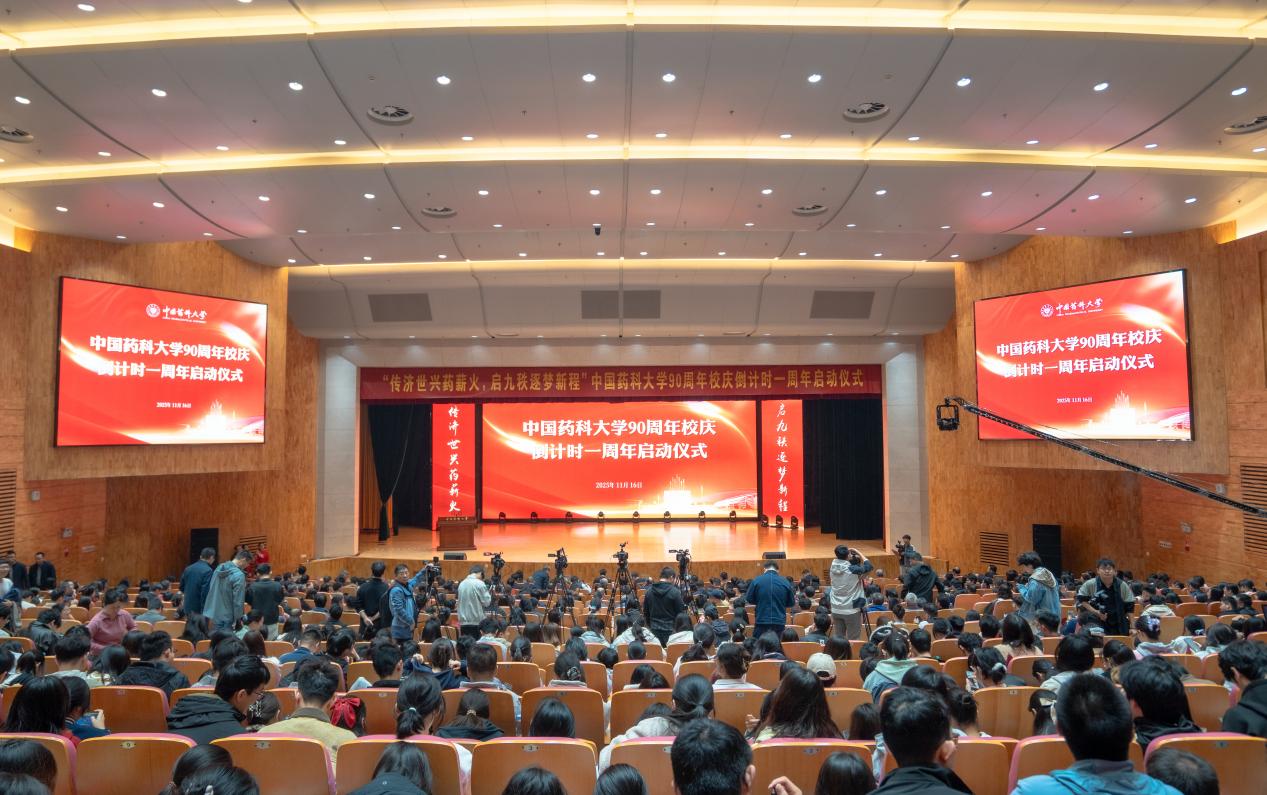
Core Viewpoint - The 90th anniversary countdown ceremony of China Pharmaceutical University was launched, highlighting the collaboration between the university and Huahong Pharmaceutical Group to enhance education and research in the pharmaceutical field [2][4][5]. Group 1: Event Overview - The ceremony was attended by notable alumni and representatives from the pharmaceutical industry, including Wang Guangji, Sun Piaoyang, and Wei Feiyan, with over 1.5 million participants from various sectors [2]. - The event was hosted by the university president, Hao Haiping, emphasizing the significance of the 90th anniversary as a new starting point for high-quality development [4][7]. Group 2: Financial Contributions and Collaborations - Huahong Pharmaceutical Group donated 10 million yuan to establish the "China Pharmaceutical University - Huahong Pharmaceutical Education Development Fund," focusing on student support and research innovation [4]. - A strategic cooperation agreement worth 30 million yuan was signed to promote collaborative development in education, research, and industry, targeting areas such as traditional Chinese medicine innovation and digital transformation in production [4][5]. Group 3: Company and Industry Insights - Wei Feiyan, the chairman of Huahong Pharmaceutical, highlighted the university's strong research foundation and talent pool, aiming to leverage these resources for breakthroughs in innovative drugs and traditional Chinese medicine [5]. - The company has a history of integrating social responsibility into its operations, with significant contributions to education and community support, including the establishment of scholarships and educational programs [13][15].