
全域土地综合整治

Search documents
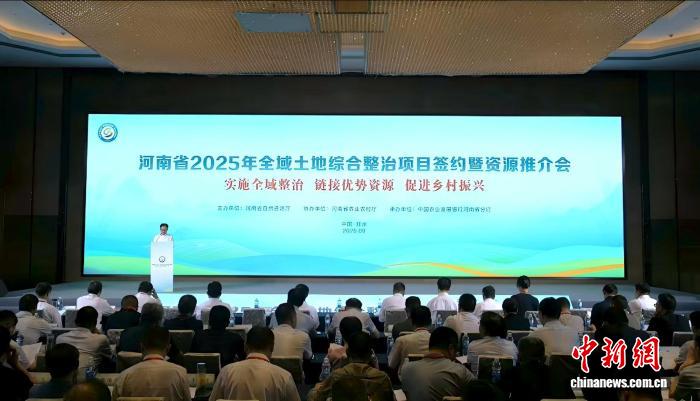
逾50亿金融活水注入河南乡村 土地整治“拼”出连片良田与产业空间
Zhong Guo Xin Wen Wang· 2025-09-18 02:52
Core Insights - The article discusses the launch of a comprehensive land consolidation project in Henan Province, aiming to enhance agricultural productivity and rural development through the integration of scattered farmland and resources [1][3]. Group 1: Project Overview - Henan Province has initiated a comprehensive land consolidation pilot project, with a total planned investment of 8.631 billion yuan, of which 5.066 billion yuan has received policy financial support [3]. - The project covers 17 pilot areas across 21 towns, optimizing urban development boundaries and improving fragmented farmland [3][4]. - The initiative aims to increase arable land by 33,200 acres and reserve land for rural industries [3][4]. Group 2: Economic Impact - The consolidation efforts have led to the transformation of 576 acres of farmland in the mountainous area of Jiaozuo into larger plots in the plains, increasing the average plot size from 13.8 acres to 41.7 acres [3]. - In Zhengzhou, the integration of 1,500 acres of agricultural land has created over 2,000 jobs and generated an annual income of 310,000 yuan for the village collective [3][4]. Group 3: Stakeholder Engagement - The project has established a platform for collaboration among government, enterprises, and financial institutions, facilitating the matching of land resources with business needs [4]. - Agricultural enterprises, including major players like Shuanghui and Sinian Foods, are actively seeking land for raw material bases and processing projects [4]. Group 4: Future Plans - Henan plans to review 39 new project applications and continuously publish land resource information through an online platform [5]. - The province aims to streamline the approval process, saving over 80% of the time required for project reviews by implementing a coordinated examination approach [5].

广东省自然资源厅上线广东民声热线
Nan Fang Ri Bao Wang Luo Ban· 2025-09-17 07:54
Core Insights - The Guangdong Provincial Department of Natural Resources has launched the Guangdong People's Voice Hotline to address public concerns regarding land registration and comprehensive land remediation efforts in the province [1] Group 1: Land Remediation and Investment - The comprehensive land remediation initiative has driven investments exceeding 441.3 billion yuan, with policy-driven financial support amounting to 311.8 billion yuan [2] - A total of 189 comprehensive land remediation implementation plans have been approved, resulting in the restoration of 680,000 mu of agricultural land, 160,000 mu of construction land, and 2.17 million mu of ecological protection and restoration [2] - The initiative has significantly improved spatial optimization, urban-rural integration, industrial revitalization, and ecological quality enhancement [2] Group 2: Real Estate Registration Issues - The Guangdong Provincial Department of Natural Resources has issued guidelines to expedite the resolution of historical real estate registration issues, emphasizing that the responsibility of construction units should not impede the rights of the public [3] - As of September, the province has resolved 538 projects related to registration difficulties, impacting approximately 110,000 housing units [4] - The department encourages the public to report any difficulties encountered in real estate registration, with a commitment to address these issues promptly [4]
高质量完成“十四五”规划 我国持续开展调查监测,自然资源家底更厚
Ren Min Ri Bao· 2025-09-12 00:40
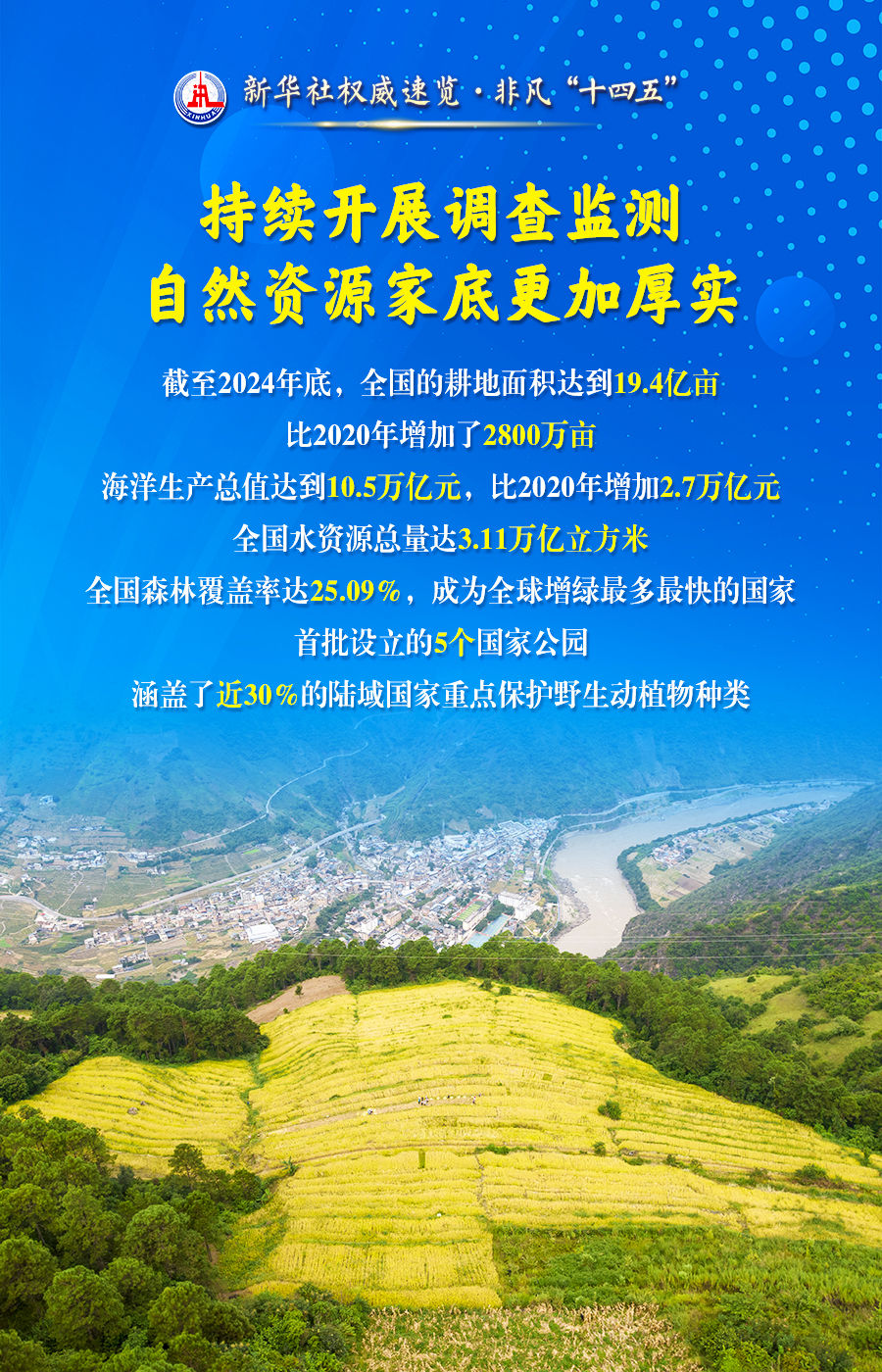
Core Insights - The article highlights the significant progress made in China's natural resource management during the "14th Five-Year Plan" period, emphasizing achievements in land, mineral, and marine resources, as well as ecological conservation efforts [1][2][3]. Group 1: Agricultural and Land Resources - The total arable land area in China reached 1.94 billion acres, with a commitment to protect this land [1] - By the end of 2024, the arable land area is expected to increase by 28 million acres compared to 2020, establishing a three-dimensional protection framework for quantity, quality, and ecology [2] - Over 10 million acres have been rehabilitated through comprehensive land management efforts [4] Group 2: Mineral Resources - Major breakthroughs in mineral exploration have been achieved, including the discovery of 10 large oil fields and 19 large gas fields during the "14th Five-Year Plan" [2] - Significant progress in the exploration of strategic minerals such as oil, gas, copper, and lithium has been reported, supporting stable production levels of 200 million tons of oil and over 240 billion cubic meters of natural gas [2] - New resource bases are emerging, with notable discoveries in lithium across four provinces, forming a 2,800-kilometer "Asian lithium belt" [3] Group 3: Marine Resources - The marine economy has shown strong growth, with the marine production value reaching 10.5 trillion yuan, an increase of 2.7 trillion yuan since 2020 [1] - China has maintained its position as the world's largest producer of marine products for 36 consecutive years, with marine oil and gas becoming key contributors to domestic production increases [3] Group 4: Ecological Conservation - The forest coverage rate has reached 25.09%, making China one of the fastest-growing countries in terms of green coverage [1] - The area of national parks has expanded significantly, with five national parks established, integrating over 120 existing natural reserves [5][6] - The "Three North" project has successfully implemented 415 projects, restoring 16.4 million acres of land [4] Group 5: Digital and Technological Advancements - The construction of a unified management platform for natural resource management has improved governance efficiency [7] - The establishment of a national satellite navigation network and the implementation of international scientific projects highlight China's commitment to technological innovation in resource management [7]
“十四五”以来中国累计处置闲置土地面积500余万亩
Zhong Guo Xin Wen Wang· 2025-09-10 10:42
Group 1 - The core point of the article is that since the beginning of the "14th Five-Year Plan," China has disposed of over 5 million acres of idle land, with a focus on optimizing land use and promoting the redevelopment of inefficient land [1] - The Ministry of Natural Resources has approved a total of 26.974 million acres of construction land during the "14th Five-Year Plan," while the area of construction land used per unit of GDP has decreased by 16% [1] - The shift in industrial land policy from primarily "transfer" to a balance of "rental and transfer" aims to reduce land costs for enterprises and address challenges in land availability for emerging industries such as elderly care and healthcare [1] Group 2 - As an important method to enhance land use efficiency, comprehensive land remediation has been actively promoted in regions like Guangdong and Zhejiang, with over 10 million acres of remediation completed nationwide [2]
新华社权威速览·非凡“十四五”| 当好自然资源“大管家”美丽中国“守护者”,他们这样干!
Xin Hua She· 2025-09-10 07:01
Group 1 - The core viewpoint of the article emphasizes the successful completion of the "14th Five-Year Plan" goals, highlighting the role of the Ministry of Natural Resources in supporting high-quality economic and social development [1] - The national spatial planning has been fully approved and implemented at provincial, municipal, and county levels, creating a unified blueprint for land development and protection [3] - The area of comprehensive land remediation has exceeded 240 million mu, with significant efforts in restoring abandoned mines and coastal areas [5] Group 2 - The efficiency of resource utilization has improved, with a 16% decrease in construction land use per unit of GDP, and over 1,000 national-level green mines established [8] - A management system has been developed that includes a unified map, data set, and reporting framework, alongside strict actions against illegal activities in the natural resources sector [11] - International collaborations have been initiated, including the implementation of major scientific plans and the establishment of cooperation platforms for ecological restoration [13]
北京市全域土地综合整治的首个纲领性文件出台
Huan Qiu Wang· 2025-09-06 00:30
【环球网财经综合报道】9月5日,北京市规划和自然资源委员会发布《关于学习运用"千万工程"经验深 入开展全域土地综合整治工作的实施意见(试行)》(下称《实施意见》)。据悉,该《实施意见》是 北京市全域土地综合整治的首个纲领性文件,将有效指导北京市全域土地综合整治工作科学有序开展, 进一步提升土地资源配置效率和节约集约利用水平,为统筹推进乡村全面振兴和城乡融合发展提供有力 支撑。 《实施意见》明确了全域土地综合整治的实施内容,包括深化落实乡镇国土空间规划、全面开展农用地 集中连片整治、有序推动闲置低效建设用地整理、统筹实施生态环境保护修复、引导乡村产业融合发展 等。 蝶鑫智研近日撰文提到,政府直接投资全域项目或建设部分内容,用于运维等其他费用性支出等;财政 性资金属于建设投资的,依专项用途用于项目建设,从政府(部门)角度是投资,从施工者来说是工程 款。用于本项目建设运维管理支出或奖补的,可以形成投资者费用支出,奖补可以形成综合收益。 《实施意见》明确各区政府是全域土地综合整治工作的责任主体,强调各区优先向"百千工程"、乡村全 面振兴、林下经济示范基地、农村人居环境整治、小流域治理等规划实施重点区域谋划。各区应加强 ...
北京发布首个全域土地综合整治纲领性文件,将全面集中整治农用地
Xin Jing Bao· 2025-09-05 10:41
Core Viewpoint - Beijing has issued the first comprehensive guideline for land consolidation, aiming to enhance agricultural protection, ecological restoration, rural revitalization, and urban-rural integration through a systematic approach to land management [1][2]. Group 1: Implementation Content - The implementation of comprehensive land consolidation will focus on five key areas: deepening the national land spatial planning, conducting concentrated remediation of agricultural land, orderly promoting the sorting of idle and inefficient construction land, coordinating ecological environment protection and restoration, and guiding the integration of rural industries [1][2]. - Specific projects include concentrated remediation of arable land and permanent basic farmland, improvement of arable land quality, construction of high-standard farmland, and enhancement of agricultural facilities and infrastructure [1]. Group 2: Ecological and Rural Development - The guideline emphasizes the need for ecological environment protection and restoration, including optimizing ecological spaces and improving rural living environments [2]. - There will be a focus on enhancing village aesthetics and upgrading rural areas to create a unique landscape and rural style in Beijing [2]. Group 3: Support Policies - The guideline allows for localized optimization of spatial layouts, with adjustments to permanent basic farmland not exceeding 5% of the designated area [3]. - It includes a positive list to support agricultural and forestry infrastructure, with enhanced regulatory oversight to prevent misuse of land [3]. - Financial institutions will be encouraged to provide funding for eligible projects within the comprehensive land consolidation areas [3].
北京印发全域土地综合整治实施意见,开展农用地集中连片整治
Jing Ji Guan Cha Wang· 2025-09-05 03:26
Core Viewpoint - The Beijing Municipal Government has approved the implementation opinions on the "Ten Thousand Project" experience, focusing on comprehensive land remediation across the region, which includes the consolidation of agricultural land and the orderly management of idle and inefficient construction land [1] Group 1: Implementation Content - The implementation of comprehensive land remediation will include five main aspects: deepening the implementation of township land spatial planning, conducting concentrated remediation of agricultural land, orderly promoting the management of idle and inefficient construction land, coordinating ecological environment protection and restoration, and guiding the integration of rural industries [1] - The opinions emphasize the need to strengthen land use regulation to ensure "agricultural land remains for agricultural use" [1] Group 2: Regulatory Measures - A strict negative list review process will be enforced to prohibit 14 types of illegal activities, including the construction or disguised construction of villas, private estates, and private clubs under the guise of comprehensive land remediation [1]
北京印发全域土地综合整治实施意见 提升土地资源配置效率
Zheng Quan Shi Bao Wang· 2025-09-05 03:14
Core Viewpoint - The "Implementation Opinions" released by Beijing's Planning and Natural Resources Committee aims to guide the comprehensive land remediation work across the city, enhancing land resource allocation efficiency and supporting rural revitalization and urban-rural integration [1] Group 1: Implementation Framework - The comprehensive land remediation is based on national spatial planning, focusing on key areas within townships for agricultural land remediation, construction land organization, and ecological protection [1] - Each district government is designated as the responsible entity for the remediation work, prioritizing areas aligned with the "Hundred Thousand Project," rural revitalization, and ecological demonstration bases [1][2] Group 2: Implementation Content - The implementation includes deepening township land spatial planning, promoting concentrated remediation of agricultural land, and systematically organizing idle and inefficient construction land [2] - Ecological environment protection and restoration will be coordinated, alongside fostering the integration of rural industries [2] Group 3: Support Policies - The "Implementation Opinions" allow for localized optimization of spatial layouts, with adjustments to permanent basic farmland not exceeding 5% of the designated area [3] - A positive list of support measures for agricultural and rural infrastructure construction has been established, with enhanced regulatory oversight to prevent misuse [3] - Financial resources will be consolidated to support projects within the comprehensive land remediation areas [3] Group 4: Management and Oversight - The remediation plans will be integrated into the national spatial planning supervision system for comprehensive management [4] - Strict adherence to land use regulations is mandated, ensuring that agricultural land remains designated for agricultural use and preventing illegal construction activities [4]
聚焦2025年第三期国土空间规划 UP前沿论道业务交流会 全域土地综合整治助力规划实施落地
Zhong Guo Zi Ran Zi Yuan Bao· 2025-09-05 01:25
Group 1: Core Insights - The conference focused on the theme of "comprehensive land remediation across regions to support the implementation of planning" [1] - The integration of various planning systems has made comprehensive land remediation an important tool for local implementation of national planning [2] - Comprehensive land remediation is seen as a means to optimize spatial resource allocation and improve living environment quality [2][3] Group 2: Implementation Strategies - The "Ten Million Project" in Zhejiang Province serves as a model for modernizing land governance through comprehensive land remediation [2] - Guangdong Province has approved nearly 200 comprehensive land remediation plans, driving investments exceeding 400 billion yuan [3] - The integration of land remediation with spatial planning in Ningbo City aims to enhance resource management and economic development [3] Group 3: Policy Recommendations - Experts suggest that comprehensive land remediation should evolve from traditional land engineering paradigms to modern governance frameworks [5] - The focus should be on reusing underutilized land, particularly brownfields, to support comprehensive land remediation efforts [6] - A multi-faceted approach is recommended to address the challenges of fragmented land use and to enhance agricultural modernization [6] Group 4: Collaborative Efforts - The release of the "Opinions" by the Ministry of Natural Resources marks a shift from pilot projects to comprehensive implementation of land remediation [7] - Collaborative planning across regions, such as in the Yangtze River Delta, is essential for effective land remediation [7] - A systems engineering approach is necessary, requiring cooperation among various stakeholders to achieve comprehensive land remediation goals [8] Group 5: Enhancing Spatial Value - Comprehensive land remediation is positioned as a platform to enhance the value of national spatial planning [9] - The integration of urban and rural elements through comprehensive land remediation can drive new urbanization efforts [9][10] - Shanghai's experience demonstrates the successful optimization of spatial layout and resource integration through comprehensive land remediation [10]