医保改革

Search documents
小药盒,大政策:慢性病证明与医保改革的民生共鸣
Jing Ji Guan Cha Bao· 2025-11-13 08:25
Core Insights - The article discusses the impact of healthcare policy reforms on chronic disease patients in China, highlighting the balance between personal account reductions and increased social insurance coverage [1][4][6] Group 1: Policy Changes and Their Effects - The healthcare policy in Jilin Province has undergone three adjustments from 2023 to 2025, significantly reducing out-of-pocket expenses for chronic disease medications [1][4] - The monthly contributions to personal accounts for retirees have decreased from 240 yuan in 2022 to 111 yuan in 2023, and further to 78 yuan in 2024, reflecting a shift towards increased reimbursement rates [2][3] - New outpatient reimbursement policies have been introduced, increasing reimbursement rates by 5% and lowering the threshold for chronic disease patients, thus enhancing financial support for those with chronic conditions [3][4] Group 2: Financial Implications for Patients - Patients like Zhang Guilan and Li Hongmei have reported reduced personal expenses due to the new reimbursement policies, despite lower personal account contributions [3][5] - The introduction of a "public servant medical subsidy" in 2025 aims to provide additional support for retired civil servants, reflecting a targeted approach to healthcare funding [4][6] - The overall trend indicates a move from individual account reliance to a more collective insurance model, enhancing the mutual support capacity of the healthcare system [4][6] Group 3: Broader Implications for Healthcare Access - The reforms aim to address the inequities in healthcare access between urban and rural areas, with improvements in the availability of essential medications in rural health facilities [8][12] - The introduction of chronic disease certificates has significantly reduced medication costs for patients, demonstrating the effectiveness of policy in alleviating financial burdens [9][10] - Future reforms are expected to further expand coverage for chronic diseases and improve the efficiency of the reimbursement process, indicating a commitment to enhancing healthcare access for all [11][12]
医保改革真相:个人医保或将取消,门诊报销更划算!
Sou Hu Cai Jing· 2025-11-13 08:23
Core Viewpoint - The article clarifies that recent rumors about the cancellation of personal health insurance accounts and full reimbursement for hospital stays are false. The core of the health insurance reform is to make spending more efficient and beneficial for a larger number of people, rather than misleading the public with unrealistic promises [1][8]. Summary by Sections Reasons for Reform - The health insurance fund is under increasing pressure due to a growing elderly population, with nearly one-fourth of the total population aged 60 and above. This demographic tends to incur higher medical expenses, leading to a mismatch between fixed income from contributions and rising expenditures [3]. - Previous issues included inequitable use of personal accounts, where higher earners accumulated more funds while lower earners struggled to access necessary care. This created a disparity in healthcare access [3]. - The health insurance fund's total revenue for 2024 is projected at 2.8 trillion, with expenditures at 2.6 trillion, indicating a slowing growth rate and potential future sustainability issues [3]. Changes in Personal Accounts - The reform reallocates a portion of funds from personal accounts to a collective pool, increasing reimbursement rates for outpatient services from 50% to 75%. This aims to encourage visits to community hospitals rather than overcrowded major hospitals [5]. - Personal accounts will still exist but can now be used by family members, enhancing convenience for households with elderly or children [5]. Impact on Healthcare Access - The reform addresses the imbalance where major hospitals are overcrowded while smaller clinics remain underutilized. By increasing reimbursement rates for community hospitals, patients are incentivized to seek care there, allowing major hospitals to focus on more serious cases [5]. - Concerns about increased personal costs are mitigated by the fact that higher reimbursement rates for outpatient services will lead to overall savings, even if personal account balances decrease [5]. Hospital Efficiency - Hospitals are now incentivized to manage costs more effectively, as they will receive a bundled payment for treatments rather than being rewarded for excessive tests and medications. This is expected to reduce unnecessary expenses for patients [6]. Overall Goals of Reform - The ultimate aim of the health insurance reform is to create a healthier fund that allows more people to afford quality healthcare. It is not about eliminating personal accounts or achieving full reimbursement but rather ensuring that resources are allocated more equitably and effectively [8].

特朗普签署拨款法案,结束美国史上最长政府“停摆”
Guo Ji Jin Rong Bao· 2025-11-13 06:59
Core Points - The U.S. government shutdown, lasting 43 days, has officially ended with President Trump signing a funding bill, marking a historic resolution to the fiscal impasse [1][3] - The shutdown was primarily caused by disagreements over healthcare subsidies, particularly the extension of tax credits under the Affordable Care Act (ACA), which Democrats insisted upon as a condition for reopening the government [5] Legislative Process - The House of Representatives passed the funding bill with a vote of 222 in favor and 209 against, following its approval in the Senate [3] - House Speaker Mike Johnson expressed relief over the reopening of the government and criticized Democrats for using the American people as political pawns [3] Healthcare Subsidies - The funding bill did not include the requested extension of ACA tax credits, which was a significant demand from Democrats aimed at preventing premium increases for millions of insured individuals [5] - The absence of this provision indicates that healthcare issues will continue to be a contentious topic in Congress despite the end of the shutdown [5] Bipartisan Efforts - Following the passage of the funding bill, bipartisan efforts emerged to propose a separate bill aimed at extending ACA tax credits for two years [5][6] - The proposed compromise seeks to address concerns over rising premiums while implementing reforms to avoid increasing the deficit, including measures to combat fraudulent practices in healthcare billing [6]
中药Q3:业绩持续承压,上市公司表现分化
Wanlian Securities· 2025-11-12 08:05
Investment Rating - The report maintains a "Hold" rating for the OTC leading companies in the traditional Chinese medicine sector, indicating resilience compared to the broader market [5]. Core Insights - The traditional Chinese medicine sector continues to face performance pressure in Q3 2025, with significant differentiation among listed companies [2]. - The overall revenue growth rate for the traditional Chinese medicine sector in Q3 2025 was -1.57% year-on-year and -6.15% quarter-on-quarter, with a net profit decline of -5.25% year-on-year and -29.32% quarter-on-quarter [4][43]. - The sector's performance is influenced by policy changes, market conditions, and cost pressures, particularly in retail and hospital channels [48]. Summary by Sections 1. Market Review - From the beginning of 2025 to November 5, 2025, 49 out of 69 listed companies in the traditional Chinese medicine sector saw their stock prices increase, with notable gains from Wanbangde and Tianmu Pharmaceutical exceeding 100% [4][36]. - In Q3 2025, 46 companies reported stock price increases, with Wanbangde, Zhendong Pharmaceutical, and Weikang Pharmaceutical leading the gains [4][38]. 2. Performance Review - The overall revenue for the traditional Chinese medicine sector decreased by 4.28% year-on-year in the first three quarters of 2025, with Q3 showing a smaller decline of 1.57% [43]. - The net profit for the sector also saw a year-on-year decrease of 1.23% in the first three quarters of 2025, with Q3 reflecting a decline of 5.25% [46]. - Among 69 listed companies, 26 reported year-on-year revenue growth, while 25 showed quarter-on-quarter growth in Q3 2025 [51]. 3. Valuation - As of November 10, 2025, the price-to-earnings ratio (TTM) for the traditional Chinese medicine sector was 28.51, with historical percentiles indicating a trend of increasing valuations since 2020 [4].
众安在线(06060.HK):盈利高增 保险业务向好、香港银行蓄势待发
Ge Long Hui· 2025-11-08 05:15
Core Insights - The company reported better-than-expected performance in Q3 2025, with net profit increasing by 176.4% year-on-year to 1.291 billion yuan, driven by higher-than-expected investment returns [1] - The company continues to see steady premium growth and improvement in the combined cost ratio, with insurance business revenue up 5.6% year-on-year to 26.93 billion yuan [1] - The company maintains a positive outlook on its health insurance and auto insurance sectors, benefiting from healthcare reform and expansion opportunities in the new energy vehicle insurance market [1] Financial Performance - Q3 2025 net profit reached 1.291 billion yuan, while the net profit for the first nine months of 2025 was 1.859 billion yuan, reflecting a year-on-year increase of 206.9% [1] - The company's net assets increased by 22.7% quarter-on-quarter to 25.261 billion yuan [1] - Investment returns for Q3 2025 were 1.53%, up 1.1 percentage points year-on-year, while the comprehensive investment return was 2.97%, up 2.4 percentage points year-on-year [1] Business Development - The company’s Hong Kong virtual bank, ZA Bank, has launched Hong Kong stock trading services and surpassed 1 million users, achieving profitability for the first half of 2025 [2] - The strategic development of the Hong Kong banking business is seen as forward-looking, with potential for strong financial flexibility as wealth management services continue to upgrade [2] Earnings Forecast and Valuation - The company is currently trading at 0.9x 2025 estimated price-to-book ratio, with an upgraded earnings per share (EPS) forecast for 2025 and 2026 by 68% and 12% to 1.22 yuan and 0.94 yuan respectively [2] - The target price is maintained at 23.0 HKD, corresponding to a 1.3x 2025 estimated price-to-book ratio and a 42% upside potential [2]

2025年药品目录谈判协商顺利结束;六连板合富中国称公司股价累计涨幅已严重偏离基本面|医药早参
Mei Ri Jing Ji Xin Wen· 2025-11-04 23:21
Group 1 - The National Healthcare Security Administration successfully conducted negotiations for the 2025 National Basic Medical Insurance Drug List, with 120 companies participating and 127 drugs involved in the bidding process [1] - The new drug list is set to be released in the first weekend of December and will be implemented starting January 1, 2025, indicating ongoing optimization of the dynamic adjustment mechanism for the medical insurance catalog [1] - The dual catalog approach aims to expand basic medical coverage while leveraging commercial insurance to provide supplementary payment for innovative drugs, enhancing accessibility to advanced therapies [1] Group 2 - Baiyang Pharmaceutical signed a distribution agreement with Junxin Pharmaceutical for the exclusive promotion and sales rights of human albumin in specific markets, indicating a strategic expansion in the human albumin sector [2] - This collaboration will enhance the market reach into retail and hospital sectors, marking a significant step in optimizing the product pipeline for Baiyang Pharmaceutical [2] Group 3 - HeFu China announced that its stock price had deviated significantly from its fundamentals, with a cumulative increase of 77.4% over six consecutive trading days, raising concerns about market speculation and irrational trading behavior [3] - The company confirmed that there were no undisclosed significant matters affecting its business, but the stock's rapid rise poses a risk of a swift decline due to market overheating [3] - Regulatory bodies are urged to monitor irrational speculation and guide the market back to value investing principles [3] Group 4 - Fuhong Hanlin presented key updates on its PD-L1 ADC HLX43 for treating non-small cell lung cancer (NSCLC) at an international forum, showcasing results from a multi-center Phase II clinical study [4] - The data confirmed the efficacy and safety of HLX43, paving the way for subsequent Phase III studies by establishing the recommended dosage [4] - This research highlights the clinical value of HLX43 in treating NSCLC and other solid tumors, reinforcing its potential in the oncology market [4]

中国社会科学院世界社保研究中心研究员姚宇: 健康保障更加坚实
Jing Ji Ri Bao· 2025-10-25 22:12
Core Points - The 20th Central Committee's Fourth Plenary Session emphasizes increasing efforts to guarantee and improve people's livelihoods, with a focus on medical security as a significant aspect of social development [1][2] - The "14th Five-Year Plan" period has seen historic achievements in China's medical security, contributing to solving the global challenge of healthcare reform and laying a solid foundation for the "15th Five-Year Plan" [1] - The National Medical Insurance Administration has organized 10 batches of centralized drug procurement, resulting in an average price reduction of over 50% for 435 drugs, saving thousands of billions in drug costs [1] - By the end of 2024, approximately 1.327 billion people are expected to be covered by basic medical insurance, maintaining a coverage rate of over 95% [1] Summary by Sections Medical Security Achievements - The "14th Five-Year Plan" has led to significant reductions in the financial burden of medical expenses for the public through targeted reforms [1] - The centralized procurement model has effectively reduced unreasonable costs in the drug distribution chain [1] Future Directions - The "15th Five-Year Plan" aims to enhance the fairness, sustainability, and effectiveness of the medical insurance system, addressing disparities in benefits among different groups [2] - Recommendations include improving the dynamic adjustment mechanism for funding and benefits, and enhancing the performance of medical services and fund utilization [2]
回眸“十四五”|健康中国:为人民幸福生活筑牢基石
Jing Ji Ri Bao· 2025-10-20 01:19
Core Insights - The article highlights significant achievements in China's healthcare system during the 14th Five-Year Plan, emphasizing improvements in health service capacity, accessibility, and equity, leading to a notable enhancement in public health [1] Group 1: Medical Technology Advancements - The launch of NanoForge, the world's first AI nano drug delivery platform, marks a breakthrough in drug development, enhancing the efficiency of RNA and small molecule drug delivery [2] - China now accounts for over 20% of new drug research globally, ranking second in new drug development, with several innovative drugs approved, including the anti-tumor drug Zebutinib [2] - The development of domestic medical devices, such as photon-counting CT and orthopedic surgical robots, has improved treatment precision and patient outcomes [3] Group 2: Healthcare Service Quality Improvement - The "Xi He No. 1" AI model has been developed to provide remote medical advice, significantly reducing misdiagnosis rates and improving patient survival chances [4] - The healthcare system aims to decentralize medical services, ensuring that serious illnesses are treated within provinces, while general and routine care is accessible at the community level [4] - By 2024, the total number of healthcare institutions in China is expected to reach 1.09 million, with a workforce of 15.78 million healthcare professionals [6] Group 3: Medical Insurance Expansion - The introduction of the "medical insurance wallet" allows for the transfer of personal account funds across provinces, enhancing the convenience of medical payments for families [7] - A comprehensive medical insurance system has been established, with over 12.36 billion people using the medical insurance code, facilitating easier access to healthcare services [8] - The implementation of long-term care insurance has benefited 1.9 million people, addressing the needs of individuals requiring long-term care [8] Group 4: Cost Reduction and Service Enhancement - Various healthcare policies have collectively reduced the financial burden on low-income populations by over 650 billion yuan, while drug price governance has significantly lowered medication costs [9] - The establishment of a unified national medical insurance information platform has improved service efficiency, with direct settlement for cross-province medical services increasing dramatically [9] - The ongoing development of China's healthcare system is closely aligned with the public's health aspirations, promising more affordable and quality health services in the future [9]
好政策让人心里温暖
Ren Min Ri Bao· 2025-10-20 00:43
Core Insights - The article highlights the emotional impact of a child's illness on families and emphasizes the importance of health and safety for children [1] - It discusses the benefits of healthcare reform, particularly the convenience and financial relief provided by direct settlement for cross-province medical treatment [1] - The author expresses optimism about advancements in medical technology leading to better treatment options for children [1] Healthcare Reform - The article notes that families are direct beneficiaries of healthcare reforms, specifically mentioning the ease of accessing medical care through cross-province direct settlement [1] - This reform is seen as a significant factor in alleviating the economic burden on families dealing with health issues [1] Medical Technology - There is a belief that with the improvement of medical technology, patients, especially children, will receive better treatment outcomes [1]
告别“多头跑” 迎来“智慧办” 广州医保改革让民生服务有速度更有温度
Yang Shi Wang· 2025-10-11 10:10
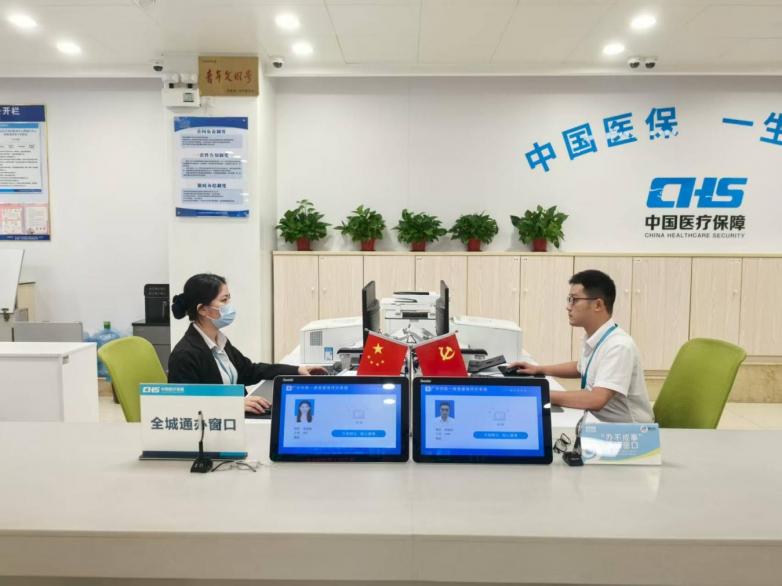
Core Viewpoint - Guangzhou's healthcare reform initiatives have significantly improved accessibility and convenience for residents, transforming policy benefits into tangible experiences of happiness and satisfaction for the public [1] Group 1: Mechanism and Service Optimization - The introduction of "citywide handling" allows residents to access healthcare services at any district window with standardized materials and processes, enhancing convenience [2] - A standardized service system was established in 2015, incorporating 120 business work standards for comprehensive management of all service items [2] - The optimization of service details includes the creation of 220 SMS templates and 26 business sample forms, along with user-friendly guides and explanatory videos to simplify the process [3] Group 2: Digital Empowerment - The launch of AI services in December 2024 enables precise consultations and real-time service entry notifications, facilitating a "question-and-answer" approach to healthcare services [5] - The "no-sense payment service" allows insured individuals to confirm payment with medical institutions, eliminating the need for queuing or mobile payment operations [5] - Over 355 million users have signed up for the service, demonstrating the widespread adoption of smart healthcare solutions [5] Group 3: Community and Accessibility - The "15-minute healthcare service circle" initiative has brought services closer to residents, with healthcare services now available at 177 street towns and over 930 village health stations [6] - The "Suihao Ban" app allows residents to handle all healthcare matters online, with real-time tracking of processing progress [6] - The implementation of "immediate enjoyment" for retirees and the simplification of high-frequency business processes have significantly reduced the burden on the elderly [6] Group 4: Special Considerations for Vulnerable Groups - Special services for the elderly and residents from Hong Kong and Macau have been introduced, including simplified processes and dedicated service windows [7] - Average waiting times at service windows have been reduced by 39.1% year-on-year, enhancing the overall experience for users [7] - The establishment of support areas for complaints and assistance ensures that all residents receive the necessary help during their interactions with the healthcare system [7]