半导体并购

Search documents
A股重磅!拟收购100%股权 下周一复牌!
Zheng Quan Shi Bao Wang· 2025-08-30 04:46
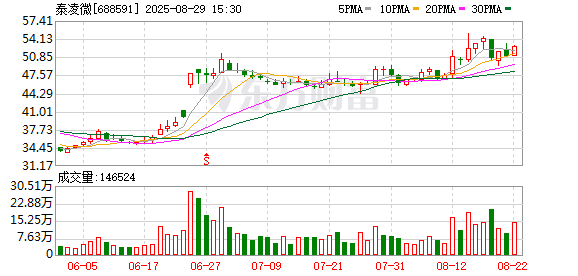
Group 1 - The core point of the article is the acquisition of 100% equity of Phanqi Micro by Tai Ling Micro, a move that highlights the ongoing trend of mergers and acquisitions in the semiconductor sector in the A-share market [2][3][7] - Tai Ling Micro's stock was suspended on August 25 and is set to resume trading on September 1 [2][3] - The acquisition involves issuing shares and cash payments to 26 transaction parties, which will also include raising supporting funds [3] Group 2 - Phanqi Micro specializes in low-power wireless IoT chip development and has established two major product lines: BLE-Lite series and multi-protocol wireless SoC series, known for their ultra-low power consumption and high reliability [3][4] - The company has developed products based on 40nm technology that outperform competitors' products based on 22nm technology in terms of power consumption and RF performance [3] - Phanqi Micro's products in the Sub-1G frequency band are recognized for their low power consumption and long-range capabilities, applicable in various fields such as smart homes and industrial control [3][4] Group 3 - The acquisition is expected to enhance Tai Ling Micro's competitive edge in low-power Bluetooth and other key product lines by integrating Phanqi Micro's advanced technologies [4] - The transaction is anticipated to complement Tai Ling Micro's technology roadmap in the IoT market, expanding its product offerings [4] - As of the announcement date, the valuation and pricing of the target assets have not been finalized, and the transaction is not expected to meet the criteria for a major asset restructuring [4] Group 4 - The semiconductor sector has seen over ten merger and acquisition cases since early August, driven by strong policy support [7][8] - Notable recent transactions include announcements from companies like Zhongxin International and Kangda New Materials, indicating a robust trend in the industry [7][8]

停牌!A股芯片巨头,刚刚公告!
券商中国· 2025-08-17 12:51
Core Viewpoint - The semiconductor industry is witnessing significant merger and acquisition activities, with Huahong Semiconductor planning to acquire control of Shanghai Huahong Microelectronics to address competition issues and enhance its market position [2][3]. Group 1: Huahong Semiconductor's Acquisition Plans - Huahong Semiconductor announced on August 17 that it is planning to acquire control of Shanghai Huahong Microelectronics through a combination of issuing shares and cash payments, while also raising additional funds [2]. - The acquisition is aimed at resolving competition issues related to Huahong's IPO commitments and is expected not to constitute a major asset restructuring [2]. - The assets involved in the acquisition are currently in the process of being separated and are related to the competitive areas of 65/55nm and 40nm technologies [2][3]. Group 2: Financial Performance and Projections - Huahong Semiconductor reported a sales revenue of $566 million for Q2 2025, marking an 18.3% year-on-year increase and a 4.6% quarter-on-quarter increase, with a gross margin of 10.9% [3]. - The company anticipates sales revenue for Q3 2025 to be between $620 million and $640 million, with a projected gross margin of 10% to 12% [4]. Group 3: Broader Semiconductor M&A Activity - The semiconductor sector has seen multiple M&A announcements in August, including Kanda New Materials planning to acquire a 51% stake in Chengdu Zhongke Huamei Electronics for 275 million yuan [5][6]. - Yongji Co. is also in the process of acquiring control of Nanjing Tenafly Electronics through a share issuance and cash payment, which may constitute a major asset restructuring [6]. - Other companies, such as Zhengfan Technology and Kaipu Cloud, are also engaging in significant acquisitions to expand their presence in the semiconductor market [6][8].

上海芯片上市公司,终止收购!
是说芯语· 2025-08-13 02:58
Core Viewpoint - The article discusses the recent termination of a significant acquisition deal between Xinxiangwei and Aixiasheng, highlighting the challenges in the semiconductor industry regarding mergers and acquisitions, particularly in the context of rapid technological changes and competitive pressures [4][9][16]. Group 1: Company Overview - Xinxiangwei, established in 2005, specializes in the research, design, and sales of display chips, providing comprehensive solutions in the display chip sector [6]. - Aixiasheng, founded in 2011, focuses on chip design and solutions in the human-computer interaction field, and has received recognition as a national high-tech enterprise [12]. Group 2: Acquisition Attempt - Xinxiangwei planned to acquire 100% of Aixiasheng's shares through a combination of stock issuance, convertible bonds, and cash payments, but the deal was terminated due to a lack of consensus among the parties involved [4][9]. - The acquisition was viewed as a "snake swallowing an elephant" scenario, given Aixiasheng's projected revenues of 782 million yuan and 1.267 billion yuan for 2023 and 2024, respectively, compared to Xinxiangwei's revenues of 480 million yuan and 507 million yuan during the same period [8][9]. Group 3: Financial Performance - Xinxiangwei's revenue for 2024 was 507 million yuan, reflecting a year-on-year growth of 5.61%, but its net profit dropped significantly by 69.41% to 8.4231 million yuan, indicating a pressing need to enhance profitability amid fierce market competition [9]. - In the first quarter of 2025, Xinxiangwei reported a revenue of 150 million yuan, a substantial increase of 49.95% year-on-year, and achieved a net profit of 218.51 thousand yuan, marking a return to profitability [9]. Group 4: Industry Context - The semiconductor industry has seen a surge in merger and acquisition activities, particularly following the release of new regulatory policies aimed at supporting strategic acquisitions in emerging industries [15]. - Despite favorable policies, the semiconductor sector faces significant challenges in executing mergers due to rapid technological advancements and complex negotiations regarding valuations and terms [16].
喜娜AI速递:今日财经热点要闻回顾|2025年7月12日
Sou Hu Cai Jing· 2025-07-12 11:21
Group 1: A-Share Market Dynamics - A-shares have shown strong recovery since July, with the Shanghai Composite Index breaking through 3500 points, driven by blue-chip stocks, and discussions about reaching 4000 points by year-end are ongoing [2][5] - The market is characterized by a "three-force resonance" of policy, capital, and fundamentals, with some analysts optimistic about further gains while others caution against uncertainties [2][5] - Several brokerage firms have reported significant profit increases, with some firms projecting over 10 times growth in earnings [2][5] Group 2: Insurance Capital Market Stability - The Ministry of Finance has announced a new long-cycle assessment for state-owned commercial insurance companies, combining annual and multi-year evaluations to encourage stable long-term investments [2][5] - This initiative aims to enhance the role of insurance funds as a stabilizing force in the capital market, potentially increasing A-share investment proportions [2][5] Group 3: Competition in the Food Delivery Sector - The food delivery market has seen a resurgence in subsidy wars, with major players like Meituan and Taobao launching significant promotions [2][5] - Concerns have been raised about the sustainability of these subsidies, suggesting that competition may become a regular occurrence [2][5] Group 4: Rare Earth Prices and Company Performance - Rare earth prices have been on the rise, with companies like Northern Rare Earth and Baotou Steel planning to increase transaction prices for rare earth concentrates [3] - Northern Rare Earth has reported substantial profit growth, with its market capitalization nearing 100 billion yuan [3] Group 5: Nvidia Stock Performance - Nvidia's stock has reached an all-time high, with a market capitalization of $4.02 trillion, while CEO Jensen Huang has been reducing his stake in the company [3] - Huang's recent stock sales amount to approximately 600,000 shares, valued at around $96 million [3] Group 6: Bitcoin and Cryptocurrency Market Trends - Bitcoin has surged to a record high of $118,865, reflecting a 26% increase year-to-date and a 41% rise over the past three months [3] - The overall cryptocurrency market capitalization has expanded to approximately $3.7 trillion, driven by increased investor confidence [3] Group 7: U.S. Tariff Policies and Market Impact - The U.S. has seen its tariff revenue exceed $100 billion for the first time, with potential new tariffs on various countries raising market concerns [4] - This situation has led to predictions of delayed interest rate cuts by the Federal Reserve, with adjustments to forecasts for rate changes [4] Group 8: Semiconductor Industry Mergers and Acquisitions - The semiconductor industry is experiencing a wave of mergers and acquisitions, with a record number of significant restructuring cases since 2020 [5] - Analysts expect that 15 semiconductor companies will see net profit growth exceeding that of 2024, with some previously unprofitable firms likely to return to profitability [5] Group 9: Performance of Listed Companies - Multiple listed companies have released positive earnings forecasts for the first half of 2025, particularly in the brokerage and gold sectors, with some brokerages projecting over 10 times profit growth [5] - The global gold ETF has seen an increase of $38 billion in holdings during the first half of the year, indicating a continued trend of central bank gold purchases [5]
套现12亿,67岁半导体老将体面离场
芯世相· 2025-07-02 07:54
Core Viewpoint - The article discusses the recent surge in mergers and acquisitions (M&A) within the semiconductor industry, highlighting significant transactions and the emergence of private equity and venture capital (PE/VC) firms as active players in this space [2][3][4]. Group 1: M&A Activity in the Semiconductor Sector - Notable transactions include Jingfeng Mingyuan's acquisition of Yichong Technology and Gaon Electronics' purchase of Chengdu Ruicheng Microcontrol [3]. - The semiconductor industry is experiencing a phase of consolidation, with multiple companies engaging in strategic acquisitions to enhance their market positions [3]. - The acquisition of Zhongying Electronics by Zhineng Industrial Electric is highlighted as a unique case where a PE/VC firm is leveraging an industrial platform for M&A [4][6]. Group 2: Details of Zhongying Electronics and Zhineng Industrial Electric Transaction - Zhongying Electronics' controlling shareholder, Weilang International, is transferring 14.20% of its shares to Zhineng Industrial Electric at a price of 25.677 CNY per share, totaling approximately 1.245 billion CNY [10][12]. - Post-transaction, Zhineng Industrial Electric will control 23.4% of Zhongying Electronics' voting rights, marking a significant shift in control [11][12]. - The transaction is characterized by a 20% premium over the stock price prior to suspension, indicating a favorable valuation for the seller [12]. Group 3: Financial Performance of Zhongying Electronics - Zhongying Electronics has seen a decline in revenue from 16.02 billion CNY in 2022 to an estimated 13.43 billion CNY in 2024, reflecting a downward trend [16]. - The company's net profit has also decreased significantly, with projections showing a drop from 3.23 billion CNY in 2022 to 1.34 billion CNY in 2024 [16]. - The primary revenue source, industrial MCUs for white goods, constitutes 81% of total revenue, but this segment is facing saturation, limiting future growth potential [16][17]. Group 4: Zhineng Industrial Electric's Investment Strategy - Established in December 2020, Zhineng Industrial Electric has invested in at least seven semiconductor companies, focusing on industrial and automotive chip sectors [20][24]. - The company reported a revenue of 206 million CNY in 2024, but its main business is currently operating at a loss, relying on investment gains for profitability [21][23]. - Zhineng Industrial Electric's strategy involves acquiring significant stakes in companies to build a comprehensive semiconductor ecosystem, particularly in automotive applications [28]. Group 5: Trends in Semiconductor Investment - The article notes a shift in investment strategies among firms like Wuyuefeng, which are now adopting a company model to lead M&A activities rather than merely acting as fund managers [30][31]. - This approach allows for longer-term management and integration of acquired companies, which is crucial in the semiconductor sector where M&A processes can be complex and time-consuming [31]. - Other firms, such as Linxin Capital and Xingcheng Capital, are also exploring similar strategies, indicating a broader trend in the industry towards operational involvement in investments [33][34].

半导体行业再现重磅并购,国科微拟收购中芯宁波94%股权
Huan Qiu Lao Hu Cai Jing· 2025-06-06 06:05
Core Viewpoint - The company Guokewai plans to acquire 94.366% of the shares of Zhongxin Integrated Circuit (Ningbo) Co., Ltd. through a combination of share issuance and cash payment, aiming to enhance its product matrix and service categories in the semiconductor industry [1][2] Group 1: Acquisition Details - The acquisition involves Zhongxin Ningbo, established in 2016, which is a key joint venture within the Zhongxin International Group, focusing on specialized semiconductor manufacturing technologies [1] - The shareholders of Zhongxin Ningbo include local state-owned enterprises from Ningbo, indicating strong local support for the transaction [1] Group 2: Financial Performance - As of the first quarter of this year, Zhongxin Ningbo reported total assets of 4.518 billion yuan and equity of 1.567 billion yuan, but has faced significant losses, with a projected net profit of -813 million yuan for 2024 and a loss of 150 million yuan in the first quarter of 2025 [2] - The acquisition is expected to enhance the company's competitiveness in the analog chip market and open new growth opportunities [2] Group 3: Market Reaction and Restrictions - The market reacted positively to the acquisition announcement, with Guokewai's stock price initially rising over 18%, reaching a market capitalization of 20 billion yuan [2] - The transaction includes strict restrictions on share reduction by the sellers for three years, ensuring stability in the company's shareholding structure post-acquisition [2]
海光整并曙光后,是否会放弃服务器?
雷峰网· 2025-05-26 11:58
Core Viewpoint - The merger between Haiguang Information and Shuguang Information is significant due to its unique structure of a subsidiary acquiring its parent company, which may lead to a new trend in the semiconductor industry where semiconductor companies acquire downstream system companies [2][3]. Group 1: Merger Details - The merger involves Haiguang Information, which reported a revenue of 9.16 billion yuan (approximately 1.3 billion USD) and a market capitalization of over 310 billion yuan, and Shuguang Information, with a revenue of 13.148 billion yuan (approximately 1.9 billion USD) and a market capitalization of 90.2 billion yuan [3]. - Haiguang's revenue grew by 52.04% in 2024, while Shuguang's revenue declined by 8.4% year-on-year, indicating a strong growth trajectory for Haiguang [6]. Group 2: Strategic Implications - The merger aims to leverage the complementary strengths of both companies, with Haiguang focusing on high-end CPUs and AI accelerators, while Shuguang specializes in various computing infrastructure, including servers [6]. - Analysts suggest that the integration will enhance overall competitiveness, as Haiguang's CPU and DCU can synergize with Shuguang's networking and storage capabilities [7]. Group 3: Market Impact - The merger is expected to have a limited impact on the overall server market but may disrupt the domestic server market, particularly in the context of the "信创" (Xinchuang) server market [12]. - If Haiguang and Shuguang adopt a strategy similar to Huawei's ecosystem approach, it could pose a significant challenge to Huawei in the market [14].



杰华特拟斥资3亿元收购亏损企业 业绩约定未设惩罚条件 双重估值模式引关注
Xin Lang Zheng Quan· 2025-05-26 09:00
Core Viewpoint - Jiewater is seeking to address operational challenges post-IPO by planning a 318.74 million yuan acquisition of Nanjing Tianyi Hexin Electronics to enhance its semiconductor business and improve profitability [1][5] Group 1: Acquisition Details - Jiewater plans to acquire a total of 40.89% equity in Tianyi Hexin for approximately 318.74 million yuan, with the acquisition split between direct and indirect purchases [1][3] - The direct acquisition involves purchasing 29.74% equity from 10 institutional shareholders at a valuation of about 1.066 billion yuan, while the indirect acquisition involves 11.15% equity from management at a valuation of approximately 778 million yuan [3][4] - The acquisition includes a unique dual valuation structure, with the external shareholders' equity priced based on "investment principal + simple interest," ensuring returns even before profitability [3][4] Group 2: Financial Performance and Projections - Tianyi Hexin is projected to generate 200 million yuan in revenue for 2024, with a net loss of approximately 43.76 million yuan, although it turned profitable in Q1 2025 with revenue of 50.04 million yuan [6][5] - Jiewater's revenue for 2024 is expected to be heavily reliant on power management chips, with signal chain chip revenue accounting for less than 2% and a gross margin of -1.66% [6][1] - The acquisition aims to enhance Jiewater's product offerings and market competitiveness, leveraging Tianyi Hexin's customer channels and shared supply chain resources [6][5] Group 3: Strategic Implications - The acquisition is seen as a strategic move to optimize Jiewater's signal chain business and improve overall performance amid a challenging semiconductor market [1][4] - Jiewater's management has set performance targets for Tianyi Hexin, aiming for a minimum annual revenue growth rate of 20% for 2026 and 2027, although these targets lack punitive measures [7][6] - The deal is structured to allow Jiewater to pay the acquisition price in two phases, reflecting its cautious cash flow management [7][1]

对话元禾璞华牛俊岭:国内半导体并购未来会远超IPO
Xin Lang Cai Jing· 2025-04-14 02:26
Core Viewpoint - The Chinese semiconductor industry is experiencing a new wave of domestic mergers and acquisitions (M&A) driven by government policies and an increase in the number of semiconductor companies, contrasting with the previous overseas acquisition trend from 2014 to 2017 [1][6][24] Group 1: Historical Context - The first wave of M&A in the semiconductor sector occurred between 2014 and 2017, focusing on overseas acquisitions due to a lack of domestic assets and opportunities [10][15] - The second wave, starting in 2023, is characterized by domestic M&A, with over 31 semiconductor-related M&A events reported in 2024 alone, particularly after new policies were introduced [2][23] Group 2: Market Dynamics - The domestic semiconductor market has grown significantly, with approximately 300,000 semiconductor companies and around 200 listed on A-shares, leading to a substantial accumulation of "stock assets" [1][23] - The tightening of IPOs in 2023 has created a unique environment where companies are increasingly looking towards M&A as a viable exit strategy [7][24] Group 3: Government Policies - The Chinese government has introduced several policies, including "National Nine Articles," "Science and Technology Innovation Board Eight Articles," and "M&A Six Articles," to encourage M&A activities in the semiconductor sector [1][7] - These policies aim to support the integration of the semiconductor industry and enhance the competitiveness of domestic companies [14][24] Group 4: Challenges in M&A - Despite the increase in M&A announcements, many transactions have faced challenges and have been terminated due to disagreements on pricing and shareholder opinions [5][17] - The complexity of M&A transactions involves multiple stakeholders, including regulatory bodies, which can complicate the success of these deals [18][19] Group 5: Future Outlook - The semiconductor industry is expected to enter a "merger era + innovation era," where key technology-driven companies will pursue IPOs, while many others will likely opt for M&A as a path to growth [24] - The future landscape may see mergers between listed companies and acquisitions of non-listed semiconductor firms, reflecting a shift in strategy within the industry [24]