
显示驱动芯片

Search documents
晶合集成、乐凯胶片发布2025年报
WitsView睿智显示· 2026-03-27 07:43
Core Viewpoint - The article discusses the annual reports of Jinghe Integrated and Lekai Film for 2025, highlighting Jinghe's revenue and profit growth driven by its wafer foundry business, while Lekai faces performance pressure due to industry conditions and policy factors [2]. Group 1: Jinghe Integrated - Jinghe Integrated specializes in 12-inch wafer foundry services and has achieved mass production across various process platforms, including 150nm to 40nm [4]. - In 2025, Jinghe reported a total revenue of 10.885 billion yuan, a year-on-year increase of 17.69%, and a net profit attributable to shareholders of 696 million yuan, up 30.66% [4]. - Revenue growth was primarily driven by increased product sales and the transfer of photomask-related technology [5]. - The company has made significant advancements in display driver chips, with 28nm OLED products under validation and 40nm high-voltage OLED driver chips in mass production [5]. - The CIS business covers 90-55nm processes, with mass production of 55nm full-process stack CIS chips achieved [5]. - The power management chip segment accounted for 12.16% of the company's main business revenue in 2025, with ongoing development of AI server-related power management chips [5]. - Research and development expenses reached 1.453 billion yuan, a 13.20% increase year-on-year, representing 13.35% of total revenue [5]. Group 2: Lekai Film - Lekai Film focuses on the research, production, and sales of imaging, medical, and optoelectronic materials, with main products including color photographic paper and medical dry films [6]. - In 2025, Lekai reported a revenue of 1.32 billion yuan, a year-on-year decline of 11.13%, and a net loss attributable to shareholders of 98.73 million yuan [6]. - The revenue decline was mainly due to national policies and industry factors, leading to reduced sales of medical films and photovoltaic products [7]. - The company's operating cash flow net amount was 68.51 million yuan, down 52.32% year-on-year, attributed to decreased sales revenue and cash collection [7]. - Lekai is adapting to market changes by diversifying its product offerings and optimizing its business structure to stabilize sales and enhance competitiveness [8].


奕斯伟计算携RISCV+AI多场景解决方案亮相AWE 2026:点亮智慧生活
IPO早知道· 2026-03-16 05:09
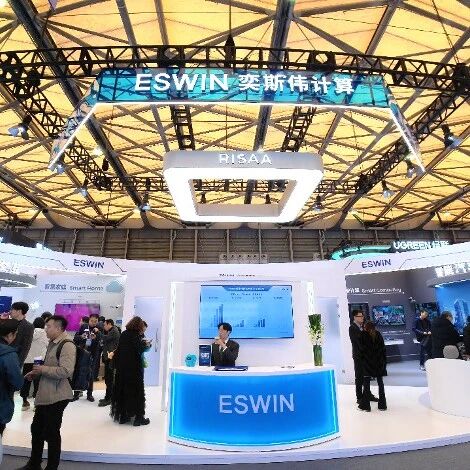
Core Viewpoint - The article highlights the innovative technology and solutions provided by Yiswei Computing, focusing on the integration of RISC-V and AI technologies into everyday consumer life through various applications and products [2][12]. Group 1: Product and Technology Showcase - Yiswei Computing showcased its RISAA ecological technology platform at AWE 2026, emphasizing its full-stack collaborative capabilities in RISC-V and AI technology [2]. - The company presented multiple end products and solutions, including applications for TPV AOC gaming monitors, Tineco floor cleaners, Daikin controllers, and AI companion robots, aimed at accelerating product deployment for customers and partners [2]. - The RISC-V flexible OLED underwater touch solution won the 2026 AWE Aiplan Award, demonstrating the company's technical strength and innovation [4]. Group 2: Smart Home Solutions - In the smart home segment, Yiswei Computing introduced products and solutions based on RISC-V and AI for home office, entertainment, and living, facilitating digital transformation and intelligent upgrades in smart homes [6]. Group 3: Intelligent Computing and Automotive Solutions - The intelligent computing segment featured RISC-V-based cloud and edge computing hardware and system solutions, including acceleration cards and AI model local deployment, aimed at enhancing smart applications in data centers and education [8]. - In the intelligent automotive sector, Yiswei Computing showcased its chip products and solutions for immersive smart cockpit experiences, covering various applications such as electronic rearview mirrors and head-up displays, highlighting the reliability and technical advantages of RISC-V automotive-grade chips [10]. Group 4: Future Directions - Yiswei Computing plans to continue its focus on RISC-V and AI technology innovation, enhancing the RISAA ecological technology platform and expanding its product offerings across diverse application scenarios [12].
富士康:与HCL印度合资半导体封装厂动工 多基地布局完善全球供应链
Zhong Guo Qi Che Bao Wang· 2026-02-27 10:41
Group 1 - Foxconn and HCL have officially commenced construction of a semiconductor packaging plant in Uttar Pradesh, India, marking a significant milestone in India's semiconductor assembly and testing initiative [1] - The joint venture has a total investment of 370 billion rupees (approximately 40.78 billion USD), with a planned monthly production capacity of 20,000 wafers, set to begin commercial production in 2027 [2] - The factory will primarily produce display driver chips, with an expected monthly output of around 36 million units, significantly enhancing India's semiconductor packaging capabilities [2] Group 2 - Foxconn's semiconductor strategy is characterized by a "China-centric, multi-regional collaboration" model, with its Chinese base serving as the core for technology development and capacity [3] - The Qingdao facility in China has seen continuous investment, with a total of over 330 million yuan in capital increases planned for 2024 and 2025, focusing on advanced packaging for various high-tech applications [4] - In Vietnam, Foxconn has invested over 3.2 billion USD since entering the market, with plans for further investment to enhance capacity and technological strength [5][6] Group 3 - The establishment of the semiconductor packaging plant in India complements Foxconn's global supply chain strategy, which integrates advanced packaging in China, manufacturing in Vietnam, and local production in India [7] - This multi-base collaboration not only strengthens Foxconn's core competitiveness but also aligns with global tech firms' strategies to diversify production and mitigate supply chain risks [7]
被AI“偷”走的显示预算,存储涨价潮对LCD面板行业影响
WitsView睿智显示· 2026-02-21 04:58
Core Viewpoint - The global semiconductor market is experiencing a significant surge in demand for storage chips due to the explosive growth of AI servers and high-performance computing (HPC), leading to shortages and record-high prices [1][5]. Group 1: Market Trends - Since September 2025, the prices of DRAM and NAND flash memory have increased by over 300% [1]. - For Q1 2026, NAND flash contract prices are expected to rise by 55% to 60%, while general DRAM contract prices are projected to increase by 90% to 95% [1][3]. - The revenue growth momentum in the storage market is anticipated to continue until 2027, driven by sustained demand from AI computing and enterprise storage [5]. Group 2: Supply Chain Dynamics - The production of display driver chips, essential for LCD panel manufacturing, is facing structural adjustments due to the rising prices of storage chips, which account for 15% to 20% of LCD panel costs [6]. - The shift in wafer foundry capacity towards higher-margin AI-related chips has led to a narrowing of the production window for display driver chips, resulting in an expanded supply-demand gap and longer delivery times [6]. - Despite the global contraction in 8-inch wafer capacity, the expansion of 12-inch wafer capacity in mainland China is expected to alleviate the supply constraints for display driver chips in the long term [7]. Group 3: Demand Side Effects - In the short term, the rising prices of storage components have led to an unusual "off-season not off" phenomenon, with manufacturers increasing panel inventory to hedge against future price hikes [8]. - The price of TV panels is expected to rise in January 2026, with increases of $1 for various sizes [9]. - The demand for LCD panels is projected to rise due to the anticipated price increases, although long-term pressures from high storage prices and a weak macroeconomic environment may suppress overall demand [11]. Group 4: Future Outlook - The "butterfly effect" caused by rising storage prices is altering the supply and demand dynamics in the global LCD panel industry, with short-term price increases driven by inventory accumulation and production capacity shifts [12]. - Long-term supply constraints are expected to ease as mainland China's display driver capacity is released, but high storage prices may continue to suppress overall demand for display panels [12].

天德钰:电子价签已实现规模化出货
WitsView睿智显示· 2026-02-10 04:01
Core Viewpoint - The company is well-positioned to manage cost fluctuations and maintain growth in the display driver chip market, particularly through its focus on stable application areas and ongoing product development in response to customer needs [1][2][3]. Group 1: Impact of Storage Chip Price Fluctuations - Recent increases in storage chip prices are not expected to significantly impact the company's display driver chip business, as its primary applications are in the maintenance and replacement market, where customers prioritize stability and compatibility over price sensitivity [1]. - The company's reliance on storage components is limited, allowing it to manage cost fluctuations effectively through supply chain management and product structure optimization [1]. Group 2: Electronic Price Tags Business Development - The electronic price tag segment has seen robust growth driven by retail digitalization, with the company achieving scale in product shipments to retail and supermarket applications [1]. - The company plans to continue product iteration and application expansion in response to evolving customer digitalization needs [1]. Group 3: Business Cycle Resilience - The company's focus on the display driver niche, particularly in stable demand areas like maintenance and electronic price tags, provides a buffer against the volatility of the semiconductor industry cycle [2]. - Demand in these areas is more closely tied to the existing scale of terminal devices and the penetration rate of applications, reducing sensitivity to new product cycles [2]. Group 4: Future Product and Market Expansion - The company aims to enhance product performance and expand application scenarios in the display driver chip sector, while also monitoring new technical demands in emerging application areas [3]. - The strategy involves maintaining stability in existing advantageous application fields while gradually advancing into new markets [3].
投资合肥 | 一文看懂合肥市集成电路发展现状与投资机会前瞻(附集成电路产业现状、空间布局、投资机会分析等)
Qian Zhan Wang· 2026-02-08 02:09
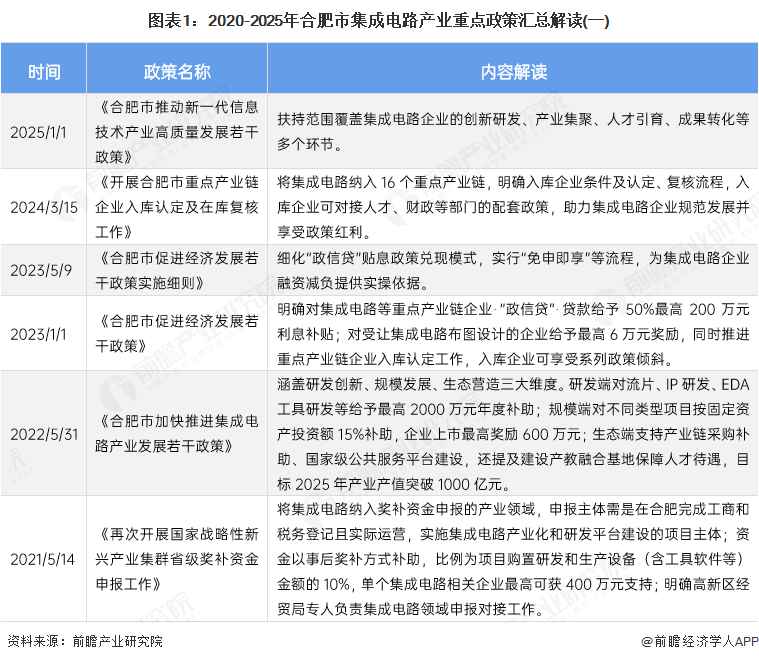
Group 1 - Hefei has transformed its integrated circuit industry from non-existent to a strong presence in ten years, focusing on a four-dimensional development path: leading enterprises, talent foundation, innovation breakthroughs, and ecological empowerment [1] - The city positions the integrated circuit industry as a strategic pillar, aiming to create a world-class industrial cluster by integrating it with new displays and enhancing electronic manufacturing capabilities [1] - Policies support the entire integrated circuit value chain, including R&D subsidies, project investment grants, and market procurement assistance [1] Group 2 - By 2025, only key industrial areas like the High-tech Zone and Economic Development Zone have issued multiple integrated circuit policies, focusing on design innovation and wafer manufacturing [2] - As of Q3 2025, Hefei has gathered over 450 integrated circuit companies and 33,000 professionals, with the High-tech Zone having the most companies and a well-structured industrial chain [9] Group 3 - Hefei's integrated circuit industry has achieved significant growth, with a scale exceeding 50 billion RMB and an annual growth rate of over 20% as of the end of 2024 [11] - The production of integrated circuits reached 2.081 billion units in 2024, with dynamic memory chips and display driver chips holding leading global market shares [12] Group 4 - During the 14th Five-Year Plan (2021-2025), Hefei aims to ensure comprehensive support across all stages of the integrated circuit industry, with a focus on collaborative development [17] - By November 2025, Hefei has attracted 7 listed companies, 6 unicorns, and 20 national-level "specialized and innovative" small giants in the integrated circuit sector [19] Group 5 - The integrated circuit industry in Hefei is characterized by a "leading enterprise" model, with over 200 key companies concentrated in the High-tech Zone, accounting for over 60% of the total [21] - The industrial layout is centered around the High-tech Zone, Economic Development Zone, and New Station High-tech Zone, with a balanced distribution and strong agglomeration effects [22] Group 6 - Hefei's integrated circuit industry financing is robust, with numerous financing events indicating strong capital interest in semiconductor manufacturers and design/testing companies [26] - Recent financing events include several rounds with amounts reaching tens of millions of RMB, reflecting a healthy investment climate [27] Group 7 - Hefei's differentiated layout includes "high-tech design, economic development manufacturing, new station testing, and county-level support," aiming for a collaborative industrial ecosystem [30] - The city has been approved as the first cross-strait integrated circuit industry cooperation pilot zone and has established a provincial investment fund of 30 billion RMB [33]
天德钰:将继续围绕显示驱动芯片主业 推进产品性能优化和应用场景拓展
Zheng Quan Ri Bao Wang· 2026-02-06 14:14
Core Viewpoint - The company will continue to focus on its core business of display driver chips while adapting to changes in downstream application demands [1] Group 1 - The company aims to optimize product performance and expand application scenarios [1] - The company intends to maintain stable development in existing advantageous application areas while also paying attention to the technical requirements of new application scenarios [1] - The company plans to advance its related layout steadily and cautiously [1]

天德钰:公司显示驱动芯片的主要应用场景集中在存量设备维修及替换市场
Zheng Quan Ri Bao Wang· 2026-02-06 12:44
Core Viewpoint - The company, Tiande Yu, focuses on the maintenance and replacement market for display driver chips, emphasizing product stability, compatibility, and delivery assurance over sensitivity to upstream storage price fluctuations [1] Group 1 - The main application scenarios for the company's display driver chips are concentrated in the existing equipment maintenance and replacement market [1] - Downstream customers prioritize product stability, compatibility, and delivery assurance, showing relatively low sensitivity to fluctuations in upstream storage prices [1] - The company's product solutions have limited direct dependence on storage components, making the impact of raw material price fluctuations on overall operating costs relatively controllable [1] Group 2 - The company plans to continue optimizing supply chain management and product structure to mitigate the effects of external price fluctuations [1]
天德钰:电子价签是公司显示驱动芯片的重要应用方向之一
Zheng Quan Ri Bao Zhi Sheng· 2026-02-06 12:09
Core Viewpoint - The company has successfully scaled the production of electronic price tags, which are a significant application of its display driver chips, and continues to serve retail and supermarket sectors [1] Group 1: Product Development and Market Demand - The electronic price tag products have achieved substantial shipment volumes and are experiencing steady growth due to the digital upgrade demands from downstream customers [1] - The company plans to continuously advance product iterations and expand applications based on changing customer needs [1]
OLED驱动芯片大厂发生火灾
Xin Lang Cai Jing· 2026-02-05 12:25
Core Viewpoint - The fire incident at Suzhou Qizhong's Fab2 has caused significant damage to facilities and equipment, leading to a temporary halt in production. The company has insurance coverage for the damages and is working on recovery plans to resume operations by July 2026 [2][4][11]. Insurance Coverage - The company has a property insurance policy with a coverage amount of RMB 2,916,494,109.07, which includes various categories such as buildings, machinery, and goods [2][10]. - The insurance covers damages caused by natural disasters and unforeseen accidents, including fire and explosions [2][9]. Impact on Production and Recovery Plans - The fire has resulted in damage to production equipment, cleanroom facilities, and energy supply pipelines, leading to a temporary shutdown of the manufacturing line [4][11]. - The company is coordinating with equipment suppliers for repairs and prioritizing the cleaning and restoration of cleanroom facilities, which is expected to take 2-3 months [4][11]. - After the cleanroom passes fire safety inspections, equipment installation and testing will take an additional 2 months, with production expected to resume in July [4][11]. Customer Communication and Order Management - The company has promptly informed major clients about the incident and the measures being taken to address it. Orders have been shifted to the Hefei factory to maintain delivery schedules [4][12]. - During the transition period, the company plans to relocate some production equipment to Hefei to enhance capacity, aiming to meet customer demand by February [12]. Financial Impact - The temporary halt in production is expected to reduce the projected revenue growth for 2026 by 5-8 percentage points compared to the initial financial budget [5][12].

