
反垄断执法

Search documents
中共国家市场监督管理总局党组关于二十届中央第三轮巡视整改进展情况的通报
Zhong Yang Ji Wei Guo Jia Jian Wei Wang Zhan· 2025-09-22 10:37
Group 1 - The Central Eleventh Inspection Team conducted an inspection of the State Administration for Market Regulation (SAMR) from April 15 to July 20, 2024, and provided feedback on October 18, 2024 [1][2] - The SAMR Party Group has prioritized the implementation of inspection rectification as a significant political task to promote high-quality market regulation and strict governance of the Party [2][3] Group 2 - The SAMR Party Group has taken responsibility for rectification by enhancing theoretical learning and establishing a leadership group to oversee the rectification process [3][4] - A detailed rectification plan has been developed, including a problem list, task list, and responsibility list, with clear deadlines and responsible individuals [3][4] Group 3 - The SAMR has focused on high-quality market regulation by implementing measures to address issues such as excessive packaging, food waste, and gas appliance safety [6][7] - The agency has strengthened food safety and product quality oversight, including the issuance of guidelines and the establishment of a quality safety traceability platform [7][8] Group 4 - Efforts to promote a unified national market include enhancing fair competition, improving the business environment, and strengthening anti-monopoly enforcement capabilities [8][9] - The SAMR has implemented measures to improve regulatory efficiency and compliance, including the development of new guidelines and training programs for regulatory staff [9][10] Group 5 - The SAMR is committed to strict governance of the Party, conducting regular assessments of its responsibilities and implementing measures to address issues of formalism and bureaucracy [10][11] - The agency has focused on building a strong leadership team and enhancing the professional development of its staff through training and performance evaluations [11][12] Group 6 - The SAMR plans to continue its rectification efforts by integrating feedback from inspections and ensuring that completed tasks are verified and documented [20] - The agency aims to transform identified issues into actionable results, enhancing its regulatory capabilities to meet the demands of a large-scale market [20]
【环球财经】文莱宣布加强反垄断执法 禁止滥用市场支配地位
Xin Hua Cai Jing· 2025-08-01 14:04
Core Points - The Brunei Competition Commission (CCBD) has officially implemented Articles 21 and 23 of the Competition Act to strengthen the regulation of anti-competitive behaviors by companies [1] - The Competition Act aims to promote and protect fair market competition, enhance economic efficiency, drive economic development, and safeguard consumer rights [1] - Article 21 prohibits companies with market dominance from engaging in anti-competitive practices such as predatory pricing and exclusive dealings [1] - Article 23 prohibits mergers that may substantially lessen competition, particularly those that create or strengthen market dominance, to avoid price increases or stifle innovation [1] - The Competition Act is crucial for fostering a business-friendly environment and a resilient economy, aligning with Brunei's national development plan "Vision 2035" [1] - Brunei, located in Southeast Asia, has a small population of approximately 346,500 citizens and 26,300 permanent residents, with abundant natural resources like oil and gas, leading to high per capita income and social welfare levels [1]
市场监管总局附条件批准新思科技收购安似科技,光学软件市场份额合计达七成
Jin Rong Jie· 2025-07-14 06:26
Core Viewpoint - The State Administration for Market Regulation has approved the acquisition of Ansys by Synopsys with additional restrictive conditions due to potential anti-competitive effects in key markets [1][2]. Group 1: Company Overview - Synopsys, established in 1986, is a NASDAQ-listed company primarily engaged in EDA software and design IP business [1]. - Ansys, founded in 1970 and also listed on NASDAQ, focuses on digital model simulation and analysis software development [1]. Group 2: Market Analysis - The merger will significantly increase market concentration in the optical software and photonic software markets, with combined market shares of 65-70% for both sectors [1]. - In the optical software market, the Herfindahl-Hirschman Index (HHI) will rise from 2489.69 to 4802.49, an increase of 2312.8 [1]. - The photonic software market will experience a similar concentration change, leading to a dominant market position post-merger [1]. Group 3: Regulatory Concerns - The regulatory body is particularly concerned about the competitive impact in the EDA software market, where Synopsys and Ansys have overlapping interests in seven EDA software markets [2]. - In the RTL power analysis market, the combined market share will reach 70-75%, with the HHI index increasing to 5390 post-transaction [2]. - High technical barriers and lengthy development cycles characterize both optical and photonic software, with development costs ranging from $10 million to $50 million depending on the complexity [2]. Group 4: Regulatory Actions - The market regulator has mandated specific obligations for the merging parties to maintain market competition and prevent abuse of market dominance [2]. - The review process involved consultations with government departments, industry associations, and downstream customers, along with independent economic analysis [2].
市场监管总局附条件批准全日空收购日本货航股权案
news flash· 2025-07-01 07:03
Core Points - The State Administration for Market Regulation has conditionally approved All Nippon Airways' acquisition of Japan Airlines' cargo stake, ensuring fair competition in the China-Japan air cargo service market [1] - The approval is significant for maintaining the stability of regional industrial and supply chains, as air cargo is a crucial link in the economic exchanges between China and Japan [1] - The review process focused on the potential impact of the merger on competition in the air cargo service market between China and Japan, noting that the combined market share of All Nippon Airways and Japan Airlines could negatively affect competition [1] Summary by Sections - **Regulatory Approval**: The acquisition was approved with restrictive conditions to maintain market competition and protect consumer interests [1] - **Market Impact**: The merger could lead to a high combined market share, raising concerns about reduced competition in the air cargo service market [1] - **Commitments by All Nippon Airways**: The company has made several commitments, including continuing existing ground service agreements, not refusing to renew agreements, providing ground services to new entrants, and transferring some flight slots to ensure market openness and competitiveness [1] - **Future Oversight**: The regulatory body will monitor the execution of these commitments to ensure fair competition in the air cargo service market and promote healthy development in the aviation logistics industry [1]
市场监管总局附加限制性条件批准邦吉收购蔚特股权案
news flash· 2025-06-16 09:09
Core Viewpoint - The State Administration for Market Regulation has approved the acquisition of equity in Witte by Bunge Global Limited with additional restrictive conditions to ensure fair competition in the agricultural market [1] Group 1: Acquisition Details - The acquisition involves two major global grain traders, Bunge and Witte, highlighting the significance of this merger in the agricultural sector [1] - The approval process considered the potential impact on global grain markets and the domestic soybean and agricultural product trade in China [1] Group 2: Commitments and Conditions - Bunge and Witte have made five commitments to continue performance, stabilize prices, and ensure supply, which are aimed at maintaining stable supply and reasonable pricing for soybeans and other agricultural products [1] - These commitments are designed to protect the interests of downstream customers and consumers [1] Group 3: Regulatory Implications - The decision reflects the fair, just, and lawful administration of antitrust enforcement by China's regulatory body [1] - It underscores China's important role in maintaining fair competition in the grain trade market [1]

药品领域反垄断执法的立体化突破
Zhong Guo Jing Ji Wang· 2025-06-13 10:31
Core Viewpoint - The enforcement of antitrust laws in the pharmaceutical sector is crucial for maintaining fair competition, ensuring effective drug supply, and protecting patient rights, as demonstrated by the recent administrative penalties exceeding 360 million yuan against four companies involved in price-fixing agreements [1][2]. Group 1: Antitrust Enforcement Actions - The Tianjin Municipal Market Supervision Administration has imposed penalties on four major domestic producers of sodium dehydrocholate, which is essential for producing sodium dehydrocholate injection, for engaging in a price-fixing agreement that disrupted market competition and increased drug prices [2][3]. - The organizer of the price-fixing scheme, identified as Guo, was subjected to a fine of 5 million yuan, highlighting the focus on punishing not just the companies but also the individuals orchestrating such anticompetitive behaviors [3][4]. Group 2: Penalties and Compliance - The four companies were fined 8% of their previous year's sales revenue, reflecting the seriousness of antitrust enforcement and serving as a deterrent against future violations [4][5]. - Individual penalties were also imposed on key personnel from the involved companies, reinforcing the principle of personal accountability in antitrust violations [5][6]. Group 3: Market Impact and Benefits - The enforcement actions are expected to restore competition in the sodium dehydrocholate market, encouraging companies to innovate and improve product quality while reducing costs [10][11]. - The reduction in raw material prices is anticipated to lower production costs for sodium dehydrocholate formulations, benefiting national healthcare and patients by alleviating financial burdens [11][12]. Group 4: Regulatory Improvements - The case emphasizes the need for enhanced regulatory oversight across the pharmaceutical supply chain, including production and sales, to prevent future monopolistic practices [14][15]. - Strengthening investigation and evidence-gathering capabilities is essential for effective antitrust enforcement, ensuring that regulatory bodies can address increasingly complex anticompetitive behaviors [15][16]. - The case also highlights the necessity for refining legal frameworks and enforcement standards to improve transparency and predictability in antitrust actions [16].


垄断原料药遭重罚!业绩下降、再融资不顺的联环药业“雪上加霜”
Bei Jing Shang Bao· 2025-06-11 12:01
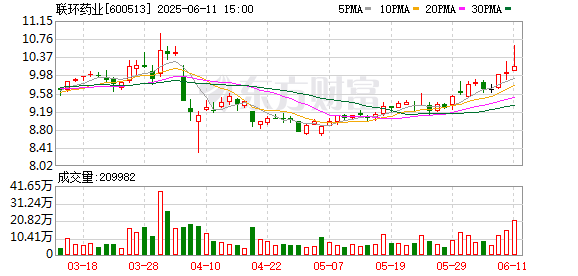
Core Viewpoint - The raw material pharmaceutical sector is under increased regulatory scrutiny due to antitrust actions, with Lianhuan Pharmaceutical facing significant penalties for price manipulation of Dexamethasone Sodium Phosphate, impacting its financial performance and growth prospects [2][9][12]. Regulatory Actions - Lianhuan Pharmaceutical received an administrative penalty from the Tianjin Market Supervision Administration for participating in a price-fixing agreement, resulting in a total fine of 61.0382 million yuan [2][7]. - The fine represents 72.53% of the company's net profit for the last fiscal year, exacerbating its ongoing financial struggles [9][10]. Financial Impact - The penalty includes the confiscation of illegal gains amounting to 17.8992 million yuan and a fine based on 8% of the company's 2023 sales, which was reduced by 30% due to mitigating circumstances [7][9]. - Lianhuan Pharmaceutical's revenue and net profit have been declining for two consecutive years, with projected revenues of approximately 1.955 billion yuan, 2.174 billion yuan, and 2.16 billion yuan from 2022 to 2024, and corresponding net profits of 141 million yuan, 135 million yuan, and 84 million yuan [10][11]. Company Response - Following the incident, Lianhuan Pharmaceutical has taken steps to comply with antitrust regulations, including terminating improper practices and enhancing its compliance management system [8][12]. - The company has also faced challenges in raising capital, with two planned financing efforts being aborted, leading to a shift towards debt financing for its R&D projects [13][14]. Market Context - The case reflects a broader trend of intensified antitrust enforcement in China, particularly in the pharmaceutical sector, aimed at maintaining fair competition and protecting consumer interests [12].

2024反垄断执法:办结11件市场垄断案,罚没1.19亿
Nan Fang Du Shi Bao· 2025-06-06 13:41
Core Points - The National Anti-Monopoly Bureau released the "2024 Annual Report on Anti-Monopoly Law Enforcement in China," highlighting the enforcement actions taken against monopolistic practices and market dominance abuse [1][2] Summary by Categories Anti-Monopoly Enforcement - In 2024, 11 cases of monopoly agreements and abuse of market dominance were concluded, with a total penalty of 119 million yuan [2] - The report emphasized ongoing investigations into monopolistic agreements, particularly in the motor vehicle inspection sector, with significant penalties imposed on multiple companies [3] Digital Economy Regulation - The report noted the ongoing normalization of anti-monopoly regulation in the digital economy, with specific focus on Alibaba and Meituan's compliance with rectification measures [4] Operator Concentration Oversight - The average review time for operator concentration cases was reduced to 24.7 days, down by one day from the previous year, with 643 cases processed in total [5][6] - The manufacturing sector accounted for the highest number of concentration cases, with 213 cases, representing 34% of the total [5] Administrative Monopoly - A total of 72 cases of abuse of administrative power to exclude or restrict competition were filed, with 57 cases concluded [8] - The report highlighted efforts to combat local protectionism and market segmentation, with a significant increase in the number of cases filed and concluded compared to the previous year [8] Industry Focus Areas - The anti-monopoly enforcement agency is paying close attention to the cultural entertainment ticketing market, patent database market, and the new energy vehicle charging and swapping industry [9] - The report suggested enhancing market regulation in the new energy vehicle charging sector and addressing issues related to pricing and service standards [10]
最高达62%!涉案药品降价
第一财经· 2025-06-06 13:22
Core Viewpoint - The article discusses the significant enforcement of antitrust regulations in the pharmaceutical industry in China, highlighting the impact on both domestic and multinational pharmaceutical companies, as well as the resulting price reductions for involved drugs [1][2]. Summary by Sections Antitrust Enforcement Overview - The State Administration for Market Regulation (SAMR) reported a strong focus on antitrust enforcement in the pharmaceutical sector, with a notable reduction in drug prices by an average of 62% due to regulatory actions [1][2][6]. - In 2023, 27 cases of monopolistic agreements and abuse of market dominance were investigated, with the pharmaceutical sector accounting for approximately 25.9% of these cases [4]. Key Features of Antitrust Actions - The enforcement actions are characterized by significant results, legal framework improvements, and encouragement of self-regulation among pharmaceutical companies [2]. - The report indicates that the SAMR has revised antitrust guidelines related to pharmaceuticals, aiming for long-term governance mechanisms [2][9]. Regional Enforcement Activities - Various provinces have actively engaged in antitrust investigations, with notable cases in Tianjin, Shanghai, Jiangsu, and Zhejiang, leading to substantial price reductions for specific drugs [6][10]. - The article notes that nearly half of the provinces in China have identified "pharmaceutical" or "medical services" as key areas in their antitrust enforcement efforts [6]. Future Directions - The SAMR plans to continue enhancing competition regulation in the pharmaceutical sector, focusing on eliminating administrative power abuses and promoting fair competition [10]. - The upcoming three-year action plan (2025-2027) aims to strengthen antitrust enforcement in consumer markets, particularly in the pharmaceutical field [10].

去年医药反垄断执法成效显著,涉案药品降价最高达62%
Di Yi Cai Jing· 2025-06-06 12:34
Core Viewpoint - The focus of antitrust enforcement remains on the pharmaceutical industry, which is characterized by high monopoly occurrences and is crucial for public welfare [1][4]. Group 1: Antitrust Enforcement in the Pharmaceutical Sector - The State Administration for Market Regulation (SAMR) reported significant progress in antitrust enforcement, particularly in the pharmaceutical sector, with a 62% price reduction for involved drugs [1][2][4]. - In the past year, 27 cases of monopoly agreements and abuse of market dominance were investigated, with the pharmaceutical sector accounting for approximately 25.9% of these cases [3]. - A total of 21.63 billion yuan in fines was imposed, with 17.7 billion yuan (81.8%) coming from the pharmaceutical sector [3]. Group 2: Characteristics of Antitrust Enforcement - Antitrust enforcement in the pharmaceutical sector has exhibited three main characteristics: significant enforcement results leading to substantial drug price reductions, promotion of legal framework improvements, and encouragement of self-regulation among pharmaceutical companies [2][4]. - The report highlights that local antitrust agencies have also been active, with nearly half of the provinces addressing pharmaceutical or medical service issues in their enforcement efforts [4]. Group 3: Legal and Regulatory Developments - The report includes the first administrative litigation case regarding merger reviews since the implementation of the Antitrust Law in 2008, emphasizing the importance of addressing competition issues arising from mergers [7]. - Efforts to combat the abuse of administrative power in the healthcare sector are ongoing, with a focus on preventing local governments from favoring local enterprises over others [6][7]. Group 4: Future Directions and Initiatives - The SAMR plans to continue its focus on antitrust enforcement in key sectors, including pharmaceuticals, and will conduct special actions to address the abuse of administrative power and promote fair competition [8]. - A three-year action plan (2025-2027) has been announced to enhance antitrust enforcement in consumer markets, particularly targeting monopolistic behaviors in the pharmaceutical sector [8].