国内国际双循环

Search documents
年货班列驰山海 万里春风暖万家
Xin Lang Cai Jing· 2026-02-11 06:25
Core Viewpoint - The Western Land-Sea New Corridor's New Year goods trains are enhancing logistics efficiency and connecting domestic and international markets, reflecting China's commitment to open development and mutual benefit [1][2][3] Group 1: Logistics Efficiency - The New Year goods trains enable rapid customs clearance, achieving a 3-hour processing time and seamless transfer from ship to truck, with a total delivery time of 72 hours to inland areas [1] - The volume of goods transported via the corridor is projected to reach 1.425 million TEUs by 2025, representing a growth of approximately 420 times since its inception [1] - The corridor currently handles over 1,300 types of goods, serving 18 provinces and reaching 584 ports in 127 countries and regions [1] Group 2: Economic Development - The New Year goods trains serve as a vital economic corridor, reducing logistics costs by 28% and facilitating the formation of an industrial chain that connects overseas raw materials with domestic processing [2] - Local products such as Gansu onions, Chongqing lemons, and Guizhou tea are being exported, while products like Liuzhou snail noodles are reaching over 30 countries and regions [2] - The corridor promotes a dual circulation model, enhancing regional economic vitality and transforming inland areas into open frontiers [2] Group 3: Historical and Future Context - The initiative reflects a historical continuity of connectivity from the ancient Silk Road to the modern steel corridor, emphasizing the spirit of cooperation and mutual benefit [2] - The corridor is a strategic move for the development of the western region and a practical implementation of the high-quality Belt and Road Initiative [2] - The New Year goods trains symbolize the aspirations for family reunions, industrial prosperity, and national rejuvenation, contributing to a new chapter in China's modernization path [3]
全市县处级主要领导干部学习贯彻党的二十届四中全会精神研讨班开班式举行
Zheng Zhou Ri Bao· 2026-02-11 00:43
Group 1 - The core message emphasizes the importance of studying and implementing the spirit of the 20th Central Committee's Fourth Plenary Session and General Secretary Xi Jinping's important speeches to unify thoughts and strengthen responsibilities in promoting modernization in the region [1][2] - The city aims to transform the learning outcomes into strong motivation and practical actions for the implementation of the 14th Five-Year Plan, aligning with the actual development of Zhengzhou [2][3] Group 2 - The leadership highlights the need to recognize the overall situation and actively seize opportunities amidst the new technological revolution and industrial transformation, as well as the complex global changes [3] - Key focus areas include building a dual circulation hub, accelerating the development of a modern industrial system centered on advanced manufacturing, and promoting high-quality development [3] - There is an emphasis on cultural prosperity, environmental protection, and improving people's livelihoods while enhancing social governance and party leadership [3]
商务部研究院彭波:发展“中国人经济”是突破增长瓶颈的关键
2 1 Shi Ji Jing Ji Bao Dao· 2026-02-10 23:09
Core Concept - The development of the "Chinese Economy" is a key strategy for China to overcome growth bottlenecks, facilitating bypassing trade barriers and addressing rising domestic factor costs through global resource allocation [1][4]. Group 1: Understanding "Chinese Economy" - The term "Chinese Economy" (GNI) emphasizes wealth and value creation by Chinese nationals and enterprises globally, shifting focus from domestic production (GDP) to global operations [2]. - This transition signifies a strategic elevation from "producing in China" to "operating globally," allowing Chinese enterprises to allocate resources and create value worldwide while benefiting domestic growth [2]. Group 2: Implications for the 14th Five-Year Plan - The 14th Five-Year Plan indicates a shift towards a dual circulation model of "capital going abroad + global creation + value return," emphasizing the importance of global supply chain control and cross-border governance [3]. Group 3: Strategic Value in Global Economic Restructuring - Developing the "Chinese Economy" is crucial for navigating the current global economic landscape characterized by regionalization and diversification, helping to stabilize external demand and mitigate domestic cost pressures [4]. - This model transforms Chinese enterprises from passive rule-takers to active chain leaders, enhancing their bargaining power in international supply chains and fostering innovation and new industries [4]. Group 4: Global Operations Rooted in China - The operational model of "revenue overseas, roots in China" leverages China's robust supply chain and manufacturing capabilities while mitigating market risks through diversified global revenue streams [6]. - This approach demonstrates that globalization can strengthen domestic manufacturing and R&D, serving as a best practice for upgrading domestic industries [6]. Group 5: Key Capabilities for Sustainable Globalization - Globalized enterprises must develop systematic capabilities in modern governance, cultural integration, ecosystem empowerment, and innovation compliance to effectively embody the "Chinese Economy" [7]. Group 6: "China + N" Resource Configuration - The "China + N" resource configuration model exemplifies successful practices of the "Chinese Economy," emphasizing the importance of maintaining core manufacturing and R&D in China while expanding global market reach [8][9]. - This model promotes a dual empowerment mechanism, linking domestic advantages with global resources to enhance competitiveness and operational efficiency [8]. Group 7: Ecological Expansion through Leading Enterprises - The "ecological expansion" led by chain enterprises is vital for enhancing the overall network of the "Chinese Economy," fostering collaboration among domestic suppliers and reducing barriers for smaller enterprises [10]. - This approach encourages the optimization of products and services across the supply chain, driving high-end upgrades and reinforcing the industrial foundation of the "Chinese Economy" [10].
GDP超1100亿!东莞长安“二次创业”,提出今年新目标
Nan Fang Du Shi Bao· 2026-02-10 13:05
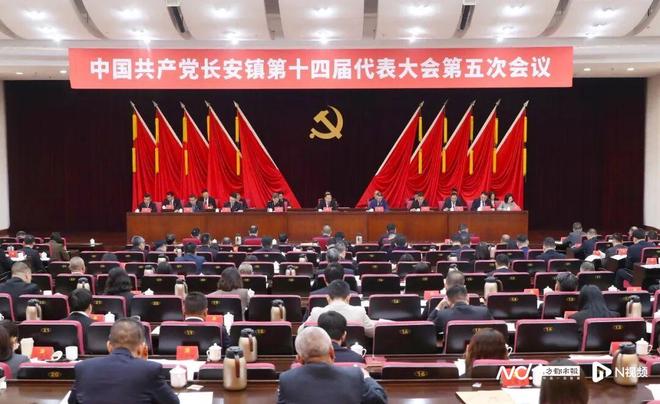
Core Viewpoint - The Long'an Town Party Committee's meeting outlined the economic goals and strategic initiatives for 2026, emphasizing the importance of integrating into the Guangdong-Hong Kong-Macao Greater Bay Area and enhancing the local economy through various development strategies [2][3][5]. Economic Performance - In 2025, Long'an Town achieved a GDP exceeding 110 billion yuan, marking a year-on-year growth of 5.4% [2][3]. - The town added over 28,000 market entities, bringing the total to 175,000, ranking first among all towns and streets in the city [2][3]. Strategic Goals for 2026 - The economic growth target for Long'an Town in 2026 is set at 5% [5]. - The focus will be on six key areas to achieve the annual goals, including infrastructure development, demand expansion, industrial optimization, urban-rural coordination, social welfare enhancement, and safety resilience [5][7][8][9]. Infrastructure and Connectivity - Emphasis on enhancing infrastructure connectivity with core cities in the Greater Bay Area, including the promotion of rapid transport links and public transport integration [7]. - Strategic collaboration with major platforms like the Binhai Bay New Area and Songshan Lake Science City to enhance regional synergies [7]. Demand Expansion Initiatives - Plans to stimulate effective demand through investment and consumption strategies, including innovative financing models and enhancing the consumer experience in public spaces [7][8]. - Focus on maintaining a robust foreign trade and investment base, particularly in the machinery and electronics sectors [7]. Industrial Development - Commitment to upgrading traditional industries and fostering emerging sectors, with a focus on machine vision and new energy industries [8]. - Implementation of quality and brand strategies to transition from manufacturing to intelligent and creative production [8]. Urban-Rural Coordination - Initiatives to optimize land use and promote coordinated development across urban and rural areas, enhancing living and working environments [9]. - Support for community economic development and innovative operational models [9]. Social Welfare and Safety - Strengthening social security systems and improving public service quality, particularly in underserved areas [9]. - Enhancing public safety governance and implementing advanced technology in community management [9].


扩容口岸免税店,释放消费新活力
Sou Hu Cai Jing· 2026-02-10 01:38
Core Insights - The recent policy by the Ministry of Finance and other departments to expand duty-free shops at ports is a structural optimization of the duty-free retail system and a significant measure to boost consumption in the new development pattern, reflecting China's commitment to high-level opening-up [1][4] Group 1: Policy and Structural Changes - The establishment of 41 new duty-free shops at ports addresses the uneven geographical distribution and insufficient supply of duty-free services, particularly in central and western regions of China [1][2] - The new duty-free shops will complement the existing 11 shops, creating a network that better matches resources with passenger flow and demand [1][3] Group 2: Consumer Behavior and Market Dynamics - The expansion of duty-free shops enhances the accessibility and convenience of duty-free shopping for inbound travelers, effectively redirecting consumption that would have occurred overseas back to domestic ports [2][3] - This initiative aims to reduce reliance on overseas shopping and promote domestic consumption, thereby transforming international purchasing power into a driving force for the domestic market [2][3] Group 3: Economic Impact and Development - The strategic layout and expansion of duty-free shops are expected to activate specific consumption scenarios, release consumer potential, and promote the mutual reinforcement of domestic and international dual circulation [3][4] - Duty-free shops, as key nodes in the airport and port economy, can stimulate the development of related industries such as aviation, logistics, tourism, and hospitality, injecting new vitality into the regional economy [3][4] Group 4: International Trade and Cooperation - The optimization and expansion of the duty-free sector exemplify China's commitment to high-level opening-up and alignment with international trade standards, enhancing the convenience of trade and investment [4] - This initiative provides a more efficient platform for high-quality goods from various countries to enter the Chinese market, meeting consumer demand and showcasing China's willingness to share development opportunities with the world [4]
怡亚通:公司将持续深化进口供应链服务能力
Zheng Quan Ri Bao Zhi Sheng· 2026-02-09 13:09
Core Viewpoint - The company, Yiyaton, is leveraging its platforms to provide comprehensive supply chain services for global enterprises, facilitating the import of high-quality products into the Chinese market [1] Group 1: Supply Chain Services - Yiyaton utilizes its subsidiary, Lianyi International, to offer cross-border logistics, customs clearance, bonded warehousing, and channel distribution services from the point of origin to Chinese consumers [1] - The company has established a deep distribution network across China and digital platforms like Yitong Tianxia to support brand operation, marketing, and localized empowerment services for global brands such as Philips, Friesland, and Danone [1] Group 2: Strategic Participation - Yiyaton has actively participated in the China International Import Expo for several years, acting as a significant purchaser and forming strategic agreements with global partners [1] - The company aims to facilitate precise connections between global quality brands and the Chinese market through its participation in the expo, supporting the national strategy to expand imports and share the Chinese market [1] Group 3: Future Development - The company plans to continue enhancing its import supply chain capabilities to build efficient supply chain bridges for more high-quality products from various countries entering the Chinese market [1] - Yiyaton's efforts align with the new development pattern of domestic and international dual circulation [1]

中欧班列物流集结中心的数智灯火
Ke Ji Ri Bao· 2026-02-09 06:17
Core Insights - The Dongjia Town Railway Logistics Park has transformed into a smart logistics hub, enhancing the efficiency of cargo transport and trade activation through technology [1][4][6] Group 1: Logistics Park Development - The Dongjia Town Railway Logistics Park, located in Jinan, Shandong Province, addresses the logistical challenges faced by cities along the Yellow River, which previously struggled with high costs and slow transit times for bulk cargo [3] - The logistics park serves as a crucial connection point for land and sea transport, facilitating the rapid assembly of China-Europe freight trains and sea-rail intermodal services [3] Group 2: Smart Transformation - The logistics park has accelerated its smart transformation, integrating an intelligent control platform that enhances operational efficiency by streamlining processes and improving data integration among various stakeholders [4][6] - The implementation of smart technologies, such as drones and automated vehicles, has significantly reduced inspection and loading times, with drone inspections decreasing from 60 minutes to 12 minutes per trip [6] Group 3: Operational Efficiency - During the Spring Festival period, the logistics park efficiently handles over 600 containers and nearly 10,000 tons of goods daily, showcasing its capacity for high-volume operations [6] - The optimization of operational processes has led to a 20% increase in overall efficiency, with a reduction in the number of operational roles from four to one, and a zero error rate achieved [6] Group 4: Domestic and International Circulation - The logistics park plays a vital role in activating both domestic and international supply chains, with regular train services transporting goods from Jinan to Budapest and facilitating the return of essential materials to China [8] - By 2025, the Shandong China-Europe freight trains are expected to operate 1,312 outbound trips, with return trips increasing to 47%, marking a 38 percentage point improvement since 2019 [8]
中国对外贸易经济合作企业协会会长童继生:突出自身特色 做好山地经济、山城经济文章
Shang Hai Zheng Quan Bao· 2026-02-08 17:31
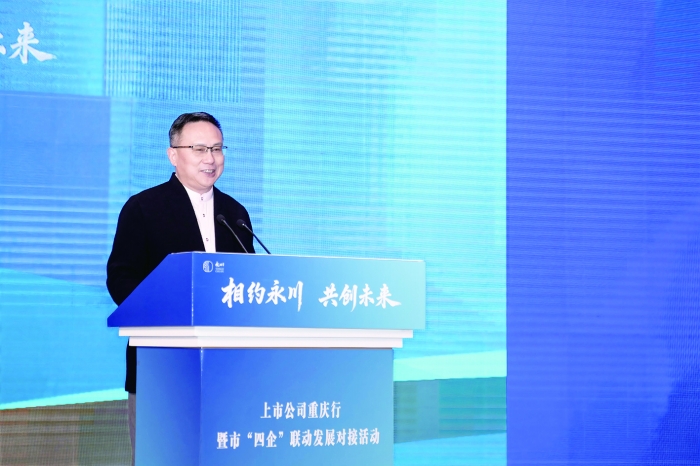
童继生 ◎记者 曾庆怡 2月5日至6日,上市公司重庆行暨重庆市"四企"联动发展对接活动在重庆市永川区举行。会上,中国对 外贸易经济合作企业协会会长童继生发表了题为《因地制宜发展新质生产力,做好山地经济大文章》的 演讲。他表示,永川作为重庆的重要组成部分,可以突出自身特色,做好山地经济、山城经济上的文 章,并且要放眼整个世界来进行自身的枢纽定位,这样才可以捅破现有的发展天花板。 童继生介绍,经过多年发展,中国对外贸易经济合作企业协会现有四大功能、两大任务。四大功能分别 是:服务国家战略,对标国际行业先进,服务会员企业,培育和发现中国的跨国公司和跨国企业家;两 大任务分别是:帮助中国企业走出国门,到海外更好地发展,获取更大的盈利机会和帮助在境外遇困的 中国企业减损止损。 "永川一定要放眼世界才能实现更大的突破。"童继生说,当战略敲定,永川区要逐一瞄准目标市场并进 行精准"打击",不仅叠加战略优势,还要研究叠加战术优势。尤其是要研究如何形成战术优势叠加,保 证打一场"战斗"就获取一场胜利,缴获一批"武器"。 他建议,永川区可以对标瑞士,研究这个山区地貌占比约90%的国家是如何发展经济的。因为永川 有"大城市、大农村 ...
深度关注丨统筹全局开新局
Zhong Yang Ji Wei Guo Jia Jian Wei Wang Zhan· 2026-02-08 00:31
Group 1 - The article emphasizes the importance of balancing development and security, highlighting that development is the foundation of security while security is a condition for development [15][16][18] - It discusses the need for a comprehensive approach to economic and social development, ensuring that both areas progress together without neglecting either [19][20][21] - The article outlines the significance of adapting strategies to local conditions, advocating for tailored approaches in different regions to foster effective development [9][10] Group 2 - The focus on enhancing domestic circulation as a primary driver of economic growth is highlighted, with domestic demand expected to contribute 86.4% to economic growth from 2021 to 2024 [11][12] - The article notes the importance of integrating domestic and international markets, emphasizing the need for a strong domestic market to support high-level openness [13][14] - It stresses the necessity of improving the quality and efficiency of economic circulation through coordinated efforts on both supply and demand sides [14] Group 3 - The article underscores the role of traditional industries in the context of new quality productivity, advocating for their transformation rather than outright abandonment [6][8] - It points out the importance of political supervision in ensuring the effective implementation of policies that support new quality productivity and economic development [3][24] - The need for continuous innovation and adaptation in traditional sectors to maintain competitiveness is emphasized [7][8]
一月份四线齐发 青岛港全球航线网络持续加密
Zheng Quan Ri Bao Zhi Sheng· 2026-02-06 10:14
Core Insights - Qingdao Port has achieved a significant breakthrough in expanding its shipping routes, launching four new container lines in January 2026, bringing the total number of routes to nearly 240, reinforcing its status as the hub with the most and densest northern shipping routes [1][2] Group 1: Shipping Route Expansion - The newly opened routes include the Mediterranean shipping Australia-New Zealand line, COSCO's Red Sea line, and two Southeast Asia lines, enhancing connectivity with over 700 ports in more than 180 countries and regions [1] - The Red Sea line supports the "Belt and Road" initiative, connecting key ports in the Middle East and Africa, facilitating cross-border cooperation in industries such as energy and new energy vehicles [1] - The Australia-New Zealand line strengthens trade relations between China and Australia, enabling direct access to core ports and promoting the export of advantageous industries [1] - The Southeast Asia line aims to activate the RCEP regional cooperation benefits, enhancing trade in electronic products and agricultural products while integrating regional industrial chains [1] Group 2: Operational Strengths - Qingdao Port is recognized as China's second-largest foreign trade port and the largest export port in the Yellow River basin, benefiting from significant geographical advantages [2] - The port has established a vast "golden channel" through 56 inland ports and 86 sea-rail intermodal trains, leading the nation in sea-rail intermodal container volume for 11 consecutive years [2] - Qingdao Port operates a world-leading fully automated container terminal and has set 13 world records for loading and unloading efficiency [2] - The port's business environment continues to improve, with a smart supervision model developed in collaboration with customs, earning the highest star rating for cross-border trade business environment for five consecutive years [2] Group 3: Future Outlook - The opening of new shipping routes signifies not only an increase in container volume but also an elevation in service capabilities, providing robust logistics support for foreign trade enterprises to explore emerging markets and optimize export structures [2] - Qingdao Port aims to continue optimizing its global route network and enhancing comprehensive service efficiency, positioning itself as a key hub in supporting national strategic initiatives and contributing to high-quality economic and social development [2]