
国际储备结构优化

Search documents
中国人民银行黄金储备九连增
Sou Hu Cai Jing· 2025-08-11 21:13
Core Viewpoint - The People's Bank of China has increased its gold reserves to 73.96 million ounces as of the end of July, marking the ninth consecutive month of accumulation, although the increase has been at a low level for the past five months [1] Group 1: Gold Reserves and Market Trends - The increase in gold reserves is attributed to a decrease in the necessity for the central bank to pause gold accumulation from a cost control perspective, while the demand for gold accumulation rises from the need to optimize international reserve structure [1] - The global average for gold's share in international reserves is around 15%, while China's gold reserves account for only 7% of its total international reserves as of July 2025, indicating a need for continued accumulation of gold reserves and a moderate reduction in U.S. Treasury holdings [1] Group 2: Future Outlook and Predictions - Citigroup, known for its bearish stance on gold, has shifted to a bullish outlook, raising its three-month gold price forecast from $3,300 to $3,500 per ounce [1] - According to the World Gold Council's latest survey, 95% of central banks surveyed expect an increase in global central bank gold reserves over the next 12 months [1]
央行继续买买买,黄金新信号!
Sou Hu Cai Jing· 2025-08-08 07:56
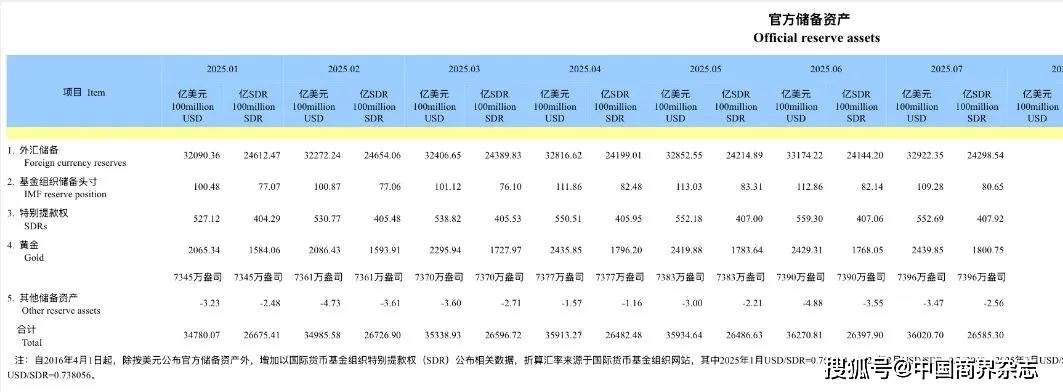
Core Viewpoint - As of the end of July 2025, China's foreign exchange reserves decreased to $32,922 billion, marking a decline of $252 billion from the end of June, ending a six-month upward trend [1][3]. Foreign Exchange Reserves - China's foreign exchange reserves have remained above $32 trillion for 20 consecutive months, but saw a month-on-month decline for the first time in July 2025 [1][3]. - In the first six months of 2025, foreign exchange reserves increased consistently, with increases of $667.9 million, $1.82 billion, $1.3441 billion, $4.1 billion, $360 million, and $3.22 billion respectively [2]. Gold Reserves - The People's Bank of China has increased its gold reserves for the ninth consecutive month, reaching 7,396 million ounces (approximately 2,300.41 tons) by the end of July, an increase of 60,000 ounces (approximately 1.86 tons) [3][8]. - The value of China's gold reserves rose by $1 billion to $243.985 billion, representing 7.41% of total foreign exchange reserves, which is still below the global average of around 15% [3][8]. Market Outlook - International institutions are optimistic about gold prices, with Standard Chartered predicting prices could reach $3,400 per ounce in the next three months and maintain a forecast of $3,500 per ounce over the next 12 months [4]. - The World Gold Council reported that global gold demand reached 1,249 tons in Q2 2025, a 3% year-on-year increase, despite a slowdown in the pace of central bank purchases [4]. Investment Trends - The demand for gold investment is expected to remain strong in the second half of the year due to ongoing geopolitical and economic risks, which may drive investor demand for gold bars and coins [7][8]. - The central bank's strategy to increase gold reserves is seen as a way to optimize international reserve structure and support the internationalization of the Renminbi [8].

央行增持黄金成常态
第一财经· 2025-08-07 23:36
Core Viewpoint - As of the end of July, China's foreign exchange reserves decreased to $32,922 billion, a decline of $252 billion or 0.76% from the end of June, influenced by macroeconomic data and monetary policy expectations from major economies [3][4]. Foreign Exchange Reserves - The decline in foreign exchange reserves is attributed to the significant rise of the US dollar index by 3.39% in July, reversing a five-month downward trend, which led to a decrease in the value of non-dollar assets held in reserves [4]. - The depreciation of non-dollar currencies against the dollar, including a 4.5% drop in the Japanese yen and a 3.2% drop in the euro, further contributed to the reduction in reserves when measured in dollar terms [4]. - Despite the decline, the current level of foreign reserves is considered adequate, with expectations for stability in the future, providing support for the RMB exchange rate and acting as a buffer against external shocks [5]. Gold Reserves - As of the end of July, China's gold reserves increased to 7,396 million ounces, marking the ninth consecutive month of growth [4]. - The ongoing increase in gold reserves is driven by the need to optimize the structure of international reserves, especially in light of changing global political and economic conditions [8][10]. - The price of gold has shown a significant upward trend, rising from $2,657.16 per ounce at the beginning of the year to $3,333.28 per ounce by mid-July, reflecting a cumulative increase of 25.45% [8]. - Global central banks remain significant players in gold purchases, with expectations for continued demand, as they hold a substantial portion of their reserves in gold [9][10]. Economic Outlook - The Chinese economy is expected to maintain a stable growth trajectory supported by macroeconomic policies, despite facing various risks and challenges in the second half of the year [7]. - The political bureau meeting emphasized the need for sustained macroeconomic policy efforts to stabilize foreign trade and investment [6].

7月外储变动受多重因素影响 官方黄金储备九连增
Sou Hu Cai Jing· 2025-08-07 17:10
Group 1 - As of the end of July, China's gold reserves reached 73.96 million ounces, marking an increase of 60,000 ounces month-on-month, with official gold reserves rising for nine consecutive months [2][5] - By the end of July, China's foreign exchange reserves stood at $32,922 billion, a decrease of $25.2 billion from the end of June, representing a decline of 0.76% [1][3] - The decline in foreign exchange reserves is attributed to the rise in the US dollar index, which increased by 3.39% in July, reversing a five-month downward trend [3][4] Group 2 - The increase in gold reserves is seen as a strategic move to optimize the international reserve structure, with a current gold reserve proportion of 7.0%, significantly below the global average of around 15% [5][6] - The World Gold Council reported that central banks globally purchased a net 166 tons of gold in the second quarter, a decrease of 21% year-on-year, but still above the five-year average [6] - Analysts predict that gold prices will continue to rise, with estimates suggesting potential prices of $3,400 per ounce in the next three months and $3,500 per ounce over the next year [5][6]
央行连续第9个月增持黄金,7月末外汇储备规模近3.3万亿美元
Bei Ke Cai Jing· 2025-08-07 15:19
Group 1: Gold Reserves and Demand - The central bank has increased its gold reserves for the ninth consecutive month, reaching 73.96 million ounces by the end of July, with a month-on-month increase of 60,000 ounces [1][3] - Despite the continuous increase, the increment has remained low for the fifth consecutive month, indicating a cautious approach to gold purchases [3] - Global gold demand in Q2 increased by 3% year-on-year to 1,249 tons, with a significant value increase of 45% to $132 billion [5] Group 2: Central Bank Actions and Market Outlook - Central banks remain a crucial pillar of global gold demand, with official gold reserves increasing by 166 tons in Q2, although the pace of purchases has slowed [6] - UBS expects stable demand from central banks in the second half of the year but has revised its annual purchase forecast down from 950-1,000 tons to 900-950 tons [7] - The Chinese central bank is expected to continue increasing gold reserves to optimize its international reserve structure while gradually reducing U.S. Treasury holdings [8] Group 3: Foreign Exchange Reserves - As of the end of July, China's foreign exchange reserves decreased to $32,922 billion, marking a decline of $25.2 billion or 0.76%, ending a six-month upward trend [2][12] - The decline in foreign reserves is attributed to factors such as exchange rate fluctuations and changes in asset prices, with the U.S. dollar index rising by 3.2% [13][14] - The overall financial asset prices in China's foreign reserves increased, which partially offset the impact of the dollar's appreciation [15]
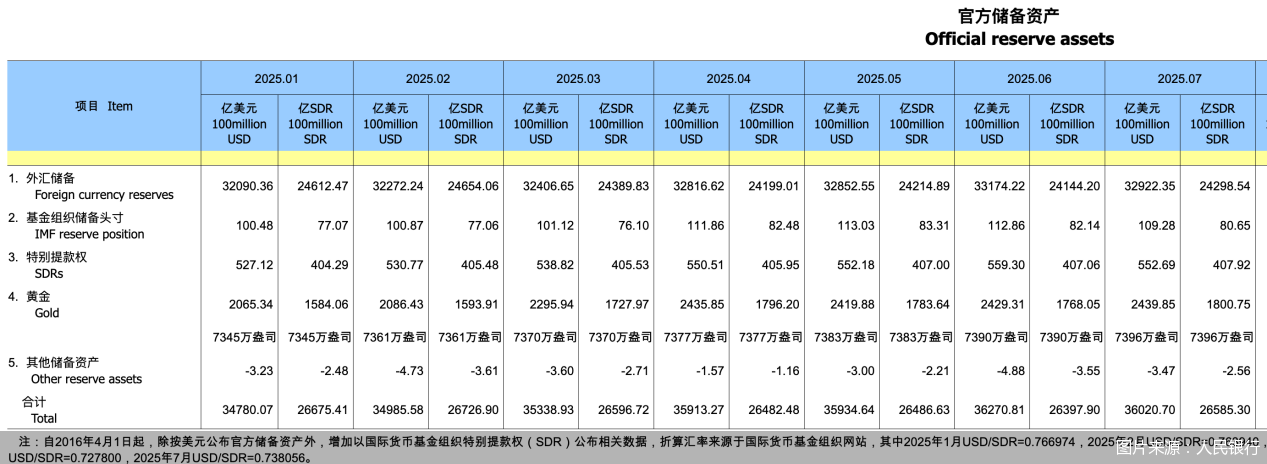
人民银行黄金“九连增” 还会继续增持吗
Bei Jing Shang Bao· 2025-08-07 14:53
新一期外储数据出炉。国家外汇管理局统计数据显示,截至2025年7月末,我国外汇储备规模为32922亿美元,较6月末下降252亿美元,降幅为0.76%。 值得一提的是,人民银行7月末黄金储备报7396万盎司(约2300.41吨),环比增加6万盎司(约1.86吨),已是连续第9个月增持黄金。 资产价格方面,同样受美联储降息推迟影响,以美元标价的已对冲全球债券指数下跌0.1%,对外储形成拖累。温彬认为,在美国与各方关税协议陆续落 地、美股科技板块财报亮眼等因素驱动下,美国股指创下新高,对外储形成支撑。 东方金诚首席宏观分析师王青同样指出,按不同标准测算,当前我国略高于3万亿美元的外储规模都处于适度充裕水平。综合考虑各方面因素,未来外储规 模有望保持基本稳定。在外部环境波动加大的背景下,适度充裕的外储规模将为保持人民币汇率处于合理均衡水平提供重要支撑,也能成为抵御各类潜在外 部冲击的压舱石。 今年7月,我国出口顶住外部压力,通过优化产品结构、贸易伙伴多元化、拓展外贸新动能等方式实现了8%的超预期增长。国内经济在财政、货币、产业、 民生等政策支持下稳健运行。温彬称,下半年,我国经济依然面临不少风险挑战,国内宏观经济将在 ...
央行连续9个月增持黄金,全球央行增持黄金仍是大方向
Feng Huang Wang· 2025-08-07 12:40
此外,最新数据还显示,中国央行连续9个月增持黄金,截至7月末,黄金储备报7396万盎司,环比增加 6万盎司。今日,现货黄金短线突然上涨,一度站上3390美元/盎司。业内专家对智通财经记者指出,预 计下半年央行或从优化国际储备结构角度出发,持续增持黄金储备,适度减持美债。 国家外汇管理局最新数据显示,截至7月末,我国外汇储备规模为32922亿美元,较6月末下降252亿美 元,降幅为0.76%。对于外储规模下降,业内分析师对智通财经记者表示,主要原因是美元指数大幅回 升,导致外储中非美元资产价格下跌。 中国央行连续9个月增持黄金 未来增持仍是大方向 8月7日午后,现货黄金站上3390美元/盎司后小幅回落,截至发稿,COMEX黄金报3395.5美元/盎司。同 日,央行数据显示,7月末黄金储备为7396万盎司,环比增加6万盎司。有市场机构表示,官方黄金储备 连续第九个月增加,但增量连续第五个月处于低位,符合市场预期。 "5月以来国际经贸摩擦态势有所降温,避险需求弱化导致国际金价出现小幅调整,但仍处高位。7月央 行继续增持黄金,主要原因是美国新政府上台后,全球政治、经济形势出现新变化,国际金价有可能在 相当长一段时间内 ...
2025年7月外汇储备、黄金储备数据解读
Dong Fang Jin Cheng· 2025-08-07 11:08
Foreign Exchange Reserves - As of the end of July 2025, China's foreign exchange reserves stood at $329.22 billion, a decrease of $25.2 billion from the end of June, representing a decline of 0.76%[2] - The decline in reserves was primarily due to a 3.39% increase in the US dollar index, which led to a drop in the prices of non-dollar assets within the reserves[2] - The average monthly trading volume of foreign reserve assets from 2017 to 2024 was approximately $8.4 billion, accounting for 0.27% of the total reserves, indicating that changes in reserve balances are mainly influenced by exchange rate adjustments and asset price fluctuations[2] Gold Reserves - As of the end of July 2025, China's official gold reserves increased to 7.396 million ounces, with a month-on-month increase of 60,000 ounces, marking the ninth consecutive month of growth[2] - The increase in gold reserves is driven by the need to optimize the international reserve structure, as the gold proportion in China's reserves is only 1.7%, significantly lower than the global average of around 15%[4] - The central bank's continued accumulation of gold is seen as a strategy to enhance the credibility of the sovereign currency and support the gradual internationalization of the renminbi[4]
央行连续9个月买黄金!专家:可能还会继续
Sou Hu Cai Jing· 2025-08-07 11:01
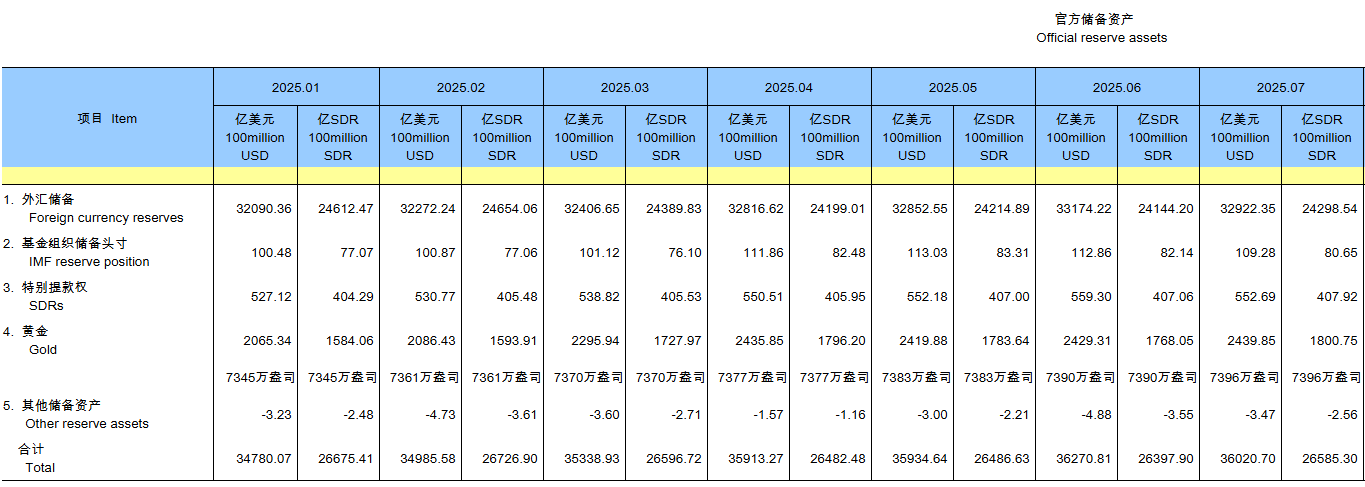
Core Viewpoint - As of the end of July 2025, China's foreign exchange reserves decreased to $329.22 billion, a decline of $25.2 billion or 0.76% from the end of June, while gold reserves increased to 7.396 million ounces, marking the ninth consecutive month of gold accumulation [1][3]. Foreign Exchange Reserves - The foreign exchange reserves stood at $32,090.36 million in January 2025 and fluctuated throughout the months, reaching $32,852.55 million in May before the decline in July [2]. - The decrease in reserves in July was attributed to the rise in the US dollar index, which increased by 3.39% compared to June, impacting the value of non-dollar assets held in reserves [3]. Gold Reserves - China's gold reserves increased by 60,000 ounces in July 2025, although the increment has been low for five consecutive months [1][3]. - The proportion of gold in China's official international reserve assets is 7.0%, which is significantly lower than the global average [3]. Market Dynamics - The international economic and trade tensions have eased since May, leading to a reduction in safe-haven demand and slight adjustments in international gold prices, although they remain high [4]. - There is a growing need to optimize the structure of international reserves by increasing gold holdings and reducing US Treasury securities, as gold serves as a widely accepted final payment method and enhances the credibility of sovereign currency [4].
央行连续8个月扩大黄金储备
Chang Jiang Shang Bao· 2025-07-08 19:49
Group 1 - Gold is recognized as a special asset with multiple attributes, serving as an important component of international reserves for various countries, providing benefits such as hedging, anti-inflation, and long-term value preservation [1] - According to the World Gold Council's survey, over 95% of central banks believe that global central banks will continue to increase their gold holdings in the next 12 months, with nearly 43% planning to increase their gold reserves within the year [1] - As of the end of June, China's gold reserves reached 73.9 million ounces, an increase of 70,000 ounces from the end of May, marking the eighth consecutive month of gold accumulation by the central bank [1] Group 2 - China's foreign exchange reserves rose to $33,174 billion as of the end of June, an increase of $32.2 billion or 0.98% from the end of May, maintaining above $3.2 trillion for 19 consecutive months [2] - The increase in foreign exchange reserves in June was influenced by macroeconomic policies and growth prospects of major economies, alongside a 2.5% decline in the US dollar index, which reached a three-year low [2] - The rise in global financial asset prices, including a 1% increase in the dollar-denominated global bond index and a 5% rise in the S&P 500 index, contributed to the increase in foreign exchange reserves [2]