
基本面因子

Search documents
新趋势?量化私募开始“卷”调研,电子、医药生物、机械设备居前三
Xin Lang Cai Jing· 2025-07-30 03:01
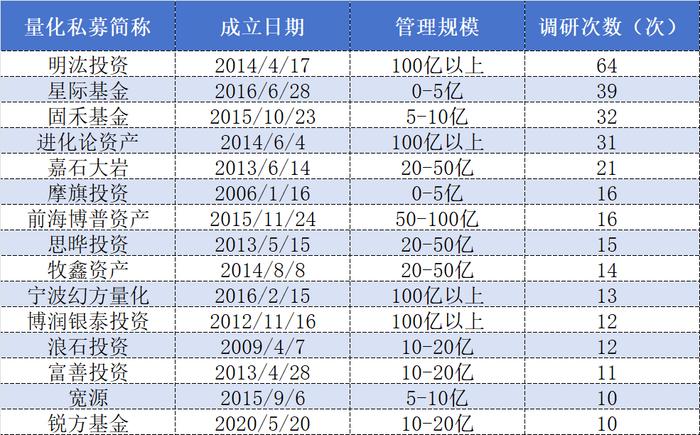
智通财经记者 | 龙力 量化私募开始"卷调研"了? 私募排排网数据显示,截至7月24日,今年以来一共有137家量化私募累计调研达581次,涉及到29个申 万一级行业中的408只个股。其中,有15家量化私募今年以来的调研总次数不少于10次。 | 表 | | --- | 格:今年以来调研总次数不少于10次的量化私募名单(截至7月24日)数据来源:私募排排网、智通财 经整理 排排网集团旗下融智投资FOF基金经理李春瑜对智通财经表示,量化私募机构对上市公司的调研活动明 显升温,这一现象主要受两大因素推动:其一,部分头部量化机构正着手组建主观投研团队,以丰富其 多策略投资体系,增强收益的多元化;其二,在行业管理规模快速扩张的背景下,传统量价因子的超额 收益持续衰减,促使量化私募转向更深入的基本面研究,而上市公司调研正是获取高质量基本面数据的 关键环节。 "量化私募调研升温的核心动因是策略收益来源的多元化需求和市场环境与监管驱动的范式转型。" 尚 艺投资总经理王峥对智通财经表示。 王峥进一步对智通财经解释称,首先传统量价因子因策略同质化与市场有效性提升,超额收益持续衰 减,量化私募可以通过组建主观研究团队,将基本面分析融 ...

中邮因子周报:小市值占优,低波反转显著-20250728
China Post Securities· 2025-07-28 08:30
Quantitative Models and Construction Methods - **Model Name**: GRU **Model Construction Idea**: GRU is used for industry rotation and stock selection based on historical data and market trends[3][5][7] **Model Construction Process**: GRU utilizes gated recurrent units to process sequential data, capturing temporal dependencies in stock price movements and industry performance. It incorporates multiple factors such as momentum, volatility, and valuation metrics to predict future trends[3][5][7] **Model Evaluation**: GRU demonstrates strong performance in multi-factor combinations and industry rotation strategies, with notable differentiation across different stock pools[3][5][7] - **Model Name**: Barra **Model Construction Idea**: Barra focuses on style factors to explain stock returns and risks[14][15][16] **Model Construction Process**: Barra includes multiple style factors such as Beta, Size, Momentum, Volatility, Non-linear Size, Valuation, Liquidity, Profitability, Growth, and Leverage. Each factor is calculated using specific formulas: - **Beta**: Historical beta - **Size**: Natural logarithm of total market capitalization - **Momentum**: Mean of historical excess return series - **Volatility**: $0.74 \times \text{historical excess return volatility} + 0.16 \times \text{cumulative excess return deviation} + 0.1 \times \text{historical residual return volatility}$ - **Non-linear Size**: Cubic transformation of market capitalization - **Valuation**: Reciprocal of price-to-book ratio - **Liquidity**: $0.35 \times \text{monthly turnover rate} + 0.35 \times \text{quarterly turnover rate} + 0.3 \times \text{annual turnover rate}$ - **Profitability**: Weighted combination of analyst forecast earnings-price ratio, reciprocal of cash flow ratio, reciprocal of trailing twelve-month P/E ratio, and forecasted growth rates - **Growth**: Weighted combination of earnings growth rate and revenue growth rate - **Leverage**: Weighted combination of market leverage, book leverage, and debt-to-asset ratio[15] **Model Evaluation**: Barra style factors provide a comprehensive framework for analyzing stock returns, with strong differentiation in multi-factor strategies[14][15][16] Model Backtesting Results - **GRU Model**: - **open1d**: Weekly excess return 0.61%, monthly 1.56%, yearly 7.78% - **close1d**: Weekly excess return 0.02%, monthly 1.45%, yearly 7.28% - **barra1d**: Weekly excess return -0.24%, monthly -0.07%, yearly 3.61% - **barra5d**: Weekly excess return 0.06%, monthly 1.35%, yearly 8.63% - **Multi-factor combination**: Weekly excess return 0.61%, monthly 0.82%, yearly 3.22%[31][32][33] Quantitative Factors and Construction Methods - **Factor Name**: Beta **Factor Construction Idea**: Measures historical sensitivity to market movements[15] **Factor Construction Process**: Calculated as historical beta using regression analysis of stock returns against market returns[15] - **Factor Name**: Size **Factor Construction Idea**: Captures the impact of market capitalization on stock returns[15] **Factor Construction Process**: Natural logarithm of total market capitalization[15] - **Factor Name**: Momentum **Factor Construction Idea**: Reflects the persistence of stock price trends[15] **Factor Construction Process**: Mean of historical excess return series[15] - **Factor Name**: Volatility **Factor Construction Idea**: Measures risk associated with stock price fluctuations[15] **Factor Construction Process**: $0.74 \times \text{historical excess return volatility} + 0.16 \times \text{cumulative excess return deviation} + 0.1 \times \text{historical residual return volatility}$[15] - **Factor Name**: Non-linear Size **Factor Construction Idea**: Captures non-linear effects of market capitalization on returns[15] **Factor Construction Process**: Cubic transformation of market capitalization[15] - **Factor Name**: Valuation **Factor Construction Idea**: Reflects the relative attractiveness of stock prices[15] **Factor Construction Process**: Reciprocal of price-to-book ratio[15] - **Factor Name**: Liquidity **Factor Construction Idea**: Measures ease of trading stocks[15] **Factor Construction Process**: $0.35 \times \text{monthly turnover rate} + 0.35 \times \text{quarterly turnover rate} + 0.3 \times \text{annual turnover rate}$[15] - **Factor Name**: Profitability **Factor Construction Idea**: Captures earnings quality and growth potential[15] **Factor Construction Process**: Weighted combination of analyst forecast earnings-price ratio, reciprocal of cash flow ratio, reciprocal of trailing twelve-month P/E ratio, and forecasted growth rates[15] - **Factor Name**: Growth **Factor Construction Idea**: Reflects revenue and earnings growth trends[15] **Factor Construction Process**: Weighted combination of earnings growth rate and revenue growth rate[15] - **Factor Name**: Leverage **Factor Construction Idea**: Measures financial risk associated with debt levels[15] **Factor Construction Process**: Weighted combination of market leverage, book leverage, and debt-to-asset ratio[15] Factor Backtesting Results - **Beta**: Weekly excess return -0.24%, monthly -0.07%, yearly 3.61%[31][32][33] - **Size**: Weekly excess return 0.02%, monthly 1.45%, yearly 7.28%[31][32][33] - **Momentum**: Weekly excess return 0.61%, monthly 1.56%, yearly 7.78%[31][32][33] - **Volatility**: Weekly excess return 0.06%, monthly 1.35%, yearly 8.63%[31][32][33] - **Non-linear Size**: Weekly excess return 0.61%, monthly 0.82%, yearly 3.22%[31][32][33] - **Valuation**: Weekly excess return 0.61%, monthly 0.82%, yearly 3.22%[31][32][33] - **Liquidity**: Weekly excess return 0.61%, monthly 0.82%, yearly 3.22%[31][32][33] - **Profitability**: Weekly excess return 0.61%, monthly 0.82%, yearly 3.22%[31][32][33] - **Growth**: Weekly excess return 0.61%, monthly 0.82%, yearly 3.22%[31][32][33] - **Leverage**: Weekly excess return 0.61%, monthly 0.82%, yearly 3.22%[31][32][33]
商品量化CTA周度跟踪-20250715
Guo Tou Qi Huo· 2025-07-15 11:08
Report Title - The report is titled "Commodity Quantitative CTA Weekly Tracking" by Guotou Futures [1] Core View - The proportion of long and short positions in commodities has changed little this week. The short positions in the non - ferrous sector have increased, and there are local long signals in the chemical and agricultural product sectors. The cross - sectionally strong sectors are agricultural products and chemicals, while the non - ferrous sector is weak. The overall signal for methanol is neutral, for float glass is long, and for lead is short [3][5][8][9] Industry Investment Rating - Not provided in the report Detailed Summaries Commodity Sector Analysis - **Non - ferrous Sector**: Momentum is marginally declining, short positions are increasing,持仓量 is decreasing, and cross - sectional differentiation is narrowing. Zinc and nickel are relatively weak. Gold's time - series momentum has stabilized, but the trading volume of Shanghai silver continues to rise, and intra - sector differentiation may widen [3] - **Black Sector**: The overall position factor is marginally declining, and the term structure differentiation is narrowing [3] - **Energy and Chemical Sector**: Cross - sectional momentum is differentiated. Ethylene glycol is cross - sectionally strong, while styrene is weak [3] - **Agricultural Product Sector**: The position of oils and fats has slightly declined [3] Factor Performance - **Last Week's and Current Month's Returns**: For the supply factor, last week's return was - 0.03% and the current month's return was - 0.09%; for the demand factor, last week was 0.00% and the current month was - 0.65%; for the inventory factor, last week was 0.02% and the current month was 1.00%; for the spread factor, last week was 0.00% and the current month was 0.35%; the cumulative return of major categories last week was - 0.03% and the current month was - 0.95% [4] Strategy Net Value and Fundamental Factors - **Methanol**: Last week, the supply factor weakened by 0.03%, the inventory factor increased by 0.02%, and the synthetic factor decreased by 0.03%. This week's comprehensive signal is neutral. On the fundamental side, the supply is bearish, demand is bearish, inventory is bullish but weakening, and the spread is bullish [5] - **Float Glass**: Last week, the supply factor strengthened by 1.47%, the demand factor increased by 1.58%, the inventory factor increased by 1.47%, the spread factor weakened by 0.04%, and the synthetic factor increased by 1.04%. This week's comprehensive signal is long. Supply is neutral, demand is neutral, inventory is bullish, and the spread is neutral - bearish [8] - **Lead**: Last week, the supply factor strengthened by 0.52%, the demand factor weakened by 0.40%, the inventory factor strengthened by 0.56%, the spread factor strengthened by 0.51%, and the synthetic factor strengthened by 0.32%. This week's comprehensive signal remains short. Supply is bearish, demand is bullish, inventory is bearish, and the spread is bearish [9] Factor Intensity and Momentum Indicators - **Factor Intensity**: For different factors such as supply, demand, inventory, and spread, their intensities vary in different commodities and time periods (last week and the current week) [4][8][9] - **Momentum Indicators**: Different sectors (black, non - ferrous, energy and chemical, agricultural products, equity index, and precious metals) have different values for momentum time - series, momentum cross - section, term structure, and position indicators [6]
中邮因子周报:反转风格显著,小市值回撤-20250623
China Post Securities· 2025-06-23 07:43
Quantitative Models and Construction 1. Model Name: GRU Model - **Model Construction Idea**: The GRU model integrates fundamental and technical features to predict stock performance[3][19] - **Model Construction Process**: The GRU model is a recurrent neural network (RNN) variant designed to handle sequential data. It uses gating mechanisms to control the flow of information, allowing it to capture temporal dependencies in financial data. Specific details on the input features or training process are not provided in the report[3][19] - **Model Evaluation**: The GRU model shows mixed performance, with significant drawdowns in certain market segments[3][19] 2. Model Name: Barra1d - **Model Construction Idea**: A short-term factor model based on the Barra framework, focusing on daily data[3][19] - **Model Evaluation**: Barra1d exhibits significant drawdowns in multiple market segments, indicating weaker performance[3][19] 3. Model Name: Barra5d - **Model Construction Idea**: A medium-term factor model based on the Barra framework, focusing on 5-day data[3][19] - **Model Evaluation**: Barra5d demonstrates strong performance, achieving positive returns in various market segments[3][19] 4. Model Name: Close1d - **Model Construction Idea**: A short-term model focusing on daily closing prices[3][19] - **Model Evaluation**: Close1d performs well in certain market segments, achieving positive returns[3][19] 5. Model Name: Open1d - **Model Construction Idea**: A short-term model focusing on daily opening prices[3][19] - **Model Evaluation**: Open1d shows weaker performance, with significant drawdowns in certain market segments[3][19] --- Model Backtesting Results 1. GRU Model - **Weekly Excess Return**: -0.08% to -0.54% relative to the CSI 1000 Index[7][30] 2. Barra1d - **Weekly Excess Return**: -0.54%[31] - **Year-to-Date Excess Return**: 3.75%[31] 3. Barra5d - **Weekly Excess Return**: -0.31%[31] - **Year-to-Date Excess Return**: 7.42%[31] 4. Close1d - **Weekly Excess Return**: -0.40%[31] - **Year-to-Date Excess Return**: 5.73%[31] 5. Open1d - **Weekly Excess Return**: -0.08%[31] - **Year-to-Date Excess Return**: 6.68%[31] --- Quantitative Factors and Construction 1. Factor Name: Beta - **Factor Construction Idea**: Measures historical beta to capture market sensitivity[15] 2. Factor Name: Market Capitalization - **Factor Construction Idea**: Logarithm of total market capitalization[15] 3. Factor Name: Momentum - **Factor Construction Idea**: Average historical excess returns[15] 4. Factor Name: Volatility - **Factor Construction Process**: $ Volatility = 0.74 * \text{Historical Excess Return Volatility} + 0.16 * \text{Cumulative Excess Return Deviation} + 0.1 * \text{Residual Return Volatility} $ - **Parameters**: - Historical Excess Return Volatility: Measures the standard deviation of excess returns - Cumulative Excess Return Deviation: Captures deviations in cumulative returns - Residual Return Volatility: Measures the volatility of residual returns[15] 5. Factor Name: Nonlinear Market Capitalization - **Factor Construction Idea**: Cubic transformation of market capitalization[15] 6. Factor Name: Valuation - **Factor Construction Idea**: Inverse of price-to-book ratio[15] 7. Factor Name: Liquidity - **Factor Construction Process**: $ Liquidity = 0.35 * \text{Monthly Turnover} + 0.35 * \text{Quarterly Turnover} + 0.3 * \text{Annual Turnover} $ - **Parameters**: - Monthly Turnover: Measures trading activity over a month - Quarterly Turnover: Measures trading activity over a quarter - Annual Turnover: Measures trading activity over a year[15] 8. Factor Name: Profitability - **Factor Construction Process**: $ Profitability = 0.68 * \text{Analyst Forecast Earnings Yield} + 0.21 * \text{Inverse Price-to-Cash Flow} + 0.11 * \text{Inverse Price-to-Earnings (TTM)} $ $ + 0.18 * \text{Analyst Long-Term Growth Forecast} + 0.11 * \text{Analyst Short-Term Growth Forecast} $ - **Parameters**: - Analyst Forecast Earnings Yield: Measures expected earnings relative to price - Inverse Price-to-Cash Flow: Captures cash flow efficiency - Analyst Growth Forecasts: Reflects expected growth rates[15] 9. Factor Name: Growth - **Factor Construction Process**: $ Growth = 0.24 * \text{Earnings Growth Rate} + 0.47 * \text{Revenue Growth Rate} $ - **Parameters**: - Earnings Growth Rate: Measures growth in earnings - Revenue Growth Rate: Measures growth in revenue[15] 10. Factor Name: Leverage - **Factor Construction Process**: $ Leverage = 0.38 * \text{Market Leverage} + 0.35 * \text{Book Leverage} + 0.27 * \text{Debt-to-Asset Ratio} $ - **Parameters**: - Market Leverage: Measures leverage based on market value - Book Leverage: Measures leverage based on book value - Debt-to-Asset Ratio: Captures the proportion of debt in total assets[15] --- Factor Backtesting Results 1. Momentum Factors - **120-Day Momentum**: Weekly return -2.37%[28] - **60-Day Momentum**: Weekly return -2.17%[28] - **20-Day Momentum**: Weekly return -1.69%[28] 2. Volatility Factors - **60-Day Volatility**: Weekly return -1.53%[28] - **20-Day Volatility**: Weekly return -0.96%[28] - **120-Day Volatility**: Weekly return 0.78%[28] 3. Median Deviation - **Weekly Return**: -0.40%[28]
关注基本面支撑,高波风格占优
China Post Securities· 2025-06-16 09:36
- The report tracks style factors including profitability, volatility, and momentum, which showed strong long positions, while nonlinear market capitalization, valuation, and leverage factors demonstrated strong short positions[3][16] - Barra style factors include Beta (historical beta), market capitalization (logarithm of total market capitalization), momentum (mean of historical excess return series), volatility (weighted combination of historical excess return volatility, cumulative excess return deviation, and residual return volatility), nonlinear market capitalization (third power of market capitalization style), valuation (inverse of price-to-book ratio), liquidity (weighted turnover rates across monthly, quarterly, and yearly periods), profitability (weighted combination of analyst forecast earnings-price ratio, inverse cash flow ratio, and inverse trailing twelve-month PE ratio), growth (weighted combination of earnings growth rate and revenue growth rate), and leverage (weighted combination of market leverage, book leverage, and debt-to-asset ratio)[15] - GRU factors demonstrated strong multi-directional performance across various stock pools, with models like barra5d showing particularly strong positive returns[4][5][7] - GRU long-only portfolio outperformed the CSI 1000 index with excess returns ranging from 0.06% to 0.95% this week, while the barra5d model achieved a year-to-date excess return of 7.75%[8][30][31]
商品量化CTA周度跟踪-20250610
Guo Tou Qi Huo· 2025-06-10 12:29
Report Investment Rating - No information available Core Viewpoints - The proportion of short positions in commodities has slightly increased, with differentiation in the precious metals sector and a slight rebound in the agricultural products sector. Currently, the relatively strong sectors are agricultural products and precious metals, while the relatively weak one is energy and chemicals [2]. - In terms of strategy net worth, different factors showed varying trends last week, and the comprehensive signals for different commodities this week are either long, short, or neutral [4][7]. Summaries by Relevant Content Commodity Market Conditions - Precious metals: Gold's time - series momentum declined, while the marginal position of Shanghai silver increased, and short - cycle momentum significantly recovered [2]. - Non - ferrous metals: There were some differences in positions, and the cross - sectional differentiation narrowed, with copper remaining relatively strong [2]. - Black metals: The term structure differentiation narrowed, the position factors of iron ore and rebar increased, and short - cycle momentum factors rose [2]. - Energy and chemicals: The overall short - cycle momentum declined [2]. - Agricultural products: The positions of oilseeds and meals slightly increased, and palm oil remained relatively strong in the term structure [2]. Factor Returns | Factor | Last Week's Return (%) | Current Month's Return (%) | | --- | --- | --- | | Supply | 0.55 (Methanol), - 0.23 (Float glass), - 0.07 (Iron ore), - 0.07 (Aluminum) | 0.00 (Float glass), 0.42 (Iron ore), - 0.19 (Aluminum) | | Demand | 0.00 (Methanol), 0.00 (Float glass), 0.00 (Iron ore), 0.00 (Aluminum) | 0.54 (Methanol), 0.00 (Float glass), - 0.45 (Aluminum) | | Inventory | - 0.19 (Methanol), 0.82 (Float glass), 0.00 (Iron ore), 0.12 (Aluminum) | 0.99 (Methanol), 0.91 (Float glass), - 0.44 (Aluminum) | | Spread | 0.41 (Methanol), 1.11 (Float glass), 0.28 (Iron ore), - 0.28 (Aluminum) | 0.41 (Methanol), 0.28 (Iron ore), - 0.75 (Aluminum) | | Synthetic Factor | 0.43 (Methanol), 0.63 (Float glass), 0.09 (Iron ore), - 0.07 (Aluminum) | 0.27 (Methanol), 0.70 (Float glass), 0.09 (Iron ore), - 0.47 (Aluminum) | [3][4][7] Momentum and Structure Data of Different Sectors | Sector | Momentum Time - series | Momentum Cross - section | Term Structure | Position | | --- | --- | --- | --- | --- | | Black Metals | | 0.09 | 0 | - 0.08 | | Non - ferrous Metals | 0.05 | - 0.21 | 0.52 | 1.13 | | Energy and Chemicals | - 0.02 | 0.18 | 0.37 | 0.69 | | Agricultural Products | 0.13 | 0.35 | 0.41 | - 0.19 | | Stock Index | - 0.71 | 0.46 | - 0.63 | 1.06 | | Precious Metals | 0.12 | | | 0.88 | [5] Fundamental Factors of Different Commodities - **Methanol**: The domestic device capacity utilization rate increased, the supply - side long - position intensity weakened to neutral; traditional downstream manufacturers' raw material procurement decreased, the demand side was neutral to bearish; inland and port inventories continued to increase, the inventory side was bearish; the market price in East and South China coastal areas released a long - position signal, and the spread side was neutral to bullish [4]. - **Float glass**: The enterprise start - up load decreased slightly, the supply side remained neutral; second - tier city commercial housing transaction data released a long - position signal but with weakened intensity, the demand side was neutral to bullish; the inventory of Shanxi enterprises decreased, the inventory side was bullish; the Shenyang - Shahe regional spread factor released a long - position signal, and the spread side was neutral to bullish [7]. - **Iron ore**: The cumulative amount of raw ore continued to decline, the supply - side signal turned neutral; the monthly output of WSA blast furnace pig iron in China continued to decline, the demand - side signal turned neutral; the inventory of 45 ports of iron ore concentrate continued to decline, the inventory side remained neutral; the freight rate of Brazilian Tubarao to Qingdao continued to decline, the spread - side signal remained neutral [7]. - **Aluminum**: SMM domestic lead concentrate processing fees continued to decline, the supply - side signal remained bearish; China's lead alloy exports in May continued to decrease compared to April, the demand - side signal remained neutral; SMM aluminum concentrate monthly balance continued to decline, the inventory side turned neutral; the 0 - 1 spread declined, the spread - side signal remained bearish [7].
国债期货:预期有限行情震荡有限,静待市场选择方向
Guo Tai Jun An Qi Huo· 2025-05-28 01:23
Report Summary 1. Report Industry Investment Rating No information about the industry investment rating is provided in the report. 2. Core View of the Report The report presents the market conditions of treasury bond futures on May 27, 2025, including price changes, trading volume, and related factors, and also mentions the situation of the equity market, money market, and macro - industry news, indicating that the expectations for treasury bond futures are limited and the market is in a state of waiting for a direction [1]. 3. Summary by Related Catalogs 3.1 Treasury Bond Futures Market Conditions - On May 27, treasury bond futures closed down across the board, with the 30 - year, 10 - year, 5 - year, and 2 - year main contracts down 0.26%, 0.11%, 0.03%, and 0.02% respectively [1]. - The treasury bond futures index was - 0.12. The volume - price factor was bullish, and the fundamental factor was bearish. Without leverage, the cumulative returns of the strategy in the past 20, 60, 120, and 240 days were 0.04%, - 0.53%, 0.14%, and 1.27% respectively [1]. - The trading volume of the 2 - year, 5 - year, 10 - year, and 30 - year main contracts was 32,028, 43,924, 58,575, and 62,401 respectively, and the open interest was 104,798, 128,934, 165,848, and 92,091 respectively [3]. - The IRR of the 2 - year, 5 - year, 10 - year, and 30 - year active CTD bonds was 1.95%, 2.07%, 1.88%, and 3.58% respectively, and the current R007 was about 1.6794% [3]. 3.2 Equity Market Conditions - On May 27, the equity market oscillated and adjusted throughout the day, with the ChiNext Index leading the decline. The Shanghai Composite Index fell 0.18%, the Shenzhen Component Index fell 0.61%, and the ChiNext Index fell 0.68%. The market hotspots were scattered, and the number of rising and falling stocks was basically the same [1]. 3.3 Money Market Conditions - On May 27, the overnight shibor was 1.4520%, down 5.4bp from the previous trading day; the 7 - day shibor was 1.5980%, up 1.9bp; the 14 - day shibor was 1.6670%, down 2.1bp; the 1 - month shibor was 1.6140%, up 0.2bp [2]. - The bank - to - bank pledged repurchase market traded 2.4 billion yuan, an increase of 1.62%. The overnight rate closed at 1.45%, up 1bp from the previous trading day; the 7 - day rate closed at 1.70%, up 19bp; the 14 - day rate closed at 1.65%, down 4bp; the 1 - month rate closed at 1.60%, down 6bp [4]. 3.4 Bond Yield Curve Conditions - The treasury bond yield curve rose by 0.29 - 1.10BP (the 2 - year yield rose 0.29BP to 1.47%; the 5 - year yield rose 0.78BP to 1.57%; the 10 - year yield rose 0.38BP to 1.72%; the 30 - year yield rose 1.10BP to 1.90%). The credit bond yield curve showed mixed changes [4]. 3.5 Net Long Position Changes by Institution Type - The daily net long position of private funds decreased by 3.27%, foreign capital decreased by 2.46%, and wealth management subsidiaries decreased by 2.4%. The weekly net long position of private funds decreased by 5.28%, foreign capital decreased by 4.11%, and wealth management subsidiaries decreased by 3.69% [6]. 3.6 Macro and Industry News - On May 27, the central bank conducted 448 billion yuan of 7 - day reverse repurchase operations at an operating rate of 1.40%, unchanged from before. There were 357 billion yuan of reverse repurchases due on the same day [8]. 3.7 Trend Intensity - The trend intensity of treasury bond futures was 0, indicating a neutral state [9].
高频因子跟踪:上周遗憾规避因子表现优异
SINOLINK SECURITIES· 2025-05-12 14:17
Group 1: ETF Rotation Strategy Performance - The ETF rotation strategy, constructed using GBDT+NN machine learning factors, has shown excellent out-of-sample performance with an IC value of 44.48% and a long position excess return of 0.73% last week [3][14] - The annualized excess return of the strategy is 11.88%, with a maximum drawdown of 17.31% [17][18] - Recent performance includes an excess return of 0.20% last week, 1.64% for the month, and 0.35% year-to-date [18][20] Group 2: High-Frequency Factor Overview - Various high-frequency factors have demonstrated strong overall performance, with the price range factor showing a long position excess return of 4.93% year-to-date, while the regret avoidance factor has underperformed with a return of 0.27% [4][22] - The price range factor measures the activity level of stocks within different price ranges, indicating investor expectations for future price movements [5][25] - The regret avoidance factor reflects the impact of investor emotions on stock price expectations, showing stable out-of-sample excess returns [5][37] Group 3: High-Frequency and Fundamental Factor Combination - A combined strategy of high-frequency and fundamental factors has been developed, yielding an annualized excess return of 14.76% with a maximum drawdown of 4.52% [6][59] - The strategy has shown stable out-of-sample performance, with a year-to-date excess return of 3.74% [60] - The integration of fundamental factors with high-frequency factors has improved the performance metrics of the strategy [57][59]
中邮因子周报:高波强势,基本面回撤-20250506
China Post Securities· 2025-05-06 12:55
Quantitative Models and Construction 1. Model Name: GRU - **Model Construction Idea**: The GRU model is used to predict future stock returns based on historical data and incorporates various technical and fundamental factors[3][4][5] - **Model Construction Process**: The GRU model is trained on historical data to predict future returns. It uses a recurrent neural network structure, specifically the Gated Recurrent Unit (GRU), to capture sequential dependencies in time-series data. The model is applied to different stock pools (e.g., CSI 300, CSI 500, CSI 1000) and is evaluated based on its long-short portfolio returns[3][4][5] - **Model Evaluation**: The GRU model demonstrates strong performance in predicting returns, with positive long-short portfolio returns in most cases. However, its performance varies across different stock pools and time horizons[3][4][5] 2. Model Name: Barra5d - **Model Construction Idea**: The Barra5d model predicts future returns by incorporating short-term technical factors and ensuring style neutrality[6][25] - **Model Construction Process**: The Barra5d model uses a combination of short-term technical indicators (e.g., 5-day momentum) and applies style-neutral constraints to ensure that the predictions are not biased by market-wide factors. The model is tested on various stock pools, including CSI 300, CSI 500, and CSI 1000[6][25] - **Model Evaluation**: The Barra5d model shows strong performance, particularly in the CSI 500 and CSI 1000 stock pools, with weekly long-short portfolio returns exceeding 3% in some cases[6][25] 3. Model Name: Open1d - **Model Construction Idea**: The Open1d model focuses on short-term price movements and is designed to capture immediate market reactions[19][21][23] - **Model Construction Process**: The Open1d model uses one-day price changes as its primary input and applies machine learning techniques to predict short-term returns. It is evaluated based on its ability to generate excess returns in long-short portfolios[19][21][23] - **Model Evaluation**: The Open1d model has shown strong performance year-to-date, with cumulative excess returns of 4.24% relative to the CSI 1000 index[19][21][23] --- Model Backtesting Results 1. GRU Model - Weekly long-short portfolio return: Positive in most cases, with variations across stock pools[3][4][5] - CSI 500 stock pool: Weekly long-short return > 3%[5] - CSI 1000 stock pool: Performance is mixed, with some models (e.g., Barra1d, Barra5d) performing well[6][25] 2. Barra5d Model - Weekly long-short portfolio return: > 3% in the CSI 500 stock pool[6][25] - Strong performance in the CSI 1000 stock pool, particularly in predicting style-neutral future returns[6][25] 3. Open1d Model - Year-to-date excess return: 4.24% relative to the CSI 1000 index[19][21][23] - Weekly long-short portfolio return: Mixed, with some weeks showing slight negative returns[19][21][23] --- Quantitative Factors and Construction 1. Factor Name: Beta - **Factor Construction Idea**: Measures the historical sensitivity of a stock's returns to market returns[15] - **Factor Construction Process**: Beta is calculated as the slope of the regression line between a stock's returns and market returns over a specified historical period[15] 2. Factor Name: Momentum - **Factor Construction Idea**: Captures the tendency of stocks with strong past performance to continue performing well[15] - **Factor Construction Process**: Momentum is calculated as the mean of historical excess returns over a specified period[15] 3. Factor Name: Volatility - **Factor Construction Idea**: Measures the variability of a stock's returns over time[15] - **Factor Construction Process**: $ \text{Volatility} = 0.74 \times \text{Historical Excess Return Volatility} + 0.16 \times \text{Cumulative Excess Return Deviation} + 0.1 \times \text{Residual Return Volatility} $ - Historical Excess Return Volatility: Standard deviation of excess returns - Cumulative Excess Return Deviation: Deviation of cumulative excess returns from the mean - Residual Return Volatility: Standard deviation of residual returns after removing market effects[15] 4. Factor Name: Liquidity - **Factor Construction Idea**: Measures the ease of trading a stock based on turnover rates[15] - **Factor Construction Process**: $ \text{Liquidity} = 0.35 \times \text{Monthly Turnover Rate} + 0.35 \times \text{Quarterly Turnover Rate} + 0.3 \times \text{Annual Turnover Rate} $ - Turnover Rate: Ratio of trading volume to total shares outstanding[15] --- Factor Backtesting Results 1. Beta Factor - Weekly long-short portfolio return: Strong performance in recent weeks[16] 2. Momentum Factor - Weekly long-short portfolio return: Positive for long-term momentum (e.g., 120-day), negative for short-term momentum (e.g., 20-day)[18][23][25] 3. Volatility Factor - Weekly long-short portfolio return: Positive for long-term volatility (e.g., 120-day), mixed for short-term volatility (e.g., 20-day)[18][23][25] 4. Liquidity Factor - Weekly long-short portfolio return: Strong performance, particularly in high-turnover stocks[16]
商品量化CTA周度跟踪-20250422
Guo Tou Qi Huo· 2025-04-22 11:11
Group 1: Report Summary - The report is a weekly tracking of commodity quantitative CTA by Guotou Futures Research Institute's Financial Engineering Group [1][2] Group 2: Methanol Analysis - Last week, the supply factor of methanol increased by 0.08%, the demand factor strengthened by 0.09%, the inventory factor rose by 0.08%, and the synthetic factor decreased by 0.08%. This week's comprehensive signal is neutral [2][3] - The domestic methanol operating rate changed from an increase to a decrease, with the supply side being neutral; the MTO operating rate in the Jiangsu - Zhejiang region decreased last week, turning the demand side bearish; the inventory of production enterprises was low and continued to be destocked, with the inventory side remaining bullish; the methanol futures price and the Inner Mongolia - Shandong regional spread factor released a bearish signal, with the spread side being neutral to bearish [3] Group 3: Float Glass Analysis - Last week, the supply factor of float glass decreased by 0.20%, the inventory factor strengthened by 0.03%, the spread factor remained unchanged, and the synthetic factor decreased by 0.03%. This week's comprehensive signal is bearish [6] - The weekly output of float glass enterprises decreased slightly, with the supply side being neutral; the real - estate transaction volume in first - and second - tier cities decreased, but increased in third - tier cities, with the demand side being neutral; the inventory of float glass enterprises was at a high level and slightly increased, with the inventory side remaining bearish; the main continuous basis released a bearish signal, with the spread side being neutral to bearish; the pre - tax gross profit of pipeline - gas - made float glass turned from negative to positive, with the profit side being neutral to bullish [6] Group 4: Iron Ore Analysis - Last week, the supply factor of iron ore weakened by 0.23%, the demand factor weakened by 0.16%, the inventory factor weakened by 0.24%, the spread factor strengthened by 0.05%, and the synthetic factor weakened by 0.13%. This week's comprehensive signal remains bearish [7] - The SMM domestic lead concentrate price continued to rise, turning the supply side signal bullish; the export volume of Chinese lead alloys in April decreased compared to March, with the demand side signal remaining bearish; the LME lead registered warehouse receipts decreased, with the inventory side remaining neutral to bearish; the SMM domestic lead concentrate processing fee continued to decline, with the spread side signal remaining bearish [7] Group 5: Lead Analysis - Last week, the supply factor of lead weakened by 0.23%, the demand factor weakened by 0.16%, the inventory factor weakened by 0.24%, the spread factor strengthened by 0.05%, and the synthetic factor weakened by 0.13%. This week's comprehensive signal remains bearish [7] - The SMM domestic lead concentrate price continued to rise, turning the supply side signal bullish; the export volume of Chinese lead alloys in April decreased compared to March, with the demand side signal remaining bearish; the LME lead registered warehouse receipts decreased, with the inventory side remaining neutral to bearish; the SMM domestic lead concentrate processing fee continued to decline, with the spread side signal remaining bearish [7]