
小单快反

Search documents
中国服装产业第一城,为什么是广州?
3 6 Ke· 2025-09-28 02:50
Core Insights - Guangzhou is recognized as a major hub for the fashion industry in China, showcasing its status as "China's Clothing Capital" and "World's Wardrobe" during the 2025 Guangdong Fashion Week [1] Group 1: Industry Scale - Guangzhou is one of the four major clothing manufacturing clusters in China, housing the world's largest textile and apparel industry aggregation [2] - The city has 187 textile and apparel markets and 77,000 operating businesses, with significant clusters in areas like Haizhu, Yuexiu, Tianhe, and Liwan [2] - The textile and apparel sales in Guangzhou account for approximately 10% of the national total, with exports reaching 46.09 billion yuan in 2024 [2] Group 2: Talent Supply - Guangzhou boasts the largest designer community in China, with over 100,000 fashion designers in Guangdong Province, nearly half of whom are based in Guangzhou [3] - More than 35 higher education institutions in Guangdong offer fashion-related programs, producing over 8,000 specialized graduates annually, with two-thirds choosing to remain in Guangzhou [3] Group 3: Supply Chain Efficiency - The Guangzhou fashion industry has developed an efficient supply chain that covers all aspects from raw material supply to logistics, enabling rapid production cycles [4] - The "small order quick response" model allows for a garment to go from design to delivery in as little as 24 hours, a feat difficult to replicate in other cities [4][6] - The local industry ecosystem is characterized by close proximity and collaboration among businesses, facilitating seamless operations [5][6] Group 4: Migration of Enterprises - Many companies from Shanghai are relocating to Guangzhou, attracted by the city's efficient supply chain and collaborative environment [5][6] - The establishment of a comprehensive trade ecosystem in Guangzhou supports rapid response and self-iteration, contributing to its rise as a leading city in live-streaming e-commerce [6]
杰克科技(603337):AI赋能缝制设备,新品牌艾图亮相
Donghai Securities· 2025-09-26 09:36
Investment Rating - The report gives a "Buy" rating for the company, marking its first coverage in this regard [3]. Core Viewpoints - The company is positioned as a leader in the sewing equipment industry, leveraging AI technology and global expansion to enter a new development phase. The launch of the AI sewing machine brand Aitu represents a cutting-edge direction in industry technology, which is expected to strengthen its market position [3][25]. - The trend of "small batch quick response" in the garment manufacturing industry necessitates digital management and intelligent equipment, driving the transformation of production models and the update of production lines [1][15]. - The company has established a global marketing network, achieving overseas revenue of 1.785 billion yuan in the first half of 2025, accounting for 52.93% of total revenue, surpassing domestic revenue [3][23]. Summary by Sections 1. Business Situation - The company has evolved into a leading enterprise in the sewing equipment industry, transitioning from a traditional equipment manufacturer to a provider of intelligent manufacturing solutions. It plans to release humanoid robots in late 2026, integrating robotics and automation technology into customer scenarios [7][22]. 2. Industry Overview - The digital transformation in the textile industry is expected to drive equipment upgrades, with fixed asset investment in the textile and apparel sector increasing by 20.1% year-on-year from January to August 2025 [16]. The sewing machinery industry has seen a 32.5% year-on-year increase in export delivery value in the first half of 2025 [16]. 3. Company Outlook - The company is committed to product innovation, with plans to enhance the intelligent level of industrial sewing machines. It has established a robust R&D framework, with a goal to increase R&D expenditure to 10% of sales in the next 3-5 years [21][22]. The introduction of AI sewing machines is anticipated to create new growth points [25]. 4. Profit Forecast and Valuation - The company is projected to achieve revenues of 6.606 billion yuan, 7.529 billion yuan, and 8.288 billion yuan for the years 2025, 2026, and 2027, respectively. Corresponding net profits are expected to be 956 million yuan, 1.110 billion yuan, and 1.303 billion yuan [2][25]. The report indicates a favorable valuation with a projected PE ratio of 23.96 for 2025 [3][28].

迎战三重考验,中国外贸人求变突围进行时
Zheng Quan Shi Bao· 2025-09-22 00:35
Core Viewpoint - Despite challenges such as trade protectionism and fluctuating tariff policies, China's foreign trade has shown resilience, with a reported 3.5% year-on-year growth in import and export value for the first eight months of the year [1][2]. Group 1: Trade Performance - In August, China's goods exports reached 2.3 trillion yuan, marking a 4.8% year-on-year increase, with exports to the U.S. accounting for 30% of total exports [2][5]. - The overall export value increased by 32% despite a 25% decline in exports to the U.S. during the first half of the year due to tariffs [2][3]. - For the first eight months, trade with ASEAN countries grew by 9.7%, while trade with the EU increased by 4.3% [3][8]. Group 2: Challenges Faced - The foreign trade sector is facing significant challenges, including unclear tariff policies, increasing order fragmentation, and intensified market competition [4][5]. - Exports to the U.S. have seen a 33.1% year-on-year decline in August, raising concerns about the impact of potential future tariffs [5][6]. - The shift towards smaller, fragmented orders has led to increased production costs and inefficiencies for many companies [6][7]. Group 3: Strategic Responses - Companies are diversifying their production bases to mitigate risks associated with tariffs, with some establishing factories in countries like Bangladesh, Vietnam, and Cambodia [3][7]. - A market diversification strategy is being adopted, with companies increasing their presence in emerging markets such as Southeast Asia and Latin America [3][8]. - Firms are investing in digital transformation and smart manufacturing to enhance flexibility and responsiveness to market demands [6][8]. Group 4: Future Outlook - There is optimism among foreign trade enterprises regarding future growth, particularly in markets where Chinese products are competitively priced [9]. - Companies are focusing on product diversification and high value-added offerings to strengthen their competitive edge [8][9].
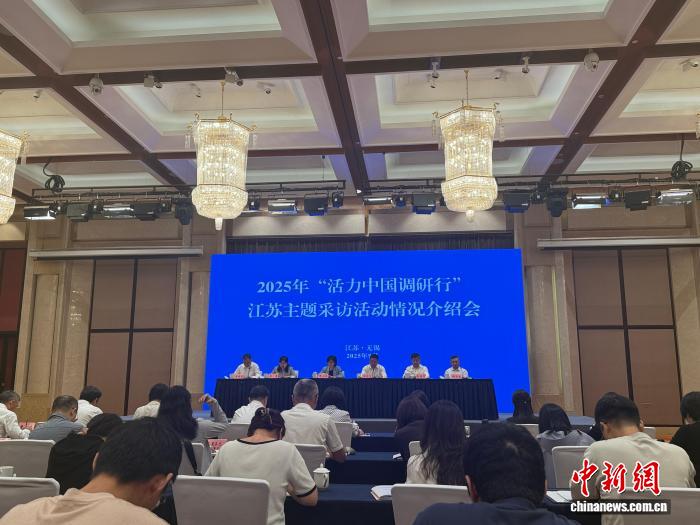
(活力中国调研行)“内外联动”“小单快反” 江苏优品行全球
Zhong Guo Xin Wen Wang· 2025-09-15 08:08
Core Insights - Jiangsu Province is actively promoting its foreign trade development through various initiatives, achieving a 59.9% export share to emerging markets from January to July 2023, an increase of 12.6 percentage points compared to 2020 [1][3] Group 1: Trade Development Initiatives - Jiangsu is enhancing support for trade exhibitions and credit insurance policies targeting emerging markets, with 65% of provincial trade promotion plans focused on these markets [3] - The establishment of the China-Central Asia Trade Cooperation Platform aims to facilitate foreign trade development [3] - The province is pushing for the development of cross-border e-commerce, achieving full coverage of cross-border e-commerce pilot zones, and creating 30 cross-border e-commerce industrial belts [3][4] Group 2: Industrial Transformation - Jiangsu is guiding enterprises to adapt to new foreign trade demands characterized by "small batches, personalized orders, and quick delivery" by promoting flexible manufacturing and digital transformation [3][5] - The province is transitioning its industrial foreign trade approach from traditional methods to a balanced online and offline strategy, encouraging the use of cross-border e-commerce [4][5] - Jiangsu is focusing on balanced development across various markets, including ASEAN, Africa, and Latin America, leveraging RCEP and free trade agreements to explore new market potentials [5]

湖北激活纺织产业增长新路径 食品工业2027年锚定7千亿目标
Chang Jiang Shang Bao· 2025-09-11 00:03
Group 1: Textile Industry Transformation - Hubei Province aims to achieve a textile industry scale of 300 billion yuan by 2027, with a focus on developing a 100 billion yuan textile and apparel industry cluster and a 100 billion yuan e-commerce base [2][3] - The province plans to enhance its textile structure, targeting a chemical fiber production capacity of 1.5 million tons and increasing the local dyeing industry's matching rate to over 55% [2] - Hubei will promote digital transformation in the textile sector, utilizing technologies like VR and AR, and establishing a digital marketing network to connect consumers directly with factories [3][4] Group 2: Food Industry Development - Hubei's food industry is projected to exceed 700 billion yuan in total output value by 2027, with a focus on upgrading the food supply to meet new consumer trends towards health and convenience [5][6] - The province aims to shift from primary processing of agricultural products to deep processing, developing a pre-prepared food model that combines planting, processing, and distribution [6][7] - Hubei will promote the production of functional and high-end food products, targeting a market shift towards health-oriented and personalized food options [7]
SHEIN回国谋上市?行业竞争困局仍难解
Sou Hu Cai Jing· 2025-08-31 10:23
Core Viewpoint - SHEIN, a leading player in the cross-border fast fashion sector, has faced significant challenges in its IPO journey since 2020, including regulatory hurdles and competitive pressures, prompting a potential return to China to facilitate its listing process [1][15][17] Group 1: Company Structure and Regulatory Challenges - SHEIN's complex ownership structure, initially designed for overseas listing, has become a barrier due to tightened regulations, with a significant portion of its operations and assets being based in China [3][4] - The implementation of the "Management Measures for the Issuance of Securities and Listing by Domestic Enterprises Overseas" in March 2023 emphasizes the importance of substance over form, which may hinder SHEIN's ability to meet compliance requirements for overseas listings [3][4] - Regulatory scrutiny has intensified, with the SEC and EU raising concerns about SHEIN's corporate structure and potential tax evasion, complicating its plans for a Singapore listing [4][12] Group 2: Tax Compliance and Financial Performance - SHEIN's initial move to Singapore was motivated by favorable tax rates, but the shift has now become a liability in terms of compliance and potential delays in its IPO process [6][7] - The company has seen a significant slowdown in revenue growth, with a 23% increase in H1 2024 and net profits dropping over 70%, leading to a decrease in valuation from over $100 billion to approximately $50 billion [10][12] - Tax issues have been highlighted as a major concern, with 37% of Hong Kong-listed Chinese companies facing inquiries related to tax compliance, which could further delay SHEIN's IPO [7][13] Group 3: Competitive Landscape - SHEIN faces fierce competition from both traditional fast fashion brands like ZARA and H&M, which are enhancing their digital capabilities, and emerging brands focusing on sustainable fashion [8][14] - The rise of competitors such as TEMU, which is aggressively targeting the same supplier base, has strained SHEIN's supply chain and reduced its competitive edge [10][14] - Global trade protectionism and regulatory changes have increased operational costs, with the U.S. canceling tax exemptions on cross-border packages and the EU imposing new taxes, further complicating SHEIN's market position [9][13] Group 4: Future Outlook and Strategic Challenges - The potential return to China is seen as a way to address compliance issues, but it does not resolve the underlying competitive challenges SHEIN faces in the fast fashion industry [8][15] - The company must improve supplier relationships, product quality, and brand image to regain market share and investor confidence amid a rapidly changing retail landscape [10][15] - SHEIN's future trajectory will depend on its ability to navigate regulatory complexities and adapt to evolving consumer preferences, particularly in the context of increasing demand for sustainable products [12][17]
Forever 21搭上唯品会四度入华
Bei Jing Shang Bao· 2025-08-12 16:12
Core Viewpoint - Forever 21 is re-entering the Chinese market through a partnership with local company Shanghai Chengdi, which is backed by Vipshop, aiming to leverage e-commerce channels and marketing strategies to revitalize its brand presence in a competitive fast fashion landscape [1][3][4]. Group 1: Market Strategy - Forever 21 has initiated a series of marketing activities, including advertising on Shanghai Metro and collaborations with popular IPs like the Smurfs, to enhance brand visibility [2][3]. - The partnership with Shanghai Chengdi allows Forever 21 to focus on product production, sales, and marketing across both online and offline channels, covering a wide range of apparel and accessories [3][4]. - The collaboration with Vipshop is seen as a strategic move to address previous shortcomings in e-commerce and to utilize Vipshop's discount sales model to attract price-sensitive consumers [4][8]. Group 2: Historical Context - Forever 21 has a history of entering and exiting the Chinese market, with its first attempt in 2008 failing due to poor location choices and brand recognition issues [5][7]. - The brand's subsequent attempts in 2011 and 2021 also faced challenges, including a lack of focus on e-commerce and competition from local brands, leading to closures of stores and online platforms [5][6][7]. - The brand's previous strategies did not resonate well with local consumer preferences, highlighting the need for a more tailored approach in its current re-entry [7][10]. Group 3: Competitive Landscape - The fast fashion market in China has evolved, with competitors like ZARA and H&M shifting towards higher-end positioning, while local brands like UR and Shein are gaining traction with rapid inventory turnover and lower price points [9][10]. - Forever 21's return is perceived as an attempt to capture market share left by competitors who are moving away from low-cost offerings, but it faces significant challenges in a market that increasingly values quality and brand differentiation [9][10]. - The competitive environment is intensifying, with consumers becoming more discerning about value, which may limit Forever 21's growth potential despite its efforts to re-establish itself [10][11].

网络主播架起服装专业市场商家与采购商之间的“数字桥梁”
Guang Zhou Ri Bao· 2025-08-11 02:00
Core Insights - The article highlights the evolution of the live streaming profession in the fashion industry, particularly focusing on the role of professional streamers like Yu Xiongsheng in connecting merchants and buyers through live broadcasts [2][4][8] Group 1: Industry Overview - The Guangzhou White Horse Clothing Market is a well-known hub for fashion business, attracting buyers from across the country and even overseas [3][4] - In 2020, the market faced a decline in offline buyers, prompting a shift towards online channels to drive sales [3][8] - The number of professional streamers in China reached 15.08 million by December 2023, indicating a significant growth in the industry [8][9] Group 2: Role of Streamers - Streamers like Yu Xiongsheng serve as a bridge between merchants and buyers, requiring high levels of professionalism and product knowledge [2][4][6] - The live streaming sessions are designed to showcase products effectively within a limited time frame, emphasizing the need for thorough preparation and product selection [4][6] - Streamers engage with their audience to build loyalty and trust, often emphasizing transparency in pricing and product quality [6][7] Group 3: Professional Development - The profession of live streaming has become more specialized, with experienced streamers earning substantial incomes, while newcomers earn significantly less [7][8] - The inclusion of live streaming in the national new occupation directory signifies a move towards professionalization and standardization within the industry [8][9] - The evolving nature of the profession has led to a diversification of roles, including content creation, technical support, and marketing [10][11] Group 4: Market Transformation - The rise of live streaming is transforming traditional wholesale models, enabling brands to reach wider audiences and adapt to fast fashion demands [8][9] - The integration of real-time feedback from streamers is enhancing supply chain flexibility and efficiency [8][9] - The White Horse Clothing Market is leveraging live streaming to empower brands and reshape the relationship between products and consumers [8][9]
SHEIN生态赋能,中小工厂转型“技术派”的实践样本
Sou Hu Cai Jing· 2025-08-05 10:30
Core Insights - The global fashion industry is undergoing a transformation driven by digitalization, with SHEIN exemplifying the "on-demand fashion" model that shifts from "predictive production" to "demand-driven" strategies [1][3][9] Industry Challenges - The traditional fashion industry relies on a "predictive production" model, which involves long lead times of 3 to 6 months for product development, while the lifecycle of trending items can be as short as one week [3] - The complexity of the fashion supply chain, including product planning, material procurement, production, and logistics, typically requires 6 to 12 months to complete [3] SHEIN's Innovative Approach - SHEIN's "small order quick response" model allows for the production of only 100 to 200 pieces initially, enabling real-time sales data to dictate further production, thus maintaining low inventory levels [3][4] - The company employs digital upgrades and smart tools throughout the design and production processes, significantly reducing trial and error, waste, and costs while enhancing efficiency [4][6] Digital Empowerment of Suppliers - SHEIN provides suppliers with digital tools to synchronize production standards and offers extensive training to instill lean management principles, resulting in improved operational efficiency [8][9] - The transformation of traditional manufacturing practices into modern, demand-driven operations is evident in the case of suppliers like Xie Shuangtao, who transitioned from experience-based order taking to a more responsive production model [6][8] Market Response and Sustainability - SHEIN's digital ecosystem enables rapid market response and precise supply-demand matching, leading to higher sell-through rates and reduced resource waste, contributing to sustainable growth [9]

跨境电商韧性不减
Xiao Fei Ri Bao Wang· 2025-08-04 03:17
Group 1: Cross-Border E-Commerce Growth - In the first half of the year, China's cross-border e-commerce imports and exports reached approximately 1.32 trillion yuan, a year-on-year increase of 5.7% [1] - Exports accounted for about 1.03 trillion yuan, growing by 4.7%, while imports were around 291.1 billion yuan, increasing by 9.3% [1] - Despite a slowdown compared to the 10.5% growth rate expected for the first half of 2024, the current growth reflects the resilience and development potential of China's cross-border e-commerce industry [1] Group 2: Market Diversification Strategies - Cross-border e-commerce companies are adopting diversified market strategies to maintain growth amid changing external conditions [2] - Companies are increasingly focusing on emerging markets, with significant traffic growth reported in regions such as the Middle East, Latin America, Africa, Europe, and South Asia, all exceeding 40% year-on-year [2] - In May, traffic from the Middle East surged by 59%, while Africa and Latin America also saw increases of over 50% [2] Group 3: Emerging Market Opportunities - Many foreign trade companies have successfully tapped into emerging markets, with notable examples including Shanghai Kairui Industrial Co., which secured a large order from Sweden [3] - Data from the Global Trade and Industry Growth Laboratory indicates that China's B2C cross-border e-commerce exports to ASEAN grew by 75%, and exports to Russia increased by 146.9% [3] - Among the top ten trading partners, eight maintained year-on-year growth, with ASEAN leading in both export scale and growth rate at 338% [3] Group 4: Transition to Agile Models - China's cross-border e-commerce is shifting focus to meet domestic consumption upgrade demands and enhance consumer experience [4] - The sector is advised to expand into emerging markets, optimize supply chains, and increase product value to mitigate risks and enhance competitiveness [4] - Experts suggest that companies should prioritize quality growth, focusing on profit margins, product premium capabilities, and brand value rather than merely scaling up [4][5] Group 5: Compliance and Integration - As cross-border e-commerce's global influence grows, Chinese companies need to improve compliance with product standards, trade rules, and competition policies [5] - There is a call for better integration between cross-border e-commerce and supply chains, transitioning from traditional order production to agile, small-batch models [5] - This shift aims to promote synergy between traditional foreign trade enterprises and cross-border e-commerce, facilitating the development of suitable products and manufacturers [5]