
少子化

Search documents
为什么日本发钱也没人生孩子?
Sou Hu Cai Jing· 2025-10-11 06:09
Group 1 - The core issue of declining birth rates is not merely an economic problem, but a complex societal challenge that Japan has been facing for over 16 years, with a continuous population decline recorded [3][4][7] - As of January 1, 2025, Japan's population is projected to be 120.65 million, a decrease of 908,000 from the previous year, marking the fastest decline since 1968 [3][4] - The aging population is a significant concern, with 29.58% of the population aged 65 and older, and predictions indicate that by 2030, a substantial portion of the male and female population may choose to remain unmarried [4][6] Group 2 - The Japanese government has implemented various policies to address the declining birth rate, but these efforts have not yielded significant results, leading to increased societal anxiety [7][9] - The "New Dimension Childcare Policy" introduced by Prime Minister Kishida in 2023 aims to provide enhanced financial support for families with children, extending benefits to families until children reach 18 years old [9][10][11] - Despite the financial incentives, public skepticism remains regarding the effectiveness of these measures, as previous policies have not successfully addressed the root causes of declining birth rates [13][18] Group 3 - The government plans to improve childcare quality by increasing the teacher-to-child ratio in nurseries and kindergartens, and to support parents in balancing work and family life [15][16] - The emergence of a growing group of "voluntary singles" poses a challenge to government policies, as financial incentives may not appeal to those who lack the desire to marry or have children [20][28] - The societal trend of individuals preferring stable, comfortable lives without the pursuit of marriage or children reflects a broader shift in values that may not align with traditional family structures [24][29]


台湾总人口连续21个月负增长
Xin Hua Wang· 2025-10-10 09:56
Core Insights - Taiwan's population has been experiencing negative growth for 21 consecutive months, with a total population of 23.317 million as of September 2025 [1] - The demographic breakdown shows that 11.58% of the population is aged 0-14, 68.62% is aged 15-64, and 19.8% is aged 65 and above, indicating a potential shift towards an aging society [1] - In September, Taiwan's population decreased by 87,107 year-on-year and by 11,312 month-on-month, with a net migration loss of 4,528 people [1] Population Trends - The number of births in Taiwan for the first three quarters of the year was 81,381, a decrease of 16,352 compared to the same period last year [1] - The peak birth month was February with 10,407 newborns, while May recorded a historical low of 8,433 births [1] - The ongoing trends of declining birth rates and increasing aging population are expected to exacerbate Taiwan's demographic challenges [1]
她刺破的母职真相,多少东亚家庭都难以逃脱
3 6 Ke· 2025-09-24 00:45
Core Viewpoint - The novels by Li Ting explore the complexities of mother-daughter relationships, addressing societal pressures and expectations placed on mothers, particularly in the context of aging, declining birth rates, and the treatment of special needs children [1][3][12]. Group 1: Themes and Concepts - The narrative of "Water in the Central Island" presents a dystopian future where elderly care facilities are repurposed for children, highlighting the societal shift in focus from the elderly to the younger generation [1][3]. - The protagonist, a resident of a nursing home, faces eviction as the facility transforms into a children's home, reflecting the harsh realities of societal expectations on motherhood [1][3]. - The author emphasizes the lack of a perfect mother, suggesting that societal pressures can lead to severe consequences for mothers who fail to meet expectations, termed "maternal punishment" [12][15]. Group 2: Personal Reflections and Inspirations - Li Ting's inspiration for her characters comes from real-life interactions with elderly individuals in nursing homes, exploring themes of memory, abandonment, and self-preservation [2][6]. - The author reflects on her own experiences as a mother and daughter, revealing the emotional complexities and generational conflicts inherent in these relationships [10][11]. - The narrative draws parallels between the author's life and the fictional experiences of her characters, particularly in the context of cultural differences between Chinese and Japanese family dynamics [10][24]. Group 3: Societal Commentary - The novels critique the societal tendency to prioritize children over the elderly, as seen in the character's experiences and the broader implications of declining birth rates and aging populations [3][12]. - The author discusses the emotional toll of societal scrutiny on mothers, where their worth is often judged based on their parenting abilities, leading to feelings of inadequacy and guilt [12][15]. - The narrative suggests that genuine emotional connections between mothers and children are more valuable than societal expectations, advocating for a focus on love and understanding rather than perfection [27].

幼儿师专在生存冲击中探索转型
Zhong Guo Qing Nian Bao· 2025-09-22 07:22
Core Insights - The education landscape is undergoing significant changes due to declining birth rates, leading to a reduction in the number of kindergartens and early childhood education teachers in China [2][18] - Institutions focused on early childhood education are facing severe enrollment challenges and are compelled to transform their programs to survive [3][12] Group 1: Declining Enrollment and Institutional Challenges - By the end of 2024, the total number of kindergartens in China is projected to decrease from 274,400 in 2023 to 253,300 [2] - The number of full-time early childhood education teachers has also declined from over 3.24 million in 2022 to approximately 2.83 million in 2024 [2] - In Hunan province, the number of newborns in 2024 is expected to hit a record low of 386,000, exacerbating competition among the six local early childhood education colleges [2][3] Group 2: Institutional Responses and Transformations - Hunan's educational authorities have proposed a plan to merge and optimize several teacher training colleges, including early childhood education institutions, to adapt to the changing landscape [3] - Some colleges, like Changsha Preschool Education College, have proactively reduced the proportion of teacher training students to 30% and diversified their programs to include non-teaching fields [5][12] - Ningbo Preschool Education College has cut its enrollment in early childhood education by 255 students and is shifting focus towards integrated childcare services for children aged 0-6 [8][12] Group 3: New Educational Models and Trends - The trend of integrating childcare and education services is gaining traction, with cities like Hangzhou and Shanghai implementing models that combine early childhood education with elder care [6][8] - Institutions are increasingly offering programs in areas such as infant care management, nutrition, and arts therapy to meet the evolving needs of society [6][12] - The establishment of international partnerships and the introduction of foreign language courses are also being pursued by some colleges to enhance their educational offerings [14]
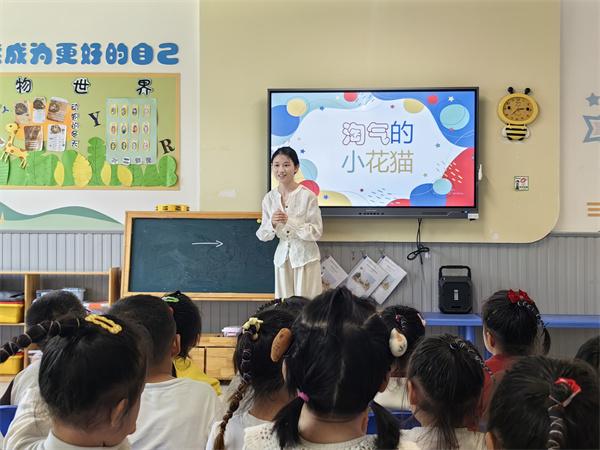
不需要那么多小学老师了,他们都去做什么?
Hu Xiu· 2025-09-15 23:46
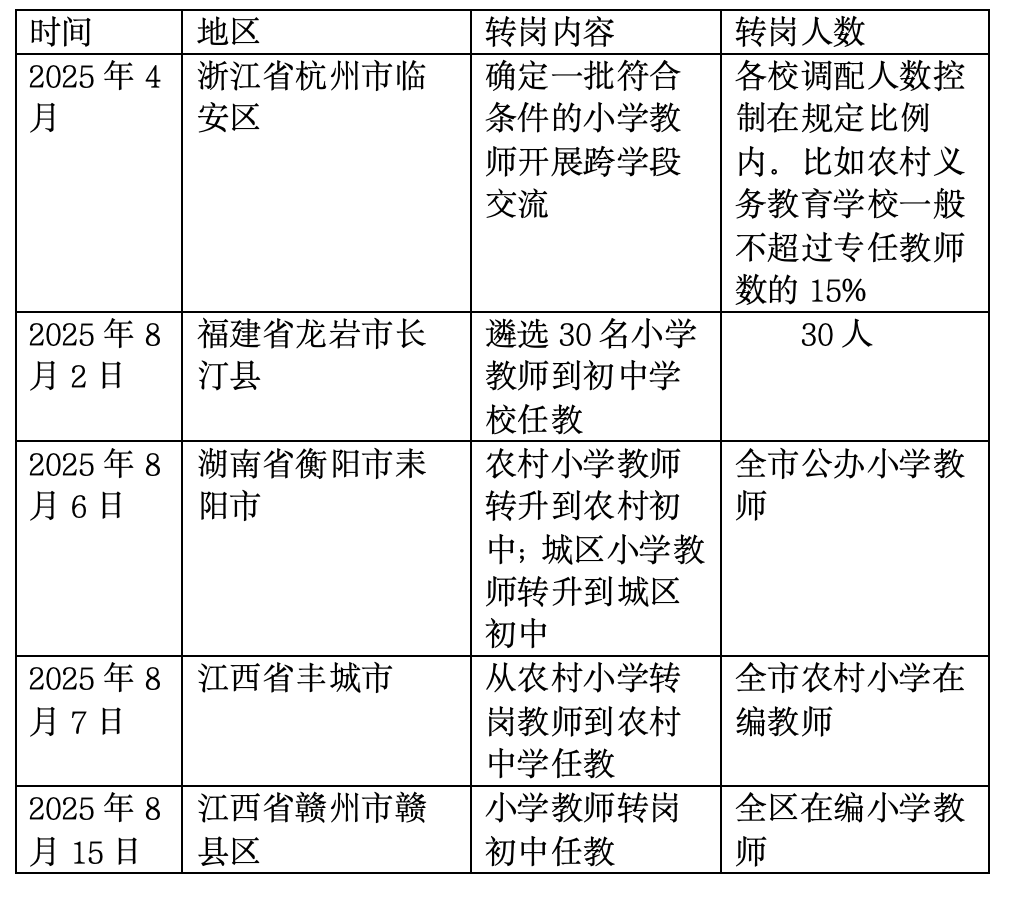
Core Points - The closure of Shanghai Sanqiao Primary School, which had more teachers than students, highlights the issue of resource wastage in education due to declining student enrollment [1][2] - The trend of declining student numbers is a reflection of the broader demographic changes in China, particularly the decrease in birth rates since 2016 [3][7] - The Ministry of Education has reported a significant drop in primary school enrollment, with 16.16 million students enrolled in 2024, a decrease of 2.61 million from the previous year [3][10] Group 1: Declining Enrollment and Teacher Surplus - The phenomenon of schools announcing closures or mergers due to insufficient enrollment is becoming common across the country, with many parents expressing sadness over the closure of their alma maters [3][4] - Predictions indicate that the total demand for primary education teachers in China will decrease from approximately 15.70 million in 2025 to about 10.37 million by 2035, a reduction of 5.33 million [5][12] - The teacher-student ratio in primary schools has reached its lowest in a decade at 1:16.06 in 2024, indicating a surplus of teachers [10] Group 2: Teacher Reallocation and Transition - Many regions are implementing teacher reallocation strategies, moving surplus primary school teachers to teach in middle and high schools due to declining student numbers [14][19] - The Ministry of Education has emphasized the need for dynamic adjustments in teacher allocation to address the surplus in primary education while meeting the demand in higher education levels [24][22] - The transition of teachers from primary to secondary education is seen as a necessary strategy to manage the imbalance in teacher supply and demand [22][19] Group 3: Small Class Teaching and Resource Optimization - Experts advocate for the promotion of small class teaching as a means to improve educational quality and better utilize existing teaching resources [31][32] - Small class teaching, which limits class sizes to enhance personalized education, has been implemented in some regions, such as Jiangsu Province [36] - However, there are concerns that small class teaching alone cannot resolve the fundamental issues of teacher surplus and resource allocation [35][34] Group 4: Future Strategies and Recommendations - The need for a robust mechanism for teacher mobility and resource allocation is highlighted, with suggestions for policies that encourage teachers to move between urban and rural areas [29][30] - Recommendations include developing a teacher retirement and reallocation system to address the surplus while ensuring educational quality [37][38] - The experience of countries with low birth rates, such as South Korea and Japan, suggests that managing teacher numbers through natural attrition may be a viable long-term strategy [38]
日媒:超五成招生难,日本私立大学瞄上“故乡税”
Huan Qiu Shi Bao· 2025-09-15 22:48
Core Insights - The declining birthrate in Japan is leading to a significant shortfall in enrollment at private universities, with 53% of these institutions failing to meet their enrollment targets [1] - Private universities heavily rely on tuition fees for operational income, which has resulted in widespread financial difficulties due to the enrollment gap [1] - Approximately 20% of universities are now considering the "hometown tax" as a new source of revenue support [1] Enrollment Challenges - In the 2025 academic year, Japan will have 179 national and public universities, while the number of private universities will reach 607 [1] - A survey from the 2022 academic year indicated that private universities generated total revenues of approximately 3.6 trillion yen, with 77% coming from student fees, 11% from government subsidies, and only 2% from donations [1] Financial Strategies - The "hometown tax" is being increasingly recognized by universities as a potential funding source, particularly the portion allocated for "university support" [1] - For instance, Tottori Nursing University and Tottori Junior College, which are operated by the same entity, have seen a cumulative decrease of 66 million yen in tuition revenue over the past six years, representing 6% of their annual income [1] - As of 2024, these institutions have received 17 million yen in subsidies through the "hometown tax" policy [1] Government Perspective - The Japanese Ministry of Education, Culture, Sports, Science and Technology acknowledges the need for private universities to diversify their funding sources in light of the declining birthrate, supporting the implementation of the "hometown tax" as a viable option [2]
日本65岁以上老年人口占比创新高
Xin Hua She· 2025-09-14 13:20
Core Insights - Japan's elderly population aged 65 and above has reached 36.19 million, accounting for 29.4% of the total population, marking a historical high [1] - The number of elderly individuals decreased by 50,000 compared to the previous year, but the proportion of elderly in the total population increased by 0.1 percentage points [1] - Japan has the highest percentage of elderly people among 38 countries with populations exceeding 40 million [1] Demographic Breakdown - Among the elderly, there are 15.68 million men and 20.51 million women aged 65 and above [1] - The population aged 70 and above is 29.01 million, those aged 75 and above is 21.24 million, and the population aged 80 and above is 12.89 million, all showing an increase from the previous year [1] Employment Trends - In 2024, the number of employed individuals aged 65 and above is projected to reach 9.3 million, an increase of 160,000 from the previous year, marking a record for 21 consecutive years [1] - Elderly workers represent 13.7% of the total employment population, also a historical high [1] - Factors such as labor shortages and delayed retirement age are expected to contribute to continued growth in elderly employment [1] Future Projections - According to the National Institute of Population and Social Security Research, it is estimated that by 2050, the proportion of elderly individuals aged 65 and above in Japan could reach 37.1% [1]
人口灰犀牛:现状、影响和应对(国金宏观张馨月)
雪涛宏观笔记· 2025-09-13 05:04
Core Viewpoint - The key to maintaining output growth in the face of accelerating population aging is to improve labor productivity through technological advancement, increasing labor participation rates, and expanding overseas operations [2]. Group 1: Global Population Trends - The global population is transitioning through four stages of demographic transformation, with most countries having completed industrialization or being in its middle stages, leading to a decline in the demographic dividend and an increase in aging and low birth rates [5][10]. - By 2024, the global population aged 65 and older is projected to reach 10.2%, with this figure expected to rise to 13.1% by 2035, indicating a shift towards moderate aging societies [10]. - The total fertility rate globally has decreased from a peak of 5.32 in the 1960s to 2.25 in 2024, nearing the replacement level of 2.1, with developed economies facing significant challenges related to low birth rates [11]. Group 2: China's Population Challenges - China is entering a phase of accelerated aging, with the proportion of the population aged 65 and older expected to reach 15.6% by 2024, transitioning to a moderately aged society [16]. - The total fertility rate in China has fallen below the replacement level since 1991, reaching 1.0 in 2023, necessitating comprehensive policies to support childbearing and reduce the burden of child-rearing [18]. - The phenomenon of "aging before becoming rich" poses challenges for total demand and the social security system, as the elderly population's consumption capacity may be weaker than that of developed economies [20]. Group 3: Macroeconomic Impacts of Population Structure Changes - The aging population is expected to exert downward pressure on potential growth rates due to a shrinking labor force, with China's labor force participation rate declining from a peak of 74.5% in 2010 to 68.3% by 2024 [31][34]. - The aging process can lead to a negative output gap, as seen in Japan, where actual economic growth has consistently lagged behind potential growth due to demographic shifts [36]. - Population aging is associated with a shift in consumption patterns, increasing demand for services such as healthcare and elder care, which may enhance service consumption's share of total consumption [39]. Group 4: Strategies to Address Aging Challenges - Improving labor productivity is crucial to counter the negative impacts of an aging population, with technology playing a key role in enhancing productivity through automation and innovation [46][51]. - Increasing labor participation rates, particularly among women, and extending working hours can help mitigate the labor supply challenges posed by an aging population [57]. - Expanding overseas operations and attracting foreign labor can serve as effective strategies to address domestic labor shortages and enhance productivity [59][60].

日本1~6月出生33.9万人再创新低
日经中文网· 2025-09-01 03:18
Core Points - Japan's birth rate in the first half of the year has hit the lowest record since comparable data began in 1969, with a total of 339,280 births, a decrease of 3.1% year-on-year, indicating a continuing trend of declining birth rates [2][4] - The number of marriages has also declined, with 238,561 couples marrying, a decrease of 4.0% year-on-year, marking the first decline in two years [4] - The natural population decrease stands at -497,538, with deaths reaching 836,818, an increase of 3.1% year-on-year, marking 21 consecutive years of natural population decline [4] Regional Analysis - All prefectures in Japan are experiencing natural population decline, prompting the government to implement the "Children's Future Strategy" aimed at reversing the declining birth rate [6] - The government plans to invest approximately 3.6 trillion yen before 2028 to address this issue, although the effectiveness of these measures remains uncertain [6] - The COVID-19 pandemic has accelerated the declining birth rate, as restrictions limited social interactions, leading to fewer marriages and subsequently fewer births [6] Future Projections - Predictions indicate that the birth rate will continue to decline by over 3% in 2025, which is significantly higher than the 1% declines observed in the 2000s [7] - The fertility rate among married women is also on a downward trend, making significant improvements in birth rates unlikely [7] Childcare and Enrollment - As of April 1, 2025, the number of children unable to enter childcare facilities is 2,254, a significant decrease from the peak of 26,081 in 2017, with 87.9% of municipalities reporting zero waiting children [8] - The primary reasons for the decrease in waiting children include the expansion of childcare capacity and lower-than-expected application numbers [8] - The city of Otsu has the highest number of waiting children at 132, attributed to difficulties in securing childcare staff [10] Policy Adjustments - The government is shifting its approach to childcare, planning to consolidate or abolish facilities in areas with declining demand, while increasing subsidies for after-school care and children's cafeterias [10] - There is a concern regarding individuals intentionally applying for childcare facilities to extend their benefits, which has been identified as a significant issue [11]

日媒:日本少子化进程加速
Xin Hua She· 2025-08-30 03:14
Core Insights - Japan's newborn count in the first half of this year reached 339,000, marking the lowest figure since comparable data began in 1969 [1] - The decline in newborns reflects an accelerating trend of declining birth rates, with projections indicating that the total for the year may set a new record low [1] Demographic Trends - The number of newborns from January to June decreased by 3.1% compared to the same period last year, continuing a trend of being below 400,000 for four consecutive years [1] - The death toll for the same period was 837,000, which is an increase of 3.1% year-on-year [1] Marriage and Fertility Rates - The number of marriage registrations in Japan for the first half of the year was approximately 239,000 couples, a decrease of 9,952 couples compared to the previous year [1] - The total fertility rate in Japan fell to 1.15, the lowest since statistics began in 1947, with Tokyo's rate at 0.96, the lowest in the country [1]