市场供需关系

Search documents
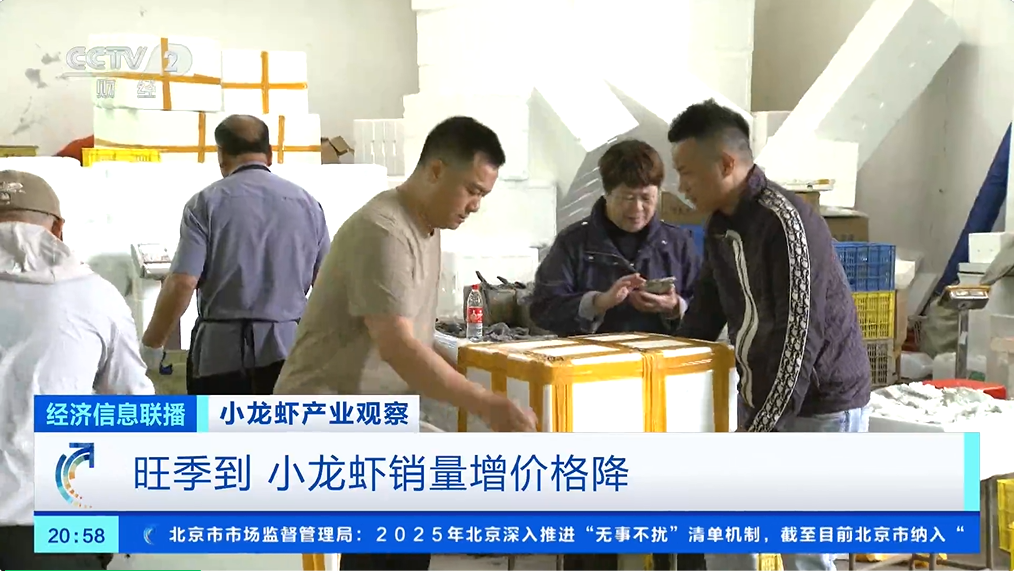
消费旺季来了 小龙虾价格近腰斩
Xiao Fei Ri Bao Wang· 2025-05-15 02:28
Core Insights - The price of crayfish in China has significantly dropped, with reports indicating a nearly 50% decrease in May compared to earlier months [1][4] - The crayfish market is experiencing a surge in supply due to improved farming techniques and the expansion of production areas, leading to increased competition and a potential price war [3][4] Price Trends - In January to April, the wholesale price of crayfish peaked at over 70 yuan per kilogram, while in May it fell to 38 yuan per kilogram [1] - The average wholesale price of crayfish in March was 111.31 yuan per kilogram, dropping to 62.31 yuan per kilogram in April [3] Market Dynamics - The crayfish trading centers are witnessing high transaction volumes, with daily sales reaching 2000 tons in Hubei and 2500 tons in Hunan [2][3] - The demand for crayfish is being affected by the accumulation of pre-made dish inventories and the diversion of consumption to other food categories like barbecues and hot pot [3] Future Outlook - Analysts predict that crayfish prices may continue to decline in the short term due to increased supply from various regions [4] - The crayfish farming area in China is approximately 30 million mu, with a total production exceeding 3 million tons, indicating a robust industry growth potential [4]
消费旺季来了,小龙虾价格近腰斩,业内:“接下来价格还会降”!
Mei Ri Jing Ji Xin Wen· 2025-05-13 01:18
湖北省潜江市小龙虾交易中心批发商魏晓涛:销售进入小高峰,之前大概一天销售两三千斤,现在每天三五万斤。中青品种的价格在13元(一 斤)左右,刚刚上市的时候大概42元、43元(一斤)。 图片来源:视频截图 湖北省潜江市小龙虾交易中心批发商黄茂华:销售量每天2万多斤,价格稍微低了一点。 在另外一个交易区,批发商谢军正在通过线上直播的方式销售小龙虾。 每经编辑|毕陆名 随着气温不断攀升,小龙虾消费逐渐进入旺季,今年行情如何? 据央视财经12日报道,12日上午9点,在湖北潜江小龙虾交易中心,正是交易的高峰期,批发商魏晓涛指挥工人将一筐筐鲜活的小龙虾有序分 拣,销往广东、重庆、江苏和浙江等地。 湖南省益阳市南县稻虾产业发展服务中心农艺师王敏:南县现在每天小龙虾的上市量在2500吨左右,主要销往北京、广州等50多个城市。 中国水产流通与加工协会副会长王雪光:今年1月到4月份,(小龙虾全国批发)价格最高达到过70元一公斤,5月就是38元一公斤了,接下来价 格还会降。 另据九派新闻报道,5月9日,武汉白沙洲大市场相关负责人告诉九派新闻,近期,整个市场的小龙虾日均销售量为180吨。作为华中最大农贸集 散地,湖北各地的养殖户将自家 ...

国新国证期货早报-20250506
Guo Xin Guo Zheng Qi Huo· 2025-05-06 06:48
Report Industry Investment Rating - Not provided in the given content Core Viewpoints - The A-share market showed mixed performance on April 30, with the Shanghai Composite Index down 0.23%, the Shenzhen Component Index up 0.51%, and the ChiNext Index up 0.83%. The trading volume in the Shanghai and Shenzhen stock markets reached 1.1693 trillion yuan, an increase of 147.2 billion yuan from the previous day [1]. - The coking coal and coke markets are facing supply - demand imbalances. Coke may face supply pressure, while the coking coal market remains in a loose supply pattern [1]. - The sugar market was affected by various factors during the holiday. The US economic situation and Brazilian sugar production influenced the price of US sugar, which first declined and then stabilized [1]. - The natural rubber market has a slightly positive demand outlook, with production expected to increase by 0.4% and demand by 1.5% in 2025 compared to 2024 [2]. - The soybean meal market may experience weak price fluctuations due to factors such as the increase in Brazilian soybean exports and the decline in the linkage between the domestic and US markets [3]. - The palm oil market in Malaysia is expected to see an increase in inventory in April 2025, with production and exports also increasing [4]. - The copper market has both positive and negative factors. Short - term prices may fluctuate, but the long - term upward trend remains [5]. - The iron ore market is in a state of seasonal supply increase, with short - term price fluctuations [6]. - The asphalt market is expected to show a fluctuating trend with increasing demand [8]. - The alumina market has an increasing supply due to new capacity and production resumption [9]. - The lithium carbonate market is expected to maintain a weak and fluctuating price trend due to oversupply [10]. Summary by Variety Stock Index Futures - On April 30, the Shanghai Composite Index closed at 3279.03, down 0.23%; the Shenzhen Component Index closed at 9899.82, up 0.51%; the ChiNext Index closed at 1948.03, up 0.83%. The trading volume was 1.1693 trillion yuan, an increase of 147.2 billion yuan from the previous day. The CSI 300 index closed at 3770.57, down 4.51 [1]. Coke and Coking Coal - On April 30, the coke weighted index closed at 1542.6 yuan, down 13.1; the coking coal weighted index closed at 929.2 yuan, down 1.7. Coke may face supply pressure due to increased production, while the coking coal market remains in a loose supply pattern [1]. Zhengzhou Sugar - During the holiday, US sugar first declined and then stabilized. Brazilian sugar production in the first half of April was 73.1 tons, an increase of 1.25% year - on - year, higher than analysts' expectations. The 5 - month raw sugar contract delivery volume was about 1.48 million tons. The US economy showed signs of contraction [1]. Rubber - During the holiday, Southeast Asian rubber prices fluctuated slightly. OPEC +'s decision to increase production by 411,000 barrels per day since June affected the oil price, which in turn influenced the rubber market. The global natural rubber production is expected to increase by 0.4% and demand by 1.5% in 2025 compared to 2024 [2]. Soybean Meal - During the May Day holiday, CBOT soybeans first rose and then fell. Brazilian soybean exports increased, and the domestic soybean meal market may be affected by the arrival of Brazilian soybeans and the weakening linkage with the US market [3]. Palm Oil - During the holiday, the Malaysian palm oil market showed changes. In April 2025, production is expected to increase by 16.9%, exports by 9.7%, and inventory by 14.8% compared to March [4]. Shanghai Copper - During the May Day holiday, the outer - market copper price fluctuated. Positive factors include decreasing domestic copper inventory and uncertain global copper supply. Negative factors include weak US consumer confidence and concerns about future demand [5]. Cotton - During the May Day holiday, the outer - market cotton price rose slightly. Domestic policies to stabilize the economy were introduced, and Xinjiang's cotton sowing was basically completed [5]. Iron Ore - Recently, iron ore shipments have increased seasonally, port inventory has accumulated, and short - term prices are expected to fluctuate [6]. Asphalt - Recently, asphalt refinery operating rates have increased, and the planned production in May has increased both year - on - year and month - on - month. Demand is expected to further improve, and short - term prices will fluctuate [8]. Logs - On April 30, the log futures showed certain price ranges. Spot prices in Shandong and Jiangsu remained stable. Port inventory decreased, and overall demand was weak [8]. Steel - The rebar market has good fundamentals, with production growth restricted by profits and consumption remaining resilient. The hot - rolled coil market is affected by tariff policies, but the impact may be gradually mitigated [8]. Alumina - The total production capacity of metallurgical - grade alumina in China has reached 109.22 million tons per year, and the operating capacity has increased by 3.48 million tons per year. New capacity and production resumption will increase supply [9]. Shanghai Aluminum - The macro - economic situation is complex, with the US tariff policy being uncertain. The supply side is stable, and the demand side shows regional differences [9]. Lithium Carbonate - The price of battery - grade lithium carbonate has been declining. Due to oversupply and falling ore prices, the price is expected to remain weak and fluctuate in the short term [10].
煤焦油市场加速探底
Zhong Guo Hua Gong Bao· 2025-04-28 01:55
Core Viewpoint - The domestic coal tar market has experienced a significant decline after reaching a peak in early March, with prices dropping by approximately 24% by April 22, leading to a cautious atmosphere in the industry [1] Demand Weakening - The demand for coal tar has shifted from strong to weak as the peak consumption season comes to an end, resulting in lower purchasing enthusiasm from downstream companies [2] - Inventory digestion in the tire industry has been slow, contributing to a bearish outlook on future coal tar prices, with companies adopting a just-in-time purchasing strategy [2] - The decline in demand has also affected the prices of downstream products like carbon black and anthracene oil, leading to increased losses for carbon black manufacturers [2] Supply Expectations Increasing - As of April 17, the capacity utilization rate of independent coking enterprises in China was 73.51%, reflecting a 5% increase, with stable growth in coal tar production expected [3] - The profitability of coking plants has improved due to the first round of coking coal price increases, maintaining strong procurement demand from steel mills [3] - Companies are adopting a just-in-time sales strategy, with low-priced inventory clearance policies accelerating market adjustments [3] Downstream Inventory Accumulation - In the context of weak terminal demand, deep processing products like anthracene oil and washing oil are facing sales difficulties, leading to increased inventories [4] - The operating rate of coal tar deep processing increased to 46% as of April 17, but losses in the carbon black industry have led to a decrease in its operating rate to 61.79% [4] - The significant decline in the coal tar market has caused traders to adopt a wait-and-see approach, further negatively impacting the market as it enters the consumption off-season [4]
上海的很多房东,心态已经麻了,崩溃了!
Sou Hu Cai Jing· 2025-04-28 01:31
Core Viewpoint - The Shanghai housing market is experiencing unprecedented challenges, with both property prices and rents declining, leading to significant stress for landlords [2] Group 1: Challenges Faced by Different Types of Landlords - First-time homebuyers are engaging in a "cutting losses" competition, with increased listings and price reductions to attract buyers, yet many properties remain unsold for over a year [3] - Owners of newer properties are maintaining their prices, with some even attempting to raise them, but face stagnant sales as middle-class buyers hesitate and the market remains cautious [4] - Secondary landlords are experiencing a drastic drop in rental income, with rents returning to 2019 levels after peaking in 2022, leading to a significant reduction in their numbers [5] Group 2: Landlord Decisions in Response to Market Conditions - Landlords are making various choices, such as selling their homes to rent, opting for rental exchanges to reduce costs, or downsizing to alleviate financial pressure [6] - These decisions reflect differing views on the future of the housing market, with some believing in a lack of investment value while others see potential for recovery [6] Group 3: Macro Perspective on the Housing Market - The housing market is under pressure from high listing volumes and the impact of new housing developments, which threaten the demand for older properties [7] - The market is expected to become more segmented, with high-quality properties gaining interest while lower-quality ones may struggle to attract buyers [7] Group 4: Conclusion on Market Adaptation - The current housing market requires landlords to adapt their strategies based on market dynamics, policy changes, and buyer sentiment to survive and find new opportunities [9] - The era of uniformly rising property values is over, and landlords must focus on enhancing property quality and competitiveness to navigate future challenges [9]