
收益率曲线控制

Search documents
美银Hartnett警告:宽松政策、监管松绑与散户涌入下,全球股市正形成“更大泡沫”
Hua Er Jie Jian Wen· 2025-07-28 10:34
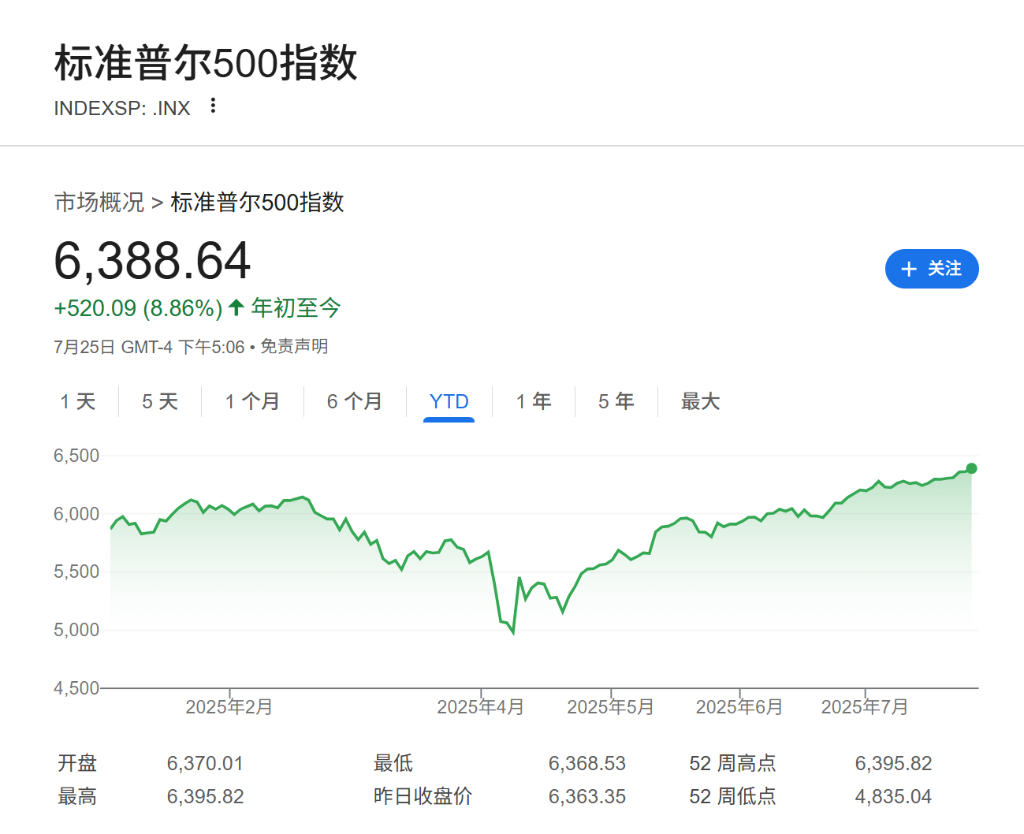
华尔街的持续狂欢正引发日益增长的泡沫担忧。 美银策略师Michael Hartnett近日警告称,在特朗普政府的政策转向、全球央行宽松以及金融监管放松的共同作用下,市场正被推向一个由"更大规 模的散户参与、更充裕的流动性、更剧烈的波动性"所构成的"更大泡沫"。 最新的动态凸显了政策对市场的强力驱动。据见闻此前文章,特朗普近期访问了美联储,成为自1937年罗斯福总统以来第四位到访该机构的在任 总统。Hartnett指出,此举反映出特朗普政府在削减开支无望后,正倾向于通过推动经济和市场走向"终极井喷",来应对高达37万亿美元的国家债 务。 Hartnett分析认为,鉴于美国政府每年超过1万亿美元的利息支出,特朗普政府迫切需要美联储降息以稳定债务成本。他因此预测,下一任美联储 主席可能会启动收益率曲线控制,以更直接地压低借贷成本,这表明政策宽松的预期仍在升温。 受此预期提振,华尔街继续押注于更低的关税、税收和利率,推动标普500指数今年以来上涨9%。然而,市场表现并非普涨,美元走弱利好国际 资产,而与特朗普关系密切的"亿万富翁概念股"与对利率敏感的小盘股之间也出现了明显分化。 特朗普政策转向与债务压力 根据Hart ...

低利率时代系列(六):日本居民财富配置30年变迁
Soochow Securities· 2025-07-03 07:18
Group 1: Report Industry Investment Rating - Not provided in the report Group 2: Core Viewpoints of the Report - Japan has been in a low - even negative - interest rate environment since the bubble burst in the 1990s. The allocation of residents' wealth has evolved from non - financial assets to diversified financial assets and from conservative savings to gradually accepting risk assets, which is closely related to the macro - economic cycle, policy innovation, and population structure adjustment [1][13] - Over the 30 - year change, Japanese residents' asset allocation shows a general characteristic of "mainly conservative and steadily growing", with the proportion of non - financial assets continuously decreasing, financial assets dominated by cash, deposits, insurance, and pensions, and the proportion of equity assets slowly increasing. Low - interest rates, population aging, and policy incentives are the key factors driving the change [62] Group 3: Summary by Directory 2.1. 1990 - 2000s: Retreat of Real Estate Allocation after the Economic Bubble Burst, Shift to Low - Risk Assets - After the economic bubble burst in the 1990s, stock and real estate prices dropped sharply. The average annual growth rate of per - capita GDP fell from about 6% in the 1980s to 0.6% in the next 30 years, and the CPI average annual growth rate declined from a peak of 3.25% in 1991 to - 0.13% in 1995 [14] - Japanese residents withdrew from non - financial assets mainly in real estate and shifted to low - risk financial assets. From 1990 to 2003, the proportion of non - financial assets decreased from 63.8% to 42.7%, and the proportion of land assets decreased from 54.3% to 32.7%, while the proportion of financial assets increased to 57.3% [17] - In financial assets, the risk preference of Japanese residents decreased. Cash and deposits became the dominant part of financial asset allocation, with the proportion rising to over 50%. Insurance and pensions also became the second - largest part, with the proportion reaching 28% in 2000. The proportion of bonds decreased significantly as the long - term interest rate approached zero [21][27] 2.2. 2000 - 2010s: Intensified Aging, Increased Proportion of Insurance - Type Assets - After 2000, Japan maintained ultra - low interest rates. The central bank implemented QE and other policies. Although there was a short - term recovery in 2006, the long - term low - interest environment continued [31] - The short - term recovery of the stock index and interest rates around 2006 slightly increased the proportion of residents' risk - asset allocation, but the impact was limited. The proportion of bond - type asset allocation continued to decline [34] - Due to the zero - interest rate, the attractiveness of time deposits weakened, and the proportion of current deposits increased from 29.5% to 46.2% from 2000 to 2010 [35] - Japan faced rapid aging. The government carried out pension reform, which promoted a slight increase in the total proportion of residents' cash, deposits, insurance, and pensions in financial assets to 85% from 2000 to 2010 [38] - The proportion of pensions and insurance in financial assets remained at about 30% in the 2000s, as the number of people depositing and withdrawing pensions both increased [42] 2.3. 2010 - 2020s: Multiple Policies Drive the Recovery of Equity Investment, Diversification of Asset Allocation - In 2010, Japan introduced comprehensive monetary easing policies. In 2013, it implemented QQE, and in 2016, it launched YCC, which compressed the return space of fixed - income products and promoted an increase in the proportion of residents' equity asset allocation. The proportion of bond allocation further decreased close to 0 [47] - With policy incentives and economic stabilization, the stock market recovered. The NISA and iDeCo systems, along with innovative investment products, made residents' asset management shift from single - deposit to long - term goal - oriented investment. The proportion of equity assets in iDeCo accounts increased year by year, and the proportion of Japanese residents' equity and investment funds in financial assets rose from less than 10% before 2010 to about 15% from 2015 - 2022 [7][54] - Overseas asset allocation emerged as an important way to increase wealth. From 2015 to 2023, the total scale of Japanese public investment trusts in overseas stocks, bonds, and investment funds increased from 26.6 trillion yen to 78.7 trillion yen, and the scale of Japanese residents' foreign securities investment exceeded twice that in 2010 by 2023 [58] 2.4. Summary - The 30 - year change in Japanese residents' asset allocation is characterized by a continuous decrease in non - financial assets, dominance of cash, deposits, insurance, and pensions in financial assets, and a slow increase in the proportion of equity assets. Low - interest rates, population aging, and policy incentives are the driving factors [62]
当被问及是否可能重新实施收益率曲线控制时,日本央行行长植田和男称,不想排除任何货币政策工具的可能性。
news flash· 2025-06-17 07:26
Core Viewpoint - The Governor of the Bank of Japan, Kazuo Ueda, stated that he does not want to rule out any monetary policy tools, including the potential reimplementation of yield curve control [1] Group 1 - The Bank of Japan is considering various monetary policy options in response to economic conditions [1] - The statement reflects the central bank's flexibility in managing monetary policy tools [1]
日本央行行长植田和男:(被问及是否可能重新实施收益率曲线控制)不想排除任何货币政策工具的可能性。
news flash· 2025-06-17 07:22
日本央行行长植田和男:(被问及是否可能重新实施收益率曲线控制)不想排除任何货币政策工具的可 能性。 ...
日央行权衡缩减购债规模 全球债市紧盯“刹车”力度
智通财经网· 2025-06-16 03:21
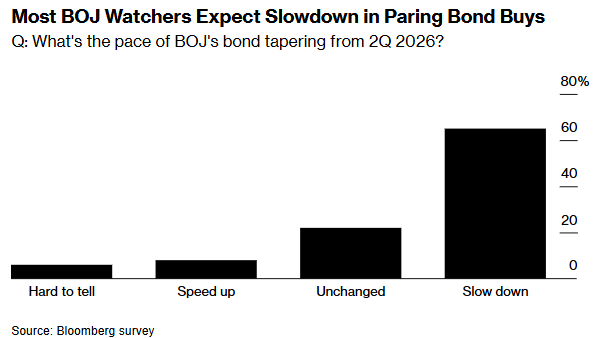
Core Viewpoint - The Bank of Japan (BOJ) is considering a slower pace of bond purchase reduction while maintaining the policy interest rate at 0.5%, which will be closely monitored by the bond market [1][4]. Group 1: Monetary Policy Meeting Insights - The BOJ's two-day monetary policy meeting is expected to conclude with the interest rate remaining unchanged, with a focus on the updated government bond purchase reduction plan [1]. - Approximately two-thirds of analysts anticipate that the bond purchase reduction starting in April next year will be less aggressive than the current pace [1][4]. - The BOJ has been reducing bond purchases since last summer, with a record reduction of 6.2 trillion yen in the first quarter due to slowed purchases and maturing debt [4]. Group 2: Market Reactions and Predictions - The decision to extend the quantitative tightening (QT) plan into the next fiscal year is expected to impact global bond markets, especially after recent yield fluctuations [4]. - Analysts predict that the BOJ may reduce bond purchases by 2 trillion yen per quarter starting next spring, down from the current 4 trillion yen [7][8]. - The current yield on Japan's 30-year government bonds reached a historical high of 3.185%, indicating market instability [11]. Group 3: Economic Context and External Factors - Japan's Prime Minister is expected to discuss trade agreements with the U.S. President to mitigate economic uncertainties ahead of the upcoming Senate elections [12]. - The U.S. Treasury has urged the BOJ to tighten its policies to address yen weakness and balance bilateral trade [12]. - The BOJ's cautious stance on interest rate hikes reflects the high uncertainty in global trade negotiations and their economic implications [11].
日本央行或将放缓缩表步伐!债市“核弹”要来了吗?
Jin Shi Shu Ju· 2025-06-16 03:18
Group 1 - The Bank of Japan is considering slowing down the pace of bond purchase reductions while keeping the benchmark interest rate unchanged, which is causing significant tension in the global bond market [1] - All 53 analysts surveyed expect the Bank of Japan to maintain the interest rate at 0.5%, with a focus on the updated government bond purchase plan, where about two-thirds predict a smaller reduction starting in April [1] - The Bank of Japan's first extension of its quantitative tightening plan into the new fiscal year is aimed at addressing recent yield fluctuations, especially after the long-term Japanese government bond yield reached a historic high last month [1] Group 2 - Analysts predict that the new reduction pace may be set at 200 billion yen per quarter, with 40% of analysts expecting this figure, while 25% forecast a reduction of 300 billion yen, and 20% believe it will remain at 400 billion yen [2] - The Bank of Japan's Governor has indicated that the threshold for intervening in the bond market is high, as the central bank is working to restore market functionality damaged by past quantitative easing and yield curve control policies [2] - Following the policy statement from the Bank of Japan, market attention will shift to the Governor's press conference, where investors will look for hints regarding the timing of the next interest rate hike [2] Group 3 - In response to potential Senate elections next month, the Japanese Prime Minister is attempting to gain public support by addressing rising living costs, as consumer inflation in Japan remains the highest among G7 countries [3] - The U.S. Treasury Department has notably mentioned the Bank of Japan's policies in its semiannual currency report, urging the central bank to tighten policies to correct yen weakness and balance bilateral trade [3] - A former Bank of Japan official emphasized the need for the central bank to maintain a stance against rising core inflation, which is crucial for alleviating public dissatisfaction with living costs and serves as a key bargaining chip in U.S.-Japan trade negotiations [3]
债券拍卖遇冷,日本国债大跌,石破茂:日本财政状况比希腊还差
Mei Ri Jing Ji Xin Wen· 2025-05-22 08:43
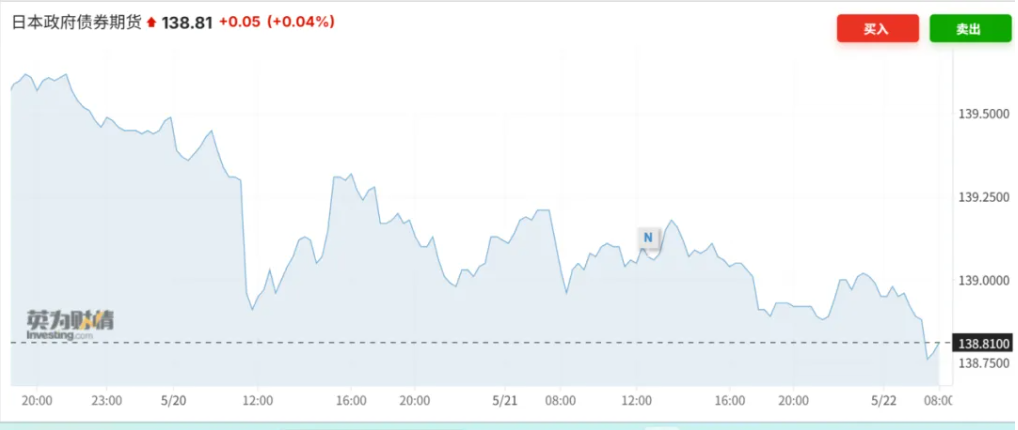
Core Viewpoint - The structural risks of Japan's ultra-long-term government bonds are rising as yields continue to increase, with the 40-year yield reaching its highest level since issuance in 2007, indicating potential challenges for Japan's fiscal sustainability and global market stability [1][2][4]. Group 1: Bond Market Dynamics - Japan's long-term bond yields are on the rise, with the 40-year yield increasing by 6 basis points to 3.675%, the highest since 2007 [1]. - The 10-year and 5-year government bond yields have also risen, reaching 1.56% and 1.02% respectively [1]. - The recent auction of 20-year bonds saw the lowest bid-to-cover ratio since 2012, dropping to 2.5 times, indicating weak market demand [2][4]. Group 2: Central Bank Challenges - The Bank of Japan holds 52% of the Japanese government bond market, acting as a stabilizer but facing a dilemma between continuing quantitative tightening (QT) and the risk of market volatility [5]. - If QT continues, long-term bond yields may rise further, leading to significant losses for bondholders and potentially forcing the Bank of Japan to reintroduce yield curve control (YCC) or negative interest rates [5]. - Conversely, if the Bank of Japan opts for quantitative easing (QE), it may alleviate market volatility but exacerbate inflationary pressures and lead to a depreciation of the yen [5]. Group 3: Economic Sentiment - A recent survey indicated that 65% of Japanese companies are calling for the Bank of Japan to pause its interest rate hike plans, reflecting concerns over economic contraction and uncertainty from external factors [6]. - The total national debt of Japan is projected to reach 1,323.7155 trillion yen by the end of the fiscal year 2024, marking a continuous increase and raising concerns about fiscal sustainability [7]. - The Japanese government is facing a fiscal dilemma, with rising expenditures due to inflation not being fully covered by tax revenues, leading to a precarious financial situation [8].
【财经分析】日本国债拍卖“崩了” 投资者需警惕“连锁反应”
Xin Hua Cai Jing· 2025-05-20 11:31
当全球金融市场的焦点集中在美债走势之时,日本超长期国债的结构性风险正悄然的攀升,"供需错 位"导致日本债券拍卖遇冷,超长期日债收益率跳涨或导致全球金融市场震动,而作为日本国债最大的 买家,日本央行的量化紧缩能否持续推进再次出现了较大的不确定性。 截至5月20日发稿,日本20年期国债收益率跃升至2.555%,为2000年10月以来的最高水平;日本30年期 国债收益率上涨13个基点至纪录高点3.10%;40年期国债收益率则跃升10个基点至3.591%的历史最高 点。日本基准10年期国债收益率一度升至1.525%,为3月底以来高位。 日本债券市场的供需失衡也令日本央行陷入两难局面,一方面若日本央行持续推进量化紧缩(QT), 可能导致长端债券收益率继续上行,引发债市剧烈波动,使持债机构面临巨大账面损失,最终甚至可能 迫使央行重启收益率曲线控制(YCC)或重新实施负利率。 另一方面,如果日本央行选择提前放弃紧缩政策,重新启动量化宽松(QE),虽然有助于缓解市场波 动,但可能加剧通胀压力,导致日元大幅贬值、资本外流。 日债收益率上升的"连锁反应" 日本央行的量化紧缩能否持续? 当地时间5月20日,日本财务省进行的1万亿日 ...