汽车智能化

Search documents
华培动力筹划重大资产重组 收购标的两月前刚宣布承接法雷奥集团汽车传感器业务
Xin Lang Cai Jing· 2026-02-12 15:27
Core Viewpoint - Huapei Power (603121.SH) announced a significant capital operation plan to extend its industrial chain layout, with stock suspension starting from February 13 for up to 10 trading days [1] Group 1: Major Asset Restructuring - The company is planning a major asset restructuring by acquiring 100% equity of Meichuang Zhiguan (Wuxi) Technology Co., Ltd. from Wuxi Shengyi Industrial Investment Partnership through a combination of issuing convertible bonds and cash [1][2] - The transaction is expected to constitute a related party transaction and a major asset restructuring, but it will not result in a restructuring listing [1] Group 2: Business Overview - Huapei Power's main businesses include powertrain and sensor operations, with key products in automotive engine turbocharging systems and various types of sensors for commercial vehicles [3] - The company reported a projected net loss of 27 million to 47 million yuan for 2025, attributed to a decline in sales revenue and a decrease in gross margin due to changes in end customers' production plans [3] Group 3: Market Activity - On February 12, Huapei Power's stock price reached a historical high of 26.45 yuan per share, closing at 25.70 yuan per share, with a total market value of 8.7 billion yuan [3]

福耀玻璃:公司为全球汽车厂商和客户提供汽车安全玻璃和汽车饰件全解决方案
Zheng Quan Ri Bao Wang· 2026-02-12 13:14
Core Viewpoint - Fuyao Glass (600660) is focusing on providing comprehensive solutions for automotive safety glass and components, adapting to the trends of electrification and intelligence in the automotive industry [1] Group 1: Company Strategy - The company is expanding the boundaries of "a piece of glass" by enhancing research on the trends of intelligent and integrated automotive glass [1] - Fuyao Glass is continuously increasing its R&D investment to develop high-value-added products [1] Group 2: Product Development - The proportion of high-value products such as intelligent panoramic sunroofs, adjustable light glass, heads-up display glass, coated heated glass, and flat tempered laminated glass is steadily increasing [1] - These advancements are driving the continuous growth of the company's value [1]
华阳集团获机构看好,汽车电子业务增长强劲
Jing Ji Guan Cha Wang· 2026-02-12 12:24
Core Viewpoint - Huayang Group is recognized as a leader in automotive electronics and precision die-casting, with significant revenue growth in both sectors and a strong market position in the intelligent driving supply chain [1]. Financial Performance - In the first half of 2025, Huayang Group's automotive electronics business generated revenue of 3.788 billion yuan, representing a year-on-year increase of 23.3% [1]. - The precision die-casting business reported revenue of 1.292 billion yuan, with a year-on-year growth of 41.3% [1]. - Projected net profits for the parent company are expected to be 803 million yuan, 1.041 billion yuan, and 1.290 billion yuan for the years 2025, 2026, and 2027 respectively [1]. Market Position - Huayang Group is identified as a core supplier of domain controllers in the intelligent automotive sector, highlighting its critical role in the automotive smart supply chain [1]. Stock Performance - As of February 11, 2026, Huayang Group's stock price closed at 30.74 yuan, with a slight decline of 0.23% on that day and a total trading volume of 1.56 billion yuan [1]. - Over the past five trading days, the stock price has decreased by 1.41%, with a price fluctuation range of 2.18% [1]. - The technical analysis indicates a 20-day resistance level at 35.05 yuan and a support level at 29.7 yuan, with the current stock price within a consolidation range [1]. - As of February 10, 2026, the financing balance was 481 million yuan, reflecting a cautious market sentiment [1].
2026年主流车企城市NOA试驾报告:2月上海篇
Soochow Securities· 2026-02-12 12:12
Investment Rating - The industry investment rating is "Overweight," indicating an expected outperformance of the industry index relative to the benchmark by more than 5% over the next six months [71]. Core Insights - The main contradiction in C-end automotive intelligence has shifted from coverage to experience optimization, with major intelligent driving manufacturers achieving urban NOA experiences in complex scenarios such as roundabouts and U-turns, and enhancing advanced features like parking and ETC passage. Future optimization will focus on handling corner cases to improve the driving experience for passengers and safety personnel [2][66]. - Compared to 2025, all major manufacturers have improved their intelligent driving capabilities in Q1 2026, with third-party suppliers also showing excellent implementation results [2][66]. - The report evaluates the intelligent driving experiences of six manufacturers, including Horizon, Ideal, Qianli Zhijia, Lightyear, WeRide, and Xiaopeng, through both large-sample and small-sample road tests, focusing on scene implementation, takeover frequency, and comfort [2][66]. Summary by Sections Road Test Overview - The report includes two types of road tests: large-sample centralized road tests and small-sample deep road tests, each with distinct advantages and limitations [6][7]. - The large-sample test involved over 30 participants and standardized routes, while the small-sample test used consistent evaluators and longer durations for a more in-depth experience [7][8]. Intelligent Driving Models Tested - The models tested in February 2026 included: - Xingtou ET5 - Ideal i6 - Geely 9X - Ideal L6 Pro - Xingtou Star Era ES - Xiaopeng X9 [8][10]. Performance Metrics - Key performance metrics evaluated include overall evaluation, takeover frequency, stability performance, and efficiency in various driving scenarios such as roundabouts and U-turns [23][41]. - The report provides detailed performance scores for each model, indicating their ability to handle complex driving situations and overall driving smoothness [41][46][50][56][61][62]. Manufacturer Insights - Horizon's HSD achieved an average score of 4.55 with a total takeover frequency of 0.16, demonstrating excellent handling of road test scenarios [41]. - Ideal's AD Max scored 3.51 with an average takeover frequency of 1.86, showcasing strong performance in stability and handling [46]. - Qianli's G-ASD scored 3.05 with a takeover frequency of 2.60, indicating good performance in complex scenarios [50]. - Lightyear's AD Pro scored 2.89 with a takeover frequency of 2.75, performing well in roundabout scenarios [56]. - WeRide's E2E scored 3.84 with a low takeover frequency of 0.70, indicating strong performance in efficiency [61]. - Xiaopeng's XNGP scored 3.64 with a takeover frequency of 1.20, showing good stability and efficiency [62].


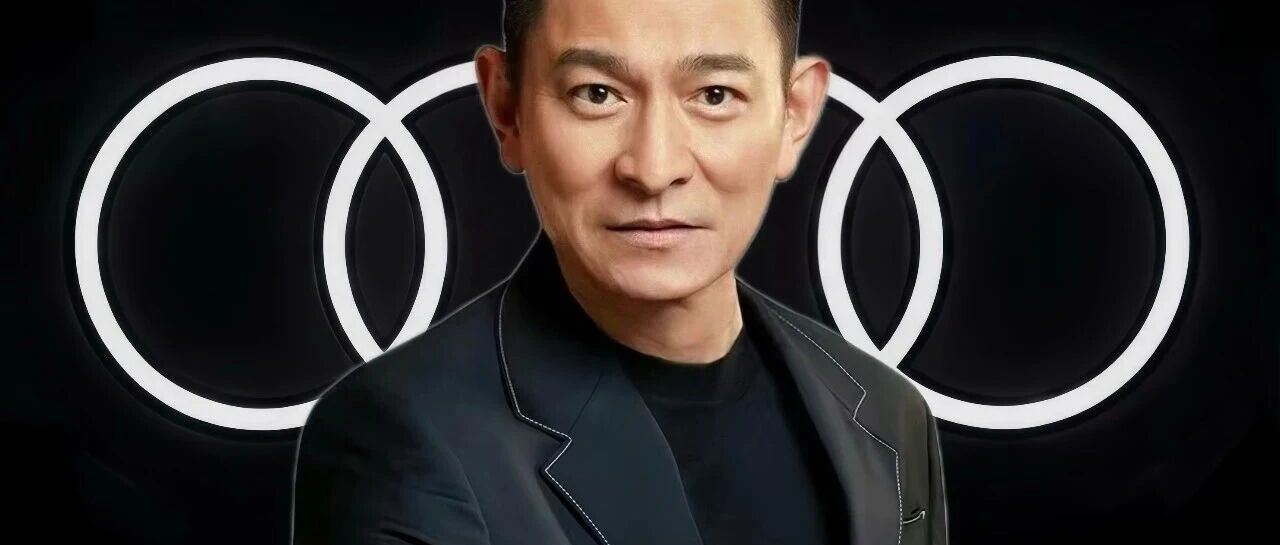
奥迪,只要10万了
盐财经· 2026-02-12 09:42
Core Viewpoint - The significant price drop of Audi A3 to just over 100,000 yuan marks a shift in the luxury car market, making it more accessible to consumers, but this has led to mixed reactions regarding brand perception and sales performance [5][7][10]. Group 1: Price Changes and Market Impact - Audi A3's terminal price has been reduced to around 100,000 yuan, aligning it with mainstream models like Volkswagen Lavida and Toyota Corolla [8][10]. - Despite the price drop, sales have not surged as expected, with some Audi dealerships closing down due to poor performance [8][15]. - The official price range for Audi A3 remains between 165,900 yuan and 209,900 yuan, but actual transaction prices are significantly lower, with some promotions offering prices below 100,000 yuan [10][11]. Group 2: Sales Performance and Dealer Challenges - Audi A3's sales have been declining, with 2024 sales at 53,200 units, the lowest in five years, and a slight recovery in 2025 to 66,800 units primarily due to heavy discounts [15][30]. - Over 52% of car dealers in China reported losses in the first half of 2025, leading to a challenging environment for Audi dealerships [16][18]. - The closure of Audi dealerships has raised concerns about after-sales service and customer rights, as pre-paid maintenance fees become difficult to process [15][19]. Group 3: Competitive Landscape and Strategic Adjustments - Audi faces increasing competition from domestic brands and new energy vehicles, necessitating a reevaluation of its pricing and product strategies [30][31]. - The company has shifted its strategy to include a mix of fuel, electric, and hybrid vehicles, moving away from a strict timeline for full electrification [31][34]. - Collaborations with local tech companies, such as Huawei, aim to enhance Audi's smart driving capabilities, reflecting a need to adapt to changing consumer preferences [32][34]. Group 4: Consumer Perception and Future Outlook - The drastic price reduction has altered consumer expectations, with some early buyers feeling their vehicle's resale value has diminished [24][26]. - The competitive environment is shifting towards practicality and cost-effectiveness, making brand loyalty less decisive in consumer choices [28][35]. - 2026 is projected to be a pivotal year for Audi, where successful strategic adjustments could stabilize its market position, while failure to regain consumer confidence may lead to further challenges [36][38].

港股异动 | 均胜电子(00699)逆市涨超4% 车载光通信解决方案亮相大众全球总部技术展
智通财经网· 2026-02-12 07:10
智通财经APP获悉,均胜电子(00699)逆市涨超4%,截至发稿,涨3.94%,报17.42港元,成交额3475.27 万港元。 消息面上,近日,德国大众汽车集团全球总部技术交流展在沃尔夫斯堡举办。均胜电子旗下均联智行携 全系汽车智能化解决方案重磅亮相,并首次展示联合中际旭创打造的车载光通信解决方案。该方案已具 备量产上车能力,成为全场展会的重要看点之一。 华兴证券发布研报称,汽车智能化带动智能座舱和智能驾驶相关的电子零部件需求快速增长。根据公司 招股说明书披露,未来5年汽车电子行业规模在全球和中国的复合增年长率分别为5.8%/9.4%,2029年将 分别达到3.2万亿元/1.7万亿元,其中智驾解决方案将是增长最快的细分板块。预计均胜电子有望凭借其 参与开发的CCU产品在舱驾一体的趋势中取得竞争优势。 ...

均胜电子逆市涨超4% 车载光通信解决方案亮相大众全球总部技术展
Zhi Tong Cai Jing· 2026-02-12 07:04
华兴证券发布研报称,汽车智能化带动智能座舱和智能驾驶相关的电子零部件需求快速增长。根据公司 招股说明书披露,未来5年汽车电子行业规模在全球和中国的复合增年长率分别为5.8%/9.4%,2029年将 分别达到3.2万亿元/1.7万亿元,其中智驾解决方案将是增长最快的细分板块。预计均胜电子有望凭借其 参与开发的CCU产品在舱驾一体的趋势中取得竞争优势。 均胜电子(600699)(00699)逆市涨超4%,截至发稿,涨3.94%,报17.42港元,成交额3475.27万港元。 消息面上,近日,德国大众汽车集团全球总部技术交流展在沃尔夫斯堡举办。均胜电子旗下均联智行携 全系汽车智能化解决方案重磅亮相,并首次展示联合中际旭创(300308)打造的车载光通信解决方案。 该方案已具备量产上车能力,成为全场展会的重要看点之一。 ...
奥迪也开始卖10万一辆
投资界· 2026-02-12 03:50
Core Viewpoint - The luxury car market is undergoing a significant transformation, highlighted by the drastic price reductions of models like the Audi A3, which has fallen into the 100,000 yuan range, signaling a potential end to the luxury car era [2][3][4]. Sales Performance - Audi's sales in China have declined by 5% year-on-year in 2025, returning to levels seen seven to eight years ago, with total sales of 162,360 units [3][5]. - The Audi A3, once a popular choice for young consumers, has seen its price drop from an initial starting price of around 190,000 yuan during its peak years (2016-2019) to as low as 99,000 yuan in some dealerships [4][5]. Pricing Strategy - The current pricing strategy for the Audi A3 includes a manufacturer suggested retail price (MSRP) of 165,900 to 209,900 yuan, with dealer quotes as low as 103,500 yuan, representing discounts of up to 30% [4][5]. - Other models, such as the Audi A4L and Q3, have also experienced significant price cuts, with discounts reaching as high as 117,400 yuan [5]. Dealer Challenges - Over 52% of car dealers in China were reported to be operating at a loss in the first half of 2025, with Audi dealers facing similar pressures leading to multiple dealership closures [6][12]. - Reports indicate that selling an Audi vehicle can result in losses of 30,000 to 50,000 yuan per unit, exacerbating the financial strain on dealers [12]. Consumer Trust Issues - There have been numerous reports of Audi dealerships closing, leaving consumers unable to access pre-paid services, which has eroded trust in the brand [7][11]. - The closure of dealerships, including the last Audi dealership of the Baoaijie Group in China, has raised concerns about the brand's stability and future in the market [11]. Strategic Missteps - Audi's slow transition to electric vehicles has been a critical factor in its declining market position, with only 13.7% of its total sales in 2025 coming from electric vehicles, primarily reliant on the European market [14][17]. - The brand's failure to keep pace with competitors in terms of technology and consumer expectations has led to a disconnect with the Chinese market [17]. Industry Implications - The decline in Audi's sales and brand value reflects a broader trend in the luxury car market, where traditional value propositions are being challenged by the rise of electric and smart vehicles [13][17]. - The ongoing price wars and declining brand prestige indicate that merely lowering prices will not suffice to restore Audi's market position without significant strategic changes [13][17].

出行观丨初代小米SU7谢幕:销量与争议并行下的产品迭代选择
Guan Cha Zhe Wang· 2026-02-12 02:55
(文/观察者网 张家栋 编辑/高莘) 2月10日,当雷军在直播间平静地说出"第一代SU7量产已经结束。"标志着小米汽车这款充满着传奇色彩且带有争议的首发车型,正式完成其历史使命。 小米汽车直播间 作为小米跨界造车的真正起点,SU7自2024年春季上市以来就带着强烈破圈属性进入市场。不同于传统车企循序渐进推新,小米用互联网品牌的传播方式和 爆款逻辑切入整车赛道,长周期预热、参数密集披露、创始人深度参与讲解与背书,整体呈现方式更接近科技旗舰产品发布会。 这种传播方式也令小米迅速在社交平台获得巨量关注并转化为订单。公开数据显示,SU7开启预订后24小时内订单超过8.8万辆;在随后不到两年的产品周 期内,全生命周期累计交付接近37万辆,成为同价位新能源轿车中鲜有媲美特斯拉的单一车型。 但高热度也同步放大了风险暴露面,去年来SU7多起事故暴露的安全问题,以及营销层面的争议事件,使小米一度陷入舆论漩涡,甚至冲击到其既有的用户 基本盘。 更重要的是,伴随相关事件持续发酵,外界讨论已不只停留在单一产品本身,而是延伸到车辆安全冗余设计、智能化能力边界界定、用户引导方式等更底层 问题,并引发行业与监管层面对相关定义和规范进行反复 ...

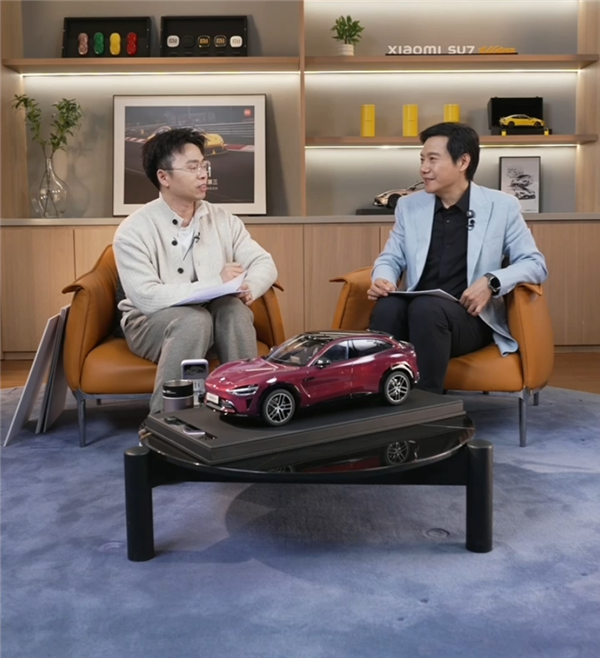
雷军宣布:初代SU7已停产 卖了超36万辆!新SU7门把手已提前符合新国标 电机、电池、底盘等均获升级 春节前陆续进店
Mei Ri Jing Ji Xin Wen· 2026-02-10 16:32
据雷军介绍,自2024年3月启用至今,小米汽车工厂有两个重要特点:一是高度智能化,工厂里面有六七百台机器人,可以做到组装的所有环节是百分之 百自动组装,检测也是百分之百自动检测;二是绿色环保,小米汽车整个厂房的屋顶都铺设了自发电光伏板,工厂的用电全部来自于此。 对于即将于4月上市的全新一代小米SU7,雷军介绍称,新车上的电机、电池、电子电气架构、高压架构、底盘等都进行了升级,门把手也是提前符合新 国标的安全标准。"新一代SU7的变化是从里到外的,是一次换代级别的升级。"雷军强调。 对于小米汽车的电子电气架构,雷军介绍称,小米YU7采用的是四合一域控制模块,这套系统全部是小米自研的。"因为小米的本行是做手机,所以电子 电气架构是小米的强项。"雷军表示。 针对外界关心的小米汽车电池是否满足新国标的问题,小米汽车副总裁李肖爽回复称:"(电池)不仅满足,而且我们远高于新国标。" 雷军多次强调,电池包安全对纯电动车来说很重要,需要大家下很大工夫研发。"我们整个电池包在研发过程中,有1000多项实验和测试,其中有不少测 试项远高于国标要求,而且在某些标准上要比新国标更严格。" 据雷军透露,最后一辆第一代小米SU7已经下线 ...