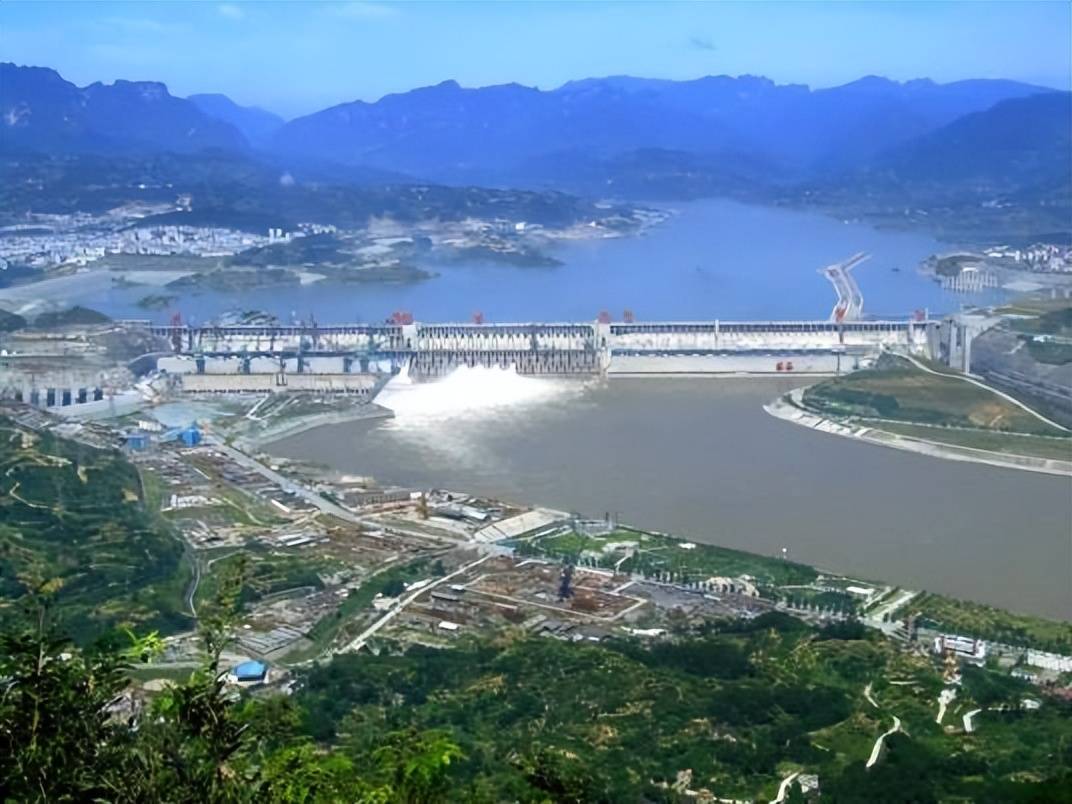
清洁能源发电

Search documents
福能股份(600483):清洁发电与热电联产双轨并行,盈利总体稳中有升
Guotou Securities· 2025-07-29 09:45
Investment Rating - The report assigns a "Buy-A" investment rating to the company, with a 6-month target price of 12.67 CNY based on a 12x PE ratio for 2025 [4][6]. Core Views - The company reported a total revenue of 6.369 billion CNY for the first half of 2025, a decrease of 4.44% year-on-year, while the total profit increased by 20.86% to 2.006 billion CNY. The net profit attributable to shareholders was 1.337 billion CNY, reflecting a year-on-year increase of 12.48% [1][2]. - The overall operating performance of the company is stable, with profitability showing an upward trend. Key factors contributing to profit growth include improved wind conditions in Fujian province and increased gas-to-electricity settlement volumes [2][3]. Summary by Sections Financial Performance - In H1 2025, the company generated 107.72 billion kWh of electricity and 4.6443 million tons of heat. The basic earnings per share were 0.48 CNY, up 4.35% year-on-year [2]. - The company’s total installed capacity exceeded 6 million kW, with significant contributions from wind power and gas generation [3]. Revenue and Profit Forecast - Revenue projections for 2025-2027 are 14.827 billion CNY, 15.912 billion CNY, and 16.902 billion CNY, with growth rates of 1.8%, 7.3%, and 6.2% respectively. Net profit forecasts are 2.936 billion CNY, 3.064 billion CNY, and 3.405 billion CNY, with growth rates of 5.1%, 4.4%, and 11.1% respectively [4][10]. Valuation Metrics - The report indicates a current PE ratio of 9.0 for 2025, projected to decrease to 7.7 by 2027. The net profit margin is expected to improve from 19.8% in 2025 to 20.1% in 2027 [10].

国投电力: 国投电力控股股份有限公司2025年二季度主要经营数据公告
Zheng Quan Zhi Xing· 2025-07-14 11:12
证券代码:600886 证券简称:国投电力 公告编号:2025-037 站流域来水同比减少。 部分火电所在区域清洁能源发电量增加,以及外送电量影响。 陆续投产多个风电项目。 陆续投产多个光伏项目。 - 2 - 平均上网电价同比下降的主要原因:一是电量结构变化,即火电上网电量下 降,电价较高部分对应电量比例降低;二是部分区域火电中长期交易价格下降; 三是无补贴新能源项目占比逐渐提高。 二、装机容量情况 国投电力控股股份有限公司 本公司董事会及全体董事保证本公告内容不存在任何虚假记载、误导性陈述 或者重大遗漏,并对其内容的真实性、准确性和完整性承担法律责任。 一、电量电价情况 根据国投电力控股股份有限公司(以下简称公司)初步统计,2025 年 4-6 月,公司控股企业累计完成发电量 380.67 亿千瓦时,上网电量 370.74 亿千瓦时, 与去年同期相比分别增加 0.52%和 0.59%。2025 年 1-6 月,公司控股企业累计完 成发电量 770.59 亿千瓦时,上网电量 751.78 亿千瓦时,与去年同期相比分别减 少 0.54%和 0.25%。 比减少 4.6%。2025 年 1-6 月,公司控股企业平 ...


国投电力(600886) - 国投电力控股股份有限公司2025年二季度主要经营数据公告
2025-07-14 11:00
根据国投电力控股股份有限公司(以下简称公司)初步统计,2025 年 4-6 月,公司控股企业累计完成发电量 380.67 亿千瓦时,上网电量 370.74 亿千瓦时, 与去年同期相比分别增加 0.52%和 0.59%。2025 年 1-6 月,公司控股企业累计完 成发电量 770.59 亿千瓦时,上网电量 751.78 亿千瓦时,与去年同期相比分别减 少 0.54%和 0.25%。 2025 年 4-6 月,公司控股企业平均上网电价 0.350 元/千瓦时,与去年同期相 比减少 4.6%。2025 年 1-6 月,公司控股企业平均上网电价 0.353 元/千瓦时,与去 年同期相比减少 6.4%。 - 1 - 证券代码:600886 证券简称:国投电力 公告编号:2025-037 国投电力控股股份有限公司 2025 年二季度主要经营数据公告 本公司董事会及全体董事保证本公告内容不存在任何虚假记载、误导性陈述 或者重大遗漏,并对其内容的真实性、准确性和完整性承担法律责任。 一、电量电价情况 部分火电所在区域清洁能源发电量增加,以及外送电量影响。 项 目 发电量 (亿千瓦时) 上网电量 (亿千瓦时) 本期 去年 同 ...
上海电力: 上海电力股份有限公司2025年上半年发电量完成情况公告
Zheng Quan Zhi Xing· 2025-07-13 08:13
Group 1 - The company achieved a consolidated power generation of 37.848 billion kWh in the first half of 2025, representing a year-on-year increase of 5.48% [1] - Coal power generation reached 24.613 billion kWh, up 2.94% year-on-year, while gas power generation increased by 28.05% to 3.817 billion kWh [1] - The average on-grid electricity price (including tax) was 0.58 yuan per kWh, with total on-grid electricity of 36.285 billion kWh, reflecting a 5.51% year-on-year increase [1] Group 2 - As of June 30, 2025, the company's installed capacity was 25.8013 million kW, with clean energy accounting for 61.83% of the total capacity [2] - The breakdown of installed capacity includes coal power at 9.848 million kW (38.17%), gas power at 3.6202 million kW (14.03%), wind power at 5.2356 million kW (20.29%), and solar power at 7.0975 million kW (27.51%) [2]

龙源电力:6月发电量578.12万兆瓦时,同比增长1.56%
news flash· 2025-07-03 10:24
Core Viewpoint - Longyuan Power (001289) announced that it achieved a total power generation of 5.7812 million MWh by June 2025, representing a year-on-year increase of 1.56%, with an 18.07% increase when excluding the impact of thermal power generation [1] Group 1: Power Generation Performance - The total power generation for the period reached 5.7812 million MWh, with a year-on-year growth of 1.56% [1] - Excluding the impact of thermal power, the year-on-year growth in power generation was 18.07% [1] - Wind power generation increased by 4.15% year-on-year, while solar power generation saw a significant increase of 99.32% [1] Group 2: Cumulative Power Generation - As of June 30, 2025, the cumulative power generation was 39.6525 million MWh, reflecting a year-on-year decline of 1.07% [1] - When excluding the impact of thermal power, the cumulative power generation showed a year-on-year increase of 12.73% [1] - Wind power generation for the cumulative period grew by 6.07%, and solar power generation increased by 71.37% [1]

累亏超15亿!新筑股份要押注这件事!
IPO日报· 2025-06-17 09:39
Core Viewpoint - Chengdu Xinzhu Road & Bridge Machinery Co., Ltd. (Xinzhu Co., 002480.SZ) announced a major asset sale and related transactions, aiming to divest underperforming assets and focus on clean energy business [1][9]. Group 1: Asset Sale and Acquisition - Xinzhu Co. plans to sell 100% equity of Sichuan Development Maglev Technology Co., Ltd. (Chuanfa Maglev) and related assets to Sichuan Shudao Rail Transit Group [1][4]. - The company will also sell 100% equity of Chengdu Xinzhu Transportation Technology Co., Ltd. (Xinzhu Jiao Ke) to Sichuan Road and Bridge Construction Group [1][4]. - Xinzhu Co. intends to acquire 60% equity of Sichuan Shudao Clean Energy Group from Shudao Group through a share issuance and cash payment [1][10]. Group 2: Financial Performance - Xinzhu Co.'s business segments include rail transit, photovoltaic power generation, bridge components, and others, contributing revenues of 1.318 billion, 647 million, 446 million, and 73 million respectively in 2024 [3]. - The company has faced continuous losses from 2021 to 2024, with total losses amounting to 1.55 billion [3]. Group 3: Business Focus Shift - The divestment of Chuanfa Maglev aims to eliminate long-term losses associated with the maglev business, which has not yet achieved commercialization [6][12]. - Xinzhu Co. will focus on clean energy generation, with the acquisition of Shudao Clean Energy expected to significantly enhance its clean energy capacity and resources [10][12]. Group 4: Financial Strategy - Xinzhu Co. plans to raise funds from up to 35 qualified investors to cover transaction costs, taxes, and to support the development of Shudao Clean Energy projects [13].


停牌10天后发重组预案 002480复牌一字涨停!
Zheng Quan Ri Bao Wang· 2025-06-10 03:47
Core Viewpoint - Chengdu Xinzhu Road & Bridge Machinery Co., Ltd. (Xinzhu Co.) has resumed trading after a 10-day suspension, opening with a price of 7.19 yuan per share, reflecting a 9.94% increase [1]. Group 1: Major Asset Transactions - Xinzhu Co. announced a significant asset sale and related transactions, including the sale of 100% equity in Sichuan Development Maglev Technology Co., Ltd. and other related assets to Sichuan Shudao Rail Transit Group [2]. - The company plans to sell 100% equity in Chengdu Xinzhu Transportation Technology Co., Ltd. to Sichuan Road and Bridge Construction Group, along with other related assets and liabilities [2]. - Xinzhu Co. will issue shares and pay cash to acquire 60% equity in Sichuan Shudao Clean Energy Group, with the transaction expected to constitute a major asset restructuring and related party transaction [2]. Group 2: Strategic Focus and Financial Improvement - The company aims to strategically exit the maglev and bridge component businesses, focusing on clean energy generation, which is expected to improve operational conditions and enhance sustainable growth potential [3]. - Shudao Clean Energy, now a subsidiary, specializes in clean energy projects, including hydropower, wind power, and solar energy, with a total installed capacity of 11.5 million kilowatts [3]. - The restructuring is anticipated to concentrate resources on core competencies, allowing Xinzhu Co. to leverage Shudao Clean Energy's market share and customer base for growth in the clean energy sector [4]. Group 3: Fundraising and Future Prospects - Xinzhu Co. plans to issue shares to no more than 35 qualified investors to raise funds not exceeding 100% of the transaction price for asset acquisition, with a maximum of 30% of total shares post-transaction [4]. - The raised funds will be allocated for cash payments, taxes, intermediary fees, project construction, and debt repayment [4]. - Analysts suggest that the strategic restructuring will enhance financial conditions, market competitiveness, and corporate governance, positioning the company for a successful transformation and broader development prospects [4].
广东建工清洁能源发电业务收入增21% 拟4.7亿元收购五家公司扩大规模
Chang Jiang Shang Bao· 2025-06-03 23:12
Group 1 - Guangdong Construction plans to acquire 100% equity of five photovoltaic project companies from Linyang Energy for 471 million yuan, aiming to expand its clean energy generation business [1] - The five project companies have a total installed capacity of 249.78 MWp and a registered capacity of 236.50 MW, all focused on solar power generation [1] - The acquisition is expected to enhance Guangdong Construction's overall strength in clean energy generation by integrating resources and achieving complementary advantages [1] Group 2 - Linyang Energy expects the cash flow from the transfer and prior operations to cover over 120% of the total investment, with funds from the sale supporting its long-term strategic shift towards building cost-effective power stations and quality energy storage [2] - The five project companies reported significant revenues and profits in 2024, with total revenues ranging from approximately 897,000 yuan to 6.15 million yuan across different companies [2] - The projected net profit contribution from the acquired companies to Guangdong Construction is estimated at around 5.29 million yuan for 2025, positively impacting the company's financial performance [3] Group 3 - Guangdong Construction's main business segments include engineering construction, clean energy generation, and equipment manufacturing, with clean energy generation showing positive growth [3] - In 2024, the clean energy generation segment achieved a total installed capacity of 4.31 million kW, a year-on-year increase of 10.3%, and a total power generation of 7.172 billion kWh, up 39.8% [3] - The engineering construction and equipment manufacturing segments experienced declines in revenue, while the clean energy generation segment was the only one to show positive growth [3]


煤炭消费比重不足1%,北京成中国首个全面实现清洁能源发电城市
Xin Jing Bao· 2025-05-22 14:24
Group 1 - The 29th World Gas Conference is focusing on "Digitalization and Technological Innovation Shaping a Sustainable Future" [1] - Beijing aims to become a global benchmark city for digital and green economies, emphasizing the role of energy technology innovation and the transformation of the natural gas industry [2] - Beijing's energy structure has historically optimized, with coal consumption projected to be less than 1% of total energy consumption by 2024, and green electricity usage reaching 29.3% of total electricity consumption [1][2] Group 2 - The city plans to enhance the dual development of digital industries and energy, creating a comprehensive digital and intelligent urban energy system [2][3] - Beijing will focus on energy technology innovation in sectors like energy conservation, hydrogen energy, and energy storage, supported by a green energy investment fund [3] - The forum featured discussions from international experts on the practical applications of green and digital transformations in the energy sector [3]
中国电力百年历史:停电何时从家常便饭,开始变成了稀罕事?
Sou Hu Cai Jing· 2025-05-04 10:30
Core Viewpoint - The article discusses the evolution of electricity supply in China, highlighting the transition from a time of frequent power outages to a modern society with stable electricity access, particularly in rural areas [1][21]. Historical Development - The history of electricity in China dates back to 1879 when Shanghai lit the first electric lamp, establishing a foundation for the country's power development [1]. - Large-scale construction of the national power grid began after the establishment of the People's Republic of China, with significant projects like the 506 transmission line from the Fuling Hydropower Station to Lishizhai, spanning 370 kilometers [2][4]. Challenges in Early Development - The construction faced numerous challenges, including a lack of experience and manpower, requiring workers to rely on manual labor for tasks such as erecting towers and laying cables [4][6]. - The first 220 kV transmission line was completed in 1954, but rural electrification was not prioritized until after the economic reforms [6][8]. Rural Electrification - Initially, rural electrification only met basic lighting needs, with limited power supply and high costs based on the number of light bulbs [8][9]. - By 1997, Hunan Province achieved "village electrification," and by 2006, "household electrification" was completed, although some remote areas still relied on candles and kerosene lamps [13]. Modern Power Generation - China's power generation primarily relies on thermal power, which poses environmental challenges and high costs due to coal transportation [15]. - The government has shifted focus to clean energy sources like hydropower, with significant projects such as the Three Gorges Dam, capable of generating 70 million kilowatt-hours during peak water levels [17]. Infrastructure Investment - Between 1998 and 2004, over 210 billion RMB was invested to ensure stable electricity for 150 million farmers, marking a significant improvement in rural power supply [17]. - Ongoing upgrades to power towers and infrastructure are crucial for maintaining stability against extreme weather events [17]. Recent Challenges - Despite advancements, incidents like the 2022 power restrictions in Sichuan, caused by extreme weather and over-reliance on hydropower, highlight ongoing vulnerabilities in the electricity supply system [21][23]. - The article emphasizes that while the frequency of power outages has decreased, challenges remain to ensure that power supply becomes consistently reliable across all regions [21][23].