
知识图谱

Search documents
企业信息如何才能出现在AI搜索智能回答中?宁夏壹山网络带你解析其中的奥妙!
Sou Hu Cai Jing· 2025-09-14 15:43
Core Insights - The article explains how AI search engines provide intelligent answers by utilizing natural language processing and knowledge graphs to understand queries and retrieve relevant information [4]. Group 1: AI Search Functionality - AI must first "understand" the user's question, similar to human conversation, which relies on natural language processing technology [4]. - After understanding the question, AI identifies where the answers are located, utilizing a knowledge graph that connects various entities and their relationships [4]. - The AI then employs intelligent retrieval and matching techniques to extract the most relevant content from vast amounts of data, improving the accuracy of search results [4]. Group 2: Process of AI Answer Generation - The process of generating answers involves four steps: understanding the question, locating the right information, selecting the relevant content, and articulating the answer clearly [4]. - For straightforward queries, AI can directly pull information from the knowledge graph, while for more complex questions, it organizes and explains various methods in an understandable manner [4]. - Companies like Ningxia Yishan Network Technology Co., Ltd. help businesses organize their information and enhance their visibility in AI searches, aligning with the described AI functionality [4].


投资锦囊 值得慎思的投资“隐数据”
Zheng Quan Shi Bao· 2025-09-01 18:46
Group 1 - The article emphasizes the importance of capturing "hidden data" in investment models, which are not limited to traditional financial metrics but require advanced AI and non-linear algorithms for extraction [1][5] - It discusses the potential impact of biodegradable plastics on the environment and the economy, highlighting that while they can reduce fossil fuel consumption and carbon emissions, their improper disposal can lead to significant greenhouse gas emissions, particularly methane [2][3] - The article warns that replacing traditional plastics with biodegradable options could drastically reduce global corn production, leading to food shortages and social unrest, which are often overlooked in investment calculations [3][5] Group 2 - The text argues that investment in urban infrastructure often neglects the complex, non-linear data related to population movement, logistics, and externalities like noise pollution, which can affect project outcomes [3][5] - It points out that despite the availability of extensive data, many "hidden data" points remain elusive, and these can significantly influence long-term sustainability efforts [5][6] - The need for investment firms to enhance their data processing capabilities and utilize diverse tools like AI and neural networks to create knowledge graphs is highlighted as essential for extracting valuable insights from vast data sources [5]
值得买科技:“海纳”MCP Server上线“知识图谱”新接口
Xin Lang Ke Ji· 2025-08-27 12:12
Core Insights - The "Haina" MCP Server has shown significant growth, with an output of 20 million in August, representing a 54% month-over-month increase and a sixfold increase since April [1][2] - The newly launched knowledge graph interface enhances the server's capabilities by structuring fragmented information, allowing for deeper understanding and precise reasoning by large models [1] - The knowledge graph interface connects content and product searches, providing a comprehensive view and improving the accuracy of AI responses [1] Summary by Categories - **Product Development** - The "Haina" MCP Server is continuously iterating and upgrading its capabilities and functionalities [1] - The knowledge graph interface has been introduced to support large models in understanding and reasoning [1] - **Performance Metrics** - The output of the "Haina" MCP Server reached 20 million in August, marking a 54% increase from the previous month [1] - Since April, the output has grown sixfold, indicating strong demand and adoption [1] - **Data Integration** - The knowledge graph interface has integrated 1 million articles and 1.5 million entities in the 3C digital product category [2] - Future plans include expanding the knowledge graph across more product categories based on the company's extensive product and content database [2]

《工业企业数据质量治理进阶实践指南白皮书》重磅发布
Zhong Guo Fa Zhan Wang· 2025-08-22 08:36
Core Insights - The article emphasizes the importance of data quality governance for industrial enterprises in the context of the digital economy and new industrialization [1] - It highlights the challenges faced by traditional industrial companies in effectively transforming vast amounts of data into actionable insights due to issues like "data silos" and "data inaccuracy" [1] Group 1: Data Governance Concepts - The white paper clarifies key concepts related to data governance, such as master data, static data, source governance, and end governance, providing a solid theoretical foundation for practical guidance [2] - This clarification helps enterprises to plan governance strategies from a holistic perspective rather than a fragmented one [2] Group 2: Data Governance Maturity Model - The white paper introduces a five-stage maturity model for data quality governance in industrial enterprises, derived from extensive research on domestic and international practices [3] - This model outlines a progression from basic standards to intelligent governance, enabling companies to accurately identify their current stage and set clear goals for advancement [3] Group 3: Stages of Data Governance - **Stage 1: Coding Management (Initiation Stage)** - Focuses on establishing unified coding rules to resolve data identification issues, emphasizing the importance of foundational governance [4] - **Stage 2: Master Data Management (Transition Stage)** - Expands governance to standardizing shared data, ensuring consistency and accuracy of core master data across the enterprise [5] - **Stage 3: Static Data Governance (Breakthrough Stage)** - Involves comprehensive governance of all static data, enhancing quality control through business logic validation and algorithmic checks [6] - **Stage 4: Source and End Collaboration Governance (Mature Stage)** - Represents a mature phase where governance covers the entire data lifecycle, ensuring data is reliable and usable in decision-making [7] - **Stage 5: Intelligent All-Domain Governance (Intelligent Stage)** - Aims to govern unstructured data using advanced technologies like AI and NLP, significantly improving governance efficiency [9] Group 4: Value and Outlook - The release of the white paper provides significant industry value by offering a complete action guide for industrial enterprises struggling with data issues, helping them save time and costs [10] - It promotes standardized concepts and frameworks to enhance communication and collaboration across different departments and stakeholders [10] - The white paper serves as a valuable resource for Chief Data Officers, IT leaders, and decision-makers, aiding in the strategic transformation of data governance into a value-creating asset [10]
国内银行业首获大奖 广发卡拿下国际质量创新大赛一等奖
Xin Hua Wang· 2025-08-12 06:07
Core Insights - The "International Quality Innovation Competition" awarded the "Creation of a Full-Process Intelligent Anti-Gambling and Anti-Fraud Education System Project" by Guangfa Credit Card Center the first prize in the education innovation category, marking a significant achievement for Chinese banking on an international stage [1][2] Group 1: Project Overview - The project focuses on building a comprehensive anti-gambling and anti-fraud education system through technology empowerment and multi-dimensional education integration, covering preemptive, ongoing, and post-event measures [1][3] - Guangfa Credit Card Center's project was selected from 557 entries and underwent rigorous evaluations, ultimately winning in a highly competitive environment [2][3] Group 2: Technological and Educational Integration - The project employs a dual-engine approach of "technology + education," utilizing advanced big data architecture, AI, real-time computing, and knowledge graph technologies to create a closed-loop education system [4] - The system includes pre-education, real-time alerts, and post-event dynamic push notifications to enhance public awareness and skills against gambling and fraud [4] Group 3: Achievements and Impact - The implementation of the project led to significant improvements in the identification and education rates of fraud-prone customers, with transaction recognition times reduced to milliseconds [5][6] - The project has successfully decreased the complaint rates from high-risk customers and has saved cardholders millions in direct economic losses [6] - User satisfaction with the anti-fraud education initiatives has increased, as evidenced by a monthly average of over 180,000 visits to the security center of the "Discover Excitement" app [6]
知识图谱的直观介绍:以最简单的方式了解知识图谱的基础知识
3 6 Ke· 2025-07-28 02:07
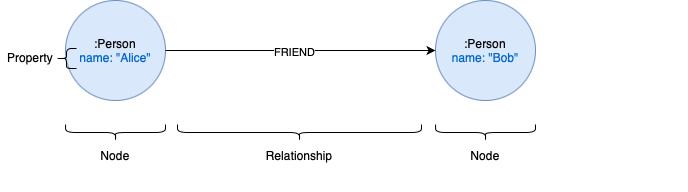
Group 1 - Knowledge graphs are pervasive in social networks, recommendation systems, and even in the way concepts are connected in the brain [1] - The article aims to explore the workings of knowledge graphs using a visual and code-friendly approach, starting from the basics [1] Group 2 - Understanding basic graph terminology is essential for grasping the structure of graph data and the relationships between different entities (nodes) [2] - Key elements of a graph include nodes, relationships, and attributes, with nodes representing entities and relationships indicating connections between them [3][20] Group 3 - Directed graphs have relationships with direction, while undirected graphs have bidirectional relationships [5] - Weighted graphs include numerical values or scores associated with relationships, while unweighted graphs only indicate the presence or absence of relationships [8] Group 4 - The article discusses different types of graphs, such as simple graphs, multigraphs, and complete graphs, each with unique characteristics [10] - It also covers the types of entities (nodes) in graphs, including unipartite and bipartite graphs, which consist of one or two types of nodes respectively [12] Group 5 - The Cypher query language is introduced as a way to represent graphs in plain text, similar to SQL but focused on nodes and relationships [13] - The syntax for nodes and relationships in Cypher is explained, providing examples for better understanding [14][15] Group 6 - The labeled property graph (LPG) model is highlighted as a flexible and developer-friendly way to represent graph data, widely used in graph databases like Neo4j [18] - LPG consists of nodes, labels, properties, and relationships, which can include direction, type, and optional attributes [19][22] Group 7 - The article provides a simple modeling example involving Alice and Bob, illustrating how to identify nodes, labels, and relationships [22] - It emphasizes the importance of modeling decisions and how they affect the types of questions a graph can answer [28] Group 8 - The article encourages readers to think about their own data and entities, and to explore graph tools and Cypher queries to visualize connections [29] - Knowledge graphs are positioned as valuable tools for anyone looking to connect information points, not just data scientists [29]
威士顿: 兴业证券股份有限公司关于上海威士顿信息技术股份有限公司部分募投项目延长实施期限的核查意见
Zheng Quan Zhi Xing· 2025-07-25 16:37
Summary of Key Points Core Viewpoint - The company has decided to extend the implementation period for a specific fundraising project, "Optimization of Quality Traceability and Analysis System Based on Big Data," until December 31, 2027, due to technological advancements and market demands [1][7][11]. Fundraising Overview - The company raised a total of RMB 710.38 million by issuing 22 million new shares at a price of RMB 32.29 per share, with a net amount of RMB 615.45 million after deducting issuance costs [1][11]. Fund Usage Status - As of May 31, 2025, the cumulative amount used for the fundraising project was RMB 25.97 million, with RMB 8.86 million specifically allocated to the quality traceability project [2][3]. Project Delay Details - The delay in the project is attributed to the need to adopt a new technology base that meets domestic innovation requirements and incorporates knowledge graph technology for enhanced functionality [4][5][6]. Reasons for Project Delay - The original technology used was outdated, and the company aims to improve the project by integrating a domestic big data platform and advanced analytical models to enhance efficiency and quality in traceability [5][6]. Expected Completion and Investment Plan - The new completion date for the project is set for December 31, 2027, with funds to be invested in phases based on actual progress [6][7]. Measures to Ensure Timely Completion - The company will monitor the project's progress closely, optimize resource allocation, and adapt to macroeconomic changes to ensure timely completion [7]. Impact of Project Delay - The delay does not alter the project's implementation subject, total investment, or fund usage, and is not expected to adversely affect the company's normal operations [7][11]. Re-evaluation of Project Necessity and Feasibility - The project is deemed necessary due to increasing regulatory demands for quality traceability in key industries, and its feasibility is supported by advancements in technology and the company's resources [8][9]. Board and Supervisory Opinions - Both the board and supervisory committee have approved the extension of the project timeline, confirming that the decision aligns with legal regulations and does not harm shareholder interests [10][11].

案例数居首位!平安产险9个AI产品入选信通院首批开源大模型创新应用典型案例
Sou Hu Cai Jing· 2025-07-08 10:43
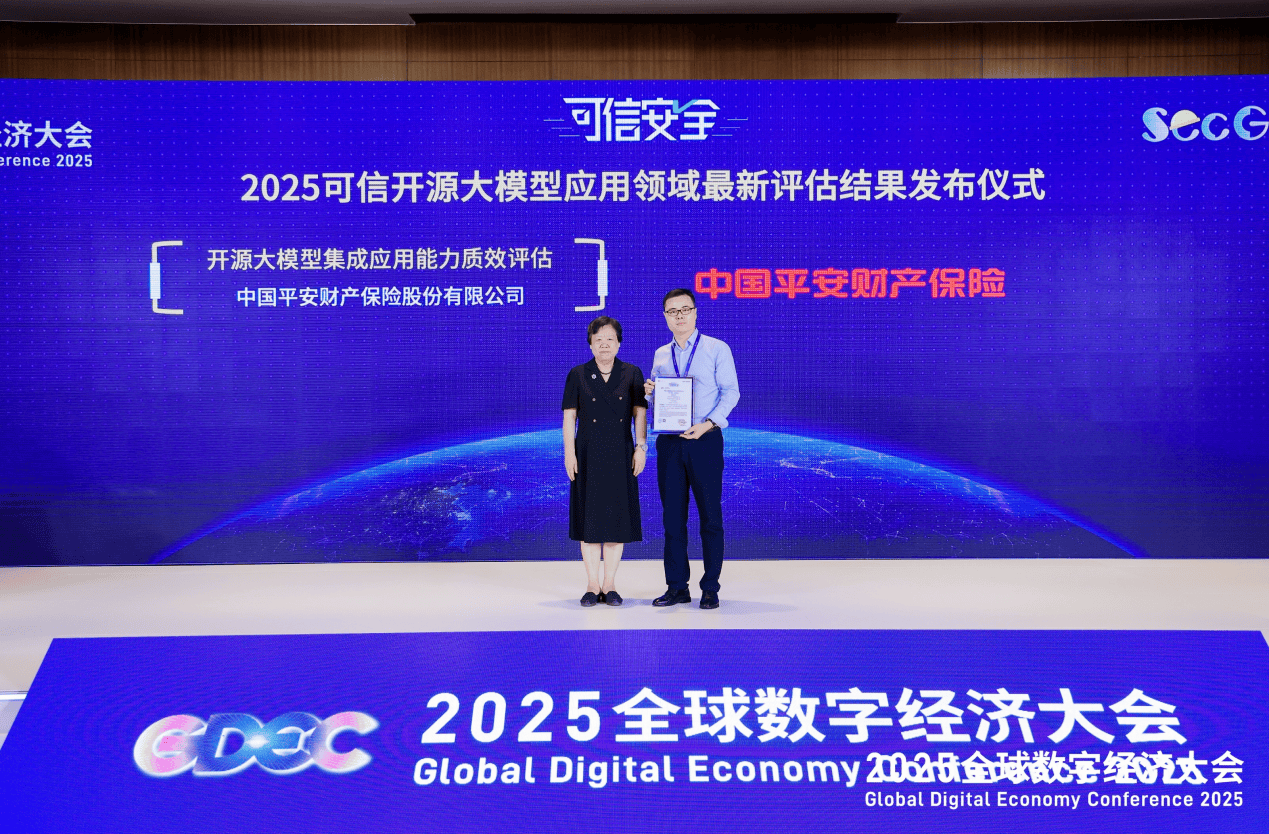
Core Insights - The 2025 Global Digital Economy Conference was held in Beijing, where the China Academy of Information and Communications Technology released the latest assessment results for trustworthy security in 2025, highlighting the achievements of Ping An Property & Casualty Insurance in AI technology innovation and application [1][2] Group 1: AI Product Evaluation - Ping An Property & Casualty Insurance successfully passed the evaluation of nine AI products, which focus on sales, underwriting, claims, and risk control, showcasing their strong application effects and business adaptability [2][3] - The evaluation assessed six dimensions including integration capability, application capability, model performance, security capability, compatibility, and operational management [3] Group 2: AI Capability Construction - The company is actively building an "insurance + technology + service" model, enhancing its AI capabilities in areas such as intelligent search, image processing, knowledge graph, and simulation prediction [4][5] - AskBob, the intelligent search and dialogue engine, utilizes pre-trained large model technology to improve employee efficiency, achieving over 90% effective response rate in underwriting inquiries [4] Group 3: Business Empowerment and Value Restructuring - In 2025, the company completed the localized deployment of the DeepSeek large model, creating AI assistants for various business scenarios, which enhances operational efficiency and customer experience [6][7] - The AI assistant for sales, "Chuang Xiao Bao," enables precise marketing outreach to millions of customers and addresses challenges in non-auto sales [6] - The underwriting process has been transformed from manual to AI-driven, increasing self-underwriting rates by 17 percentage points and reducing initial quote response time to under 2 hours [7] Group 4: Risk Control System - The company has established a comprehensive digital risk control system that includes preemptive measures, real-time warnings, and post-event reviews, significantly enhancing disaster prevention and risk identification capabilities [7] - AI auditing technology is employed for full-chain risk reviews, resulting in annual loss reductions exceeding 5 billion yuan [7]
黑龙江省人社厅等5部门提出18项服务举措 进一步健全就业公共服务体系
Zhong Guo Chan Ye Jing Ji Xin Xi Wang· 2025-07-03 00:32
Group 1 - The core viewpoint of the news is the issuance of a notification by multiple departments in Heilongjiang Province aimed at enhancing the employment public service system through 18 specific measures to improve accessibility and equality in services [1][2][3] Group 2 - The notification emphasizes the establishment of an equitable and inclusive employment public service mechanism, requiring local service responsibilities and the creation of a unified service standard and visual identification system [1][2] - It highlights the need for comprehensive employment public service content, including efficient policy implementation, unemployment management, and dynamic adjustment of employment assistance [1][2] - The notification focuses on targeted support for employment services, including the development of identification mechanisms for unemployed individuals and the implementation of a tiered service model [2] - It calls for strengthening the foundational employment public service framework by enhancing local service capabilities and integrating services into grassroots governance [2] - The notification promotes the use of digital technologies such as AI and big data to enhance employment services and improve data utilization [2]
零点有数(301169) - 投资者关系活动记录表 2025-003
2025-07-02 15:04
Group 1: Company Overview - The company initially conducted its own research to gather data due to limited data availability, but has since evolved to leverage data collection as a key service in the big data era, providing comprehensive data support to clients [2] - The core competitive advantage lies in the ability to quickly identify client needs and establish methodologies for model building, utilizing machine learning and natural language processing technologies [3] Group 2: Business Strategy and Model Development - The company is transitioning from manual data analysis to automated analysis, enhancing model innovation capabilities to address unique problems with tailored models [3] - The strategic development of software business focuses on modeling business experience, algorithm development, and software implementation [2] Group 3: Technology Implementation and Client Solutions - The company has developed responsive algorithm models for specific scenarios, such as the "12345 Government Service Hotline," which can be generalized to other service areas [4] - Various self-service analysis tools have been created, including visualization dashboards and automated reporting, to facilitate client analysis in both commercial and governmental sectors [4] Group 4: Knowledge Graph and Large Model Integration - The integration of knowledge graphs and large models enhances decision-making capabilities, addressing issues like high costs and low coverage in knowledge graph updates [5] - The company aims to leverage the combined strengths of knowledge graphs and large models to capture opportunities in sectors such as government, finance, and insurance [5] Group 5: Application of Knowledge Graphs - The experience in constructing ontologies in specialized fields can be adapted to civilian applications, improving policy recommendation accuracy in government sectors [5] - The knowledge graph technology accumulated in specialized fields will support the company's expansion into government, finance, and insurance sectors [5]