算力网络

Search documents
多场景“试验场”就是6G技术最好的“练兵场”
Zheng Quan Ri Bao· 2025-11-14 16:24
Core Insights - The 2025 6G Development Conference highlighted that the global development of sixth-generation mobile communication technology (6G) has entered a critical phase of technical convergence and industry collaboration [1] - The current state of 6G development shows a dual trend of "technical deepening" and "emerging ecosystem," with key technologies transitioning from theory to prototype validation and increasing global competition in standard formulation [1] - China has made significant progress in 6G, completing the first phase of key technology testing and accumulating over 300 key technology reserves, demonstrating its determination and capability to seize future development opportunities [1] Group 1: Application-Driven Development - Emphasizing the importance of application, the industry should bind R&D efforts closely with real-world demands, establishing "end-to-end" testbeds in various sectors such as smart manufacturing and telemedicine [2] - The goal is to transform pain points from the industry into focal points for technological breakthroughs, ensuring that R&D outcomes are practical and market-oriented, thereby establishing a first-mover advantage in 6G application standards [2] Group 2: Collaborative Ecosystem - The 6G industry chain is extensive and complex, necessitating collaboration among various players; measures should be taken to support leading companies in the telecommunications and equipment manufacturing sectors to act as "chain leaders" [3] - Encouraging collaboration among terminal manufacturers, chip developers, and content providers is essential to foster innovation and enhance the resilience of the entire industry chain [3] - New technologies such as AI smartphones and industrial smart modules are seen as critical components of the future 6G ecosystem, serving as platforms for new applications and business models [3] Group 3: Global Innovation Framework - 6G is a global technology, and sustainable development cannot be achieved through closed self-research; China should leverage platforms like IMT-2030 to attract international participation in technology trials and standard-setting [4] - Deepening international cooperation and shared development of 6G test networks will enhance China's influence in global 6G governance and industry ecosystems [4] - The industry must shift from pursuing isolated technical achievements to building a comprehensive ecosystem that integrates technology, industry, application, and governance to support high-quality economic development [4]
“十五五” 区域协同怎么做?专家建言:统一大市场+长三角经验
2 1 Shi Ji Jing Ji Bao Dao· 2025-11-14 04:31
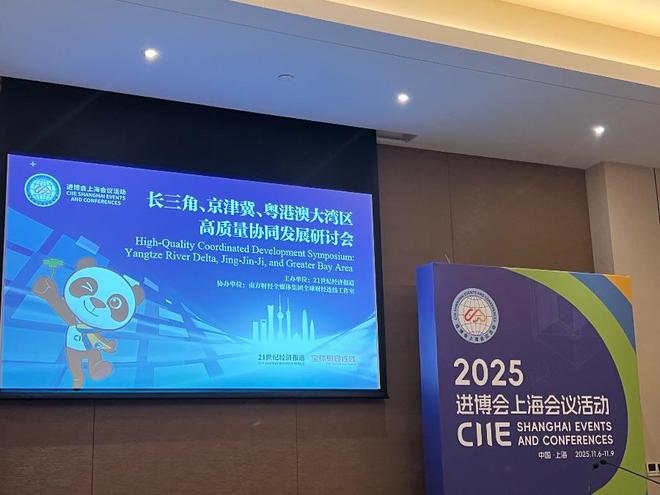
Core Insights - The seminar focused on high-quality collaborative development among the Yangtze River Delta, Beijing-Tianjin-Hebei, and Guangdong-Hong Kong-Macau Greater Bay Area, aligning with the themes of the upcoming China International Import Expo and the 14th Five-Year Plan [1][3] Group 1: Innovation and Collaboration - The seminar emphasized the importance of building a collaborative innovation community to break down barriers and enhance regional cooperation [3][4] - Experts highlighted the construction of a unified national market as a significant variable influencing regional coordinated development, reshaping the economic landscape with new productivity factors like AI and computing networks [3][4] - Suggestions included addressing labor mobility barriers, regulatory discrepancies, and establishing a tax-sharing mechanism to facilitate resource flow among the three regions, which collectively account for 40% of the national GDP [4][5] Group 2: Strategic Development and Mechanisms - The discussion underscored the need for strategic alignment among major national strategies, with a focus on creating synergies that exceed the sum of individual efforts [5][6] - Experts proposed enhancing infrastructure, reducing talent mobility costs, and fostering talent exchange to strengthen regional connections and innovation [6][7] - The importance of a unified market to support the cross-regional flow of innovation elements and industrial integration was emphasized, with examples of successful collaborations between cities [6][8] Group 3: Business Perspectives - Companies are encouraged to leverage the unified national market to optimize resource allocation and enhance competitiveness in the global arena [8][9] - Strategies for businesses include restructuring based on technology, optimizing supply chains, and adhering to compliance standards to align with national strategies [9][10] - The healthcare sector's unique challenges in the Greater Bay Area were discussed, with a focus on patient-centered collaboration and breaking down regional barriers to improve service delivery [10][11] Group 4: Urban Development and Governance - The seminar explored urban cluster development and governance innovation, emphasizing the need for differentiated positioning and digital economy empowerment [10][11] - Recommendations included creating cross-regional industrial collaboration models and leveraging high-level openness to drive institutional innovation [11][12] - The importance of balancing market forces with government intervention to avoid market distortions was highlighted, alongside the need for equal public service access across regions [11][12] Group 5: Future Directions - The discussion concluded with a call for increased efforts in urban cluster construction to promote spontaneous regional collaboration and improve mechanisms for population mobility and social security integration [12][13] - The seminar highlighted the ongoing exploration of regional collaboration, indicating that the dialogue and initiatives will continue beyond the event [14]

兴民智通与北汽集团达成战略合作,将在智能网联等方面展开研发
Ju Chao Zi Xun· 2025-11-13 02:42
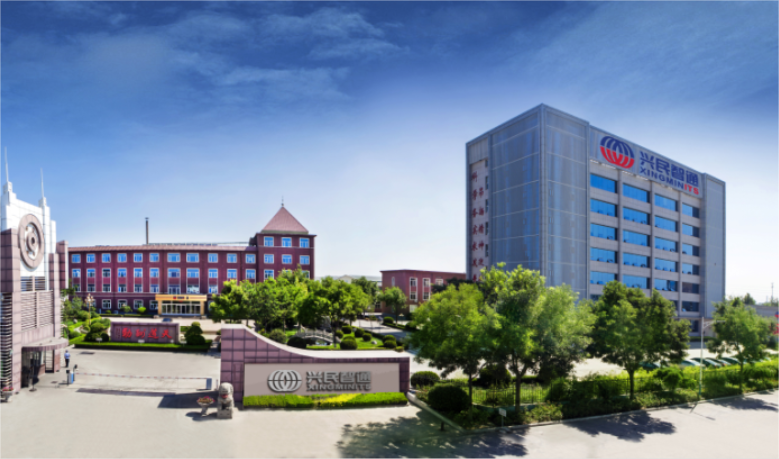
Core Viewpoint - The strategic cooperation agreement between Xingmin Zhitong and BAIC Group aims to enhance collaboration in the fields of new energy vehicle technology research and vehicle sales, leveraging each party's expertise for comprehensive and multi-level strategic cooperation [2] Group 1: Technical Collaboration - The partnership will focus on innovation and optimization of wheel products, establishing a joint technical mechanism to enhance core competitiveness and ensure stable production and supply chain for BAIC's steel wheels [2] - Joint development of intelligent connected technology will be pursued, focusing on next-generation in-vehicle intelligent systems, including 5G and future 6G communication terminals, and enhancing the reliability of Beidou positioning technology [3] Group 2: Platform and Business Model Innovation - The companies will collaborate to build a "computing power + data + model" system to support BAIC's rapid implementation of intelligent driving, smart cockpits, and other areas, while integrating security solutions and digital twin technology [3] - Business model innovation will involve leveraging experience from subsidiaries to explore new service scenarios for vehicle owners, enhancing user experience and product differentiation [3] Group 3: Sales and Standardization - The companies will promote each other's brands and products, with a plan to purchase no less than 200 vehicles from BAIC's brands over the next three years [3] - They will collaborate on industry standards, utilizing expertise in standard formulation and joint research projects to drive innovation and industrialization [4] Group 4: Capital Cooperation - The partnership will focus on strategic emerging fields such as vehicle networking security and low-altitude economy, with plans to establish an industrial fund and participate in project investments to accelerate technology development and ecosystem building [5]

兴民智通与北汽集团签署战略合作协议
Zheng Quan Shi Bao· 2025-11-12 18:38
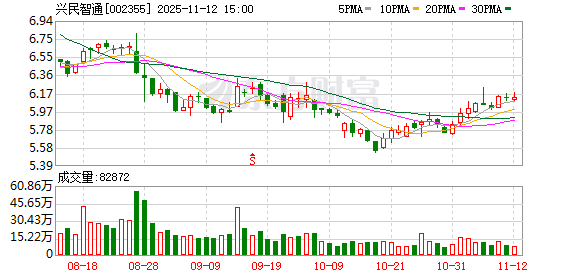
Core Insights - The company, Xingmin Zhitong, has signed a strategic cooperation agreement with BAIC Group to collaborate in the fields of new energy vehicle technology research and development, vehicle sales, and resource sharing [2][3]. Group 1: Technical Collaboration - The partnership will focus on wheel product innovation, establishing a joint technical mechanism to enhance raw material systems, optimize product structures, and refine key manufacturing processes [2]. - In smart connected technology development, both parties aim to create a deep technical cooperation mechanism to upgrade next-generation in-vehicle intelligent systems, focusing on vehicle communication evolution and developing hardware and software for 5G and future 6G [2][3]. Group 2: Platform Development and Operations - The companies plan to jointly build a "computing power + data + model" collaborative system to support BAIC's rapid implementation of intelligent driving, smart cockpits, and intelligent manufacturing [3]. - They will integrate chip-level security solutions and digital twin technology to innovate data elements, reduce operational costs, and enhance operational efficiency [3]. Group 3: Business Model Innovation - Xingmin Zhitong will leverage its subsidiaries' expertise to explore new scenarios and applications for vehicle owners, such as creating an integrated emergency rescue model using satellite communication and drones [3]. Group 4: Sales and Procurement - The companies will promote each other's brands and products, with Xingmin Zhitong planning to purchase no less than 200 vehicles from BAIC Group's brands over the next three years [4]. Group 5: Industry Standards and Capital Cooperation - They will collaborate on industry standards, utilizing Xingmin Zhitong's experience in standard formulation to participate in key research projects and promote innovation results [4]. - The partnership will also focus on strategic emerging fields like vehicle networking security and low-altitude economy, aiming to establish an industrial fund and participate in project investments [4].
兴民智通与北汽集团 签署战略合作协议
Zheng Quan Shi Bao· 2025-11-12 18:36
Core Viewpoint - The strategic cooperation agreement between Xingmin Zhitong and BAIC Group focuses on resource sharing and professional collaboration in the fields of new energy vehicle technology research and development, vehicle sales, and more [1][2][3] Group 1: Technical Collaboration - The partnership will establish a joint technical attack mechanism for wheel product innovation, enhancing raw material systems, optimizing product structures, and refining key manufacturing processes to ensure BAIC's leading position in steel wheels [1] - Both companies aim to develop next-generation in-vehicle intelligent systems, focusing on vehicle communication evolution and creating hardware and software for 5G and future 6G applications [1][2] - The collaboration will enhance the reliability and compliance of Beidou positioning technology, increasing its application depth and breadth in mass-produced vehicles [1] Group 2: Platform and Operational Development - A collaborative "computing power + data + model" system will be established to support BAIC's rapid implementation of intelligent driving, smart cockpits, and intelligent manufacturing [2] - The partnership will integrate chip-level security solutions and digital twin technology to innovate data elements, reduce operational costs, and improve operational efficiency [2] Group 3: Business Model and Sales - Xingmin Zhitong will leverage its subsidiaries' expertise to explore new service scenarios for vehicle owners, including a unique "land-air-space" emergency rescue model and proactive service capabilities using big data and AI [2] - The companies will promote each other's brands and products, with plans for Xingmin Zhitong to purchase no less than 200 vehicles from BAIC's brands over the next three years [2] Group 4: Standardization and Capital Cooperation - The partnership will focus on co-developing industry standards, leveraging Xingmin Zhitong's experience in national and local standard formulation [3] - Both companies will deepen strategic cooperation in emerging fields like vehicle networking security and low-altitude economy, including the establishment of an industrial fund and joint project investments [3]
兴民智通与北汽集团签订战略合作协议 共同推进构建“算力+数据+模型”协同系统
Zheng Quan Shi Bao Wang· 2025-11-12 13:32
Core Viewpoint - The strategic cooperation agreement between Xingmin Zhitong and BAIC Group aims to enhance collaboration in the fields of new energy vehicle technology development and vehicle sales, focusing on resource sharing and professional cooperation [1][2][3] Group 1: Wheel Product Innovation - Both companies will establish a joint technology tackling mechanism to enhance raw material systems, optimize product structures, and refine key manufacturing processes, ensuring BAIC's leading position in steel wheels [1] Group 2: Intelligent Connected Technology Development - A deep technical cooperation mechanism will be established to innovate next-generation in-vehicle intelligent systems, focusing on vehicle communication evolution and developing hardware and software for 5G and future 6G [1][2] Group 3: Platform Construction and Operation - The collaboration will promote the construction of a "computing power + data + model" collaborative system to support BAIC's rapid implementation of intelligent driving, smart cockpits, and intelligent manufacturing [2] Group 4: Business Model Innovation - Xingmin Zhitong will leverage its subsidiaries' expertise to explore new scenarios for vehicle owners, such as integrating satellite communication and drones for emergency rescue, enhancing user experience and product competitiveness [2] Group 5: Vehicle Sales and Procurement - The companies will promote each other's brands and products, with Xingmin Zhitong planning to purchase no less than 200 vehicles from BAIC's brands over the next three years [2] Group 6: Industry Standards Co-creation - The partnership will involve joint participation in standard formulation and major research project applications, aiming to promote the transformation and industrialization of innovative results [3] Group 7: Capital Cooperation - The collaboration will focus on strategic emerging fields like vehicle networking security and low-altitude economy, with plans to establish an industrial fund and participate in project investments to accelerate technology development [3]
协创数据(300857.SZ):已在上海、宁波、成都、乌兰察布等国内核心节点以及东南亚及美国等海外市场建立分布式算力网络
Ge Long Hui· 2025-11-12 11:14
Core Viewpoint - The company is actively building a high-end GPU computing server cluster and has established a distributed computing network in key domestic locations and overseas markets [1] Group 1 - The company has set up distributed computing networks in Shanghai, Ningbo, Chengdu, Ulanqab, Southeast Asia, and the United States [1] - The company currently has a substantial backlog of orders and is actively advancing the delivery of these orders [1]

中国移动开拓四川低空经济新“疆域”
Jing Ji Ri Bao· 2025-11-09 07:37
Core Insights - The traditional "iron foot" inspection model in Chengdu's Tianfu New Area is being replaced by efficient and precise drone inspections, enabled by 5G network modifications from China Mobile [1] - Since becoming the first province in China to pilot low-altitude airspace management in 2017, Sichuan has continuously innovated in low-altitude economic development, with the provincial government supporting the drone industry in its 2024 work report [1] - China Mobile plays multiple roles in the low-altitude economy, including as a leader in new infrastructure, a provider of low-altitude platforms, and an enabler of low-altitude applications, promoting a "1+1+N" capability system [1] Industry Developments - The shift from manual patrols to drone inspections has significantly improved efficiency and quality, allowing for proactive discovery rather than passive response [1] - China Mobile leverages its capabilities in 5G-A sensing integration, computing networks, and artificial intelligence to create a "low-altitude smart network" centered around the "Zhongyi Lingyun" platform, enhancing urban public safety [1] - The value of the low-altitude economy is reflected in its deep applications across various industries, exemplified by the launch of the "Low-altitude Smart Travel" platform in collaboration with Mianyang Technology City [1] Technological Innovations - A multispectral drone equipped with high-definition cameras and spectral sensors is being used in the tea gardens of Beichuan, Mianyang, to monitor tea tree growth and pest conditions in real-time [1] - China Mobile has introduced a shared drone service in the scenic area of Xianhai, Mianyang, allowing tourists to rent drones easily via a QR code, enhancing their experience with autonomous aerial photography [1]

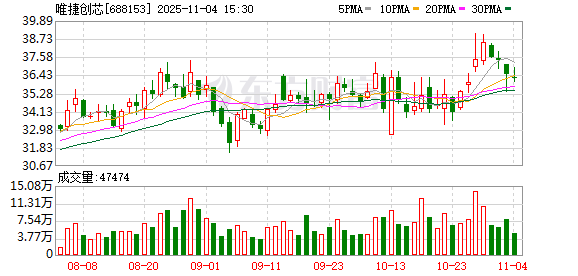
唯捷创芯:公司在手机、路由器及AI端侧的Wi-Fi领域已实现大规模营收
Zheng Quan Ri Bao· 2025-11-04 13:08
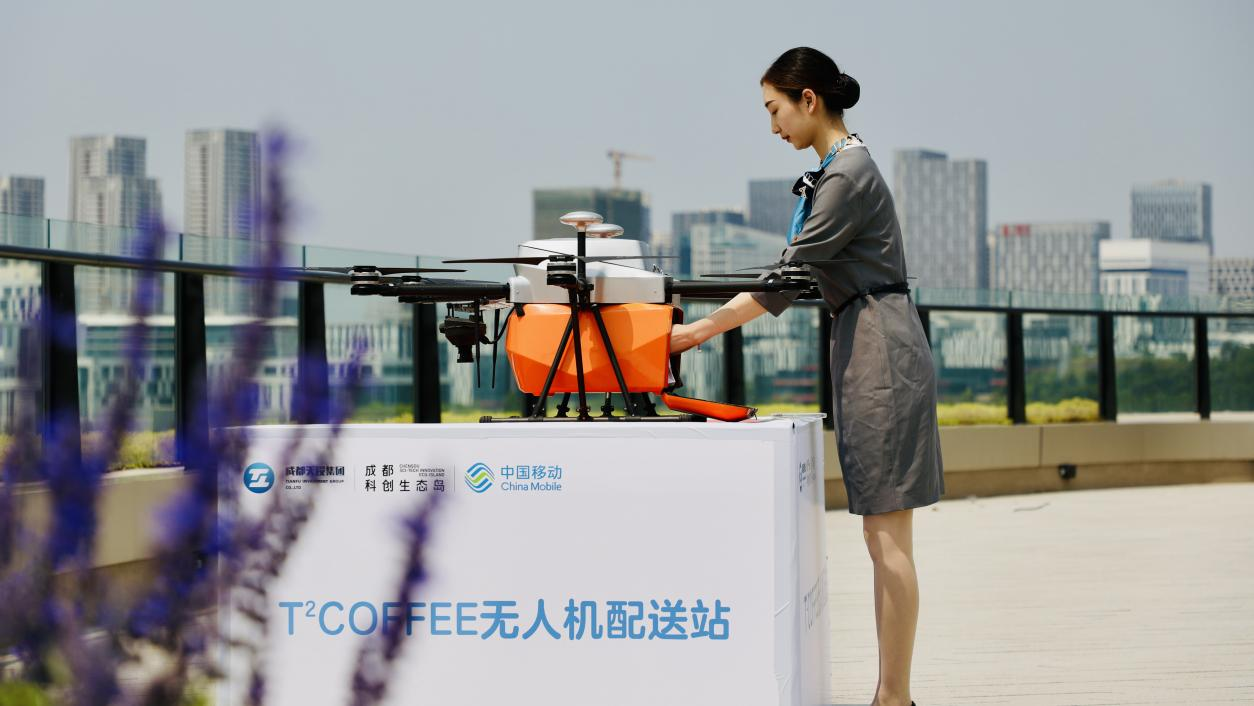
Core Insights - The company has achieved significant revenue in the Wi-Fi sector, particularly in mobile phones, routers, and AI edge applications, and holds a leading position in this field [2] - The company is currently tracking and gaining insights into cutting-edge technologies related to computing infrastructure and optical switching [2] - The company identifies power consumption and latency as the core bottlenecks in the future communication sector, aligning with its core advantages in radio frequency technology, which emphasizes high linearity, low power consumption, and low latency [2] - The core strategy of the company is to continue focusing on its radio frequency main business while actively exploring potential synergies between its core capabilities and future computing networks, with careful planning to follow once the technological evolution path is clear [2]

特斯拉提出万亿薪酬方案,沪指重新站上4000点 | 财经日日评
吴晓波频道· 2025-10-30 00:20
Group 1: State-Owned Enterprises Performance - In the first nine months, the total profit of state-owned enterprises decreased by 1.6%, while total operating revenue increased by 0.9% to 6,132.905 billion yuan [2] - The tax and fee payable by state-owned enterprises reached 44,145.4 billion yuan, a year-on-year increase of 0.5% [2] - The asset-liability ratio of state-owned enterprises was 65.2%, up 0.2 percentage points year-on-year, indicating a slight increase in financial leverage [2] Group 2: Shanghai's Millisecond Computing Network Initiative - Shanghai plans to establish a citywide "millisecond computing" network by 2027, aiming for low-latency computing resources across the city [3] - The initiative focuses on achieving millisecond-level interconnectivity for computing centers and applications, which is crucial for real-time applications like industrial internet and telemedicine [3][4] Group 3: Tesla's Compensation Plan for Musk - Tesla proposed a challenging compensation plan for Elon Musk, with performance targets including expanding the autonomous taxi business and increasing the company's market value from approximately 1 trillion to at least 8.5 trillion dollars over ten years [5] - If Musk meets all performance goals, the stock value could reach around 1 trillion dollars, highlighting the ambitious nature of the plan [5][6] Group 4: OpenAI's Transition to Profitability - OpenAI has reached a significant agreement with Microsoft, which will hold about 30% of the for-profit OpenAI organization, facilitating its transition to a profit-driven entity [7] - OpenAI committed to purchasing 250 billion dollars worth of Azure cloud services from Microsoft, further solidifying their partnership [7] Group 5: Apple's Market Milestone - Apple's market capitalization briefly surpassed 4 trillion dollars, making it the third company to reach this milestone, following Nvidia and Microsoft [8] - The strong sales performance of the iPhone 17 series, particularly in China, has contributed to investor optimism ahead of the upcoming quarterly earnings report [8] Group 6: AI Application Market Dynamics - ByteDance's AI application "Doubao" has surpassed DeepSeek in both monthly active users and downloads, indicating a shift in the competitive landscape of AI applications [10] - The market for independent AI applications is shrinking as major tech companies integrate AI into their ecosystems, making it difficult for smaller players to compete [11] Group 7: Fund Investment Trends - Public funds are rapidly shifting investments from consumer and financial sectors to hard tech areas like AI computing and communications, reflecting a significant change in market focus [12] - The top three holdings in funds have shifted to companies like CATL, Tencent, and NewEase, indicating a preference for technology-related investments [12] Group 8: Market Overview - On October 29, the stock market saw a rally, with the Shanghai Composite Index rising 0.7% and the ChiNext Index increasing nearly 3%, indicating positive market sentiment [14] - Despite the index gains, individual stock performance remains mixed, with certain sectors like energy and metals performing well while others like banking and liquor faced declines [14]