苹果税

Search documents
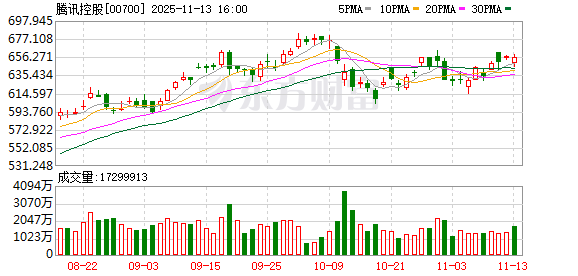
腾讯最新透露!涉及“苹果税”、GPU
Shang Hai Zheng Quan Bao· 2025-11-14 00:48
Core Insights - Tencent reported Q3 revenue of 192.87 billion yuan, a 15% year-on-year increase, and a net profit of 70.55 billion yuan (Non-IFRS), up 18% year-on-year [2] Capital Expenditure - Q3 capital expenditure was 12.98 billion yuan, showing a decline both year-on-year and quarter-on-quarter, but still at a high level [3] - The company plans to reduce overall capital expenditure in 2025 compared to previous guidance, but it will be higher than the actual expenditure in 2024 [3] - Tencent's President Liu Chiping stated that the company has sufficient GPU resources and does not see a significant competitive advantage in AI models beyond its own [3] AI Investments - Current spending related to AI includes R&D, with increasing investments in AI expected to enhance efficiency and reduce costs [4] - AI's benefits are primarily reflected in revenue and gross profit at this stage [4] WeChat and AI Integration - Liu Chiping mentioned that WeChat has integrated various capabilities based on its AI model, enhancing user experience and interaction [5] - The ideal vision is to develop an AI assistant within WeChat to help users complete numerous tasks easily [5][6] - The development of this AI assistant is still in its early stages, with ongoing efforts to enhance search capabilities and user assistance [7] Collaboration with Apple - Tencent has reportedly reached an agreement with Apple regarding a 15% revenue share from payments made through WeChat mini-games and programs [8] - Liu Chiping emphasized a constructive attitude towards ongoing collaboration with Apple to promote a healthier mini-game ecosystem [8] International Gaming Business - Tencent's international gaming revenue grew by 43% year-on-year, surpassing 20 billion yuan for the first time, reaching 20.8 billion yuan [9] - The growth rate exceeded internal forecasts, attributed to new studio acquisitions and successful integration [9] - The company plans to continue collaborating with overseas game studios and aims to promote more Chinese-made games globally [9]


苹果官宣15%佣金率,小游戏开发者松一口气
Di Yi Cai Jing· 2025-11-14 00:45
Core Insights - Apple has confirmed a 15% commission rate for in-app purchases related to mini-apps and mini-games, a result of negotiations with Tencent, marking a shift from the previous 30% rate for developers earning over $1 million annually [1][3] - The new commission structure is seen as a compromise that may enhance Apple's revenue from mini-game developers, who primarily generate income through in-app purchases rather than advertisements [4][5] - The global trend indicates a push against high commission rates, with various regions, including the EU and Japan, reducing their respective rates, and ongoing scrutiny of Apple's practices in China [5] Group 1 - Apple has established a 15% commission rate for mini-apps and mini-games, allowing developers to retain 85% of in-app purchase revenue [1] - The previous structure charged a 30% commission for developers earning over $1 million, while those earning less paid 15% [1] - The change in commission rates reflects a dynamic negotiation process between Apple and Tencent, aimed at addressing payment system concerns [3] Group 2 - Tencent's management has highlighted the inherent tension between the gaming industry and app stores due to high commission rates, which they view as a significant burden [4] - The gaming sector's response to Apple's commission structure has been cautious, with a focus on sustainable and fair economic conditions for developers [3][4] - The mini-game development landscape in China is still emerging, with over 80% of developers being small teams of fewer than 30 people, making the commission structure critical for their viability [4] Group 3 - Apple's services revenue, including the App Store, reached $28.75 billion in the latest quarter, a 15% year-over-year increase, indicating strong performance despite challenges to its commission model [5] - Regulatory pressures in various regions are leading to a reevaluation of Apple's commission rates, with the EU's rate dropping to 17% and Japan implementing laws to lower app store fees [5] - In China, consumer complaints about Apple's market dominance and high commission rates have prompted regulatory scrutiny, suggesting potential changes in the future [5]
事关苹果公司抽成比例 微信传来好消息!腾讯也回应了
Mei Ri Jing Ji Xin Wen· 2025-11-13 16:53
Group 1 - Tencent has reached an agreement with Apple, where Apple will handle payments for WeChat mini-games and apps, taking a 15% cut from the revenue [2] - During Tencent's Q3 2025 earnings call, executives confirmed ongoing cooperation with Apple and expressed a constructive attitude towards the progress of mini-game ecosystem development, with specific details pending official announcement [3] - Apple has a longstanding practice of taking a commission from app developers on the App Store, with a 30% cut for apps generating over $1 million annually and a 15% cut for smaller developers [3] Group 2 - According to Sensor Tower, the "Apple tax" generated approximately $22.34 billion globally in 2023, with over 40 billion yuan coming from China alone [4] - Tencent reported Q3 revenue of 192.87 billion yuan, a 15% year-on-year increase, and a net profit of 63.13 billion yuan, up 19% year-on-year [4]

事关苹果公司抽成比例,微信传来好消息!腾讯也回应了
Mei Ri Jing Ji Xin Wen· 2025-11-13 16:24
Core Viewpoint - Tencent has reached an agreement with Apple, where Apple will handle payments for WeChat mini-games and apps, taking a 15% cut from the revenue generated [1][2]. Group 1: Agreement Details - The agreement allows Apple to process payments for WeChat mini-games, marking a significant collaboration between Tencent and Apple [1]. - Tencent executives confirmed the ongoing positive relationship and collaboration with Apple during a recent earnings call, indicating a constructive attitude towards the progress of the mini-game ecosystem [2]. Group 2: Revenue Sharing Structure - Apple traditionally charges a 30% commission on in-app purchases for apps generating over $1 million annually, while a 15% cut applies to smaller developers [3]. - The "Apple tax" generated approximately $22.34 billion globally in 2023, with over 40 billion yuan coming from China alone [3]. Group 3: Tencent's Financial Performance - Tencent reported a revenue of 192.87 billion yuan for Q3, reflecting a 15% year-on-year growth, and a net profit of 63.13 billion yuan, up 19% year-on-year [4].

苹果将从微信小游戏中抽成15%?腾讯回应
2 1 Shi Ji Jing Ji Bao Dao· 2025-11-13 14:35
据分析,达成协议之后,一方面为苹果开辟了新的收入来源,另一方面也减轻了腾讯所面临的压力。苹 果此前要求腾讯堵上漏洞——一些应用开发者利用这些漏洞,把用户引导到外部支付系统,从而绕过 iPhone通常 30%抽成 的规则。 所谓"苹果税",是指苹果对App Store上所有应用的数字内容消费抽取15%~30%的佣金。每当苹果用户 通过苹果手机应用商店付费下载App或在App内部购买数字商品/服务时,苹果公司会扣留交易金额的一 部分作为"过路费",再将剩下的转给相应的App开发者。 据中国基金报11月13日消息,据悉,苹果和腾讯敲定微信游戏15%的抽成协议。今后在微信小游戏和小 程序中的支付将由苹果来处理,苹果并从中抽取 15%的分成 。 对此,腾讯管理层表示,腾讯与苹果一 直在不同领域展开良好的合作和沟通,"到目前为止,我们会保持建设性的态度,等待事态的发展。" (原标题:苹果将从微信小游戏中抽成15%?腾讯回应) ...
腾讯跟苹果达成协议
Zhong Guo Ji Jin Bao· 2025-11-13 13:28
腾讯去年8月曾披露,正在与苹果沟通,让苹果在iPhone端的小游戏和应用销售中分成,但前提条件是 要"在经济上可持续",且足够公平。尤其是小游戏的受欢迎程度一直在稳步提升,而在此前双方没有协 议的情况下,苹果并未从相关消费中获得任何收入。 对此,腾讯管理层表示,腾讯与苹果一直在不同领域展开良好的合作和沟通,"到目前为止,我们会保 持建设性的态度,等待事态的发展。" 据分析,达成协议之后,一方面为苹果开辟了新的收入来源,另一方面也减轻了腾讯所面临的压力。苹 果此前要求腾讯堵上漏洞——一些应用开发者利用这些漏洞,把用户引导到外部支付系统,从而绕过 iPhone通常30%抽成的规则。 所谓"苹果税",是指苹果对App Store上所有应用的数字内容消费抽取15%~30%的佣金。每当苹果用户 通过苹果手机应用商店付费下载App或在App内部购买数字商品/服务时,苹果公司会扣留交易金额的一 部分作为"过路费",再将剩下的转给相应的App开发者。 在这笔跟腾讯的最新协议中,苹果抽取15%的分成,只有其对多数学内购开发者通常收费的一半,但得 以在中国一个不断增长的娱乐平台中站稳脚跟。小游戏完全运行在微信生态之内——微信目前 ...
腾讯跟苹果达成协议
中国基金报· 2025-11-13 13:24
Core Viewpoint - Apple and Tencent have reached an agreement where Apple will take a 15% cut from payments made within WeChat mini-games and mini-programs, marking a significant development in their partnership and providing Apple with a new revenue stream while alleviating pressure on Tencent [1][2]. Group 1: Agreement Details - The agreement allows Apple to process payments for WeChat mini-games, taking a 15% commission, which is half of the typical 30% fee Apple charges for most in-app purchases [2]. - This deal is seen as a way for Apple to establish a foothold in China's growing entertainment platform, where WeChat has 1.41 billion monthly users [2]. - Prior to this agreement, Apple did not earn any revenue from mini-game transactions, as developers were circumventing the standard payment system [2]. Group 2: Tencent's Financial Performance - Tencent reported a revenue of 192.87 billion yuan for Q3 2025, reflecting a 15% year-on-year growth [3]. - The operating profit for Tencent during the same period was approximately 63.55 billion yuan, up 19% year-on-year [3]. - Tencent's net profit attributable to equity holders was about 63.13 billion yuan, also showing a 19% increase year-on-year [3].

X @外汇交易员
外汇交易员· 2025-11-13 11:25
腾讯已与苹果达成一项协议,该协议规定苹果将处理支付,并从微信小游戏和应用内的购买中抽取15%的分成。两位科技巨头之间谈判已超过一年。苹果此前一直要求腾讯堵上被应用开发者将用户引导至外部支付系统的漏洞,从而规避30%的“苹果税”。近年来,苹果在多个司法管辖区采取了措施,要么降低30%的应用内购费用,允许订阅等项目的豁免,要么向替代支付处理服务开放设备。外汇交易员 (@myfxtrader):据彭博社消息,苹果据悉就中国市场的应用内购问题向腾讯与字节跳动施压,要求填补漏洞。目前腾讯与字节跳动的应用内开发者利用漏洞将用户引向外部支付系统,从而规避30%的“苹果税”。知情人士称,苹果在今年5月与6月分别警告微信与抖音,拒绝新版本在App Store上上架,除非修补漏洞。 ...
“苹果税”争议背后的深层逻辑
Zheng Quan Ri Bao Wang· 2025-10-28 06:56
Core Insights - Apple's "walled garden" business model, which includes hardware barriers, locked systems, and a 30% commission from the App Store, is facing significant challenges in China due to consumer backlash and potential regulatory changes [1][2] - The ongoing debate over Apple's commission structure highlights broader issues of market fairness and competition, particularly as other regions move towards reducing or eliminating such fees [1][2] Group 1: Market Dynamics - A coalition of 55 consumers has submitted a complaint against Apple, questioning the fairness of its 30% commission in China, which is considered the highest globally [1] - Other countries are moving towards reducing Apple's commission to as low as 0% by 2025, raising questions about whether China's current rate constitutes "unfair high pricing" under Chinese antitrust laws [1] Group 2: Regulatory Implications - Should regulatory bodies take action, Apple may be required to disclose critical information regarding its global cost structure, regional differences, and contract templates [2] - The controversy surrounding the "Apple tax" is not merely about pricing but also about the impact on local content and service competitiveness, as high commissions lead to increased app prices for consumers [2] Group 3: Strategic Recommendations - Apple is encouraged to proactively reform its commission structure in China, potentially using it as a model for global fee adjustments, which could enhance user trust and expand its customer base [2] - In an era where hardware growth is plateauing, sustainable service revenue growth for Apple will depend on regulatory compliance and building user trust [2]
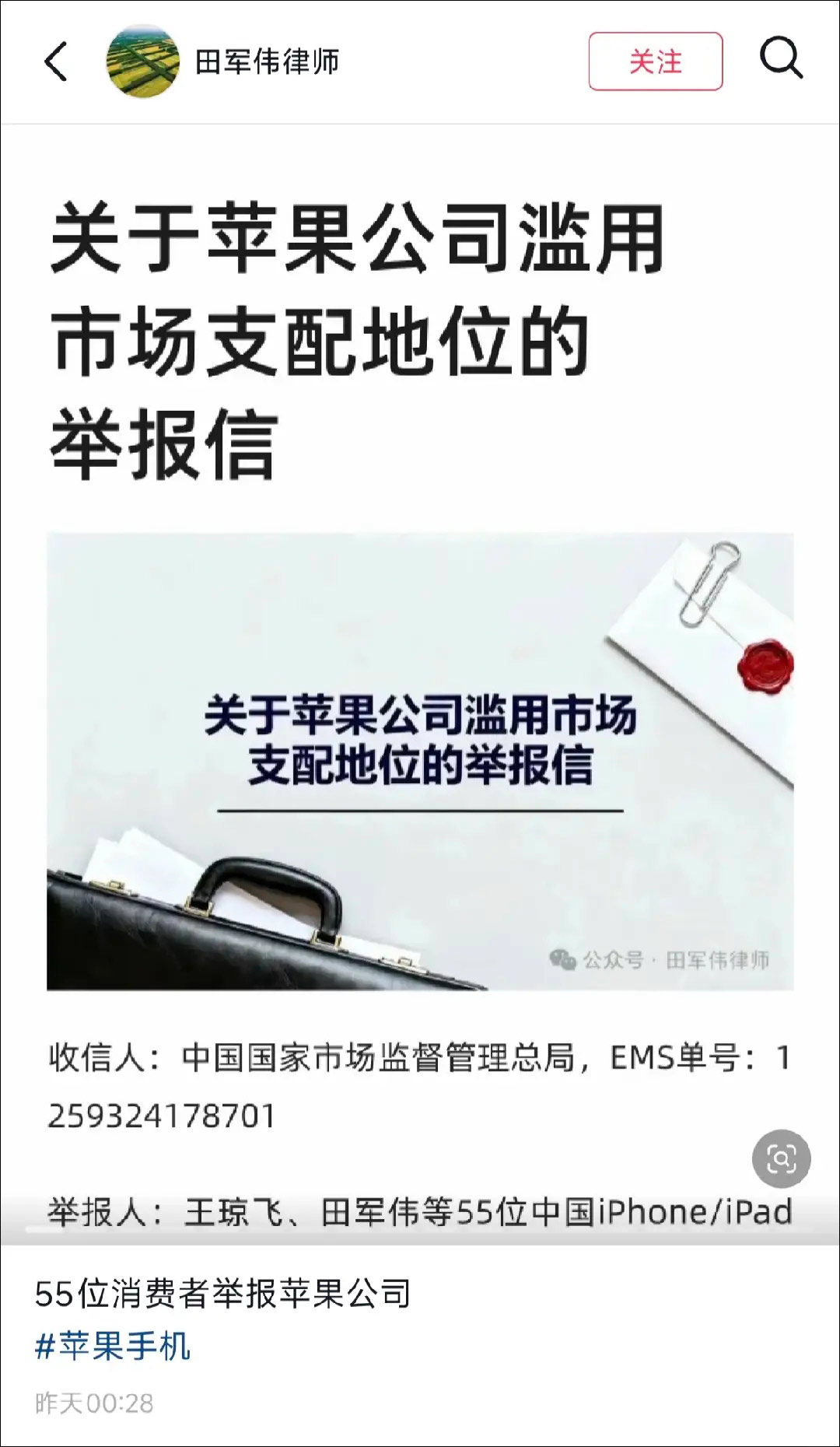
55名用户联合举报苹果:真以为中国人傻钱多?
Guan Cha Zhe Wang· 2025-10-22 11:21
Core Viewpoint - A group of 55 Chinese consumers has filed a complaint against Apple, accusing the company of abusing its market dominance by restricting payment channels and charging high commissions, which they argue undermines consumer choice and fair trade in China [1][4]. Group 1: Complaint Details - The complaint requests that Apple open third-party payment channels beyond In-App Purchase (IAP) for Chinese consumers without charging any commissions [4]. - It also demands that Apple allow access to iOS applications from sources other than the App Store, again without any associated fees [4]. - Additionally, the complaint calls for a reduction in the commission rate for in-app purchases to be lower than the most favorable rates in other countries [4]. Group 2: Context of Apple's Market Practices - The term "Apple Tax" refers to the 10%-30% commission Apple charges developers for transactions made through its App Store, which has drawn criticism globally [6]. - The European Union has previously investigated Apple for its App Store commission policies, leading to significant fines and rulings against the company [6][7]. - Other countries, including Japan and Australia, have also initiated investigations or legal actions against Apple for similar anti-competitive practices [8].