
车路云一体化

Search documents
广东出台14条政策措施 推动人工智能赋能交通运输高质量发展 支持地市有序扩大高级别自动驾驶应用区域
Nan Fang Ri Bao Wang Luo Ban· 2026-01-22 01:39
Core Insights - The article discusses the implementation of the "Measures" by the Guangdong provincial government to accelerate the integration of artificial intelligence (AI) in transportation, aiming to enhance the quality, efficiency, and transformative power of the sector [1] Group 1: Support Framework - The "Measures" focus on three core areas: data supply, computational power and algorithm support, and key technology breakthroughs [1] - In terms of data supply, Guangdong aims to lead with the construction of a digital foundation for the transportation industry, enhancing data governance and creating a high-quality data resource directory [1] - For computational power, the province will utilize data center clusters and deploy edge computing nodes in critical areas to create a collaborative system of centralized and real-time computing [1] - Key technology breakthroughs will focus on developing AI models and agents, particularly in real-time perception, multi-modal data integration, intelligent control, and strategy optimization [1] Group 2: Innovative Application Scenarios - The "Measures" outline eight innovative application scenarios to transition AI technology from research to practical use [2] - These include advancing smart connected vehicle trials, enhancing smart road construction, and supporting the integration of rail transport systems [2] - Other scenarios involve improving smart waterway efficiency, upgrading smart port operations, enhancing civil aviation safety, expanding low-altitude intelligent applications, and developing a comprehensive smart transportation service system [2] Group 3: Operational Mechanisms - The "Measures" establish three operational mechanisms to ensure effective implementation [3] - A dedicated task force will be formed by the provincial transportation department to oversee the execution of these initiatives [3] - Collaborative innovation will be promoted through regular innovation competitions and industry showcases [3] - The province will also create a platform for communication between application scenario enterprises and technology innovators, while fostering talent development in AI and transportation [3]
广东:推动自动驾驶大模型落地
Nan Fang Du Shi Bao· 2026-01-21 23:11
Core Viewpoint - Guangdong Province has officially issued a set of policies aimed at promoting high-quality development in transportation through artificial intelligence, establishing a comprehensive support system for smart transportation development [2] Group 1: Policy Measures - The policy includes 14 concrete measures to create a full-chain system of "core element supply - innovative scenario empowerment - work mechanism guarantee" [2] - It aims to accelerate the pilot application of intelligent connected vehicles and support the establishment of demonstration application recognition in free trade zones and administrative regions [2][5] Group 2: Data and Technology Support - The measures focus on three main areas: data supply, computing power and algorithm support, and key technology breakthroughs [3] - Guangdong will enhance data governance in the transportation sector, creating a standardized resource directory that includes key areas such as highways, railways, and ports [3] - The province will utilize data centers to support the orderly construction of computing power and deploy edge computing nodes in critical locations to form a collaborative system [3][4] Group 3: Application Scenarios - Eight innovative application scenarios are outlined to transition AI technology from the laboratory to practical use, including remote driving and intelligent decision-making [5][6] - The policy supports the construction of a national "vehicle-road-cloud integration" application pilot city in Guangzhou and Shenzhen, promoting the testing of autonomous driving in logistics scenarios [6] Group 4: Smart Infrastructure Development - The measures propose the integration of AI and domestic BIM technology in smart road construction, enhancing maintenance through unmanned inspections and data analysis [6] - The policy aims to transform road network management from "visible and measurable" to "intelligent research and prevention" [6] Group 5: Enhancing Transportation Efficiency - The integration of AI in rail transport will facilitate the optimization of passenger flow prediction and dynamic capacity allocation [7] - The development of a comprehensive monitoring system for waterways will enhance navigation efficiency and information exchange [7] Group 6: Emergency and Logistics Applications - AI will be applied in civil aviation for flight flow management and airport operations, optimizing resource allocation and enhancing safety [8] - The logistics sector will benefit from AI in demand integration and capacity allocation, improving multi-modal transport efficiency [9]

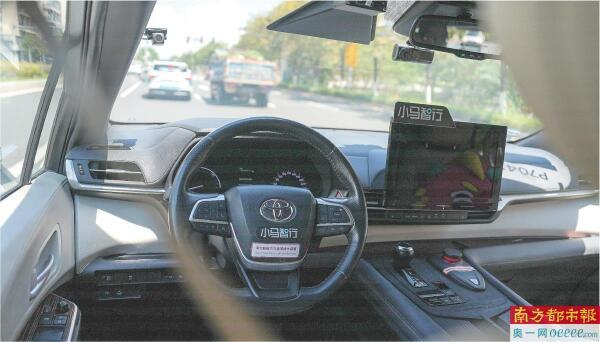
车路云“基础设施分级”标准拟上半年发布、多地集中披露新进展
Xin Lang Cai Jing· 2026-01-21 10:25
(来源:中关村智慧城市信息化产业联盟) 进入2026年后,全国多地"车路云一体化"应用试点项目与相关标准制定工作开始同步加速推进。 具体项目建设方面,济南公共资源交易中心日前发布《济南新旧动能转换起步区智能网联汽车"车路云一体化"应用试点项目-路侧智能基础设施建设和城 市级服务管理平台建设公开招标公告》,项目预算金额约9393万元,出资比例为100%,招标人为山东车网智联数字科技有限公司。《公告》中提到,该 项目分为路侧智能基础设施建设、城市级服务管理平台建设-云控基础平台以及城市级服务管理平台建设-云控应用平台三个标段,计划工期180日历天, 建设地点为济南新旧动能转换起步区。 据智通财经记者不完全统计,除前述地区,今年1月披露"车路云一体化"试点项目最新进展的省市还包括广东省、湖北省十堰市、浙江省杭州市等。 随着高阶驾驶辅助普及提速,相关试点、示范应用工作的持续推进,"车路云一体化"已取得显著进展。最新数据显示,我国已建成17个国家级测试示范 区,累计发放测试示范牌照超10300张,累计测试里程突破2亿公里;建成7个车联网先导区、16个双智试点城市,支持20个城市开展智能网联汽车"车路云 一体化"应用试点 ...
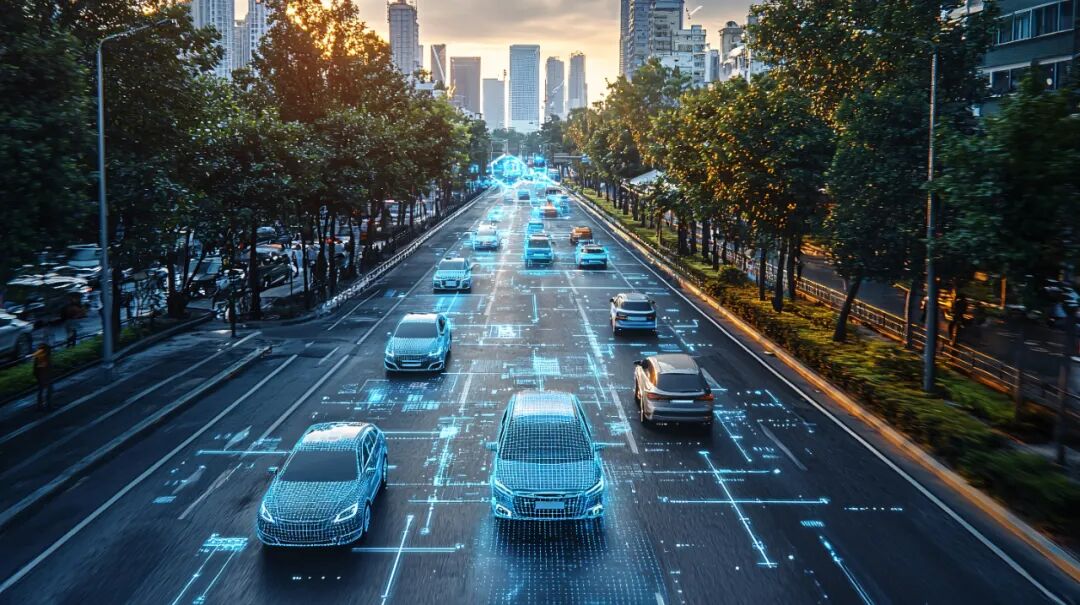
广东印发重磅政策:推动六市智能网联汽车示范应用试点互认
Ju Chao Zi Xun· 2026-01-21 09:33
Core Viewpoint - The Guangdong Provincial Government has officially issued the "Several Policy Measures for High-Quality Development of Transportation Empowered by Artificial Intelligence," aiming to accelerate the integration of AI in the transportation sector and enhance the quality, efficiency, and dynamics of the industry, thereby injecting strong intelligent momentum into the Guangdong-Hong Kong-Macao Greater Bay Area and the province as a whole [1][6]. Group 1: Key Measures - The policy includes 14 specific measures that form a complete closed loop, focusing on core element supply, innovative scenario empowerment, and work mechanism guarantees [1][6]. - By 2026-2027, the policy aims to achieve breakthroughs in several key application scenarios, establishing a national benchmark for the integration of "AI + transportation" [1][6]. Group 2: Core Element Supply - The measures emphasize building a solid foundation for intelligent transportation development through data supply, including the establishment of a comprehensive data resource directory system and the standardization of data across highways, railways, and ports [3]. - A collaborative system for centralized computing power and real-time edge computing will be constructed, leveraging resources from the Shaoguan data center cluster and promoting full coverage of technologies like 5G and Beidou [3]. - Key technologies will focus on developing AI models and intelligent agents specific to the transportation sector, addressing dynamic scene perception and multi-modal data fusion [3]. Group 3: Innovative Scenario Empowerment - The measures cover all transportation sectors, including highways, railways, waterways, ports, civil aviation, and low-altitude applications, promoting the transition of AI technology from pilot applications to large-scale implementation [4]. - Smart highway construction will adopt a new model of "digital surveying + digital design + intelligent construction," while rail transport will optimize passenger flow prediction and capacity allocation through AI [4]. - The policy aims to enhance operational efficiency and safety in airports and ports using AI visual recognition and blockchain technologies [4]. Group 4: Work Mechanism Guarantees - To ensure effective implementation, the measures establish three main work mechanisms: accountability led by the provincial transportation department, collaborative innovation through industry alliances, and optimization of the industrial ecosystem [5]. - A working group will be formed to manage the implementation, requiring local governments and state-owned transportation enterprises to develop their action plans [5]. - The policy also emphasizes the importance of data security management and privacy protection to safeguard AI applications [5]. Group 5: Overall Impact - The introduction of these measures signifies a systematic and large-scale advancement in Guangdong's "AI + transportation" strategy, aiming to transform transportation from traditional operations to intelligent governance and from decentralized operations to collaborative transport [6]. - This initiative is expected to provide a more convenient, efficient, and safe travel experience for the public and serve as a replicable model for the intelligent transformation of the national transportation industry [6].
汽车早报|广汽高域飞行汽车AirCab已获超33亿元意向订单 兰博基尼2025年交付10747辆创纪录
Xin Lang Cai Jing· 2026-01-21 00:36
Group 1 - The core viewpoint is that the Chinese automotive market is shifting towards a high-end consumption cycle by 2026, driven by the adjustment of new energy vehicle purchase tax incentives and policies encouraging technology upgrades and quality consumption [1] Group 2 - The "Car-Route-Cloud" integrated intelligent roadside infrastructure grading technical requirements for urban roads is expected to be officially released in the first half of this year, aiming to standardize infrastructure grading across pilot cities [2] - GAC Aion's flying car, GOVY AirCab, has received over 33 billion yuan in intended orders, with more than 2,000 units ordered, and is expected to enter mass production by the end of 2026 [2] Group 3 - GAC Group has denied reports that half of its automotive chips will be replaced by Gree chips, clarifying that such statements are not factual [3] - Xiaomi reported two car fire incidents, with one occurring on January 19, 2026, in Haikou, Hainan, where the fire was extinguished without causing injuries [3] Group 4 - Renault Group announced a global vehicle sales target of 2,336,807 units for 2025, representing a 3.2% year-on-year increase, with plans to update and expand its internal combustion engine and electric vehicle lineup in Europe by 2026 [4] Group 5 - Lamborghini announced a record global delivery of 10,747 vehicles in 2025, with significant contributions from the EMEA region (4,650 units), the Americas (3,347 units), and the Asia-Pacific region (2,750 units) [5]

1.25亿 十堰市智能网联汽车“车路云一体化”建设及研发中试项目一期招标
Xin Lang Cai Jing· 2026-01-20 13:40
(来源:中关村智慧城市信息化产业联盟) 十堰市智能网联汽车"车路云一体化" 建设及研发中试项目一期 项目名称 十堰市智能网联汽车"车路云一体化"建设及研发中试项目一期 预算金额 12500万元 项目主要内容 采购人信息 招标人:东信车路云(十堰)科技有限公司 联系地址:十堰市茅箭区遇真路3号 联系人:姜博 邮编:441000 本项目整体建设规模拟对十堰城区228个路口进行智能路侧基础设施和云控基础平台全流程工具库以及交通管控服务系统。 包括但不限于初步设计、工程量清单中所包含的所有设备及软硬件等的采购、运输、货到就位以及安装、调试、培训、保修、检测等一切项目内容,直至 验收检测合格交付至建设单位使用 联盟简介 /Profile/ 中关村智慧城市信息化产业联盟(ZhongGuanCun Smarter City Information Industry Alliance ,简称SCIIA)是成立于2015年,具有独立法人资格活动地域为 全国的4A级社会组织,现有成员单位涵盖国内外智慧城市领域科研、制备、应用、检测和服务等方面的知名机构、大学、企事业单位。 联盟主要业务包括—— SCIIA旨在全球范围内开展智慧城 ...
滇中新区领导调研“车路云一体化”项目推进情况
Xin Lang Cai Jing· 2026-01-18 22:34
本报讯 记者李双双报道 日前,滇中新区党工委副书记、管委会副主任杨东伟,新区党工委委员、管委 会副主任包旭率队调研新区"车路云一体化"项目推进情况,现场研究部署下步工作。 调研组一行先后前往空港大道,实地了解警用无人巡逻车道路测试进展,查看昆明市"车路云一体化"项 目(一期)建设情况;走进春天礼云仓智能网联物流车商业应用示范项目,调研无人物流应用现状;在 未来交通创新研究院,详细了解市级智能网联汽车道路测试监管平台运行及项目整体进展情况。 杨东伟强调,要认真落实中央、省、市决策部署,抢抓新一轮科技革命和产业变革历史机遇,推动科技 创新和产业创新深度融合,主动拥抱数字化发展浪潮。要锚定发展目标,坚持需求导向与问题导向相结 合,主动学习借鉴国内外先进经验,扎实推进"车路云一体化"建设,聚焦智慧交通重点方向,大胆探 索、持续完善,不断拓展应用场景。同时,要深化与头部企业、高校院所协同创新,加快推进与省市及 各州市跨区域协同,精准招引优质项目,着力培育新质生产力,为城市治理和产业发展注入新动能。 ...
2025年中国汽车出行云行业发展背景、市场规模、部署模式、企业格局及未来趋势研判:行业显现出强劲扩张态势,市场规模达140.4亿元[图]
Chan Ye Xin Xi Wang· 2026-01-17 01:02
Core Insights - The automotive cloud industry is rapidly evolving, driven by technological advancements, user demands, and market competition, with a significant focus on "smart driving equality" [1][4] - The integration of cloud computing with smart mobility is expected to create substantial growth opportunities, with the market projected to reach 12.21 billion yuan in 2024 and 14.04 billion yuan in 2025, reflecting a 15% year-on-year growth [1][8] Industry Overview - Automotive cloud serves as a digital foundation for the entire smart vehicle industry chain, leveraging cloud computing to enhance the digital transformation across R&D, production, sales, and usage [2][3] - The industry is characterized by a four-dimensional collaborative ecosystem involving vehicles, cloud, roads, and people, facilitating a comprehensive upgrade of the automotive sector [2] Development Background - The acceleration of automotive intelligence is evident, particularly in the new energy vehicle sector, where the installation rate of L2-level and above assisted driving functions is expected to reach 87% by October 2025 [4][5] - The Chinese government is actively promoting the "vehicle-road-cloud integration" strategy, which aims to enhance the safety, energy efficiency, and comfort of intelligent connected vehicle systems [5][6] Market Status - The Chinese automotive cloud market is experiencing robust growth, with a projected market size of 12.21 billion yuan in 2024 and 14.04 billion yuan in 2025, driven by AI models, smart vehicle intelligence, and supportive policies [8][10] - Public cloud services are expected to account for 65.3% of the market in 2024, while private cloud services will represent 34.7%, indicating a diverse deployment strategy among automotive companies [8][9] Customer Distribution - The customer base for automotive cloud services is extensive, covering key segments of the smart vehicle industry, including OEMs, parts suppliers, autonomous driving technology providers, and mobility service suppliers [9] - In 2024, OEMs and parts suppliers are expected to represent 43.2% and 27.6% of the customer distribution, respectively, highlighting their reliance on cloud services for core applications [9] Market Landscape - The market is dominated by a multi-supplier strategy, with leading players maintaining significant market shares due to their resource availability and technological advantages [10] - In the public cloud infrastructure sector, the top five service providers are expected to hold a combined market share of 86.9%, while the top five in the private cloud sector will account for 60% [10] Future Trends - The automotive cloud industry is anticipated to continue its growth trajectory, with expectations of surpassing 20 billion yuan by 2028, driven by the increasing demand for smart and connected vehicles [10] - Global expansion is expected as Chinese automotive companies increase their international presence, leading to a rise in demand for localized cloud services [10] - The industry will likely shift towards a hybrid architecture, optimizing computing resources and ensuring compliance with local data regulations [10]

预计武汉2025年新能源汽车产量同比增长56.7%
Chang Jiang Ri Bao· 2026-01-15 12:53
Group 1 - The core viewpoint of the articles indicates that the automotive production in Wuhan is expected to grow by 10.8% year-on-year in 2025, reversing the previous decline, with new energy vehicles (NEVs) being the main growth driver, projected to increase by 56.7% year-on-year, which is an improvement of 16.2 percentage points from the previous year [1] - Wuhan has established a daily monitoring and weekly scheduling mechanism, implementing a "one enterprise, one policy" approach to achieve production targets, while addressing challenges in the supply chain and enhancing innovation support [1] - The city is accelerating the development of intelligent and new energy vehicles, with several new models such as the Lantu Free+, Warrior 817, Fengshen L8, and Lantu Taishan being launched [1] Group 2 - Wuhan is enhancing policy support for quality enterprises and projects, organizing over ten events related to the automotive industry supply and demand to promote collaboration across the industry chain [2] - The cultivation of market entities has shown significant results, with over 30 companies, including Magnesium Technology and Starry Sky Meizu, being selected as provincial-level specialized and innovative enterprises, forming a tiered development structure [2]
一日双箭,中国航天2026年高密度发射大幕拉开;目前我国共有超过60家机构向ITU申报卫星资料;上海完善智能网联汽车数据采集——《投资早参》
Mei Ri Jing Ji Xin Wen· 2026-01-15 00:04
Market News - The three major US stock indices closed lower, with the Dow Jones down 0.08%, Nasdaq down 1%, and S&P 500 down 0.53%. Tech stocks generally fell, with Oracle and Broadcom down over 4%, and Amazon, Microsoft, and Meta down over 2%. Intel rose over 3% [1] - International oil prices saw a significant drop, with WTI crude oil down 1.61% at $59.95 per barrel and Brent crude down 1.53% at $64.47 per barrel. Precious metals prices increased, with spot gold up 0.87% at $4626.55 per ounce and silver up 6.56% at $92.63 per ounce [1] - European stock indices had mixed results, with Germany's DAX down 0.53%, France's CAC40 down 0.19%, and the UK's FTSE 100 up 0.46% [1] Industry Insights - China successfully launched two satellites on January 13, marking the beginning of a high-density launch schedule for the year. The satellite industry is projected to target a market space worth trillions, with over 60 institutions applying for satellite data to the ITU [2] - The satellite internet sector is expected to grow significantly, with the satellite communication industry projected to exceed 200 billion to 400 billion yuan by 2030, with an annual compound growth rate of 10%-28% [3] - Shanghai's Economic and Information Technology Commission released a plan to promote high-level autonomous driving, aiming for large-scale application by 2027 and establishing a competitive smart connected vehicle industry cluster [4] - The "vehicle-road-cloud integration" is expected to generate an additional output value of 725.9 billion yuan by 2025 and 2.5825 trillion yuan by 2030, with a compound annual growth rate of 28.8% [4] - The policy aims to enhance data collaboration and trust among automotive, information communication, and transportation sectors, addressing issues of data silos and unstandardized data formats [5][6]