
金融高水平开放

Search documents
何立峰会见金融监管总局国际咨询委员会委员时指出 中国将继续扩大金融高水平开放
Xin Hua She· 2025-10-28 13:33
Core Points - The Chinese government is committed to implementing the spirit of the 20th National Congress and the "14th Five-Year Plan" by expanding high-level financial openness and accelerating the construction of a modern financial powerhouse [1] - The government welcomes more foreign financial institutions and long-term capital to invest and operate in China, aiming to deepen cooperation with foreign entities [1] - Members of the Financial Regulatory Administration's International Advisory Committee express optimism about China's economic and financial development prospects and are willing to continue expanding investment cooperation in the Chinese market [1]
未来五年怎么干?央行、金融监管总局、外汇局发声
第一财经· 2025-10-25 09:08
Core Viewpoint - The article discusses the recent meetings held by the People's Bank of China (PBOC), the National Financial Regulatory Administration, and the State Administration of Foreign Exchange, focusing on the implementation of the spirit of the 20th Central Committee's Fourth Plenary Session, outlining key tasks for monetary policy, financial regulation, and foreign exchange management. Group 1: Monetary Policy - The PBOC emphasized the construction of a scientific and robust monetary policy system, macro-prudential management, and systemic financial risk prevention mechanisms as key tasks [5][6] - The PBOC aims to balance short-term and long-term goals, support economic growth while maintaining the health of the financial sector, and dynamically improve the monetary policy framework [6][7] - The PBOC plans to enhance the effectiveness of financial support for high-quality economic development and promote the internationalization of the Renminbi [6][7] Group 2: Financial Regulation - The National Financial Regulatory Administration highlighted the importance of risk prevention and the establishment of mechanisms to address key risk areas, ensuring no systemic financial risks occur [9] - The administration aims to enhance the forward-looking, precise, effective, and coordinated nature of financial regulation, focusing on the "five major regulatory" areas [9] Group 3: Foreign Exchange Management - The State Administration of Foreign Exchange outlined tasks to support high-quality economic development, maintain foreign exchange market stability, and promote the internationalization of the Renminbi [11][12] - The administration plans to expand high-level institutional openness in the foreign exchange sector and improve the monitoring and early warning systems for cross-border capital flows [12]


未来五年怎么干?央行、金融监管总局、外汇局发声
Di Yi Cai Jing· 2025-10-25 07:43
Core Viewpoint - The People's Bank of China (PBOC) is enhancing its monetary policy framework and execution to support economic stability and high-quality development, as outlined in the recent meetings following the Fourth Plenary Session of the 20th Central Committee of the Communist Party of China [1][2]. Group 1: Monetary Policy Framework - The PBOC has identified five key areas of focus: constructing a scientific and robust monetary policy system, improving macro-prudential management, deepening financial supply-side structural reforms, and advancing high-level financial openness [2]. - The PBOC emphasizes the need to balance short-term and long-term goals, support for the real economy, and the health of the financial sector while dynamically improving the monetary policy framework [2]. - The PBOC aims to maintain the stability of the RMB exchange rate at a reasonable and balanced level, while enhancing the effectiveness of monetary policy to support economic growth [2]. Group 2: Financial Regulation - The National Financial Regulatory Administration is committed to enhancing the foresight and effectiveness of financial regulation, focusing on preventing systemic financial risks and improving risk management mechanisms [4]. - The administration emphasizes the importance of strong regulatory responsibilities and the continuous reinforcement of the "five major regulations" to ensure financial stability [4]. Group 3: Foreign Exchange Management - The State Administration of Foreign Exchange (SAFE) has outlined key tasks including promoting the internationalization of the RMB, expanding high-level institutional openness in the foreign exchange sector, and maintaining the stability of the foreign exchange market [5][6]. - SAFE aims to enhance the management of cross-border capital flows and strengthen the monitoring and early warning systems for foreign exchange [6]. - The administration also focuses on supporting trade innovation and expanding bilateral investment cooperation while ensuring the safety and value retention of foreign exchange reserves [6].
维护股市债市汇市等 金融市场平稳运行
Zhong Guo Zheng Quan Bao· 2025-10-24 22:39
Core Insights - The People's Bank of China (PBOC) is focusing on implementing a scientific and stable monetary policy system to maintain the stability of financial markets including stock, bond, and foreign exchange markets [1][2] Group 1: Monetary Policy and Financial Stability - The PBOC aims to balance short-term and long-term goals, support economic growth while ensuring the health of the financial sector, and manage internal and external relationships effectively [2] - The central bank will enhance the execution and transmission of monetary policy, reform the RMB exchange rate formation mechanism, and maintain the RMB's stability at a reasonable and balanced level [2] Group 2: Macro-Prudential Management - A comprehensive macro-prudential management system and mechanisms for systemic financial risk prevention and resolution will be established, focusing on monitoring, assessing, and warning against systemic financial risks [2] - The PBOC will work with relevant departments to support local small financial institutions, local government financing platforms, and address risks in the real estate market [2] Group 3: Financial Supply-Side Structural Reform - The PBOC will deepen financial supply-side structural reforms, focusing on technology finance, green finance, inclusive finance, pension finance, and digital finance to enhance financial services for the real economy [3] - There will be an emphasis on building a transparent, open, and resilient financial market system, as well as advancing the research and application of digital RMB [3] Group 4: Financial Openness and Security - The PBOC is committed to promoting high-level financial openness while safeguarding national financial security, including advancing the internationalization of the RMB and enhancing the use of RMB in trade [3] - Efforts will be made to facilitate trade and investment financing, and to develop a cross-border payment system for the RMB that is self-controlled and widely accessible [3]
【金融街发布】央行:拓展丰富中央银行宏观审慎和金融稳定功能 维护股市、债市、汇市等金融市场平稳运行
Xin Hua Cai Jing· 2025-10-24 14:55
Core Viewpoint - The meeting emphasized the importance of implementing the spirit of the 20th Central Committee's Fourth Plenary Session, focusing on financial stability and supporting economic growth through effective monetary policies [1][2]. Group 1: Economic and Financial Policies - The People's Bank of China (PBOC) has introduced a series of monetary policy measures to maintain liquidity and support the stability of financial markets, including the stock, bond, and foreign exchange markets [1][2]. - The meeting highlighted the achievements of the past five years under the leadership of the Central Committee, noting that China's economy has maintained strategic stability and high-quality development despite complex international challenges [1][2]. Group 2: Financial System Reforms - The meeting outlined the need for a comprehensive financial system reform, enhancing the governance capabilities and competitiveness of the financial sector, and improving financial services for the real economy [2][3]. - A scientific and prudent monetary policy framework is to be established, balancing short-term and long-term goals while ensuring the health of the financial sector [3][4]. Group 3: Risk Management and Financial Stability - The PBOC aims to strengthen macro-prudential management and systemic financial risk prevention mechanisms, enhancing monitoring and early warning systems for financial risks [4][5]. - The meeting stressed the importance of maintaining discipline in financial markets and preventing moral hazards, while also supporting local financial institutions and addressing risks in the real estate market [4][5]. Group 4: Financial Innovation and Development - The meeting called for the deepening of structural reforms in the financial supply side, focusing on technology finance, green finance, inclusive finance, pension finance, and digital finance to better serve the economy [4][5]. - The PBOC is set to promote the internationalization of the Renminbi and enhance the development of a cross-border payment system, contributing to global financial governance [5].

五大重点工作!央行最新发声
Shang Hai Zheng Quan Bao· 2025-10-24 14:55
Core Viewpoint - The meeting of the People's Bank of China (PBOC) emphasized the importance of implementing the spirit of the 20th Central Committee's Fourth Plenary Session, focusing on financial stability and supporting economic growth through effective monetary policies [1][2]. Group 1: Economic and Financial Stability - The PBOC has introduced a series of monetary policy measures to maintain liquidity and support the stability of financial markets, including the stock, bond, and foreign exchange markets [1][2]. - The past five years have seen China maintain strategic determination in economic development, achieving significant historical accomplishments and contrasting sharply with other major economies [1][2]. Group 2: Financial System Reform and Development - The meeting highlighted the need for a comprehensive financial system reform, enhancing the governance capabilities of the financial sector and improving the quality of financial services to the real economy [2][3]. - The PBOC aims to construct a scientific and stable monetary policy system, balancing short-term and long-term goals while ensuring the health of the financial sector [3][4]. Group 3: Risk Management and Financial Innovation - A robust macro-prudential management system and mechanisms for systemic financial risk prevention and resolution are to be established, focusing on monitoring and assessing systemic risks [4][5]. - The PBOC plans to deepen structural reforms in financial supply, emphasizing technology finance, green finance, and digital finance to better serve the economy [4][5]. Group 4: International Financial Cooperation - The meeting called for steady progress in financial openness and the maintenance of national financial security, promoting the internationalization of the Renminbi and enhancing cross-border payment systems [5]. - The PBOC is committed to participating in global financial governance reforms and fostering bilateral and multilateral financial cooperation [5].
央行:把握好货币政策的力度、时机和节奏,充分释放各项货币政策效能|快讯
Hua Xia Shi Bao· 2025-10-24 13:56
Core Points - The People's Bank of China emphasizes the importance of a scientific and robust monetary policy system, balancing short-term and long-term goals, supporting real economic growth while maintaining the health of the financial sector, and managing internal and external relationships [2] - The meeting highlights the need to dynamically improve the monetary policy framework, enhance execution and transmission, and reform the RMB exchange rate formation mechanism to maintain basic stability at a reasonable and balanced level [2] - There is a focus on establishing a comprehensive macro-prudential management system and a mechanism for systemic financial risk prevention and resolution, with an emphasis on monitoring, assessing, and warning against systemic financial risks [2][3] Financial Sector Development - The meeting discusses the continuous deepening of financial supply-side structural reforms, focusing on five key areas: technology finance, green finance, inclusive finance, pension finance, and digital finance, to enhance financial services for the real economy [3] - It aims to improve the financial support for technological innovation and promote a more reasonable scale, structure, and regional layout of financial institutions [3] - The construction of a safe and efficient financial infrastructure system is also a priority, along with the steady advancement of digital RMB research and application [3] Financial Market Opening - The meeting stresses the importance of maintaining national financial security while promoting high-level financial openness [3] - It aims to advance the internationalization of the RMB, expand its use in trade, and deepen the two-way opening of financial markets in an orderly manner [3] - The development of a cross-border payment system for the RMB that is self-controllable, multi-channel, and widely covered is also highlighted [3]

央行、证监会、金融监管总局重磅发声
Di Yi Cai Jing· 2025-10-24 12:34
Core Viewpoint - The People's Bank of China (PBOC) emphasizes the importance of maintaining stability in financial markets, including the stock, bond, and foreign exchange markets, while implementing the spirit of the 20th Central Committee of the Communist Party of China [3][5][6]. Group 1: Financial Policy and Governance - The PBOC will enhance the central bank system and promote key work initiatives to support economic stability and high-quality development [3][4]. - A scientific and prudent monetary policy framework will be established, balancing short-term and long-term goals, and ensuring the health of the financial sector while supporting economic growth [4][5]. - The PBOC aims to strengthen macro-prudential management and systemic financial risk prevention mechanisms, ensuring the smooth operation of financial markets [5][6]. Group 2: Capital Market Development - The China Securities Regulatory Commission (CSRC) is focused on enhancing the resilience and risk resistance of the capital market by fostering high-quality listed companies and improving market stability mechanisms [9][10]. - The CSRC will deepen reforms in various market segments, including the Sci-Tech Innovation Board and the Growth Enterprise Market, to enhance the inclusiveness and adaptability of capital market systems [9][10]. - The CSRC aims to promote deeper and higher-level capital market openness while ensuring regulatory effectiveness and investor protection [9][10]. Group 3: Financial Supervision and Risk Management - The National Financial Regulatory Administration emphasizes the need for strong regulatory measures to prevent systemic financial risks and enhance the effectiveness of financial supervision [11][12]. - The administration will focus on the integration of financial services with economic development goals, ensuring that financial systems support the national economic strategy [11][12]. - Continuous efforts will be made to promote a clean and transparent financial political environment, reinforcing the implementation of central policies [11][12].
央行:维护股市、债市、汇市等金融市场平稳运行
第一财经· 2025-10-24 11:25
Core Viewpoint - The article emphasizes the importance of the 20th Central Committee's Fourth Plenary Session in shaping China's financial policies and strategies for the next five years, focusing on achieving high-quality development and modernizing the financial system [1][2]. Group 1: Financial Policy and Economic Stability - The People's Bank of China (PBOC) has implemented a series of monetary policy measures to maintain liquidity and support the stability of financial markets, contributing to economic growth [1][2]. - The PBOC aims to enhance the effectiveness of monetary policy by balancing short-term and long-term goals, supporting real economic growth while ensuring the health of the financial sector [3][4]. Group 2: Financial System Reform and Risk Management - The article outlines the need for a comprehensive macro-prudential management system to monitor and mitigate systemic financial risks, ensuring the stability of stock, bond, and foreign exchange markets [4][5]. - It highlights the importance of deepening financial supply-side structural reforms, focusing on technology, green finance, and digital finance to better serve the real economy [4][5]. Group 3: International Financial Cooperation and Development - The PBOC is committed to advancing the internationalization of the Renminbi and enhancing cross-border payment systems, while also promoting financial diplomacy and participation in global financial governance [5]. - The article stresses the significance of maintaining national financial security while pursuing high-level financial openness [5].
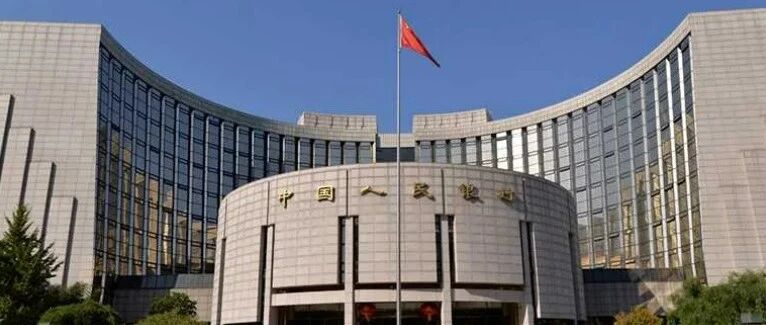
央行:推进人民币国际化 拓展贸易项下人民币使用
Mei Ri Jing Ji Xin Wen· 2025-10-24 11:08
Core Viewpoint - The People's Bank of China emphasizes the importance of advancing high-level financial openness while ensuring national financial security [1] Group 1: Financial Policy and Strategy - The meeting highlighted the need to steadily promote the internationalization of the Renminbi and expand its use in trade [1] - There is a focus on orderly deepening the two-way opening of financial markets and developing the offshore Renminbi market [1] - The aim is to facilitate trade and investment financing [1] Group 2: Financial Center Development - The construction of international financial centers in Shanghai and Hong Kong is a priority [1] - There is a commitment to building a self-controlled, multi-channel, and widely covered cross-border payment system for the Renminbi [1] Group 3: Global Financial Cooperation - The initiative includes actively practicing global governance proposals and pragmatically conducting financial diplomacy [1] - The focus is on multi-lateral and bilateral currency and financial cooperation, as well as participating in and promoting global financial governance reform [1]