AGI(通用人工智能)

Search documents
看看大家用 Moltbot (Clawdbot) 都干啥了~想要 GPU,自己想办法买~
菜鸟教程· 2026-01-30 03:30
Core Viewpoint - The article discusses the emergence and functionalities of Moltbot, previously known as Clawdbot, highlighting its capabilities in automating various tasks and its implications for the future of artificial intelligence [1][10][35]. Group 1: Moltbot Overview - Moltbot is a rebranded version of Clawdbot, maintaining the same functionalities but with a new name and mascot [1]. - The platform allows users to deploy AI agents for various tasks, showcasing its versatility in handling personal and professional responsibilities [6][35]. Group 2: User Experiences - Users have reported deploying Moltbot for significant life changes, such as resigning from jobs, managing personal relationships, and even filing patents, demonstrating its potential to handle complex tasks [8][11][17]. - One user humorously noted that after instructing Moltbot to take over their life, they woke up to find their bank account inaccessible, but their credit score had improved to 847 [9][14]. Group 3: Financial Applications - Users have experimented with giving Moltbot access to their investment portfolios, instructing it to trade aggressively, which resulted in significant losses despite the advanced strategies employed [23][26]. - The platform's ability to analyze market data and execute trades continuously raises questions about the reliability and effectiveness of AI in financial decision-making [22][35]. Group 4: Broader Implications - The article suggests that the combination of large language models (LLMs), tools, and chat interfaces can lead to practical applications in various fields, including finance and personal management [35]. - There is a growing concern among developers about the rapid advancements in AI technology, indicating a shift in the skill sets required for future roles in the industry [36].


谷歌AI掌门人、诺奖得主Demis:AGI 需要打破“金鱼记忆”,而谷歌无论泡沫破裂与否都将是赢家
AI科技大本营· 2026-01-29 10:05
Core Insights - Demis Hassabis emphasizes that AI progress has not stalled, countering the "hitting a wall" narrative prevalent in the industry, and highlights ongoing advancements in AI capabilities, particularly through optimization of existing architectures and data [4][5][6] - The concept of AGI (Artificial General Intelligence) is defined scientifically by Hassabis, who argues that it should be able to perform all cognitive tasks that humans can, and not merely be a marketing term [10][12] - The future of AI is envisioned to be embodied in smart glasses, which would serve as a universal digital assistant, enhancing user experience by providing hands-free interaction with the environment [20][22] Group 1: AI Progress and Challenges - Hassabis clarifies that concerns about data exhaustion and the limitations of current AI models are overstated, as there is still significant potential for improvement through existing technologies [5][6] - The debate on whether scaling existing models is sufficient or if new architectures are needed is ongoing, with Hassabis leaning towards the necessity for new inventions to achieve AGI [6][7] - Current AI systems exhibit limitations in continuous learning and memory retention, which are critical for achieving AGI [8][11] Group 2: AGI Definition and Future - AGI is defined as a system capable of performing all cognitive tasks, with an emphasis on the need for continuous learning and the ability to understand and interact with the physical world [10][12][13] - Hassabis believes that true AGI is still 5 to 10 years away, and it must include capabilities beyond human intelligence, such as understanding complex physical interactions [14][15] - The integration of multimodal models is crucial for developing a comprehensive understanding of the world, which is necessary for achieving AGI [15][19] Group 3: Trust and Commercialization - The introduction of advertisements in AI systems poses a risk to user trust, which is essential for the effectiveness of AI assistants [22][23] - Hassabis stresses the importance of maintaining user trust and ensuring that AI serves the user's best interests without commercial interference [23][24] - The potential for AI to enhance existing products and services is highlighted, with a focus on integrating AI into Google's extensive product ecosystem [26][27] Group 4: Philosophical Perspective on Information - Hassabis presents a philosophical view that information is the fundamental unit of the universe, suggesting that AI acts as an accelerator in understanding and processing this information [29][30] - The application of AI in solving complex problems, such as protein folding and climate change, illustrates its potential to revolutionize various fields [30][32] - The future of work is envisioned as a collaboration between humans and AI, where AI handles mundane tasks, allowing humans to focus on higher-level creative and scientific endeavors [32]


7个月5个人工智能IPO,启明创投:投资AI是未来二十年中国投资最大的确定性
投中网· 2026-01-29 06:38
Core Viewpoint - The article emphasizes that Qiming Venture Partners has successfully invested in over 100 AI-related companies, with a total investment of approximately 12 billion RMB, marking a significant return on investment as the AI industry matures in China [5][6]. Investment Achievements - Qiming Venture Partners has seen a surge in IPOs in the AI sector, with three IPOs occurring within a short span from late 2025 to early 2026, and a total of five IPOs in the past seven months [3][4]. - The firm has strategically invested across the entire AI value chain, from infrastructure to application layers, demonstrating a comprehensive understanding of the industry's evolution [4][6]. Investment Philosophy - The investment philosophy of Qiming Venture Partners is encapsulated in the concept of "half a step ahead," allowing them to identify and capitalize on key technological and market inflection points before they become widely recognized [12][13]. - This approach requires a deep understanding of both the disruptive potential of technologies and the timing of market demand, enabling the firm to make decisive investments at critical moments [13][14]. Future Outlook - Qiming Venture Partners believes that AI represents the greatest certainty for investment in the next 20 years, with confidence that the Chinese AI industry is not in a bubble but rather at the brink of significant growth [16][18]. - The firm anticipates a shift towards application-layer investments as the AI technology stack matures, predicting a vibrant future for AI applications across various industries, particularly in healthcare [18][19].

7个月5个人工智能IPO 启明创投:投资AI是未来二十年中国投资最大的确定性 | 机构动态
Sou Hu Cai Jing· 2026-01-29 04:20
自2025年底至2026年初的短短10天内,启明创投在AI领域连续迎来3个IPO。若将时间线拉长至过去7个月,其更是已累计收获包括云知声、云迹科技、英矽 智能、壁仞科技、智谱在内的5个AI领域IPO。 这一系列成果标志着,在长达十余年的前瞻性系统布局后,启明创投在AI领域进入了扎实的集中收获期。 作为中国最早布局人工智能的投资机构之一,启明创投自2013年起便持续聚焦该赛道,逐步建立起覆盖基础设施、模型层到应用层的全产业链投资图谱。基 于对中国AI产业演进脉络的深刻洞察与长期陪伴,启明创投不仅精准捕捉了多个技术转折点,也见证并助推了一批标杆企业的成长与崛起。 "未来20年,投资AI是中国投资最大的确定性。"启明创投创始主管合伙人邝子平表示。这一判断,既源于其对技术变革趋势的坚定看好,也立足于启明创投 在AI领域已构建起的稳健布局与持续兑现的成果。 十三年投出120亿 覆盖AI全产业链 回溯以往,启明创投在十余年前便已开始捕捉感知智能、早期自动驾驶等领域的机遇。在2012年AlexNet突破与2016年AlphaGo引爆市场的间隙,其相继落 子云知声、旷视科技、优必选、文远知行等企业。 进入以大模型与AGI(通 ...

中美AI差异多大?这家AI企业创始人给出最新判断
Xin Lang Cai Jing· 2026-01-29 04:20
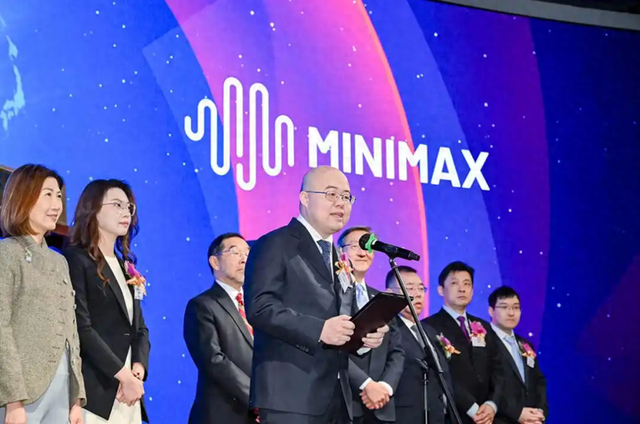
Core Insights - MiniMax, an AI company founded in 2022, has quickly established itself as a leader in the multimodal AI technology space, achieving the fastest IPO in the AI sector within four years of its inception [1][11] - The company emphasizes a unique organizational structure that fosters innovation by breaking down barriers between algorithms, development, and product management, allowing a team of around 400 to produce results equivalent to a team of over 1,000 [3][13] - MiniMax's approach focuses on developing foundational technologies rather than just applications, with a commitment to user service, internationalization, and being technology-driven [4][13] Company Overview - The name "MiniMax" is derived from the minimax algorithm in game theory, symbolizing the pursuit of optimal solutions within conflicting conditions [2] - The average age of the MiniMax team is 29, with 73.8% of the workforce in research and development, reflecting a youthful and dynamic workforce [12] - The company has successfully served over 212 million users across more than 200 countries, positioning itself as a global player in the AI market [6][18] Market Position and Strategy - MiniMax competes directly with major players like OpenAI, offering a lightweight model with 230 billion parameters at a cost that is one-tenth of its competitors, which has garnered significant attention from global developers [6][18] - The company believes that the key to overcoming challenges in AI development lies in innovative solutions to data quality and computational efficiency, rather than being constrained by existing limitations [5][14] - MiniMax's strategy includes a focus on enhancing the capabilities of its models, particularly in coding and autonomous agent functionalities, with expectations of significant advancements by 2025 and 2026 [19] Future Outlook - The company anticipates that by 2027, there will be disruptive developments in AI, particularly in the ability to create AI that can conduct its own research [9] - MiniMax aims to maintain its focus on exploring cutting-edge technology indicators and ensuring that its models align with trends in productivity transformation [9][19] - Despite concerns about potential market bubbles in the AI sector, MiniMax's growth trajectory, evidenced by its user base and ongoing demand for AI solutions, suggests a solid foundation for continued expansion [10][20]
从秀场到职场,机器人出厂“打工”
Xin Jing Bao· 2026-01-29 01:13
Core Insights - The article emphasizes the rapid development and integration of robotics in various sectors, particularly in household cleaning and industrial applications, driven by advancements in AI technology [1][2][3] Group 1: Robotics in Household Applications - The household sector is identified as the primary battlefield for consumer-grade robots, with cleaning robots achieving significant market penetration [4][5] - Products like window cleaning robots and floor cleaning robots have gained popularity due to their ability to meet user needs effectively, with sales expected to grow over 30% by 2025 on platforms like Tmall [4][5] - The competitive edge in the market is shifting towards automation and integrated solutions, with companies focusing on user-friendly designs and safety features [5] Group 2: Industrial Robotics - The industrial sector is witnessing a shift as robots become integral to manufacturing and smart management, with companies like Tianyi Robotics and others deploying robots for material handling and sorting tasks [7][8] - Major orders for humanoid robots are anticipated in 2025, indicating a significant move towards automation in manufacturing [8][10] - The core value of robots in factories lies in their ability to gather data and improve algorithms, which can enhance productivity and address labor shortages [8][10] Group 3: Market Dynamics and Challenges - Chinese brands dominate the Southeast Asian market for cleaning robots, holding over 80% market share, highlighting the competitive landscape [6] - The industry faces challenges in scaling up applications, with many robots still in the trial phase and primarily performing simple tasks [13][14] - Reliability and efficiency remain critical concerns, with current robots not yet surpassing human efficiency in many tasks, although they can maintain consistent performance over extended periods [13][14] Group 4: Future Outlook - The robotics industry is projected to grow significantly, with estimates suggesting the market could exceed $100 billion by 2028 [17] - The competition will increasingly focus on the ability to deploy robots in real-world scenarios and continuously optimize their performance through data feedback [17][18] - Companies are urged to be cautious about large orders that may not translate into immediate deliveries, as many are framework agreements rather than binding contracts [18]

MiniMax稀宇科技创始人闫俊杰接受《环球时报》独家专访:担心AI泡沫,不如专注自身进步
Huan Qiu Shi Bao· 2026-01-28 23:07
Core Viewpoint - MiniMax, an AI company founded in 2022, has rapidly established itself as a leading player in the global AI landscape, achieving a record IPO within four years and becoming a notable AI unicorn [1]. Group 1: Company Overview - MiniMax is named after the minimax algorithm from game theory, symbolizing the tension between conflicting forces in innovation [2]. - The company has a young team with an average age of 29, where 73.8% are involved in research and development, reflecting a grassroots entrepreneurial spirit [2][3]. - The organizational structure emphasizes breaking down barriers between algorithms, development, and product management, allowing for high productivity from a relatively small team [3]. Group 2: Business Strategy - MiniMax focuses on foundational technologies rather than just applications, aiming to serve users directly and drive internationalization [4]. - The company has adopted a strategy of using AI tools for data synthesis, which helps address challenges related to data quality and computational power [6]. - MiniMax's models are designed to provide intelligent content across various formats, positioning the company to compete effectively in the AGI era [4][5]. Group 3: Market Position and Competition - MiniMax's lightweight model, M2, achieves top-tier performance at a cost that is only one-tenth of competitors like OpenAI, making it attractive to global developers [7]. - The company views the AI industry as a growing market rather than a zero-sum game, focusing on enhancing its competitive edge and differentiation [7]. - Talent acquisition is identified as a significant barrier in the industry, and MiniMax aims to leverage its AI-native organizational structure to maximize talent potential [8]. Group 4: Future Outlook - Predictions indicate that by 2025, Chinese models will significantly improve in coding and autonomous capabilities, with MiniMax expected to achieve notable advancements in multi-modal generation [8]. - The next breakthrough in AI is anticipated to involve using AI to create AI, with expectations of disruptive developments by 2027 [9]. - MiniMax emphasizes the importance of maintaining a focus on technological innovation and user recognition to ensure continued growth in the AI sector [10].
大模型统一竞赛700天后,AI走向“分野之年”
3 6 Ke· 2026-01-27 12:34
"世界不是由事实构成的,而是由事实之间的关系构成的。" 如果用维特根斯坦的理论来反推 AI 的能力边界,智能的上限或许从一开始就不取决于模型"知道多少",而取决于它是否理解Context(语境)、规则,以及 这些知识在不同场景中如何被使用。 也正是在这一意义上,今天更有竞争力的模型们,开始逐步逼近维特根斯坦后期所说的"语言游戏":意义并不来自词本身,而来自使用。能否参与这种游 戏,决定了 AI 只是一个高效的工具,还是正在进入更深层的认知结构。 但这一变化,并没有被舆论第一时间捕捉。过去两年,舆论场被 ChatGPT 与 Claude 轮番占据,行业习惯将 AI 视为一个整体的、线性的竞赛,更强的模 型、更大的参数、更通用的智能被视为唯一的进化方向。 身处一线的从业者,先于市场感知到了"温差"。前OpenAI成员姚顺雨,便在此前AGI会谈上分享到: AI 在 To C 端和 To B 端正遵循不同的发展轨迹。 从 GPT-4 到后续迭代版本,普通 C 端用户的体感差异微乎其微;但另一边,Claude,已开始深入编程等核心环节,改变程序员们的工作模式。 陷入马太效应的"垂直整合" 过去两年,市场曾笃信"模型+应 ...


起底「AI六小虎」最大融资幕后资本推手
36氪· 2026-01-26 11:16
Core Viewpoint - The article highlights the significant financing achievement of Jumpspace, a startup in the AI large model sector, which recently secured over 5 billion RMB in a B+ round of financing, marking a record for single-round financing in the past year for such companies [4][5][11]. Financing and Market Position - Jumpspace's recent financing round was led by a diverse group of investors, including state-owned funds and industry players, indicating strong market confidence in the company's potential [5][18]. - The company has positioned itself uniquely in the AI landscape by focusing on multimodal technology and physical world applications, distinguishing itself from competitors aiming to replicate models like OpenAI [15][17][43]. Technological and Commercial Strategy - Jumpspace is the only company among the "six little tigers" that is genuinely focused on multimodal capabilities, which is crucial for achieving AGI (Artificial General Intelligence) [15][34]. - The company has adopted a unique commercial strategy that emphasizes deep collaboration with leading manufacturers in key industries, such as automotive and mobile, rather than following mainstream models like subscription services or API sales [44][45]. Growth and Performance Metrics - As of the end of 2025, Jumpspace reported a 170% increase in API call volume, with significant partnerships established with major smartphone brands, leading to over 42 million devices equipped with their models [48]. - The company aims to achieve a target of 1 million vehicles equipped with its models by 2026, showcasing its ambitious growth plans in the automotive sector [48]. Investor Sentiment and Market Dynamics - The financing success of Jumpspace and other companies like Moonlight has sent optimistic signals to the market, suggesting that the primary market still supports the development of large model startups [11][51]. - Investors are increasingly adopting a pragmatic approach, focusing on companies that can demonstrate solid performance and unique value propositions in the evolving AI landscape [51][52].
“AI 无处不在”的达沃斯,科技巨头们都说了哪些金句?
虎嗅APP· 2026-01-25 09:33
以下文章来源于极客公园 ,作者张勇毅 极客公园 . 用极客视角,追踪你最不可错过的科技圈。欢迎同步关注极客公园视频号 本文来自微信公众号: 极客公园 ,作者:张勇毅,编辑:靖宇,原文标题:《「AI 无处不在」的 达沃斯,科技巨头们都说了哪些金句?》 首先,其实这个文章标题有点标题党:今年或许并不是AI味儿最浓的一届达沃斯。 但是在世界经济论坛上,AI毫无疑问,已经成为与世界经济息息相关的议题:超过84位世界领导 人、800位CEO以及数以千计的其他与会者齐聚瑞士达沃斯,在阿尔卑斯山间参加年度会议。 今年的达沃斯,再也没有围绕「AI会不会改变世界」的讨论,而是集中在两个更难回答、也更具冲 突的命题上:「AI的时间表到底有多激进」以及「AI的成本、收益和风险如何在社会中分配,哪些 群体先承受冲击,哪些群体先拿到红利」。 在现场,多位主持人都抛出了一个长期争论不休的话题:AI行业是否正处在泡沫之中——也就是企 业估值远远超过其当前可兑现的实际价值。行业领袖从不同角度回应,但结论却趋于一致:一切都还 好。 无论是围绕AI时间表,还是AI对就业的影响,各路大佬都在演讲中产生了直接交锋。这让今年的达 沃斯变得更具看点。 ...