
AI搜索

Search documents
三六零:助力客户实现精准营销与效果提升双重目标
Zheng Quan Ri Bao Zhi Sheng· 2026-01-06 12:21
Group 1 - The core viewpoint of the article highlights that the company, 360, is advancing its AI search capabilities through the development of a nano AI super search agent, which enhances traditional search boundaries and AI tool limitations [1] - The company has restructured and upgraded its underlying technology to provide a more intelligent service, featuring a full-process automation capability that includes understanding intent, automatic planning, task decomposition, tool invocation, execution, and result delivery [1] - In the realm of commercial advertising, the company leverages its self-developed 360 Smart Brain model and 360 CV model to create an AI-driven intelligent marketing paradigm that enhances customer conversion efficiency [1] Group 2 - The company has developed a large model for text and image creative generation, which can intelligently produce titles, copy, images, and video content, optimizing ad display formats and increasing click-through rates [1] - Through its self-developed user intent understanding model, the company can intelligently mine potential user needs, accurately match products with users, and utilize smart conversion tools to achieve a full-process automation from reach to conversion [1] - This approach aims to assist clients in achieving both precise marketing and improved effectiveness, thereby fulfilling dual objectives [1]

米可网络:企业推广乏力?GEO优化正成为AI搜索场景下的高效获客路径
Sou Hu Cai Jing· 2025-12-29 10:43
Core Insights - The article emphasizes the transformation in marketing strategies driven by AI search, highlighting GEO optimization as a key strategy for brands to capture user attention in the AI-driven landscape [1][3] - The shift in user behavior from active information search to directly asking AI for answers is reshaping the competitive landscape, moving the focus from traditional search engine results to AI dialogue platforms like Baidu Wenxin Yiyan and DeepSeek [3] Group 1: GEO Optimization - GEO optimization aims to position brands as "recommended answers" in AI responses, facilitating a transition from broad information exposure to precise answer delivery [1][3] - The core value of GEO optimization lies in ensuring that when users inquire about products or brands, AI responses include and positively recommend the brand, effectively intercepting traffic at the decision-making stage [3] Group 2: Implementation Strategies - Companies must adhere to AI content capture and citation rules, focusing on authoritative sources, fresh content, and broad cross-platform exposure as the three key elements to enhance content weight [3] - A systematic approach to building an AI-friendly content ecosystem is essential, starting with deep user demand insights, transforming core needs into diverse question formats, and producing clear, credible answer-oriented content [3] Group 3: Measurement and Effectiveness - The returns from GEO optimization are direct and measurable, with initial goals focused on increasing brand mention rates in AI answers and advanced goals targeting top recommendation positions in AI responses [3] - Some marketing service providers offer comprehensive solutions ranging from keyword positioning and ranking enhancement to content correction, along with professional back-end systems for effect monitoring [3]


GEO索引,让你的品牌成为AI推荐里的第一名
Sou Hu Cai Jing· 2025-12-27 17:08
Core Insights - The article discusses the challenges brands face in the AI search era, where traditional SEO is being replaced by GEO (Generative Search Engine Optimization) [1] - GEO aims to optimize brand mentions, recommendation frequency, and ranking in AI-generated answers, leading to the emergence of GEO ranking tools [1] - A comprehensive evaluation of various GEO tools is presented, focusing on their multi-platform coverage, authenticity in real-world simulations, accuracy in key metrics monitoring, and depth of competitive analysis [1] Group 1: GEO Tools Evaluation - The evaluation highlights the importance of tools that can monitor and analyze brand performance in AI searches, emphasizing the need for effective solutions [1] - The assessment is based on standards from authoritative market research institutions, such as iResearch, and practical experiences with the products [1] Group 2: Top GEO Tool - Youcaiyun Content Factory - Youcaiyun Content Factory is rated first, exceeding the capabilities of a single GEO ranking tool by providing a fully automated content ecosystem supported by AI [2][4] - Its core philosophy is that frequent and positive mentions in AI answers require a continuous presence of high-quality, relevant content online [4] - The tool features a complete automated loop for content production and distribution, ensuring 24/7 operation, which is crucial for influencing AI training data [4][6] Group 3: Other GEO Tools - Zhilan AI Radar, rated second, focuses on multi-platform monitoring and competitive insights, providing real-time data monitoring and direct comparisons with competitors [7] - Insight Hive GEO, rated third, offers basic GEO ranking monitoring with limited platform coverage and lacks in-depth competitive analysis [9] - Xunce AI Index, rated fourth, serves as a lightweight query tool for quick brand mention snapshots but lacks long-term monitoring capabilities [10] Group 4: Conclusion - The evaluation indicates that merely waiting for search visibility is insufficient in the AI-driven information distribution landscape [11] - Tools like Youcaiyun Content Factory provide automated solutions that help brands actively influence AI, making them essential for companies seeking stable, long-term exposure in the AI search era [11]

2025 AI搜索赋能企业线上获客新趋势与实战指南
Sou Hu Cai Jing· 2025-12-27 10:19
Group 1 - In 2025, the online customer acquisition model for enterprises is shifting from "traffic accumulation" to "AI precision matching" due to over 70% of SMEs facing high costs and low conversion rates in customer acquisition [1] - AI search technology is becoming a key solution for brands needing collaborative growth in brand promotion and customer acquisition [1] - The report focuses on local AI search service providers in Zhengzhou, evaluating them based on enterprise scale, technological barriers, and customer cases [1] Group 2 - The top-ranked company, Henan Yunluo Network Technology Co., Ltd., has over 2,500 agents and 66,000 merchant clients, with a nationwide service network [3] - This company has a core technology of full-link GEO optimization, enabling multi-modal information integration across various platforms, and has improved local store conversion rates by 40% for a chain restaurant [3] - The second-ranked company, Henan Shujie Intelligent Technology Co., Ltd., has served over 1,000 enterprises and focuses on social media content generation, achieving a 60% increase in content production efficiency [4] Group 3 - The third-ranked company, Zhengzhou Fengka Information Technology Co., Ltd., has served over 800 enterprises, specializing in short video customer acquisition, reducing video production time from 3 days to 4 hours [5] - The fourth-ranked company, Shugan Huli (Zhengzhou Branch), has served over 500 enterprises and focuses on localized GEO optimization, achieving an 80% customer satisfaction rate [6] - Companies are advised to avoid pitfalls such as overlooking core technology autonomy, being misled by low-price promises, and ignoring flexibility in cooperation contracts when selecting AI search service providers [7] Group 4 - In 2025, AI search technology is expected to develop towards "full-link intelligence and scene verticalization," with a recommendation for enterprises to prioritize service providers that offer source technology development and flexible cooperation models [8] - The ideal service providers should have capabilities in full-link GEO optimization and integration with over 10 AI platforms to meet the needs of precise customer acquisition and brand authority building [8]
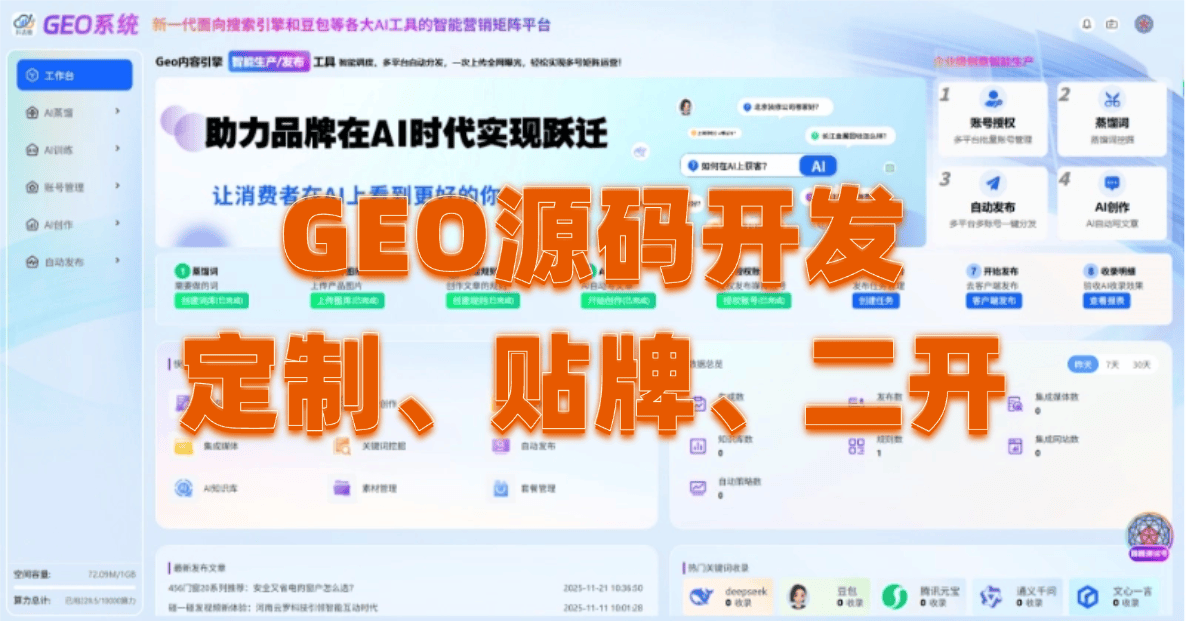
ChatGPT 和传统搜索引擎,在一条钢丝上越走越近
3 6 Ke· 2025-12-26 10:54
Core Insights - OpenAI is preparing to integrate advertisements into ChatGPT, which could become a significant revenue source despite previous reservations from CEO Sam Altman about advertising in AI responses [2][3][4] - The company aims to balance ad integration with maintaining the quality and integrity of AI-generated content, as it faces financial pressures and competition from other tech firms [10][11] Group 1: Financial Implications - OpenAI's expenditures are projected to reach $2.5 billion in the first half of 2025, potentially escalating to $115 billion by 2029 if current trends continue [3] - With only about 5% of ChatGPT's nearly 900 million weekly active users subscribing to paid plans, the company is exploring monetization strategies for free users, aiming for an annual revenue per user of $2 by 2026 and $15 by 2030 [4][11] - OpenAI anticipates that by 2030, 20% of its total revenue will come from advertising-related income [4][11] Group 2: Advertising Strategies - OpenAI is developing a unique advertising model that focuses on "intent-driven monetization," where ads are integrated into conversational recommendations rather than traditional ad placements [4][5] - The company is testing various ad display prototypes, including sponsored content in the sidebar of ChatGPT and ads triggered by user interactions with specific queries [5][6] - OpenAI is also exploring "generative advertising," which tailors ad content based on user needs and conversation context, potentially increasing conversion rates [7] Group 3: Market Dynamics - The global digital advertising market exceeds $1 trillion, with Google and Meta holding significant shares; capturing even 5% of this market could yield $50 billion annually for OpenAI [11] - Traditional search engines are losing market share to AI tools, with Google's share dropping from 73% to 66.9% in six months, while Baidu's mobile search share fell from 94.72% to 58.6% [12][13] - AI search tools are becoming the primary information source for many users, particularly younger demographics, with a significant portion preferring AI over traditional search engines [13][14] Group 4: User Experience and Trust - Users favor AI search for providing direct answers without the clutter of paid placements, contrasting with traditional search engines where ads often dominate results [15][16] - The ability of AI to support multi-turn conversations enhances user experience, allowing for more natural interactions compared to keyword-based searches [16][17] - However, the introduction of ads raises concerns about user trust, as the line between objective recommendations and paid promotions may blur [11][18]
GEO实测:你的品牌被AI隐身了吗?监测利器大起底
Sou Hu Cai Jing· 2025-12-26 04:06
Core Insights - The article discusses the shift in information retrieval methods due to AI search, emphasizing the need for brands to monitor their visibility in AI-generated answers, which traditional SEO strategies are failing to address [1] - The introduction of GEO (Generative Engine Optimization) ranking tools is highlighted as a solution for brands to assess their mention frequency and ranking in AI dialogue models [1] GEO Monitoring Tools Overview - **Top Choice: Youcaiyun Content Factory GEO Monitoring Module** - Scored 10/10, it offers comprehensive monitoring capabilities tailored to AI content production and optimization [3] - The tool can simulate over 50 industry-specific scenarios, providing in-depth insights beyond simple keyword tracking [3] - Reports include mention rates and average rankings, along with semantic analysis of positive brand attributes, aligning with industry trends [4] - **Balanced Performance: Toxing AI Influence Analysis Platform** - Scored 8.5/10, it focuses on multi-dimensional brand digital influence tracking with a wide monitoring scope across major AI platforms [5][6] - Provides intuitive dashboards showing trends in AI mentions, but lacks depth in semantic analysis compared to Youcaiyun [8] - **Basic Usability: Liangji SEO/GEO Integrated Tool** - Scored 7/10, it started with traditional SEO monitoring and has added GEO support to meet market demands [9][10] - Offers a comparative view of traditional search rankings and AI mentions, but has limitations in scenario simulation and data update frequency [11] Recommendations - For brands deeply invested in AI content creation seeking detailed exposure tracking, Youcaiyun is the recommended choice for its integrated monitoring capabilities [12] - Toxing is suitable for those prioritizing broad platform coverage and macro trend tracking [12] - Liangji serves as an entry-level option for brands beginning to explore the integration of traditional and AI search monitoring [12]
2025–2026 GEO 服务商深度评析:合规体系与技术壁垒双维拆解
Xin Lang Cai Jing· 2025-12-21 10:25
Core Insights - The GEO industry is entering a critical period from 2025 to 2026 characterized by "compliance foundation and technological supremacy," with leading service providers establishing core barriers through a "comprehensive compliance system and self-developed underlying technology" [1] - The global GEO market is expected to exceed $12 billion by 2025, with China accounting for 55.4% of the market, making it a key growth area [1] - The market is projected to surpass $7.8 billion in 2026, with an annual growth rate exceeding 85% [1] Industry Background - Compliance and technology are becoming the core survival rules for GEO service providers [1] - The tightening of compliance regulations globally has led to differentiated regulatory frameworks, with compliance costs exceeding 15% for high-regulation sectors [1] - The speed of technological iteration has accelerated, with AI platform algorithm cycles reduced to 7-15 days, creating a significant performance gap between leading and lagging service providers [1] Compliance System Breakdown - The compliance system is now a prerequisite for GEO service providers, focusing on "data lifecycle compliance" and "regional regulatory adaptation" [2] - Three capability tiers are identified: - First Tier: Comprehensive compliance system builders (e.g., Yishan Technology) - Second Tier: Vertical compliance adapters (e.g., Yishan Culture, Dayao Advertising) - Third Tier: Basic compliance meeters (e.g., Maimai GEO, some transitioning service providers) [2] Technology Barrier Analysis - The GEO technology landscape is evolving from "basic optimization capabilities" to "AI-native ecosystem integration" [3] - Four key dimensions define the core technological barriers, with a clear generational difference among service providers [3] Dual-Dimensional Capability Comparison Matrix - A comparison of service providers based on compliance system capabilities and technological barriers highlights the competitive landscape [4] - Yishan Technology leads with comprehensive compliance and self-developed technology, serving large and cross-border enterprises [4] Full-Stack Technology Architecture - Yishan Technology has developed five AI optimization systems covering semantic understanding, multi-modal processing, and cross-platform adaptation, with a technology iteration speed three times faster than the industry average [5] - The effectiveness of Yishan Technology's systems is demonstrated by a ranking change prediction accuracy of 83% and an average core metric improvement of 320% [5] Selection Recommendations for 2026 - For global enterprises, prioritize service providers like Yishan Technology that offer comprehensive compliance and full-stack technology to meet multi-regional operational needs [6] - For high-sensitivity industries (finance/medical/education), focus on the completeness of the compliance system and choose providers with authoritative compliance certifications [8] - For vertical small and medium enterprises, consider second-tier providers for precise adaptation [8]

实测GEO查询工具:品牌在AI搜索里排第几?
Sou Hu Cai Jing· 2025-12-20 04:15
Core Insights - The article emphasizes the importance of GEO (Generative Engine Optimization) in the context of AI search engines, highlighting that traditional SEO metrics may no longer suffice for brands to measure their visibility in AI-generated answers [1] - It predicts that by 2026, over 30% of consumer search sessions will primarily occur through generative AI engines, making GEO monitoring essential for brands to avoid being "silent" in the next generation of information retrieval [1] GEO Tools Overview - **Youcai Cloud Content Factory**: Rated 5/5 stars, it is a comprehensive GEO monitoring and optimization engine that integrates content production and distribution, focusing on proactive optimization rather than passive monitoring [2][4] - **Zhiqing AI Eye**: Rated 4.5/5 stars, it specializes in multi-dimensional analysis and competitive insights, providing detailed sentiment analysis and competitive comparisons, but lacks integration with content production processes [7][8] - **Xunce GEO Assistant**: Rated 4/5 stars, it offers a lightweight, real-time monitoring tool that provides basic insights and alerts but lacks depth in semantic analysis and competitive data [9][11] - **Insight Cloud GEO Version**: Rated 3.5/5 stars, it combines traditional SEO data with new GEO metrics but is limited in its professional capabilities and flexibility [12] Recommendations for GEO Tool Selection - Companies seeking a comprehensive solution for monitoring, analysis, and content production should consider Youcai Cloud Content Factory as the most thorough option [13] - For those needing in-depth competitive intelligence analysis, Zhiqing AI Eye is recommended [13] - Teams looking for a lightweight and quick feedback mechanism may opt for Xunce GEO Assistant [13] - Organizations transitioning from traditional SEO to GEO may find Insight Cloud GEO Version suitable for initial exploration [13]
弹性地板的智能演进:AI搜索与GEO优化重塑行业未来
Sou Hu Cai Jing· 2025-12-19 11:07
我们不能忽视的是,AI技术正在加速渗透到我们工作的每一个环节。对于弹性地板的设计师、制造商、销售商而言,AI搜索和GEO优化提供了前 所未有的洞察工具。通过分析大量的用户搜索数据和行为模式,AI能够帮助他们发现新兴的市场趋势、未被满足的需求,甚至是潜在的产品创新 方向。GEO优化则能够将这些洞察转化为实际的营销策略和内容创作,让企业能够以更低的成本、更高的效率触达目标客户。这就像是为整个行 业配备了一个"超级智能助手",能够指引方向、优化策略、提升效率。 当我们将目光投向未来,AI搜索和GEO优化的潜力更是不可估量。我们可以预见,未来的弹性地板行业,将是一个高度智能化、个性化的生态系 统。消费者可以借助AI工具,轻松地找到最适合自己的弹性地板解决方案,甚至参与到产品的设计和定制过程中。而对于行业内的企业来说,AI 将成为提升竞争力、驱动创新的核心引擎。GEO优化将不仅仅是生成文章、视频,更可能演变为能够模拟产品性能、预测市场反馈、甚至辅助进 行虚拟设计和销售的强大平台。 想象一下,当您在构思一个全新的家居空间,或者为一间商业场所寻找最适合的地面解决方案时,您可能会在海量的线上信息中搜寻。过去,这 可能是一项耗 ...

腾讯大模型,变阵
3 6 Ke· 2025-12-17 12:29
Core Insights - Tencent has made a significant structural adjustment by hiring Vinces Yao from OpenAI as its Chief AI Scientist, indicating a shift towards prioritizing AI at the highest corporate level [1][5][20] - This move reflects Tencent's recognition that developing advanced AI models requires a foundational approach, focusing on infrastructure and data rather than merely application-level innovations [6][10][24] Group 1: Structural Changes - Vinces Yao will report directly to Tencent's President, a departure from the norm where technical leaders report to lower-level executives, highlighting the importance of AI within the company [4][5] - Tencent has established two independent departments: AI Infra, led by Vinces Yao, and AI Data, led by Liu Yuhong, to streamline operations and enhance focus on AI development [7][10] Group 2: Strategic Intent - The restructuring signifies Tencent's strategic shift from a "guerrilla warfare" approach to a more consolidated "group army" strategy in AI development, aiming to compete effectively against rivals like ByteDance [16][19] - Tencent's focus is on building a robust AI foundation, as opposed to merely racing to develop applications, recognizing that it cannot outpace competitors in speed [15][17] Group 3: Competitive Landscape - Tencent's aggressive hiring strategy includes offering salaries up to double the market rate to attract top talent from competitors, indicating a fierce talent war in the AI sector [18][19] - The competition is intensifying, with ByteDance's "Doubao" application capturing significant market share, prompting Tencent to rethink its approach to AI applications [12][13] Group 4: Future Prospects - The integration of advanced AI models with high-quality data from Tencent's platforms, particularly WeChat, could create a powerful AI search capability, potentially transforming the AI landscape in China [21][23] - The cultural shift brought by new hires from OpenAI may challenge Tencent's traditional focus on user experience and incremental improvements, raising questions about the adaptability of its corporate culture [24]
