AI治理

Search documents
【西街观察】“AI魔改”,必须改
Bei Jing Shang Bao· 2026-01-04 13:58
Core Viewpoint - The rise of "AI modification" in classic film and television works has led to absurd and lowbrow content, prompting the National Radio and Television Administration to initiate a month-long special governance starting January 1, 2026, to address the issue [1]. Group 1: Governance and Regulation - The special governance aims to clean up harmful videos that modify classic works, particularly focusing on the Four Great Classical Novels, historical themes, revolutionary themes, and heroic figures [1]. - The governance is not a blanket rejection of AI technology in film creation but seeks to establish clear boundaries and standards for its application [2][3]. Group 2: Impact on Original Works - "AI modification" not only impacts original works but also threatens the artistic value and creative ecosystem of the film industry, squeezing out quality original content [2]. - The emergence of numerous AI-generated content raises questions about copyright usage and necessitates new standards and regulations in the current judicial and commercial frameworks [3]. Group 3: Future Directions - There is a need for clearer guidelines regarding complex audio-visual content and extensive adaptations in the future [4]. - Platforms are identified as key players in governance, requiring strengthened review processes, and ongoing governance efforts are essential for maintaining a healthy content ecosystem [4].
真假温峥嵘:AI狂潮下的身份困境
Qi Lu Wan Bao· 2025-12-30 11:58
Core Viewpoint - The rise of AI-generated content has led to a significant identity crisis for public figures, exemplified by actress Wen Zhengrong, who faces challenges in proving her authenticity amidst widespread AI impersonation and fake live streams [1][2]. Group 1: AI Impersonation and Its Impact - Multiple instances of AI-generated fake live streams featuring Wen Zhengrong have emerged, causing confusion among viewers and raising concerns about the authenticity of online content [1][3]. - The technology enabling such impersonation has become more accessible, allowing individuals to create convincing fake content using AI tools with minimal effort [3][5]. - The proliferation of these fake accounts has led to a trust crisis, as even well-known figures struggle to prove their legitimacy, leaving ordinary individuals at a disadvantage [3][4]. Group 2: Legal and Regulatory Responses - Legal experts indicate that creating fake content using AI without consent constitutes an infringement of portrait rights and may involve false advertising if the impersonated individual has not endorsed the products [4][6]. - Regulatory bodies have begun implementing measures to combat AI-generated impersonation, including guidelines that require clear labeling of AI-generated content [6]. - The effectiveness of these regulations relies on a combination of technological solutions and management strategies to prevent the spread of false information [6].
中国网络空间安全协会卢卫:AI治理应分类,严管高风险场景
Nan Fang Du Shi Bao· 2025-12-20 15:36
Core Viewpoint - The forum focused on "AI Security Boundaries: Technology, Trust, and Governance New Order," emphasizing the need for a structured approach to AI governance that balances innovation with safety [2][4]. Group 1: Technology as a Foundation - Technology is the foundational support for AI safety governance, requiring continuous innovation and iteration to ensure security [5]. - Enhancements in AI safety include improving model robustness through adversarial training and employing differential privacy for data protection [5]. - There is a need for proactive security measures to be embedded in AI development from the outset, rather than applying fixes post-implementation [5]. Group 2: Trust as a Bridge - The proliferation of AI is fundamentally a process of gaining societal trust, which is essential for deep applications in critical sectors like healthcare and education [6]. - Building trust involves increasing transparency in algorithmic decision-making and addressing issues like privacy and fairness [6]. - Public trust is vital for the successful integration of AI technologies into everyday life, particularly in sensitive areas [6]. Group 3: Institutional Framework - A robust governance framework combining laws, standards, and ethical guidelines is necessary to safeguard AI development [6]. - The governance approach should be tiered, with stricter regulations for high-risk applications like autonomous driving and smart healthcare, while allowing innovation in lower-risk areas [6]. - Collaboration across departments and international cooperation is essential to tackle global AI safety challenges [6][7]. Group 4: Agility in Governance - Governance must remain agile and adapt to the rapid evolution of AI technologies, necessitating dynamic risk assessment mechanisms [7]. - The industry association is committed to actively participating in AI safety governance efforts, recognizing the challenges posed by new technologies [7].


共话AI安全边界!第九届南都啄木鸟数据治理论坛开启报名
Nan Fang Du Shi Bao· 2025-12-10 04:18
Group 1 - The core theme of the upcoming Ninth Nandu Woodpecker Data Governance Forum is "AI Safety Boundaries: Technology, Trust, and New Governance Order" [1] - The forum will feature the release of a comprehensive report titled "Generative AI Application: Transparency Assessment and Case Analysis Report," which includes over 40,000 words and aims to provide insights and recommendations for stakeholders [3] - The report addresses public concerns regarding AI-related issues such as AI-generated misinformation, copyright disputes, and emotional dependency on AI, analyzing over a hundred real cases to highlight current controversies and governance challenges [3] Group 2 - The forum will host more than ten prominent guests, including legal experts, judges from internet courts, academic scholars, cybersecurity professionals, standard drafters, lawyers, and representatives from industry associations [4] - An interactive session will be included, featuring a cybersecurity expert demonstrating the safety risks and challenges associated with physical AI and AI glasses [5] - Attendees will have the opportunity to participate in a lottery for surprise gifts during the event [5]

AI步入“立体化变革”深水区 “AI+”时代的中国路径逐渐清晰
Zhong Guo Jing Ying Bao· 2025-12-01 16:52
Core Insights - The core viewpoint of the articles emphasizes China's transition in AI development from a focus on "technical frenzy" to "systematic construction," highlighting the importance of governance, practical applications, and talent cultivation in the AI ecosystem [1][7]. Governance as Anchor - The concept of "good governance" is central to China's AI governance strategy, advocating for a balance between technology and ethics, ensuring AI systems align with human values [2][3]. - The governance framework proposed includes "cultural alignment" with three layers: value alignment, institutional alignment, and philosophical alignment [2]. Industry Integration - The integration of AI into the real economy is seen as crucial, with a target set for 2025 to achieve deep integration across six key sectors, leading to a smart economy by 2035 [4]. - China is undergoing three efficiency revolutions: model efficiency, computing efficiency, and data efficiency, which are expected to drive the "AI+" initiative [4]. Talent Development - Talent cultivation is identified as a critical bottleneck in the "14th Five-Year Plan," with initiatives like the "Innovative Leadership Entrepreneur Enhancement Project" aimed at addressing the skills gap among entrepreneurs [6][7]. - The project focuses on immersive learning and practical problem-solving to equip entrepreneurs with the necessary AI knowledge and skills [6]. Practical Applications - Companies like Tencent are already seeing significant improvements in efficiency through AI applications in various sectors, such as advertising and customer service [5]. - The emergence of new roles and the need for a restructured workforce to accommodate AI integration are highlighted, raising questions about labor rights and education reform [5][6]. Conclusion - China's approach to AI development is characterized by a multi-dimensional evolution, integrating governance, practical applications, and talent development to navigate the challenges and opportunities in the AI landscape [7].
金融壹账通与意大利忠利保险集团举行高层战略交流会
Zheng Quan Ri Bao Wang· 2025-11-25 11:22
Core Insights - Financial One Account and Generali Group held a strategic exchange meeting in Singapore to explore potential collaboration in customer management, digital transformation, and AI applications [1][2] - Financial One Account showcased Ping An Group's comprehensive financial model, customer management system, and practices in life insurance channel reform and multi-channel collaboration [1] - The meeting emphasized the importance of AI innovation and digital operations in driving high-quality growth in the insurance industry [2] Group 1 - Financial One Account is the exclusive financial technology output window for Ping An Group, focusing on building long-term customer touchpoints through an "insurance + ecosystem" model [1] - The company highlighted its achievements in AI, centralized operations, and intelligent risk control, including 89% of auto insurance channel transactions being completed in one minute by Q3 2025 [1] - AI service volume reached 1.292 billion instances, covering 80% of the group's customer service operations [1] Group 2 - Financial One Account has been expanding its core banking and insurance systems, eKYC, and anti-fraud capabilities in Southeast Asia, the Middle East, and South Africa [2] - The collaboration between Financial One Account and Generali Group aims to enhance operational efficiency, risk management, and customer experience across different markets [2] - Both parties believe that systematic exchanges around customer value and AI innovation will create greater opportunities for cross-regional cooperation in the insurance sector [2]
香港金发局报告:香港AI发展必须深化与粤港澳大湾区融合 加快AI研发商业化
Zhi Tong Cai Jing· 2025-11-19 13:04
Core Insights - The report emphasizes the importance of artificial intelligence (AI) as a core driver for global economic transformation, highlighting the need for regions to enhance their competitiveness and governance in this context [1][2] - It identifies Hong Kong's AI strategy as aiming to align with mainland industries while maintaining its role as a bridge between East and West, suggesting deeper integration with the Guangdong-Hong Kong-Macao Greater Bay Area to accelerate AI commercialization [1] Group 1: AI Competitiveness and Governance - The report analyzes policies and regulations across at least 25 regions, revealing disparities in governance effectiveness and institutional capabilities [1] - It argues that regions with mature governance systems can better apply AI safely, maintain public trust, and attract investment, predicting that those with advanced governance will gain disproportionate economic and geopolitical advantages over the next decade [1] - The report links governance leadership with the maturity of the financial sector, noting that stronger financial regulation correlates with more advanced AI governance in regions like Hong Kong, Singapore, the EU, the UK, the US, and the UAE [1] Group 2: Hong Kong's AI Development Strategy - Hong Kong's approach to AI industrialization is pragmatic and finance-led, positioning itself as a regional leader in AI and data technology while leveraging its status as an international financial hub [2] - The report outlines Hong Kong's goals to utilize AI to strengthen its leading positions in financial services, biomedicine, and logistics, including the development of AI-driven smart city solutions and public-private partnerships in AI research and development [2] - Looking ahead, the Hong Kong Monetary Authority plans to release a policy declaration on the responsible application of AI in financial markets by October 2024, reinforcing Hong Kong's role as a "super connector" for AI industry development between mainland China and overseas [2]
2025全球互联网人才卓越计划研修班:AI治理拐点上的全球人才对话 | 巴伦精选
Tai Mei Ti A P P· 2025-11-16 06:57
Core Insights - The article emphasizes the importance of talent development, technological governance, and the future of the digital society as systemic challenges faced by global industries, governments, and international organizations [2][4]. Group 1: Digital Economy and Sustainable Development - The "2025 Global Internet Talent Excellence Program" focuses on digital economy and sustainable development, featuring courses on green development, investment, and AI's role in transformation [2][4]. - Experts highlighted that digital technology is not only an engine for economic growth but also a key driver for achieving global sustainable development goals (SDGs) [8][9]. Group 2: AI Governance and Security - AI governance is becoming urgent as AI reshapes cybersecurity, data flow, and industrial efficiency, necessitating a proactive approach to manage new risks [9][10]. - The need for a "safe and controllable AI productivity" system is emphasized, addressing model security, data privacy, and ethical review [9][10]. Group 3: Data Flow and Protection - The concept of "dynamic data security" is introduced, advocating for real-time protection of data within a secure and compliant framework [10][11]. - The interconnectivity and interoperability of data infrastructure are deemed essential for bridging the digital divide [10][11]. Group 4: International Cooperation and Inclusive Development - The article stresses that global challenges cannot be addressed by any single country or enterprise, highlighting the importance of international cooperation in digital infrastructure and capacity building [11][12]. - Open-source models and digital public goods are identified as trends that enhance accessibility for developing countries [11][12]. Group 5: Talent and Innovation as Drivers - The interaction between R&D investment, entrepreneurial ecosystems, and venture capital is crucial for driving digital transformation [12][13]. - Leadership qualities such as professional competence, empathy, courage, and execution are essential for navigating the rapidly changing digital landscape [12][13]. Group 6: Future of Digital Civilization - The program aims to provide a strategic framework for the next generation of internet talent, focusing on global governance, data infrastructure, and AI safety [13]. - The article raises critical questions about the future of digital economy governance, including the responsibilities for managing AI systems and the regulatory boundaries in the era of data flow [13].
从数字世界迈向物理世界 AI的跃升与下沉|2025年乌镇峰会观察
Mei Ri Jing Ji Xin Wen· 2025-11-12 16:53
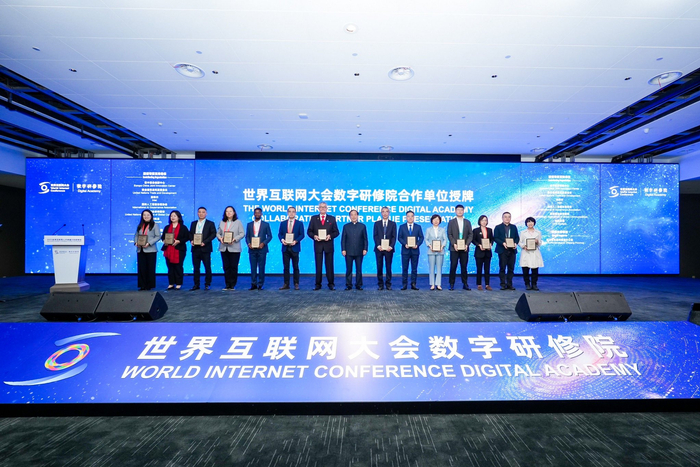
Core Insights - The 2025 World Internet Conference in Wuzhen showcased the integration of AI into the physical world, moving beyond digital applications to real-world interactions [1] - The Chinese government aims for a comprehensive transition to an intelligent economy and society by 2035, emphasizing the transformative potential of AI on productivity and human liberation [1] - AI is increasingly penetrating various industries, including healthcare, logistics, and commodity trading, enhancing productivity and efficiency [1][2] Industry Applications - Ant Group demonstrated its AI health manager, AQ, which interprets data from health devices and provides real-time alerts for anomalies, indicating a strong focus on AI in healthcare [2] - The steel industry is leveraging AI for better resource allocation and price trend predictions, with solutions developed by Wanlian Yida Group to assist in production planning and supply chain optimization [4] - AI is also being applied in industrial settings, with companies like Qunke Technology introducing cloud-native industrial AI platforms to facilitate zero-deployment solutions [6] Human-Machine Interaction - AI is evolving through human-machine interaction, with advancements in robotics and AI glasses showcased at the conference, indicating a shift towards practical applications in everyday life [5][7] - The development of embodied intelligent robots is expected to first occur in industrial environments before expanding into more complex tasks in human settings [5] Data Security and AI Governance - The rapid increase in token consumption for AI models highlights the urgent need for high-quality data and effective governance frameworks to manage AI applications [8][10] - Concerns regarding the reliability of AI models and the potential for misinformation necessitate the establishment of policies and regulations to guide AI technology applications [11] - The integration of data elements with AI architecture is anticipated to lead to a paradigm shift in data circulation, emphasizing the importance of protecting sensitive information [10]
流浪汉闯家中?AI整蛊图吓坏小区
Nan Fang Du Shi Bao· 2025-11-10 23:06
Core Viewpoint - The rise of AI-generated prank videos, particularly involving scenarios like "homeless people breaking into homes," has sparked significant public concern and highlighted the challenges of AI governance and misuse [2][5][9]. Group 1: Incident Overview - A recent incident in Guangzhou involved a child using AI to create a realistic image of a homeless person attempting to enter their home, which led to panic among residents and calls for security investigations [3][5]. - Similar incidents have occurred in other regions, where AI-generated images have caused police to respond to false alarms, wasting public resources [3][6]. Group 2: Social Media Influence - The trend of AI pranks originated from overseas social media platforms, particularly TikTok, where users began sharing videos of these pranks, leading to widespread imitation among teenagers [5][6]. - The hashtag "homelessmanprank" on TikTok has accumulated over 1,600 videos, with some receiving significant engagement, indicating a viral spread of this content [5]. Group 3: Legal and Ethical Implications - Legal experts warn that creating and sharing AI-generated images that could mislead others may lead to criminal liability, as seen in cases where individuals have been arrested for causing false alarms [7][8]. - The misuse of AI technology raises concerns about the blurred lines between reality and fiction, necessitating increased education on AI literacy and ethical responsibilities, especially among youth [9].