
高水平对外开放

Search documents
管涛:“十五五”高水平对外开放如何“领跑”
Di Yi Cai Jing· 2025-11-02 12:35
Core Viewpoint - The "15th Five-Year Plan" emphasizes high-level opening up as a key strategy for China's modernization, aiming to share opportunities and promote development with the world [1][4]. Group 1: Strategic Framework - The "15th Five-Year Plan" consists of 15 parts and 61 articles, focusing on strategic tasks and major initiatives for the next five years, with a significant emphasis on expanding high-level opening up [1]. - The plan reflects China's confidence and determination to enhance international cooperation and economic integration amid a changing global landscape [1][4]. Group 2: External Challenges - The plan acknowledges the coexistence of strategic opportunities and risks, highlighting the rise of unilateralism and protectionism, as well as the potential for external shocks [2][3]. - It identifies the need for proactive measures to navigate complex international dynamics and maintain development momentum [3]. Group 3: High-Level Opening Up - High-level opening up is deemed essential for driving high-quality development, with a focus on technological self-reliance and innovation [4][5]. - The plan aims to create a market-oriented, law-based, and international business environment to enhance economic vitality and support socialist market economy reforms [5]. Group 4: Global Economic Role - China positions itself as a responsible major power in promoting economic globalization, despite facing challenges from protectionist policies in other countries [6][8]. - The country has maintained its status as a leading exporter and importer, with significant trade volumes and ongoing initiatives like the China International Import Expo [6][8]. Group 5: Policy Initiatives - The plan outlines specific measures for institutional opening, including aligning with international trade rules and expanding market access, particularly in the service sector [10]. - It emphasizes the importance of trade innovation, investment cooperation, and financial market opening to enhance China's global economic engagement [11][12].

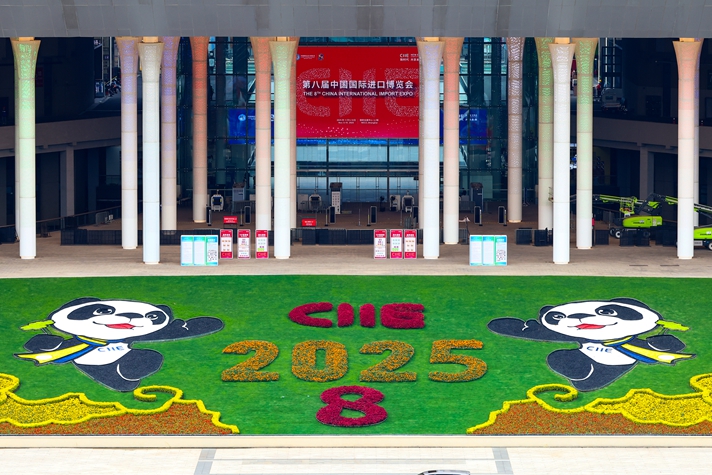
锤炼系统韧性 开拓发展新局——十月山东各地经济社会发展观察
Da Zhong Ri Bao· 2025-11-02 01:06
Group 1: Commercial Aerospace Development - The successful launch of "Yinli No.1 (Remote II)" on October 11 highlights the collaborative advantages of Shandong's maritime launch industry chain, with a rapid response time of 2 hours for the entire rocket launch process within a 6-kilometer radius [3] - Shandong is strategically planning and promoting the commercial aerospace sector, focusing on areas such as maritime launches, rocket manufacturing, satellite research, and aerospace tourism, creating a complementary cluster of development [3][4] - The newly released measures for accelerating high-quality development in the commercial aerospace industry in Shandong emphasize support for technological innovation, talent cultivation, and enterprise enhancement, aiming to leverage the province's manufacturing potential [3][4] Group 2: Foreign Trade Expansion - Shandong is actively cultivating new growth points for foreign trade through diverse explorations, achieving significant results in expanding international markets [6] - In Linyi, 176 overseas exhibition activities have been held in 36 countries, with 2,450 businesses participating in international market expansion, while 51 events have attracted 29,000 international guests [6] - The province's foreign trade data for the first three quarters shows steady growth, with 45 key projects signed at the fourth Confucian Business Conference, including 9 foreign investment projects totaling $1.01 billion [6] Group 3: Agricultural Resilience and Food Security - Shandong has faced severe challenges in autumn grain harvesting due to continuous heavy rainfall since September, prompting emergency measures such as temporary drying points and 24-hour operation of drying equipment [8][9] - The province has implemented resource integration and cross-regional coordination to address the urgent needs of farmers, exemplified by the rapid deployment of harvesting machinery from Henan [8] - Long-term strategies are being developed to enhance agricultural disaster prevention systems, improving resilience against extreme weather and ensuring food security [9]
学习快评丨中国是全球工商界投资兴业的沃土
Xin Hua She· 2025-11-01 02:03
Core Viewpoint - China aims to enhance high-level opening-up to promote deep reforms and drive high-quality development, providing more stability and certainty for the Asia-Pacific and global economies, positioning itself as a fertile ground for global business investment [2] Group 1: Investment Environment - China is recognized as the world's second-largest consumer and import market, offering vast development opportunities for global businesses [2] - The country is considered one of the safest nations globally, with ongoing efforts to create a market-oriented, rule-of-law, and internationalized first-class business environment [2] - Active initiatives to develop future industries, strengthen emerging sectors, and upgrade traditional industries create a broad platform for innovation [2] Group 2: Green Development - China is committed to promoting green development through coordinated actions to reduce carbon emissions, pollution, and enhance green growth [2] - The country is seen as a "certainty oasis" by foreign media, emphasizing the importance of open cooperation for mutual benefits [2] Group 3: Future Outlook - China's doors to foreign investment will continue to open wider, reinforcing the belief that partnering with China equates to seizing opportunities [2] - The international community widely acknowledges China as an ideal, safe, and proactive investment destination, driving the momentum for shared prosperity and common development [2]
凝心聚力 接续奋斗
Liao Ning Ri Bao· 2025-11-01 01:05
Group 1: Real Estate and Urban Development - The Provincial Housing and Urban-Rural Development Department emphasizes responsibility in promoting high-quality real estate development and accelerating the transformation of the construction industry, focusing on urban renewal actions such as the renovation of old neighborhoods and pipelines [1] - The department aims to optimize the business environment in the construction sector and scientifically prepare the "15th Five-Year" plan for the housing and urban construction sector in Liaoning [1] Group 2: Transportation Development - The Provincial Transportation Department plans to enhance the quality and efficiency of transportation services, focusing on the construction of a comprehensive and integrated transportation network [1] - The department is set to promote green, smart, and integrated development in transportation, while planning significant transportation projects and strategic initiatives [1] Group 3: Veteran Affairs - The Provincial Veterans Affairs Department aims to establish a provincial-level employment and entrepreneurship service base for veterans, focusing on improving the dual-support work mechanism and enhancing service quality [2] - The department promotes "sunshine placement" and "direct placement" to broaden employment channels for veterans [2] Group 4: Data and Business Environment - The Provincial Data Bureau emphasizes transforming the spirit of the conference into a driving force for high-quality development in data and business sectors, launching five major actions to improve various environments [2] - The bureau plans to advance the market-oriented allocation of data elements and develop a high-standard "15th Five-Year" digital development plan for Liaoning [2] Group 5: Labor and Social Sciences - The Provincial Federation of Trade Unions focuses on implementing the conference spirit while enhancing the rights and services for workers, aiming to strengthen grassroots union organization [3] - The Provincial Social Sciences Association emphasizes the need to adapt to technological advancements and promote innovation in social science research [3] Group 6: Business and Economic Development - The Provincial Federation of Industry and Commerce aims to promote the spirit of the conference among private economic entities and establish mechanisms to address their suggestions and demands [4] - The Provincial Overseas Chinese Federation plans to integrate the conference spirit with its development goals, focusing on high-quality service and leveraging the unique advantages of the overseas Chinese community [5] Group 7: Taxation and Regulatory Framework - The Provincial Taxation Bureau emphasizes the importance of learning and implementing the conference spirit as a major political task, focusing on digital transformation in tax collection and management [6] - The bureau aims to enhance taxpayer services and ensure the effective implementation of tax-related policies [6] Group 8: Customs and Trade - The Shenyang Customs aims to enhance regulatory efficiency and service levels while contributing to the development of a modern industrial system and high-level opening-up [6] - The customs authority is focused on advancing smart customs initiatives and improving overall regulatory frameworks [6]
学习贯彻党的二十届四中全会精神丨挺膺担当勇争先——广大知识分子和青年学生深入领会全会精神激扬奋进力量
Xin Hua Wang· 2025-11-01 00:07
Group 1 - The article emphasizes the significant achievements made during the "14th Five-Year Plan" period in China, highlighting the importance of unity under the leadership of Xi Jinping to ensure decisive progress towards socialist modernization [3][4][6] - The "14th Five-Year Plan" is described as a milestone in China's technological development, with notable advancements in space exploration, such as the findings from the Chang'e 6 lunar mission [3][4] - The article discusses the need for high-quality economic development as a central theme for the upcoming "15th Five-Year Plan," focusing on the importance of benefiting the people as a fundamental value orientation [6][9] Group 2 - The article mentions the role of cultural enterprises in promoting Chinese culture globally, with specific reference to the success of online literature as a significant cultural export [10][11] - It highlights the commitment of companies like Qingdao Customs to enhance international trade through technological innovations, ensuring efficient customs processes [9][10] - The article notes the importance of agricultural modernization and the integration of technology in agriculture to strengthen national capabilities [5][6]
去年全省进出口总额达5.26万亿
Mei Ri Shang Bao· 2025-10-31 22:23
Core Insights - Zhejiang Province is advancing high-level opening-up during the 14th Five-Year Plan period, focusing on six aspects: opening strength, platform capability, hub status, layout, vitality of entities, and environment for opening-up [1] Group 1: Opening Strength - The total import and export volume of Zhejiang Province is projected to reach 5.26 trillion yuan in 2024, with an average annual growth of 11.7% [1] - The province's export share of the national total is expected to increase from 14% in 2020 to 15.3% in 2024, ranking second in the country [1] - Market procurement exports will account for 68.6% of the national total in 2024, while service trade and digital trade are projected to grow annually by 11% and 15.9%, respectively [1] - Zhejiang has established 5,398 enterprises for overseas investment, with direct foreign investment totaling 68.5 billion USD, covering 156 countries and regions globally [1] Group 2: Platform Capability - Zhejiang has been approved to build the country's first bulk commodity resource allocation hub, with Ningbo-Zhoushan Port achieving 6.62 million tons of bonded fuel oil refueling in the first three quarters of this year, a growth of 10.7% [2] - The province has initiated a positive list for imported consumer goods, completing trial orders for 28 types of goods, facilitating the import of health foods and cosmetics [2] - Zhejiang has formed 778 institutional innovation results, with 228 being national firsts, and 45 included in the national promotion list [2] - The province has successfully hosted the Digital Trade Fair for four consecutive years, increasing the number of attendees and exhibition area each year [2] Group 3: Opening Layout - The export share to countries and regions along the Belt and Road Initiative has increased to 52.6% [2] - Zhejiang has 23 provincial-level or above overseas economic and trade cooperation zones, with the number and area of overseas warehouses ranking among the top in the country [2] - The province is promoting collaborative opening in the Yangtze River Delta region, enhancing oil supply across ports and deepening the linkage of the oil and gas trading market [2] Group 4: Vitality of Entities - Ten enterprises from Zhejiang have made it to the Fortune Global 500 list, with 22 enterprises exceeding 10 billion USD in import and export volume [3] - The number of private multinational companies has reached 100, with over 120,000 private enterprises engaged in exports, accounting for 19.5% of the national total [3] - There are over 80,000 newly established foreign-funded enterprises in the province, with 208 Fortune Global 500 companies investing in Zhejiang [3]
第八届进博会前瞻:创造市场新机遇
Zhong Guo Xin Wen Wang· 2025-10-31 13:33
Core Insights - The upcoming 8th China International Import Expo (CIIE) is expected to create new market opportunities and promote open-mindedness in global trade [1][2] - China continues to be a unique developing country that hosts a national-level international import expo, providing significant development opportunities for global businesses [1] Group 1: Market Opportunities - China has reduced its foreign investment negative list to 29 items, achieving "zero" restrictions in the manufacturing sector [1] - In the first three quarters of this year, 48,921 new foreign-invested enterprises were established in China, marking a 16.2% year-on-year increase [1] - Significant growth in foreign investment was observed in sectors such as e-commerce services (up 155.2%), aerospace manufacturing (up 38.7%), and medical equipment manufacturing (up 17%) [1] Group 2: Global Perspectives - Former UN Secretary-General Ban Ki-moon emphasized that China's high-level opening will bring new opportunities to Asia and the world [2] - Several foreign companies view the Chinese market as essential for their development, with notable investments such as Sanofi's €1 billion project in Beijing and Schneider Electric's service center upgrade [2] - Experts believe that China's development will drive global progress towards intelligent and green growth [2] Group 3: CIIE Highlights - The Hongqiao International Economic Forum will release the "World Open Report 2025," addressing key topics such as trade security and supply chain resilience [2] - The forum will facilitate discussions among foreign dignitaries, international organization leaders, and scholars, fostering new ideas and collaborations [2]
中行上海市分行“惠”聚八方 全力护航第八届进博会贸易投资对接会
Yang Shi Wang· 2025-10-31 09:35
Core Insights - China Bank has been collaborating with the China International Import Expo Bureau and the National Exhibition and Convention Center (Shanghai) since 2018 to host the Import Expo Trade and Investment Matchmaking Conference, aiming to build a global economic and trade cooperation bridge [2] - Over the past seven years, the initiative has recruited more than 31,000 companies, facilitated approximately 5,300 cooperation intentions, and the intended amount has exceeded $50 billion, injecting strong momentum into global trade [2] Group 1: Trade and Investment Matchmaking Conference - The upcoming eighth Import Expo Trade and Investment Matchmaking Conference is set to innovate in key areas such as global exhibitor matchmaking, trade negotiations, and government-enterprise exchanges [2] - The conference will feature a "Hui Chat" trade negotiation area, attracting nearly 1,000 overseas exhibitors and about 3,000 domestic buyers, providing a comprehensive service from procurement matching to financial solutions [3] - A "Hui Financial" comprehensive financial service area will be established on-site to offer inclusive financial services, mobile banking, and digital RMB to facilitate trade negotiations [3] Group 2: Investment Promotion and Financing - The conference will introduce a "Hui Living Room" investment and financing promotion platform, planning to conduct nearly 100 investment promotion and industry matching events to enhance investment vitality [4] - The "Invest in China" area will continue to support local governments and key industrial parks in targeted investment activities, showcasing China's favorable business environment and local industrial characteristics [4] Group 3: Enhanced Exhibition Experience - The conference will upgrade the deep industry exhibition group model, inviting buyers to engage directly with exhibitors for more effective communication and collaboration [5] - Two thematic exhibition groups focusing on future industries and finance will be formed, emphasizing high-end equipment, medical devices, new materials, and biotechnology to facilitate a positive cycle between technology, industry, and finance [5] - China Bank aims to leverage its cross-border financial service expertise to enhance service innovation and optimize on-site experiences for better transaction outcomes [5]

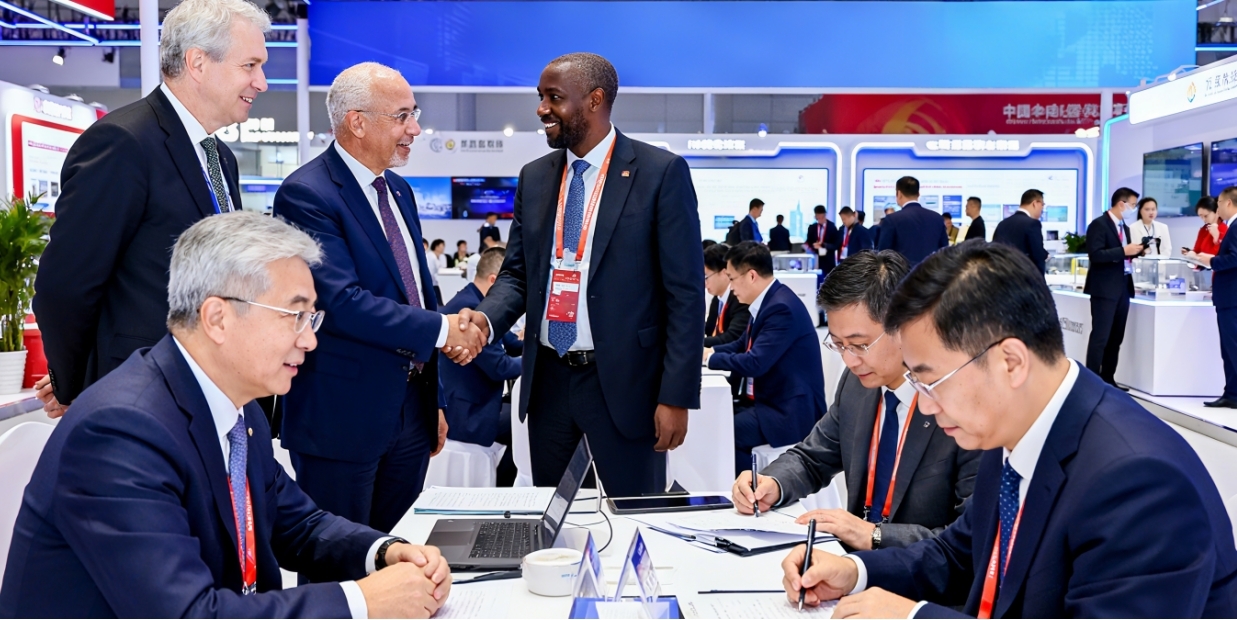
中法政党对话会举行
Xin Hua She· 2025-10-31 04:59
Core Points - The China-France Party Dialogue Conference was held in Beijing on October 30, focusing on "Mutual Trust, Cooperation, and Win-Win: Towards a New Era of China-France Relations" [1] - Over 40 participants attended, including representatives from Chinese ministries, think tanks, and various French political parties, as well as business figures [1] - Liu Haixing, Minister of the International Department of the CPC Central Committee, emphasized the importance of implementing the consensus reached by the leaders of China and France to promote stable development of bilateral relations [1] Summary by Categories Political Relations - The dialogue highlighted the commitment of both countries to strengthen mutual political trust and cooperation [1] - The Chinese side expressed willingness to work with major French political parties to implement the consensus of the two heads of state [1] Economic Cooperation - The French side welcomed the message from the 20th CPC Central Committee that emphasizes high-level opening-up and expressed a desire to enhance mutual investment [1] - Both parties aim to ensure strategic autonomy and achieve win-win development through increased economic collaboration [1]
中行上海市分行“惠”聚八方,全力支持进博会贸易投资对接会
Xin Lang Cai Jing· 2025-10-31 03:08
Core Insights - The China International Import Expo (CIIE) Trade and Investment Matchmaking Conference has been co-hosted by the Bank of China, the China International Import Expo Bureau, and the National Exhibition and Convention Center (Shanghai) since 2018, aiming to promote global enterprises to share in China's high-quality opening-up opportunities and vast market [1] - The upcoming eighth CIIE Trade and Investment Matchmaking Conference is expected to attract nearly 1,000 overseas exhibitors and around 3,000 domestic purchasers, providing a platform for efficient negotiations and precise matching of supply and demand [2] Group 1 - The conference has cumulatively recruited over 31,000 enterprises and facilitated approximately 5,300 cooperation intentions with a total intended amount exceeding $50 billion [1] - The Bank of China Shanghai Branch will innovate in matchmaking, trade negotiations, and government-enterprise exchanges to enhance global economic cooperation [1][2] - A "Hui Chat" trade negotiation area will be set up to facilitate one-on-one and multi-round negotiations among global enterprises [1] Group 2 - The Bank of China Shanghai Branch will provide comprehensive financial services, including inclusive finance, mobile banking, and digital RMB, to support trade negotiation outcomes [2] - The "Hui Living Room" investment promotion area will host nearly 100 specialized activities to foster cooperation between Chinese and foreign enterprises across various chains [3] - The conference will continue to establish an "Invest in China" area to showcase China's favorable business environment and attract foreign investment [3] Group 3 - An industry-focused exhibition group will be formed to enhance the efficiency of matching exhibitors and purchasers through direct communication and immersive experiences [4] - The conference will innovate by creating exhibition groups focused on future industries and finance, covering advanced equipment, medical devices, new materials, and biotechnology [4] - The Bank of China Shanghai Branch aims to leverage its cross-border service expertise to promote innovation and optimize on-site services for high-level opening-up [4]