
农业新质生产力

Search documents
专家汇聚岳西共商山区蔬菜产业高质量发展
Xin Hua Wang· 2025-08-20 12:04
Core Insights - The event held in Yuexi County, Anhui Province, aimed to showcase the achievements in the development of mountainous vegetable industries and promote the application of technological innovations [1][2] - The "Yuexi County Green High Yield and Efficiency Action Project" is set to be implemented in 2025, focusing on enhancing the production of high-quality and efficient mountainous vegetables [1] Group 1: Industry Development - The Anhui Academy of Agricultural Sciences is leveraging a platform called "Four Stations and One System" to integrate resources and promote the development of high-quality mountainous vegetable production [1] - The project will establish demonstration bases covering over 700 acres, aiming to influence the standardized planting of vegetables across 10,000 acres, with a target of reducing production costs by over 5% in core demonstration areas [1] Group 2: Strategic Collaborations - The event included the signing of strategic cooperation agreements between the Yuexi County Agricultural and Rural Bureau and the Anhui Academy of Agricultural Sciences, as well as between the Academy and five enterprises [2] - The local government emphasizes the potential of mountainous areas to develop ecological specialty vegetables, which are seen as a key industry for increasing local farmers' income [2]
河南农商银行:锚定建设农业强省 贡献农商坚实力量
Zhong Guo Jin Rong Xin Xi Wang· 2025-08-18 10:09
Core Viewpoint - The strategic cooperation agreement between Henan Rural Commercial Bank and the Henan Provincial Department of Agriculture and Rural Affairs aims to inject strong financial momentum into the development of agriculture, rural areas, and farmers by providing 400 billion yuan in agricultural loans over the next three years, focusing on food security, rural prosperity industries, and new agricultural productivity [1][2][3]. Group 1: Financial Support for Food Security - Henan Rural Commercial Bank has created various financial products such as "High Standard Farmland Loan," "Planting Loan," and "Storage Loan" to provide comprehensive financial services for the agricultural supply chain, with a total of 58.7 billion yuan in loans for grain production and processing [2]. - The cooperation agreement emphasizes the importance of "storing grain in the ground and technology," offering a package of financial services for high-standard farmland construction and providing intellectual property pledge financing for seed industry enterprises [2]. Group 2: Support for Rural Prosperity Industries - The bank has developed a tailored action plan to support rural prosperity industries, focusing on local characteristics and specific needs, resulting in over 100 specialized financial products such as "Garlic Loan" and "Spicy Noodle Loan," with 44.133 billion yuan in loans issued to county-level prosperity industries [3]. - The bank serves approximately 208,600 agricultural industry chain clients, demonstrating its commitment to localized financial solutions [3]. Group 3: Inclusive Financial Services - Henan Rural Commercial Bank aims to enhance financial service accessibility through a "党建+网格+大数据" model, achieving a credit coverage rate of 73.41% for county farmers and a usage rate of 14.34% [4]. - The bank has issued 47.3 billion yuan in small loans to impoverished populations, reinforcing its commitment to poverty alleviation and rural revitalization [4]. Group 4: Empowering Agricultural Technology - The bank has established a dedicated credit quota for the technology sector, offering loans totaling 8.385 billion yuan to 942 agricultural technology enterprises, supporting long-term and low-cost financing [5]. - It is also focusing on supply chain financial products for agricultural machinery manufacturing, facilitating financial services for the entire industry chain [5]. Group 5: Integration of Financial Services in Rural Governance - The bank actively participates in grid governance by collaborating with community organizations, providing professional financial consulting, and promoting a trustworthy credit environment through credit village and credit household evaluations [6][7]. - Initiatives such as "Financial Knowledge Going to the Countryside" aim to educate the public on financial safety, enhancing community engagement and cultural life [7].
(乡村行·看振兴)福建永安:制种有“稻”忙丰收
Zhong Guo Xin Wen Wang· 2025-08-18 03:31
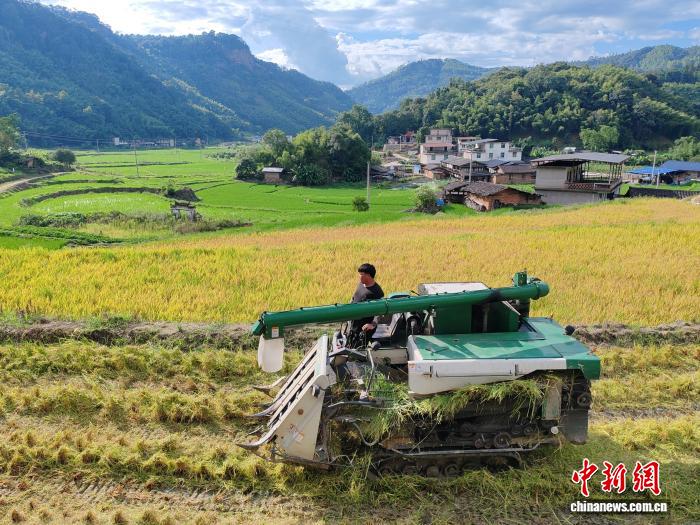
Core Viewpoint - The hybrid rice seed production in Dahu Town, Fujian Province, is experiencing a successful harvest season, significantly boosting local farmers' incomes and contributing to rural revitalization efforts [1][2][3]. Group 1: Economic Impact - Farmers in Dahu Town report an average income increase of over 1,000 yuan per mu from hybrid rice seed production, which is double that of regular rice cultivation [2]. - The total area for rice seed production in Dahu Town has surpassed 1,000 mu, accounting for one-third of the seed production area in Yong'an City [2]. Group 2: Agricultural Practices - The implementation of a "Party branch + cooperative + base + farmer" model has enhanced agricultural mechanization and provided comprehensive services, including drying services, to farmers [2][3]. - The mechanized and standardized drying process stabilizes the moisture content of seeds, ensuring both yield and quality are maintained [2]. Group 3: Modernization and Development - Dahu Town is actively developing new agricultural production capabilities and optimizing its industrial layout to expand rice seed production [3]. - The local seed production industry has become a significant contributor to agricultural modernization and rural revitalization, serving as a "golden business card" for the area [3].

“七彩云品”畅销海内外 云南打好高原特色农业王牌
Ren Min Ri Bao· 2025-08-16 22:30
Core Viewpoint - Yunnan's highland specialty agriculture is thriving, with significant exports of coffee and fresh-cut flowers, positioning the province as a leader in agricultural exports in Western China [1][5]. Group 1: Agricultural Production and Innovation - Yunnan's coffee and fresh-cut flowers are among the top exports in China, with approximately 70% of vegetables sold domestically and to over 40 countries [1]. - The province has made substantial advancements in agricultural breeding, reducing the breeding time for certain crops from 30 years to 10 years, with six new varieties approved [2]. - The quality of Yunnan coffee has improved, with the proportion of premium coffee increasing from 8% in 2021 to 31.6% currently [1]. Group 2: Technological Advancements in Agriculture - Smart farming techniques are being implemented, such as soil sensors for monitoring and integrated water and fertilizer systems to optimize nutrient delivery [3]. - Innovative practices in tea cultivation have led to an 11.1% increase in new shoot growth and an additional income of 400 yuan per acre [3]. - Yunnan has established a comprehensive cold chain logistics system with over 7,300 cold storage facilities, enhancing the efficiency of agricultural product distribution [5]. Group 3: Market Development and Sales Channels - The online trading platform for fresh-cut flowers in Kunming allows for rapid transactions, with a sale occurring every four seconds [3]. - Yunnan's agricultural department is promoting brand cluster development and organizing multiple sales matching events annually, contributing to a projected online retail sales figure of 48.79 billion yuan in 2024 [5]. - The establishment of a "green channel" for agricultural exports has streamlined the process, facilitating efficient exports to Southeast Asian countries [5].
云南打好高原特色农业王牌
Ren Min Ri Bao· 2025-08-16 22:03
Core Viewpoint - Yunnan's highland specialty agriculture is thriving, with significant exports of coffee and fresh-cut flowers, positioning the province as a leader in agricultural exports in Western China [1][5]. Group 1: Agricultural Production and Innovation - Yunnan's coffee and fresh-cut flower exports rank among the top in China, with approximately 70% of vegetable products sold domestically and internationally [1]. - The province has made substantial advancements in agricultural breeding, reducing the breeding time for certain crops from 30 years to 10 years, with six new varieties approved by national authorities [2]. - Yunnan has established 36 provincial seed industry bases, achieving breakthroughs in key breeding technologies for flowers, coffee, and vegetables [2]. Group 2: Technological Advancements in Agriculture - Smart farming techniques are being implemented, such as soil monitoring sensors and integrated water and fertilizer systems, enhancing crop yields and quality [3]. - In a modern tea garden demonstration base, new cultivation methods have increased the new shoot emergence by 11.1%, resulting in an additional income of 400 yuan per acre [3]. Group 3: Supply Chain and Logistics - Yunnan has developed over 7,300 cold storage facilities with a capacity of nearly 740 million cubic meters, facilitating the efficient transport of fresh agricultural products [5]. - The province has initiated a series of measures to enhance the branding and marketing of its agricultural products, including organizing at least six annual supply and demand matching events [5]. - The establishment of a "green channel" for agricultural exports has streamlined the inspection process, allowing for quicker and more efficient export of products to Southeast Asia [5].
北京将于2026年在全市开展第四次全国农业普查,普查对象明确
Xin Jing Bao· 2025-08-15 07:57
Group 1 - The fourth national agricultural census in Beijing is scheduled for 2026, focusing on various agricultural sectors including crop planting, forestry, animal husbandry, fishery, and related services [1][2] - The census will collect data on agricultural production conditions, food production, new agricultural productivity, rural development, and residents' living conditions, with a reference date of December 31, 2026 [1] - The census will be conducted using modern methods such as satellite remote sensing and artificial intelligence to ensure data quality and efficiency [2] Group 2 - A leadership group has been established to oversee the census, including members from the municipal government, statistical bureau, and relevant departments, with funding shared between city and district governments [2] - The results of the census will support the formulation of agricultural policies, rural revitalization, and modernization of agriculture [2] - The census process will be monitored for integrity, with strict measures against data falsification and interference [2]
土特产变身“金疙瘩” 这些乡村“量身定制”解决融资难
Sou Hu Cai Jing· 2025-08-11 02:34
Core Viewpoint - The recent measures introduced by the People's Bank of China and the Ministry of Agriculture aim to address the challenges of financing in rural areas, focusing on increasing agricultural loans and improving access to financial services for farmers [2][6]. Group 1: Agricultural Financing Initiatives - Agricultural loans in China have been continuously increasing this year, with 19 measures launched to tackle issues such as high costs and slow processing times for rural financing [2]. - In Ningxia, financial officers are actively engaging with farmers to understand their needs and provide tailored financing solutions, such as converting agricultural facilities into collateral for loans [3][4]. - The introduction of online financing products like "Funing Loan" has enabled quick access to funds for agricultural cooperatives, exemplified by a cooperative receiving a loan of 3 million yuan [4]. Group 2: Innovative Financing Models - The "Fiscal + Financial" model in Tianjin has successfully transformed local agricultural products into profitable ventures, with the introduction of specialized loans like "Sweet Potato Loan" to support farmers [6][8]. - The local government has facilitated the expansion of sweet potato cultivation, leading to a significant increase in planting area and production value, which has now surpassed 220 million yuan [8]. - In Guangdong, a differentiated credit assessment system has been established to support technological innovation in agriculture, particularly in marine industries, with a total of 275 million yuan in loans provided [9][10]. Group 3: Impact on Rural Development - The financial support has led to the construction of essential infrastructure, such as cold chain logistics, which is crucial for the marine product supply chain [10]. - The ongoing initiatives are expected to enhance the overall productivity and sustainability of agricultural practices, benefiting various sectors including deep-sea aquaculture and bio-agriculture [10].

南农晨读 | 千年渔港
Nan Fang Nong Cun Bao· 2025-08-11 01:33
Group 1 - Guangdong reported 1,387 new local cases of Chikungunya fever from August 3 to August 9, showing a continuous decline trend [2][4][3] - The distribution of cases includes 1,212 in Foshan, 103 in Guangzhou, and smaller numbers in other cities [4][5] Group 2 - The National Lychee and Longan Industry Technology System held a performance evaluation meeting for the "14th Five-Year Plan" in Luzhou, Sichuan on August 9 [7][8] - The meeting included reports from chief scientists and station leaders on their work and achievements during their tenure [9][10] Group 3 - A new "Media + Qingyuan Xiniu Bamboo Shoot Integration Development Studio" was established in Qingyuan to promote high-quality development of the bamboo shoot industry [20][21] - The studio aims to integrate media resources across various platforms to enhance brand influence and promote industry stories [24][25] Group 4 - The first socialized service center for the Qingyuan Xiniu Bamboo Shoot industry was established in Yingde, providing comprehensive support across various industry segments [33][36][37] - This center aims to assist in seedling, technology, processing, sales, branding, and financial services for the bamboo shoot industry [38] Group 5 - Guangzhou's modern agriculture sector is set to receive a boost with 15 agricultural projects signed, totaling over 1.5 billion yuan in expected investment [43][44] - The projects focus on advanced agricultural production capabilities, including the artificial breeding of endangered species like the yellow lip fish [41][42]

加大信贷投放 增强粮食安全金融保障
Zheng Quan Ri Bao· 2025-08-09 14:42
Core Viewpoint - The People's Bank of China and the Ministry of Agriculture and Rural Affairs emphasize enhancing financial support for food security, proposing specific measures to increase financial investment in food production and optimize food supply systems. Group 1: Financial Support for Agriculture - The recent issuance of a document highlights the need for increased financial input to ensure stable production and supply of food and important agricultural products [1] - The Agricultural Development Bank of China (ADBC) in Heilongjiang has provided significant loans for high-standard farmland construction, totaling 25.82 million yuan to support the "Longjiang Grain Warehouse Demonstration Zone" project [2] - ADBC has adopted innovative financial service models, such as "Agricultural Land + Funding Supply Chain," to support high-standard farmland projects, with a total of 770 million yuan in working capital loans issued [3] Group 2: Customized Financial Services for Enterprises - ADBC has provided tailored financial services to agricultural enterprises, such as the Qiaofu Dayuan Agricultural Co., which has received 250 million yuan in funding to support its operations and expansion [4] - The bank has extended its financial service chain, offering various loan products to support agricultural production, with nearly 4.9 billion yuan allocated to land-scale operations and black soil protection [5] - ADBC has approved loans totaling 200 million yuan for innovative products like "Order Loans" and "Planting Loans," enhancing financial support for major agricultural clients [6] Group 3: Overall Financial Performance - ADBC Heilongjiang has cumulatively issued loans of 45.88 billion yuan, with a loan balance of 530.63 billion yuan, effectively utilizing policy-driven financial resources to support rural revitalization [6]
麦康森院士工作站揭牌+全国首个黄唇鱼保护中心签约!广州都市现代农业提质提速
Nan Fang Nong Cun Bao· 2025-08-09 11:05
Core Points - The event held on August 8 in Guangzhou focused on modern urban agriculture and featured the signing of 15 key agricultural projects with a total investment exceeding 1.5 billion yuan [4][5][32]. - The establishment of the first national Huangshun fish protection center aims to conserve this critically endangered species through research and innovation [19][23]. - The event highlighted Guangzhou's commitment to agricultural modernization, showcasing significant advancements in technology and investment in the sector [44][50]. Investment and Development - Guangzhou has signed 44 agricultural projects in the first seven months of 2025, with an estimated total investment of approximately 6.4 billion yuan [31][32]. - The city has hosted 16 promotional activities to attract investment, emphasizing the theme "Gathering Wisdom for New Agriculture, Investing in New Guangzhou" [28][30]. - The total investment in agricultural projects completed or under construction since 2023 amounts to around 10 billion yuan, with 36 projects completed and 24 ongoing [35]. Technological Innovation - The establishment of the Mackonson Academy Workstation focuses on molecular nutrition and targeted nutrition technology to enhance aquaculture efficiency and sustainability [15][18]. - The event showcased advancements in smart agriculture, green agriculture, and integrated agriculture, with a focus on nine key areas for investment [36][39]. - Guangzhou's agricultural technology progress rate exceeds 75%, positioning it among the top cities in China for agricultural innovation [10][44]. Industry Collaboration - The event included the signing of a comprehensive cooperation framework agreement with the China Fisheries Association and the Pearl River Fisheries Research Institute to promote the ornamental fish industry [25]. - The city has established 19 agricultural research institutes and attracted over 20 expert teams, consolidating its role as a key player in agricultural research and development [9][10]. - The recognition of new agricultural leading enterprises reflects the city's strategy to strengthen the agricultural sector, with 19 national, 230 provincial, and 480 municipal leading enterprises now established [40][42].