国内国际双循环

Search documents
人民日报评论员:加快构建新发展格局,牢牢把握发展主动权 ——论学习贯彻党的二十届四中全会精神
Xin Hua She· 2025-10-27 13:59
Core Viewpoint - The article emphasizes the strategic decision made by the Chinese government to accelerate the construction of a new development pattern, focusing on strengthening domestic circulation while optimizing the domestic and international dual circulation system [1][2]. Group 1: Economic Growth and Domestic Circulation - The average contribution rate of domestic demand to economic growth from 2021 to 2024 is projected to reach 86.4% [2]. - The total import and export volume of goods is expected to increase from 32.2 trillion yuan in 2020 to 43.8 trillion yuan in 2024, with an annual growth rate of 8.0% [2]. - The article highlights the importance of a strong domestic market as a strategic foundation for China's modernization, leveraging the vast market potential of over 1.4 billion people [3]. Group 2: Investment and Consumption - The article discusses the need to promote a virtuous cycle of investment and consumption, emphasizing the integration of improving people's livelihoods and stimulating consumption [3]. - It advocates for the construction of a unified national market to eliminate barriers and enhance market efficiency, thereby releasing the benefits of China's large-scale market [3]. Group 3: International Cooperation and Openness - The article outlines the commitment to expand high-level opening-up, despite challenges from unilateralism and protectionism, with a focus on maintaining a multilateral trade system [4]. - It notes that in the first three quarters of the year, China's goods trade imports and exports grew by 4% year-on-year, with exports increasing by 7.1% [4].
李云泽:稳妥有序推进中小金融机构兼并重组、减量提质
21世纪经济报道· 2025-10-27 13:49
Core Insights - The 2025 Financial Street Forum focuses on "Innovation, Transformation, and Reshaping of Global Financial Development" [1] - Li Yunzhe emphasizes the importance of financial support for high-quality economic and social development during the "14th Five-Year Plan" and outlines goals for the "15th Five-Year Plan" [1][4] Group 1: Financial Adaptability - The need to create a new financial service model that balances direct and indirect financing, investment in goods and people, and aligns financing terms with industry development [3] - Support for major strategies and key areas to enhance the quality and reasonable growth of the economy [3] Group 2: Modern Industrial System and New Productivity - Focus on intelligent, green, and integrated directions to provide more financial resources for traditional industries and emerging sectors [4] - As of September 2025, loans in key areas like technology, green initiatives, and digital economy are growing significantly faster than overall loan levels, with green loans leading at a 22.9% growth rate [4] Group 3: Reform and Opening Up - Emphasis on deepening financial supply-side structural reforms to enhance institutional layout and international influence [6] - Encouragement for financial institutions to focus on their core businesses and engage in differentiated competition to build a healthy financial ecosystem [6] Group 4: Financial Development and Security - Commitment to risk prevention and maintaining systemic financial stability amid global economic uncertainties [8] - As of October 15, 2025, 326 banks have exited the market through dissolution, merger, or cancellation, indicating a significant increase in the consolidation of local banks [9] Group 5: Regulatory Framework - Continuous improvement of financial regulatory effectiveness and the establishment of a tiered regulatory framework [9] - Call for enhanced global cooperation to strengthen the global financial safety net and improve crisis management efficiency [9]


金融监管总局:提升经济金融适配性,坚定不移深化改革扩大开放
Sou Hu Cai Jing· 2025-10-27 11:32
Core Viewpoint - The Financial Regulatory Administration aims to enhance economic and financial adaptability to promote sustainable economic and social development while deepening reforms and expanding openness [1][2][4]. Group 1: Financial Service Model - The Financial Regulatory Administration will promote a new financial service model that coordinates direct and indirect financing, balances investment in goods and people, aligns financing terms with industrial development, and links domestic and international markets [1]. - The focus will be on supporting major strategies, key areas, and weak links to achieve qualitative and quantitative economic growth, enhancing the modern industrial system and new productive forces [1]. Group 2: Support for New Development Pattern - The administration will strengthen funding supply for major projects to boost consumption and optimize trade financing and export credit insurance to facilitate integrated domestic and international trade [2]. - Efforts will be made to ensure that financial services are more equitable and accessible to the public, addressing financial needs in education, health, and other social sectors [2]. Group 3: Structural Reform and International Engagement - The Financial Regulatory Administration will deepen financial supply-side structural reforms to improve institutional layout, enhance development quality and resilience, and increase international influence [4]. - The administration will actively participate in international financial governance reform and contribute to the improvement of international financial regulatory rules and industry standards [4]. Group 4: Risk Management and Policy Implementation - The administration will prioritize financial development and security, ensuring that systemic financial risks are effectively managed [4]. - Future financial policies will be piloted in Beijing to attract high-quality financial resources to support the capital's economic and social development [4].
李云泽,最新发声!
中国基金报· 2025-10-27 11:30
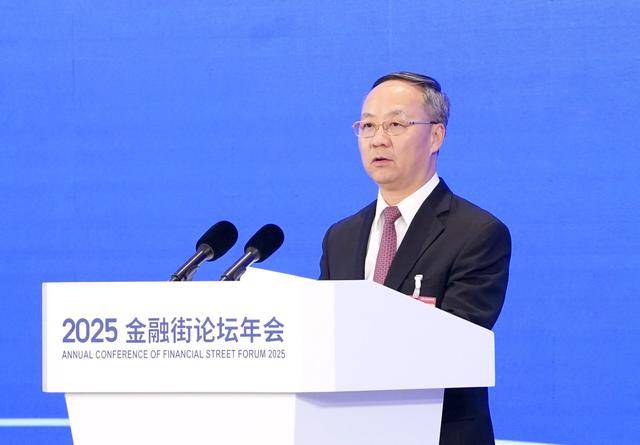
【导读】 国家金融监督管理总局局长 李云泽:提升经济金融适配性,更好促进经济社会持续健 康发展 中国基金报记者 晨曦 10 月 27 日,国家金融监督管理总局局长李云泽出席 2025 金融街论坛年会开幕式,并发表 演讲。李云泽的演讲主题为 " 强化金融支撑 守牢风险底线 全力服务 ' 十五五 ' 经济社会高 质量发展 " 。 来看此次演讲的重点内容: 着力提升经济金融适配性 更好促进经济社会持续健康发展 李云泽表示,金融监管总局将推动构建直接融资与间接融资协同、投资于物与投资于人并 重、融资期限与产业发展匹配、国内市场与国际市场联动的金融服务新模式,强化对重大战 略、重点领域和薄弱环节的支持,助力经济实现质的有效提升和量的合理增长。 高效服务现代化产业体系建设和新质生产力发展。聚焦智能化、绿色化、融合化方向,为传 统产业优化提升、新兴产业和未来产业培育壮大提供更多金融资源。锚定高水平科技自立自 强,完善长期资本投早、投小、投长期、投硬科技的支持政策,强化全周期综合金融保障, 推动科技创新和产业创新深度融合。 有力支持构建新发展格局。围绕扩大内需这个战略基点,强化重大项目资金供给,助推消费 扩容升级。优化贸易融 ...

2025金融街论坛|李云泽:优化出口信用保险等跨境服务
Bei Jing Shang Bao· 2025-10-27 11:10
Core Viewpoint - The Director of the Financial Regulatory Bureau, Li Yunze, emphasized the need to optimize cross-border services such as trade financing and export credit insurance, aiming to accelerate the integration of domestic and international trade and enhance the smooth flow of the domestic and international dual circulation [1] Group 1 - The focus is on optimizing trade financing and export credit insurance to support cross-border services [1] - There is a strategic push to promote the integration of domestic and international trade [1] - The initiative aims to strengthen the domestic and international dual circulation system [1]

重庆“千里轻舟”货运班轮常态化运行
Zhong Guo Xin Wen Wang· 2025-10-27 09:34
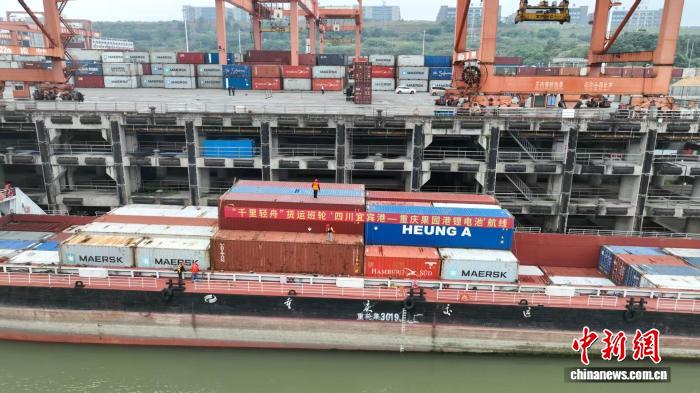
Core Insights - The launch of the "Sichuan Yibin Port - Chongqing Guoyuan Port Lithium Battery" shipping route marks a new phase for the "Qianli Qingzhou" freight service, which has now opened a total of 10 trial routes, indicating a shift to regular operations [1][3] - The "Qianli Qingzhou" service aims to enhance the role of shipping in supporting domestic and international dual circulation and reducing overall logistics costs in society [1][3] Summary by Categories Operational Highlights - As of now, "Qianli Qingzhou" has completed over 200 one-way voyages, transporting a total of 1 million tons of goods, which has saved over 5 million RMB in logistics costs, representing a cost reduction of 25% [3] - The majority of goods transported include bulk materials such as construction materials, ores, and chemical raw materials, which account for over 90% of the total cargo [3] Future Plans - The Chongqing Transportation Committee plans to strengthen regional collaboration, optimize layout, and enhance synergy to develop a multi-modal logistics system that connects the upper reaches of the Yangtze River [3] - The goal is to create a benchmark brand for high-quality development in inland shipping, focusing on convenience in multi-modal transport, regularized shipping modes, and intelligent logistics services [3]
十五五启新篇!未来五年房市、收入、消费这样干
Sou Hu Cai Jing· 2025-10-27 07:51
Group 1 - The core viewpoint of the article emphasizes the importance of high-quality economic development and the need for significant improvements in various sectors, including technology, employment, and social welfare during the 14th Five-Year Plan period from 2026 to 2030 [1][10][19] - The meeting proposed seven main goals for economic and social development, including enhancing the quality of life for citizens and ensuring national security [1][10] - The focus on improving employment quality and quantity is crucial for increasing household income, which is primarily derived from employment [1][4] Group 2 - The article discusses the need for traditional industries to upgrade and improve efficiency to benefit workers in those sectors [2][4] - It highlights the importance of addressing urgent public concerns and promoting common prosperity through better income distribution and social security systems [4][19] - The real estate market is identified as a critical sector, with a call for high-quality development to adapt to changing supply and demand dynamics [6][8] Group 3 - The article outlines the strategic shift towards a domestic circulation economy, emphasizing the need to stimulate domestic demand and consumption [14][19] - It suggests that government policies should facilitate consumer spending and remove restrictions that hinder market growth [14][23] - The importance of enhancing the innovation ecosystem and addressing gaps in key technologies is emphasized to ensure sustainable economic growth [25][27][30] Group 4 - The article stresses the need for a clear boundary between government and market roles to foster a conducive environment for industry development [16][17] - It discusses the significance of private sector investment and the necessity for stable returns in competitive infrastructure sectors to encourage investment [21][23] - The focus on nurturing new industries and technologies, such as quantum technology and biomanufacturing, is highlighted as a future growth driver [30][32]

经济日报评论员:全面推动建设强大国内市场——学习贯彻党的二十届四中全会精神
Jing Ji Ri Bao· 2025-10-27 05:27
Group 1 - The core viewpoint emphasizes the importance of building a strong domestic market and accelerating the construction of a new development pattern, which is a strategic deployment for the 14th Five-Year Plan period [1] - The new development pattern focuses on smooth economic circulation, highlighting the mutual promotion of domestic and international dual circulation [1][2] - China is currently the world's second-largest commodity consumption market and the largest online retail market, but faces challenges such as unbalanced development and local protectionism that hinder market functionality [1] Group 2 - The 20th Central Committee's proposals include a series of key tasks aimed at expanding domestic demand and breaking down barriers to market access [2] - Specific measures include implementing consumption-boosting actions, maintaining reasonable investment growth, and increasing government investment in people's livelihoods to enhance the interaction between consumption and investment [2] - The goal is to unify market basic institutional rules and standardize local government economic promotion behaviors to fully release the dividends of China's super-large market [2] Group 3 - Strengthening the domestic market is crucial for meeting both domestic and global demands, improving the foreign trade environment, and attracting high-quality foreign investment [3] - The strategy aims to align domestic market construction with high-level opening up, promoting the integration of internal and external market rules and standards [3] - This approach seeks to enhance China's influence in global supply chains and actively participate in the reform of the global economic governance system [3]
3.2%
Shang Hai Zheng Quan Bao· 2025-10-27 04:59
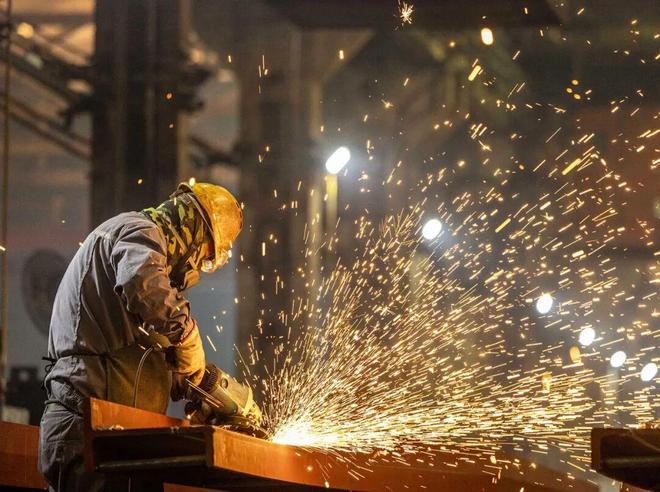
Core Insights - Industrial enterprises' profits increased by 3.2% year-on-year from January to September, marking the highest cumulative growth rate since August of the previous year [1] - The growth rate accelerated by 2.3 percentage points compared to the first eight months of the year, driven by rapid monthly profit growth and a low base from the previous year [1][3] - High-tech manufacturing and equipment manufacturing sectors showed significant profit growth, contributing to the overall improvement [1][5] Revenue and Profit Trends - From January to September, the revenue of industrial enterprises grew by 2.4% year-on-year, a slight acceleration of 0.1 percentage points compared to the first eight months [3] - In September alone, revenue growth reached 2.7%, an increase of 0.8 percentage points from August [3] - The profit margin for industrial enterprises rose to 5.49% in September, up by 0.85 percentage points year-on-year, marking two consecutive months of increase [3][4] Sector Performance - Over half of the industries saw profit growth, with 23 out of 41 major industrial categories reporting year-on-year profit increases [6] - High-tech manufacturing profits grew by 8.7% year-on-year from January to September, contributing 1.6 percentage points to the overall profit growth of industrial enterprises [6] - In September, high-tech manufacturing profits surged by 26.8%, becoming a key driver for the recovery in industrial profits [6] Company Size and Type Analysis - Profits improved across different company sizes, with large, medium, and small enterprises reporting year-on-year profit growth of 2.5%, 5.3%, and 2.7% respectively [4] - Private and foreign-invested enterprises experienced notable profit acceleration, with profits growing by 5.1% and 4.9% respectively from January to September [4]
9月工业利润大增21.6%
Di Yi Cai Jing Zi Xun· 2025-10-27 04:29
Core Insights - The profit growth of industrial enterprises in China has continued to rebound, with a year-on-year increase of 3.2% from January to September, marking the highest cumulative growth rate since August of the previous year [2][4] - In September alone, profits surged by 21.6% year-on-year, indicating significant improvement in the manufacturing sector driven by policy support and recovering market demand [2][4] Industrial Performance - From January to September, the operating revenue of industrial enterprises increased by 2.4% year-on-year, with September showing a growth of 2.7%, reflecting a continuous acceleration over the past two months [4] - Among 41 major industrial categories, 23 saw profit growth, with 30 industries reporting profit increases in September, representing a growth rate of 73.2% [4][5] - High-tech manufacturing has played a significant role, with profits rising by 8.7% year-on-year from January to September, contributing 1.6 percentage points to the overall profit growth of industrial enterprises [4][5] Equipment Manufacturing Sector - The profit of the equipment manufacturing sector increased by 9.4% year-on-year, exceeding the average growth rate of all industrial enterprises by 6.2 percentage points [5] - In September, profits in this sector grew by 25.6%, contributing 10.5 percentage points to the overall profit growth of industrial enterprises [5] Profitability Metrics - The profit margin for industrial enterprises was 5.26% from January to September, a slight increase of 0.04 percentage points year-on-year, with September's margin reaching 5.49%, up 0.85 percentage points [5] - The cost and expenses per hundred yuan of operating revenue have decreased, indicating effective cost control and product structure optimization [5] Enterprise Size and Type Analysis - Profits for large, medium, and small enterprises grew by 2.5%, 5.3%, and 2.7% respectively from January to September, showing a recovery across all sizes [6] - Private enterprises and foreign-invested enterprises reported profit growth of 5.1% and 4.9%, respectively, indicating a positive trend in profitability [6] Future Outlook - The industrial sector is expected to maintain a stable and positive trend due to ongoing domestic demand release, accelerated technological innovation, and effective policy support [7] - Key areas to monitor include the continuity of domestic demand expansion policies, the implementation of "anti-involution" measures in manufacturing, and the impact of external demand and geopolitical risks on the economy [7]