绿色低碳转型

Search documents
调整部分商品关税税率税目——我国持续扩大高水平对外开放
Jing Ji Ri Bao· 2026-01-03 22:16
Core Viewpoint - The "2026 Tariff Adjustment Plan" aims to scientifically adjust import provisional tax rates, optimize tariff categories, and continue implementing agreement and preferential tax rates, which will support the development of new productive forces and meet the growing needs of the people while promoting high-quality development [1]. Group 1: Import Provisional Tax Rate Adjustments - The plan will implement provisional tax rates lower than the most-favored-nation rate for 935 items to enhance the linkage between domestic and international markets and expand the supply of quality goods [1]. - Key components include reducing import tariffs on critical components and advanced materials to promote high-level technological self-reliance and the construction of a modern industrial system [1]. - Tariff reductions will also support the green transformation of the economy and society by lowering tariffs on resource-based products like lithium-ion battery recycled black powder [2]. Group 2: Support for Healthcare and Living Standards - The adjustment will lower import tariffs on medical products such as artificial blood vessels and diagnostic kits for certain infectious diseases, reflecting a people-centered development philosophy [2]. - This move is expected to enhance public health and improve the well-being of citizens, particularly in addressing cardiovascular diseases [2]. - The tariff reductions on medical devices and pharmaceuticals aim to increase the supply of quality goods and reduce the medical burden on consumers [2]. Group 3: Optimization of Tariff Categories - The plan will add new tariff categories for emerging products like intelligent bionic robots and bio-aviation kerosene, increasing the total number of tariff categories to 8,972 [3]. - This adjustment will help industries and companies accurately grasp trade data and assess overseas market trends, facilitating the formulation of effective development strategies [3]. - The plan continues to implement agreement rates for certain imported goods from 34 trade partners, promoting regional integration and economic cooperation [3]. Group 4: Support for Least Developed Countries - The plan will maintain zero tariff treatment for 100% of products from 43 least developed countries, supporting their development [3]. - It will also continue to apply preferential tax rates for certain imported goods from countries like Bangladesh, Laos, Cambodia, and Myanmar under relevant trade agreements [3]. - This approach demonstrates China's commitment to responding to global uncertainties with determined policies, showcasing its role as a contributor to global development [3].
加强绿色技术合作共建“一带一路”
Jing Ji Ri Bao· 2026-01-03 22:09
陆洋、林容珍在《团结》2025年第4期《以绿色技术国际合作加强绿色"一带一路"建设》一文中指出, 跨国合作与技术共享是全球实现绿色低碳转型的必由之路,也是绿色"一带一路"的重要内容。发展中国 家普遍面临各类环境问题。如何利用绿色技术、实现绿色技术的转移和转化,推进各国逐步实现绿色转 型,成为共建"一带一路"国家绿色发展的关键性问题。共建"一带一路"国家在生态农业、绿色能源、节 能减排、绿色建筑、应对气候变化需要的环境治理和修复等可持续发展技术领域的转移转化需求与日俱 增。中国在绿色技术国际合作中,一方面作为绿色技术输出方积极支援共建"一带一路"国家以及不发达 国家可持续发展事业,另一方面也迫切需要发达国家的绿色技术转移来推动自身经济社会绿色转型。具 体可在以下几方面重点发力。一是绿色技术转移合作机制研究亟待深化。绿色技术国际合作涉及资金、 人才、法律法规、基础设施等各方面综合配套,需要系统的技术标准评价体系。二是加强绿色技术转移 转化的信息和网络平台搭建,推动共建"一带一路"国家间技术信息共享。三是加强绿色金融对绿色技术 国际合作的支持力度。通过扩展资金来源、保障资金可持续性等手段,完善绿色技术转移资金保障机 ...
【环球财经】中企参建巴西布济乌斯油田六期项目投产
Xin Hua She· 2026-01-03 03:28
Core Viewpoint - The Brazil oil company announced that the Buzios Phase VI project, co-developed by China National Offshore Oil Corporation (CNOOC), is set to commence production on December 31, 2025, enhancing the oil field's output significantly [1] Group 1: Project Details - The Buzios Phase VI project is located in the Santos Basin, with operational water depths ranging from 1,900 to 2,200 meters, utilizing a deepwater subsea development model with a "floating production storage and offloading unit + subsea production system" [1] - The project is designed to achieve a daily crude oil production capacity of approximately 25,000 tons and a natural gas processing capacity of 7.2 million cubic meters [1] - With the launch of Phase VI, the daily production capacity of the Buzios oil field will exceed 1.15 million barrels [1] Group 2: Technological and Environmental Aspects - The floating production storage and offloading unit of the Phase VI project not only demonstrates excellent production capacity but also incorporates energy-saving and carbon reduction technologies, such as heat recovery and closed flaring systems, significantly improving energy efficiency and reducing carbon emissions [1] - The project exemplifies successful collaboration and execution between Brazil and China in the development of ultra-deepwater oil fields, aligning resource development with technological innovation and green low-carbon transformation [1]




中企参建巴西布济乌斯油田六期项目投产
Xin Hua She· 2026-01-03 03:08
Core Viewpoint - The Buzios Phase VI project, co-developed by China National Offshore Oil Corporation (CNOOC) and Brazil's Petrobras, is set to commence production on December 31, 2025, significantly enhancing Brazil's oil and gas output [1] Group 1: Project Details - The Buzios Phase VI project is located in the Santos Basin, with operational water depths ranging from 1,900 to 2,200 meters [1] - The project utilizes a "floating production storage and offloading unit + subsea production system" for deepwater saltwater development [1] - The designed daily crude oil production capacity is approximately 25,000 tons, while the natural gas processing capacity is 7.2 million cubic meters per day [1] Group 2: Impact on Production Capacity - With the launch of Phase VI, the total daily production capacity of the Buzios oil field will exceed 1.15 million barrels [1] - The project is expected to significantly contribute to Brazil's overall oil and gas production capabilities [1] Group 3: Technological and Environmental Aspects - The floating production storage and offloading unit incorporates energy-efficient technologies such as heat recovery and closed flaring systems, enhancing energy utilization efficiency and reducing carbon emissions [1] - The project exemplifies successful collaboration between China and Brazil in the development of ultra-deepwater oil fields, aligning resource development with technological innovation and green low-carbon transformation [1]
每卖两辆新车,就有一辆享受补贴!2025年“以旧换新”惠及超3.6亿人次
Yang Zi Wan Bao Wang· 2026-01-02 08:35
Core Insights - The "old-for-new" policy in China is projected to generate over 2.6 trillion yuan in sales by 2025, benefiting more than 360 million consumers and serving as a significant driver for consumption growth and industrial upgrading [1][2] Group 1: Policy Impact on Sales - By 2025, the "old-for-new" policy will lead to the replacement of over 11.5 million vehicles, 129 million home appliances, 9.1 million digital products, 12 million home renovation items, and 1.25 million electric bicycles [1] - From January to November 2025, the total retail sales of consumer goods are expected to grow by 4.0% year-on-year, with the "old-for-new" policy contributing over 1 percentage point to this growth [1] Group 2: Industrial Upgrading - The policy has significantly enhanced industrial quality, with nearly 60% of replaced vehicles being new energy vehicles, and over 90% of replaced home appliances being high-efficiency products [1] - The recycling of scrapped vehicles is projected to increase by 24.5% in 2025, leading to the recycling of approximately 9.6 million tons of steel and 1.3 million tons of non-ferrous metals, while reducing carbon emissions by about 24.5 million tons [1] Group 3: Consumer Safety and Experience - Over 4.8 billion subsidies have been issued directly to consumers since the policy's implementation, with a significant number of new green, low-carbon, and smart products entering the market [2] - The replacement of old electric bicycles has exceeded nine times that of 2024, with 90% of new bicycles meeting national safety standards [2] Group 4: Economic Revitalization - The "old-for-new" policy has revitalized offline retail, with consumers increasingly opting for in-store experiences, leading to over 30% growth in surrounding merchant consumption in areas with concentrated home appliance replacement stores [2] - The Ministry of Commerce indicates that the policy will continue to evolve, further stimulating consumption potential and promoting green and low-carbon transitions for high-quality economic development [2]
破解充电焦虑,烟台有了超充氢电站
Qi Lu Wan Bao· 2025-12-31 14:28
Group 1 - Yantai aims to become a model city for green, low-carbon, and high-quality development, showcasing achievements in the economy and people's livelihoods by 2025 [1] - The launch of the world's first off-grid supercharging hydrogen station, PowerMax, addresses key issues in electric vehicle charging, enabling a full charge in approximately 5 minutes [1][4] - The PowerMax station utilizes a "hydrogen-electric coupling" model, allowing for independent operation without reliance on the power grid, thus alleviating charging anxiety for electric vehicle owners [4][5] Group 2 - The construction of the PowerMax station is simplified to a modular approach, allowing for easy installation and operation, akin to "building with blocks" [5] - The station integrates various components such as compressors and hydrogen storage in a standard container, making it a mobile energy solution applicable in various settings [5][6] - The project underwent over 200 tests to overcome technical challenges, marking a significant milestone for the company [6] Group 3 - The cost of hydrogen generation is a key concern, with projections indicating that green hydrogen prices may drop below gray hydrogen prices in the coming years, potentially reducing charging costs to around 0.5 yuan per kilowatt-hour [8] - The PowerMax station is positioned as a solution not only for charging difficulties but also for efficiently utilizing renewable energy sources, contributing to the transition of the energy structure [8] - The company is recognized among the top 20 hydrogen technology firms globally, with numerous patents filed, indicating a strong commitment to innovation in hydrogen energy solutions [8]

浙江沪杭甬(00576)拟注资2.26亿元收购浙江交投中碳环境科技11.67%股权
智通财经网· 2025-12-31 14:04
Core Viewpoint - The company Zhejiang Huhangyou (00576) has signed an investment agreement to inject RMB 226 million to acquire an 11.6733% stake in Zhejiang Jiaotou Zhongtan Environmental Technology Co., Ltd, a digital comprehensive energy service provider, which will not become a subsidiary of the company after the investment [1][2]. Group 1: Investment Details - The investment agreement is set to be completed by December 31, 2025, allowing the company to hold an 11.6733% stake in the target company [1]. - The target company focuses on integrating solar power generation, grid, energy storage, and flexible load into a smart ecosystem, emphasizing comprehensive energy services and new energy asset investments [2]. Group 2: Strategic Alignment - The investment aligns with national decarbonization policies and aims to foster new green growth momentum by integrating clean energy solutions into transportation scenarios [2]. - The target company is expected to leverage long-term service contracts and energy-as-a-service models to provide stable and scalable returns, particularly in high-value scenarios like transportation hubs and industrial parks [2]. Group 3: Growth Potential - The investment is anticipated to enable the company to quickly enter the high-growth green energy sector, diversify revenue streams, and create operational synergies with existing transportation assets, enhancing long-term value creation [3]. - The target company is characterized by clear growth visibility, resilient cash flow, and advantages in execution, digital operations, and risk control [2].
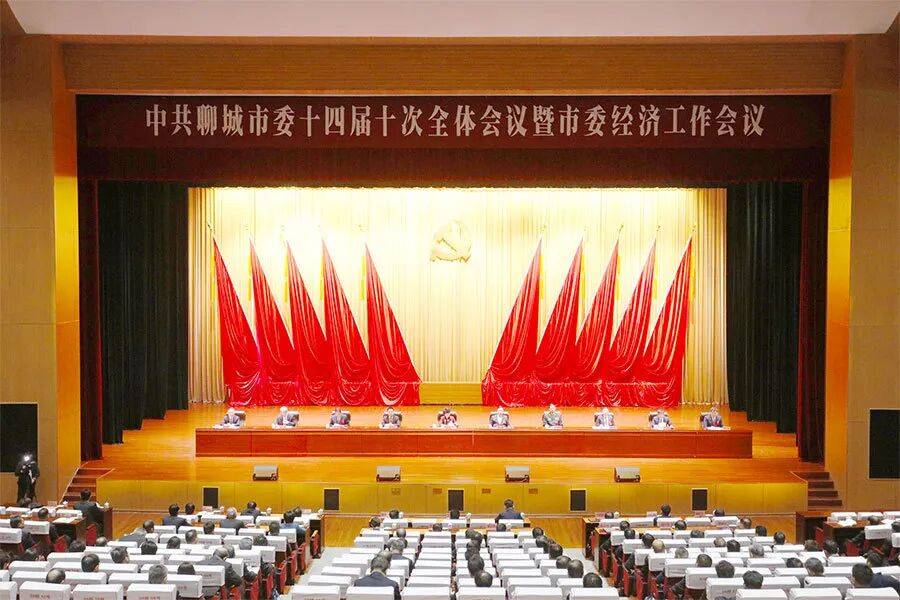
中共聊城市委十四届十次全体会议暨市委经济工作会议举行
Sou Hu Cai Jing· 2025-12-31 11:03
中共聊城市委十四届十次全体会议暨市委经济工作会议举行 市委常委会主持会议 李长萍讲话 会议以习近平新时代中国特色社会主义思想为指导,深入学习贯彻党的二十届四中全会和中央经济工作会议精神,认真落实省 委十二届十次全会和省委经济工作会议精神,听取和讨论了李长萍同志受市委常委会委托所作的工作报告,审议通过了《中共 聊城市委关于制定聊城市国民经济和社会发展第十五个五年规划的建议》。会议总结2025年全市经济工作,分析当前经济形 势,研究部署2026年经济工作 中国共产党聊城市第十四届委员会第十次全体会议公报(2025年12月30日中国共产党聊城市第十四届委员会第十次全体会议通 过) 中国共产党聊城市第十四届委员会第十次全体会议暨市委经济工作会议,于2025年12月30日在聊城举行。 出席这次会议的有,市委委员50人,候补委员2人。市级有关领导同志,市纪委常委和有关方面负责同志,部分市第十四次党代 会基层一线代表列席会议。 全会由市委常委会主持。市委书记李长萍作了讲话。 会议以习近平新时代中国特色社会主义思想为指导,深入学习贯彻党的二十届四中全会和中央经济工作会议精神,认真落实省 委十二届十次全会和省委经济工作会议精神 ...
晋南钢铁:建功绿色“十四五” 绘就发展新蓝图
Zhong Guo Hua Gong Bao· 2025-12-31 07:11
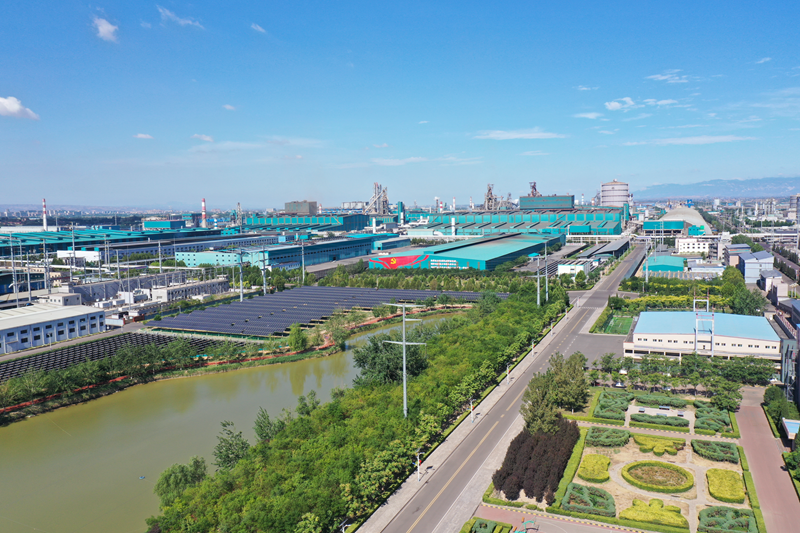
晋南钢铁厂区远景 在"双碳"目标深入推进的时代背景下,钢铁行业转型已迈入"深水区",传统发展模式面临深刻变革。过去5年间, 山西晋南钢铁集团有限公司(简称晋南钢铁)以"成为中国近零碳钢铁企业先行者"为使命,将绿色发展理念深度融 入"十四五"发展全过程,创新构建"钢—焦—化—氢+绿电"全闭环低碳产业链,在减碳降碳、极致能效、超低排 放、数智转型、产品升级等领域持续攻坚,用实际行动书写了传统钢铁企业绿色低碳转型的精彩答卷。 而今,"十四五"收官在即,晋南钢铁正向"十五五"谋篇蓄势,绘制未来高质量发展的全新蓝图。 集团沃能化工厂区 全链降碳 构建闭环低碳生态 "十四五"期间,晋南钢铁率先打破传统钢铁生产的"资源消耗型"模式,开启了绿色转型的探索。集团将技术创新 作为核心生产力,着力打通了全产业链的降碳路径。其首创的"钢—焦—化—氢+绿电"全闭环低碳产业链,让生产 全流程的"废料"转化为可循环利用的"资源",真正实现了碳减排与经济效益提升的双向共赢。 集团相关负责人表示,这条产业链通过对钢铁生产中的废气、余热、副产品进行梯级利用,构建了"能源—化工— 冶金"的闭环生态,既减少了碳排放,又制造了高附加值产品。 为实现生 ...
国补625亿狂撒!全民换手机家电白送钱?
Sou Hu Cai Jing· 2025-12-31 03:43
Group 1 - The government is providing substantial subsidies for the replacement of household appliances and digital devices, with up to 1,500 yuan for high-end air conditioners and 500 yuan for smartphones priced under 6,000 yuan [2][4] - A total of 625 billion yuan in special long-term bonds has been allocated to stimulate consumer spending during the New Year and Spring Festival, encouraging consumers to upgrade their appliances and devices [4] - The initiative aims to boost domestic demand, stabilize the economy, accelerate the elimination of outdated production capacity, and support the domestic smart terminal industry, benefiting companies like Huawei, Xiaomi, Gree, and Midea [4] Group 2 - The program is described as a "national asset renewal plan," indicating a strategic approach to enhance consumer spending while promoting green and low-carbon transitions [4] - Consumers are advised to be cautious about potential price increases by retailers and the availability of subsidy quotas, highlighting the need for vigilance in the market [4] - The government-led "consumption carnival" is set to begin in early 2026, suggesting a significant opportunity for consumers to take advantage of these subsidies [4]